In its early implementations, background modeling was a process of building a model for the background of a video with a stationary camera, and identifying pixels that did not conform well to this model. The pixels that were not well-described by the background model were assumed to be moving objects. Many systems today maintain models for the foreground as well as the background, and these models compete to explain the pixels in a video. If the foreground model explains the pixels better, they are considered foreground. Otherwise they are considered background. In this paper, we argue that the logical endpoint of this evolution is to simply use Bayes’ rule to classify pixels. In particular, it is essential to have a background likelihood, a foreground likelihood, and a prior at each pixel. A simple application of Bayes’ rule then gives a posterior probability over the label. The only remaining question is the quality of the component models: the background likelihood, the foreground likelihood, and the prior. We describe a model for the likelihoods that is built by using not only the past observations at a given pixel location, but by also including observations in a spatial neighborhood around the location. This enables us to model the influence between neighboring pixels and is an improvement over earlier pixelwise models that do not allow for such influence. Although similar in spirit to the joint domain-range model, we show that our model overcomes certain deficiencies in that model. We use a spatially dependent prior for the background and foreground. The background and foreground labels from the previous frame, after spatial smoothing to account for movement of objects, are used to build the prior for the current frame. These components are, by themselves, not novel aspects in background modeling. As we will show, many existing systems account for these aspects in different ways. We argue that separating these components as suggested in this paper yields a very simple and effective model. Our intuitive description also isolates the model components from the classification or inference step. Improvements to each model component can be carried out without any changes to the inference or other components. The various components can hence be modeled effectively and their impact on the overall system understood more easily.
In moving camera videos, motion segmentation is commonly performed using the image plane motion of pixels, or optical flow. However, objects that are at different depths from the camera can exhibit different optical flows even if they share the same real-world motion. This can cause a depth-dependent segmentation of the scene. Our goal is to develop a segmentation algorithm that clusters pixels that have similar real-world motion irrespective of their depth in the scene. Our solution uses optical flow orientations instead of the complete vectors and exploits the well-known property that under camera translation, optical flow orientations are independent of object depth. We introduce a probabilistic model that automatically estimates the number of observed independent motions and results in a labeling that is consistent with real-world motion in the scene. The result of our system is that static objects are correctly identified as one segment, even if they are at different depths. Color features and information from previous frames in the video sequence are used to correct occasional errors due to the orientation-based segmentation. We present results on more than thirty videos from different benchmarks. The system is particularly robust on complex background scenes containing objects at significantly different depths
Joint alignment of a collection of functions is the process of independently transforming the functions so that they appear more similar to each other. Typically, such unsupervised alignment algorithms fail when presented with complex data sets arising from multiple modalities or make restrictive assumptions about the form of the functions or transformations, limiting their generality. We present a transformed Bayesian infinite mixture model that can simultaneously align and cluster a data set. Our model and associated learning scheme offer two key advantages: the optimal number of clusters is determined in a data-driven fashion through the use of a Dirichlet process prior, and it can accommodate any transformation function parameterized by a continuous parameter vector. As a result, it is applicable to a wide range of data types, and transformation functions. We present positive results on synthetic two-dimensional data, on a set of one-dimensional curves, and on various image data sets, showing large improvements over previous work. We discuss several variations of the model and conclude with directions for future work.
Smart environments are being developed to support older adults aging in place. However, the design contributions of the older users have not been explicated. The purpose of this review of literature was to determine how older adults' ideas are being incorporated into the design of smart environments. Twenty-one research articles, incorporating older adults' preferences into the design and evaluation of smart environments are presented. Although only one study was found that used findings from older adult focus groups in the design and development of their system, the findings indicate that older adults are open to living in technically advanced environments if doing so would improve their quality of life and help them stay in their own homes, and that incorporating older adults ideas about smart environments improve the desirability of smart homes.
Phosphorus (P) is an expensive component in swine diets, and dietary P levels above the pig's requirement can result in excess P excreted in manure and potential environmental concerns. Consequently, utilization of dietary P by pigs must be optimized in order to minimize diet cost and P excretion in manure. Phosphorus and calcium (Ca) balance was evaluated in nursery pigs fed a control maize-soybean meal (M-SBM) diet formulated on a total P (TP) basis, and four experimental diets containing maize dried distillers grains with solubles (DDGS; 100 or 200 g/kg) formulated on either a TP or available P (AP) basis. Barrow pigs (n=39, initial body weight = 10.37 +/- 0.37 kg) were randomly assigned to one of five diets for a 7 d adaptation period followed by a 5 d period of total, separate collection of both urine and feces. Compared to the M-SBM diet, dry matter (DM) digestibility coefficients were reduced in pigs fed diets containing 100 or 200 g/kg DDGS by approximately 0.02 and 0.04 units, respectively (P<0.01). Feed and total P intake were similar among pigs fed control and DDGS diets, but P intake was lower (P<0.01) for pigs fed diets formulated on an AP compared to TP basis. Fecal P concentration was reduced (P<0.01) when diets contained DDGS compared to the M-SBM diet, and when DOGS diets were formulated on an AP basis compared to a TP basis. Total P excretion, retention, and apparent total tract digestibility coefficients were not affected by diet formulation method (FM) or level of DDGS inclusion (P>0.05). Calcium intake tended to be higher (P=0.06), and fecal Ca concentration and retention were higher (P<0.05) for pigs fed the M-SBM diet compared with those fed the DDGS diets. Feeding the 200 g/kg DDGS diets tended to increase (P=0.08) fecal Ca excretion, and reduced (P<0.05) Ca retention, retention coefficient, and apparent total tract digestibility compared to feeding the 100 g/kg DDGS diets. There were no significant effects of FM or DDGS x FM for Ca intake, retention, excretion, or apparent total tract digestibility. These results indicate that increasing dietary DDGS inclusion levels for nursery pigs decreases DM digestibility and fecal P concentration, but does not affect P excretion, retention, or digestibility. Formulating DDGS diets (100 or 200 g/kg) on a TP or AP basis had no effect on P digestibility or total excretion, but total dietary P content is reduced when diets are formulated on an AP basis. Published by Elsevier B.V.
In many algorithms for background modeling, a distribution over feature values is modeled at each pixel. These models, however, do not account for the dependencies that may exist among nearby pixels. The joint domain- range kernel density estimate (KDE) model by Sheikh and Shah [7], which is not a pixel- wise model, represents the background and foreground processes by combining the three color dimensions and two spatial dimensions into a five- dimensional joint space. The Sheikh and Shah model, as we will show, has a peculiar dependence on the size of the image. In contrast, we build three- dimensional color distributions at each pixel and allow neighboring pixels to influence each other's distributions. Our model is easy to interpret, does not exhibit the dependency on image size, and results in higher accuracy. Also, unlike Sheikh and Shah, we build an explicit model of the prior probability of the background and the foreground at each pixel. Finally, we use the adaptive kernel variance method of Narayana et al. [5] to adapt the KDE covariance at each pixel. With a simpler and more intuitive model, we can better interpret and visualize the effects of the adaptive kernel variance method, while achieving accuracy comparable to state-of-the-art on a standard backgrounding benchmark.
Recent work on background subtraction has shown developments on two major fronts. In one, there has been increasing sophistication of probabilistic models, from mixtures of Gaussians at each pixel [7], to kernel density estimates at each pixel [1], and more recently to joint domainrange density estimates that incorporate spatial information [6]. Another line of work has shown the benefits of increasingly complex feature representations, including the use of texture information, local binary patterns, and recently scale-invariant local ternary patterns [4]. In this work, we use joint domain-range based estimates for background and foreground scores and show that dynamically choosing kernel variances in our kernel estimates at each individual pixel can significantly improve results. We give a heuristic method for selectively applying the adaptive kernel calculations which is nearly as accurate as the full procedure but runs much faster. We combine these modeling improvements with recently developed complex features [4] and show significant improvements on a standard backgrounding benchmark.
The dramatically increasing population of disabled people and adults who are 65 years old and over will increase financial burdens for assisted living care in the United States and more generally on a global basis. To mitigate these costs, increasing numbers of disabled and elderly people (our clientele) will live alone at home. This paper suggests that the safety of such disabled and elderly people might be increased by using precise process definitions of Activities of Daily Living (ADLs) as the basis for guiding and monitoring their activities. We propose to model ADLs using Little-JIL, a language that supports ADL definitions that are distinguished from other ADL definitions in the literature by their use of such features as concurrency, exception handling, reaction control, and channel communication, all of which are important for monitoring ADLs at appropriately low levels of detail. This paper uses making tea, making a sandwich and answering a phone, as example ADLs for process definition. It suggests how a client can be monitored in real-time to detect unsafe ADL performance deviations that may lead to hazards. It also suggests how monitoring histories can be used for automated assessments that can provide care providers/specialists with key information about trends.
Computer vision researchers design intelligent machines capable of perceiving visual information. One of many approaches is to model the fascinating visual processing done by primates. The eyes, the brain, and their interconnections provide a rich set of visual perceptions without conscious effort. How primates “see” has long been an intriguing research question in neuroscience, biology, physiology, and psychology. Based on discoveries in these fields, computer scientists have attempted to apply biologically plausible models to the design of visual machines. While still inferior to primates, the performance of existing systems has been demonstrated to be quite promising. It appears that a machine based on biological principles can be simple yet achieve high accuracy and generalize well.This thesis takes a closer look at an artificial vision system based on biological principles, specifically with respect to object recognition and categorization. An existing system will be investigated, followed by various modifications leading to a new and improved system. The proposed model employs unsupervised feature learning, simulating a hypercolumn of the primary visual cortex, a hierarchical feed-forward framework, mimicking simple and complex cells, and finally neural network classification, based on a computational model of interconnected neurons. Compared to existing approaches, the proposed system is not only more biologically inclined, but also more effective. With significantly shorter running times it achieves good accuracies on several data sets compared to other state-of-the-art systems. Another key feature is good generalizability. The proposed approach does not rely on delicate domain specific segmentation procedures often employed by traditional vision systems. There are few parameters and a single set of parameters can be applied to images from different domains without significant loss of accuracy.In order to evaluate the system, experiments are conducted both on a commonly used collection of natural scenes as well as a challenging collection of realistic underwater marine images. The latter data is a rather uncommon data source in the computer vision community. Although automated labeling of various species of tiny planktonic organisms has recently attracted the attention of a number of researchers, biologically inspired vision systems had not previously been applied to this kind of data. Despite domain specific difficulties, such as low image quality, and high diversity of shapes and motions, the potential of the proposed system is shown to be quite promising. Given the demonstrated performance, there is a high likelihood that such a system could substantially facilitate research of the planet’s ocean ecosystems. As plankton plays an important role in the carbon cycle, high-volume automated labeling of planktonic specimens may lead to new insights concerning global climate changes. The encouraging experimental results in the marine domain bode well for future application of the proposed approach to other domains currently not considered by mainstream computer vision applications.
In this paper, a multi-agent search scheme is presented that supports the recognition of activities and, thus, learning methods for cooperative human-robot interaction. In our approach, stochastic models of human search activity are used to estimate state for HRI. The robot updates a Probabilistic Distribution Function of the target object using the observations and the estimated state of human peers. By this means the robot can choose places to search to compensate the behavior of human peers. This paper also presents an implicit interface design for robot assisted tasks, which allows the robot to infer the intention of the user and to provide assistance autonomously. It reduces the cognitive workload of the user and therefore is useful for elder care applications. The effectiveness and the efficiency of the proposed approaches are demonstrated in the experimental results.
Covering over 70% of the Earth's surface and containing over 95% of the planet's water, the aquatic ecosystem has a great influence on many environmental functions. An indicator of the health of a marine habitat is its populations, estimated by taking underwater images and labeling various species. Designing an automated algorithm for this task is quite a challenge. Image quality tends to be low due to the dynamics of the water body. The diversity of shapes and motions among living plankton and non-living detritus are remarkable. We have applied two very different techniques from computer vision to the automatic labeling of tiny planktonic organisms. One is a common approach involving segmentation and calculations of statistical features. The other is inspired by the sophisticated visual processing in primates. Both achieved competitively high accuracies, comparable to general agreement among expert marine scientists. We found that a relatively simple biologically motivated system can be as effective as a more complicated classical schema in this domain.
In this paper, we present a hierarchical smart resource coordination and reconfiguration framework for distributed systems. We view the coordination problem as one of context aware resource reconfiguration. The fundamental unit in this hierarchy is a Fault Containment Unit (FCU) that provides run-time fault-tolerance by deciding on the best alternative course of action when a failure occurs. FCUs are composed hierarchically and are responsible for dynamically reconfiguring failing FCUs at lower levels. When such a reconfiguration is not possible, FCUs propagate the failure upward for resolution. We evaluate the effectiveness of our framework in a people tracking application using a network of cameras. The task for our multi-camera network is to allocate pairs of cameras that localize a subject optimally given the current run-time context. The system automatically derives policies for switching between camera pairs that enable robust tracking while being attentive to certain performance measures. Our approach is unique in that we model the dynamics in the scene and the camera network configuration steers the policies to provide robust tracking.
In this paper we present the design of a decentralized vision-based object search system that can be used for el- der care in a smart environment. In our approach, each autonomous search agent maintains separate estimates of the probability density function (PDF) of the object location and makes independent decisions about its search process. Asynchronous cooperative search is achieved by transmit- ting perceptual information among the agents. Our work also investigates how context such as the detection history and density of activity by people influence the estimation of the prior PDF of the target and the use of this information to improve the search efficiency. Our experimental results demonstrate that the proposed cooperative search strategy is efficient and the methods we use to incorporate contextual information into the target's posterior PDF can improve the efficiency further.
This paper describes our experiences with the first partial deployment of Presentations Automatically Organized from Lectures (PAOL), a lecture recording system developed and tested at the University of Massachusetts Amherst. PAOL automatically records all information presented during lectures using any combination of computer, whiteboard, and overhead presentation and compiles the captured lectures into indexed presentations. We discuss lessons learned from this deployment that have application in lecture recording specifically and classroom technology in general. We also discuss our initial evaluation of created presentations as determined by a small focus group study.
Scene text recognition (STR) is the recognition of text anywhere in the environment, such as signs and storefronts. Relative to document recognition, it is challenging because of font variability, minimal language context, and uncontrolled conditions. Much information available to solve this problem is frequently ignored or used sequentially. Similarity between character images is often overlooked as useful information. Because of language priors, a recognizer may assign different labels to identical characters. Directly comparing characters to each other, rather than only a model, helps ensure that similar instances receive the same label. Lexicons improve recognition accuracy but are used post hoc. We introduce a probabilistic model for STR that integrates similarity, language properties, and lexical decision. Inference is accelerated with sparse belief propagation, a bottom-up method for shortening messages by reducing the dependency between weakly supported hypotheses. By fusing information sources in one model, we eliminate unrecoverable errors that result from sequential processing, improving accuracy. In experimental results recognizing text from images of signs in outdoor scenes, incorporating similarity reduces character recognition error by 19 percent, the lexicon reduces word recognition error by 35 percent, and sparse belief propagation reduces the lexicon words considered by 99.9 percent with a 12X speedup and no loss in accuracy.
Alzheimer’s disease (AD) is not a normal part of aging and does not inevitably happen in the later stages of life. It is a disorder of nerve cells in the brain that impairs memory and often leads to thinking and behavioral disabilities. AD is characterized by the presence of amyloid deposition and neurofibrillary tangles, together with the loss of cortical neurons and synapses [22]. In this work, we propose a neuroimaging technique to facilitate the early diagnosis of Alzheimer’s disease based on longitudinal studies of the affected population. We also discuss the utility of a recently developed information theoretic technique for bias correction in this context. We present the preliminary results and discuss the difficulties in analyzing them.
This paper presents the design and implementation of a dual-camera sensor network that can be used as a memory assistant tool for assisted living. Our system performs energy-efficient object detection and recognition of commonly misplaced objects. The novelty in our approach is the ability to tradeoff between recognition accuracy and computational efficiency by employing a combination of low complexity but less precise color histogram-based image recognition together with more complex image recognition using SIFT descriptors. In addition, our system can seamlessly integrate feedback from the user to improve the robustness of object recognition. Experimental results reveal that our system is computation-efficient and adaptive to slow changes of environmental conditions.
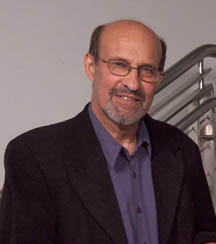 Edward M. Riseman合作论文数Manning College of Information & Computer Sciences, University of Massachusetts Amherst104
 Howard Schultz合作论文数University of Massachusetts29Bruce Draper合作论文数Colorado State University;Department of Computer Science26
 Zhigang Zhu合作论文数Department of Computer Science, The Grove School of Engineering, The City College of New York;CUNY Graduate Center;The CUNY Computational Vision and Convergence Laboratory26
 Robert T. Collins合作论文数School of Electrical Engineering and Computer Science, College of Engineering, The Pennsylvania State University;Department of Computer Science and Engineering, College of Engineering, The Pennsylvania State University25
 Christopher Jaynes合作论文数19E Riseman合作论文数16Frank Stolle合作论文数BAE Systems15
 Erik G. Learned-Miller合作论文数Manning College of Information & Computer Sciences, University of Massachusetts Amherst15Xiaoguang Wang合作论文数14
 Maurício Marengoni合作论文数Universidade Presbiteriana Mackenzie10
 Jerod Weinman合作论文数Grinnell College9
 Harpreet S Sawhney合作论文数Microsoft Mixed Reality8
 Roderic A. Grupen合作论文数University of Massachusetts,Amherst7
 Zhongfei (Mark) Zhang合作论文数Department of Computer Science, Watson School of Engineering and Applied Sciences, Binghamton University7Yong-Qing Cheng合作论文数7Paul E. Dickson合作论文数Hampshire College6
 Ramachandran Karuppiah合作论文数Department of Computer Science, University of Massachusetts6Charles Weems合作论文数Architecture and Language Implementation research group ;University of Massachusetts;Dept. of Computer Science6
 W. Richards Adrion (Rick)合作论文数Robert and Donna Manning College of Information and Computer Sciences, University of Massachusetts Amherst6F. Stolle合作论文数5edward m riseman合作论文数5Piyanuch Silapachote合作论文数University of Massachusetts Amherst5Paul A. Nagin合作论文数5
 J. Ross Beveridge合作论文数Computer Science Department, Colorado State University5John Brolio合作论文数5
 Marwan Mattar合作论文数Scale AI5E. M. Riseman合作论文数4Dan Xie (谢丹)合作论文数中国科学院宁波材料技术与工程研究所4Inigo Thomas, J.合作论文数4
 Manjunath Narayana合作论文数Department of Computer Science;University of Massachusetts Amherst;Department of Computer Science, University of Massachusetts Amherst4XG Wang合作论文数3richard weiss合作论文数3yongqing cheng合作论文数3Richard Weiss合作论文数3Phebe Sessions合作论文数3D. Slaymaker合作论文数3Y. Cheng合作论文数3
 Shlomo Zilberstein合作论文数Manning College of Information & Computer Sciences, University of Massachusetts Amherst3G Kutlu合作论文数2
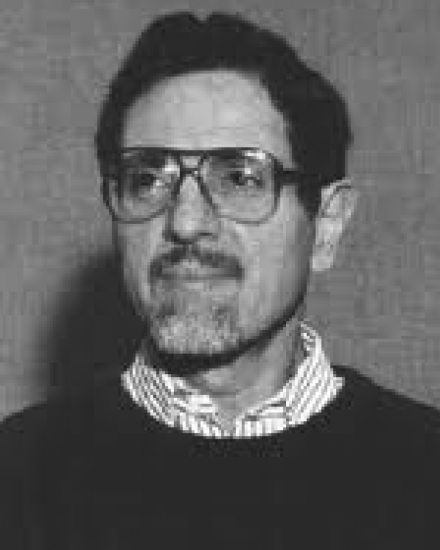 Joseph Horowitz合作论文数2
 Sai Ravela合作论文数The Center for Computational Science and Engineering, Schwarzman College of Computing, Massachusetts Institute of Technology;Windrisktech LLC;E5 Aerospace LLC2
 Dong-Min Woo合作论文数Department of Electronics Engineering, College of Engineering, Myongji University2Ralf Kohler合作论文数2Charles A. Kohl合作论文数2Rich Weiss合作论文数2K. Deepak Rajasekar合作论文数2
 Shichao Ou合作论文数2




