Objective: This study investigates long-term trends (1991–2024) in the population dynamics of 13 major livestock species in Türkiye by examining changes in species abundance, breed composition and biodiversity structure, with emphasis on the impacts of intensive breeding practices on local genetic resources.Material and Methods: Annual livestock statistics from the Turkish Statistical Institute (TUIK) were used to analyse species and breed trends. Biodiversity was assessed using ecological indices including Shannon, Simpson, Pielou’s Evenness, Berger–Parker and Margalef. Multivariate analyses (PCA and hierarchical clustering) and visualizations (heat maps, radar charts and dendrograms) were conducted in Python 3.11. Data were normalized to ensure comparability among species.Results: Commercial cattle and broiler chicken populations increased markedly, whereas native sheep and goat breeds declined. Biodiversity indices showed reductions in species richness and evenness after 2000. Bray–Curtis analyses revealed significant differences in species composition across five-year periods (F = 8.06, p
Objective: This study aims to document the phenotypic diversity, morphometric characteristics and conservation status of the Norduz sheep breed in order to provide essential data for future genetic conservation and breeding strategies.Material and Method: The study sample consisted of Norduz sheep raised in the Norduz region of Gürpınar, Van province. Field studies conducted in 2024 identified morphological traits suitable for purebred breeding and phenotypic traits were generated using standard forms. Furthermore, the current conservation status was assessed through observation and breeder information.Results: The data obtained demonstrate that Norduz sheep are exceptionally well adapted to regional conditions. However, observations and breeder data have shown a significant decline in the purebred Norduz sheep population in recent years. Despite this decline, concrete steps have been taken to prevent genetic erosion as part of the "In-Situ Conservation" program launched by the Ministry of Agriculture and Forestry.Conclusion: The Norduz sheep represents a valuable local genetic resource with high adaptive and productive potential. The documentation of its phenotypic and morphometric characteristics is crucial for informing future breeding and conservation programs.
Bu çalışma, Muş ili Malazgirt ilçesine bağlı köylerdeki ruminant hayvan varlıkları (sığır, koyun, keçi) ile mevcut mera kaynaklarını karşılaştırmalı olarak analiz etmeyi ve hayvansal üretim kapasitesiyle ne ölçüde örtüştüğünü belirlemeyi amaçlamaktadır. Ayrıca, kültür ırkı kullanımı ve dişi hayvan oranları gibi faktörler doğrultusunda üretim potansiyelinin etkinliği değerlendirilmiştir. Araştırma materyalini köylere ait hayvan varlığı ve mera alanı verileri oluşturmuş; analizlerde yapay zeka (YZ) destekli temel istatistik yöntemleri ve görselleştirme tekniklerir kullanılmıştır. Büyükbaş Hayvan Birimi (BBHB) dönüşüm katsayıları ile türler arası karşılaştırma yapılmış, Shannon-Wiener Çeşitlilik İndeksi ile tür çeşitliliği ölçülmüş, Z-skor normalizasyonu ile gelişim potansiyeli puanlanmış ve medyan tabanlı sınıflama yöntemiyle yerleşim birimleri kategorize edilmiştir. Bulgular, bazı köylerde mera kapasitesinin hayvan varlığıyla uyumsuz olduğunu, bazılarında bölgelerde ise kültür ırkı ve dişi oranlarının düşüklüğünün üretim kapasitesini sınırladığını göstermiştir. Sonuç olarak, mera-hayvan dengesi, kültür ırkı kullanımı ve yapay zekâ tabanlı analizlerin kırsal kalkınmada kritik rol oynayabileceği belirlenmiştir.
Objective: This study aimed to investigate the population structure and diversity of small ruminants, assess the effects of farm management strategies, evaluate reproductive performance, particularly the parturition and analyze the socio-economic context of agro pastoral systems in relation to income and feeding practices. Material and Methods: The study was carried out in three districts of Iraq's Erbil Province between March 15, 2020 and March 15, 2021. A standardized questionnaire consisting of 69 items was used to gather data from 160 small ruminant farms. SPSS version 24 was used for data analysis and a descriptive research design were used. Results: All breeders were male (100 %) and 67.5 % were over 40 years old. Primary education predominated (70 %). Most holdings operated under extensive systems (60.6 %), while 10.6 % practiced intensive management. Concrete waterers (56.3 %) and soil-based barns (93.1 %) were common, but only 50 % performed daily cleaning. Housing was built mainly of reinforced concrete (89.4 %) and just 54.4 % of farms registered animals with the Ministry. During summer, 72.5 % of farmers grazed flocks for 15 hours per day and 46.9 % practiced transhumance. Roughage was mostly sourced externally (63.1 %), with barley (88.8 %) as the primary concentrate feed. Rams were kept year-round (90 %) and 69.4 % of breeders produced one lamb per year. Periodic dipping was common (84.4 %), but veterinary support remained limited. Conclusion: Despite current limitations, improved and strategic farm management practices show potential to improve productivity and overall reproductive and economic outcomes on small ruminant farms in the region.
This study was carried out to determine some makro and micro mineral levels in the blood of a total of 26 Norduz goats (at the end of 1st lactation (n=10), at the end of 2nd lactation (n=8), at the end of 3rd lactation (n=8)) fed in pasture at Van Yuzuncu Yil University, Research and Application Farm (Van, Turkiye). For this purpose, blood samples were duly taken from goats that had completed the lactation period at the beginning of June. Some macro mineral’s levels (potassium (K), magnesium (Mg), calcium (Ca), sodium (Na)) and some micro mineral’s levels (cobalt (Co), copper (Cu), iron (Fe), nickel (Ni), manganese (Mn), selenium (Se), zinc (Zn), lead (Pb)) in samples of serum obtained from blood samples collected from goats were determined by inductively coupled plasma optical emission spectrometry (ICP-OES). Results were subjected to all statistical analysis using SPSS 24.0 version (IBM SPSS Inc, Chicago, USA) (SPSS, 2016). All statistically significant differences (P<0.05) were compared and ranked with Duncan's Multiple Range Test. Later, the relationships between minerals were revealed by Pearson Correlation Coefficient (P≤0.05). In addition, in this study, the ranking of macro and micro minerals and the rates of some of these minerals (Ca/Mn, Ca/Mg, Ca/Zn, Cu/Fe, Cu/Zn, Fe/Mn, Fe/Zn, K/Mg, K/Na, K/Mn) were also presented.
In this study, which aims to determine the levels of heavy metals, in the blood of 20 Anatolian buffaloes (Bubalus bubalis) aged 12-18 months, raised in Bitlis province, Güroymak District and fed with ready-made feed ad-libitum in pasture + pen conditions. 3 macro minerals and 14 micro minerals were found in the blood. The levels of a total of 17 minerals were measured by inductively coupled plasma optical emission spectrometry (ICP-OES). Among the macro minerals levels were Ca 43.896±1.216 ppm, Mg 11.381±0.325 ppm, K 133.175±13.959 ppm and micro minerals levels were Al 0.710±0.090 ppm, As 0.027±0.006 ppm, Ba 0.038±0.006 ppm, Co 0.006±0.002 ppm, Cr 0.055±0.010 ppm, Cu 0.218±0.033 ppm, Fe 0.83 2±0.051 ppm, Mn 0.024±0.003 ppm, Mo 0.009±0.002 ppm, Se 0.084±0.009 ppm, Sr 0.050±0.004 ppm, Ti 0.046±0.011 ppm, V 0.058 ±0.014 ppm and Zn 0.168±0.025 ppm. Relationships between minerals are revealed by Pearson Correlation Coefficient (p<0.05). In addition, in this study, the ranking of macro and micro minerals and the relative values of some of these minerals (As/Se, Ca/Mg, Ca/Mn, Ca/Zn, Cu/Fe, Cu/Zn, K/Mg, Mn/Fe, Mn/ Mg, Zn/Fe) were presented.
The aim of this study was to determine the some serum minerals and their interactions between in 2, 3 and 4 years-old healthy Norduz (n=45) and Hair (n=31) goats raised in semi-intensive conditions. Mineral levels were determined with Atomic absorption spectroscopy (AAS) in ppm level. Results were calculated as Fe 1.578±0.088 and 1.379±0.095 mmol/L, Cu 1.300±0.067 and 1.303±0.080 mg/L, Zn 0.972±0.029 and 0.937±0.029 mg/L, K 4.574±0.091 and 2.102±0.074 mmol/L, Mg 2.089±0.057 and 4.670±0.098 mmol/L, Mn 2.163±0.152 and 2.215±0.198 mg/L, Pb 0.078±0.005 and 0.087±0.006 mg/L for Norduz and Hair goats, respectively. While the differences in the mineral levels of hair goats were not significant, significant differences has been found between the age groups in terms of K, F and Pb in Norduz goats. In addition, while there was no statistically significant difference between 3-year-old goats, statistically significant differences hs been found for Fe and 2-year-old goats K and Mg in 4-year-old goats. Moreover, with respect to correlation coefficients, positive correlations were obtained both between K-Mg at Norduz goats and between Fe-Cu, Fe-K, Fe-Mg, K-Mg at Hair goats in all years-old groups.
The objectivity of this study was to investigate some blood minerals and parameters in Honamli goats reared under semi-intensive conditions. 90 goats (2-4 ages) in different three herds kept under similar manage mental conditions were chosen as research materials in Teke Border of Antalya Province. Serum Ca 6.786±0.206 mg/dL, P 4.094±0.173 mg/dL, Cl 111.105±0.582 mmol/L, K 4.519±0.066 mmol/L, Mg 2.161±0.05 mg/dL, Na 148.047±0.508 mmol/L, Fe 110.706±2.510 μg/dL, UIBC 155.025±4.333 μg/dL and Tp 7.055±0.120 g/dL were determined by Roche Diagnostics, Cobas 8000 modular analyser series, immunoassay. After then, total iron- binding capacity (TIBC), transferrin (Tf), transferrin saturation (TSAT) and Ca++ levels were calculated from each other using different biochemical formulas. Ratios between the some minerals were calculated and presented in the text. Also, very high significant differences (P
This study aimed to evaluate the readability of electronic and visual ear tags in hair goat kids managed under extensive conditions. A total of 74 kids were identified with electronic and visual ear tags at birth. Readability of electronic and visual ear tags was 97.3% and 94.6% in static conditions at the end of 7 months, and 96.8% and 93.5% at the end of the first year after tagging, respectively. No breakages and electronic failures occurred during this study. Infected ear rate in electronic and visual ear tags was 45.9% and 17.6%, respectively. Under the conditions of this study, electronic and visual ear tags did not fulfill the International Committee for Animal Recording (ICAR) requirements (readability >98%) for an official animal identification device at the end of the first year after tagging. Therefore, low animal traceability with electronic and visual ear tags was determined by this study.
In this research, Kilis and Honamli goats are used, which are specific local genetic resources of Turkey. The herds were independent, but they had similar care and nutrition circumstances. From each breed 30 samples were taken, in all 120 samples were collected. Erythrocyte, whole blood and serum samples were used for haemoglobin (Hb), glutathione (GSH) and transferrin (Tf), ceruloplasmin (Cp) analysis, respectively. In the analysis of these samples, Hb and Tf bands were determined by electrophoresis. However, Cp and GSH levels were analyzed by the spectrophotometer. 3 Hb phenotypes (AA, BB, AB) and 6 Tf phenotypes (AA, AB, AC, BB, BC, CC) were determined in this study. In addition, both the observed and the expected values of polymorphic characteristic for 2 characters were presented according to the Hardy- Weinberg Equilibrium (HWE). Cp levels were detected as 0.822 +/- 0.055 mg/dl and 1.793 +/- 0.109 mg/dl in Kilis and Honamli herds, respectively. Also GSH levels were detected as, 42,486 +/- 1,034 mg/dl and 33.515 +/- 0.345 mg/dl in these breeds, respectively. On the other hand, the high and low GSH levels (GSHH and GSHh) of herds were presented.
The objective of this study was to evaluate the effectiveness of electronic and visual ear tags in animal traceability, and to investigate the effect of placement site on ear-tag retention in Akkaraman lambs under rural conditions. A total of 380 lambs were identified with electronic and visual ear tags. Electronic and visual ear tags displayed 98.9 and 98.7% readability at the end of 7 months, and 98.0 and 98.0% readability at the end of the first year after tagging, respectively. Regarding the placement site, it was observed that there was more loss in ear tags placed on the mid-point part of the ear than the first-quarter part from the head side, but the difference was not statistically significant (P > 0 : 05). Breakages and electronic failures were not recorded during this study. In conclusion, electronic and visual ear tags demonstrated similar on-farm efficiency for the identification of Akkaraman lambs and fulfilled the minimum efficiency of 98% required by the International Committee for Animal Recording (ICAR) for an official animal identification device at the end of the first year after tagging. Based on the findings of the study, placement of the ear tag in a cranial position and near the base of the ear would be advised.
 Suna Akkol合作论文数Faculty of Agriculture, Yuzuncu Yil University5
 Ferda Karakus .合作论文数3
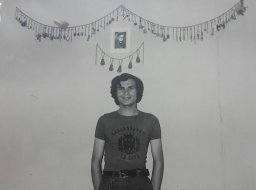 Nihat Mert合作论文数University of Yuzuncu Yil Department of Biochemistry, Faculty of Veterinary Medicine 65080 Van Turkey2
 Nesrullah Aysin合作论文数1Adem Duzgun合作论文数1
 Mehmet Nur Ciftsuren合作论文数1
 İnci Söğütlü合作论文数Republic of Turkey Ministry of Agriculture and Forestry1
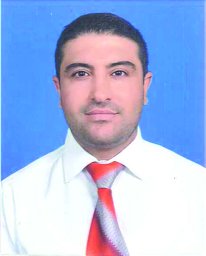 Yıldırım Ercan ÇALIŞ合作论文数1
 Kıvanc Irak合作论文数Fac Vet Med, Siirt Univ1
 Murat Karakus合作论文数1
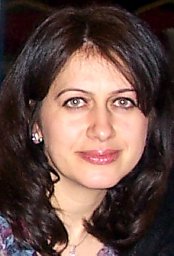 Handan Mert合作论文数University of Yuzuncu Yil Department of Biochemistry, Faculty of Veterinary Medicine 65080 Van Turkey1
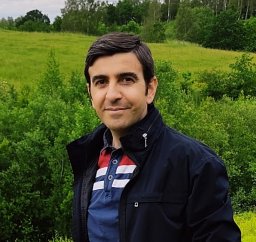 Mehmet Karakus合作论文数Pamukkale University;, Faculty of Arts and Sciences;Department of Chemistry;Faculty of Arts and Sciences, Pamukkale University1




