IntroductionScientific research drives national progress and innovation, but abrupt federal funding disruptions can destabilize scientific training at critical career stages and push talented researchers out of the workforce. Actions by the Trump administration in early 2025 sent shockwaves across academic research in the United States (U.S.). Federal science budgets were significantly reduced, hundreds of research grants were abruptly frozen or terminated, and politically appointed agency leaders overrode peer-reviewed funding decisions.MethodsWe conducted pilot, rapid-response surveys to capture quotes, stories, and quantitative data in order to understand how these seismic policy shifts impacted early career researchers at American universities.ResultsOur results showed that the majority of respondents were PhD students and early career researchers at varying stages of training, across a range of institutions and disciplines, including different types of sciences, with the largest percentage of respondents from the life sciences. Respondents described threats to the continuity of their research and careers due to funding cuts at major federal science agencies including the National Institutes of Health (NIH) and the National Science Foundation (NSF), and reported concerns about long-term job prospects and broader systemic issues in academia. Many respondents also indicated that these disruptions led them to consider leaving research altogether or pursuing scientific careers outside the U.S. Reported concerns spanned the undergraduate, graduate, and postdoctoral researcher levels. While universities provided some resources of support, respondents emphasized the need for Congress to protect, stabilize, and restore science funding.DiscussionRobust and sustained funding support for early career researchers is imperative for developing a strong science, technology, engineering, and math (STEM) workforce and maintaining American leadership in research and innovation. Overall, this pilot study provides early evidence that reductions in federal science funding may disrupt training pathways, erode confidence in research careers, and contribute to lasting losses from the future research workforce in the United States.
The recent movement underscoring the importance of career taxonomies has helped usher in a new era of transparency in PhD career outcomes. The convergence of discipline-specific organizational movements, interdisciplinary collaborations, and federal initiatives has helped to increase PhD career outcomes tracking and reporting. Transparent and publicly available PhD career outcomes are being used by institutions to attract top applicants, as prospective graduate students are factoring in these outcomes when deciding on the program and institution in which to enroll for their PhD studies. Given the increasing trend to track PhD career outcomes, the number of institutional efforts and supporting offices for these studies have increased, as has the variety of methods being used to classify and report/visualize outcomes. This report comprehensively synthesizes existing PhD career taxonomy tools, resources, and visualization options to help catalyze and empower institutions to develop and publish their own PhD career outcomes. Similar fields between taxonomies were mapped to create a new crosswalk tool, thereby serving as an empirical review of the career outcome tracking systems available. Moreover, this work spotlights organizations, consortia, and funding agencies that are steering policy changes toward greater transparency in PhD career outcomes reporting. Such transparency not only attracts top talent to universities, but also propels research progress and technological innovation forward. Therefore, university administrators must be well-versed in government policies that may impact their PhD students. Engaging with government relations offices and establishing dialogues with policymakers are crucial steps toward staying informed about relevant legislation and advocating for more resources. For instance, much of the recent science legislation in the U.S. Congress, including the Creating Helpful Incentives to Produce Semiconductors (CHIPS) and Science Act, significantly impacts federal agency programs influencing universities. To ensure sustained development, it is imperative to support initiatives that enhance transparency, both in terms of legislation and resources. Increased funding for programs supporting transparency will aid legislatures and institutions in staying informed and responsive. Many efforts presented in this publication have received support from federal and state governments or philantrophic sources, underscoring the need for multifaceted support to initiate and perpetuate this level of systemic change.
A Congressional Science & Technology policy fellow outlines some options available for responding to the blatant attacks on science and the scientific workforce in the US.
Academic research in the U.S. is managed through and driven by principal investigators overseeing independent research programs, often with a goal of training researchers in the process. The theoretical path to becoming a principal research investigator consists of developing research skills during a PhD, followed by “apprentice”-style research experiences as a postdoctoral researcher, ultimately leading to independent leadership of research projects (and teams) as a faculty member. Early career researchers looking to climb this career ladder therefore need to develop research “independence”, or independence of thought. Workshops conducted with graduate students and postdoctoral researchers in biomedical sciences at multiple universities revealed barriers to research independence. Through these workshops, early career researchers identified solutions to achieving research independence, which revolve around intellectual contributions, training and mentorship, career development and progression, compensation and benefits, work-life balance and mental health, and finally immigration and visas. We propose that systemic changes in these areas will lead to the development of a healthy and productive research enterprise that can build future leaders in the field through developing independent researchers who can advance scientific research.
Adriana Bankston’s year-long policy fellowship allows her to fight for science and scientists at a crucial time. Adriana Bankston’s year-long policy fellowship allows her to fight for science and scientists at a crucial time.
Scientific research drives national progress and innovation, and must be protected at all costs. Actions from the Trump administration in early 2025 sent shockwaves across academic research. Federal science budgets were slashed, hundreds of research grants were abruptly frozen or terminated, and politically appointed agency heads overrode peer-reviewed grant decisions. We conducted rapid-response surveys to capture quotes, stories, and data to understand how these seismic shifts were being felt by early career researchers. The majority of survey respondents were PhD students, and early career trainees in varying years of training at a variety of institutions, mainly in the life sciences. Their future in research, funded by major science agencies including NIH, was threatened by funding cuts with varying impacts to their professional endeavors. Survey respondents highlighted concerns with long-term research job prospects and broader systemic issues in academia, leading them to consider leaving the field altogether and/or pursue science in another country. Their opinions highlighted concerns at the undergraduate, graduate, and postdoctoral levels. While universities provided some resources, trainees called upon Congress to protect, stabilize, and restore science funding. They also undertook a number of advocacy actions across the nation. The fight is far from over. Continued support for early career researchers and their careers in research is imperative to continue both in the current environment and into the future, in order to develop a strong workforce and ensure U.S. global competitiveness in science and technology fields.
Making research evidence accessible and relevant to policymakers is one way that the scientific enterprise confers direct societal benefits. With global norms increasingly promoting these types of broader impacts, new initiatives to do so, including training researchers to engage in policy, have flourished. But what should this training entail, and how would we know whether it has been effective? A review of academic and professional literature in fields such as science communication and public affairs suggests that curricula aiming to enhance the capacity of scientists and engineers to engage in policy should broadly cover effective communication skills and knowledge of public policy processes. This finding largely aligns with the learning outcomes sought by leaders of science policy training programs in the Commonwealth of Virginia, a state with among the highest number and diversity of these types of initiatives in the U.S. Training efforts could benefit from evaluation models and measures from academic literature that speak to the same types of educational outcomes. However, the lack of consistent theoretical foundations and constructs across this highly multidisciplinary scholarship reduces their utility. A common framework describing shared conceptual terms and relationships is needed to further establish the study and practice of these interventions at the science-policy interface.
Scientists must play a significant role in enacting societal change by educating and advising policymakers on relevant policy topics. To fill the identified gap in science policy and advocacy training, during the pandemic years, we piloted and offered the online Science Policy & Advocacy for STEM Scientists Certificate Program starting in 2020. Over three cohorts, the program was focused on practical skills and concepts, networking, and career development opportunities, and providing pathways for PhD students and postdoctoral researchers to learn about and in many cases fully transition into science policy and advocacy roles and careers. Program participants were exposed to many important aspects of what it means to be involved in science policy and advocacy, and many chose to enter the field through subsequent opportunities facilitated by the program training. We sought to reduce a number of barriers to program participation, and additionally provided resources for others to develop similar programs at their university. We believe this training model is innovative and can be recapitulated, and sincerely hope to see more universities create similar programs in the US and internationally in order to serve trainees interested in science policy and advocacy and facilitate their building impactful careers in the field for years to come.
This talk was given at the Atlanta Conference on Science and Innovation Policy on May 25, 2023, and covered the Bankston Lab work and recent publication with the STEM Advocacy Institute, in addition to other opportunities for science policy engagement.
Diverse pathways into the science policy workforce are necessary for providing opportunities to students at all levels to engage in the field and to bring their talents to the future of policymaking. Both classroom and experiential training opportunities are essential to achieving this goal. In this publication, we assessed the current landscape of science policy training for undergraduate students in the United States by conducting a keyword search for experiential career training opportunities at varying levels of education. We also reviewed existing science policy publications for undergraduate opportunities, an area that has been largely unexplored to date. From these assessments, we found that most experiential training opportunities are geared towards Science, Technology, Engineering and Math (STEM) students in PhDs program or recent PhD graduates, followed by Masters-level students or graduates, and fewer opportunities exist for undergraduate students and Bachelor-degree holders. We then conducted focus group-style interviews with early career scientists involved in science policy, including undergraduate students, to discuss their experiences and ideas for change. Based on our findings, we recommend that universities, organizations, and funding agencies expand upon their existing resources for curriculum, academic advising, training opportunities, and funding, and dedicate resources toward raising awareness and creating additional opportunities in science policy at the undergraduate level. These steps can help create pathways for undergraduate students to enter and contribute to the science policy workforce.
This talk was presented during the Career Exploration Day hosted by Stowers Crossroads at the Stowers Institute for Medical Research, and it covered my career path in science policy, how the system works, ways to engage and a number of resources.
This presentation was given to the course "Science Diplomacy and the World Health" (MICB 705) at Georgetown University on January 24, 2022. The class is part of the Biomedical Science Policy and Advocacy (BSPA) Masters program, housed in the Georgetown University Biomedical Graduate Education portfolio.
This presentation was given during a Seminar for the Office of Graduate and Postdoctoral Affairs (OGPA) and Postdoctoral Association (PDA) at The University of Chicago Biological Sciences Division (BSD) on January 21, 2022. The talk covered opportunities for early career scholars to publish in JSPG, and hone their research and writing skills in science policy through a number of professional development events.
This talk was given at the Virginia Science Policy Bootcamp (virtual) on March 4, 2022. This is an annual statewide event originated by graduate students at the University of Virginia, meant to introduce students across the Commonwealth to science policy and how it can impact their research and future careers.
This talk was given NIH Science Policy Discussion Group (SPDG) on February 2, 2022, focused on key components for writing a effective policy memo to inspire action.
This talk was given during the 1st meeting of the UNESCO Working Group on Open Science Policies and Policy Instruments, on 23 May 2022 (virtual). It covered the joint call for papers and competition on Open Science Policies as an Accelerator for Achieving the Sustainable Development Goals, for a special topics issue of JSPG co-sponsored by UNESCO and the UN Major Group for Children and Youth, with Global Young Academy Working Group on Open Science as an outreach partner.
This talk was given for the 'Science-Policy Interface' course organized by Hub Ciencia Emprende on April 18, 2022. This is the first significant online open course for ECRs in Latin America and the Caribbean (LAC) region on science–policy interfaces.
This talk was given at the virtual event on Developing the Next Generation of Civic Scientists: Rice Science Policy Symposium on April 8, 2022.
This talk was given at the Johns Hopkins University PhD EXCELS graduate level course on April 19, 2022. This is a pilot first year course and inaugural cohort of the PHutures program, in collaboration with the Cell, Molecular, Developmental Biology and Biophysics (CMDB) Department.
This presentation was given to the Neuroscience Seminar, Professional Development (PHPH 742) at the University of South Carolina (USC) on March 18, 2022, covering my career path in science policy and opportunities with JSPG.
 Gary Steven McDowell合作论文数Addenbrooke’s Hospital, University of Cambridge15
 Harinder Singh合作论文数9
 Caroline A Niziolek合作论文数Department of Otolaryngology, University of California San Francisco5
 Stephanie M. Davis合作论文数4
 McKenzie Carlisle合作论文数3
 Rodoniki Athanasiadou合作论文数Center for Genomics and Systems Biology, New York University3Ryan Wheeler合作论文数2Fátima Sancheznieto合作论文数2Deepti Ramadoss合作论文数2
 Heather Krasna合作论文数Mailman School of Public Health, Columbia University2Christopher L Pickett合作论文数Rescuing Biomed Res, Washington, DC USA2
 Vincent Boudreau合作论文数UCSF-UC Berkeley2
 Rebekah L Layton合作论文数Dept Pharmacol, Off Grad Educ, Univ North Carolina Chapel Hill2Sonia Hall合作论文数1C PICKETT合作论文数1Dan Lurie合作论文数1
 Catarina C Boffino合作论文数1Melanie Sinche合作论文数1
 Ali Khatibi合作论文数1Rosie K Dutt合作论文数1C. Abigail Stayart合作论文数1
 Julio Alejandro Yanes合作论文数NIH, Natl Ctr Complementary & Integrat Hlth1
 Mengxia Gao合作论文数State Key Laboratory of Brain and Cognitive Sciences, The University of Hong Kong1
 Chiara Caldinelli合作论文数Inst Neurosci, Trinity Coll Dublin1Juan Pablo Ruiz合作论文数1
 Feyza Nur Arslan合作论文数IST Austria1
 Yi Hao合作论文数1
 Xinqi Zhou合作论文数Institute of Brain and Psychological Sciences, Sichuan Normal University1
 Amelie Haugg合作论文数Department of Child and Adolescent Psychiatry and Psychotherapy, University Hospital of Psychiatry1
 David M.A. Mehler合作论文数Institute for Translational Psychiatry.1
 Karolina Finc合作论文数Nicolaus Copernicus Univ, Ctr Modern Interdisciplinary Technol, Torun, Poland1
 Ricarda Braukmann合作论文数Data Archiving & Networked Serv1
 Kaori L Ito合作论文数Div Occupat Sci & Occupat Therapy, Univ Southern Calif1
 Katherine L. Bottenhorn合作论文数Keck School of Medicine, University of Southern California1
 Taylor Salo合作论文数Department of Psychiatry, University of Pennsylvania1
 Michael Bartlett合作论文数Scion New Zealand Forest Res Inst Ltd1Sridar Narayanan合作论文数Department of Neurology & Neurosurgery, Faculty of Medicine and Health Sciences, McGill University1
 Claire Godard-Sebillotte合作论文数1
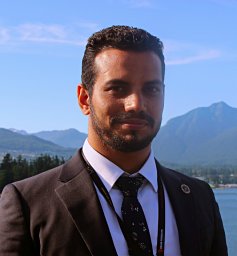 Meena M. Makary合作论文数Syst. & Biomed. Eng., Cairo Univ.;c;Syst. & Biomed. Eng., Cairo Univ.1
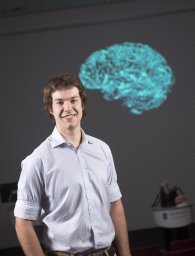 Phillip G. D. Ward合作论文数1
 Courtney C Walton合作论文数Brain and Mind Research Institute, University of Sydney1
 Sarabipour Sarvenaz合作论文数Inst Computat Med, Johns Hopkins Univ1
 Hernandez Leanna M合作论文数Ahmanson Lovelace Brain Mapping Ctr, Univ Calif Los Angeles1Castro-Faix Moraima合作论文数1
 Amreen Mughal合作论文数Department of Pharmacology and Toxicology, National Institute of Pharmaceutical Education and Research1
 Jorgensen Christian合作论文数†Department of Chemistry, King's College London1
 Sofie Valk合作论文数Max Planck Institute for Human Cognitive and Brain Sciences;Forschungszentrum Jülich1
 Ayaka Ando合作论文数1Gurel Pinar S合作论文数1




