The rise of misinformation underscores the need for scalable and reliable fact-checking solutions. Large language models (LLMs) hold promise in automating fact verification, yet their effectiveness across global contexts remains uncertain. We systematically evaluate nine established LLMs across multiple categories (open/closed-source, multiple sizes, diverse architectures, reasoning-based) using 5,000 claims previously assessed by 174 professional fact-checking organizations across 47 languages. Our methodology tests model generalizability on claims postdating training cutoffs and four prompting strategies mirroring both citizen and professional fact-checker interactions, with over 240,000 human annotations as ground truth. Findings reveal a concerning pattern resembling the Dunning-Kruger effect: smaller, accessible models show high confidence despite lower accuracy, while larger models demonstrate higher accuracy but lower confidence. This risks systemic bias in information verification, as resource-constrained organizations typically use smaller models. Performance gaps are most pronounced for non-English languages and claims originating from the Global South, threatening to widen existing information inequalities. These results establish a multilingual benchmark for future research and provide an evidence base for policy aimed at ensuring equitable access to trustworthy, AI-assisted fact-checking.
Large language models (LLMs) demonstrate strong Helpfulness, Harmlessness, and Honesty (3H) alignment in English-centric settings, but these gains transfer poorly to low-resource languages due to cultural mismatches. Existing multilingual 3H benchmarks rely predominantly on automated translation or LLM based synthesis, propagating source-language biases while sacrificing local relevance. To address this gap, we introduce Pak3H1, the first human-validated, culturally contextualized Urdu benchmark suite for 3H alignment, comprising PakAlpaca (helpfulness), PakBeaverTails (harmlessness), and PakTruthfulQA (honesty). Our multi-stage pipeline integrates manual cultural adaptation and dictionary-guided post editing to prioritize native speaker judgment, ensuring both semantic fidelity and contextual authenticity. Zero-shot evaluations across multiple open and proprietary LLM architectures reveal systematic cross-lingual alignment gaps: helpfulness win rates decline under localized contexts, harmlessness guardrails break down against regional safety risks, and composite honesty metrics degrade substantially due to localized factual constraints. These findings expose structural limitations in current alignment approaches, underscoring the necessity of human-guided localization for equitable multilingual evaluation.
Active learning (AL) optimizes data labeling efficiency by selecting the most informative instances for annotation. A key component in this procedure is an acquisition function that guides the selection process and identifies the suitable instances for labeling from the unlabeled pool. However, these acquisition methods suffer from high computational costs with large unlabeled data pools, posing a roadblock to their applicability on large datasets. To address this challenge and bridge this gap, we introduce a novel plug-and-play unlabeled data pruning strategy, ActivePrune, which leverages language models to prune the unlabeled pool. ActivePrune implements a two-stage pruning process: an initial fast evaluation using perplexity scores from an n-gram language model, followed by a high-quality selection using metrics for data quality computed through a quantized LLM. Additionally, to enhance the diversity in the unlabeled pool, we propose a novel perplexity reweighting method that systematically brings forward underrepresented instances for selection in subsequent labeling iterations. Experiments on translation, sentiment analysis, topic classification, and summarization tasks on four diverse datasets and four active learning strategies demonstrate that ActivePrune outperforms existing data pruning methods. Finally, we compare the selection quality ↔ efficiency tradeoff of the data pruning methods and demonstrate that ActivePrune is computationally more efficient than other LLM score-based pruning methods, and provides up to 74 end-to-end time required for active learning.
LLMs are increasingly being integrated into clinical workflows, yet they often lack clinical empathy, an essential aspect of effective doctor-patient communication. Existing NLP frameworks focus on reactively labeling empathy in doctors' responses but offer limited support for anticipatory modeling of empathy needs, especially in general health queries. We introduce the Empathy Applicability Framework (EAF), a theory-driven approach that classifies patient queries in terms of the applicability of emotional reactions and interpretations, based on clinical, contextual, and linguistic cues. We release a benchmark of real patient queries, dual-annotated by Humans and GPT-4o. In the subset with human consensus, we also observe substantial human-GPT alignment. To validate EAF, we train classifiers on human-labeled and GPT-only annotations to predict empathy applicability, achieving strong performance and outperforming the heuristic and zero-shot LLM baselines. Error analysis highlights persistent challenges: implicit distress, clinical-severity ambiguity, and contextual hardship, underscoring the need for multi-annotator modeling, clinician-in-the-loop calibration, and culturally diverse annotation. EAF provides a framework for identifying empathy needs before response generation, establishes a benchmark for anticipatory empathy modeling, and enables supporting empathetic communication in asynchronous healthcare.
This study examines how controlling misinformation on a social media platform in Pakistan affects users’ exposure to both accurate and false information. It combines an intervention to disseminate official information about the COVID-19 pandemic across the platform with a randomized experiment that measures the impact of fully controlling access to pandemic-related misinformation. The treatments rely on a higher-intensity, ex ante approach to moderating misinformation on the platform relative to the control, which relies on a typical ex post approach to moderation. Fully controlling misinformation, as in the treatments, reduces the number of daily users by 19%, indicating a distaste for moderation. Furthermore, the treatments reduce exposure to official information by 29% more than they reduce exposure to misinformation. A conceptual framework posits that these findings can be explained by the fact that, in this setting, official information is more trusted, and thus is more widely disseminated, relative to misinformation.
The growing prevalence of text reuse and plagiarism in various fields has led to an urgent need for reliable computational methods for detection. However, current commercial plagiarism detection systems are ineffective in identifying paraphrased cases of text reuse, highlighting the need for improvement. Previous research on paraphrased text reuse and plagiarism detection has mainly focused on English, European, Persian, and Arabic languages, and very few studies have been reported on the under-resourced Urdu language. This study aims to overcome this research gap by using a Deep Neural Network (DNN) based architecture and pre-trained Large Language Models (LLMs) for the task of Urdu paraphrased text reuse and plagiarism detection. The architecture called Deep Text Reuse and Paraphrased Plagiarism Detection (D-TRaPPD), relies on LLMs for input and utilizes CNN and LSTM to extract essential textual features. Moreover, we have proposed and evaluated two D-TRaPPD variants, Word Embeddings-D-TRaPPD (WE-D-TRaPPD) and Sentence Embeddings-D-TRaPPD (SE-D-TRaPPD), using two gold standard document-level corpora containing both real and simulated cases of Urdu paraphrased text reuse and plagiarism. The results demonstrate the effectiveness of the D-TRaPPD architecture, with SE-D-TRaPPD achieving the highest F_1 scores of 91.77 for real cases and 95.15 for simulated cases. Furthermore, the results highlight the superiority of our approaches over the state-of-the-art methods for Urdu paraphrased text reuse and plagiarism detection.
This paper presents a novel methodology for generating synthetic Preference Optimization (PO) datasets using multi-model workflows. We evaluate the effectiveness and potential of these workflows in automating and enhancing the dataset generation process. PO dataset generation requires two modules: (1) response evaluation, and (2) response generation. In the response evaluation module, the responses from Large Language Models (LLMs) are evaluated and ranked - a task typically carried out by human annotators that we automate using LLMs. We assess the response evaluation module in a 2 step process. In step 1, we assess LLMs as evaluators using three distinct prompting strategies. In step 2, we apply the winning prompting strategy to compare the performance of LLM-as-a-Judge, LLMs-as-a-Jury, and LLM Debate. Our evaluation shows that GPT-4o-as-a-Judge is more consistent across all datasets. For the response generation module, we use the identified LLM evaluator configuration and compare different configurations of the LLM Feedback Loop. We use the win rate to determine the best multi-model configuration for generation. Experimenting with various configurations, we find that the LLM Feedback Loop, with Llama as the generator and Gemma as the reviewer, achieves a notable 71.8% and 73.8% win rate over single-model Llama and Gemma, respectively. After identifying the best configurations for both modules, we generate our PO datasets using the above pipeline.
This paper presents a comprehensive evaluation of Urdu Automatic Speech Recognition (ASR) models. We analyze the performance of three ASR model families: Whisper, MMS, and Seamless-M4T using Word Error Rate (WER), along with a detailed examination of the most frequent wrong words and error types including insertions, deletions, and substitutions. Our analysis is conducted using two types of datasets, read speech and conversational speech. Notably, we present the first conversational speech dataset designed for benchmarking Urdu ASR models. We find that seamless-large outperforms other ASR models on the read speech dataset, while whisper-large performs best on the conversational speech dataset. Furthermore, this evaluation highlights the complexities of assessing ASR models for low-resource languages like Urdu using quantitative metrics alone and emphasizes the need for a robust Urdu text normalization system. Our findings contribute valuable insights for developing robust ASR systems for low-resource languages like Urdu.
The aim of conversational speech processing is to analyze human conversations in natural settings. It finds numerous applications in personality traits identification, speech therapy, speaker identification and verification, speech emotion detection, and speaker diarization. However, large-scale annotated datasets required for feature extraction and conversational model training only exist for a handful of languages (e.g. English, Mandarin, and French) as the gathering, cleaning, and annotation of such datasets is tedious, time-consuming, and expensive. We propose two scalable, language-agnostic algorithms for automatically generating multi-speaker, variable-length, spontaneous conversations. These algorithms synthesize conversations using existing non-conversational speech datasets. We also contribute the resulting datasets (283 hours, 50 speakers). As a comparison, we also gathered the first spontaneous conversational dataset for Urdu (24 hours, 212 speakers) from public talk shows. Using speaker diarization as an example, we evaluate our datasets and report the first baseline diarization error rates (DER) for Urdu (25% for synthetic dataset-based models, and 29% for natural conversations). Our conversational speech generation technique allows training speaker diarization pipelines without the need for preparing huge conversational repositories.
Plagiarism, the unauthorized reuse of text, fueled by the ease of access to online content, is a pressing concern for academia, publishers, and authors. Paraphrasing, a common tactic in textual plagiarism, compounds the problem further. The automatic detection of paraphrased plagiarism in text documents is a fundamental task in Natural Language Processing (NLP), crucial for maintaining academic integrity and authenticity. This article presents an extensive investigation into Urdu sentential paraphrased plagiarism detection leveraging advanced Deep Neural Networks (DNNs) and Large Language Models (LLMs). The study builds upon the foundational work and proposes modifications to the Deep Text Reuse and Paraphrased Plagiarism Detection (D-TRaPPD) architecture to incorporate state-of-the-art pre-trained LLMs. The proposed approach, SELLM-D-TRaPPD, integrates various language models, including contextualized sentence embedding-based LLMs, language-agnostic and multilingual transformer-based LLMs, and multilingual knowledge-distilled transformer-based LLMs. We evaluated these models against three benchmark Urdu sentential paraphrase corpora-Urdu Sentential Paraphrase Corpus, Urdu Short Text Reuse Corpus, and Semi-automatic Urdu Sentential Paraphrase Corpus. The results demonstrate the effectiveness of SELLM-D-TRaPPD with LLMs, achieving F1 scores of 92.09%, 96.70%, and 98.23%, respectively. A comparative analysis with existing state-of-the-art methods shows significant performance improvements, establishing SELLM-D-TRaPPD as the new leading approach for Urdu sentential paraphrased plagiarism detection. These findings highlight the value of leveraging advanced neural network architectures and pre-trained LLMs in improving the accuracy and effectiveness of paraphrased plagiarism detection in Urdu, addressing a crucial gap in Urdu NLP research.
While recent advances in speech processing have led to substantial performance improvements across diverse tasks, they often demand significantly higher computational costs and resources. To address this efficiency challenge, data selection has emerged as a crucial strategy. This survey provides a comprehensive overview and introduces a unifying taxonomy for data selection methods in speech processing, structured along three key dimensions: selection granularity (sample-level vs. segment-level), selection process (static, dynamic, or active learning), and selection criteria (uncertainty, diversity, or hybrid approaches). Through systematic analysis across major speech tasks, including automatic speech recognition, text-to-speech synthesis, audio anti-spoofing, speaker recognition, and emotion recognition, we evaluate the effectiveness and applicability of diverse data selection strategies. Our analysis reveals that targeted data selection not only alleviates computational burdens but often enhances model robustness and performance by strategically filtering redundant, noisy, or detrimental training examples. By synthesizing insights scattered across disparate speech domains, we identify common principles, highlight task-specific challenges, and reveal emerging research trends. Finally, we outline promising future research directions in data selection for efficient speech processing.
In Low- and Middle-Income Countries (LMICs), poor health outcomes come from a high burden of disease, a shortage of healthcare professionals, and inefficient health information exchange leading to substantial economic losses. In this paper, we highlight critical gaps in healthcare delivery in Pakistan and propose solutions to improve patient outcomes in resource-constrained environments. We have built Darcheeni, an AI-driven healthcare framework that leverages artificial intelligence to assist and supplement physicians, streamline healthcare processes, and prioritize patient-centered care. Darcheeni analyzes doctor-patient interactions in real-time, integrates lab and imaging data, generates and distributes care plans customized to the patient’s needs, and sends them directly to patients’ smartphones. We also discuss the challenges and limitations associated with sustainable AI integration by centering our learnings from the pilot deployment of Darcheeni. By focusing on Pakistan as a case study, this work offers practical insights and strategies for deploying AI-driven technologies sustainably in similar resource-constrained environments and contributes to the broader discourse on the role of AI in global health improvement.
This paper presents a systematic analysis of biases in open-source Large Language Models (LLMs), across gender, religion, and race. Our study evaluates bias in smaller-scale Llama and Gemma models using the SALT (Social Appropriateness in LLM-Generated Text) dataset, which incorporates five distinct bias triggers: General Debate, Positioned Debate, Career Advice, Problem Solving, and CV Generation. To quantify bias, we measure win rates in General Debate and the assignment of negative roles in Positioned Debate. For real-world use cases, such as Career Advice, Problem Solving, and CV Generation, we anonymize the outputs to remove explicit demographic identifiers and use DeepSeek-R1 as an automated evaluator. We also address inherent biases in LLM-based evaluation, including evaluation bias, positional bias, and length bias, and validate our results through human evaluations. Our findings reveal consistent polarization across models, with certain demographic groups receiving systematically favorable or unfavorable treatment. By introducing SALT, we provide a comprehensive benchmark for bias analysis and underscore the need for robust bias mitigation strategies in the development of equitable AI systems.
Automatic paraphrase detection is the task of measuring the semantic overlap between two given texts. A major hurdle in the development and evaluation of paraphrase detection approaches, particularly for South Asian languages like Urdu, is the inadequacy of standard evaluation resources. The very few available paraphrased corpora for these languages are manually created. As a result, they are constrained to smaller sizes and are not very feasible to evaluate mainstream data-driven and deep neural networks (DNNs)-based approaches. Consequently, there is a need to develop semi-or fully automated corpus generation approaches for the resource-scarce languages. There is currently no semi-or fully automatically generated sentence-level Urdu paraphrase corpus. Moreover, no study is available to localize and compare approaches for Urdu paraphrase detection that focus on various mainstream deep neural architectures and pretrained language models.This research study addresses this problem by presenting a semi-automatic pipeline for generating paraphrased corpora for Urdu. It also presents a corpus that is generated using the proposed approach. This corpus contains 3147 semi-automatically extracted Urdu sentence pairs that are manually tagged as paraphrased (854) and non-paraphrased (2293). Finally, this paper proposes two novel approaches based on DNNs for the task of paraphrase detection in Urdu text. These are Word Embeddings n-gram Overlap (henceforth called WENGO), and a modified approach, Deep Text Reuse and Paraphrase Plagiarism Detection (henceforth called D-TRAPPD). Both of these approaches have been evaluated on two related tasks: (i) paraphrase detection, and (ii) text reuse and plagiarism detection. The results from these evaluations revealed that D-TRAPPD (F-1 = 96.80 for paraphrase detection and F-1 = 88.90 for text reuse and plagiarism detection) outperformed WENGO (F-1 = 81.64 for paraphrase detection and F-1 = 61.19 for text reuse and plagiarism detection) as well as other state-of-the-art approaches for these two tasks. The corpus, models, and our implementations have been made available as free to download for the research community.
Deepfakes, particularly in the auditory domain, have become a significant threat, necessitating the development of robust countermeasures. This paper addresses the escalating challenges posed by deepfake attacks on Automatic Speaker Verification (ASV) systems. We present a novel Urdu deepfake audio dataset for deepfake detection, focusing on two spoofing attacks - Tacotron and VITS TTS. The dataset construction involves careful consideration of phonemic cover and balance and comparison with existing corpora like PRUS and PronouncUR. Evaluation with AASIST-L model shows EERs of 0.495 and 0.524 for VITS TTS and Tacotron-generated audios, respectively, with variability across speakers. Further, this research implements a detailed human evaluation, incorporating a user study to gauge whether people are able to discern deepfake audios from real (bonafide) audios. The ROC curve analysis shows an area under the curve (AUC) of 0.63, indicating that individuals demonstrate a limited ability to detect deepfakes (approximately 1 in 3 fake audio samples are regarded as real). Our work contributes a valuable resource for training deepfake detection models in lowresource languages like Urdu, addressing the critical gap in existing datasets. The dataset is publicly available at: https://github.com/ CSALT-LUMS/urdu- deepfake- dataset.
Active learning (AL) techniques reduce labeling costs for training neural machine translation (NMT) models by selecting smaller representative subsets from unlabeled data for annotation. Diversity sampling techniques select heterogeneous instances, while uncertainty sampling methods select instances with the highest model uncertainty. Both approaches have limitations - diversity methods may extract varied but trivial examples, while uncertainty sampling can yield repetitive, uninformative instances. To bridge this gap, we propose Hybrid Uncertainty and Diversity Sampling (HUDS), an AL strategy for domain adaptation in NMT that combines uncertainty and diversity for sentence selection. HUDS computes uncertainty scores for unlabeled sentences and subsequently stratifies them. It then clusters sentence embeddings within each stratum and computes diversity scores by distance to the centroid. A weighted hybrid score that combines uncertainty and diversity is then used to select the top instances for annotation in each AL iteration. Experiments on multi-domain German-English and French-English datasets demonstrate the better performance of HUDS over other strong AL baselines. We analyze the sentence selection with HUDS and show that it prioritizes diverse instances having high model uncertainty for annotation in early AL iterations.
The Transformer architecture has revolutionized deep learning through its Self-Attention mechanism, which effectively captures contextual information. However, the memory footprint of Self-Attention presents significant challenges for long-sequence tasks. Grouped Query Attention (GQA) addresses this issue by grouping queries and mean-pooling the corresponding key-value heads - reducing the number of overall parameters and memory requirements in a flexible manner without adversely compromising model accuracy. In this work, we introduce enhancements to GQA, focusing on two novel approaches that deviate from the static nature of grouping: Key-Distributed GQA (KDGQA) and Dynamic Key-Distributed GQA (DGQA), which leverage information from the norms of the key heads to inform query allocation. Specifically, KDGQA looks at the ratios of the norms of the key heads during each forward pass, while DGQA examines the ratios of the norms as they evolve through training. Additionally, we present Perturbed GQA (PGQA) as a case-study, which introduces variability in (static) group formation via subtracting noise from the attention maps. Our experiments with up-trained Vision Transformers, for Image Classification on datasets such as CIFAR-10, CIFAR-100, Food101, and Tiny ImageNet, demonstrate the promise of these variants in improving upon the original GQA through more informed and adaptive grouping mechanisms: specifically ViT-L experiences accuracy gains of up to 8 further analyze the impact of the number of Key-Value Heads on performance, underscoring the importance of utilizing query-key affinities. Code is available on GitHub.
Recent studies have highlighted the challenges low-literacy users face with complex user interfaces, often preventing them from utilizing essential smartphone applications for an improved quality of life. This paper introduces the EvolveUI design approach that diverges from conventional interface design by evolving in complexity alongside a user’s growing proficiency. Initially presenting a single navigation point to simplify interaction, EvolveUI systematically expands, introducing more features and navigation points as users become more adept at interacting with the interface. We build upon previous adaptive user interface research by uniquely focusing on expanding functionality based on user proficiency, offering a tailored experience that aligns with individual learning curves. By conceptualizing the interface as a dynamically expanding hierarchy, starting as a minimalist “tree” and unfolding into a more complex structure, EvolveUI facilitates a more accessible and engaging user experience. Our study compares this evolving interface approach with conventional designs through usability tests on a mobile health application, demonstrating EvolveUI’s potential to enhance technology accessibility for low-literacy users and suggesting new directions for inclusive design practices.
 Awais Athar合作论文数University of Cambridge15
 Ihsan Ayyub Qazi合作论文数SBA School of Science and Engineering LUMS Lahore Pakistan14
 Abdul Hameed Azeemi合作论文数Department of Computer Science, Lahore University of Management Sciences13
 Roni Rosenfeld合作论文数Machine Learning Department, School of Computer Science, Carnegie Mellon University11
 Umar Saif合作论文数Department of Computer Science, School of Science and Engineering, Lahore University of Management Sciences;Information Technology University8Samee Arif合作论文数6
 Mustafa Naseem合作论文数School of Information, University of Michigan Ann Arbor6
 Shan Randhawa合作论文数Information Technology University, University of California, Berkeley6
 Zain Tariq合作论文数Lahore University of Management Sciences6Muhammad Bilal Saleem合作论文数5Haris Bin Zia合作论文数5
 Hafiz Rizwan Iqbal合作论文数Department of Computer Science, Lahore University of Management Sciences4Ayesha Ali合作论文数3
 Mudassir Shabbir合作论文数Department of Computer Science, Information Technology University;Vanderbilt University3Huda Sarfraz合作论文数3Farhan Ul Haq合作论文数3Samia Razaq合作论文数Lahore University of Management Sciences3
 Aditya Vashistha合作论文数Ann S. Bowers College of Computing and Information Science, Cornell University3
 Saeed-Ul Hassan合作论文数AIT Asian Institute of Technology3
 Nimra Zaheer合作论文数Computer Science Information Technology University, Pakistan2Namoos Hayat Qasmi合作论文数Department of Computer Science, Lahore University of Management Sciences (LUMS), Pakistan2
 Arman Rezaee合作论文数, University of California-Davis, Davis, CA, USA2
 Yibin Lin合作论文数2Sacha St-Onge Ahmad合作论文数University of Maryland, College Park, MD, USA2
 Tallal Ahmad合作论文数Information Technology University, Lahore, Pakistan2Hira Dhamyal合作论文数Elect & Comp Engn, Carnegie Mellon Univ2
 Muhammad Sharjeel合作论文数Department of Computer Science Rachna College of Engineering and Technology Pakistan2
 Amna Batool合作论文数School of Information, University of Michigan;Federal Investigation Agency2
 Jay Chen合作论文数Department of Computer Science and Engineering, Tandon School of Engineering, New York University2
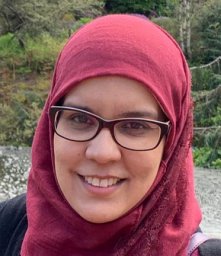 Maryam Mustafa合作论文数Comp Graph Lab, Tech Univ Carolo Wilhelmina Braunschweig2
 Bhiksha Raj Ramakrishnan合作论文数Language Technologies Institute, School of Computer Science, Carnegie Mellon University;Department of Electrical and Computer Engineering, College of Engineering, Carnegie Mellon University;FPrime AI2
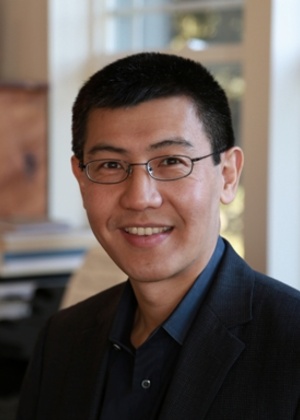 Kentaro Toyama合作论文数School of Information, University of Michigan;Dalai Lama Center for Ethics and Transformative Values, Massachusetts Institute of Technology2
 Richard J. Anderson合作论文数Department of Computer Science and Engineering, University of Washington2
 Inam Ullah合作论文数University of Engineering and Technology, Lahore, Pakistan2
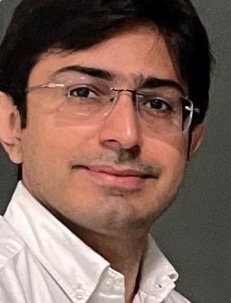 Zafar Ayyub Qazi合作论文数Department of Computer Science, Lahore University of Management Sciences2
 Mansoor Pervaiz合作论文数Northeastern University2
 Jawad Shafi合作论文数2Emaan Mujahid Abbas合作论文数1Mukeet Raza合作论文数1Wassay Sajjad合作论文数1Sheza Munir合作论文数1Imama Zahoor合作论文数1
 Lubna Razaq合作论文数Dept of Human Centered Design & Engineering, College of Engineering, University of Washington1Sarmad Hussain合作论文数1Obaid Ullah Ahmad合作论文数1Muhammad Mustansar Saeed合作论文数1
 Syed Ali Hussain合作论文数1
 Hassan Ali合作论文数1Mahad Ali合作论文数1




