To meet the demands of the Beam Energy Scan phase-II (BES-II) program, the STAR experiment at the Relativistic Heavy Ion Collider (RHIC) developed a dual real-time framework consisting of a High Level Trigger (HLT) and an Express Data Production system (xProduction). The HLT operates online within the Data Acquisition (DAQ) chain on a dedicated multi-core CPU cluster with the option to offload compute-intensive kernels to Xeon Phi coprocessors. It uses parallelized algorithms, such as the Cellular Automaton (CA) Track Finder, to perform rapid tracking, vertexing, and event filtering. This allows it to select events of interest in real time and provide immediate feedback on detector and beam conditions. In contrast, the xProduction workflow runs concurrently and independently of the DAQ loop. It applies near offline-quality calibration and reconstruction within hours of data collection. The xProduction input is the express data stream, whose content can be enriched by HLT trigger/priority selections under DAQ/HLT resource constraints, and it uses the STAR calibration/conditions framework, incorporating online calibration/QA information when available. This enables early preliminary physics analysis, including the reconstruction of rare signals, such as hyperons and hypernuclei. It also provides collaboration-wide access to analysis-ready datasets. Together, the HLT and xProduction systems form a complementary architecture: the HLT performs online event selection while the xProduction chain delivers high-quality results within a short amount of time. This integrated framework has enabled the prompt reconstruction of the 5He hypernucleus with high statistical significance and the efficient processing of hundreds of millions of heavy-ion collision events. Its demonstrated scalability and robustness establish a model for future high-luminosity experiments requiring both online event filtering and rapid access to analysis-quality data.
The method in arXiv:2508.18409 constructs a “data-driven correction” from combinatorial (pseudo-ϕ) pairs and applies it to the signal. An explicit decomposition shows that the construction calibrates the background response rather than the signal: it is defined by the difference between an acceptance-free pseudo-ϕ surrogate and its data-level realization. Promoting a background-derived correction to a signal correction requires a strong physics proof that signal and background share identical detector response at the pair level – including acceptance-anisotropy couplings and dependencies on parent kinematics – which the manuscript does not establish. Consequently, local numerical proximity in a restricted region of phase space is incidental rather than evidentiary; validation must rest on mechanism, not numerical coincidence. Moreover, the pseudo-ϕ background is non-unique: with infinitely many admissible constructions, any apparent agreement for a few cases would not be dispositive – no finite scan can substitute for a mechanism-level response equivalence. In the absence of such a demonstrated equivalence, the construction should be regarded as a background calibration rather than a signal correction.
Quantum entanglement has now been demonstrated in several hadronic systems, revealing that non-classical spin correlations survive even through the strong-interaction hadronization process. To date, however, all studies have focused exclusively on angular observables, leaving the possibility untouched that quantum coherence might also influence the decay times of entangled partners. In this work we propose data-driven tests of spin-lifetime and lifetime-lifetime correlations for Λ−Λ¯ pairs produced in high-energy collisions. By examining the opening-angle distribution in slices of Δt, constructing a pair-wise spin-lifetime correlator, and testing a simple lifetime-lifetime covariance, we search for deviations from independent exponential decay that align with known spin correlations. Observation of nonzero lifetime correlations would compel a reassessment of how entanglement manifests in decaying systems, revealing hitherto unexplored temporal coherence.
In heavy-ion collisions at relativistic energies, the incident nuclei travel at nearly the speed of light. These collisions deposit kinetic energy into the overlap region and create a high-temperature environment where hadrons "melt" into deconfined quarks and gluons. The spectator nucleons, which do not undergo scatterings, generate an ultraintense electromagnetic field-on the order of 1018 G at the Relativistic Heavy Ion Collider and 1019 G at the Large Hadron Collider. These powerful electromagnetic fields have a substantial impact on the produced particles, not only complicating the study of particle interactions but also inducing novel physical phenomena. To explore the nature of these fields and their interactions with deconfined quarks, we provide a detailed overview, encompassing theoretical estimations of their generation and evolution, as well as experimental efforts to detect them. We also provide physical interpretations of the discovered results and discuss potential directions for future investigations.
In heavy-ion collision experiments, the global collectivity of final-state particles can be quantified by anisotropic flow coefficients (nu(n)). The first-order flow coefficient, also referred to as the directed flow (nu(1)), describes the collective sideward motion of produced particles and nuclear fragments in heavy-ion collisions. It carries information on the very early stage of the collision, especially at large pseudorapidity (eta), where it is believed to be generated during the nuclear passage time. Directed flow therefore probes the onset of bulk collective dynamics during thermalization, providing valuable experimental guidance to models of the pre-equilibrium stage. In 2018, the Event Plane Detector (EPD) was installed in STAR and used for the Beam Energy Scan phase-II (BES-II) data taking. The combination of EPD (2.1 < |eta| < 5.1) and high-statistics BES-II data enables us to extend the nu(1) measurement to the forward and backward eta regions. In this paper, we present the measurement of nu(1) over a wide. range in Au+Au collisions at root s(NN) = 19.6 and 27 GeV using the STAR EPD. The results of the analysis at root s(NN) = 19.6 GeV exhibit excellent consistency with the previous PHOBOS measurement, while elevating the precision of the overall measurement. The increased precision of the measurement also revealed finer structures in heavy-ion collisions, including a potential observation of the first-order event-plane decorrelation. Multiple physics models were compared to the experimental results. Only a transport model and a three-fluid hybrid model can reproduce a sizable nu(1) at large. as was observed experimentally. The model comparison also indicates nu(1) at large. might be sensitive to the QGP phase transition.
The chiral magnetic effect (CME) in heavy-ion collisions reflects the local violation of P and CP symmetries in strong interactions and manifests as electric charge separation along the direction of the magnetic field created by the wounded nuclei. The experimental observables for the CME, such as the gamma 112 correlator, the R Psi 2 (AS) correlator, and the signed balance functions, however, are also subject to non-CME backgrounds, including those from resonance decays. A previous study showed that the CME observables are affected by the diagonal component of the spin density matrix, the rho 00 for vector mesons. In this work, we study the contributions from the other elements of the spin density matrix using a toy model and a multiphase transport model. We find that the real part of the rho 1-1 component, Re rho 1-1, affects the CME observables in a manner opposite to that of the rho 00. All three aforementioned CME observables show a linear dependence on Re rho 1-1 in the model calculations, supporting our analytical derivations. The rest elements of the spin density matrix do not contribute to the CME observables. The off-diagonal terms in the spin density matrix indicate spin coherence and may be nonzero in heavy-ion collisions due to local spin polarization or spin-spin correlations. Thus, Re rho 1-1, along with rho 00, could play a significant role in interpreting measurements in search of the CME.
The significant global spin alignment observed for ϕ mesons in heavy-ion collisions has sparked intense discussions about its origin and implications. One explanation suggests that fluctuations in the strong force field may introduce strong spin correlations between strange (s) and anti-strange (s̅) quarks, leading to the global spin alignment of ϕ mesons. Extending this line of research, the theoretical community has proposed studying the spin correlation between Λ and Λ̅ hyperons. In this paper, we construct experimental observables and make connections between them and the theoretical proposed quantities.
This White Paper presents an overview of the current status and future perspective of QCD research, based on the community inputs and scientific conclusions from the 2022 Hot and Cold QCD Town Meeting. We present the progress made in the last decade toward a deep understanding of both the fundamental structure of the sub-atomic matter of nucleon and nucleus in cold QCD, and the hot QCD matter in heavy ion collisions. We identify key questions of QCD research and plausible paths to obtaining answers to those questions in the near future, hence defining priorities of our research over the coming decades.
In the paper, we discuss the development of the multi-gap resistive plate chamber Time-of-Flight (TOF) technology and the production of the STAR TOF detector in China at the beginning of the 21st century. Then we review recent experimental results from the first beam energy scan program (BES-I) at the Relativistic Heavy Ion Collider (RHIC). Topics cover measurements of collectivity, chirality, criticality, global polarization, strangeness, heavy-flavor, di-lepton and light nuclei productions.
The chiral magnetic effect (CME) is a phenomenon that arises from the QCD anomaly in the presence of an external magnetic field. The experimental search for its evidence has been one of the key goals of the physics program of the Relativistic Heavy-Ion Collider. The STAR Collaboration has previously presented the results of a blind analysis of isobar collisions (Ru4496+Ru4496, Zr4096+Zr4096) in the search for the CME. The isobar ratio (Y) of CME-sensitive observable, charge separation scaled by elliptic anisotropy, is close to but systematically larger than the inverse multiplicity ratio, the naive background baseline. This indicates the potential existence of a CME signal and the presence of remaining nonflow background due to two- and three-particle correlations, which are different between the isobars. In this postblind analysis, we estimate the contributions from those nonflow correlations as a background baseline to Y, utilizing the isobar data as well as Heavy Ion Jet Interaction Generator simulations. This baseline is found consistent with the isobar ratio measurement, and an upper limit of 10% at 95% confidence level is extracted for the CME fraction in the charge separation measurement in isobar collisions at sNN=200 GeV. Published by the American Physical Society 2024
Angular distributions of charged particles relative to jet axes are studied in v sNN = 200 GeV Au+Au collisions as a function of the jet orientation with respect to the event plane. This differential study tests the expected path-length dependence of energy loss experienced by a hard-scattered parton as it traverses the hot and dense medium formed in heavy-ion collisions. A second-order event plane is used in the analysis as an experimental estimate of the reaction plane formed by the collision impact parameter and the beam direction. Charged-particle jets with 15 < p(T, jet) < 20 and 20 < p(T, jet) < 40 GeV/c were reconstructed with the anti-k(T) algorithm with radius parameter setting of R = 0.4 in the 20-50% centrality bin to maximize the initial-state eccentricity of the interaction region. The reaction plane fit method is implemented to remove the flow-modulated background with better precision than prior methods. Yields and widths of jet-associated charged-hadron distributions are extracted in three angular bins between the jet axis and the event plane. The event-plane (EP) dependence is further quantified by ratios of the associated yields in different EP bins. No dependence on orientation of the jet axis with respect to the event plane is seen within the uncertainties in the kinematic regime studied. This finding is consistent with a similar experimental observation by ALICE in root sNN = 2.76 TeV Pb-Pb collision data.
The nuclear equation of state (EOS) is at the center of numerous theoretical and experimental efforts in nuclear physics. With advances in microscopic theories for nuclear interactions, the availability of experiments probing nuclear matter under conditions not reached before, endeavors to develop sophisticated and reliable transport simulations to interpret these experiments, and the advent of multi-messenger astronomy, the next decade will bring new opportunities for determining the nuclear matter EOS, elucidating its dependence on density, temperature, and isospin asymmetry. Among controlled terrestrial experiments, collisions of heavy nuclei at intermediate beam energies (from a few tens of MeV/nucleon to about 25 GeV/nucleon in the fixed-target frame) probe the widest ranges of baryon density and temperature, enabling studies of nuclear matter from a few tenths to about 5 times the nuclear saturation density and for temperatures from a few to well above a hundred MeV, respectively. Collisions of neutron-rich isotopes further bring the opportunity to probe effects due to the isospin asymmetry. However, capitalizing on the enormous scientific effort aimed at uncovering the dense nuclear matter EOS, both at RHIC and at FRIB as well as at other international facilities, depends on the continued development of state-of-the-art hadronic transport simulations. This white paper highlights the essential role that heavy-ion collision experiments and hadronic transport simulations play in understanding strong interactions in dense nuclear matter, with an emphasis on how these efforts can be used together with microscopic approaches and neutron star studies to uncover the nuclear EOS.
We report on the charged-particle multiplicity dependence of net-proton cumulant ratios up to sixth order from s = 200 GeV p+p collisions at the Relativistic Heavy Ion Collider (RHIC). The measured ratios C4/C2, C5/C1, and C6/C2 decrease with increased charged-particle multiplicity and rapidity acceptance. Neither the Skellam baselines nor PYTHIA8 calculations account for the observed multiplicity dependence. In addition, the ratios C5/C1 and C6/C2 approach negative values in the highest-multiplicity events, which implies that thermalized QCD matter may be formed in p+p collisions.
Measurements of exclusive J/psi, psi(2s), and electron-positron (e(+) e(-)) pair photoproduction in Au + Au ultraperipheral collisions are reported by the STAR experiment at root s(NN) = 200 GeV. We report several first measurements at the BNL Relativistic Heavy Ion Collider, which are (i) J/psi photoproduction with large momentum transfer up to 2.2 (GeV/c)(2), (ii) coherent J/psi photoproduction associated with neutron emissions from nuclear breakup, (iii) the rapidity dependence of incoherent J/psi photoproduction, (iv) the psi(2s) photoproduction cross section at midrapidity, and (v) e(+) e(-) pair photoproduction up to high invariant mass of 6 GeV/c(2). For measurement (ii), the coherent J/psi total cross section of gamma + Au -> J/psi + Au as a function of the center-of-mass energy W-gamma N has been obtained without photon energy ambiguities. The data are quantitatively compared with the Monte Carlo models STARlight, Sartre, BeAGLE, and theoretical calculations of gluon saturation with color glass condensate, nuclear shadowing with leading twist approximation, quantum electrodynamics, and the next-to-leading-order perturbative QCD. At the photon-nucleon center-of-mass energy of 25.0 GeV, the coherent and incoherent J/psi cross sections of Au nuclei are found to be 71% +/- 10% and 36% +/- 7%, respectively, of that of free protons. These data provide an important experimental constraint for nuclear parton distribution functions and a unique opportunity to advance the understanding of the nuclear modification effect at the top RHIC energy.
The longitudinal and transverse spin transfers to Lambda (Lambda) hyperons in polarized proton-proton collisions are expected to be sensitive to the helicity and transversity distributions, respectively, of (anti)strange quarks in the proton, and to the corresponding polarized fragmentation functions. We report improved measurements of the longitudinal spin transfer coefficient, D-LL, and the transverse spin transfer coefficient, D-TT,D- to Lambda and Lambda in polarized proton-proton collisions at root s=200 GeV by the STAR experiment at RHIC. The dataset includes longitudinally polarized proton-proton collisions with an integrated luminosity of 52 pb(-1), and transversely polarized proton-proton collisions with a similar integrated luminosity. Both datasets have about twice the statistics of previous results and cover a kinematic range of |eta(Lambda (Lambda))|<1.2 and transverse momentum p(T,Lambda( (Lambda)) up to 8 GeV/c. We also report the first measurements of the hyperon spin transfer coefficients D-LL and D-TT as a function of the fractional jet momentum z carried by the hyperon, which can provide more direct constraints on the polarized fragmentation functions.
We report the first measurements of cumulants, up to 4th order, of deuteron number distributions and proton-deuteron correlations in Au+Au collisions recorded by the STAR experiment in phase-I of Beam Energy Scan (BES) program at the Relativistic Heavy Ion Collider. Deuteron cumulants, their ratios, and proton-deuteron mixed cumulants are presented for different collision centralities covering a range of center-of-mass energy per nucleon pair root s(NN) = 7.7 to 200 GeV. It is found that the cumulant ratios at lower collision energies favor a canonical ensemble over a grand canonical ensemble in thermal models. An anti-correlation between proton and deuteron multiplicity is observed across all collision energies and centralities, consistent with the expectation from global baryon number conservation. The UrQMD model coupled with a phase-space coalescence mechanism qualitatively reproduces the collision-energy dependence of cumulant ratios and proton-deuteron correlations.
In high-energy heavy-ion collisions, the chiral magnetic effect (CME) is predicted to arise from the interplay between the chirality imbalance of quarks in the nuclear medium and the intense magnetic field, and will cause a charge separation along the magnetic field direction. While the search for the CME is still ongoing in experiments at Relativistic Heavy Ion Collider (RHIC) and the Large Hadron Collider (LHC), the CME-sensitive observables need to be scrutinized to exclude the non-CME contributions. In this work, we examine the influence of globally spin-aligned ρ mesons on the γ112 correlator, the RΨ2(ΔS) correlator, and the signed balance functions, via a toy model and a multiphase transport model (AMPT). The global spin alignment of vector mesons could originate from non-CME mechanisms in heavy-ion collisions, and is characterized by the 00-component of the spin density matrix, ρ00. We find that the CME observables show similar dependence on ρ00, and could receive a positive (negative) contribution from ρ-decay pions, if the ρ00 of ρ mesons is larger (smaller) than 1/3. Since pions are the most abundant particles in such collisions, the ρ00 measurements for ρ mesons become crucial to the interpretation of the CME data.
 Declan Keane合作论文数Department of Physics, Kent State University625
 Daniel Cebra合作论文数Department of Physics and Astronomy, University of California, Davis618
 Howard S. Matis合作论文数Nuclear Science Division, Lawrence Berkeley National Laboratory;Silicon Valley Advantage;SensTek;Ashsensors613
 Yuri Fisyak合作论文数Physics Department, Brookhaven National Laboratory607
 Helen Caines合作论文数Wright Laboratory, Department of Physics, Yale University;Brookhaven National Laboratory603James Colville Dunlop合作论文数598
 Petr Chaloupka合作论文数Department of Physics, Faculty of Nuclear Sciences and Physical Engineering, Czech Technical University597Jurgen Engelage合作论文数593
 Jeffery Landgraf合作论文数Physics Department, Brookhaven National Laboratory592t ljubicic合作论文数590
 Rene Bellwied合作论文数Department of Physics, College of Natural Sciences and Mathematics, University of Houston586
 Spyridon (Spiros) Margetis合作论文数Kent State University580
 William Christie合作论文数Collider Accelerator Department, Brookhaven National Laboratory580G. Eppley合作论文数579
 Thomas J. Humanic合作论文数Department of Physics, College of Arts and Sciences, The Ohio State University576L. Didenko合作论文数571
 Stephen Trentalange合作论文数Physics & Astronomy Department, College of Physical Sciences, University of California, Los Angeles567
 Peter Kravtsov合作论文数Cryogenic and Superconductive Techniques Laboratory, High Energy Physics Division, St. Petersburg Nuclear Physics Institute;Department of High Energy Physics, Petersburg Nuclear Physics Institute;National Research Nuclear University MEPhI566
 Zubayer Ahammed合作论文数Variable Energy Cyclotron Centre564
 Evan Finch合作论文数Department of Physics, Southern Connecticut State University563Akio Ogawa (小川暁生)合作论文数Physics Department, Brookhaven National Laboratory558Howard Wieman合作论文数558Averichev,GS合作论文数554Norbert Schmitz合作论文数554
 Jiansong Wang (王建松)合作论文数School of Science, Huzhou University553
 William Llope合作论文数Department of Physics and Astronomy, College of Liberal Arts and Sciences, Wayne State University553
 David Underwood合作论文数Collider-Accelerator Department, Brookhaven National Laboratory;Enrico Fermi Institute, University of Chicago553
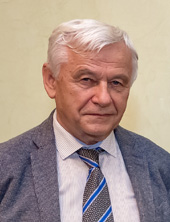 Richard Lednický合作论文数Veksler and Baldin Laboratory of High Energy Physics, Joint Institute for Nuclear Research549
 Jim Thomas合作论文数The Berkeley Laboratory, University of California548
 Sevil Salur合作论文数Department of Physics and Astronomy, School of Arts and Sciences, Rutgers University;Department of Physics, Yale University547
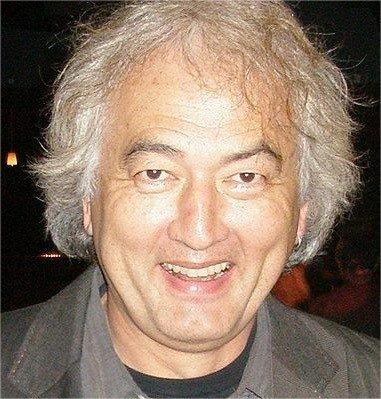 John Harris合作论文数Department of Physics, Yale University545Juan L Romero合作论文数University of California, Davis544Yu A. Panebratsev合作论文数539
 Lijuan Ruan (阮丽娟)合作论文数Physics Department, Brookhaven National Laboratory538
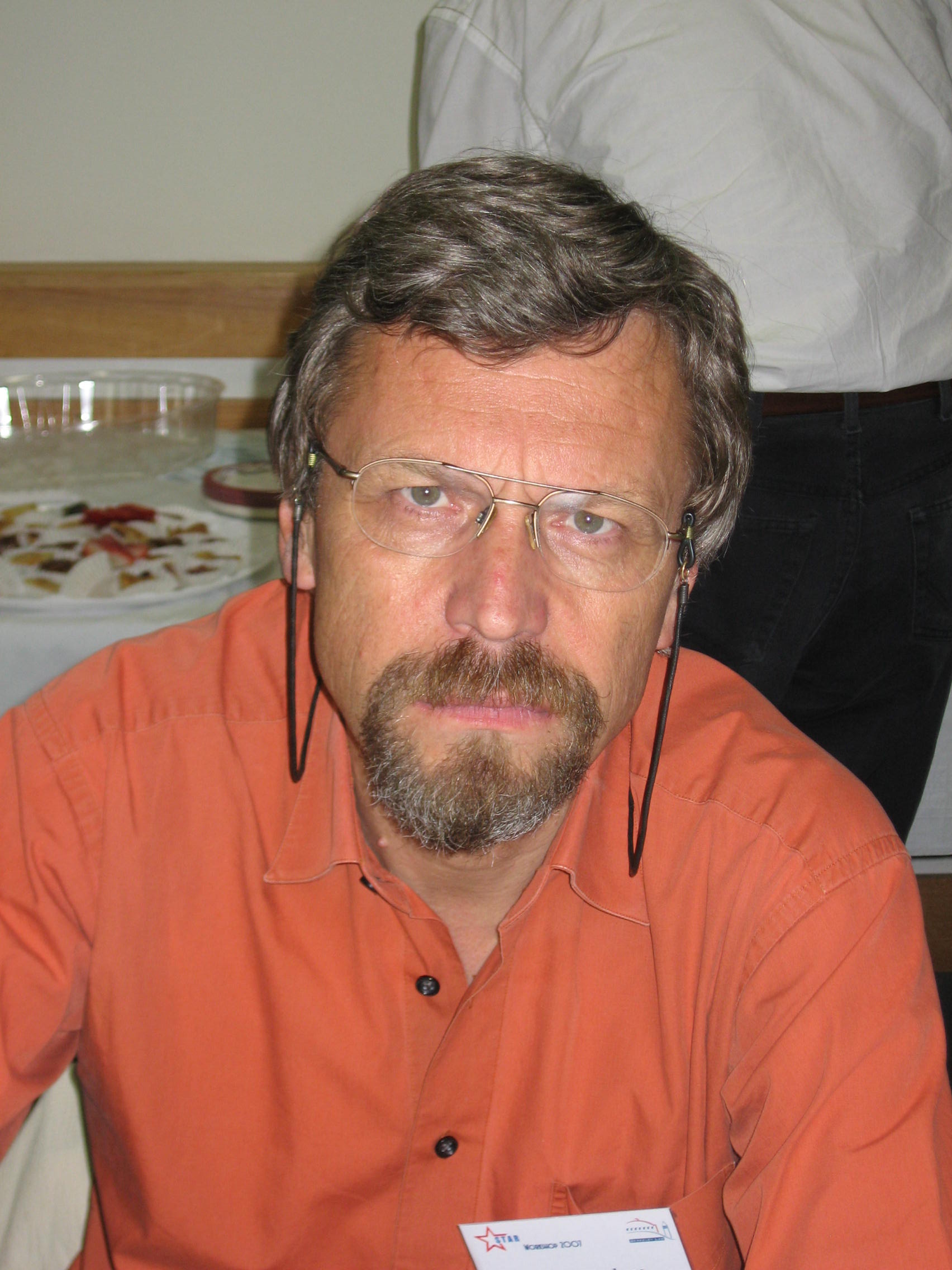 Michal Sumbera合作论文数Nuclear Physics Institute, The Czech Academy of Sciences;Brookhaven National Laboratory537
 Frank Geurts合作论文数Department of Physics and Astronomy, Rice University;T.W. Bonner Laboratory, Rice University536Alexei Lebedev合作论文数Physics Department, Brookhaven National Laboratory534Harold Spinka合作论文数Argonne National Laboratory533
 Sonja Kabana合作论文数University of Nantes531James P. Hays-Wehle合作论文数The Johns Hopkins University Applied Physics Laboratory530
 Bal Govind Srivastava合作论文数Department of Mathematics, Faculty of Science, University of Allahabad530
 Ronald S Longacre合作论文数Brookhaven National Laboratory523E. Shahaliev合作论文数522
 Christina Markert合作论文数Department of Physics, College of Natural Sciences, The University of Texas at Austin520J. Sandweiss合作论文数519
 Thomas Ullrich合作论文数Physics Department, Brookhaven National Laboratory;Physics Department, Yale University;Wright Laboratory, Yale University519
 Joern Putschke合作论文数College of Liberal Arts and Sciences, Wayne State University518George Igo合作论文数518K. Krueger合作论文数517




