McKibben Artificial Muscles (AMs) are widely used in soft robotics as actuators due to their compliance and high force output. However, achieving complex motions with multiple AMs in different orientations remains challenging, as each requires a bulky pneumatic or hydraulic system, complicating assembly and increasing the risk of leaks. These limitations restrict their use in compact or lightweight applications. Inspired by natural muscle architectures that optimize force distribution and enable multidirectional motion, this study aims to integrate complex fiber arrangements into a single McKibben AM. A novel fabrication technique was developed using an interplay between multiple traditional Japanese Kumihimo braiding disks to create multi-directional AMs. Two case studies demonstrate the approach: (1) a bending actuator capable of achieving programed bending angles depending on actuation pressure and (2) a convergent actuator whose combined branches reconfigured output force direction to extend motion range. The resulting branched AMs locally encode complex motion within their structure, eliminating the need for complex actuator systems. This manufacturing strategy advances McKibben AM design toward more compact, adaptive and versatile systems for advanced soft robotic applications.
McKibben artificial muscles (AMs) are known as a prominent class of pneumatic actuators in soft robotics and biomechanical engineering, due to their unique structure and multifunctionality. This paper presents a comprehensive review of recent advancements in McKibben AMs, focusing on their performance, structural variations, and operational principles. A systematic literature search on Scopus identified 146 relevant articles, which were analysed for both performance metrics and design characteristics. Inspired by natural muscle behaviour, McKibben AMs enable complex motions such as bending, linear extension, and twisting. These actuators can be organised as individual or bundled systems: individual units are typically arranged in linear or circular patterns, while bundled systems occur in serial, parallel, braided, convergent, or pennate configurations. Recent innovations in smart actuation methods, braided sleeves and internal bladders have expanded their capabilities, enabling embedded sensing, environmental adaptability and untethered operation. Additionally, alternative manufacturing methods offer promising solutions for developing McKibben muscles with enhanced functionality and tailored properties.
Self-propelling robotic capsules eliminate shaft looping of conventional colonoscopy, reducing patient discomfort. However, reliably moving within the slippery, viscoelastic environment of the colon remains a significant challenge. We present OSCAR, an ovipositor-inspired self-propelling capsule robot that translates the transport strategy of parasitic wasps into a propulsion mechanism for colonoscopy. OSCAR mechanically encodes the ovipositor-inspired motion pattern through a spring-loaded cam system that drives twelve circumferential sliders in a coordinated, phase-shifted sequence. By tuning the motion profile to maximize the retract phase relative to the advance phase, the capsule creates a controlled friction anisotropy at the interface that generates net forward thrust. We developed an analytical model incorporating a Kelvin-Voigt formulation to capture the viscoelastic stick–slip interactions between the sliders and the tissue, linking the asymmetry between advance and retract phase durations to mean thrust, and slider-reversal synchronization to thrust stability. Comprehensive force characterization experiments in ex-vivo porcine colon revealed a mean steady-state traction force of 0.85 N, closely matching the model. Furthermore, experiments confirmed that thrust generation is speed-independent and scales linearly with the phase asymmetry, in agreement with theoretical predictions, underscoring the capsule's predictable performance and scalability. In locomotion validation experiments, OSCAR demonstrated robust performance, achieving an average speed of 3.08 mm/s, a velocity sufficient to match the cecal intubation times of conventional colonoscopy. By coupling phase-encoded friction anisotropy with a predictive model, OSCAR delivers controllable thrust generation at low normal loads, enabling safer and more robust self-propelling locomotion for robotic capsule colonoscopy.
Breastfeeding is essential for infant nutrition, but the increasing number of women returning to work before weaning highlights the need for efficient and comfortable milk expression methods. Traditional breast pumps rely solely on vacuum suction, which can cause discomfort, tissue damage, and longer extraction times compared to natural nursing. This study aims to develop a breast pump that better mimics the biomechanics of infant breastfeeding to improve comfort and efficiency. We investigated two actuator designs-membrane and soft pleated-integrated into the breast shield to replicate infant sucking. The pleated actuator proved most effective, offering a wide range of expansion and contraction. Unlike traditional pumps, vacuum is applied through radial expansion, allowing the nipple to widen rather than elongate, closely simulating infant tongue movements. The breast shield was fabricated using additive manufacturing with soft, elastic materials, enabling complex geometries and varied stiffness. The prototype was tested against a commercial pump using an artificial breast phantom. Results suggest this design can enhance milk output, reduce pumping time, and improve user comfort. By merging soft robotics with biological insights, our approach offers a promising alternative to conventional breast pumps.
Friction is the essential mediator of terrestrial locomotion, yet in robotic systems it is almost always treated as a passive property fixed by surface materials and conditions. Here, we introduce ultrasonic lubrication as a method to actively control friction in robotic locomotion. By exciting resonant structures at ultrasonic frequencies, contact interfaces can dynamically switch between "grip" and "glide" states, enabling locomotion. We developed two friction control modules: a cylindrical design for lumen-like environments and a flat-plate design for external surfaces, and integrated them into bio-inspired systems modeled after inchworm and wasp ovipositor locomotion. Both systems achieved bidirectional locomotion with nearly perfect locomotion efficiencies that exceeded 90%. Friction characterization experiments further demonstrated substantial friction reduction across various surfaces, including rigid, soft, granular, and biological tissue interfaces, under dry and wet conditions, and on surfaces with different levels of roughness, confirming the versatility of ultrasonic lubrication for locomotion applications. These findings establish ultrasonic lubrication as a viable active friction control mechanism for robotic locomotion, with the potential to reduce design complexity and improve the efficiency of robotic locomotion systems.
The octopus achieves intricate arm deformations through local muscle interactions rather than centralized coordination. Inspired by this principle, this study aims to develop embodied intelligent McKibben Artificial Muscles (AMs), in which global deformation is encoded directly into their physical structure.The key design parameter explored is the braiding angle, which governs the type and magnitude of motion. By spatially varying this angle along the actuator, we demonstrate embedded capabilities for local extension and contraction within a single AM. Additionally, a mismatch in braiding angles between opposing wire sets generates a twisting motion. To implement these variations, traditional braiding techniques were adapted for localized angle control. Within a single McKibben AM, a maximum strain of +0.06 and minimum strain of −0.19 was measured. A twist angle of 100° was achieved using a 50.4° angle difference at 50 kPa actuation pressure. A final modular prototype demonstrated the integration of multiple motion modes within a single actuator body.These results highlight the potential of mechanically intelligent AMs to simplify actuation systems in soft robotics. Applications include wearable technologies such as exoskeletons and prosthetics, as well as bioinspired systems like artificial hearts or continuum robotic arms, where compact and adaptive actuation is essential.
IntroductionOrthopedic procedures often require drilling of tunnels through bone, for instance for the introduction of implants. The currently used rigid bone drills make it challenging to reach all target areas without damaging surrounding anatomy. Steerable bone drills are a promising solution as they enable access to larger volumes and the creation of curved tunnels thereby reducing the risk of harm to surrounding anatomical structures.MethodThis review provides a comprehensive overview of steerable bone drill designs identified in patent literature via the Espacenet database and in scientific literature accessed via the Scopus data base. A Boolean search combined with pre-set inclusion criteria returned 78 literature references describing a variety of drill designs.ResultsThese drill designs could be categorized based on how the drilling trajectory was defined. Three methods to influence the drilling trajectory were identified: (1) the device (57% of the sources), (2) the environment (15% of the sources): the path is defined based on the tissue interaction forces with the surrounding bone or (3) the user defines the drilling trajectory (28% of the sources).DiscussionThe comprehensive overview of steerable drilling methods provides insights in the possibilities in drill design and may be used as a source of inspiration for the design of novel steerable drill designs.
Positioning a thin needle into a solid substrate near a target region is difficult because the needle can easily bend and buckle. Nevertheless, in nature, female parasitic wasps can do this by using buckling prevention and steering mechanisms. This study presents a self-propelled needle that incorporates wasp-inspired steering mechanisms, specifically, the use of pretension and asymmetry within the needle segments. The needle with an outer diameter of 0.89 millimeters comprises seven parallel needle segments, with the central needle segment being either straight for a forward trajectory or prebent for steering purposes. By retracting and rotating the prebent central needle segment, the needle is capable of omnidirectional steering. The performance of the needle in tissue-mimicking phantoms was evaluated in terms of its propulsion efficiency and steering performance. The propulsion efficiency, affected by slippage of the needle segments with respect to the tissue-mimicking phantoms, was, on average, 63% ± 4% for forward motion and 55% ± 7% for steering motion. Moreover, the needle successfully steered with a mean deflection-to-insertion ratio of 0.41 ± 0.11 (i.e., radius-of-curvature of 44 mm). The proposed bioinspired needle design is a relevant step toward developing steerable needles for percutaneous interventions.
Orthopedic surgery relies on bone drills to create tunnels for fracture fixation, bone fusion, or tendon repair. Traditional rigid and straight bone drills often pose challenges in accessing the desired entry points without risking damage to the surrounding anatomical structures, especially in minimal invasive procedures. In this study, we explore the use of hydraulic pressure waves in a flexible bone design to facilitate bone drilling. The HydroFlex Drill includes a handle for generating a hydraulic pressure wave in the flexible, fluid-filled shaft to transmit an impulse to the hammer tip, enabling bone drilling. We evaluated seven different hammer tip shapes to determine their impact on drilling efficiency. Subsequently, the most promising tip was implemented in the HydroFlex Drill. The HydroFlex Drill Validation demonstrated the drill's ability to successfully transfer the impulse generated in the handle to the hammer tip, with the shaft in different curves. This combined with the drill's ability to create indentations in bone phantom material is a promising first step towards the development of a flexible or even steerable bone drill. With ongoing research to enhance the drilling efficiency, the HydroFlex Drill opens possibilities for a range of orthopedic surgical procedures where minimally invasive drilling is essential.
In nature, organisms such as the octopus exhibit remarkable adaptability by reconfiguring their bodies into contracting and extending segments. Translating this modularity into robotics, origami-inspired designs have proven effective in creating adaptable building blocks for modular robotic arms. The Kresling cylinder, a bistable cylindrical origami structure, exemplifies this approach by functioning as both a contracting and extending actuator. However, current actuation strategies in origami-inspired structures-such as pneumatic, mechanical, or stimuli-responsive methods-suffer from bulky actuators, slow speed, or inability to provide local actuation. Magnetically-actuated Kresling cylinders offer promising solutions for rapid and localized actuation. However, they typically rely on large external coils, limiting their use in restricted environments. To overcome this limitation, we have embedded coils directly into a modular Kresling cylinder, creating a standalone electromagnetically-actuated system. The finite element analysis was employed to understand the effect of the electromagnets' dimensions on effective contraction and extension, resulting in a weight-efficient actuator. Trends were uncovered for the design of flat, effective electromagnets for embedded electromagnetic actuation. Following these design trends, a prototype was successfully manufactured, demonstrating rapid contraction and extension in both horizontal and vertical orientation. The standalone Kresling actuator is particularly well-suited for use in dynamic, remote or restricted environments. The simple design of the manufactured prototype illustrates the potential for incorporating embodied actuation into functional soft robotic designs.
Transluminal minimally invasive surgery uses natural orifices and small incisions to access internal anatomical structures, promoting quicker recovery and reduced morbidity. However, navigating instruments such as catheters and endoscopes through anatomical pathways creates frictional interactions with luminal walls, risking complications such as perforation, poor haptic feedback, and instrument buckling. This paper presents an active lubrication sheath that controls friction on demand through discrete friction control modules distributed along its shaft. These modules employ ultrasonic vibrations at the instrument surface to generate a pressurized fluid layer at the contact interface, lubricating the interface and thereby reducing friction. We implemented these modules in a prototype catheter, which we validated under dry and liquid-lubricated conditions, across rigid and soft interfaces, and along varied anatomical curvatures. In a cardiac catheterization use case, active lubrication reduced friction by up to 42
Percutaneous pancreatic core biopsy is conclusive but challenging due to large-diameter needles, while smaller-diameter needles used in aspiration methods suffer from buckling and clogging. Inspired by the ovipositor of parasitic wasps, which resists buckling through self-propulsion and prevents clogging via friction-based transport, research has led to the integration of these functionalities into multi-segment needle designs or tissue transport system designs. This study aimed to combine these wasp-inspired functionalities into a single biopsy needle by changing the interconnection of the needle segments. The resulting biopsy needle features six parallel needle segments interconnected by a ring passing through slots along the length of the needle segments, enabling a wasp-inspired reciprocating motion. Actuation employs a cam and follower mechanism for controlled translation of the segments. The needle prototype, constructed from nitinol rods and stainless steel rings, measures 3 mm in outer diameter and 1 mm in inner diameter. Testing in gelatin phantoms demonstrated efficient gelatin core transport (up to 69.9% ± 9.1% transport efficiency) and self-propulsion (0.842 ± 0.042 slip ratio). Future iterations should aim to reduce the outer diameter while maintaining tissue yield. The design offers a promising new avenue for wasp-inspired medical tools, potentially enhancing early pancreatic cancer detection, thus reducing healthcare costs and patient complications.
In percutaneous interventions, long and thin needles are used to reach deep target locations within the body. However, inserting a long and thin needle into the tissue can cause needle buckling, resulting in poor control of the needle's trajectory and reduced targeting accuracy. In nature, the female parasitic wasp prevents the buckling of her long and slender ovipositor through a self-propelled motion. This study presents a stationary actuation system that can advance a wasp-inspired self-propelled needle consisting of seven 0.3-mm stainless steel rods with a theoretically unlimited insertion length. Based on the pencil lead advance mechanism in mechanical pencils that advances the pencil lead at a fixed increment when the pencil button is pushed, our actuation system advances the seven needle segments that comprise our needle by locking, advancing, releasing, and retracting the advance mechanisms. Experimental evaluation demonstrated that the actuation system successfully executes these actions, enabling step-by-step propulsion of the needle segments in gelatin-based tissue-mimicking phantoms. Moreover, the needle achieved mean motion efficiencies of 98 ± 2%, 68 ± 5%, and 57 ± 7% in air, 5-wt% gelatin, and 10-wt% gelatin, respectively, over 15 actuation cycles. This actuation system prototype, which is based on a mechanical pencil, is a step forward in developing self-propelled needles for targeting deep tissue structures.
Human fingers exhibit remarkable dexterity and adaptability through a combination of structures with varying stiffness levels, ranging from soft tissues (low stiffness) to tendons and cartilage (medium stiffness) to bones (high stiffness). This paper focuses on the development of a robotic finger that emulates these multi-stiffness characteristics. Specifically, we propose utilizing a lattice configuration, parameterized by voxel size and unit cell geometry, to achieve fine-tuned stiffness properties with high precision. A key advantage of this approach is its compatibility with single-process 3D printing, which eliminates the need for manual assembly of components with varying stiffness. Using this method, we present a novel, human-like robotic finger and a soft gripper. The gripper is integrated with a rigid manipulator and demonstrated in pick-and-place tasks, showcasing its effectiveness.
INTRODUCTION:This study focuses on the quantification of and current guidelines on the hazards related to needle positioning in prostate cancer treatment: (1) access restrictions to the prostate gland by the pubic arch, so-called Pubic Arch Interference (PAI) and (2) needle positioning errors. Next, we propose solution strategies to mitigate these hazards. METHODS:The literature search was executed in the Embase, Medline ALL, Web of Science Core Collection*, and Cochrane Central Register of Controlled Trials databases. RESULTS:The literature search resulted in 50 included articles. PAI was reported in patients with various prostate volumes. The level of reported PAI varied between 0 and 22.3 mm, depending on the patient's position and the measuring method. Low-Dose-Rate Brachytherapy induced the largest reported misplacement errors, especially in the cranio-caudal direction (up to 10 mm) and the largest displacement errors were reported for High-Dose-Rate Brachytherapy in the cranio-caudal direction (up to 47 mm), generally increasing over time. CONCLUSIONS:Current clinical guidelines related to prostate volume, needle positioning accuracy, and maximum allowable PAI are ambiguous, and compliance in the clinical setting differs between institutions. Solutions, such as steerable needles, assist in mitigating the hazards and potentially allow the physician to proceed with the procedure.This systematic review was performed in accordance with the PRISMA guidelines. The review was registered at Protocols.io (DOI: dx.doi.org/10.17504/protocols.io.6qpvr89eplmk/v1).
Additive Manufacturing (AM) or 3D printing provides significant flexibility in the creation of intricate shapes and mechanisms. This capability is particularly advantageous in applications involving miniature, high- precision instruments, such as those used in eye surgery. AM offers numerous benefits, including the ability to produce customized products and increased complexity. However, the primary challenges associated with AM in miniature applications lie in the constraints of manufacturing size and the accuracy limitations of current 3D printers [1,2]. In the realm of eye surgery, where instruments and components are exceptionally small, the majority of currently available AM technologies struggle to produce features at this scale. While progress has been made in nanoscale AM methods like 2-photon lithography, these techniques are limited to sub-millimetre build volumes [3]. For applications in the millimetre-scale range, such as those for eye surgery, only a few print methods are potentially suitable. Among the commercially available AM techniques, vat photopolymerization processes boast some of the highest reported resolutions, currently reaching as small as 25 μm [3-5]. However, when the size of parts or features approach the maximum resolution, limitations in accuracy become apparent. The final accuracy of a part will be influenced by many factors, such as the material, process parameters and even the specific 3D printer [6]. In this paper, we describe a novel way to develop an ultraslender steerable light pipe for use during eye surgery, nicknamed Acci, using conventional 3D print technology. The function of a light pipe is to illuminate the inside of the globe of the eye during surgical procedures. As of now, only rigid light pipes exist for eye surgery. By adding steerability, the light can be directed more precisely to the surgical location without placing high forces on the trocar, as well as prevent shadows caused by the other instruments.
Metal additive manufacturing is a promising technology for the production of functional medical products, due to its high shape complexity and resolution, and ability to withstand sterilization temperatures. This study explores the possibility of designing a completely non-assembly steerable surgical instrument using Selective Laser Melting. Despite its advantages for medical devices, the rough surface quality of unfinished parts can be problematic for non-assembly designs, leading to increased friction and wear in rigid body mechanisms and tendon-actuated mechanisms. We investigated printing of rolling contact joints with crossed flexures as low-friction joints, adjusted for printing in titanium for the design of the instrument. Grid-based lattice structures were incorporated as miniature flexures, and we explored the influence of various grid sizes on the flexibility and bending stiffness of the lattices. Based on this exploration, we altered the rolling joint configuration from two crossed flexures to a single straight flexure for our design. The resulting steerable surgical instrument design is completely non-assembly, including its actuation, facilitates easy removal of support structures, and requires no surface finishing steps. It has a diameter of less than 20 mm, facilitates opening and closing of a grasper, and steering of the grasper by 20 degrees.
Pedicle screws have long been established as the gold standard for spinal bone fixation. However, their fixation strength can be compromised in cases of low bone density, particularly in osteoporotic bone, due to the reliance on a micro-shape lock between the screw thread and the surrounding bone. To address this challenge, we propose augmenting conventional pedicles screws with a curved compliant anchor. This anchor integrates a curved super-elastic nitinol rod that is advanced through a canulated pedicle screw, forming a macro-shape lock within the vertebral body to aid the fixation strength. Both placement safety and fixation strength of this novel spinal bone anchor were validated on tissue phantoms (Sawbones). The radius of the curved compliant anchor’s path demonstrates high precision while exhibiting strong dependence on the bone density in which the anchor is placed. When the curved compliant anchor is combined with a conventional pedicle screw, the mean maximum pull-out force elevated to 290 N, marking a 14% enhancement in pull-out resistance compared to using pedicle screw alone. Further augmentation with multiple curved compliant anchors holds promise for even greater fixation. The application of a curved compliant spinal bone anchor offers a promising means of increasing the fixation strength of pedicles screws, which is especially relevant in challenging clinical scenarios such a patient suffering from osteoporosis.
Thrombus removal from the human body is facilitated through the utilization of aspiration catheters during minimally invasive thrombectomy procedures, where a pressure differential guides the targeted tissue through a flexible tubular medical instrument. In this paper, we present a patent analysis of thrombectomy aspiration catheter tip designs sourced from the EspaceNet database. Our findings reveal that enhancing the operability of aspiration catheters can be achieved by improving ease of positioning or suction capacity, whether through active or passive means. In terms of the former, both tip shape and flexibility play pivotal roles in maneuvering the distal end effectively. Variations in aspiration port characteristics, either distal-oriented or sideways-oriented, have the potential to enhance suction efficiency. In the active approach, aspects of positioning and suctioning are integrated into a single design, allowing for seamless transitions between configurations. While numerous design characteristics can coexist in a thrombectomy aspiration tip, a balance between flexibility and buckling resistance, as well as between maximizing aspiration lumen diameter and minimizing tip diameter, must be struck. This paper offers an insightful overview of existing thrombectomy aspiration tip designs, providing valuable inspiration for future innovations in this field.
Suction grippers offer a distinct advantage in their ability to handle a wide range of items. However, attaching these grippers to irregular and rough surfaces presents an ongoing challenge. To address this obstacle, this study explores the integration of magnetic intelligence into a soft suction gripper design, enabling fast external magnetic actuation of the attachment process. Additionally, miniaturization options are enhanced by implementing a compliant deploying mechanism. The resulting design is the first-of-its-kind magnetically-actuated deployable suction gripper featuring a thin magnetic membrane (& Oslash; 50 mm) composed of carbonyl iron particles embedded in a silicone matrix. This membrane is supported by a frame made of superelastic nitinol wires that facilitate deployment. During experiments, the proof-of-principle prototype demonstrates successful attachment on a diverse range of curved surfaces in both dry and wet environments. The gripper achieves attachment on curved surfaces with radii of 50-75 mm, exerting a maximum attachment force of 2.89 +/- 0.54 N. The current gripper design achieves a folding percentage of 75%, enabling it to fit into a & Oslash; 12.5 mm tube and access hard-to-reach areas while maintaining sufficient surface area for attachment forces. The proposed prototype serves as a foundational steppingstone for further research in the development of reliable and effective magnetically-actuated suction grippers across various configurations. By addressing the limitations of attachment to irregular surfaces and exploring possibilities for miniaturization and precise control, this study opens new avenues for the practical application of suction grippers in diverse industries and scenarios.
 Paul Breedveld合作论文数Department of BioMechanical Engineering, Faculty of Mechanical, Maritime and Materials Engineering, Delft University of Technology39
 Vera Kortman合作论文数10
 Kirsten Lussenburg合作论文数Faculty of Mechanical, Maritime, and Materials Engineering, Delft University of Technology10
 Esther de Kater合作论文数10
 Michaël Wiertlewski合作论文数Department of Cognitive Robotics, Faculty of Mechanical, Maritime and Materials Engineering, Delft University of Technology9
 Jovana Jovanova合作论文数Department of Maritime and Transport Technology, Faculty of Mechanical, Maritime and Materials Engineering, Delft University of Technology8
 Mostafa A Atalla合作论文数Department of BioMechanical Engineering, Delft University of Technology6
 Jette Bloemberg合作论文数5Remi van Starkenburg合作论文数4
 Paul Henselmans合作论文数3
 Scali Marta合作论文数3
 Dimitra Dodou合作论文数Department of BioMechanical Engineering, Faculty of Mechanical, Maritime and Materials Engineering, Delft University of Technology3
 Cosimo Della Santina合作论文数Department of Cognitive Robotics, Faculty of Mechanical, Maritime and Materials Engineering, Delft University of Technology;Deutsches Zentrum fur Luft- und Raumfahrt German Aerospace Center3
 G. Endo合作论文数2Marleen van der Wiel合作论文数2J Alkemade合作论文数2
 Costanza Culmone合作论文数Department of Biomechanical Engineering, Delft University of Technology2
 Jenny Dankelman合作论文数Department of BioMechanical Engineering, Faculty of Mechanical, Maritime and Materials Engineering, Delft University of Technology2
 Ewout A. Arkenbout合作论文数Department of BioMechanical Engineering, Delft University of Technology2
 Gerwin Smit合作论文数Department of BioMechanical Engineering, Faculty of Mechanical, Maritime and Materials Engineering, Delft University of Technology2
 Roger Lewis合作论文数Department of Mechanical Engineering, The University of Sheffield2
 Johan L. Van Leeuwen合作论文数Wageningen University2
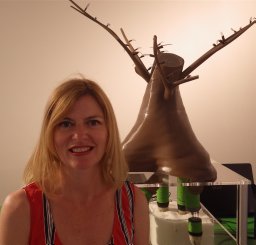 Barbara Mazzolai合作论文数CRIM Laboratory, Scuola Superiore Sant’Anna2Valentina Lo Gatto合作论文数1Seher Makineli合作论文数1Jos A Boetzkes合作论文数1Mathijs Bruins合作论文数1Zola Fung-A-Jou合作论文数1Ditzia Susana Garcia Morales合作论文数1Merel Leistikow合作论文数1
 Sam Hoh合作论文数1Martijn de Vries合作论文数1
 Ebrahim Shahabi合作论文数National Taiwan University of Science and Technology;Taipei Taiwan;National Taiwan University of Science and Technology1
 Giovanni Colucci合作论文数Politecn Torino, DIMEAS1
 Shibo Zou合作论文数Lab Multiscale Mech LM2, Polytech Montreal1
 Jovana Janjic合作论文数Biosense Webster, Johnson & Johnson Medical S.p.A.1
 Luigi van Riel合作论文数1
 Rosangela Barcaro合作论文数CNR1
 Mando Dyko Filipe合作论文数1
 Simona Aracri合作论文数Univ Edinburgh, Sch Engn, Sanderson Bldg,Robert Stevenson Rd, Edinburgh EH9 3FB, Midlothian, Scotland1
 Fabian Trauzettel合作论文数Department of Biomechanical Engineering, Delft University of Technology1
 Awaz Ali合作论文数1
 Angelo Odetti合作论文数Department of Engineering, Roma Tre University1
 Evelyn Regar合作论文数1
 Josies Hughes合作论文数School of Engineering, École Polytechnique Fédérale de Lausanne1
 Yu Jun Tan (陈毓君)合作论文数Department of Mechanical Engineering, College of Design and Engineering, National University of Singapore1
 Raye Chen Hua Yeow合作论文数Department of Biomedical Engineering, College of Design and Engineering, National University of Singapore;Roceso Technologies;Emosis1
 G. (Gijs) Van Soest合作论文数Department of Cardiology, Erasmus MC;Medical Delta1Vriens Menno R合作论文数1




