This conclusion presents some closing thoughts on the concepts covered in the preceding chapters of the book. The book explains how foreign intervention influences the course of civil wars. It focuses on how foreign resources affect the military power of the recipient belligerent. The book analyses how changes in the balance of capabilities influence the form of warfare that characterises a civil war. It introduces the idea that foreign resources possess both a gross and interactive value. The book explores how changes in one, or more, belligerent's military power will affect the character of the warfare in civil war. It presents evidence that foreign intervention in the Angolan and Afghan civil wars had a significant impact on the contending strategies of the belligerents in those conflicts. Foreign intervention in the Angolan and Afghan civil wars reinforces the notion that foreign resources will have an inconsistent impact on …
Prevaricating through Georgia: Sherman's Memoirs as a Source on the Atlanta Campaign Albert Castel It would be difficult to exaggerate the influence of The Personal Memoirs of W. T Sherman, Written by Himselfon both popular and professional conceptions of the Civil War.' Ever since their publication in 1875 many thousands of people have read them and numerous historians have made heavy use of them in writing about what has been well-called "the American Iliad." That this is so is understandable. Sherman played a major, and eventually the leading, role in some of the Civil War's most dramatic and decisive events. In his Memoirs he often presents significant information about these events that can be found in no other source. Not least of all, he writes in a manner that is attractive to the general reader and furnishes the historian with an abundance ofquotable passages and colorful anecdotes with which to enliven his own pages. But if Sherman's Memoirs are a highly influential source on the Civil War, are they also highly dependable one? No! thundered Henry Van Ness Boynton , Washington correspondent of the Cincinnati Gazette and a brevet brigadier general of the Union army, in a book that appeared soon after the publication of the Memoirs and which was entitled Sherman's Historical Raid. "Judged by the historical records," Boynton charged, "the verdict must be that the work is intensely egotistical, unreliable, and cruelly unjust," an accusation he sought to support by presenting documents contradicting Sherman's account of various key episodes in his wartime career. Sherman contended, and probably believed, that Boynton was hired to write his critique of the Memoirs by Secretary of War William W. Belknap and Grant's ' Written in 1873-74, the Memoirs were published in two volumes in 1875 by D. Appleton and Company ofNew York. In 1886 the same company published, also in two volumes, a revised and expanded edition of the Memoirs with appendixes containing correspondence engendered by the 1875 edition. AU citations in these notes refer to the 1886 edition unless otherwise indicated. Civil War History, Vol. XL, No. 1, © 1994 by The Kent State University Press PREVARICATING THROUGH GEORGIA49 personal secretary, Orville Babcock, both of whom soon found it necessary to resign from their offices because of corruption. Whether or not Boynton in fact was employed by Belknap and Babcock is beyond the purview of this article. It also is irrelevant; even a hired pen prefers facts to falsehoods as ammunition. It is worth noting, however, that Boynton was a college professor before the Civil War, that during it he became lieutenant colonel of the 35th Ohio, that he received a Congressional Medal of Honor for his conduct at the Battle of Missionary Ridge, that he was breveted brigadier general for his performances at Chickamauga and Missionary Ridge, and that from 1897 to 1905 he was chairman of the Chickamauga and Chattanooga National Military Park Commission. This is scarcely the background and record of a man who could, to quote what Sherman said about him in an 1880 newspaper interview , be hired "to do anything for money. Why, for a thousand dollars he would slander his own mother."2 Fifty-four years later the same question was asked about the Memoirs by Maj. Basil H. Liddell Hart, the famous British military historian and theoretician , in his Sherman: Soldier, Realist, American. His answer, in stark contrast to Boynton's, was a resounding Yes! Although Sherman, he conceded, was guilty of "occasional careless slips," the "general impression conveyed by the memoirs coincides closely with that obtained by an analysis of the records, and the only important ommissions are some of his own achievements . . . . The faults of his memoirs are of detail, not of vain glory or bias."3 Which ofthese diametrically opposed opinions is correct, or at least comes closest to so being? The only way to find out is to do what Boynton and Liddell Hart claimed that they did: compare Sherman's versions of events with the "records"—to be specific, the Official Records of the Union and Confederate Armies—and other pertinent primary sources. Since doing this thoroughly for all of the nearly six hundred...
book reviews335 The last volume under review, Jones' Hood's Texas Brigade: Sketch Book (introduction by Simpson), is more than a "coffee table" volume; rather. Sketch Book gives readers a realistic glimpse of the personal paraphernalia ofTexas'Confederate soldiers going to war. That paraphernalia was just about whatever the soldiers wanted it to be—"bowie" knives with 24-inch blades, instead of sabers; double-barreled shotguns, instead of repeating rifles; and uniforms ofeverydescription. Section "A"ofthe volume includes drawings ("photographic interpretations") which depict various officers and enlisted men in their "dress" uniforms, with the uniforms being as varied as the men who wore them; section "B" depicts more uniforms and accouterments such as weaponry; sections "C" and "D" depict battle standards (some new, some worn, torn, and bullet-riddled) and military statuettes (as popular art). Again, realism is the byword of Jones' effort. As Simpson notes in his introduction, Jones manages to capture the "drama" ofthe brigade, bringing it to life. Jones in his section "A"—again as Simpson notes—even manages to capture the "certain cockiness, an air of self-assurance and even defiance" in the faces of the men (v). In sum, all four books under consideration here add significantly to the "detail" of the Civil War. Notably, the autobiography by Graber and the biography by Gallaway give insight into the war from the "ground up," from the vantage ofindividual, "average"enlistees. Simpson then enlarges the panorama by providing much detail on Texas' most famous fighting unit, while Jones makes "it" all come alive. Historians of the Civil War era, along with their colleagues studying Texas and military history should add these volumes to their list of books to examine. James Smallwood Oklahoma State University Battle Tactics ofthe Civil War. By Paddy Griffith. (New Haven and London : Yale University Press, 1989. Pp. 239. $25.00.) Dr. Paddy Griffith Royal Military Academy Sandhurst, England Dear Paddy: You will not like what I am about to write and you will be right. But before I write it, let me assure you that I am not the least bit anglophobic or (given your first name) gaelophobic, nor do I in any way consider it presumptious for non-Americans to deal with the American Civil War. "Outsiders " can see things that escape the oft-times parochial vision of Ameri- 336CIVIL WAR HISTORY can Civil War historians, as is amply demonstrated by G. F. R. Henderson, J.F.C. Fuller, B.H. LiddellHart, and A. H. Burne, all ofwhom made excellent contributions to the study ofthe subject. It is only because, for strictly scholarly reasons, I find that your book does not make such a contribution that I say what I will say about it. Its thesis in essence is this: Despite their greater range and accuracy, rifled muskets and cannons provided little actual advantage over smoothbores on the Civil War battlefield, with the result that tactically the 1861-65 conflict, instead of being the "first modern war," was the "last Napoleonic war." Furthermore,judged by Napoleonic standards, both the Union and Confederate armies performed in an inept and inferior fashion. This was particularly so when it came to infantry attacks. Owing to the baneful influence of the prewar tactical doctrines espoused by West Point "engineers" such as Mahan, Halleck, and McClellan, too much emphasis was placed on defensive fortifications. Along with poor training, amateurish leadership, and insufficient offensive spirit among the troops, in particular veterans, this caused battles, notably after 1863, to degenerate into mere firefights that rarely achieved decisive results. Had true Napoleonic tactics, embracing the "attaque à outrance" by infantry relying on the bayonet, concentrated artillery bombardments at close range, and the large-scale employment of saber-wielding cavalry as a "corps de chasse," been utilized, battles would have had Napoleonic outcomes and the war ended sooner. As you are fully aware, this thesis runs diametrically counter to what long has been the standard view among American Civil War historians (and British ones as well). It is an article of faith with them that the Civil War foreshadowed modern war, that the combination of the rifle and the trench made the defense tactically dominant over the offense, and that consequently Napoleonic...
BOOK REVIEWS The American Civil War and the Origins ofModern Warfare. By Edward Hagerman. (Bloomington & Indianapolis: Indiana University Press, 1988. Pp. xviii, 366. $37.50.) Most Civil War military history, like most military history in general, consists of narrative-analyses of campaigns and battles as seen through the eyes, so to speak, ofthe contending commanders. Edward Hagerman's The American Civil Warandthe Origins ofModern Warfare is not that kind of history. It takes what the author calls an "organizational" approach and focuses on how and why the Civil War was conducted the way it was rather than on what happened as such. One might say that instead of the traditional eagle's view, with its emphasis on the subjective and dramatic, it offers a mule's perspective on the Civil War, in which the objective and mundane are the center of attention. Hagerman, however, begins with the theoretical as he examines the nature ofAmerican military thought prior to 1861 . He finds it ambivalent. On the one hand it extolled the Napoleonic pursuit ofquick, decisive victory by means ofthe tactical offensive; on the other hand it stressed, notably in the writings of Dennis Hart Mahan, the value of the tactical defense based on field fortifications. Moreover, reflecting its prime source, Jomini, it suffered from a "mechanistic" divorce of organization from strategy. For these reasons, and also because oftheir ambiguous experience in the Mexican War, the generals of the North and South were inadequately prepared intellectually to fight the sort of war they had to fight in actuality. Hagerman then proceeds to devote the rest of his book (which derives in substantial part from his 1965 Duke University dissertation, "The Evolution of Trench Warfare in the American Civil War," and large portions of which have been previously published in essentially the same form in this and otherjournals) to demonstrating how Civil War armies coped with the challenges they encountered after April 12, 1 86 1—challenges that were unprecedented , unanticipated, and which arose from the technological, ideological , organizational, geographical, and social conditions of midnineteenth -century America. Broadly speaking there were three of them: (1) supplying tens of thousands of men and animals over long distances and periods oftime while far from water and rail transportation and oper- BOOK REVIEWS173 ating in regions where the terrain was rugged, roads few and poor, and population and forage sparse; (2) communicating information and orders in a timely and reliable fashion so that commanders could exercise effective control over these huge hosts; and (3) finding a solution to the tactical and strategic problems posed by the battlefield dominance ofthe rifled musket. The answer to the first challenge, overland supply, was the mule-drawn wagon. Civil War armies employed wagons on a scale far exceeding that of Europe or any previous war. Indeed, at times wagons were so numerous in Union armies that they impaired what they were intended to facilitate— mobility. To alleviate this problem, the Federals, with Quartermaster General Montgomery Meigs taking the lead, endeavored to reduce the ratio of wagons to troops by increasing the amount of rations the latter carried, using more pack mules, and developing better marching techniques. Their efforts achieved considerable success, notably in the Army ofthe Potomac, where the wagon-troop ratio was reduced from 45: 1000 during the Peninsular Campaign to 20: 1000 during Mead's post-Gettysburg maneuverings in Virginia. However, when Grant took defacto command ofthe Army of the Potomac in 1864 he scrapped many of Meigs's reforms and raised the ratio to 40: 1000. By the same token Rosecrans, when faced in 1863 with the need to traverse nearly a hundred miles of virtually barren country between Murfreesboro and Chattanooga, accumulated seventy wagons for every thousand soldiers in his army—the highest such ratio of the entire war— and the following year Sherman for similar reasons had fifty-two wagons for every one thousand men (the second highest ratio of the war) despite orders drastically curtailing regimental transport. In contrast, the Confederates , out ofnecessity and because theirarmies were smaller, got by with a much lower (although still high by European standards) ratio, at least until the closing months of the war when a shortage of...
BOOK RENTEWS179 er, were in danger of reverting to barbarism. Phillips's remedy embraced crop diversification and enlarged units of production, that is, plantations operated by trained, educated managers where blacks would as wage laborers resume therelationship with paternalistic whites for which they were suited by the innate qualities of their race. But in the longrun history was more important to Phillips than reform, if only because he found it easier to write superb history than to change things in the real world. And it is again possible, perhaps, to say "superb history." Professor Dillon, whose main concern hitherto has been with abolitionists, was one of that generation of scholars "amongwhom Phillips ' achievement was pushed into obscurity" by critics who charged that the Georgian's "pro-planter bias and his racist views . . . had led him to distort southern history," thus divesting his work "of scholarly— even moral—legitimacy" (p. 1). But then, one might say, Eugene Genovese cried, "Lazarus, come forth!" and Phillips was revived and, with qualifications, made respectable. The author undertakes a measured evaluation ofhis subject's work, repeatedly and punctiliously reminding his readers of Phillips's racialism, pointing out that although he anticipated some recent theories of the role and accomplishments of blacks under slavery, his inability to take blacks seriously kept him from developing such insights and would, when prevailing views on race had changed, bring down upon his writings overwhelming obloquy. More than anything else, Professor Dillon has written the history of an academic career in the days of giants. It is this aspect of the biography that may prove to be most valuable and interesting, because most of those who are likely to read the book already are familiar with the ups and down—and ups—of Phillips's scholarly reputation. Even though the personality of Dillon's Phillips remains just a little dim, those in the profession can easily fill in the gaps. Some things in the business have changed since those days, but others never will. The author's research in manuscript collections is wide-ranging, and the biography is well organized and clearly written. If it does not, in its net effect, go as far as Genovese's 1966 assertion that Phillips perhaps came as close to greatness "as any historian this country has yet produced ," it certainly seems to support what can now be taken as the current professional consensus—that Phillips's work is of enduring value. LudwellH. Johnson III College of William and Mary The Papers of AndrewJohnson: Volume 7, 1864-1865. Edited by LeRoy P. Graf. (Knoxville: The University of Tennessee Press, 1986. Pp. lxxxviii , 730. $39.50.) The materials presented in this volume of The Papers of Andrew Johnson begin on July 1, 1864, and end on April 30, 1865. These ten months 180CIVIL WAR HISTORY were, of course, the pivotal period of Johnson's career. During them he was elected vice-president, concluded his work as military governor of Tennessee, and suddenly and unexpectedly became President of the United States at one of the most crucial points in its history. No longer would he be, in the context of national affairs, merely one of many more or less important figures; now he would be the single most important person in the country, with enormous power for good or evil. What is to be learned about Johnson's metamorphosis in this volume? As in the previous volumes, precious little from what he himself wrote. Paper and pen were not his mode of communication, with the result that of the 657 documents contained in volume seven, only 86 are letters or telegrams he wrote or dictated, and most of these are of a routine official nature. Hence, again as is in the previous volumes, the majority of significant documents pertaining to Johnson takes the form of newspaper accounts of his speeches and letters (532 in all) from others. An examination of these sources reveals a number of things of interest with reference to Johnson's approach to Reconstruction. First, thanks in large part to a superb speech he gave in January 1865 to the Unionist Constitutional Convention he had arranged, he completed the difficult task of establishing...
book reviews187 trol—"We have concluded to pospone [sic] [another child] for a yearor so yet" (p. 46). Prevalent diseases and their treatments are discussed, and finally, the letters reveal much about Dr. Rutherford, including his surging ego—"Here I walk a lord of the soil. The Doctor is the greatest man in the country" (p. 15)—and his fondness of money. The second portion of the work, of dubious value, consists of Dr. Rutherford's recollections of early Oakland, Illinois. The third portion consists of accounts of the roles played by Dr. Rutherford, Abraham Lincoln, and others in the Matson trial. Unlike many edited works, this one has an index. A good introduction adds additional strength, as do several illustrations. The bibliography is meager, however, and the absence of a map is bothersome. The footnote on Arminianism (p. 105) is nearly useless, and the Fugitive Slave Act of 1850 is curiously labeled (p. 135). In sum, the work is limited and has flaws, but it is interesting and of value. James E. Davis Illinois College The Papers of AndrewJohnson: Volume4, 1860-1861. Edited by LeRoy P. Graf and Ralph W. Haskins. (Knoxville: University of Tennessee Press, 1976. Pp. L, 745. $20.00.) The Papers of AndrewJohnson: Volume5, 1861-1862. Edited by LeRoy P. Graf and Ralph W. Haskins. (Knoxville: University of Tennessee Press, 1978. Pp. borii, 676. $20.00.) Publication of the first volume of The Papers ofAndrewJohnson, a project sponsored by the University of Tennessee, the National Historical Publications and Records Commission, and the Tennessee Historical Commission, took place in 1967. These latest two volumes, as their titles indicate, cover the most important phase ofJohnson's life prior to his becoming president. It was during this period that he broke ranks with his fellow southern Democrats, opposed secession in his home state of Tennessee and in the South as a whole, became the most prominent leader of the southern Unionists, and was appointed by Lincoln as military governor of northern-occupied Tennessee. Thus Johnson performed a significant historical role, became for the first time a national figure, and placed himself in the position which would lead to his becoming , first, vice president, then president. What do the documents presented in these volumes tell us aboutJohnson , his attitudes, and events in general between 1860 and 1862? Sadly but bluntly, little of consequence that is not readily available in the more detailed biographies of Johnson, notably George Fort Milton's The Age of Hate and Lately Thomas's The First President Johnson. The reason for this disappointing outcome lies in the problem that is inherent in publishing Johnson's papers: there simply are very few Johnson papers 188CIVIL WAR HISTORY in the standard meaning of the term—i.e., letters or other documents written, or at least dictated, by Johnson himself. Of the nearly450items in volume four, only 22 bear Johnson's signature; and although the number of Johnson items increases to 152 (out of about 600) in volume five, most are routine official correspondence. Furthermore, as the editors frankly acknowledge, none of this handful of Johnson items reveals much about him personally or provides major insights into his public career. Either the great majority of Johnson's letters were lost and have yet to be found, or else Johnson did not write that many letters. The latter is almost certainly the case. Despite his earnest efforts to overcome his total lack of formal education, Johnson was, as all of the letters he personally penned demonstrate, scarcely literate; in addition, an injury to his right arm, suffered in a railway accident shortly before the Civil War, made writing physically awkward for him. Hence, Johnson avoided the written word as much as possible; the spoken word was his medium. To make up for the paucity of actual Johnson papers, the editors perforce have resorted to Johnson's speeches, as reported in newspapers and the Congressional Globe, and to letters he received. Since the speeches tend to be repetitious andsince most ofthem canberead in the original sources, reprinting them in thesevolumes isbasicallyto provide details and as a convenience for scholars. As for the letters of Johnson, with a few exceptions (such as...
THE HISTORIAN AND THE GENERAL: Thomas L. Connelly versus Robert E. Lee Albert Castel The June 1969 issue of Civil War History contains an article by Thomas L. Connelly entitled "Robert E. Lee and the Western Confederacy : A Criticism of Lee's Strategic Ability." In it Connelly, the author of an ongoing study of the Confederate Army of Tennessee,1 contends (among other things) that Lee is overrated both as a man and a soldier, that his selfish preoccupation with Virginia was an important factor in causing the Confederacy to devote a disproportionate share of its limited military resources to the East at the expense of the strategically more important West, and that his ill-conceived and wasteful offensives hastened Confederate defeat if in fact they did not cause it. Connelly concludes with the assertion that "one ponders whether the South may not have fared better had it possessed no Robert E. Lee."2 It is at once apparent that Connelly set out to do a job on Bobby Lee. Now there is nothing wrong with this as such. Scholars should be critical , reassessments are always in order, and Lee need not be regarded as some sort of sacrosanct saint on horseback. Personally I find it instructive to compare him with some of those German generals of World War II, such as Von Manstein, who by all accounts possessed admirable characters, but who gave their military talents to the service of an evil cause—in their case Naziism, in Lee's case slavery.3 And being myself a native of Kansas and having studied somewhat the South's struggle in the West, I can understand Connelly's resentment against what he terms "the colonial status of the western Confederate army in both Civil War writing and thinking."4 Nevertheless I find that most of Connelly's criticisms of Lee are either unfounded, excessive, or pointless. Furthermore I regard his article in general as constituting an example of a type of pseudohistory that has always existed, but which in recent times seems to be flourishing. It is a 1 Thomas L. Connelly, Army of the Heartland: The Army of Tennessee, 18611862 (Baton Rouge, 1967). 2 Thomas L. Connelly, "Robert E. Lee and the Western Confederacy: A Criticism of Lee's Strategic Ability," Civil War History, XV (June, 1969), 132. 3 To be sure, Lee in his own mind was fighting for his country. But the same was true of Hitìer's generals. * Connelly, "Lee and the Western Confederacy," 116. 50 type most notoriously represented by such works as Charles C. Tansill's Backdoor to War and D. F. Fleming's The Cold War and Its Origins.^ In them the authors, like Connelly in his article, disparage previous writers on their subject as being biased, guilty of superficial research and analysis, and as being members of some ill-defined scholarly establishment with a vested interest in perpetuating an historical myth. Also they, like Connelly, ignore obvious and fundamental truths while marshaling a massive array of carefully selected and one-sided data, all impressively buttressed by footnotes, in order to "prove" that the orthodox view is false and their own supposedly original interpretation is true. Thus Tansill "proves" that Roosevelt, and not the Japanese government , "got us into" World War II, and Fleming "proves" that Truman , and not Stalin, is mainly to blame for the Cold War. Similarly, Connelly "proves" that Lee was a poor strategist who hurt more than he helped the Confederate cause. Connelly begins his indictment of Lee by stating that in spite of the "morass" of biographies and monographs written about him, no Civil War figure "stands in greater need of re-evaluation than Lee," who on "at least three major counts, personality, field success and strategy . . . may have been the beneficiary of special pleading." With respect to the first count, Connelly suggests that Lee's awesome personal reputation may be undeserved, that perhaps it is really the product of the adulatory postwar writings of his former generals and staff officers, the South's need for a "symbol of suffering and resignation," and the "literary ability of Douglas Freeman."6 This is not without an element of truth...
80CIVIL WAR HISTORY Army of the Heartland: The Army of Tennessee, 1861-1862. By Thomas Lawrence Connelly. (Baton Rouge: Louisiana State University Press, 1967. Pp. xvi, 305. $8.50.) In his preface Thomas Lawrence Connelly observes that "the history of the Army of Tennessee, unlike that of its companion in arms, the Army of Northern Virginia, has been rather badly neglected." Stanley F. Horn's Army of Tennessee, first published in 1941, is the only full-length book on the subject, and although well written it is deficient from a scholarly standpoint . Yet, as Connelly also points out, the operations of the Army of Tennessee were as important strategically (if not politically) as those of Lee's forces, its military task actually far more difficult. With fewer numbers it was required to defend an area ten times larger than the Virginia theater and served by an inferior transportation system. In addition it was constantly handicapped by poor leaders, lack of governmental support , and political interference. As a result it was rarely victorious and often defeated; nevertheless it fought valiandy to die end, its soldiers sustained —not by the inspiration of a Lee or Jackson—but by an unshakable faith in themselves. Connelly (the author of that enjoyable satire on the Civil War Centennial , WtU Success Spoil Jeff Davis?) has undertaken in this, the first of a proposed two-volume study, to give the "army of the heartland" its rightful place in Civil War historiography by presenting a fresh, comprehensive, and critical account of its campaigns, battles, and leaders. On the whole he succeeds admirably. His analysis of the geographical, economic, and psychological factors that moulded Confederate strategy in the Tennessee Valley is a thoroughly original contribution, both in conception and information presented. The same can be said regarding the section on the formation and early history of what became the Army of Tennessee. Here in particular he reveals the key role of Governor Isham Harris of Tennessee and of the influence of public opinion on the deployment of Confederate forces (e.g., pressure from the "Memphis lobby" helped lead to an overconcentration of troops along the Mississippi and thus set the stage for Grant's breakthrough along the Cumberland and Tennessee Rivers). Although he deals with extremely complex operations, his descriptions are clear, concise, and quite readable. Undoubtedly the outstanding feature of the work is Connelly's evaluations of the personalities and performances of the various commanders of the Army of Tennessee. These are invariably perceptive, frequently iconoclastic , and almost always critical. He is especially harsh with Albert Sidney Johnston, who emerges as weak-willed, befuddled, and dominated by his nominal subordinate, the ambitious and conceited Beauregard. On the other hand, while noting Bragg's numerous mistakes, he rejects the standard view that the failure of the Perryville campaign was primarily the fault of that unfortunate general. Kirby Smith and the Richmond authorities, he argues, must share much of the blame. And, finally, he has done a truly monumental amount of research, particularly in manuscript sources, and as BOOK REVIEWS81 a result not only does he present important new facts but demolishes certain old myths. Just to cite one example, despite having been written about many times, it is not until now that we have the full and true story of the fall of Forts Henry and Donelson. Of course the book is not without some errors and defects. Contrary to what is reported on page 239, Sterling Price did not refuse to join Van Dom in a move through West Tennessee, nor did Van Dom stop Price "on the eve of a march on Nashville." Connelly, in his desire to be fair to Bragg, is perhaps unjust to Kirby Smith; certainly one will find a fundamentally different account of Kirby Smith's role in the 1862 Kentucky campaign in Joseph Parks's biography. Although the book contains five maps, the reader will find it advisable to have a Civil War atlas at hand. And Connelly has a habit of citing sources in manuscript even when they are readily available in print. Unless there are serious textual differences between the original and published versions, this practice would seem to be...
QUANTRILL'S BUSHWHACKERS: A Case Study in Partisan Warfare Albert Castel The successes achieved by Communist partisans in Asia and elsewhere , die realization diat die United States must learn to cope witii such enemies, and die belief held by some diat nuclear weapons make conventional military tactics unfeasible, have combined to produce an upsurge of interest in guerrilla warfare. Popular magazines and professional military journals alike have been featuring articles on guerrilla operations, and recently a number of books on the subject have been published as well. Most of diese writings naturally concentrate on modern developments, and only a few deal with historical examples. Yet the past, if properly utilized, can be instructive to the present. Nor is it necessary to look to otiier lands for source materials . Our own nation's history provides a splendid case study in partisan warfare—QuantrilTs bushwhackers. The Civil War brought into being many guerrilla leaders, but die most famous of them all, with the possible exception of John S. Mosby, was William Clarke Quantrill, sometimes called "die bloodiest man in American History." For nearly four years Quantrill and his men waged a constant and generally successful campaign against die Federal forces in western Missouri and along die Kansas border. In so doing they tied down thousands of Union troops, who could have been used witii greater strategic advantage elsewhere, and kept a large portion of Missouri a Confederate stronghold long after die main battlefront had moved far to the soutii. And not only did tìiey defy all efforts of die Federals to suppress diem, but more tìian once defeated large enemy forces in pitched batties. Thus at Baxter Springs, Kansas, on October 7, 1863, diey exterminated a one-hundred-man Union cavalry detachment, and on September 27, 1864, at Centralia, Missouri, diey did die same to 150 mounted infantry.1 Their most sensational exploit, and die one which is usually associated witii Quantrill's name, was die bloody Lawrence massacre of !Albert Castel, William Clarke QuantrilL- His Life and Times (New York, 1962), pp. 149-154, 187-193. Unless otherwise indicated all data and quotations appearing in Ulis article ara from Ulis work. 40 August 21, 1863. On this occasion Quantrill took 450 bushwhackers (probably die largest such force ever assembled during the Civil War) forty miles into Kansas, surprised and burned Lawrence (a town of about four tìiousand), and brutally murdered over 180 of its male inhabitants. He tiien led his men safely back to Missouri, altiiough hotly pursued by strong forces of vengeance-diirsting Federal soldiers.2 The skill and daring he displayed on this raid so impressed die historian Lloyd Lewis diat he declared Quantrill the equal of Nadian Bedford Forrest as a cavalry leader.3 The Unionists were outraged and dismayed by Quantrill's victories. In particular, diey found it difficult to understand why it was diat die diousands of Federal troops and militia stationed in Kansas and Missouri were unable to defeat or even check him. One exasperated editor asked; Is there not, among all our lieutenants, Captains, Majors, Colonels, and Generals, one single man of wit, address, shrewdness, and vim enough to devise some means of clearing out die miserable bushwhackers who are keeping the border in constant turmoil? Must we give it up [sic] that one bushwhacker is more than a match for ten soldiers? There is a screw, and pretty big one, loose somewhere. . . .4 The editor's outburst is a good example not only of die frustration tiiat guerrillas can cause among their enemies, but also of the lack of comprehension that most people have of die nature of partisan warfare. For Quantrill's success was due to otìier tilings besides 'loose screws" and an absence of "vim" in the Union military. It was based, instead, on tìiose factors tiiat have come to be recognized as die essentials for all effective guerrilla operations. As listed by that modem-day master of partisan war, Mao Tse-tung, these are:5 1.A climate of public opinion adverse to die government: "guerrillas must swim like fish in die sea of die people." 2.A tough, hard nucleus of rebels ready to...
BOOK REVIEWS439 also suffered a series of penetrations, the most famous of which was Stoneman 's raid in 1865. The fall of Fort Fisher, "the Gibraltar of the South," and the subsequent occupation of Wilmington resulted in Confederate loss of the mouth of the Cape Fear River, destroyed the Confederacy's last contact with the outside world, and closed down the Soudi's last port of entry for munitions from Europe. Sherman entered the state in March, 1865, and soon moved against Raleigh, last stop along the road to Bennett's farmhouse where in April, 1865, Johnston surrendered to him. Professor Barrett points out that North Carolina was a primary source of supply for Lee's operations in Virginia and that die blockade-runners slipping in and out of Wilmington played a significant role in keeping Confederate armies in the field. He emphasizes North Carolina's contribution to the Confederate war effort in terms of materiel but claims that the state's greatest gift was its manpower. With one-ninth of die population of die Confederacy , it furnished an estimated one-sixth or one-seventh of its soldiers and the author claims that one of every four Confederates killed in battle was a North Carolinian. Such figures, by their very nature, are hard to come by; but if they are indeed accurate, then North Carolina's losses far exceeded those of any other Southern state. While these three state studies have no common format, they deal with a number of similar topics. For example, each volume describes the secession movement on the local scene—the arguments advanced, the passions aroused, the mechanics employed for its consummation. They also, either directly or indirectly, deal with such military problems as raising, arming, equipping, and training troops as well as such domestic problems as collecting taxes, enforcing laws, struggling against financial chaos, and producing the food, clothing, and medical supplies necessary for maintenance of a tolerable living standard despite the blockade. To one degree or another, each state had to deal with the problems of desertion, dissident unionists within their borders , and of conducting business with the Confederate government. In each state there were, in addition, specific problems arising from the fact that part of its territory was actually occupied by enemy troops. The volumes reviewed here, based as they are upon substantial research, are genuinely valuable additions to the Civil War library. They not only provide balanced views of the social, political, economic, and military activities in their respective states but also, insofar as is possible, relate these activities to the larger picture of the war. In so doing, the three authors have added to our already vast store of knowledge about this profoundly significant period in our nation's history. Otis A. Singletary University of North Carolina at Greensboro The Union vs. Dr. Mudd. By Hal Higdon. (Chicago: Follett Publishing Company, 1964. Pp. 235. $5.95.) The basic facts concerning "The Union vs. Dr. Mudd" are well known and well established. Samuel A. Mudd, a Maryland physician of Southern 440CIVIL WAR history sympathies, tended the broken leg of John Wilkes Booth, gave him shelter, and aided him in his escape attempt. Shortly afterward Mudd was arrested and placed on trial as one of the Lincoln assassination conspirators. He pleaded that he had been unaware of Booth's identity and crime, but a special military court sentenced him to life imprisonment. He was confined at Dry Tortugas, where he displayed heroism ministering to fellow prisoners and the soldiers of the garrison during a severe yellow fever epidemic. After serving nearly four years he was pardoned by President Andrew Johnson and spent the remaining years of his life practicing his profession and professing his innocence. The great mystery in the case of Dr. Mudd is whether or not he bed when he stated that he did not recognize Booth and that he was ignorant of the actor's deed. The court believed he did, so did most contemporaries, and author Hal Higdon agrees. Mudd had twice before met Booth and on both occasions spent considerable time with him. Mudd at the trial falsely denied one of these meetings and also alleged that Booth...
A member of the History Department at the University of California, Los Angeles, Albert Castél has specialized in the Civil War. His article on the Fort Pillow Massacre appeared in this magazine in March, 1958, and his book A Frontier State at War: 1861-1865 was published by the Cornell University Press last year. The Jayhawkers and Copperheads of Kansas ALBERT CASTEL "i would not for my life go into any part of Kansas and advocate the rebel cause. . . . The mere suspicion that one is disloyal may result in his being shot."1 So wrote a New York Tribune correspondent following a trip through Kansas early in 1863. The correspondent did not exaggerate. The overwhelming majority of Kansans were Northern in origin, Republican in politics, and intensely antislavery in sentiment. Moreover, they had bitter memories of the Missouri border ruffian invasions of the 1850's and of the long struggle to make Kansas a free state. As a consequence probably nowhere else in the North did there exist so fanatical a devotion to the Union cause and so passionate a hatred of the South and slavery as in this recently admitted and sparsely settled frontier state. The patriotism of the Kansans led to their contributing more Federal troops, in proportion to population, than any other Northern state; these troops suffered a higherpercentage of casualties than those of any other Northern state.2 Their strong antislavery, anti-Southern feeling also resulted in a fierce and ofttimes vicious persecution of any group or person in Kansas suspected of disloyalty or Southern sympathies. Thus the citizens of Elwood, as well as those of many other Kansas communities, 1 Quoted in Freedom's Champion (Atchison), March 31, 1863. 2 The War of the Rebellion: A Compilation of the Official Records of the Union and Confederate Armies (Washington: Government Printing Office, 1880-1901), Ser. Ill, VoL 5, p. 667; hereinafter cited as O.R., followed by the series number in Roman numerals, the volume number in Arabic, the part number (if any), and the page, as O.R., III, 5, p. 667. 283 284albert castel publicly flogged alleged "secessionists" and ordered them to leave the state.3 At Topeka, members of the local Union League moved to "take care" of all Copperheads following the Lawrence Massacre.4 In Jefferson County, failure to join the militia or to enthusiastically support all war measures was generally sufficient to cause a man to lose his property or even his life.5 And at Junction City and Fort Scott, soldiers sacked newspapers accused of publishing treasonable statements.8 Such repressive measures, moreover, could be committed with legal impunity : The state legislature had declared all "rebel sympathizers" to be outside the protection of the law.7 The brunt of suspicion and persecution fell on settlers of Southern antecedents, and in particular on members of the Methodist Episcopal Church, South. When the ministers of this church met in Atchison in September, 1861, for their annual conference, city authorities notified them to transact their business and be out of town without two hours. Theirpresence caused an "unusual commotion" among the townspeople, who kept them under surveillance throughout their stay in Atchison. As the war proceeded and this sort of hysteria increased, members of the church became afraid of being known as such, and finally stopped attending public services. Soldiers destroyed a Southern Methodist meetinghouse at Shawnee Mission, and mobs wrecked its churches elsewhere. Often members found it necessary to meet clandestinely in private houses. Eventually all but four of Southern Methodist preachers in Kansas fled the state for fear of their lives; and of these four, only one "continued to preach through the war period." By the end of the war the Methodist Church, South, was nearly extinct in the state.8 The most notorious instance of the persecution of so-called Copperheads occurred in Leavenworth, then the chief city of Kansas. In June, 1861, Daniel R. Anthony, fiery Republican pubh'sher of the misnamed Leavenworth Daily Conservative, shot and killed R. C. Saterlee, Democratic editor of the rival Herald, for printing supposedly unpatriotic remarks . Anthony was brought to trial but acquitted; his deed apparently received general public approbation. The only...
Albert Castel, a doctoral graduate of the University of Chicago, L· a Kansan now teaching in the Department of History of the University of California at Los Angeles. The Fort Pillow Massacre: A Fresh Examination of the Evidence ALBERT CASTEL a feeling of horror swept across the North during the month of April, 1864. From the banks of the Mississippi down in Tennessee came news that the Union garrison at Fort Pillow had been brutally massacred by the Confederate cavalry of Nathan Bedford Forrest. Not only had the Confederates murdered most of the garrison after it had surrendered, but they had buried Negro soldiers alive, set fire to tents containing Federal wounded, and committed other terrible atrocities. Outraged people throughout the North demanded vengeance, and President Lincoln promised retaliation should the reports from Tennessee prove true. Although Lincoln never ordered reprisals, the "Fort Pillow Massacre" became fixed in the mind of the North as a deed of "inhuman, fiendish butchery."1 The Joint Congressional Committee on the Conduct of the War, after collecting a large quantity of sworn testimony from the survivors of the garrison, issued a widely read report which provided official documentation for this belief.2 On the basis of the evidence contained in the report, Horace Greeley bluntly asserted that "If human testimony ever did or can establish anything, then [Fort Pillow] is proved a case of deliberate, wholesale massacre of prisoners of war after they had surrendered. . . ."8 Subse1 Harper's Weekly, VIII (April 30, 1864), 283. 2 House Reports, No. 65, 38 Cong., 1 Sess., Joint Committee on the Conduct of the War, Fort Pillow Massacre [Washington, D.C., 1864], hereinafter cited as Fort Pillow Report . 8 Horace Greeley, The American Conflict (2 vols.; Hartford: O. D. Case 8t Co., 18641866 ), ?, 620. 37 38ALBERT CASTEL quent Northern historians, without any notable exception, have basically accepted this conclusion.* Southern historians, however, especially the many biographers of Forrest, have heatedly and skillfully challenged the Northern view.5 They have questioned the objectivity of the Committee on the Conduct of the War, criticized its procedures, and pointed to contradictions and errors in the statements of the witnesses who appeared before it. Above all, they have offered an impressive amount of testimony, much of it sworn, from Confederate participants in the attack on Fort Pillow. This is in fundamental opposition to the Northern testimony. Backed by this Southern evidence, they have in effect declared that "If human testimony ever did or can establish anything, then Fort Pillow was not a case of deliberate, wholesale massacre of prisoners of war after they had surrendered." In the writer's opinion, neither side in this controversy is altogether wrong or altogether right; they are both guilty, in varying degrees, of prejudice and error. Consequently, the discussion in the following pages is an attempt to re-examine the evidence concerning Fort Pillow solely on its own merits and to arrive at the closest approximation to the historical truth possible. The fact that because of his Kansas birth the author might be considered a "Yankee" is, he trusts, balanced by the fact that prior to undertaking this study he was a wholehearted believer in the Southern point of view concerning Fort Pillow. The historical debate over Fort Pillow divides itself into three categories: (1) the capture of the fort, (2) the massacre, and (3) the atrocities. THE CAPTURE OF THE FORT Fort Pillow stood atop a bluff overlooking the Mississippi River. It consisted of a dirt parapet six to eight feet high, and from four to six feet thick, with a ditch twelve feet wide and about eight feet deep immediately in front. The parapet extended for about 125 yards in the form of a rough semicircle and faced only to the east. The rear, or river side, of the fort was open to the bluff, which descended sharply to the river bank below. The terrain on the land side of the fort was rough and hilly, and covered with a low undergrowth. At distances varying from ten to 150 yards, the ground * Dudley T. Comish, The Sable Arm (New York: Longmans, Green & Co., 1956), pp. 173-76; Harry Williams, "Benjamin Wade and the Atrocity...
 Richard K Betts合作论文数1
 Asad Amir Zada合作论文数1Pierre Allan合作论文数1
 William Rosenau合作论文数1Mats Berdal合作论文数1David M Malone合作论文数1Ivan Arreguín-Toft合作论文数1Stephen Biddle合作论文数1fred bridgland合作论文数1Gerald J. Bender合作论文数1horace campbell合作论文数1C. A. Jones合作论文数1Barry Buzan合作论文数1Henry St. Amant Bradsher合作论文数1
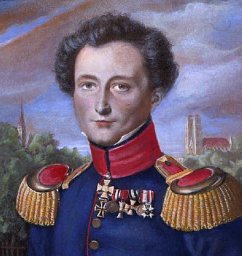 carl von clausewitz合作论文数1Jutta Bakonyi合作论文数1
 Peter Chalk合作论文数Sch Int Affairs & Publ Adm, Shanghai Univ Polit Sci & Law1anthony arnold合作论文数1
 bernd beber合作论文数WZB Berlin Social Sci Ctr1
 James F. Adams合作论文数Department of Political Science, University of California, Davis1
 Samuel Bowles合作论文数Santa Fe Institute;University of Massachusetts, Amherst;Faculty of Economics, University of Siena1Peter Paret合作论文数1Michael Howard合作论文数1
 Christopher Blattman合作论文数NATIONAL BUREAU OF ECONOMIC RESEARCH1
 Duncan Snidal合作论文数Nuffield College, University Of Oxford1
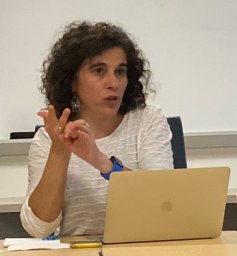 Laia Balcells合作论文数Department of Political Science;Yale University;Department of Political Science, Yale University1
 Kirsti Stuvøy合作论文数1
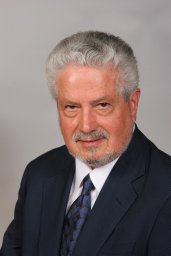 David A Baldwin合作论文数Department of Chemistry, University of Houston1
 Daniel L. Byman合作论文数School of Foreign Service, Georgetown University1
 Adam Lockyer合作论文数Department of Government and International Relations;University of Sydney;Department of Government and International Relations, University of Sydney1Derek J. Clark合作论文数Department of Economics;University of Tromsø;Department of Economics, University of Tromsø1
 Halvard Buhaug合作论文数Peace Research Institute Oslo;Norwegian University of Science and Technology1
 Boaz Atzili合作论文数1Christopher H. Achen合作论文数1Jan Angstrom合作论文数1Andrew J. Enterline合作论文数University of North Texas;University of North Texas, University of North Texas1Aysegul Aydin合作论文数Department of Political Science;Binghamton University1Dylan Balch-Lindsay合作论文数1
 Scott Gates合作论文数Department of Political Science, University of Oslo1
 Kristian Skrede Gleditsch合作论文数Department of Government, University of Essex1Eliot A. Cohen合作论文数1Patrick M Regan合作论文数1Risa Brooks合作论文数1
 Bruce Hoffman合作论文数Edmund A. Walsh School of Foreign Service, Georgetown University1Albert A. Stahel合作论文数1
 Patrick Regan合作论文数University of Notre Dame1




