Artificial mounds in pre-Columbian America provide evidence of stratified societies as chiefdoms and states. These structures served multiple purposes, including as burialgrounds. For the first time, artificial mounds have been identified by the use ofgeotechnologies at the Lontra stilt villages in eastern Amazon, Brazil.
ABSTRACT The submersed anthrosols of the estearias in Maranhão exhibit unique characteristics that expand our understanding of anthropogenic soils in complex hydromorphic and fluviolacustrine environments. This study aimed to characterize these soils morphologically, physically, and chemically, and to compare them with other Amazonian Archaeological Dark Earths (ADEs) from upland and floodplain environments. A database of 160 anthropic horizons from 71 profiles in eight studies was compiled from theses and dissertations, allowing detailed comparative analyses. Principal Component Analysis and Pearson correlation were applied to identify the main soil properties associated with each environment. The results indicate that, beyond anthropogenic additions, prolonged flooding and redox-affected conditions play a crucial role in soil formation. When combined with horizons containing ceramic artifacts, charcoal, and organic sediments, these features suggest that the estearias soils formed under distinct dynamics compared to typical ADEs. The novel association of anthropogenic and organic horizons in submerged estuarine soils highlights the complexity of environmental and human interactions in the region. These findings support the need for revising ADE classification criteria, particularly regarding the exclusive use of available phosphorus as a diagnostic parameter. Complementary studies, including micromorphology, mineralogy, and spatial and temporal analyses, are essential to understand the genesis and dynamics of these soils. Despite their limited agricultural potential, these soils represent a valuable scientific and cultural heritage.
Montículos artificiais de terra são encontrados em toda a América pré-colombiana. Eles evidenciam sociedades estratificadas, nas quais a liderança era capaz de mobilizar grande esforço humano para sua construção. Pela primeira vez, com a ajuda da aplicação de geotecnologias, essas estruturas foram descobertas nos sítios arqueológicos palafíticos da Amazônia Oriental, Brasil.
Anna C. Roosevelt is one of the most important scholars of the Amazon. In the late 1970s, the American archaeologist caused a revolution in the archaeological thinking of South America's lowlands by opposing the ecological determinism that dominated archaeological thought at the time. Roosevelt brought significant visibility and prominence to the history of Brazilian indigenous peoples, asserting that the original peoples who inhabited the region thrived in the tropical environment, achieving the status of civilization. This article revisits her chapter published in the work that inaugurated the so-called New Indigenous History, which remains a cornerstone in understanding the traditional peoples of the Amazon.
As serpentes são animais que aparecem com muita frequência na iconografia pré-colombiana, assim como nos relatos etnográficos e nas mitologias, de norte a sul do continente Americano. Foram estudadas, em sua maioria, como símbolos ou representações de esferas sociais e religiosas. Neste artigo busca-se rever esse tema sob o olhar das Novas Materialidades na Arqueologia, cuja agência da serpente se revela, por vezes, mais importante do que a agência humana. Busca-se, desse modo, uma visão menos antropocentrista de cosmologias em que a serpente teve um papel crucial, ora nos mitos de criação, ora na produção de cultura material. Examinam-se, de modo comparativo, três áreas culturais, a saber: Mesoamérica, Amazônia e Andes.
Greenstone artifacts, or muiraquit & atilde;s, were objects of luxury and prestige appreciated by Amerindians throughout all pre-Columbian America. Generally these artifacts are shaped like a toad or frog. This paper presents a new discussion over these greenstones associated with the world of the dead in Amazon and Mesoamerica, highlighting spheres of interaction between both cultural areas.
Snakes are very important animals in various worldviews, from the Ancient world to the present day. They are animals that appear very frequently in pre-Columbian iconography, as well as in ethnographic accounts, from the north to the south of the American continent. This article seeks to review this theme from the perspective of New Materialisms in Archaeology, in which the agency of the snake is sometimes revealed to be more important than the human agency. In this way, a less anthropocentric view of cosmologies in which the snake played a crucial role, sometimes in creation myths, sometimes in the production of material culture, is sought
Os livros didáticos do Ensino Básico do Brasil dão pouca atenção à pré-história do continente americano e do próprio Brasil. Enfatizam o modelo de civilização do Antigo Mundo e pouco promovem a reflexão para estes mesmos parâmetros no continente americano. Poucas são as exceções, como é o caso da civilização maia. Por outro lado, ao se conferir o epíteto de civilização a estes povos ameríndios, se esquece de refletir que são povos indígenas, originários da América. Neste capítulo abordamos estas questões e chamamos a atenção para a existência de uma complexa civilização que se desenvolveu na Baixada Maranhense entre o início da era cristã até o ano 1000 d.C.
Habitações em palafitas são um tipo de moradia comum na longa duração. Estão presentes em locais majoritariamente tropicais, com alta incidência de chuva, cujos troncos de árvores servem para separar as águas das casas. Durante o period pré-colonial no continente americano, este tipo de moradia predominou num arco que vai desde a costa do Peru, passando pelo Panamá, Colômbia, Surianame, Guianas, baixo Amazonas e estuário do Maranhão, além de ao longo do rio Amazonas. Neste artigo examinamos as estearias do Maranhão, sítios de palafitas construídos desde o ano 1 até o ano de 1200 AD.
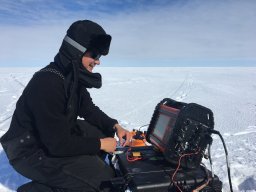
Archaeological evidence of pre-colonial indigenous villages are scarce in the Amazon region. Normally, wood decomposes quickly in the ground. However, in the case of stilt houses, the archaeological materials can be well preserved underwater or buried in sediments below waterbodies. The main objective of this work is to advance the understanding about the archaeological stilt village at the Formoso Lake in the Maranhao wetland, eastern Brazilian Amazon. We applied Ground Penetrating Radar (GPR) and Side Scan Sonar (SSS) for this underwater archaeological investigation. The GPR results allowed us to map the lakebed and detect diffraction hyperbolas in the water column, which can be related to wood stilts. The SSS results also helped image the lakebed and identify stilts with a higher spatial coverage compared to GPR. The combination of these two non-invasive geophysical methods allowed us to detect stilts beyond the area found in previous studies. These findings can guide the search and collection of new archaeological materials and, therefore, contribute to preserving this unique cultural heritage.
Pendants made of green stone and known as muiraquitãs were made by pre-colonial Amazonian indigenous peoples. Possibly used as jewelry, these artifacts comprised a sphere of political interaction that encompassed the Caribbean, lower Amazon and the Brazilian state of Maranhão. This article discusses these relationships based on three muiraquitãs found in the stilt villages of Maranhã
O período formativo (cerca de 4.000 a 2.000 AP) no continente americano foi caracterizado por ocupações humanas ao longo da costa, rios, lagos, e nos interflúvios das terras altas. No Brasil, existe agora uma tendência de negar a existência do Formativo devido a um suposto vazio popular amazônico neste período. Os estudos nas estearias da Baixada Maranhense, juntamente com investigações anteriores em outras partes do Brasil, sugerem que o Formativo certamente existiu e mostram que estes sítios possivelmente foram a última fronteira do Formativo na Amazônia em sua porção oriental. Ademais, sugere-se uma nova fase para a Tradição Borda Incisa nas estearias.
Este artigo debruça-se na estearia do Formoso, um sítio arqueológico pré-colonial formado por palafitas na região estuarina da Baixada Maranhense. A análise do material cerâmico desse sítio evidenciou características tecnológicas semelhantes à da Tradição Inciso-Ponteada/Arauquinoide. Nesse sentido, sugere-se uma nova fronteira geográfica para a dispersão dessa Tradição, sendo o Maranhão, a porção mais oriental da expansão destes grupos humanos. A análise espacial do assentamento mostrou uma área linear conectada, possivelmente por uma ponte, a outro conjunto circular. O estudo dos artefatos coletados corroborou para a interpretação de que a área linear é um espaço mais cerimonial enquanto que a circular, mais residencial. A estearia do Formoso apresenta uma forma inédita de habitação indígena nunca antes descrita na Antropologia e na Arqueologia das Terras Baixas da América do Sul.
Este trabalho tem como objetivo aplicar as teorias das novas materialidades ao estudo da cultura material da estearia do Formoso, uma aldeia palafítica pré-colonial dos séculos IX-X AD, localizada na Amazônia oriental. Os apliques dos vasos cerâmicos deste sítio arqueológico apresentam várias informações cosmológicas no que tangem à transformação ou metamorfose dos corpos, aspectos estes férteis para a discussão do xamanismo nas terras baixas da América do Sul, em especial, da Amazônia. Utilizam-se conceitos clássicos da etnografia antropológica aplicados à Arqueologia, contribuindo para a discussão sobre a diversidade das formas de fabricar o corpo na Amazônia em sua porção mais oriental, como o do Mestre dos Animais, uma entidade sobrenatural metamorfoseada pelo xamã e que também pôde ter feito parte da cosmologia dos povos lacustres do Maranhão.
Prehistoric figurines are generally ceramic and stone artifacts made for various functions, from toys to ceremonial purposes. The figurines can depict humans, animals and super naturals beings. A set of 74 ceramic figurines of the stilt villages in eastern Amazonia (Maranhão) are analyzed in this article through a techno-typological analysis and description of the iconographic features. It is suggested that this set of artifacts concerns different ways of manufacturing the body, including physical characteristics of individual beings to shamanic practices evidenced by the bodily transformations of beings with human and animal traits.
Archaeological surveys conducted in the Maranhao estuaries of Brazil, near the Atlantic coast, revealed the remnants of 21 prehistoric stilt villages constructed on piles of Tabebuia handroanthrus hardwood above three seasonal flood water estuaries. Radiocarbon dates of 27 samples from 11 of those sites yielded an Archaic Period of construction (6622 +/- 119 calibrated years before present) followed much later by consecutive construction periods from approximately the first century B.C. to the thirteenth century A.D. (1994 to 728 cal. yrs BP). The Formoso site-currently dated as the longest occupied site (1509 to 930 cal. yrs BP)-yielded early IncisedPunctate/Arauquinoid pottery, a previously unreported pottery style in the Amazon region. Additionally, using StarryNight astronomy software, the night sky at Formoso was compared with a map of the pile dwelling layout, revealing a statistically significant resemblance to the Pleiades. This paper focuses on the Formoso site, suggesting that it may have served cultural significance to the Pleiades as early evidence for the later widespread ethnographic use of the star cluster's annual sighting to mark the seasonal flood cycles and the management of agricultural and ecological activities throughout tropical South America.
Este trabalho tem como objetivo aplicar as teorias das novas materialidades ao estudo da cultura material da estearia do Formoso, uma aldeia palafítica pré-colonial dos séculos IX-X AD, localizada na Amazônia oriental. Os apliques dos vasos cerâmicos deste sítio arqueológico apresentam várias informações cosmológicas no que tangem à transformação ou metamorfose dos corpos, aspectos estes férteis para a discussão do xamanismo nas terras baixas da América do Sul, em especial, da Amazônia. Utilizam-se conceitos clássicos da etnografia antropológica aplicados à Arqueologia, contribuindo para a discussão sobre a diversidade das formas de fabricar o corpo na Amazônia em sua porção mais oriental, como o do Mestre dos Animais, uma entidade sobrenatural metamorfoseada pelo xamã e que também pôde ter feito parte da cosmologia dos povos lacustres do Maranhão.
In this work we present and discuss the results of a pioneering Ground Penetrating Radar (GPR) survey performed at the underwater archaeological stilt village called Jenipapo in the eastern Amazon region. Jenipapo stilt village is located on the Turiacu River, Maranhao State, Northeast of Brazil. The region is known as the Maranhense wetland where settlements were built by indigenous populations that inhabited this region during the pre-colonial period (similar to AD 1 - 1100). These settlements were built on the margin of rivers and lakes, being supported by wooden pillars, corresponding to prehistoric stilt houses. The objectives of this research are to refine the wooden pillars location at the Turiacu River bottom and guide the search for underwater archaeological artifacts. A total of twelve GPR profiles were acquired with 270 MHz antennas using a rubber boat. The GPR results indicated clear signal reflection from the river bottom and several diffraction hyperbolas suspended over the river bottom related to the top of the wooden pillars. To support the interpretation of the results, a GPR numerical modeling was performed to simulate the diffraction hyperbolas suspended in the water related to the wooden pillars. The synthetic result presented a good agreement with real data. Finally, the location of several diffraction hyperbolas can guide the divers to find and collect archaeological artifacts around the underwater wooden pillars that are the best evidence of the stilt houses of indigenous settlements found in the eastern Amazon region. Several archaeological artifacts were found during previous work, including ceramic materials. The results of this research show the capability of the GPR method to map an underwater wooden pillar and increase the probability of finding archaeological artifacts on the river bottom, which contributes to improve the knowledge of the Amazonian archaeology in Brazil.
 João Costa Gouveia Neto合作论文数11
 Luiz Antonio Pereira de Souza合作论文数4Karen Cristina Costa da Conceição合作论文数4
 Jorge Luís Porsani合作论文数Instituto de Astronomia Geofísica e Ciências Atmosféricas (IAG), Universidade de São Paulo (USP)4Abrahão Sanderson Nunes Fernandes da Silva合作论文数3
 Marcelo Cesar Stangari合作论文数3César Augusto Castro合作论文数3
 Marcondes Lima da Costa合作论文数Institute of Geosciences, the Federal University of Pará3Caio Alves de Moraes合作论文数2
 Leonardo Goncalves de Lima合作论文数2
 Rodrigo Rangel合作论文数Department of Geology and Geophysics, University of Wyoming2
 Leonardo Negrao合作论文数2
 Herbert Pollmann合作论文数2
 Hermann Behling合作论文数2
 Anna C. Roosevelt合作论文数2
 Pedro Paulo A. Funari合作论文数IFCH-UNICAMP Department of History, Centre for Strategic Studies (NEE/Unicamp) C. Postal 6110 Campinas SP 13081-970 Brazil2
 Andre Prous合作论文数1Nivaldo Dos Santos合作论文数1Yuri Givago Alhadef Sampaio Mateus合作论文数1Glayce Jholy Souza da Silva Valente合作论文数1maria ecilene nunes da silva meneses合作论文数1Rafael Gomes Siqueira合作论文数1
 Taran Grant合作论文数Departamento de Zoologia, Instituto de Biociencias, Universidade de Sao Paulo1
 Julia Sonsin合作论文数Programa PosGrad PPG Bot, Univ Brasilia UNB1Thaís Alves Pereira Gonçalves合作论文数1
 Ricardo C. Rangel合作论文数LSI, Univ. of Sao Paulo;c;LSI, Univ. of Sao Paulo1
 Miguel Trefaut Rodrigues合作论文数Departamento de Zoologia, Instituto de Biociencias, Universidade de Sao Paulo1Silvana Nisgoski合作论文数1
 Vinicius R.N. Santos合作论文数1
 Romulo Simoes Angelica合作论文数Centro de Geociências, Universidade Federal do Pará;Instituto de Geociências, Universidade Federal do Pará1João Carlos Ker合作论文数1
 Carlos Ernesto Gonçalves Reynaud Schaefer合作论文数Departamento de Solos, Universidade Federal de Vicosa1




