We present an agent-oriented system designed to simulate collaborative and competitive interactions between heterogeneous agents, including random agents, rule-based algorithmic agents (operating in pairs or triples), biologically inspired cognitive architecture (BICA) agents, and neural network-based agents. To study human-AI interaction, the system integrates a Telegram-based interface, allowing human players to participate in real-time gameplay. The core environment is a strategic game called “Stones,” where agents move between nodes in a graph, aiming to eliminate all but two nodes (“stones”) under a shared constraint: a stone is removed if exactly two agents occupy it after a move. The collaborative objective is to achieve this in the minimal number of steps, fostering emergent cooperation and/or competition. Our platform serves as a testbed for implementing and comparing different intelligent agent architectures. It enables systematic evaluation of agent behaviors through recorded gameplay sessions, which are then used to train neural agents via imitation learning. Unlike traditional approaches that rely solely on reinforcement learning or on predefined cognitive models, our method focuses on training neural agents to mimic prototype agents—including human players—by learning directly from their demonstrated strategies. This approach not only provides insights into the relative strengths of different agent types but also facilitates the development of adaptive AI systems that can emulate human-like decision-making in collaborative environments. The recorded interactions further allow for iterative refinement of neural agents, bridging the gap between rule-based systems and data-driven AI. This study is primarily exploratory, illustrating the feasibility of the proposed neuro-agent training methodology.
This work presents a study of Virtual Tutor: a system designed to enhance essay-writing skills among undergraduate students. The system integrates the eBICA cognitive architecture with advanced large language models (LLMs), specifically GPT-4o, enabling the cognitive framework to operate within semantic spaces and moral schemas while adhering to the principles of Self-Regulated Learning (SRL). By combining these technologies, the platform fosters adaptive, context-dependent learning strategies that promote learner autonomy and critical thinking. The system architecture comprises four core components: visualization module, interaction module, reasoning module, and answer generation module. A set of experiments in educational settings were conducted with the implemented system to evaluate its efficacy in fostering students’ autonomous learning and improving their writing proficiency. 48 college students participated in the essay writing experiment. Results showed a positive effect of Virtual Tutor on the quality of essays evaluated on 16 criteria (ANOVA p < 0.011). The effect persisted in subsequent essay writing sessions when Virtual Tutor was not used. Therefore, experimental results demonstrate a clear, positive impact of Virtual Tutor on the writing quality with minimal resource overhead. The solution scales readily via internet and browser-based access, requiring no specialized hardware. Directions for improvement to further increase the Virtual Tutor’s effectiveness include enhancing the agent’s visualization quality and enabling multimodal interfaces. Virtual Tutor is expected to be equally efficient in other learning domains (STEM, foreign language, creative writing), indicating a considerable potential for the combination of three approaches—SRL, cognitive modeling and advanced LLMs—in educational technology.
Biologically inspired cognitive architectures (BICA) are capable of reproducing higher cognitive functions of the human brain, such as self-awareness, metacognition, theory of mind, imagination, episodic memory, higher emotions, goal reasoning, and more. The problem is that implementing them in BICA at a human level using traditional approaches requires enormous effort. On the other hand, elements of these functions are potentially available in modern large language models (LLMs) and can be unleashed with the right multiagent architecture design. Here we use brain-derived principles of BICA together with the ideas of Modal Logics to construct such an architecture and to implement it as an LLM-based agent. Our implementation is intended as a proof of concept; therefore, we compare its performance only against a baseline GPT model with a single prompt. The contribution of this work is a framework for a novel approach in multiagent LLM architectures and a challenge for future research.
The platform developed as an open-source project is intended for testing and deploying models of social agents designed to interact with humans. Test agents of any nature can be used, from scripts to cognitive architectures to deep neural networks, provided their function is social, user-related, and explainable in natural language (the test agent itself may not possess natural language capabilities). The implemented system enables remote multimodal social interactions between a test agent and human users that can occur in real-life settings. The idea is to integrate tools of OpenAI, Unreal Engine 5, and IT communicators in one system to give the agent a humanlike appearance and the abilities to communicate with users in natural language, to recognize and use intelligently tonalities of speech, facial expressions, and other modalities in social communication. This combined capability of the platform is vital for deploying emotionally intelligent cognitive architectures.
We present a cognitive-architecture framework for integrating large language models (LLMs) with self-regulated learning (SRL)-informed tutoring, instantiated in a web-based Virtual Tutor for undergraduate essay writing. The framework embeds an LLM within the emotional Biologically Inspired Cognitive Architecture (eBICA), enabling feedback and dialogue acts to be guided by an explicit learner state rather than generated ad hoc. This state incorporates task goals, writing progress, interaction history, and affective indicators. Tutoring policies are represented as moral schemas that encode pedagogical narratives and socio-emotional norms, supporting consistent, context-sensitive interventions such as planning prompts, rubric-based self-monitoring, and reflective questioning. The system includes four modules: (1) essay-structure and rubric-coverage visualization; (2) an interface for iterative drafting and clarification; (3) cognitive reasoning for learner-state updating and SRLaligned strategy selection; and (4) LLM-based generation of explanations, examples, and revision suggestions. We evaluated the tutor in a within-subject classroom pilot with 50 students, each writing one tutor-assisted and one independent essay. Essays were automatically scored with GPT-4.1 using a 16-criterion analytic rubric, with mean overall rubric score as the primary outcome. A linear mixed-effects model showed a significant tutor effect of 3.44 points, 95% CI [1.56, 5.32], p = 0.0006, Cohen's dz = 0.48, with no significant interactions, including Tutor & times; Order. The solution is browser-accessible, requires no specialized hardware, and is implemented in Python for scalable deployment. Future work will strengthen longitudinal evaluation of retention and transfer, refine learner modeling, and incorporate multimodal signals to better infer intensions and affect.
This paper presents the development of a neural network-based system designed to detect intentionality in dialogues, which refers to the goal-oriented aspects behind conversational exchanges. Intentionality plays a critical role in interpreting interpersonal communication by identifying the underlying intentions, whether explicit or subtle, in verbal interactions. Our research integrates state-ofthe-art transformer-based large language models (LLM), such as DistilBERT, to classify and analyze intentional cues in dialogues. We cover the processes involved in data generation, model architecture, training methodology, evaluation metrics, and comparative benchmarking against systems like ChatGPT. The experimental results demonstrate the effectiveness of our approach in understanding and detecting nuanced intentional patterns, making our system a significant step forward in dialogue analysis technologies.
Recent advances in deep learning renewed the search for novel methods of deep neural network (DNN) optimization and training. Evolutionary algorithms (EA) applied directly to this problem have, so far, failed to demonstrate convincing advantages over gradient-based techniques. The approach proposed here labelled Deep Learning Evolution (DLE) overcomes the limitation of traditional genetic algorithms. This is possible due to the following feature: the training data themselves are treated as a genotype and are subject to crossovers and mutations, while DNN parameters and architecture are not modified by genetic operators directly. The method is empirically evaluated on a cooperative multiagent task. Results demonstrate consistent improvements over reinforcement and supervised learning. The paper presents theoretical foundations of the method, details of the algorithm, and results of its evaluation on a series of benchmark numerical experiments. The proposed approach has a potential to serve as a new general paradigm in constructing more versatile and adaptive neural systems applicable to a wide range of complex domains.
This chapter comprises selected short and extended abstracts of invited talks and discussion panels that took place at the 2023 Annual International Conference on Brain-Inspired Cognitive Architectures for Artificial Intelligence, also known as the 14th Annual Meeting of the BICA Society (BICA*AI 2023), held in Ningbo, China during October 13–15, 2023. Abstracts included here were not accompanied by papers in this volume. The abstracts are arranged alphabetically by the first author’s last name, as follows: (1) Boltuc, (2) Fahlman, (3) Hendrikse and Treur, (4) Laird, (5) Lieto, (6) Liu, (7) Robertson, (8) Samsonovich, (9) Sun, (10) Takeno. Section authors are listed again beneath the header of each section.
The goal of this study is two-fold: (1) to evaluate the usefulness and reliability of ChatGPT as a tool for detecting and generating nontrivial semantic categories of text, characterized by various conversational intentionalities, and (2) to build a semantic map of intentionalities and characterize its topological and geometric properties. ChatGPT 3.5 was used in this work. Results demonstrate reproducibility and reasonable accuracy. Furthermore, it was found that most intentionalities are highly correlated with each other and therefore can be expected to belong to a low-dimensional subspace on the semantic map.
The work addresses the problem of integration of deep learning and genetic algorithms (GA). An approach is developed where the GA directly modifies the training datasets rather than adjusting the parameters of the trained neural network. These datasets consist of records capturing the agent's behavior in the environment and are treated as genotypes within the GA framework. The resulting phenotypes are the trained neural networks themselves. Importantly, the architecture and hyperparameters of the neural network and its learning model remain unchanged throughout the process. Numerical experiments conducted using the “Three Cowboys” game paradigm provide evidence supporting the concept and demonstrate the effectiveness of the proposed approach.
This chapter comprises selected short and extended abstracts of presentations given at the 2023 Annual International Conference on Brain-Inspired Cognitive Architectures for Artificial Intelligence, also known as the 14th Annual Meeting of the BICA Society (BICA*AI 2023), held in Ningbo, China during October 13–15, 2023. Only those abstracts are included that were not accompanied by full papers. Abstracts are arranged alphabetically by the first author’s last name, as follows: (1) Boboshko M. Yu. et al., (2) Knyazeva V. M. et al., (3) Kolonin A., (4) Samsonovich A. V. All contributors are listed as the authors of this chapter. Support information is given at the end of each abstract and in the Acknowledgments section at the end.
Large Language Models (LLM) enable recognition of the topic of arbitrary statements, as well as their emotional coloring, but do not “understand” the logic of emotions, despite the fact that they can often generate adequate responses in a given context. On the other hand, cognitive architectures such as eBICA are able to model the dynamics of emotional states in the general case but require assistance in understanding the meaning of statements and generating responses to them. This work introduces a new way to integrate LLM and eBICA, allowing them to complement each other. An experimental study based on the paradigms “virtual receptionist” and “virtual psychologist” is presented, showing encouraging results.
The development of modern intelligent robotic systems increasingly requires a high-quality approach to the design of information system architecture. The objective of this work is to develop a general-purpose information system architecture that can be used in intelligent robotic systems as well as in intelligent distributed systems, serving simultaneously multiple clients of various types. Here a new approach in the design of information systems is developed based on a two-tier microservice architecture. Using this approach, a prototype of an intelligent robotic system was designed, implemented, and tested as a servant to bank clients. The load testing was carried out with measurements of the request processing time by the system. The estimated system development time was also studied. Comparison with the traditional approach showed a significant improvement in both metrics. Specifically, the new approach resulted in a reduction of the request processing time by 36
A virtual conversational agent is designed based on a cognitive model integrated with neural network model named BERT and large language model ChatGPT. The system was tested in a Turing-test-like experiment with human participants, using a limited paradigm of registration of a guest in a hotel. Performance of the agent on several scales matches human performance, while in empathy it showed a significantly higher score compared to humans. The narrowly designed prototype proves the concept and suggest future applications to general open-ended paradigms.
There are a lot of studies researching automated recognition of emotions. Emotions are represented as points in an emotion space. The emotion space itself is represented by different types of models. One is Facial Action Units System, another is Valence-Arousal-Dominance model. This study aims to create a mapping between these two emotion spaces. The data for the study was collected in a series of experiments with real humans, where both types of measurements were collected simultaneously. Given the data, we study the ability of machine learning models to create this type of mapping. We test different types of models against the task, such as tree-based models and linear models, and make conclusions about the optimal model.
Emotions can be instrumental in shaping the cognition of an intelligent agent. This work presents a yet another attempt to formalize emotions based on the Ortony-Clore-Collins (OCC) model. Specifically, we are interested in emotions, the appraisal of which evaluates the consequences for others. The formal modeling framework introduced here is based on the multiagent Affective Probabilistic Logic (AfPL), which allows us to compute the potential of a given emotion, which represents the emotion’s intensity. The value of this potential allows us to distinguish experienced emotions from mere affective responses using a threshold. The framework describes basic as well as compound emotions. An illustrative practical application scenario in the field of intelligent tutoring is analyzed, demonstrating that the model is robust and practically useful in real-life applications. Broader impact and future research directions are discussed.
The development of Artificial Intelligence (AI) technology presents both new opportunities and challenges for educators when teaching. Leveraging AI with its anthropomorphic features and interactive capabilities has the potential to create improved digital environments that support self-regulated learning (SRL), especially during problem-based learning (PBL). In this position paper, we focus on developing a framework for embedding AI and SRL within a PBL context, through the use of an Interactive Virtual Agent (IVA). Modern IVA technologies frequently offer natural interactions between a virtual agent (e.g., tutors, instructors) and a student in which a multimodal interface is used, including recognition and synthesis of affect and attitude expressed in speech tonality (content and voice), facial expression, gaze, gestures, and body language. Such systems, however, often miss important functionality that is desirable for educational needs such as SRL skills, providing teacher support in the classroom, and human-level social compatibility. These gaps could be addressed by integrating key SRL processes (e.g., goal-setting, self-monitoring, self-evaluating) into Biologically Inspired Cognitive Architecture (eBICA), and further combining the result with a Virtual Agent visualization, in the form of a Virtual Tutor, based on the game engine UE5. This paper will begin with an overview of PBL centered within SRL theory, followed by an introduction to how AI technology, and finally how it can be leveraged during PBL and teaching. Potential implications for practice of this SRL-centered framework will be discussed.
Embodied social agents are expected to become useful for emotion regulation with applications in the field of service-oriented artificial intelligence. Emotion models can be used to generate an adequate response of the agent in order to achieve a desired emotion regulation effect. Here an eBICA-based model of emotional interaction of embodied social agents is proposed, combining concepts borrowed from biology, cognitive psychology, sociology, and ethics. Based on it, a concept of an embodied emotionally-intelligent agent is developed that will enable natural user emotion regulation during human-computer social interaction. The expected impact includes new smart emotion regulation technologies and new feasible means for emotional communication with and via artifacts.
Among dimensional models of emotions, two- and three-dimensional are most popular, while the true dimension of affective space is a matter of debates. Here we study the inherent dimension of the emotion space represented in facial expressions, along with the mapping of electromyography (EMG) signals recorded from facial muscles to expressed emotions. For this purpose, an experiment was conducted with parallel EMG recording from three facial muscles (Zygomaticus Major, Corrugator Supercilii, and Masseter) and video registration of the face with automated emotion recognition from the video stream. Data analysis based on machine learning methods confirmed the 3D nature of the affective space (at least its part reflected in facial expressions). This result is consistent with the VAD and PAD models. Possibilities of accounting for complex, higher-order, or social emotions without introducing additional dimensions are discussed. The second finding of this study is the ability to reconstruct all three significant principal components of expressed affects using EMG signals recorded from three facial muscles with the help of machine learning.
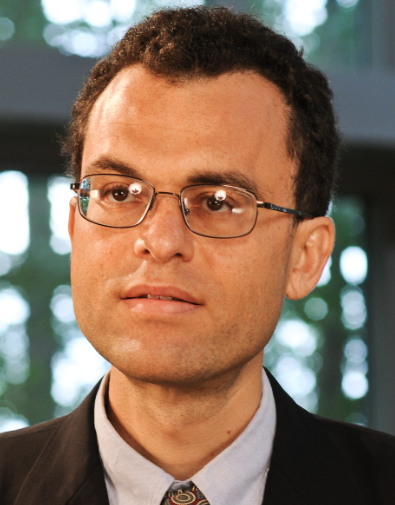 Giorgio Ascoli合作论文数Department of Molecular Neuroscience, George Mason University;Computational Neuroanatomy Group, Center for Neural Informatics, Structures, & Plasticity, Krasnow Institute for Advanced Study, George Mason University;Department of Bioengineering, Krasnow Institute for Advanced Study, George Mason University25
 Anastasia Kitsantas合作论文数College of Education and Human Development, George Mason University8
 Daria V. Tikhomirova合作论文数7Arthur A. Chubarov合作论文数6
 Kenneth A. De Jong合作论文数Department of Computer Science, School of Computing, George Mason University;Krasnow Institute, George Mason University;Volgenau School of Engineering, College of Engineering and Computing, George Mason University6Alexander A. Eidlin合作论文数5Hameroff Stuart R合作论文数5
 Vadim Ushakov合作论文数NRC "Kurchatov Institute", Moscow, Russia
National Research Nuclear University MEPhI (Moscow Engineering Physics Institute), Moscow, Russia4
Vadim Ushakov合作论文数NRC "Kurchatov Institute", Moscow, Russia
National Research Nuclear University MEPhI (Moscow Engineering Physics Institute), Moscow, Russia4 Sergey A. Dolenko合作论文数Dumanskii Institute of Colloid and Water Chemistry, National Academy of Sciences of Ukraine4Zhen Liu (刘箴)合作论文数3Vladimir S. Tsarkov合作论文数3Vyacheslav Orlov合作论文数National Research Center “Kurchatov Institute”, Moscow, Russia3Valentin Klimov合作论文数3
 Tingting Liu (刘婷婷)合作论文数College of Science & Technology, Ningbo University3Steen Rasmussen合作论文数3
 Kamilla Run Johannsdottir合作论文数3
 Nada Dabbagh合作论文数George Mason University3
 Rafael Lahoz-Beltra合作论文数Facultad de Biologia, Universidad Complutense3
 Judith Dayhoff合作论文数National Library of Science3
 Lynn Nadel合作论文数Department of Psychology, School of Mind, Brain, and Behavior, College of Science, The University of Arizona3
 Nikolai Veselov合作论文数2I. M. Gadzhiev合作论文数2Artur A. Chubarov合作论文数2Anton Kolonin合作论文数2Daniil A. Azarnov合作论文数2Vladimir Shirokii合作论文数2Ksenia Kuznetsova合作论文数2
 Mark Coletti合作论文数Geographic Information Science and Technology Group, Oak Ridge National Laboratory, Oak Ridge, TN, USA2
 Andrea Stocco合作论文数Department of Psychology, University of Washington2
 Kartashov Sergey I合作论文数2
 Antonio Chella合作论文数University of Palermo2
 Christian Lebiere合作论文数Carnegie Bosch Institute, Carnegie Mellon University;Dietrich College of Humanities and Social Sciences, Carnegie Mellon University;Psychology Department, Carnegie Mellon University2Ben Goertzel合作论文数perspective. Virtual So-Cal high school as a post-Singularity metaverse is a kind of transhumanist nightmare2
 Layne Kalbfleisch合作论文数2Alexander A. Gridnev合作论文数1Lyudmila I. Skiteva合作论文数1Anastasia Korosteleva合作论文数1Wang YuanYi合作论文数1Alex Davis合作论文数1Galina V. Rybina合作论文数1Roman D. Vladimirov合作论文数1Maria A. Eidlina合作论文数1Ilya Panin合作论文数1Sergey V. Shigeev合作论文数1Yifan Chu合作论文数1E S Garbaruk合作论文数1Aliona Petrova合作论文数1
 Sophie C. F. Hendrikse合作论文数Amsterdam Emot Regulat Lab, Vrije Univ Amsterdam1Denis Malakhov合作论文数1




