Indonesia’s fragmented geography and uneven infrastructure pose persistent challenges for adopting new educational technologies. While national initiatives aim to mainstream AI in K–12 schools by 2025, policy readiness does not automatically mean teachers are ready for the classroom. This study surveys Indonesian K–12 teachers to examine: (1) their understanding of AI, (2) how they and their students use AI, and (3) their views on the acceptability of AI in learning activities. Through semi-automated thematic analysis, we identify common misconceptions and use cases. Our findings reveal a notable mismatch: while teachers find AI use in education acceptable and support it for the sake of efficiency, they remain fully aware of the risks to learning depth and academic honesty. We also find that this high level of acceptance is currently coupled with a poor understanding of how AI actually works.
We introduce softpick, a rectified, not sum-to-one, drop-in replacement for softmax in transformer attention mechanisms that eliminates attention sink and massive activations. Our experiments with 340M and 1.8B parameter models demonstrate that softpick achieves 0% sink rate consistently. The softpick transformers produce hidden states with significantly lower kurtosis and creates sparse attention maps. Quantized models using softpick outperform softmax on standard benchmarks, with a particularly pronounced advantage at lower bit precisions. Our analysis and discussion shows how softpick has the potential to open new possibilities for quantization, low-precision training, sparsity optimization, pruning, and interpretability. Code: https://github.com/zaydzuhri/softpick-attention.
Prior studies have shown that distinguishing text generated by Large Language Models (LLMs) from human-written one is highly challenging for humans, and often no better than random guessing. To verify the generalizability of this finding across languages and domains, we perform an extensive case study to identify the upper bound of human detection accuracy. Across 16 datasets covering 9 languages and 9 domains, 19 annotators achieved an average detection accuracy of 87.6%, thus challenging previous conclusions. We find that major gaps between human and machine text lie in concreteness, cultural nuances, and diversity. Prompting by explicitly explaining the distinctions in the prompts can partially bridge the gaps in over 50% of the cases. However, we also find that humans do not always prefer human-written text, particularly when they cannot clearly identify its source. We release our dataset, the human labels, and the annotator metadata at https://github.com/xnlp-lab/HumanEval-MGT.
Existing circuit discovery methods rely on templated tasks with clean counterfactuals, limiting their use on diverse natural text. We adapt Contextual Decomposition for Transformers (CD-T) for unstructured settings via label-balanced activation means and task-directional relevance scoring, enabling counterfactual-free circuit discovery. We leverage the discovered circuits for Circuit-Targeted Supervised Fine-Tuning (CT-SFT), restricting parameter updates to task-relevant heads and LayerNorm. Experiments on NusaX cross-lingual sentiment transfer show that CT-SFT is highly competitive for low-resource adaptation. While non-circuit sparse updates and full fine-tuning sometimes match target accuracy through capacity recruitment, CT-SFT most consistently avoids catastrophic forgetting, preserving source-language and related-task performance. Extensions to XNLI support the source-retention and intervention findings on a harder task and two model families, showing that circuit-targeted adaptation provides a more controlled, intervention-supported alternative to global fine-tuning.
Dialectal Arabic (DA) remains under-resourced compared to Modern Standard Arabic (MSA), particularly for machine reading comprehension (MRC) and question answering (QA). Existing Arabic QA benchmarks primarily focus on formal written MSA or multiple-choice QA, with limited coverage of naturally spoken dialects. Here, we aim to bridge this gap. We introduce EDRAC, the first large-scale benchmark for dialectal Arabic machine reading comprehension (MRC) and generative QA, covering five major dialects: Egyptian, Moroccan, Emirati, Syrian, and Saudi Arabic. EDRAC contains 499 passages derived from naturally occurring spoken interactions and 4,977 corresponding QA pairs generated through a human–LLM collaborative pipeline combining iterative generation, LLM-as-a-judge evaluation, and human verification. We benchmark Arabic-centric and multilingual LLMs on EDRAC using lexical and semantic metrics. Our results reveal substantial gaps between semantic answer quality and dialectal fidelity, highlighting the limitations of existing evaluation metrics for dialectal Arabic generation. EDRAC provides a realistic and challenging MRC benchmark for future research on dialectal Arabic NLP.
Large Language Models (LLMs) increasingly succeed on competitive programming problems, yet existing evaluations conflate algorithmic reasoning with code-level implementation. We argue that competitive programming is fundamentally a problem-solving task and propose centering natural-language editorials in both solution generation and evaluation. Generating an editorial prior to code improves solve rates for some LLMs, with substantially larger gains when using expertly written gold editorials. However, even with gold editorials, models continue to struggle with implementation, while the gap between generated and gold editorials reveals a persistent problem-solving bottleneck in specifying correct and complete algorithms. Beyond pass/fail metrics, we diagnose reasoning errors by comparing model-generated editorials to gold standards using expert annotations and validate an LLM-as-a-judge protocol for scalable evaluation. We introduce a dataset of 83 ICPC-style problems with gold editorials and full test suites, and evaluate 19 LLMs, arguing that future benchmarks should explicitly separate problem solving from implementation.
Training large language models requires jointly configuring two interdependent aspects of the system: the global batch size, which governs statistical efficiency, and the 3D parallelism strategy, which governs hardware throughput. Existing approaches make these decisions independently: optimization work adapts the batch size to track the evolving critical batch size while keeping parallelism fixed, and systems work selects the fastest parallelism for a given fixed batch size without anticipating that the optimal batch size could change. We show that these decisions are tightly coupled: the throughput-optimal parallelism strategy may shift as the global batch size changes, so any method that fixes one while adapting the other operates with a suboptimal configuration for part of the training run. We present COPUS, a system that adaptively tunes the global batch size, parallelism strategy, and micro-batch size as training evolves. COPUS is guided by Goodput, the product of throughput and statistical efficiency, which models both hardware and statistical effects jointly and directly measures useful convergence per unit of wall-clock time. The system combines online gradient noise scale estimation under 3D parallelism with throughput-aware evaluation of candidate configurations, and supports efficient reconfiguration of both batch size and parallelism during training. We evaluate COPUS on LLM pre-training workloads across 1-4 nodes of 8xH100 and 8xMI210 GPUs and model sizes from 3B to 32B parameters, demonstrating average time-to-convergence speedups of 3.9-8.0
Sense representations (explicit, per-token meaning decompositions) are useful for disambiguation, steering, and cross-lingual alignment, but existing approaches require models to be pretrained with sense structure baked in. We introduce ACROS, which induces an explicit sense pathway into a frozen pretrained decoder LM through a gated residual addition. On SmolLM2-360M, ACROS preserves base LM quality while supporting three uses of the same induced variables: zero-shot word-sense disambiguation (64.95 F1 on Raganato ALL, competitive with the WordNet first-sense heuristic), low-KL lexical steering across 5,161 CoInCo cases where a simple non-oracle proxy recovers about 90
Low-resource machine translation (MT) has gained increasing attention as parallel data from low-resource language communities is collected, but many potential methods for improving low-resource MT remain unexplored. We investigate a self-supervised reinforcement-learning-based fine-tuning for translation in low-resource settings using round-trip bootstrapping with the No Language Left Behind (NLLB) family of models. Our approach translates English into a target low-resource language and then back into English, using a combination of chrF++ and BLEU as the reward function on the reconstructed English sentences. Using the NLLB-MD dataset, we evaluate both the 600M and 1.3B parameter NLLB models and observe consistent improvements for the following languages: Central Aymara, Friulian, Wolof and Russian. Qualitative inspection of translation outputs indicates increased fluency and semantic fidelity. We argue that our method can further benefit from scale, enabling models to increasingly leverage their pretrained knowledge and continue self-improving. The code is available on github: https://github.com/Copticoder/thesis-nllb-bootstrap-grpo.
Culturally aware safeguards are crucial for AI alignment in real-world settings, where safety extends beyond common sense and encompasses diverse local values, norms, and region-specific regulations. However, building large-scale, culturally grounded datasets is challenging due to limited resources and a scarcity of native annotators. Consequently, many safeguard models rely on machine translation of English datasets, often missing regional and cultural nuances. We present a novel agentic data-generation framework to scalably create authentic, region-specific safety datasets for Southeast Asia (SEA). On this foundation, we introduce the SEA-Guard family, the first multilingual safeguard models grounded in SEA cultural contexts. Evaluated across multiple benchmarks and cultural variants, SEA-Guard consistently outperforms existing safeguards at detecting regionally sensitive or harmful content while maintaining strong general safety performance.
Benchmarks and leaderboards are how NLP most often communicates progress, but in the LLM era they are increasingly easy to misread. Scores can reflect benchmark-chasing, hidden evaluation choices, or accidental exposure to test content – not just broad capability. Closed benchmarks delay some of these issues, but reduce transparency and make it harder for the community to learn from results. We argue for a complementary practice: an Olympiad-style evaluation event where problems are sealed until evaluation, submissions are frozen in advance, and all entries run through one standardized harness. After scoring, the full task set and evaluation code are released so results can be reproduced and audited. This design aims to make strong performance harder to “manufacture” and easier to trust.
Large language models (LLMs) are now deployed worldwide, inspiring a surge of benchmarks that measure their multilingual and multicultural abilities. However, these benchmarks prioritize generic language understanding or superficial cultural trivia, leaving the evaluation of grounded tasks – where models must reason within real-world, context-rich scenarios – largely unaddressed. To fill this gap, we present CulturALL, a comprehensive and challenging benchmark to assess LLMs' multilingual and multicultural competence on grounded tasks. CulturALL is built via a human–AI collaborative framework: expert annotators ensure appropriate difficulty and factual accuracy, while LLMs lighten the manual workload. By incorporating diverse sources, CulturALL ensures comprehensive scenario coverage. Each item is carefully designed to present a high level of difficulty, making CulturALL challenging. CulturALL contains 2,610 samples in 14 languages from 51 regions, distributed across 16 topics to capture the full breadth of grounded tasks. Experiments show that the best LLM achieves 44.48
For scientific progress, we need benchmarks that test the limits of state-of-the-art models, and evaluation methods that inform us about failure cases. As models get stronger, standard benchmarks for machine translation are approaching saturation. Further, automatic translation metrics are unreliable, vulnerable to reward-hacking, and provide unactionable assessments. Even gold human evaluation is not problem-free, because it often lacks reproducibility, objectivity, and scalability. Overall, this prevents us from tracking objective progress in the field and identifying pathways for improvement. We introduce the Last Translation Benchmark, a collection of human-authored and peer-reviewed examples (texts, images, audio, videos) that break leading machine translation models. We also present a new evaluation approach: each example comes with handcrafted verification rules describing concrete failure cases on that example, therefore allowing reliable and actionable future evaluation. The Last Translation Benchmark is a live dataset that accepts ongoing contributions. The latest version is LTBv1, containing accepted contributions prior to September 1st 2026, with future releases planned as new data is continuously collected.
We present DialectalArabicMMLU, a new benchmark for evaluating the performance of large language models (LLMs) across Arabic dialects. While recently developed Arabic and multilingual benchmarks have advanced LLM evaluation for Modern Standard Arabic (MSA), dialectal varieties remain underrepresented despite their prevalence in everyday communication. DialectalArabicMMLU extends the MMLU-Redux framework through manual translation and adaptation of 3K multiple-choice question-answer pairs into five major dialects (Syrian, Egyptian, Emirati, Saudi, and Moroccan), yielding a total of 15K QA pairs across 32 academic and professional domains (22K QA pairs when also including English and MSA). The benchmark enables systematic assessment of LLM reasoning and comprehension beyond MSA, supporting both task-based and linguistic analysis. We evaluate 19 open-weight Arabic and multilingual LLMs (1B-13B parameters) and report substantial performance variation across dialects, revealing persistent gaps in dialectal generalization. DialectalArabicMMLU provides the first unified, human-curated resource for measuring dialectal understanding in Arabic, thus promoting more inclusive evaluation and future model development.
Multilingual benchmarks rarely test reasoning over culturally grounded premises: translated datasets keep English-centric scenarios, while culture-first datasets often lack control over the reasoning required. We propose Macaron, a template-first benchmark that factorizes reasoning type and cultural aspect across question languages. Using 100 language-agnostic templates that cover 7 reasoning types, 22 cultural aspects, native annotators create scenario-aligned English and local-language multiple-choice questions, and systematically derived True/False questions. Macaron contains 11,862 instances spanning 20 countries/cultural contexts, 10 scripts, and 20 languages and dialects (including low-resource ones like Amharic, Yoruba, Zulu, Kyrgyz, and some Arabic dialects). In zero-shot evaluation of 21 multilingual LLMs, reasoning-mode models achieve the strongest performance (80.8% overall) and near-parity between English and local languages (∆MC = −1.3%), while open-weight models degrade substantially in local languages (∆MC = −6.8%) and often approach chance on T/F tasks. Culture-grounded mathematical and counting templates are consistently the hardest. The data can be accessed here https://huggingface.co/datasets/AlaaAhmed2444/Macaron.
Africa is home to over one-third of the world’s languages, yet remains severely underrepresented in multimodal AI research. We introduce Afri-MCQA, the first Multilingual Cultural Question-Answering benchmark containing 7.5k Q A pairs across 15 African languages from 12 countries. The benchmark offers parallel text and speech modalities and was entirely created by native speakers. We find that models show poor performance across evaluated cultures, with near-zero accuracy on open-ended VQA when queried through native language or speech. To test linguistic competence, we include control experiments meant to assess this specific aspect separate from cultural knowledge, and we observe significant performance gaps between native languages and English for both text and speech. These findings underscore the pressing need for speech-first approaches, culturally grounded pretraining, and cross-lingual cultural transfer. We release Afri-MCQA to support more inclusive multimodal AI development.
While pixel-based language modeling aims to bypass the sub-word tokenization bottleneck by rendering text as images, recent multimodal variants such as DualGPT reintroduce text tokenizers to improve autoregressive performance. We investigate a fundamental question, does visual rendering truly decouple a model from tokenization constraints? Focusing on four Indonesian low-resource local languages that have their own non-Latin scripts (i.e., Javanese, Balinese, Sundanese, and Lampungnese), we evaluate the impact of script-tokenizer alignment within the DualGPT architecture. Our results show that, despite visual rendering, reintegrating a text tokenizer into the architecture reintroduces the same issue that pixel-based language modeling aims to resolve, which is the tokenizer misalignment problem. Despite having lower OOV and fertility rates, we show that the Llama 2 tokenizer performs significantly worse than a custom tokenizer, with improvements of up to 30.15 chrF++. Our findings serve as a warning for future multimodal variants, as text tokenizers remain a significant barrier to equitable models.
We approach multilinguality as sense adaptation: aligning latent meaning representations across languages rather than relying solely on shared parameters and scale. In this paper, we introduce SENse-based Symmetric Interlingual Alignment (SENSIA), which adapts a Backpack language model from one language to another by explicitly aligning sense-level mixtures and contextual representations on parallel data, while jointly training a target-language language modeling loss to preserve fluency. Across benchmarks on four typologically diverse languages, SENSIA generally outperforms comparable multilingual alignment methods and achieves competitive accuracy against monolingual from-scratch baselines while using 2-4x less target-language data. Analyses of learned sense geometry indicate that local sense topology and global structure relative to English are largely preserved, and ablations show that the method is robust in terms of design and scale.
Most existing cultural evaluation frameworks for large language models (LLMs) focus on matching model outputs to ground-truth answers, primarily measuring factual cultural awareness. This overlooks whether models internalize broader cultural structure and pluralism. We introduce a spectral-analysis-based framework that captures large-scale macrostructural patterns in models' cultural knowledge and evaluate eight LLMs across nine cultural domains spanning all five of Newmark's cultural dimensions and 170 countries. Comparing with human data, we find that instruction-tuned models align more closely with human cultural structure than older models, while increased model size does not consistently improve performance. Finally, simulation-based experiments show that our proposed spectral metric better predicts a model's ability to serve users from unfamiliar cultural backgrounds than existing ones.
 Genta Indra Winata合作论文数Capital One35
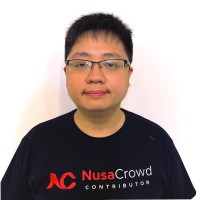 Samuel Cahyawijaya合作论文数Cohere22
 Jan Christian Blaise Cruz合作论文数De La Salle Univ17
 Fajri Koto合作论文数Mohamed bin Zayed University of Artificial Intelligence16
 Haryo Akbarianto Wibowo合作论文数Mohamed Bin Zayed University of Artificial Intelligence16
 Ayu Purwarianti合作论文数Bandung Institute of Technology15
 Radityo Eko Prasojo合作论文数Rukita;Freelance14
 Ruochen Zhang合作论文数Department of Computer Science, Brown University;Health NLP Lab, Brown University14
 Farid Adilazuarda合作论文数University of Edinburgh13
 Kenneth Heafield合作论文数Efficient Translation Limited13
 Peerat Limkonchotiwat合作论文数AI Singapore;Faculty of Arts, Chulalongkorn University12
 Thamar Solorio合作论文数Department of Computer Science, University of Houston;Bloomberg LP12
 Holy Lovenia合作论文数AI Singapore, National University of Singapore11
 Zheng-Xin Yong合作论文数Department of Computer Science, Brown University11
 Rendi Chevi合作论文数11
 Preslav Nakov合作论文数Natural Language Processing Department, Mohamed Bin Zayed University of Artificial Intelligence11
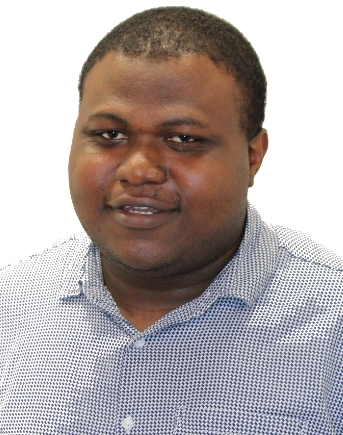 David Ifeoluwa Adelani合作论文数University College London;School of Computer Science, McGill University9
 Lintang Sutawika合作论文数Language Technologies Institute, Carnegie Mellon University9
 Nizar Habash合作论文数Department of Computer Science, College of Arts & Science, New York University9Jonibek Mansurov合作论文数8
 Shamsuddeen Hassan Muhammad合作论文数Imperial College London8
 Nedjma Djouhra Ousidhoum合作论文数School of Computer Science and Informatics, Cardiff University8
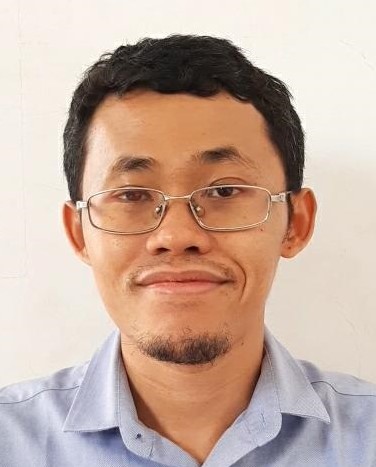 Rahmad Mahendra合作论文数University of Melbourne;RMIT University;Faculty of Computer Science, Universitas Indonesia8
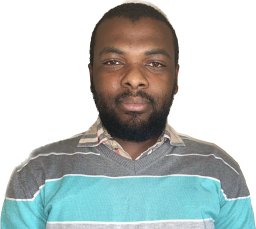 Idris Abdulmumin合作论文数Department of Computer Science, University of Pretoria;Department of Computer Science, Ahmadu Bello University8
 Derry Wijaya合作论文数Monash University, Indonesia8
 Vladimir Araujo合作论文数Sailplane;Universidad de Tarapacá;Pontificia Universidad Católica de Chile8
 Iryna Gurevych合作论文数Ubiquitous Knowledge Processing Lab, Technical University of Darmstadt;Department of Computer Science, Technical University of Darmstadt8
 Chenxi Whitehouse合作论文数Meta7
 Niklas Muennighoff合作论文数Meta;Stanford University;Ai27Made Nindyatama Nityasya合作论文数7
 Stella Biderman合作论文数EleutherAI7
 Nikolay Bogoychev合作论文数Institute for Language, Cognition and Computation, School of Informatics, The University of Edinburgh7Jian Gang Ngui合作论文数6Frederikus Hudi合作论文数6
 Minghao Wu (吴明昊)合作论文数The University of North Carolina at Chapel Hill6
 Osama Mohammed Afzal合作论文数Mohamed bin Zayed University of Artificial Intelligence6Nirmal Surange合作论文数6Tarek Mahmoud合作论文数Mohamed Bin Zayed University of Artificial Intelligence6
 Akim Tsvigun合作论文数6
 Ibrahim Said Ahmad合作论文数Bayero Univ Kano, Dept Informat Technol, Kano 700241, Nigeria6
 Artem Shelmanov合作论文数6
 Christine De Kock合作论文数Department of Computer Science and Technology, University of Cambridge6
 Meriem Beloucif合作论文数Hong Kong University of Science and Technology6
 Chenyang Lyu (吕晨阳)合作论文数Mohamed bin Zayed University of Artificial Intelligence6
 Raj Dabre合作论文数National Institute of Information and Communications Technology6
 Jinyan Su合作论文数Cornell University;Microsoft5
 David Moeljadi合作论文数Nanyang Technological University5
 Jessica Zosa Forde合作论文数Computer Science Department, Brown University5
 Jiahui Geng合作论文数University of Stavanger5




