Women’s migration in early modern Spain and its empire was framed by the quotidian nature of women’s mobility, cycles of displacement and colonization, and the use of women as agents of empire. Typically, peninsular women chose to leave home in search of work or spouses, often hoping to escape rural poverty; for others, however, the abandonment of their homes was forced on them. The expulsions of Muslims and Jews compelled women and their families to leave the peninsula, while African women were captured, enslaved, and brought involuntarily first to the peninsula and then to the Americas. Despite the coercive nature of their migration, they created vibrant diasporic societies on both sides of the Atlantic. After the initial contacts in the Americas, women of all races and classes, both alone and with family members, made the transatlantic voyage. In their new homes, they fulfilled imperial expectations by establishing and perpetuating Spanish culture and bearing Spanish children. Their successes came at the expense of displaced Indigenous women, who increasingly migrated to cities and mining regions in search of work and stability. By the 18th century, the Bourbon monarchy strategically employed women and their families in colonization projects to secure Spanish territory against other empires and establish Spanish society on the far edges of the empire.
The authors of this edited collection explore the contributions of the Junta de Damas de Honor y Mérito, a secular association of elite Spanish women, to the Bourbon monarchy’s reform programs, as well as how the women of the Junta fulfilled the expectations of their class and gender while at the same time vying for more authority and more visible participation in Enlightenment endeavors. The contributors, though mostly historians, allow for a diversity of perspectives by employing a range of disciplines, including intellectual history, social history, biography, literary analysis, and art history to provide a multifaceted analysis of the Junta de Damas and its members.The first section lays out the history of the Junta de Damas. Bolufer examines the debate over women’s admission to Spain’s economic societies that preceded the creation of the Junta and situates the association in a broader European context. Martín-Valdepeñas Yagüe discusses the Junta’s membership and priorities, influenced as they were by Enlightenment ideas of economic and social reform and the expectation that elite women were obligated to engage in charitable works. The second section consists of biographies of four of the Junta’s most prominent members—the Countess-Duchess of Benavente, the Countess of Montijo, the Marchioness of Fuerte-Híjar, and the Marchioness of Villafranca—as well as an essay that surveys the Junta’s less distinguished members. Although these women’s personal and social trajectories were strongly determined by marriage and lineage strategies, they nevertheless sought personal growth and social change through philanthropic work and their tertulias (salons). Read individually, the biographical chapters (including López-Cordón Cortezo’s chapter in section one on Josefa Amar y Borbón) tend to portray their subjects as “exceptional” (121); however, considered together, we see a group of progressive women cultivating other like-minded women and creating what Jaffe calls a “corporate identity” (220) that helped to extend their influence in Spanish society. The chapters in the third section, which in particular demonstrates the value of interdisciplinarity, focus on the Junta de Damas’ pursuit of Enlightenment efforts. In addition to Méndez Vázquez’s study of the educational projects of the Junta, Lewis considers the spatial dimensions of their works, Jaffe analyzes their literary networks, and Molina examines the members’ portraits and the ways that artists represented these women who often challenged traditional gender expectations. The juxtaposition of these essays reveals the multilayered nature of the agency that these women were able to exercise in a variety of places and spaces.Another important contribution of this collection lies in its discussion of how these women experienced the terrifying invasion of the peninsula by Napoleon and the instability of the post-Napoleonic period. Rarely do scholars of the Spanish Enlightenment move into the chaotic world of Restoration politics and the Carlist wars. Understanding how these women’s experiences and expectations changed during the nineteenth century is a revelation.The collection has been thoughtfully edited to be accessible to readers who are unfamiliar with the Junta de Damas while also providing high quality, archivally-based research for specialists (and the translation of the Statutes of the Junta in the appendix is an added bonus). It will work well in the classroom, as the short chapters connect well to one another but also stand on their own. Examining the Junta de Damas from a number of disciplines makes sense; they were philanthropists, writers, socialites, matriarchs of powerful noble lineages, and patrons and students of the arts and sciences. No other approach could do them justice.
At the end of the eighteenth century, Edward Jenner discovered that exposure to cowpox provided safe and effective immunity to smallpox, one of the worlds' deadliest diseases. Using an array of printed and archival documentation, this article explores how as word of the worlds' first vaccine spread to Spain and its empire, smallpox vaccination was initially associated with women. In fact, medical practitioners initially relied on elite women to promote vaccination, advocated teaching women to vaccinate their own children, and even created pamphlets to instruct them in the procedure. However, the mechanisms that the Spanish Crown used to extend access to the vaccine both in Spain and across the Americas quickly transformed the simple procedure into a medical operation to be performed only by male medical professionals.
At the beginning of the nineteenth century, the Spanish Crown extended the use of cowpox as a vaccine against smallpox to its subjects around the globe. As the first global public health initiative, the smallpox vaccination campaign presents a prime opportunity to reconsider the global early modern through an analysis of the relationship between the global imperial structures through which the vaccine was conveyed and the varied local responses to vaccination. In fact, the vaccination campaign prompted a complex and dynamic interchange between the global and the local over issues as diverse as the relationship between subject and king, hierarchies of medical knowledge and authority, and expectations about maternity and motherhood.
Laywomen and the Making of Colonial Catholicism in New Spain, 1630–1790. Jessica L. Delgado. Cambridge Latin American Studies 110. Cambridge: Cambridge University Press, 2018. xiv + 282 pp. $29.99. - Volume 74 Issue 1
Chapter Twenty-Two The Atlantic World Allyson M. Poska, Search for more papers by this authorSusan D. Amussen, Search for more papers by this author Allyson M. Poska, Search for more papers by this authorSusan D. Amussen, Search for more papers by this author Book Editor(s):Teresa A. Meade, Search for more papers by this authorMerry E. Wiesner-Hanks, Search for more papers by this author First published: 27 November 2020 https://doi.org/10.1002/9781119535812.ch22 AboutPDF ToolsRequest permissionExport citationAdd to favoritesTrack citation ShareShare Give accessShare full text accessShare full-text accessPlease review our Terms and Conditions of Use and check box below to share full-text version of article.I have read and accept the Wiley Online Library Terms and Conditions of UseShareable LinkUse the link below to share a full-text version of this article with your friends and colleagues. Learn more.Copy URL Share a linkShare onEmailFacebookTwitterLinked InRedditWechat Summary In exploring the gendered nature of early modern imperialism in the Atlantic world, in this chapter, the authors construct their analysis across empires and imperial boundaries. It is impossible to understand early modern Atlantic empires without considering the role of gender in the imposition of imperial control, the adaptation and acquiescence of the people of the early modern Atlantic to that control, and the resistance to European attempts to alter their lives and gender expectations. Women's prosperity benefited everyone and their engagement with the Atlantic economy proved to be a successful adaptation to European imperialism. Around the Atlantic world, women resisted European imperial attempts to take their land, minimize their authority, enslave them, and control their minds and bodies. That resistance was sometimes violent, but more often came by ignoring legal and religious prescriptions. A Companion to Global Gender History, Second Edition RelatedInformation
The historical narrative of the Spanish colonization of the Americas is generally framed by the notion that not enough peninsular women emigrated to the New World. White women were believed to be able to tame the violence of Spanish men, provide condoned outlets for their sexual desires, and produce and properly Hispanize successive generations of Spanish children. The supposed failure of European women to participate in colonization efforts left many colonies untenable and left native women vulnerable to Spanish male sexual aggression. In order to rethink peninsular women's roles in colonization, we must reconsider this judgment that there were not enough women, which scholars have assumed because there were never equal numbers of male and female emigrants. However, significant numbers of peninsular women did make the Atlantic crossing. In her new book, Amelia Almorza Hidalgo pieces together an array of quantitative and qualitative evidence to tell the story of peninsular women's emigration to Peru during the first century after the Spanish conquest.Almorza Hidalgo begins by examining the data on emigration to the Indies. Relying on the work of others, including Peter Boyd-Bowman and Magnus Mörner, she focuses on the period between 1560 and 1625, when women made up between one-quarter and one-third of emigrants. Between 1601 and 1625, women and men emigrated in nearly equal numbers, although the number of legal female migrants declined precipitously over the rest of the century. Both single and married women made the transatlantic crossing, and Almorza Hidalgo clearly details the legal migration process. She then uses both published letters and archival materials to explore the push-pull factors that led to women's migration. By necessity she relies on letters written by men, but she does a good job teasing out the llamadas that would influence women's decisions.She then follows her subjects to their destination and works to reconstruct their lives in colonial Lima. Using ecclesiastical records, she explores marriage patterns and makes some interesting discoveries, including the marriage strategies of colonists from different parts of the Iberian Peninsula. For instance, women from Andalusia generally married men from Old Castile, while those from Extremadura were more prone to endogamy (p. 174). She also analyzes the evolution of Lima's marriage market. While the initial settlers sent for peninsular women to marry, Spanish men increasingly turned to American-born Spanish women and eventually indigenous women for wives. These last two phases led to a collapse of the marriage market for Spanish women and affected the desirability of Lima as a destination for female migrants. Focusing on encomenderas, Almorza Hidalgo examines the ways that the Spanish legal system allowed women to inherit significant property and use it to attain some social mobility. The last chapter studies the social welfare institutions (both formal and informal) available to single women in Lima and how Spanish women maintained their connections on both sides of the Atlantic through their testamentary bequests.Although much of the information in this book will be familiar to scholars, Almorza Hidalgo has done an excellent job of bringing together the English- and Spanish-language scholarship. Moreover, she has combined the scholarship with new archival research to tell a story that very much needed to be told. Peninsular women emigrated to Peru for an array of reasons and under a variety of circumstances. Her emphasis on the role of the family in women's migration makes her work a nice complement to Jane Mangan's Transatlantic Obligations: Creating the Bonds of Family in Conquest-Era Peru and Spain (2016). Almorza Hidalgo's book also makes an important contribution to the scholarship that sees Atlantic migration as a two-way movement, with the peninsula and the Americas intensely connected by people, letters, money, and plans.There are significant parts of the narrative that do not include women, in part because not every moment of the journey was gendered and in part because the documentary record does not allow Almorza Hidalgo to see how women's experience might have differed from that of men. For instance, in her discussion of the passage through Panama, I wondered how that very difficult part of the journey might have been experienced differently by women.Almorza Hidalgo has constructed a clear, useful narrative of peninsular women's migration. Unfortunately, the book lacks a conclusion to tie it all together and to articulate any overarching conclusions. However, this book does much to reenvision peninsular women's engagement in the construction of the Spanish empire and allows us to begin to reconsider women's role in early colonization.
 Susan D. Amussen合作论文数3Alison Weber合作论文数2Jane Couchman合作论文数1
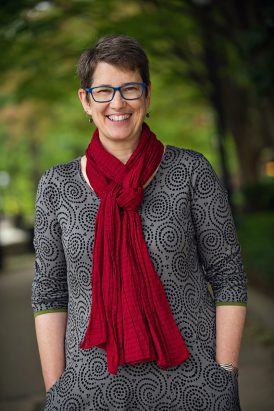 Katherine French合作论文数Department of History, College of Literature, Science, and the Arts, University of Michigan-Ann Arbor1Kirsten Schultz合作论文数1
 Katherine L. French合作论文数Joint Program in Chemical Oceanography, Massachusetts Institute of Technology and Woods Hole Oceanographic Institution;Joint Program in Chemical Oceanography, Massachusetts Institute of Technology and Woods Hole Oceanographic Institution1Josué Fonseca Montes合作论文数1




