Gov4You is a federal government agency responsible for managing and sharing citizen information for large groups of the population. The Gov4You department was created almost 15 years ago to meet the election promise of providing better information services to the citizens. The department was setup to provide complete digital services for citizens. The digital citizen services must cater to the large demographic differences, and for those that are digitally savvy as well as those without any access to the Internet. These services are currently provided by several different departments that sometimes require physical visits by the citizens to the departments with a lot of paper work for identification and service request forms. However, citizens demand better services that use digital platforms in 24 × 7 formats. This concept of providing service using a digital transformation is referred to as ‘Smart …
The question in the title is examined from the standpoint of economic thinking. Three ideas are sustained: (1) if made an objective of economic policy, the necessity of work could be minimized in the distant future; (2) this is not what is desirable or will tend to happen. Even in extreme scenarios of robot adoption considerable demand for human labor should persist in tasks related to the expansion of the knowledge frontier and in those where the humanity of the executor is of the essence for the definition of the task (performing, sports, care, companionship, and so on); (3) redistributive taxation may well be in order. Guaranteed income schemes, and the link with entitlement through work, are discussed.
Inspired by the existing work on correlated equilibria and regret-based dynamics in games, we carry out a first exploration of the links between the leading equilibrium concept for (exchange) economies, Walrasian equilibrium, and the dynamics, specifically regret-matching dynamics, of trading games that fit the economic structure and have the property that their pure Nash equilibria implement the Walrasian outcomes. Interestingly, in the case of quasilinear utilities (or transferable utility), all the concepts essentially coincide, and we get simple deterministic dynamics converging to Walrasian outcomes. Connections to sunspot equilibria are also studied.
This volume collects almost two decades of joint work of Sergiu Hart and Andreu Mas-Colell on game dynamics and equilibria. The starting point was the introduction of the adaptive strategy called regret-matching, which on the one hand is simple and natural, and on the other is shown to lead to correlated equilibria. This initial finding - boundedly rational behavior that yields fully rational outcomes in the long run - generated a large body of work on the dynamics of simple adaptive strategies. In particular, a natural condition on dynamics was identified: uncoupledness, whereby decision-makers do not know each other's payoffs and utilities (so, while chosen actions may be observable, the motivations are not). This condition turns out to severely limit the equilibria that can be reached. Interestingly, there are connections to the behavioral and neurobiological sciences and also to computer science and engineering (e.g., via notions of regret ). Simple Adaptive Strategies is self-contained and unified in its presentation. Together with the formal treatment of concepts, theorems, and proofs, significant space is devoted to informal explanations and illuminating examples. It may be used for advanced graduate courses - in game theory, economics, mathematics, computer science, engineering - and for further research.
We propose a new and simple adaptive procedure for playing a game: "regret-matching." In this procedure, players may depart from their current play with probabilities that are proportional to measures of regret for not having used other strategies in the past. It is shown that our adaptive procedure guarantees that, with probability one, the empirical distributions of play converge to the set of correlated equilibria of the game.
Regret-based dynamics have been introduced and studied in the context of discrete-time repeated play. Here we carry out the corresponding analysis in continuous time. We observe that, in contrast to (smooth) fictitious play or to evolutionary models, the appropriate state space for this analysis is the space of distributions on the product of the players' pure action spaces (rather than the product of their mixed action spaces). We obtain relatively simple proofs for some results known in the discrete case (related to ‘no-regret’ and correlated equilibria), and also a new result on two-person potential games (for this result we also provide a discrete-time proof).
We consider repeated games where at any period each player knows only his set of actions and the stream of payoffs that he has received in the past. He knows neither his own payoff function, nor the characteristics of the other players (how many there are, their strategies and payoffs). In this context, we present an adaptive procedure for play called “modified-regret-matching” — which is interpretable as a stimulus-response or reinforcement procedure, and which has the property that any limit point of the empirical distribution of play is a correlated equilibrium of the stage game.
Issues relating to the emergence, persistence, and stability of cooperation among social agents of every type are widely recognized to be of paramount importance. They are also analytically difficult and intellectually challenging. This book, arising from a NATO Advanced Study Institute held at SUNY in 1994, is an up-to-date presentation of the contribution of game theory to the subject. The contributors are leading specialists who focus on the problem from the many different angles of game theory, including axiomatic bargaining theory, the Nash program of non-cooperative foundations, game with complete information, repeated and sequential games, bounded rationality methods, evolutionary theory, experimental approaches, and others. Together they offer significant progress in understanding cooperation.
La concessio del Premi Nobel d'Economia 2005 a Robert J. Aumann i Thomas C. Schelling confirma la influencia de la teoria de jocs i l'interes social que desperta. L'any 1994, John C. Harsanyi, John F. Nash Jr. i Reinhard Selten compartiren el Premi «per la seva analisi pionera de l'equilibri en la teoria de jocs no cooperatius». Aumann i Schelling, guardonats «per haver ampliat la nostra comprensio del conflicte i la cooperacio mitjancant l'analisi de la teoria de jocs», son dos teorics que han estudiat les motivacions i consequencies del paradigma de la racionalitat en l'accio humana. Aquest treball es una breu revisio dels fonaments teorics de l'estrategia del conflicte i de l'equilibri de la por, elements que han estat presents en situacions com ara la guerra freda i que son a la base de decisions d'alta politica mundial. S'analitzen aquestes i altres aportacions dels dos guardonats, les variants del dilema del presoner i la seva aplicacio en estrategies tant de politica defensiva-ofensiva com d'inversio economica , i els raonaments en la presa de decisions d'abast particular.
La colaboracion del Departament d'Economia de la Generalitat de Catalunya con el Instituto Flores de Lemus se inicio a finales de 2007 mediante un convenio para el estudio y la prediccion de la inflacion en Cataluna y del conjunto del Estado. Como consecuencia de la presion de los precios el Gobierno catalan diseno un plan de medidas para combatir la inflacion.
We investigate how university governance affects research output, measured by patenting and international university research rankings.For both European and U.S. universities, we generate several measures of autonomy, governance, and competition for research funding.We show that university autonomy and competition are positively correlated with university output, both among European countries and among U.S. public universities.We then identity a (political) source of exogenous shocks to funding of U.S. universities.We demonstrate that, when a state's universities receive a positive funding shock, they produce more patents if they are more autonomous and face more competition from private research universities.Finally, we show that during periods when merit-based competitions for federal research funding have been most prominent, universities produce more patents when they receive an exogenous funding shock, suggesting that routine participation in such competitions hones research skill.
It is shown that in any affine space of payoff matrices the equilibrium payoffs of bimatrix games are generically finite.
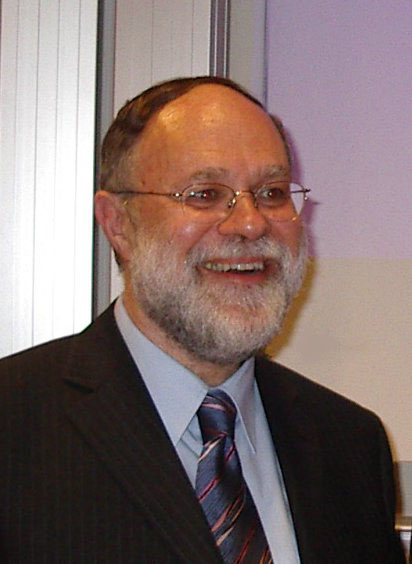 Sergiu Hart合作论文数Bogen Family Department of Economics, Hebrew University of Jerusalem;Federmann Center for the Study of Rationality, Hebrew University of Jerusalem18
 Mathias Dewatripont合作论文数European Centre for Advanced Research in Economics and Statistics, Solvay Brussels School of Economics & Management, Université Libre de Bruxelles8
 Philippe Aghion合作论文数Department of Economics, London School of Economics;Collège de France, INSEAD7
 André Sapir合作论文数Université Catholique de Louvain7
 Caroline Hoxby合作论文数Department of Economics, Stanford University7
 Timothy J. Kehoe合作论文数Department of Economics, University of Minnesota3
 John Geanakoplos合作论文数Department of Economics, Yale University2
 William Zame合作论文数Department of Economics, University of California, Los Angeles;Department of Mathematics, College of Physical Sciences, University of California, Los Angeles2
 Joaquim Silvestre合作论文数2
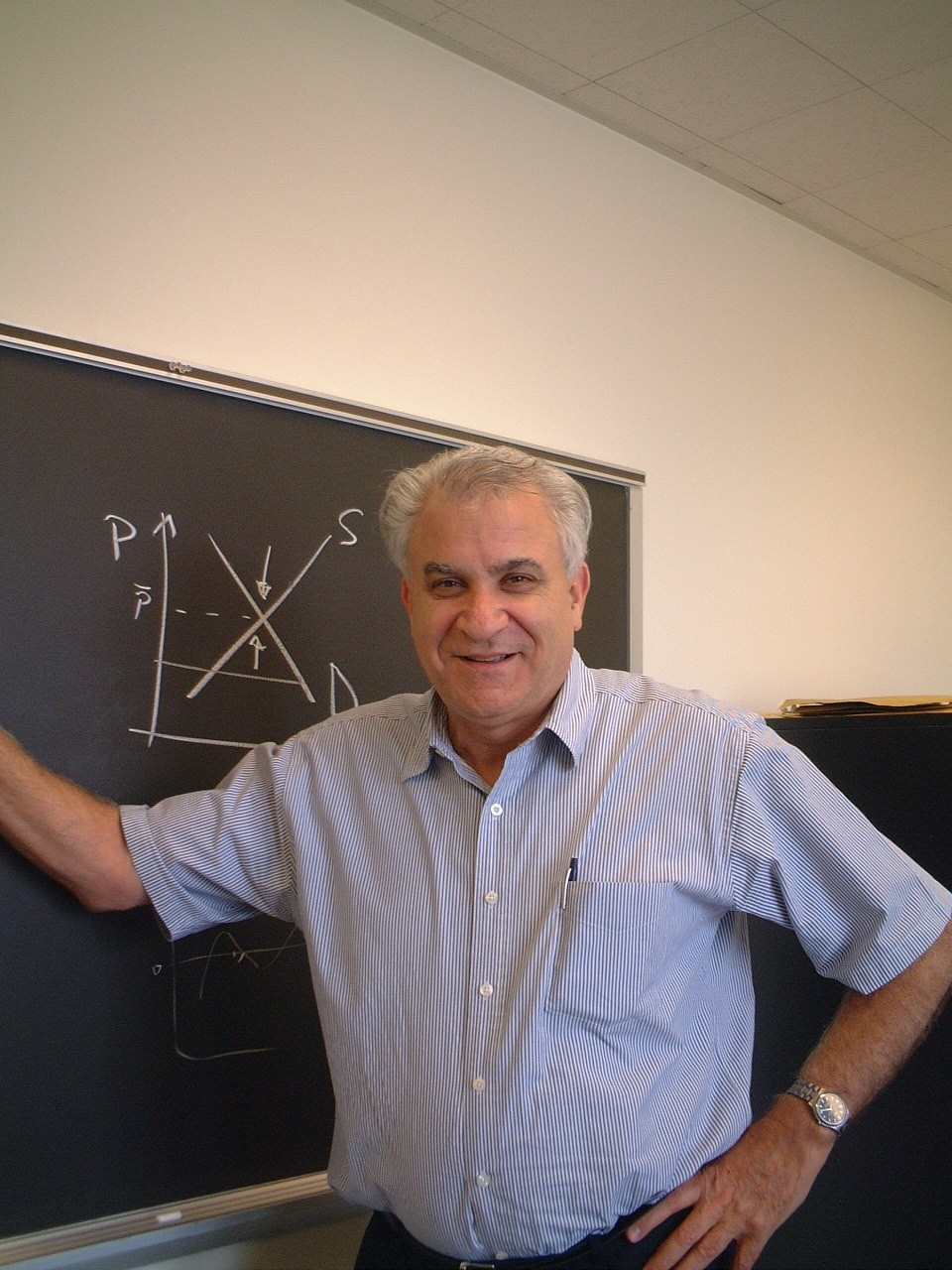 Assaf Razin合作论文数Department of Economics Tel Aviv University2
 David L. Levine合作论文数Department of Economics, European University Institute2B Unhelkar合作论文数1
 Xavier Vives合作论文数Public-Private Sector Research Center, IESE Business School, University of Navarra1c e ferguson合作论文数1Th Davenport合作论文数1J. Manyika合作论文数1n h michas合作论文数1Paulina Beato合作论文数1Werner Hildenbrand合作论文数1Dave J. Orr合作论文数1Linda M. Orr合作论文数1james a george合作论文数1
 Damon Golsorkhi合作论文数1g s maddala合作论文数1kenneth e boulding合作论文数1TW Oestreich合作论文数1Jason Wingard合作论文数1james v luisi合作论文数1l reynolds合作论文数1
 Deborah Soule合作论文数Massachusetts Institute of Technology1gerard debreu合作论文数1
 Bernard Cornet合作论文数University of Kansas1alon halevy合作论文数1
 Aloisio Araujo合作论文数Fundacao Getulio Vargas - RJ, FGV-RJ, Brazil.1
 William A. Barnett合作论文数Washington University1
 Eric A. Hoffman合作论文数Department of Radiology, Carver College of Medicine, University of Iowa1
 Baek-Young Choi合作论文数University of Missouri1Adi Sapir合作论文数1
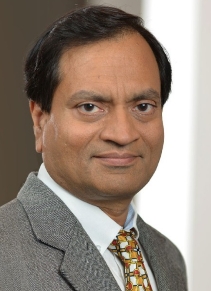 Pradeep Dubey合作论文数Parallel Computing Lab, Intel Corporation1
 Martin Shubik合作论文数Department of Economics, Yale University1
 James A. Rodger合作论文数Indiana University of Pennsylvania1Alex Berson合作论文数1
 Miguel Beato合作论文数Centre for Genomic Regulation;Institute of Molecular Biology;Bielefeld University1
 Armando Gomes合作论文数1
 Tuba Kocaturk合作论文数Building Technology Department, Delft University of Technology1Graham Hooley合作论文数1Brian R. Binger合作论文数1R Kihlstrom合作论文数1




