Andrew Jermy explores the work of a bacteriologist who championed basic research and reproducibility.
Following the success of the inaugural games, the Microbial Olympics return with a new series of events and microbial competitors. The games may have moved to a new hosting venue, but the dedication to training, fitness, competition (and yes, education and humour) lives on.
Colossal microbes taking over the world sounds like a B-movie plot, rather than the business plan of a stuffed toy manufacturer. We asked Drew Oliver, the creator and CEO of Giant Microbes, about how the company came about, how their products have been received and his plans for the future.
Michele Banks (also known as @artologica ) is a US-based painter and collage artist whose works are based on scientific and medical themes, and who has a particular fascination with all things microbial. We caught up with Michele to ask about her art and the inspiration behind it.
Few science writers capture the attention of readers quite like Ed Yong, columnist for The Atlantic, author of soon-to-be-published I Contain Multitudes, and all-round nice guy. We asked Ed a few questions; it felt like taking Lewis Hamilton out for a Sunday drive.
Andrew Jermy travels with Hugh Pennington on the arc of humanity's long, troubled relationship with microorganisms.
On exposure to a cell wall synthesis inhibitor, Mycobacterium smegmatis persisters enter a dynamic state of balanced cell division and death.
report on replacing the native regulation mechanisms of the nitrogen fixation gene cluster from Klebsiella oxytoca with synthetic genetic components.
Isolation and characterization of a novel greigite-producing magnetotactic bacterium.
single T3SS effector protein from S . Typhimurium can expand the narrow host range of S . Typhi by targeting the RAB32-dependent trafficking pathway, which controls the composition of the SCV.
Phage T4 encodes an antitoxin that is active against multipleEscherichia colitoxins.
The right place at the right timeThe positioning of bacterial genes within the cell had previously been proposed to depend on the function of the proteins that they encode -for example, genes encoding membrane proteins would be positioned close to the membrane.This study tests this hypothesis in Escherichia coli, examining the dynamics of two loci carrying genes encoding membrane proteins.The authors found that both the lac (lactose metabolism) locus and an inducible locus carrying the tetracycline efflux pump TetA fused to mCherry (tetA-mCherry) shifted towards the membrane following induction.This relocalization was rapid, occurring within 1-3 minutes of induction for tetA-mCherry, and required ongoing transcription and translation.Moreover, the authors detected repositioning of loci that were 90 kb away from tetA-mCherry, indicating that large regions of the genome relocalize during gene expression.It is therefore likely that membrane protein expression has an integral role in determining the conformation of the bacterial chromosome.
 M Willer合作论文数4Colin J. Stirling合作论文数4Robert C. Rees合作论文数4Gregor J. Steel合作论文数2R. Jennings合作论文数2John S Lilleyman合作论文数2Christine A Olson合作论文数1
 Helen Vuong合作论文数Department of Pediatrics, Medical School, University of Minnesota;Division of Neonatology, Medical School, University of Minnesota1B. P. Young合作论文数1
 Jen Nguyen合作论文数Swiss Fed Inst Technol, Inst Environm Engn, Dept Civil Environm & Geomat Engn, CH-8093 Zurich, Switzerland1Alexander B Chase合作论文数1
 Michaeline Nelson Albright合作论文数Alamos Natl Lab, Biosci Div1
 Elaine Hsiao合作论文数Department of Integrative Biology and Physiology, College of Life Sciences, University of California1Beeson David合作论文数1Davis Elaine合作论文数1
 Johannes Paul Schneider合作论文数1
 Roman Stocker合作论文数Oceans, Massachusetts Institute of Technology;Department of Civil, Environmental and Geomatic Engineering, ETH Zurich1
 Daniel Kearns合作论文数Department of Biology, College of Arts & Sciences, Indiana University Bloomington1Smillie Chris S合作论文数Computational and Systems Biology Initiative, Massachusetts Institute of Technology1
 Martin Ackermann合作论文数Institute of Biogeochemistry and Pollutant Dynamics, Department of Environmental Systems Sciences, Eidgenossische Technische Hochschule Zurich;Eawag, ETH Zurich1Roller Benjamin Rk合作论文数1
 Reid Oshiro合作论文数Department of Microbiology, University of Hawaii1
 Angela Vincent合作论文数Medical Sciences Division, Nuffield Department of Clinical Neurosciences, University of Oxford1
 Chien Diana M合作论文数School of Engineering,MIT1
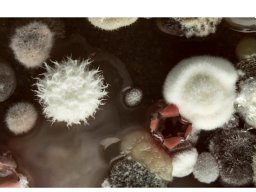 Barrie Wilkinson合作论文数University Chemical Laboratory and Cambridge Centre for Molecular Recognition, Lensfield Road, Cambridge CB2 1EW, UK1
 J. Newsom-Davis合作论文数Institute of Molecular Medicine1Nick Willcox合作论文数1
 Karen Lloyd合作论文数Department of Microbiology, University of Tennessee1Robert C Rees合作论文数1Andrew Platts合作论文数Department of Virology, The University of Sheffield Medical School1
 Jennifer B. H. Martiny合作论文数Department of Ecology and Evolutionary Biology, Charle Dunlop School of Biological Sciences, University of California, Irvine1G. J. G. Rees合作论文数1
 Marek Basler合作论文数Institute of Microbiology of AS CR, v.v.i Vídeňská 1083 142 20 Prague 4 Czech Republic1
 Eric J. Alm合作论文数Department of Civil and Environmental Engineering, School of Engineering, Massachusetts Institute of Technology1A. Jermy合作论文数1




