The Gesture Controlled Rover is a robot that responds to simple human motions. Robots these days are playing quite a significant role in day-to-day life. This work aims to propose a new technique to operate a robot by utilizing gestures, as well as to develop a remote-controlled robot that can be controlled using only gestures from a distance. A gesture gadget is to be worn by a user that has a sensor attached to it. As instructed by this user, the sensor records the movement made and thus the robot will move in the same instructed direction. This concept can be used to create a robot whose navigation can be automated. Gesture commands that the user can freely train and can be utilized to control external devices using a handheld wireless sensor unit. Hand movements control the accelerometer.
Kidney stone illness, one of the most common medical problems worldwide, relieves pain and drives people to the ER. Diagnoses often use imaging, but educated doctors must interpret them. Computer-aided diagnostics (CAD) systems help doctors discover kidney stones more accurately. The suggested technique includes preprocessing, feature extraction, and model training. Ultrasound (US) image preprocessing includes restoration, smoothness, sharpness, and contrast enhancement. The Grey Level Co-occurrence Matrices (GLCM) analyze image texture to extract characteristics. Model training uses KELM. The KELM-based model outperforms Extreme Learning Machine (ELM) and K-Nearest Neighbours (KNN) with an average accuracy of 92.54%. This accuracy demonstrates the method can detect kidney stones in ultrasound images. This proposed shows that computer-aided kidney stone detection can be fast and accurate. The combination of GLCM's texture analysis and KELM's classification skills can help medical professionals diagnose kidney stones using imaging.
The sustainability of irrigated agriculture is jeopardized by catastrophic climate change, with projected forecasts indicating that by 2025, one out of every four people on the planet will be experiencing extreme water scarcity. In this context, an attempt was made for scheduling irrigation at a regional scale combining satellite data and agrometeorological indices over major rice growing tracts of Palakkad district in Kerala. Normalized Difference Vegetation Index (NDVI) product of MODIS (MOD13Q1) with a temporal resolution of 16 days and a spatial resolution of 250 m was utilized to establish a relationship with crop coefficient (Kc) of rice during the mundakan rice season of 2020-21 and 2021-22 in 30 ground truth locations. The results revealed that NDVI values have strong relationship with Kc values with an R2 value of 0.81. Crop coefficient (Kc) maps developed using satellite derived NDVI provided Kc values at a regional scale during different stages of crop growth and it helped to estimate crop evapotranspiration with greater accuracy. Based on this crop water demands maps depicting the spatial and temporal distribution of irrigation requirement were generated for the whole study area. These maps can be used as a tool for the estimation of the crop water requirement of a rice field if the geographical coordinates of the location are known. The total crop water requirements estimated during mundakan season 2020-21 and 2021-22 in Palakkad district were in the range of 700-975 mm and 560-897 mm respectively. Integration of remote sensing & agrometeorological techniques has scope for regional-scale crop water requirement estimation in a cost-effective and time-bound manner.
An experiment was conducted at the Instructional Farm of the College of Agriculture, Kerala Agricultural University (KAU), Vellanikkara, Thrissur from October to December 2021. The objective of the study was to assess the effect of fertilizer micro-dosing and designer seeds on the growth and yield of cowpea (Vigna unguiculata (L.) Walp). The experiment was laid out in Completely Randomized Design (Factorial), with 3 replications. The treatments consisted of five levels of fertilizer micro-dosing (micro-dose 25%, 50%, 75% of NPK as per package of practices (POP) of KAU, NPK as per POP of KAU and absolute control) and three levels of seed treatments (designer seeds, rhizobium treated seeds, and untreated seeds). The results of the study indicated that, micro-dose and designer seeds significantly increased the biometric and yield parameters of cowpea. Among fertilizer micro-dosing, micro-dose (50 %) showed minimum days (39.78 days) to 50% flowering which was on par with micro-dose (25 %) (39.89 days). Designer seeds showed a minimum of days to 50% flowering (37.27 days) as compared to other seed treatments The combination of micro-dose (50%) along with designer seeds emerged as the most potent, yielding the highest pod weight per plant and seed yield (43.80g and 969.87kg/ha, respectively).
Proper calculation of rice cultivation area well before harvest is critical for projecting rice yields and developing policies to assure food security. This research looks at how Remote Sensing (RS) and Geographic Information System (GIS) can be used to map rice fields in Palakkad district of Kerala. The area was delineated using three multi-temporal cloud free Sentinel-2 data with 10 m spatial resolution, matching to crop's reproductive stage during mundakan season (September-October to December-January), 2020-21. To make classification easier, the administrative boundary of district was placed over the mosaicked image. The rice acreage estimation and land use classification of the major rice tract of Palakkad district comprising five blocks was done using Iterative Self-Organisation Data Analysis Technique (ISODATA) unsupervised classification provision in ArcGIS 10.1 software, employing False Colour Composite (FCC) including Blue (B2), Green (B3), Red (B4) and Near-infrared (B8) Bands of Sentinel-2 images. The classification accuracy was determined by locating a total of 60 validation points throughout the district, comprising 30 rice and 30 non-rice points. The total estimated area was 24742.76 ha, with an average accuracy of 88.33% and kappa coefficient 0.766 in five blocks of Palakkad district. The information generated will be helpful in assessing the anticipated production as well as the water demand of the rice fields.
— In recent years, with rapid advancement in Artificial Intelligence technology, several intelligent systems have been developed for human emergency prediction under ambient intelligence. Automatic pain recognition through state-of-the-art deep learning algorithms has attracted much attention recently in smart healthcare informatics. This research presents a Convolutional Neural Network (CNN) approach for detecting audio-based emergency identification during Myocardial Infarction. For evaluation, simulated emergency distress audio signals are recorded during possible myocardial infarction as a private dataset. This work demonstrates an approach to train the deep learning CNN model for multiclass audio samples and deploy it on an edge embedded Artificial Intelligence device Jetson Nano for real-time recognition.
Field experiment was conducted at International Crops Research Institute for the Semi-Arid Tropics, Hyderabad during early summer season in 2021 and 2022 to study the “Effect of integrated use of Nano and Non–Nano fertilizers on the growth and yield of sunflower under semi-arid conditions”. The experiment was carried out using randomized block design with 3 replications and comprised of 12 treatments. The averages of all study indicators were compared according to L.S.D test at a probability level of 0.05. Results revealed that application of conventional fertilizers as per recommended dose (75:90:30 kg/ha) along with foliar application of nano (19:19:19) N P K at 0.2% at 30 DAS and 60 DAS + nano boron at 0.2 % at ray floret opening stage (T7) recorded highest plant height (195,197 and196 cm), number of leaves (27.43, 28.12 and 27.78), leaf area (7632, 7665 and 7649 cm2 plant-1), leaf area index (LAI) (4.24 4.25 and 4.25), and dry matter production (98.96, 97.64 and 98.30 g/plant) at 90 DAS in both the years and on mean basis. However, treatment T7 was statistically on par with the treatment T9 - Conventional fertilizers 50% as per recommended dose + nano (19:19:19) N P K at 0.2% as foliar spray at 30 DAS and 60 DAS and nano boron at ray floret opening stage. Seed yield (1961,1915 and 1938 kg/ha), stalk yield (4193, 3918 and 4055 kg/ha) were also significantly influenced during both the years respectively with the treatment (T7) was statistically on par with the treatment T9. Lowest seed yield (758, 710 and 734 kg/ ha) and stalk yield (1684, 1702 and 1693 kg/ ha) and oil content (40.73 %, 39.67% & 40.20) was recorded with the control in both the years and on mean basis.
Polyurethane (PU) foams are inevitable for many applications from comfort materials or energy saving to aerospace. Today, greener routes for their production have gained thoughtful attention among the scientific community by avoiding mainly the use of toxic isocyanates. An easily scalable process for the realization of self-blown isocyanate-free PU (poly (hydroxy urethane)-PHU) foams by exploiting suitable amines and cyclic carbonates is demonstrated in this work. The foaming is attributed to the release of CO2, from the reaction of cyclic carbonate of resorcinol diglycidyl ether (RDGCC) with amine terminated oligomeric phenyl hydroxy amine (AOPHA), where a parallel reaction of the hydroxyl groups and amino groups with the cyclic carbonate groups are competing during polymerization and culminate in poly (hydroxy urethane) foam. The released gas was confirmed as CO2 from GC–MS and temperature dependent FTIR. The realized flexible PHU foam is thermally stable (>250 ℃) with adhesive strength between Al-Al as 1.5 to 2.0 MPa, and with a closed cell structure possessing a density of 480 kg/m3.
Pollution is a major problem all over the world. According to the energy conservation statement law states that energy cannot be created or destroyed but can be converted from one form to another. As it relates to nature, the sudden increase in urban and industrial growth has been completed with potentially hazardous waste. Sound is the electrical energy of the machine and can be converted into electrical energy through many provocative methods including heating using piezoelectric material and diaphragm. Other sounds are not preventable such as road noise, market noise, industry, train stations etc. and those unnecessary noises can be used to generate electricity. In this way we can reduce the use of piezoelectric power and energy generated by chemical materials where it is converted directly from energy to electrical energy. The widespread use of this space is to focus on how we can increase the electrical performance generated by the conversion of sound energy from non-renewable sources. When sound vibrations are in the diaphragm and are compressed and hard to convert into electrical energy.
In this paper, an efficient and low complexity method has been proposed for implementation of an address generation circuit of the two-dimensional deinterleaver which is used in the Worldwide Interoperability for Microwave Access (WiMAX) transmitter and receiver. An algorithm with simple method along with its mathematical operations for address generation has been proposed in this paper of the wireless multiple access channel deinterleaver which supports all possible code rates with different modulation techniques like QPSK and 16-QAM has been implemented and also the necessity of floor function has been eliminated. The resources shared for a quadrature phase shift keying and 16 quadrature amplitude modulation algorithm with different code rates make this method to be efficiently high when compared with conventional lookup table (LUT).
India is totally beaten by diverse range of artificial and natural disasters.It couldn't be controversial which contempt their natural and splendid beauty.By these devastations the country suffers through the government sets an interference and mitigation idea set in mitigation and interference plans, very little place into thought when the diversity occurs.This paper emphasis on the data engineering (ICT) associate degree appliance exceedingly in a very kind of a mechanical man based application that are mostly transportable that provides losses the aptitude for hunting facilitate once an incident or disaster strikes, additionally, individuals will advise other individuals of the danger ahead through the mobile application.Such that they will evade the world wherever the hazard is thru crowd sourcing.It uses user's movable intrinsical GPS and it shows the user various route to his destination such that he can avoid the disaster affected area and choose the different route.
The paper presents minimal effort nursery house checking framework. In green house development, plants are under acceptable climatic conditions, for instance, temperature, dampness, etc. This would help the farmers to increase progress. Along these lines watching and controlling greenhouse conditions is fundamental for creation and management of green houses. The present work intended to screen and control the indoor and openair sogginess, temperature, and climatic conditions impacting the plants by using Arduino Uno. It is a fundamental, easy to present, straightforward system to screen and record the estimation of temperature, tenacity and light of the regular natural surroundings. Arduino has an option to assume the responsibility for the cooling fan and focus light dependent on the changing characteristics of the sensor associated with it. The parameters are checked and the information is recorded and sends the message to the mail or message.
Field experiment was conducted at Agronomy Farm, College of Horticulture, Vellanikkara during Kharif (rainy season) 2019 to develop cost-effective weed management strategy for upland rice in Kerala. Treatments consisted of brown manuring (cowpea) by application of 2,4-D 1.0 kg/ha at 25 days after sowing (DAS); in situ green manuring (cowpea) at 25 DAS; oxyfluorfen 0.15 kg/ha on the day of sowing fb hand weeding (HW) at 30 DAS; oxyfluorfen 0.15 kg/ha on the day of sowing fb bispyribac-sodium 0.025 kg/ha at 20 DAS; pyrazosulfuron-ethyl 0.03 kg/ha at 6 DAS fb HW at 30 DAS; pyrazosulfuron-ethyl 0.03 kg/ha at 6 DAS fb bispyribac-sodium 0.025 kg/ha at 20 DAS. Hand weeded control and unweeded control were also maintained. Results revealed that application of oxyfluorfen at 0.15 kg/ha on the day of sowing fb hand weeding at 30 DAS recorded lesser weed density and dry matter production, higher grain (2.74 t/ha) and straw (5.89 t/ha) yields and net monetary returns. It was at par with pyrazosulfuron-ethyl 0.03 kg/ha at 6 DAS fb hand weeding at 30 DAS.
A robot is a machine which is programmed by a computer and the movements and functions of which are controlled by an external or an embedded control. It has dynamic uses in all domains of life. A robot in a university setting can be used as an attender for passing circulars around instead of multiple attenders doing the task manually which is a cost and time consuming process. Parents often find it difficult to navigate through the unfamiliar university. In this review paper, we have focused on a voice based attender robot with line following capabilities along with speech to text recognition that can be used for a variety of purposes at universities like passing around the circulars; interacting with parents and helping them navigate through the university. The aim of this work is to introduce a robot that it is able to interact with human through the Spoken Natural Language. Here, the focus will be on two languages; English and Kannada. This system uses an application to recognize human voice and is converted to text; text is further processed and is used to act or reply according to the user’s command. In this way, the voice based attender robot finds its applications in the university setting. But it is not limited to only universities. It can also be further implemented in places like railway stations, bus stations, big factories and other similar surroundings.
A field experiment was conducted at Water Management Research Unit, Vellanikkara from December 2018 to March 2019 to study the effect of foliar application of zinc and boron on growth and yield of okra under drip irrigation and conventional irrigation methods. Treatments consisted of foliar sprays of zinc as ZnSO4 (0.5%), boron as Solubor® (0.5%), combination of zinc and boron [ZnSO4 (0.5%) + Solubor® (0.5%)] and KAU multi mix (Sampoorna, 0.5%), three times at three week intervals and these treatments were tested against treatment without foliar application of micronutrients both under drip irrigation and conventional irrigation. All the treatments were supplied with soil test based application of NPK at recommended dose and FYM at 20 t/ha. Results of the study revealed that under drip irrigated condition, foliar application of KAU multi mix resulted in greater plant height, leaf area, fruit length, fruit weight and fruit yield. However, under conventional irrigation, foliar application of micronutrients did not produce any yield advantage over treatments without foliar application.
An unmanned aerial vehicle is used in this paper to demonstrate a disaster response scheme (UAV).Once the natural disasters like flooding or major quakes occur, rapid injury evaluation and continuous data collection are critical to develop a response plan for damage mitigation on behalf of disaster.This approach builds an onboard applications and prototype UAV with the use of navigation system termed GPS/IRNSS as a part of this research.
Background Sexual violence is cancerous, and it malignantly affects all strata of our community regardless of age, gender, race, ability, and social status. Excellent healthcare service requires professionals who can do a sexual assault examination, collect medico-legal evidence, take photographs of patients' anatomy that was involved in the assault and document what is there and where it is in relation to the victims or perpetrators body or other parts of the crime scene, whether or not it is connected to the crime. Main text The objective of this article to orient the professions to the novel trends and approaches in forensic photography, namely e-consent, digital cameras and their accessories, dedicated forensic software, and photographic protocols and procedures. Conclusion The inadequate and improper collection, preservation and presentation of evidence can lead to crime scene errors and fewer conviction rates. Training in forensic photography is vital and a game-changer in the sexual assault examination.
ML (Machine learning) is a subset of AI and also improved learning technique has different performance in result over the conventional ML determining the complexity in structures of dimensional data. ADHD is one of the most important neurological disorders and it is represented by different symptoms and we can extract useful the information from FMRI time series. In this paper the ADHD identification and classification is obtained by machine learning techniques. This paper explores an artificial intelligence in unsupervised learning is appropriate to learn features from raw data. The proposed system presented with two stage approaches for ADHD diagnosis which associated SoftMax Regression and SVM fine tuning approach. In the implementation part used FMRI brain images are data sets. The two stage approach shows the high accuracy in performance by using the learning techniques.
In recent days, there is an exponential increase in diabetic patient and increase in eye-related problems, the major eye problems boost due to diabetes, the diabetic retinopathy screening can be performed by image processing methods using fundus images which is an active research area, For this reason, a deep knowledge of various databases for diabetic retinopathy, various eye diseases characteristics, fundus image processing methods and analysis are necessary. This article provides an overview of twelve retinal fundus image datasets for diabetic retinopathy and its validation and presents a collective discussion on twelve recent diabetic retinopathy fundus image processing methods and different stages of diabetic disease. This article will provide insight into databases classified with several images, image quality, camera involved to capture images, image resolution, and field of view.
A robot is a machine which is programmed by a computer and the movements and functions of which are controlled by an external or an embedded control. It has dynamic uses in all domains of life. A robot in a university setting can be used as an attender for passing circulars around instead of multiple attenders doing the task manually which is a cost and time consuming process. Parents often find it difficult to navigate through the unfamiliar university. In this paper, we have focused on a voice based attender robot with line following capabilities along with speech recognition that can be used at universities for a variety of purposes like passing around the circulars, interacting with parents and helping them navigate through the university through Spoken Natural Language. The main objectives of the proposed work is to reduce the burden of passing circulars, calling a student/faculty on the attender by designing a robot that is also competent enough to connect with human through spoken natural language such as English or Kannada, so that it interacts with parents who are new to the institution and do not know whom to approach. The main aim of this work is to introduce a robot that it is able to interact with human through the Spoken Natural Language. Here, the focus is on two languages; English and Kannada. This system uses a voice recognition module to recognize human voice and a voice playback module is used to reply back in either English or Kannada according to the user’s command. It can work in two modes, the voice recognition mode to answer to user queries or in line following mode to pass circulars, call student/faculty. In this way, the voice based attender robot finds its applications in the university setting. But it is not limited to only universities. It can also be further implemented in places like railway stations, bus stations, big factories and other similar surroundings.
 Chaithanya D J合作论文数8
 e sreenivasan合作论文数7S. Ch. Vijaya Bhaskar合作论文数7s m purushothaman合作论文数5
 Hemanth Kumar .G合作论文数5B Ramya合作论文数3P A Aisiri合作论文数3
 Vinod Menon合作论文数Department of Neurology and Neurological Sciences, Stanford University;Department of Psychiatry and Behavioral Sciences, Stanford University3
 Durga C.合作论文数2V Divya Vijayan合作论文数2Ambreen Saniya合作论文数2I. Sujjahad Hussain合作论文数2H. M. Mohan合作论文数2
 Nirmal Krishnan合作论文数2
 Ajithkumar B Pillai合作论文数2
 Sanjaya Pandey合作论文数2
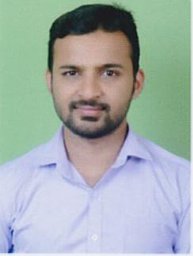 Ajith Krishnapillai合作论文数Luminescence and Solid State Ionics Lab., Bharathiar University2S. Ramachandran合作论文数2
 V.I. Beena合作论文数2
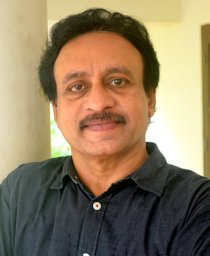 G. Unnikrishnan合作论文数Department of Chemistry, NIT Calicut2
 Balamurugan, V.合作论文数Sathyabama Univ.;c;Sathyabama Univ.2K. S. Santhosh Kumar合作论文数2
 Vinod Chandrakanth Nayak合作论文数Department of Forensic Medicine, Kasturba Medical College Manipal2N Umadevi合作论文数1E. S. Padmakumar合作论文数1K.P. Prameela合作论文数1Ponmozhi Chezhiyan合作论文数1Mohanakrishnan Kandasamy合作论文数1Savitha Antony合作论文数1K. P. Vijayalakshmi合作论文数1
 Anitrosa Innazent合作论文数1
 Bhindhu Ps合作论文数1
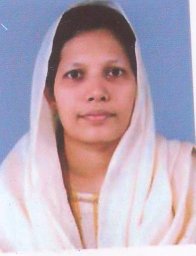 Seenath Peedikakandi合作论文数1Muthuramalingam Ramasubramanian合作论文数1Ammu Punnoose合作论文数1
 Jim Elliot Christopherjames合作论文数1
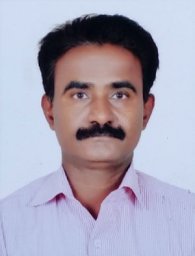 Karthikeyan Kulothungan合作论文数Sch Civil Engn, VIT Univ1D. Vijayalakshmi合作论文数1K Mohana合作论文数Nirmala College for Women1Madhusudhan S合作论文数1K. Sreelakshmi合作论文数1P. Prameela合作论文数1
 G.L. Sawargaonkar合作论文数ICRISAT Development Center, International Crops Research Institute for the Semi-Arid Tropics1Kalburgi Narayanasa Maruthy合作论文数1
 Nithyalakshmi .J合作论文数1
 S. Sarada合作论文数Kerala Agricultural University1a henry合作论文数1
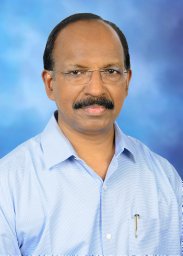 C George Thomas合作论文数College of Horticulture, Kerala Agricultural University1A Prema Kirubakaran合作论文数Kerala Agricultural University1




