Large language models (LLMs) have demonstrated remarkable capabilities in analyzing textual data to support disease diagnosis. Extending these advances to audio, Multimodal Large Language Models (MLLMs) open new opportunities for addressing speech-impairing conditions such as Parkinson’s Disease (PD). Using the NeuroVoz corpus, which includes speech recordings and expert evaluations across 14 perceptual dimensions of voice quality, phonation, and prosody, we validated the clinical utility of these annotations and assessed the ability of MLLMs to replicate them. The models generated acoustic macro-descriptors that showed good agreement with expert ratings and enabled effective PD classification. Feeding these descriptors into machine learning classifiers for PD detection achieved up to 80.47% UAR. Overall, the findings highlight the potential of MLLMs to provide reliable and interpretable features directly from audio, thereby supporting scalable and cross-domain speech-based diagnosis of neurodegenerative conditions.
Recent works in pathological speech analysis have increasingly relied on powerful self-supervised speech representations, leading to promising results. However, the complex, black-box nature of these embeddings and the limited research on their interpretability significantly restrict their adoption for clinical diagnosis. To address this gap, we propose a novel, interpretable framework specifically designed to support Parkinson's Disease (PD) diagnosis. Through the design of simple yet effective cross-attention mechanisms for both embedding- and temporal-level analysis, the proposed framework offers interpretability from two distinct but complementary perspectives. Experimental findings across five well-established speech benchmarks for PD detection demonstrate the framework's capability to identify meaningful speech patterns within self-supervised representations for a wide range of assessment tasks. Fine-grained temporal analyses further underscore its potential to enhance the interpretability of deep-learning pathological speech models, paving the way for the development of more transparent, trustworthy, and clinically applicable computer-assisted diagnosis systems in this domain. Moreover, in terms of classification accuracy, our method achieves results competitive with state-of-the-art approaches, while also demonstrating robustness in cross-lingual scenarios when applied to spontaneous speech production.
This work describes a comprehensive approach for the automatic assessment of cognitive decline from spontaneous speech in the context of the PROCESS Challenge 2025. Based on our previous experience on the use of speech and text-derived biomarkers for disease detection, we evaluate here the use of knowledge-based acoustic and text-based feature sets, as well as LLM-based macro-descriptors, and multiple neural representations (e.g., Longformer, ECAPA-TDNN, and Trillsson embeddings). The combination of these feature sets with different classifiers resulted in a large pool of systems, from which, those providing the best balance between train, development, and individual class performance were selected for model ensembling. Our final best-performing systems correspond to combinations of models that are complementary to each other, relying on acoustic and textual information from the three clinical tasks provided in the challenge dataset.
The automatic identification of medication states of Parkinson's disease (PD) patients can assist clinicians in monitoring and scheduling personalized treatments, as well as studying the effects of medication in alleviating the motor symptoms that characterize the disease. This paper explores speech as a non-invasive and accessible biomarker for identifying PD medication states, introducing a novel approach that addresses this task from a speaker-independent perspective. While traditional machine learning models achieve competitive results, self-supervised speech representations prove essential for optimal performance, significantly surpassing knowledge-based acoustic descriptors. Experiments across diverse speech assessment tasks highlight the relevance of prosody and continuous speech in distinguishing medication states, reaching an F1-score of 88.2%. These findings may streamline clinicians' work and reduce patient effort in voice recordings.
This work describes our group's submission to the PROCESS Challenge 2024, with the goal of assessing cognitive decline through spontaneous speech, using three guided clinical tasks. This joint effort followed a holistic approach, encompassing both knowledge-based acoustic and text-based feature sets, as well as LLM-based macrolinguistic descriptors, pause-based acoustic biomarkers, and multiple neural representations (e.g., LongFormer, ECAPA-TDNN, and Trillson embeddings). Combining these feature sets with different classifiers resulted in a large pool of models, from which we selected those that provided the best balance between train, development, and individual class performance. Our results show that our best performing systems correspond to combinations of models that are complementary to each other, relying on acoustic and textual information from all three clinical tasks.
Existing resources for Automatic Speech Recognition in Portuguese are mostly focused on Brazilian Portuguese, leaving European Portuguese (EP) and other varieties under-explored. To bridge this gap, we introduce CAMÕES, the first open framework for EP and other Portuguese varieties. It consists of (1) a comprehensive evaluation benchmark, including 46h of EP test data spanning multiple domains; and (2) a collection of state-of-the-art models. For the latter, we consider multiple foundation models, evaluating their zero-shot and fine-tuned performances, as well as E-Branchformer models trained from scratch. A curated set of 425h of EP was used for both fine-tuning and training. Our results show comparable performance for EP between fine-tuned foundation models and the E-Branchformer. Furthermore, the best-performing models achieve relative improvements above 35
This work explores the potential of Large Language Models (LLMs) as annotators of high-level characteristics of speech transcriptions, which may be relevant for detecting Alzheimer's disease (AD). These low-dimension interpretable features, here designated as macro-descriptors (e.g. text coherence, lexical diversity), are then used to train a binary classifier. Our experiments compared the extraction of these features from both manual and automatic transcriptions obtained with different types of speech recognition systems, and involved both open and closed source LLMs, with several prompting strategies. The experiments also compared the use of macro-descriptors with the direct prediction of AD by the LLM, given the transcription. Even though LLMs are not trained for this task, our experiments show that they achieve up to 81% accuracy, surpassing the baseline of previous AD detection challenges, particularly when used as extractors of macro-descriptors.
Massive amounts of audio-visual contents are shared in public platforms everyday. These contents are created with many purposes, from entertaining or teaching, to extremist propaganda. Civil security actors need to monitor these platforms to detect and neutralize security threats. Generating actionable knowl-edge from multimedia contents requires the extraction of multiple information, from linguistic data to sounds and background noises. Information extraction demands audio-visual annotations, a costly, time-consuming task when performed manually, which hinders the analysis of such an overwhelming amount of data. This work, performed in the context of the EU Horizon 2020 Project AIDA, addresses the challenge of building a robust sound detector focused on events relevant to the counter-terrorism domain. Our classification framework combines PLP features with a convolutional architecture to train a scalable model on a large number of events that is later fine-tuned on the subset of interest. The fusion of different corpora was also investigated, showing the difficulties posed by this task. With our framework, results attained an average F1-score of 0.53% on the target set of events. Of relevance, during the fine-tune phase a general-purpose class was introduced, which allowed the model to generalize on ’unseen’ events, highlighting the importance of a robust fine-tune.
Speech and language technology is currently being incorporated into e-health services addressed to the detection, assessment and rehabilitation of different types of speech and language disorders. This is the case of the Portuguese platform VITHEA, which provides remote access to automatic training sessions for aphasia rehabilitation. In VITHEA, patients’ answers to semantic confrontation exercises are validated using automatic speech recognition. Text-to-speech synthesis and a virtual agent are exploited to allow a natural multimodal interaction. While the effectiveness of the different technological components has been individually validated, there is a need for the assessment of the overall therapeutic platform. In this work, we report evaluation results of the complete therapeutic platform based on a survey collected from speech and language therapists. The results not only confirmed the significant usefulness of the platform for the treatment of aphasic patients, but also provided very relevant feedback that led to the introduction of additional features and to the development of similar solutions for other diseases .
Parkinson's disease (PD) is a progressive degenerative disorder of the central nervous system characterized by motor and nonmotor symptoms. As the disease progresses, patients alternate periods in which motor symptoms are mitigated due to medication intake (ON state) and periods with motor complications (OFF state). The time that patients spend in the OFF condition is currently the main parameter employed to assess pharmacological interventions and to evaluate the efficacy of different active principles. In this work, we present a system that combines automatic speech processing and deep learning techniques to classify the medication state of PD patients by leveraging personal speech-based bio-markers. We devise a speaker-dependent approach and investigate the relevance of different acoustic-prosodic feature sets. Results show an accuracy of 90.54% in a test task with mixed speech and an accuracy of 95.27% in a semi-spontaneous speech task. Overall, the experimental assessment shows the potentials of this approach towards the development of reliable, remote daily monitoring and scheduling of medication intake of PD patients.
Clinical literature provides convincing evidence that language deficits in Alzheimer's disease (AD) allow for distinguishing patients with dementia from healthy subjects. Currently, computational approaches have widely investigated lexicosemantic aspects of discourse production, while pragmatic aspects like cohesion and coherence, are still mostly unexplored. In this article, we aim at providing a more comprehensive characterization of language abilities for the automatic identification of AD in narrative description tasks by also incorporating pragmatic aspects of speech production. To this end, we investigate the relevance of a recently proposed set of pragmatic features extracted from an automatically generated topic hierarchy graph in combination with a complementary set of state-of-the-art features encoding lexical, syntactic and semantic cues. Experimental results on the DementiaBank corpus show an accuracy improvement from 82.6% to 85.5% in identifying AD patients when pragmatic features are incorporated to the set of lexicosemantic features. Nevertheless, these results are obtained relying on manual transcriptions, which strongly limits the applicability of computational analysis to clinical settings. Thus, in this work we additionally carry out an analysis of the errors introduced by a speech recognition system and the way in which they impact the performance of the proposed method. In spite of the high word error rates obtained on these data (similar to 40%), automatic AD identification accuracy decreased only to 79.7%, which is considered a remarkable result when compared with solutions based on manual transcriptions.
This paper describes a multi-modal approach for the automatic detection of Alzheimer's disease proposed in the context of the INESC-ID Human Language Technology Laboratory participation in the ADReSS 2020 challenge. Our classification framework takes advantage of both acoustic and textual feature embeddings, which are extracted independently and later combined. Speech signals are encoded into acoustic features using DNN speaker embeddings extracted from pre-trained models. For textual input, contextual embedding vectors are first extracted using an English Bert model and then used either to directly compute sentence embeddings or to feed a bidirectional LSTM-RNNs with attention. Finally, an SVM classifier with linear kernel is used for the individual evaluation of the three systems. Our best system, based on the combination of linguistic and acoustic information, attained a classification accuracy of 81.25%. Results have shown the importance of linguistic features in the classification of Alzheimer's Disease, which outperforms the acoustic ones in terms of accuracy. Early stage features fusion did not provide additional improvements, confirming that the discriminant ability conveyed by speech in this case is smooth out by linguistic data.
Automatic personality analysis has gained great attention in the last years as a fundamental dimension in human-machine interactions. However, the development of this technology in some domains, such as the classification of children’s personality, has been hindered by the limited number and size of the available speech corpora due to ethical concerns on collecting such corpora. To circumvent the lack of data, we have investigated the application of a semi-supervised training approach that makes use of heterogeneous (age and language mismatches) and partially non-labelled data sets. Namely, preliminary personality models trained using a small labelled data set with French speaking adults are iteratively refined using a larger unlabeled set of Portuguese children’s speech, whereas a labelled corpus of Portuguese children is used for evaluation. We also investigated speech representations based on prior linguistic knowledge on acoustic-prosodic clues for personality classification tasks and have analysed their relevance in the assessment of each personality trait. The results point out to the potential of applying semi-supervised learning approaches with heterogeneous data sets to overcome the lack of labelled data in under-resourced domains, and to the existence of acousticprosodic clues shared by speakers with different languages and ages, which allows for the classification of personality independently of these variables.
Query-by-example Spoken Term Detection (QbE STD) aims to retrieve data from a speech repository given an acoustic (spoken) query containing the term of interest as the input. This paper presents the systems submitted to the ALBAYZIN QbE STD 2016 Evaluation held as a part of the ALBAYZIN 2016 Evaluation Campaign at the IberSPEECH 2016 conference. Special attention was given to the evaluation design so that a thorough post-analysis of the main results could be carried out. Two different Spanish speech databases, which cover different acoustic and language domains, were used in the evaluation: the MAVIR database, which consists of a set of talks from workshops, and the EPIC database, which consists of a set of European Parliament sessions in Spanish. We present the evaluation design, both databases, the evaluation metric, the systems submitted to the evaluation, the results, and a thorough analysis and discussion. Four different research groups participated in the evaluation, and a total of eight template matching-based systems were submitted. We compare the systems submitted to the evaluation and make an in-depth analysis based on some properties of the spoken queries, such as query length, single-word/multi-word queries, and in-language/out-of-language queries.
Language impairment in Alzheimer’s disease is characterized by a decline in the semantic and pragmatic levels of language processing that manifests since the early stages of the disease. While semantic deficits have been widely investigated using linguistic features, pragmatic deficits are still mostly un-explored. In this work, we present an approach to automatically classify Alzheimer’s disease using a set of pragmatic features extracted from a discourse production task. Following the clinical practice, we consider an image representing a closed domain as a discourse’s elicitation form. Then, we model the elicited speech as a graph that encodes a hierarchy of topics. To do so, the proposed method relies on the integration of various NLP techniques: syntactic parsing for sentence segmentation into clauses, coreference resolution for capturing dependencies among clauses, and word embeddings for identifying semantic relations among topics. According to the experimental results, pragmatic features are able to provide promising results distinguishing individuals with Alzheimer’s disease, comparable to solutions based on other types of linguistic features.
Automatic personality analysis has gained attention in the last years as a fundamental dimension in human-to-human and human-to-machine interaction. However, it still suffers from limited number and size of speech corpora for specific domains, such as the assessment of children's personality. This paper investigates a semi-supervised training approach to tackle this scenario. We devise an experimental setup with age and language mismatch and two training sets: a small labeled training set from the lntcrspcech 2012 Personality Sub-challenge, containing French adult speech labeled with personality OCEAN traits, and a large unlabeled training set of Portuguese children's speech. As test set, a corpus of Portuguese children's speech labeled with OCEAN traits is used. Based on this setting. we investigate a weak supervision approach that iteratively refines an initial model trained with the labeled data-set using the unlabeled data-set. We also investigate knowledge-based features, which leverage expert knowledge in acoustic-prosodic cues and thus need no extra data. Results show that, despite the large mismatch imposed by language and age differences, it is possible to attain improvements with these techniques, pointing both to the benefits of using a weak supervision and expert-based acoustic-prosodic features across age and language.
Query-by-Example Spoken Term Detection (QbE-STD) is the task of finding occurrences of a spoken query in a repository of audio documents. In the last years, this task has become particularly appealing, mostly due to its flexibility that allows, for instance, to deal with lowresourced languages for which no Automatic Speech Recognition (ASR) system can be built. This paper reports experimental results of the LF system built for the QbE-STD Albayzin 2016 evaluation. The system exploits frame level phone posteriors followed by a Dynamic Time Warping (DTW) search procedure. In order to ease the search process, audio documents are first partitioned into smaller segments using an audio segmentation module. Then, given a query and an audio document, the normalized distance matrix is computed between their phone posterior representations and a segmental DTW matching procedure is performed between the query and each segment of the audio document. Phone decoders of different languages have been exploited and no assumption has been made about the language of the audio collection and the queries. In the end, different sub-systems are combined together based on a discriminative calibration and fusion approach.
Parkinson's disease (PD) is the second most common neurodegenerative disorder of mid-to-late life after Alzheimer's disease. During the progression of the disease, most individuals with PD report impairments in speech due to deficits in phonation, articulation, prosody, and fluency. In the literature, several studies perform the automatic classification of speech of people with PD considering various types of acoustic information extracted from different speech tasks. Nevertheless, it is unclear which tasks are more important for an automatic classification of the disease. In this work, we compare the discriminant capabilities of eight verbal tasks designed to capture the major symptoms affecting speech. To this end, we introduce a new database of Portuguese speakers consisting of 65 healthy control and 75 PD subjects. For each task, an automatic classifier is built using feature sets and modeling approaches in compliance with the current state of the art. Experimental results permit to identify reading aloud prosodic sentences and story-telling tasks as the most useful for the automatic detection of PD.
The diagnosis and monitoring of Alzheimer’s Disease (AD), which is the most common form of dementia, has been the motivation for the development of several screening tests such as Mini-Mental State Examination (MMSE), AD Assessment Scale (ADAS-Cog), and others. This work aims to develop an automatic web-based tool that may help patients and therapists to perform screening tests. The tool was implemented by adapting an existing platform for aphasia treatment, known as Virtual Therapist for Aphasia Treatment (VITHEA). The tool includes the type of speech-related exercises one can find in the most common screening tests, totalling over 180 stimuli, as well as the Animal Naming test. Its great flexibility allows for the creation of different exercises of the same type (repetition, calculation, naming, orientation, evocation, ...). The tool was evaluated with both healthy subjects and others diagnosed with cognitive impairment, using a representative subset of exercises, with satisfactory results.
 Alberto Abad合作论文数22
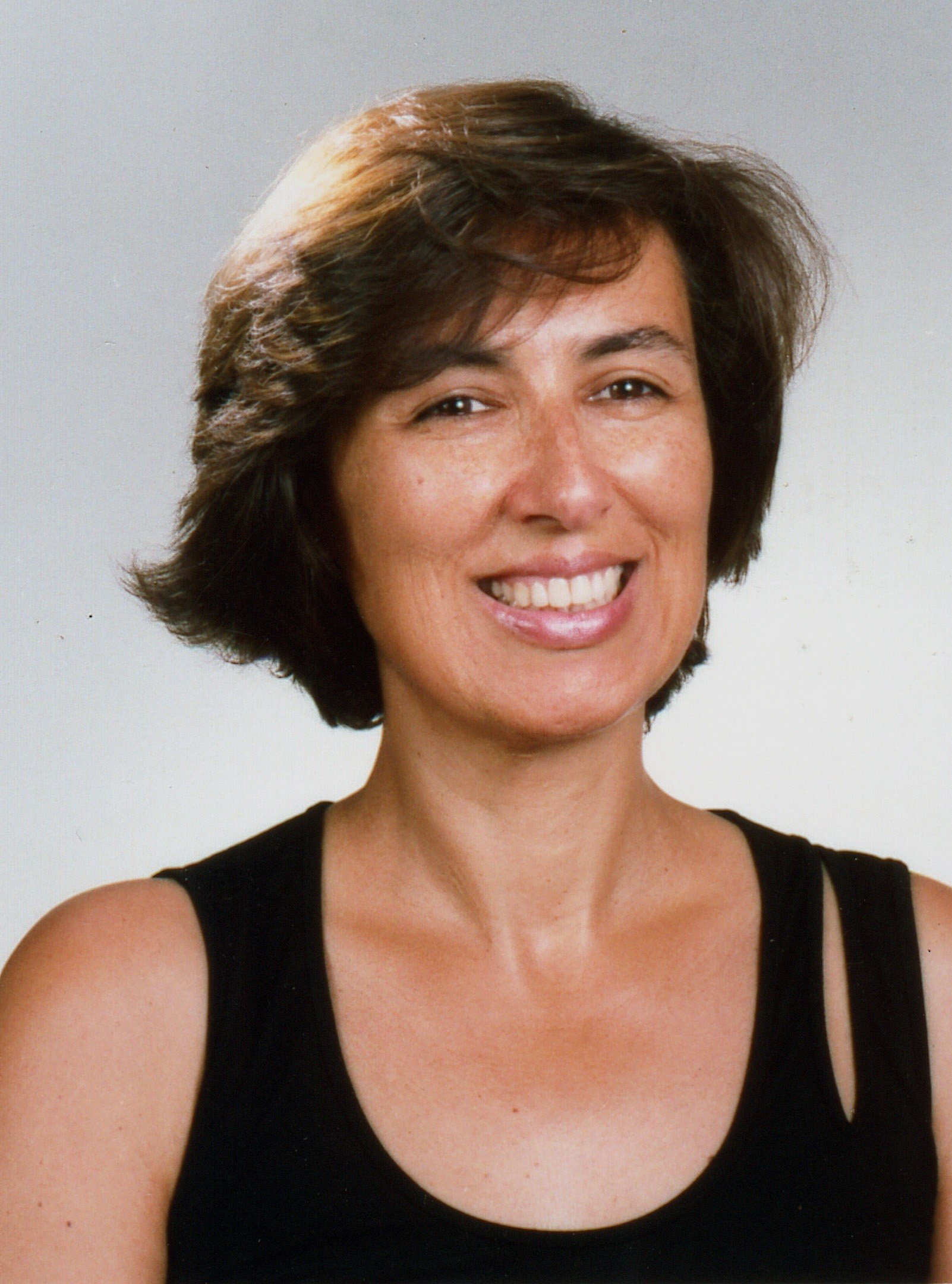 Isabel Trancoso合作论文数Instituto Superior Tecnico, University of Lisbon12
 Rubén Solera-Ureña合作论文数Department of Signal Theory and Communications, EPS-Universidad Carlos III de Madrid8
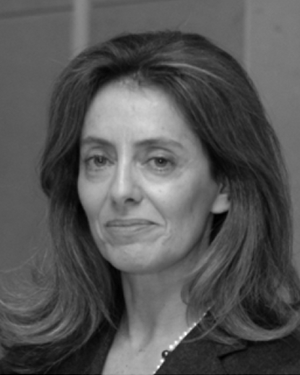 Isabel Pavão Martins合作论文数7
 Catarina Botelho合作论文数6
 David Gimeno-Gómez合作论文数4
 Rolland Thomas合作论文数4
 Carlos-D Martinez-Hinarejos合作论文数Departament de Sistemes Informatics i Computaci;Institut Tecnologic d'Inform;Departament de Sistemes Informatics i Computaci, Institut Tecnologic d'Inform4
 David Martins de Matos合作论文数Department of Computer Science and Engineering, Universidade de Lisboa Instituto Superior Técnico;Spoken Language Systems Lab, Instituto de Engenharia de Sistemas e Computadores Investigação e Desenvolvimento em Lisboa;Human Language Technology Lab, INESC-ID Lisboa4
 John Daniel Fidalgo Mendonça合作论文数Human Language Technologies Laboratory;Instituto Superior Técnico3
 Jose Fonseca合作论文数3
 Rita Cardoso合作论文数3
 Isabel Cristina Ramos Peixoto Guimaraes合作论文数3
 Francisco Teixeira合作论文数Univ Lisbon, Inst Super Tecn, INESC ID, Lisbon, Portugal3
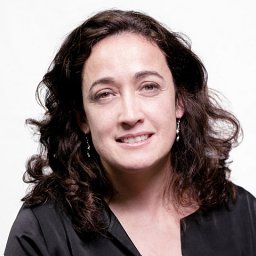 Helena Moniz合作论文数L2F INESC-ID/IST, L2F INESC-ID/IST3
 Fernando Batista合作论文数Spoken Language Systems Laboratory3Gabriela Leal合作论文数2Patrícia Pereira合作论文数2
 Cristiana Araujo Amorim合作论文数2
 Angela Costa合作论文数2Diogo A. P. Nunes合作论文数2Luisa Farrajota合作论文数Hospital de Santa Maria2
 Ramón Fernandez Astudillo合作论文数IBM Research AI2
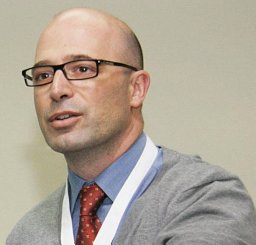 Joaquim Ferreira合作论文数Instituto de Medicina Molecular, Universidade de Lisboa;Faculty of Medicine, University of Lisbo2
 Vera Cabarrão合作论文数2
 Helena Santos合作论文数1Sérgio Paulo合作论文数1
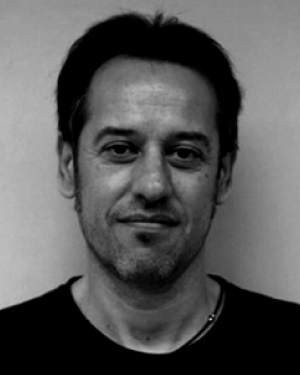 José García Rodríguez合作论文数1João Ferreira合作论文数1
 Joana Campos合作论文数1
 Jorge Proenca合作论文数1
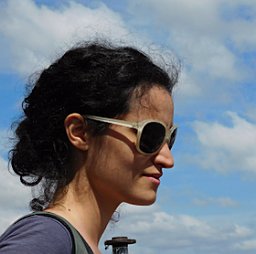 Mariana Julião合作论文数Inst Super Tecn, Univ Lisbon1
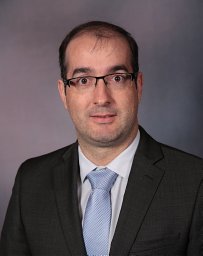 Carlos Ramon Silveira Mendes合作论文数1
 Ana Paiva合作论文数Department of Computer Science and Engineering, Instituto Superior Técnico, University of Lisbon1
 Paula Lopez-Otero合作论文数Multimedia Technologies Group, Universidade de Vigo1
 Joana Carvalho合作论文数Cellule Interuniversitaire d'Epidémiologie1Laura Docío Fernández合作论文数1
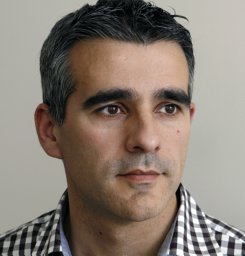 Torre Toledano合作论文数Universidad Autónoma de Madrid1
 Margherita Fabbri合作论文数Department of Neurological Sciences, University of Bologna1
 Fernando Perdigão合作论文数Instituto de Telecomunicações1
 Tanja Schultz合作论文数Cognitive Systems Lab, University of Bremen;Language Technologies Institute, School of Computer Science, Carnegie Mellon University1
 Emilio Sanchis Arnal合作论文数Dpto. de Sistemas Informáticos y Computación (DSIC), Universidad Politécnica de Valencia, Spain1
 Fernando García-Granada合作论文数1Tiago Luís合作论文数1Javier Tejedor合作论文数Universidad CEU San Pablo1




