Scientific literacy (SL) has been recognized globally as the main goal of school science. Similarly, scientific inquiry (SI) is an established science procedure in learning. Science textbooks are major resources for learning, but the ways in which SL themes and SI-levels are presented to students in textbooks may vary between countries. This study aims to compare how the representations of SL themes and SI-levels in upper-secondary schools biology textbooks in Finland (BookF) and Nigeria (BookN) align with a competency-based approach focusing on scientific knowledge and competencies, the learning context, and attitudes towards science. A modified framework of the Programme for International Student Assessment 2015 (PISA 2015) and a deductive content analysis were used for data processing. The findings using χ 2 tests indicate significant differences in the representations of SL themes and SI-levels. The books focused more on scientific knowledge and competencies than on learning contexts and attitudes. Moreover, BookF encourages structured inquiry, whereas BookN proposes confirmation inquiry levels.
Pyrkimykset ratkaista kestävyysongelmia haastavat eri oppiaineiden opetuksen ja opetuksen tutkimuksen ottamaan huomioon kestävän kehityksen tavoitteet. Tässä kirjassa käsitellään biologian opetusta. Oleellinen kysymys on selvittää, miltä perustalta nousevat tavoitteet ja sisällöt opetukseen, jonka päämääränä on monipuolinen luonnontieteellinen sivistys ja kestävyyttä edistävä toimintakompetenssi. Kirjassa biologian opetuksen tutkijat tarkastelevat biologian tieteenalan, opetuksen sekä luonnontiedekasvatuksen ja kestävyyskasvatuksen välisiä yhteyksiä. Painopiste on biologian opetuksen ja kestävyyskasvatuksen teoreettisissa kysymyksissä ja empiirisessä tutkimuksessa. Kirjoittajat tarkastelevat myös biologian ja kestävyyden käsitteellistä ymmärtämistä sekä kiistanalaisia ja sensitiivisiä aiheita opetuksessa. Tutkimuksellista lähestymistapaa, ongelmanratkaisutaitoja sekä koulun ulkopuolella toteutettavaa biologian opetusta tarkastellaan luonnontieteellisen sivistyksen ja kestävyysosaamisen vahvistajina.
We examined the association between curriculum standards and biology textbooks from Nigeria and Finland based on the components of scientific literacy (SL), namely scientific knowledge and competences, learning contexts, and attitudes towards science. By means of content and co-occurrence network analysis we systematically determined the degree of association among the curriculum materials. The results indicate that biology curricula and textbooks from both countries overlap in terms of scientific knowledge and competences, whereas learning contexts, epistemic knowledge and attitudes towards science differ in how they relate to the other SL components. Our findings also show that a combination of content and network analysis is a useful approach to examining the assoc Article visualizations: iation between science-curriculum standards and textbooks.
The existing co-teaching practices in teachers’ professional learning emphasize collaboration between pre-service and in-service teachers. Although this collaboration is usually defined by a mentor–student relationship with asymmetric power relations, successful co-teaching practices in schools are considered to involve parity, resulting in mutual learning for all involved parties. In this study, we designed a model for teachers’ professional learning in which pre- and in-service teachers collaborate and have shared goals, with the aim of equal responsibilities for planning and implementing instruction, despite the teachers’ diverse backgrounds. During the 4 years of piloting and developing the model in the Finnish teacher education context, we investigated how the participants reflected on the co-teaching process. We analyzed data from collaborative reflection sessions to identify the challenges and benefits of this untypical form of collaboration. The findings showed that asymmetric backgrounds may cause challenges, but that if these are overcome, they can also create opportunities for valuable co-teaching experiences for all the participants. Helping the participants initiate the co-teaching process and take different roles appeared to be essential for a successful process. We discuss the findings regarding the development of co-teaching practices in teacher education and in schools.
Scientific literacy (SL) has been recognized as the main goal of science curricula documents around the world; however, comparative international curriculum research is limited, especially with Western and African countries. To fill this gap, this study aimed to compare the coverage of SL competencies with the components of knowledge, attitudes, and contexts in the upper secondary school biology curricula of Finland and Nigeria. Content analysis was used as a method and a modified version of the SL framework of the Programme for International Student Assessment 2015 (OECD, 2016) was used to analyze the curricula. The results revealed that both curricula contain the main components of SL defined in the framework, scientific knowledge being the most prominent, followed by scientific competencies. Both curricula laid less emphasis on the interpretation competency and attitudes to science component. The curricula differed in the amount of attention paid to the different areas of SL components. The Finnish curriculum focused more on content knowledge, explaining phenomena scientifically and frontiers of science and technology, while in the Nigerian curriculum procedural knowledge, evaluation and design of scientific enquiry and natural resources as context were more emphasized. The results of this study are not only important to the European and African continents but to other parts of the world for the promotion SL in schools, also the findings reinforce the call on curriculum planners and science educators to ensure equal coverage of all the dimensions of SL in the school science curriculum if the next generation of the world is to be scientifically literate.
It is important to know how current education affects students’ attitudes towards learning, specifically in a quickly evolving and societally relevant field of biology such as genetics. The aim of this study is to examine how teacher and student-related factors explain secondary school students’ attitudes towards the applications of genetics and learning in genetics. In total 421 students aged between 17 and 20 from ten schools participated in the study. We measured students’ liking of, self-concept in and experienced utility of genetics and students’ attitude towards gene technology and belief in genetic determinism. We carried out item response theory based modelling by including teachers’ teaching emphases, learning materials, student gender and the number of attended biology courses as explanatory variables. The attitude towards gene technology and belief in genetic determinism correlated with all independent factors. Male students’ attitude towards gene technology was more liberal; they had higher self-concept, but experienced less utility in genetics and their belief in genetic determinism was weaker than in women. If the teacher’s emphasis was on Heredity or if the textbook with stronger Mendelian emphasis was used in teaching, students had more negative attitudes towards learning in genetics, but the belief in genetic determinism was stronger. In comparison, teacher’s Developmental emphasis explained students’ lower belief in genetic determinism, whereas Structural emphasis correlated with students’ liking of genetics. The results suggest that teachers’ approaches in genetics teaching as well as learning materials need updates to fulfil the needs for genetics literacy in current science education.
Background Investigations of evolution knowledge and acceptance and their relation are central to evolution education research. Ambiguous results in this field of study demonstrate a variety of measuring issues, for instance differently theorized constructs, or a lack of standardized methods, especially for cross-country comparisons. In particular, meaningful comparisons across European countries, with their varying cultural backgrounds and education systems, are rare, often include only few countries, and lack standardization. To address these deficits, we conducted a standardized European survey, on 9200 first-year university students in 26 European countries utilizing a validated, comprehensive questionnaire, the “Evolution Education Questionnaire”, to assess evolution acceptance and knowledge, as well as influencing factors on evolution acceptance. Results We found that, despite European countries’ different cultural backgrounds and education systems, European first-year university students generally accept evolution. At the same time, they lack substantial knowledge about it, even if they are enrolled in a biology-related study program. Additionally, we developed a multilevel-model that determines religious faith as the main influencing factor in accepting evolution. According to our model, knowledge about evolution and interest in biological topics also increase acceptance of evolution, but to a much lesser extent than religious faith. The effect of age and sex, as well as the country’s affiliation, students’ denomination, and whether or not a student is enrolled in a biology-related university program, is negligible. Conclusions Our findings indicate that, despite all their differences, most of the European education systems for upper secondary education lead to acceptance of evolution at least in university students. It appears that, at least in this sample, the differences in knowledge between countries reflect neither the extent to which school curricula cover evolutionary biology nor the percentage of biology-related students in the country samples. Future studies should investigate the role of different European school curricula, identify particularly problematic or underrepresented evolutionary concepts in biology education, and analyze the role of religious faith when teaching evolution.
The lack of standardised assessment of evolutionary knowledge and acceptance of evolution across Europe makes comparisons between studies difficult. The Evolution Education Questionnaire on Acceptance and Knowledge (EEQ) was constructed to measure attitudes and understanding across Europe and beyond. We aimed to compile a brief instrument to allow for easy application in school and university. The target group of the EEQ was freshman university students who had just finished their secondary education. However, several components of the questionnaire were developed and validated for additional target groups. Therefore, this questionnaire may, in addition, be suitable for students in secondary school, in-service teachers as well as the general public. This method report describes the contents and application of the EEQ and provides information on survey conduction, data preparation, analyses and interpretation of results to serve as a standardised and ready-to-use protocol to measure the acceptance of and knowledge about evolution in a local, national or international context. To allow for sampling in different European countries, we present the EEQ in 23 European languages.
Science education can be alienating for students, as it is apart from the mundane world with which they are familiar. Science education research has approached the gap between everyday understandings and science learning largely as a challenge arising while learning about science concepts and the kinds of instructional approaches that may support this. However, the forms of everyday ways of relating to the world fundamentally expand beyond conceptual understandings. In this study, we use data from an outdoor science learning setting to examine a range of non-conceptual but culturally possible and intelligible ways in which students actually connect science learning processes to their everyday world and its characteristic commonsense understandings. Our study shows how students’ (a) spontaneous embodied explorations, (b) humor in all of its bodily and grotesque forms, and (c) narrative representation and interpretation of the world are used to contextualize science learning, namely its environment and content, within their familiar world. We show how students draw on these fundamental cultural forms of understanding the world even without particular instructional support while, at the same time, completing their science tasks according to the goals set by their teachers. Our findings suggest that the ways in which students connect their everyday world with science learning do not have to be explicitly related to the particular conceptual learning goals but can parallel conceptual learning while contextualizing it in affectively meaningful ways.
Biology education should be relevant to young students so that they can become interested in biology and understand biological topics in their everyday and vocational lives. We conducted interviews and collected mind maps to examine Finnish pre-service biology teachers' (N = 16) views on the relevance of biology education. Furthermore, we analysed Finnish secondary school biology curricula, which were compared with the pre-service teachers' answers. We classified the views on relevance into nine main categories using grounded theory as the methodological frame of reference. Pre-service teachers emphasised the relevance of biology to the student's own life, whereas scientific practices and the nature of science were expressed in secondary school curricula more often. Novice pre-service teachers put more value on general knowledge, while more experienced pre-service teachers were more likely to mention sustainable futures and societal aspects in their reasoning. Based on the results, we identified two stages in the development of the views. This study suggests that pedagogical studies, teaching experience and teacher training have an impact on the pre-service teachers' views about the relevance of biology education. Moreover, we could find differences between curricula and pre-service teachers' views, especially regarding scientific practices and the role of the nature of science in biology education.
Current mainstream practices of education tend to have an authoritative and serious side through their emphasis on the transmission and reproduction of canonical knowledge. Simultaneously, there are calls for dialogical approaches that provide students with opportunities to express their understandings and thereby increase engagement in learning. Yet there is little educational research on the students' ways of coping with the authoritative dimensions as these arise. In this study, we use data from an outdoor science setting where the teacher is not physically present to identify students' ways to act upon authoritative feedback. Our study shows that dialogic interactions among the students, which might be considered unacceptable behavior or off-topic activities, allow students to (temporarily) regain some level of control over the authoritativeness of teaching. The students use abusive language, humor and derision to oppose and degrade authoritativeness conveyed in the teacher's evaluative feedback in ways that would not be accessible to them with the teacher present. Simultaneously, disrupting the authoritative role of academic learning reinforced its serious nature, which manifests itself in the way that the students follow the teacher's instructions and improve their level of performance as if the negative emotions had been coped with in affectively meaningful ways.
In this article we discuss, as a proof of concept, how a network model can be used to analyse gaze tracking data coming from a preliminary experiment carried out in a biodiversity education research project. We discuss the network model, a simple directed graph, used to represent the gaze tracking data in a way that is meaningful for the study of students’ biodiversity observations. Our network model can be thought of as a scanning signature of how a subject visually scans a scene. We provide a couple of examples of how it can be used to investigate the personal identification processes of a biologist and non-biologist when they are carrying out a task concerning the observation of species-specific characteristics of two bird species in the context of biology education research. We suggest that a scanning signature can be effectively used to compare the competencies of different persons and groups of people when they are making observations on specific areas of interests.
This research clarifies how a collaborative team teaching model (CTTM) can support both pre-service and in-service teachers’ professional development in using inquiry-based science teaching in primary schools. The data were collected via a questionnaire-based survey approach after inquiry projects implementation at public schools in four Finnish cities. In total, 98 pre-service teachers and 51 in-service class teachers were involved in the research. According to their experiences collaborative team teaching was seen as an adequate teaching approach in primary school science lessons. Both in-service and pre-service teachers experienced inquiry-based science teaching enthusiastically and received new ideas, knowledge and skills to carry out inquiries during the school projects. Also, they became more confident to use inquiry-based approach in their teaching. The findings indicate that the CTTM combines pre-service teachers’ professional development and in-service teachers’ expertise and the model successfully support the use of inquiry-based practices in primary school science education. Keywords: collaborative team teaching model, inquiry-based science teaching, survey research, teachers’ experiences.
The skills to understand genetic phenomena and transfer knowledge to real world situations are an important part of 21st century scientific literacy. While socio-scientific issues (SSI) are emphasized and impediments to considering SSI are widely studied, science teachers have low interest in adopting SSI in teaching. Little is known about how teachers choose content for their teaching, although this is the process in which curricula translates to teaching practice. We studied how teachers choose content for biology courses on cells, heredity, and biotechnology by interviewing ten Finnish upper-secondary school teachers. We asked which content they perceived as the most important and studied how they described teaching genetically modified organisms, hereditary disorders, and complex human traits. We used content analysis to build a tentative model of variables influencing teachers9 choices. We found three main categories of the most important contents: development of phenotype, inheritance and continuity, and gene function. While teachers mentioned that SSI are important, they were never mentioned among the important contexts. Teachers differed in how they described teaching: some embraced human-related content while others described avoidance due to content or pedagogy-related issues. The tentative model of teachers9 choices included national-level factors, which were common to all teachers, school-level factors as the local context and personal-level factors. We classified teachers9 perceptions to Developmental, Structural and Hereditary approaches in genetics teaching which contained not only the perceptions of the most important content, but also teacher inclinations towards teaching human genetics and perceptions of students9 interest in different topics. Teachers9 perceptions were strongly linked with teachers9 likelihood to discuss human genetics. Experience played a part in which approach teachers had, and contrary to previous research, the less experienced teachers were most open to discussing human genetics. Our results suggest that curriculum is an important tool encouraging teachers to adopt SSI-oriented teaching.
Science education strives to increase interest in science and facilitate active citizenship. Thus, the aspects of personal and societal relevance are increasingly emphasised in science curricula. Still, little is known about how teachers choose content for their teaching, although their choices translate curricula to teaching practice. We explored how teachers choose genetics content and contexts for biology courses on cells, heredity and biotechnology by interviewing ten Finnish upper-secondary school teachers. We studied how the teachers described teaching on three themes in which they have varying freedom afforded by curricula: genetically modified organisms, hereditary disorders, and complex human traits. We analysed interviews with theory-guiding content analysis and found consistent patterns in teachers' perceptions of the themes in genetics teaching and teacher inclinations towards teaching genetics in human context. These patterns, which we call emphasis of content in genetics teaching were Developmental, Structural and Hereditary. Teachers with Developmental emphasis embraced teaching genetics in a human context, while teachers with a Structural emphasis avoided them. In general, teachers justified their choices by national, local school, and personal factors. While teachers mentioned that societal and personal contexts are important, at the same time teachers never framed the main themes in genetics with these contexts.
AbstractThe skills required to understand genetic phenomena and transfer knowledge to real world situations are an important part of 21st century scientific literacy. While socio-scientific issues (SSI) are increasingly emphasised in science curricula, teachers have low interest in adopting SSI in teaching. Little is known about how teachers choose content for their teaching, although this process translates curricula to teaching practice. We explored how teachers choose content and contexts for biology courses on cells, heredity, and biotechnology by interviewing ten Finnish upper-secondary school teachers. We studied how the teachers described teaching on genetically modified organisms, hereditary disorders, and human traits. Teachers’ perceptions on genetics teaching were classified to Developmental, Structural and Hereditary approaches. The approaches were connected not only to the teachers’ perceptions of the more important content, but also teacher inclinations towards teaching genetics in the human context and perceptions of students’ interest in different topics. Teachers’ justified their choices by national, local school, and teacher’s personal-level factors. While teachers mentioned that SSI are important, they were never mentioned among the important contexts. Nevertheless, some teachers embraced teaching genetics in the human context while others avoided them. Teachers justified their avoidance for personal and pedagogical factors, such as their competence in dealing with these contexts. Experience played a part in the approach that teachers had, and contrary to the results of previous research, the less experienced teachers were more open to discussing human genetics. We conclude that curriculum development is important to encourage teachers to adopt more SSI-oriented teaching.Disclosure statementTuomas Aivelo has participated in writing biology textbooks for upper-secondary school biology for eOppi Oy. None of the teachers involved in this study used biology textbooks from eOppi Oy.
Fieldwork is an important part of biology as well as science and biology education. However, teachers perceive several reasons for the limited use of fieldwork in schools. Further, outdoor education is often organised as a single fieldtrip guided by outdoor educators, and little research has been done on fieldwork as a regular part of formal biology education. This case study explores three secondary-school biology teachers who untypically use outdoor education as a major part of their ecology courses for 8th grade students (median age 14). Berger and Luckmann's theory of the process of institutionalization as a theoretical background is used to interpret the pedagogical and organizational choices of the case study teachers. Analysis of the interviews of the selected three teachers revealed pedagogical and organizational means through which outdoor teaching is institutionalized into a regular activity in biology lessons. The teachers considered regularity, assessment practices and the school curriculum as major tools to legitimate outdoor learning as a formal schoolwork and foster successful learning. However, they also emphasised students' freedom during outdoor activities. The findings are discussed in terms of how the teachers succeeded in combining the institutional order of formal schooling with students' freedom in nature.
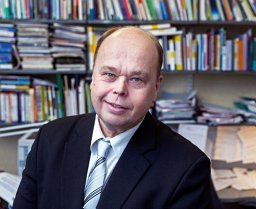 Jari Lavonen合作论文数University of Helsinki34
 Kalle Juuti合作论文数University of Helsinki, University of Helsinki34
 Veijo Meisalo合作论文数Veijo Meisalo , University of Helsinki , Department of Teacher Education , P.O. Box 9 , FIN-00014 , Helsinki ,
University of Helsinki, Department of Computer Science and Dept. of Teacher Education, P.O.Box 38, FIN-00014 University of Helsinki, Finland25
Veijo Meisalo合作论文数Veijo Meisalo , University of Helsinki , Department of Teacher Education , P.O. Box 9 , FIN-00014 , Helsinki ,
University of Helsinki, Department of Computer Science and Dept. of Teacher Education, P.O.Box 38, FIN-00014 University of Helsinki, Finland25 Reijo Byman合作论文数23
 Aivelo Tuomas合作论文数Institute of Biotechnology, University of Helsinki10
 Anttoni Kervinen合作论文数Dept Educ, Univ Helsinki9Seppo Saloranta合作论文数7
 Eila Kyllikki Jeronen合作论文数5Merike Kesler合作论文数4
 Kaisa Hahl合作论文数4
 Jouko Sarvala合作论文数4Helmi Risku-Norja合作论文数4
 Jarkko Lampiselka合作论文数4
 Janis Gedrovics合作论文数3riikka hakonen合作论文数3
 Jelle Boeve-de Pauw合作论文数Institute for Education and Information Sciences, University of Antwerp3
 Arja Kaasinen合作论文数3Minna Mikkola合作论文数3
 Lucia Vazquez Ben合作论文数2
 Gregor Torkar合作论文数2Maria Petersson合作论文数2
 Paul Kuschmierz合作论文数2Justus Mutanen合作论文数2
 Pia Smeds合作论文数2
 Alexandru Nicolae Stermin合作论文数Babeș-Bolyai University2
 Paivi Portaankorva-Koivisto合作论文数2
 Anna Beniermann合作论文数Humboldt Univ2Juris Porozovs合作论文数2Dittmar Graf合作论文数2
 Giulia Realdon合作论文数UNICAMearth Grp, Univ Camerino2gustav bohlin合作论文数Public & Science (VA)2
 Umran Betul Cebesoy合作论文数Fac Educ, Usak Univ2
 Momir Futo合作论文数Sch Med, Catholic Univ Croatia2
 Adam Zoltan Lendvai合作论文数Dept Evolutionary Zool & Human Biol, Univ Debrecen2
 Pietrzak Barbara合作论文数Laboratory of Evolutionary Biodemography, Max Planck Institute for Demographic Research, Konrad-Zuse-Straße 1, 18057 Rostock, Germany;Institute of Zoology, University of Warsaw;Max Planck Institute for Demographic Research, University of Warsaw2
 Andrej Sorgo合作论文数2
 Savković Uroš合作论文数2
 Mirko Đorđevic合作论文数2
 Paolucci S合作论文数Centre for Ecological and Evolutionary Studies, University of Groningen2
 Rianne Pinxten合作论文数Laboratory of Ethology, University of Antwerp2
 Havu-Nuutinen Sari合作论文数2Arto Kallioniemi合作论文数2
 Pirita Seitamaa-hakkarainen合作论文数University of Joensuu2Dragana Cvetkovic合作论文数Research Scientist Department of Electrical and Computer Engineering
Center for Advanced Information Processing (CAIP)
Rutgers University2
Pirita Seitamaa-hakkarainen合作论文数University of Joensuu2Dragana Cvetkovic合作论文数Research Scientist Department of Electrical and Computer Engineering
Center for Advanced Information Processing (CAIP)
Rutgers University2 Liisa Tainio合作论文数2Nicoleta Geamana合作论文数Department of Systems Ecology and Sustainable Development, University of Bucharest2
 Athanasios Mogias合作论文数Democritus University of Thrace;Department of Education-Primary;Department of Education-Primary, Democritus University of Thrace2A.-S. Heiskanen合作论文数2
 Wolff-Michael Roth合作论文数University of Victoria2




