This book is about scientific inquiry, providing a practical manual for conducting and communicating quality research in (mathematics) education.
AbstractEvery researcher wants their study to matter—to make a positive difference for their professional communities. To ensure your study matters, you can formulate clear hypotheses and choose methods that will test them well, as described in Chaps. 1, 2, 3 and 4. You can go further, however, by considering some of the terms commonly used to describe the importance of studies, terms like significance, contributions, and implications. As you clarify for yourself the meanings of these terms, you learn that whether your study matters depends on how convincingly you can argue for its importance. Perhaps most surprising is that convincing others of its importance rests with the case you make before the data are ever gathered. The importance of your hypotheses should be apparent before you test them. Are your predictions about things the profession cares about? Can you make them with a striking degree of precision? Are the rationales that support them compelling? You are answering the “So what?” question as you formulate hypotheses and design tests of them. This means you can control the answer. You do not need to cross your fingers and hope as you collect data.
AbstractBuilding on the ideas in Chap. 1, we describe formulating, testing, and revising hypotheses as a continuing cycle of clarifying what you want to study, making predictions about what you might find together with developing your reasons for these predictions, imagining tests of these predictions, revising your predictions and rationales, and so on. Many resources feed this process, including reading what others have found about similar phenomena, talking with colleagues, conducting pilot studies, and writing drafts as you revise your thinking. Although you might think you cannot predict what you will find, it is always possible—with enough reading and conversations and pilot studies—to make some good guesses. And, once you guess what you will find and write out the reasons for these guesses you are on your way to scientific inquiry. As you refine your hypotheses, you can assess their research importance by asking how connected they are to problems your research community really wants to solve.
AbstractTheoretical frameworks can be confounding. They are supposed to be very important, but it is not always clear what they are or why you need them. Using ideas from Chaps. 1 and 2, we describe them as local theories that are custom-designed for your study. Although they might use parts of larger well-known theories, they are created by individual researchers for particular studies. They are developed through the cyclic process of creating more precise and meaningful hypotheses. Building directly on constructs from the previous chapters, you can think of theoretical frameworks as equivalent to the most compelling, complete rationales you can develop for the predictions you make. Theoretical frameworks are important because they do lots of work for you. They incorporate the literature into your rationale, they explain why your study matters, they suggest how you can best test your predictions, and they help you interpret what you find. Your theoretical framework creates an essential coherence for your study and for the paper you are writing to report the study.
AbstractIf you have carefully worked through the ideas in the previous chapters, the many questions researchers often ask about what methods to use boil down to one central question: How can I best test my hypotheses? The answers to questions such as “Should I do an ethnography or an experiment?” and “Should I use qualitative data or quantitative data?” are quite clear if you make explicit predictions for what you will find and fully develop rationales for why you made these predictions. Then you need only worry about how to find out in what ways your predictions are right in what ways they are wrong. There is a lot to know about different research designs and methods because these provide the tools you can use to test your hypotheses. But as you learn these details, keep in mind they are means to an end, not an end in themselves.
Abstractspiepr Abs1Every day people do research as they gather information to learn about something of interest. In the scientific world, however, research means something different than simply gathering information. Scientific research is characterized by its careful planning and observing, by its relentless efforts to understand and explain, and by its commitment to learn from everyone else seriously engaged in research. We call this kind of research scientific inquiry and define it as “formulating, testing, and revising hypotheses.” By “hypotheses” we do not mean the hypotheses you encounter in statistics courses. We mean predictions about what you expect to find and rationales for why you made these predictions. Throughout this and the remaining chapters we make clear that the process of scientific inquiry applies to all kinds of research studies and data, both qualitative and quantitative.
For five decades, JRME has sought to publish high-quality mathematics education research that advances the field's knowledge and has a positive impact on the teaching and learning of mathematics in the classroom. The journal's 50th anniversary represents an opportune time for the research community to take a step back, assess what progress has been made on the major problems of the field, and consider the most important problems that could orient research in the future. As we look across educational scholarship, we find that among the most robust findings from research on teaching and learning is that students'
Over the past several decades, educators have become increasingly intent on using data to inform decision-making at all levels of the educational system (Cho & Wayman, 2014; Mandinach, 2012; Means et al., 2010). The underlying reasoning is sound: Better decisions can be made with relevant data. Policymakers have reasoned that instructional decisions made by teachers that are based on data relevant to the classroom will help students to learn and achieve more. Indeed, from the introduction of No Child Left Behind (NCLB) to the current policies of the Every Student Succeeds Act (ESSA), the
Significant research in science and mathematics education should advance the field’s knowledge and understanding of the teaching and learning of science and mathematics. How, then, should the significance of a research question in science and mathematics education be assessed? And, when disseminating the findings of research, how should the significance of the research questions be communicated? In this study, we analyzed peer reviews to answer these questions. Our analysis revealed the main issues peer reviewers identify about research questions and the ways they are communicated during the dissemination of research. The findings provide insights for new and experienced researchers about communicating the significance of research questions, and they also illustrate how reviewer comments in peer-reviewed journals can provide a window into the field’s frontiers.
In our recent editorials (Cai et al., 2019a, 2019b), we discussed the important roles that research questions and theoretical frameworks play in conceptualizing, carrying out, and reporting mathematics education research. In this editorial, we discuss the methodological choices that arise when one has articulated research questions and constructed at least a rudimentary theoretical framework. Just as the researcher must justify the significance of research questions and the appropriateness of the theoretical framework, we argue that the researcher must thoroughly describe and justify the selection of methods. Indeed, the research questions and the theoretical framework should drive the choice of methods (and not the reverse). In other words, a sufficiently well-specified set of research questions and theoretical framework establish the parameters within which the most productive methods will be selected and developed.
We concluded our November editorial (Cai et al., 2018b) with a promise to consider research paradigms that could bring us closer to the new world we have envisioned where research is intertwined with practice. We will call the paradigms we have in mind research pathways to avoid the range of complicated connotations often applied to the term paradigm. By research pathways in education, we mean the collection of assumptions that define the purposes of educational research, the principles that differentiate research from other educational activities, and the guidelines for how research should be conducted.
In our March editorial (Cai et al., 2019), we discussed the nature of significant research questions in mathematics education. We asserted that the choice of a suitable theoretical framework is critical to establishing the significance of a research question. In this editorial, we continue our series on high-quality research in mathematics education by elaborating on how a well-constructed theoretical framework strengthens a research study and the reporting of research for publication. In particular, we describe how the theoretical framework provides a connecting thread that ties together all of the parts of a research report into a coherent whole. Specifically, the theoretical framework should help (a) make the case for the purpose of a study and shape the literature review; (b) justify the study design and methods; and (c) focus and guide the reporting, interpretation, and discussion of results and their implications.
Although often asked tactfully, a frequent question posed to authors by JRME reviewers is “So what?” Through this simple and well-known question, reviewers are asking: What difference do your findings make? How do your results advance the field? “So what?” is the most basic of questions, often perceived by novice researchers as the most difficult question to answer. Indeed, addressing the “so what” question continues to challenge even experienced researchers. All researchers wrestle with articulating a convincing argument about the importance of their own work. When we try to shape this argument, it can be easy to fall into the trap of making claims about the implications of our findings that reach beyond the data.
In 2002, the National Research Council (NRC) released Scientific Research in Education , a report that proposed six principles to serve as guidelines for all scientific inquiry in education. The first of these principles was to “pose significant questions that can be investigated empirically” (p. 3). The report argued that the significance of a question could be established on a foundation of existing theoretical, methodological, and empirical work. However, it is not always clear what counts as a significant question in educational research or where such questions come from. Moreover, our analysis of the reviews for manuscripts submitted to JRME 1 suggests that some practical, specific guidance could help researchers develop a significant question or make the case for the significance of a research question when preparing reports of research for publication.
In our May editorial (Cai et al., 2018a), we explored how collaborations among teacher-researcher partnerships could harness emerging technological resources to address the problem of isolation in the work of teachers and researchers. In particular, we described a professional knowledge base (Cai et al., 2018b) and a mechanism by which that knowledge base could be continuously populated, updated with data and resources that are useful to teachers and researchers, and shared among partnerships thereby enabling them to work on the same instructional problems. In this editorial, we shift our focus to discuss how data on students' thinking and classroom experiences could be leveraged within such a system to improve instructional practice. We will explore how the knowledge base could serve as a tool to (a) gather, process, and analyze data from individual students; (b) increase our understanding of the effects of students' mathematical learning experiences; and (c) help teacher-researcher partnerships understand and improve students' learning.
In our March editorial (Cai et al., 2018), we considered the problem of isolation in the work of teachers and researchers. In particular, we proposed ways to take advantage of emerging technological resources, such as online archives of student data linked to instructional activities and indexed by learning goals, to produce a professional knowledge base (Cai et al., 2017b, 2018). This proposal would refashion our conceptions of the nature and collection of data so that teachers, researchers, and teacher-researcher partnerships could benefit from the accumulated learning of ordinarily isolated groups. Although we have discussed the general parameters for such a system in previous editorials, in this editorial, we present a potential mechanism for accumulating learning into a professional knowledge base, a mechanism that involves collaboration between multiple teacher-researcher partnerships. To illustrate our ideas, we return once again to the collaboration between fourth-grade teacher Mr. Lovemath and mathematics education researcher Ms. Research, who are mentioned in our previous editorials(Cai et al., 2017a, 2017b).
In our November 2017 editorial (Cai et al., 2017), we presented a vision of a future in which research has a significant impact on practice. In the world we described, researchers and teachers work together, sharing similar goals and incentive structures. A critical feature of this brave new world is the existence of an online professional knowledge base comprising “useful findings and artifacts that are continuously refined over time, indexed by specific learning goals and subgoals, and that assist teachers and researchers in implementing learning opportunities in their classrooms” (p. 469). Moreover, we argued that teacher—researcher partnerships are a necessary condition for greater impact on practice.
 James Hiebert合作论文数Education and Human development, University of Delaware37
 Charles Hohensee合作论文数26
 Stephen Hwang合作论文数School of Cities, Faculty of Arts and Science, University of Toronto26Victoria Robison合作论文数20
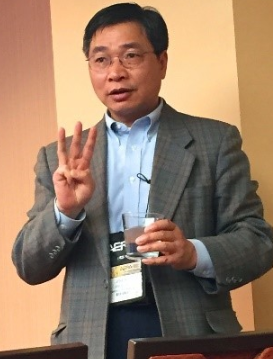 Jinfa Cai (蔡金法)合作论文数美国特拉华大学数学系12steven l kramer合作论文数9
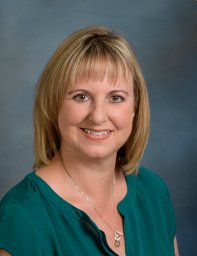 Michelle Cirillo合作论文数9Jean Schmittau合作论文数5Vm Sloutsky合作论文数2Vladimir M. Sloutsky合作论文数Center for Cognitive Science, Ohio State University2John C. Moyer合作论文数2
 Sandy M. Spitzer合作论文数Mathematics Department, Towson University2
 Arthur Bakker合作论文数Freudenthal Institute for Science and Mathematics Education, Utrecht University2
 Swee Fong Ng合作论文数National Institute of Education, Nanyang Technological University2
 Hee-Chan Lew合作论文数Korea National University of Education2peggy alexopoulou合作论文数Ctr Informat Management, Univ Loughborough1John Moyer合作论文数1
 Mark Hepworth合作论文数People's Information Behaviour, Loughborough University1
 Amanda Jansen合作论文数University of Delaware Newark1
 Angelika Kullberg合作论文数1
 Dawn Berk合作论文数1




