We revisit and invalidate all dark photon dark matter constraints from resonant conversion of dark photons into photons (plasmons) in the early universe. These constraints rely on the resonant transfer of a substantial portion of the dark photon energy density into the SM plasma, heating the plasma in the process. We demonstrate that this resonant transfer saturates because of plasma nonlinearities. Dark photon dark matter resonantly converts into k ≃ 0 Langmuir waves in the early universe electron-ion plasma. Once the Langmuir-wave energy approaches the thermal energy of the plasma, nonlinear effects driven by the ponderomotive force become significant. In particular, we show using dedicated Particle-in-Cell simulations that large-amplitude k = 0 Langmuir waves excite higher-k Langmuir and ion acoustic waves, producing strong spatial variations in density and plasma frequency. These inhomogeneities suppress further resonant conversion, limiting the deposited energy to about the thermal energy of the electrons at the time of conversion, orders of magnitude below observable cosmological thresholds. Consequently, the dark photon dark matter constraints are weaker by factors of 3000 to 10^7 across ten orders of magnitude in dark photon mass.
We discuss relaxation solutions to the dark matter - baryon coincidence problem in the context of QCD axion dark matter. In relaxation solutions, a moduli dynamically adjusts the mass of dark matter and baryons until their energy densities are O(1) the same. Because the QCD axion is heavily connected to QCD, scanning the QCD axion mass inherently also scans the proton mass. In the context of relaxation solutions, this implies that the ratio of dark matter to baryon abundances (Ω_ DM/Ω_ B) is a ratio of beta functions showing that these models can only accommodate discrete values of Ω_ DM/Ω_ B thereby “predicting" the ratio of the dark matter to baryon abundances. The original composite axion model has only a single integer degree of freedom N, the size of the gauge group, and we show that when N=8 the observed value of Ω_ DM/Ω_ B = 5.36 is reproduced to within its percent level error bars. Novel tests of this model include more precise measurements of Ω_ DM/Ω_ B, a better lattice determination of the dependence of the proton mass on the high energy QCD gauge coupling, as well as more traditional tests such as fifth force experiments.
Inflaton couplings during warm inflation result in the production of a thermal bath. Thermal friction and fluctuations can dominate the standard de Sitter analogues, resulting in a modified slow-roll scenario with a new source of density fluctuations. Due to issues with back-reaction, it is advantageous to consider inflaton couplings with the thermal bath that are pseudo-scalar in nature, e.g., derivative interactions or topological F∼F couplings. We demonstrate that every single existing model of warm inflation utilizing pseudo-scalar couplings needs to be corrected to properly account for all of the chemical potentials that the thermal bath acquires in response to the inflaton coupling. These chemical potentials are for non-conserved charges, and are non-zero only because of the applied inflaton couplings. The model-dependent chemical potentials modify the fluctuation-dissipation theorem, making the relationship between the thermal friction and thermal fluctuations model-dependent. In extreme cases, these chemical potentials can cause the friction term to vanish while thermal fluctuations remain non-zero. In the context of a simple example, we demonstrate how to calculate the chemical potentials, thermal friction, and thermal fluctuations using both the Boltzmann equations and by calculating thermal expectation values, showing explicitly that the two approaches give the same result.
We report the refined dark-photon exclusion bound from Dark SRF's pathfinder run. Our new result is driven by improved theoretical modeling of frequency instability in high-quality resonant experiments. Our analysis leads to a constraint that is an order of magnitude stronger than previously reported (corresponding to a signal-to-noise ratio that is 4 orders of magnitude larger). This result represents the world-leading constraint on non-dark-matter dark photons over a wide range of masses below 6 μeV and translates to the best laboratory-based limit on the photon mass m_{γ}<2.9×10^{-48} g.
A compelling production mechanism for QCD axion dark matter is from the scaling dynamics of early universe axion strings. We show that in DFSZ-like models containing tree-level interactions between fermions and the axion, friction between the thermal bath and the axion string drastically changes the behavior of the axion string network for lower f_a values. Friction delays the onset of scaling and increases the energy density of axions. Once the effects of friction are included, we argue that in addition to the standard value of m_a ∼ meV, m_a ∼ 0.1 eV also reproduces the dark matter energy density.
Axion models generically suffer from a severe quality problem when coupled to gravity. In this article we provide a very simple model with a high quality axion. The axion is a pseudo-Nambu-Goldstone boson of the baryon number symmetry, U(1)_B, of a new composite sector that breaks U(1)_B spontaneously when it confines. A controlled example is a supersymmetric QCD (SQCD) with N_c = N_f. The axion shift symmetry is automatically protected due to the high dimension of the gauge-invariant baryon operator, with the Peccei-Quinn breaking operators arising at dimension N_c+2. The standard model gauge group is embedded as a subgroup of the flavor symmetry group of SQCD that has an anomaly with U(1)_B, generating the standard coupling with gluons.
Axion-like particles coupled to photons are one of the most compelling new physics scenarios. We demonstrate that an axion-photon coupling resulting from a non-anomalous PQ symmetry under which light fermions are charged acts as a bandpass filter: both high- and low-energy probes experience a parametrically suppressed coupling while intermediate-energy probes remain unaffected. An immediate result of this bandpass is that lab-based constraints can naturally be the dominant constraint for almost all values of the axion mass. High-energy constraints coming from stellar dynamics as well as low-energy constraints coming from photon-axion conversion in galactic/stellar magnetic fields are simultaneously suppressed, while lab-based experiments, such as light-shining-through-a-wall experiments, done at intermediate energies are unsuppressed.
We consider axions lighter than what their QCD couplings might otherwise suggest. Starting with a ℤ_N-axion, we introduce a small explicit ℤ_N symmetry-breaking coupling between the Standard Model Higgs boson and a reheaton. This small explicit breaking allows us to populate a large portion of the light axion m_a-f_a plane, removes the 1/N tuning in the ℤ_N-axion, and explains why only our sector was reheated. Due to finite temperature effects, axions of this sort undergo either “rigged" misalignment, where the axion misalignment angle is effectively π regardless of its initial value; or “shuffled" misalignment, where the initial angle is effectively randomized.
We consider axions lighter than what their QCD couplings might otherwise suggest. Starting with a ZN axion, we introduce a small explicit ZN symmetry-breaking coupling between the Standard Model Higgs boson and a reheaton. This small explicit breaking allows us to populate a large portion of the light axion ma - fa plane, removes the 1/N tuning in the ZN-axion, and explains why only our sector was reheated. Because of finite temperature effects, axions of this sort undergo either "rigged" misalignment, where the axion misalignment angle is effectively pi regardless of its initial value, or "shuffled" misalignment, where the initial angle is effectively randomized.
We report the refined dark-photon exclusion bound from Dark SRF's pathfinder run. Our new result is driven by improved theoretical modeling of frequency instability in high-quality resonant experiments. Our analysis leads to a constraint that is an order of magnitude stronger than previously reported (corresponding to a signal-to-noise ratio that is four orders of magnitude larger). This result represents the world-leading constraint on non-dark-matter dark photons over a wide range of masses below $6\,\rm μeV$ and translates to the best laboratory-based limit on the photon mass $m_γ<2.9\times 10^{-48}\,\rm g$.
We introduce a mechanism by which a misaligned ALP can be dynamically converted into a dark photon in the presence of a background magnetic field. An abundance of non-relativistic ALPs will convert to dark photons with momentum of order the inhomogeneities in the background field; therefore a highly homogeneous field will produce non-relativistic dark photons without relying on any redshifting of their momenta. Taking hidden sector magnetic fields produced by a first order phase transition, the mechanism can reproduce the relic abundance of dark matter for a wide range of dark photon masses down to 10^-13 eV.
The gravitational fields of astrophysical bodies bend the light around them, creating multiple paths along which light from a distant source can arrive at Earth. Measuring the difference in photon arrival time along these different paths provides a means of determining the mass of the lensing system, which is otherwise difficult to constrain. This is particularly challenging in the case of microlensing, where the images produced by lensing cannot be individually resolved; existing proposals for detecting time delays in microlensed systems are significantly constrained due to the need for large photon flux and the loss of signal coherence when the angular diameter of the light source becomes too large. In this work, we propose a novel approach to measuring astrophysical time delays. Our method uses exponentially fewer photons than previous schemes, enabling observations that would otherwise be impossible. Our approach, which combines a quantum-inspired algorithm and quantum information processing technologies, saturates a provable lower bound on the number of photons required to find the time delay. Our scheme has multiple applications: we explore its use both in calibrating optical interferometric telescopes and in making direct mass measurements of ongoing microlensing events. To demonstrate the latter, we present a fiducial example of microlensed stellar flares sources in the Galactic Bulge. Though the number of photons produced by such events is small, we show that our photon-efficient scheme opens the possibility of directly measuring microlensing time delays using existing and near-future ground-based telescopes.
Abstract We study the phenomenology of a string bosenova explosion in vector superradiance clouds around spinning black holes, focusing on the observable consequences in gravitational wave detectors and accelerometers. During the superradiance growth of a dark photon cloud — which occurs for dark photon masses $$ {m}_{A^{\prime }}\sim {10}^{-14}-{10}^{-11}\textrm{eV} $$ m A ′ ~ 10 − 14 − 10 − 11 eV around stellar-mass black holes ($$ {m}_{A^{\prime }}\sim {10}^{-23}-{10}^{-16}\textrm{eV} $$ m A ′ ~ 10 − 23 − 10 − 16 eV for supermassive black holes) — the dark electromagnetic field might reach a critical field strength, when a network of dark photon strings is produced via a superheated phase transition. These dark photon strings will then absorb the energy in the background gauge fields and get ejected from the cloud, with total energy of the string network as large as the total rotational energy of the spinning black hole. In this paper, we study the subsequent evolution of this dense string network, and the resulting observational consequences depending on the unknown string tension, or almost equivalently, the ratio between the quartic and the gauge coupling in the Abelian Higgs model. Strings with large tension will dissipate into gravitational waves, detectable over a wide range of frequencies, from ~ nHz near supermassive blackholes, to ≳ 10MHz around stellar mass black holes. This is the first known source of high frequency gravitational waves, unconstrained by cosmological observations. The strain of this gravitational wave can be larger than 10−14 at low frequencies, lasting for longer than typical duration of experiments. Small tension strings, whose string networks can have total lengths as large as 1040 km, can travel to the earth with appreciable rate from any black hole in the Milky Way and interact with earth based accelerometers. If the Standard Model particles are directly charged under the dark photon, e.g. U(1)B−L, this interaction leads to an acceleration of Standard Model particles that is independent of the coupling strength. We work out the spectral density of this acceleration, and project that modern accelerometers and equivalence principle tests can be sensitive to the passing of these strings.
The absence of a neutron electric dipole moment (EDM) constrains the quantum chromodynamics (QCD) theta angle to be less than one part in ten billion, posing the Strong CP problem. We revisit two classes of proposed solutions. First, we show that when P or CP is realized as a gauged discrete symmetry - as can arise in quantum gravity - the vacuum necessarily preserves CP, contrary to recent claims that discrete-symmetry solutions fail. Gauged discrete models face model-building challenges, such as avoiding contributions to the neutron EDM after spontaneous P or CP breaking, but in principle have no fundamental obstructions. Second, we critically examine recent arguments that the Strong CP problem is illusory, demonstrating that a nonzero neutron EDM at finite follows directly from well-understood QCD dynamics. Taken together, our results reinforce the reality of the Strong CP problem and highlight gauged discrete-symmetry realizations of P or CP as plausible solutions.
We study (multi) fermion - monopole bound states, many of which are the states that dyons adiabatically transition into as fermions become light. The properties of these bound states depend critically on the UV symmetries preserved by the fermion mass terms, their relative size, and the value of θ. Depending on the relative size of the mass terms and the value of θ, the bound states can undergo phase transitions as well as transition from being stable to unstable. In some simple situations, the bound state solution can be related to the Witten effect of another theory with fewer fermions and larger gauge coupling. These bound states are a result of mass terms and symmetry breaking boundary conditions at the monopole core and, consequently, these bound states do not necessarily have definite quantum numbers under accidental IR symmetries. Additionally, they have binding energies that are 𝒪(1) times the fermion mass and bound state radii of order their inverse mass. As the massless limit is approached, the bound state radii approach infinity, and they become new asymptotic states with odd quantum numbers giving a dynamical understanding to the origin of semitons.
We show that if there are conserved flavor symmetries then some properties of a monopole can depend on $\theta$ even when a fermion is massless. The quantized nature of global symmetries and the fractional nature of the Witten effect can lead to interesting structure. Seen from another point of view, aside from possibly breaking baryon and lepton flavor symmetries (the Callan-Rubakov effect), monopole boundary conditions can also break the axial symmetry that otherwise could have been used to remove $\theta$ from the Lagrangian. As an example, in a toy model, we calculate the $\theta$ dependence of the mass of the monopole and properties of the non-zero charge density surrounding the monopole.
We argue that the striking similarity between the cosmic abundances of baryons and dark matter, despite their very different astrophysical behavior, strongly motivates the scenario in which dark matter resides within a rich dark sector parallel in structure to that of the standard model. The near cosmic coincidence is then explained by an approximate $\mathbb{Z}_2$ exchange symmetry between the two sectors, where dark matter consists of stable dark neutrons, with matter and dark matter asymmetries arising via parallel WIMP baryogenesis mechanisms. Taking a top-down perspective, we point out that an adequate $\mathbb{Z}_2$ symmetry necessitates solving the electroweak hierarchy problem in each sector, without our committing to a specific implementation. A higher-dimensional realization in the far UV is presented, in which the hierarchical couplings of the two sectors and the requisite $\mathbb{Z}_2$-breaking structure arise naturally from extra-dimensional localization and gauge symmetries. We trace the cosmic history, paying attention to potential pitfalls not fully considered in previous literature. Residual $\mathbb{Z}_2$-breaking can very plausibly give rise to the asymmetric reheating of the two sectors, needed to keep the cosmological abundance of relativistic dark particles below tight bounds. We show that, despite the need to keep inter-sector couplings highly suppressed after asymmetric reheating, there can naturally be order-one couplings mediated by TeV scale particles which can allow experimental probes of the dark sector at high energy colliders. Massive mediators can also induce dark matter direct detection signals, but likely at or below the neutrino floor.
The near equality of the dark matter and baryon energy densities is a remarkable coincidence, especially when one realizes that the baryon mass is exponentially sensitive to UV parameters in the form of dimensional transmutation. We explore a new dynamical mechanism, where in the presence of an arbitrary number density of baryons and dark matter, a scalar adjusts the masses of dark matter and baryons until the two energy densities are comparable. In this manner, the coincidence is explained regardless of the microscopic identity of dark matter and how it was produced. This new scalar causes a variety of experimental effects such as a new force and a (dark) matter density-dependent proton mass.
The presence of a plethora of light spin 0 and spin 1 fields is motivated in a number of BSM scenarios, such as the axiverse. The study of the interactions of such light bosonic fields with the Standard Model has focused mostly on interactions involving only one such field, such as the axion ($\phi$) coupling to photons, $\phi F \tilde F$, or the kinetic mixing between photon and the dark photon, $ F F_D$. In this work, we continue the exploration of interactions involving two light BSM fields and the standard model, focusing on the mixed axion-photon-dark-photon interaction $\phi F \tilde F_D$. If either the axion or dark photon are dark matter, we show that this interaction leads to conversion of the CMB photons into a dark sector particle, leading to a distortion in the CMB spectrum. We present the details of these unique distortion signatures and the resulting constraints on the $\phi F \tilde F_D$ coupling. In particular, we find that for a wide range of masses, the constraints from these effect are stronger than on the more widely studied axion-photon coupling.
We conduct the first ``light-shining-through-wall" (LSW) search for dark photons using two state-of-the-art high quality-factor superconducting radio frequency (SRF) cavities and report the results of its pathfinder run. Our new experimental setup enables improvements in sensitivity over previous searches and covers new dark photon parameter space. We design delicate calibration and measurement protocols to utilize the high-$Q$ setup at Dark SRF. Using cavities operating at $1.3 \ \text{GHz}$, we establish a new exclusion limit for kinetic mixing as small as {$\epsilon= 1.6\times 10^{-9}$} and provide the world's best constraints on dark photons in the $2.1\times 10^{-7} \ \text{eV} - 5.7\times10^{-6} \ \text{eV}$ mass range. Our result is the first proof-of-concept for the enabling role of SRF cavities in LSW setups, with ample opportunities for further improvements. In addition, our data sets a competitive lab-based limit on the Standard Model photon mass by searching for longitudinal photon polarization.
 Gustavo Marques-Tavares合作论文数University of Maryland12
 Junwu Huang合作论文数Perimeter Inst Theoret Phys, 31 Caroline St N, Waterloo, ON N2L 2Y5, Canada12
 Gonzalo Torroba合作论文数Department of Physics and Astronomy;Rutgers University;Department of Physics and Astronomy, Rutgers University10
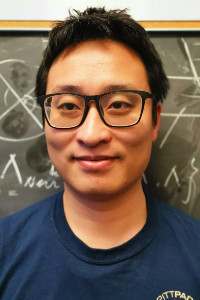 Zhen Liu合作论文数School of Physics and Astronomy, College of Science and Engineering, University of Minnesota9Dawid Brzeminski合作论文数8A. Berlin合作论文数7Timothy Cohen合作论文数Michigan Center for Theoretical Physics ( MCTP );Department of Physics;University of Michigan;Michigan Center for Theoretical Physics ( MCTP ), University of Michigan7
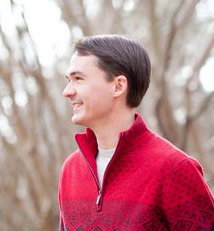 Nathaniel Craig合作论文数School of Natural Sciences, Institute for Advanced Study, Princeton, NJ 08540, U.S.A.7
 Jay G. Wacker合作论文数Theory Group7Clayton Ristow合作论文数6raffaele tito dagnolo合作论文数6Raman Sundrum合作论文数6Nikita Blinov合作论文数5
 Yuhsin Tsai合作论文数Dept Phys, Univ Notre Dame5
 Hitoshi Murayama (村山齐)合作论文数Department of Physics, University of California, Berkeley;Berkeley Center for Theoretical Physics, University of California, Berkeley5
 Prateek Agrawal合作论文数ABV-Indian Institute of Information Technology and Management5
 Rouven Essig合作论文数Department of Physics and Astronomy, College of Arts and Sciences, Stony Brook University;C.N. Yang Institute for Theoretical Physics, Stony Brook University5Saurav Das合作论文数4B. Giaccone合作论文数Fermilab, Superconducting Quantum Mat & Syst Ctr SQMS4Manuel A. Buen-Abad合作论文数4r pilipenko合作论文数4
 David Curtin合作论文数Department of Physics, Faculty of Arts and Science, University of Toronto4Eder Izaguirre合作论文数4
 Martin Jankowiak合作论文数Generate Biomedicines4
 Jesse Thaler合作论文数Center for Theoretical Physics, Massachusetts Institute of Technology;NSF Institute for Artificial Intelligence and Fundamental Interactions4
 Jessie F Shelton合作论文数Department of Astronomy, College of Liberal Arts and Sciences, University of Illinois at Urbana-Champaign4Roni Harnik合作论文数Physics Department, SITP;Stanford University;Stanford University, Stanford University4
 Sergey a Belomestnykh合作论文数Cornell University4
 Yonatan Frederick Kahn合作论文数Department of Physics, The Grainger College of Engineering, University of Illinois at Urbana-Champaign4
 Yotam Soreq合作论文数Physics Department, Technion – Israel Institute of Technology4
 Sam Posen合作论文数SQMS Center, Fermi National Accelerator Laboratory3Vyacheslav P Yakovlev合作论文数3
 Marcel Vos合作论文数Instituto de Física Corpuscular3
 Seyda Ipek合作论文数Carleton Univ3David Pinner合作论文数3
 Anna Grassellino合作论文数National Quantum Information Science SQMS Center;Fermi National Accelerator Laboratory;Center for Applied Physics and Superconducting Technology, Northwestern University3
 Davide Racco合作论文数Perimeter Inst Theoret Phys, 31 Caroline St N, Waterloo, ON N2L 2Y5, Canada3
 Raymond Tung-Ming Co合作论文数3
 LianTao Wang合作论文数Department of Physics, The University of Chicago3Bogorad Zachary合作论文数3
 Jung, Sunghoon合作论文数Department of Physics & Astronomy, Seoul National University3Gilad Perez合作论文数3
 Zackaria Chacko合作论文数Department of Physics, College of Computer, Mathematical, & Natural Sciences, University of Maryland;Maryland Center for Fundamental Physics, University of Maryland3Andrew J. Larkoski合作论文数Stanford University3
 Bibhushan Shakya合作论文数Newman Laboratory of Elementary Particle Physics;Cornell University;Newman Laboratory of Elementary Particle Physics, Cornell University3
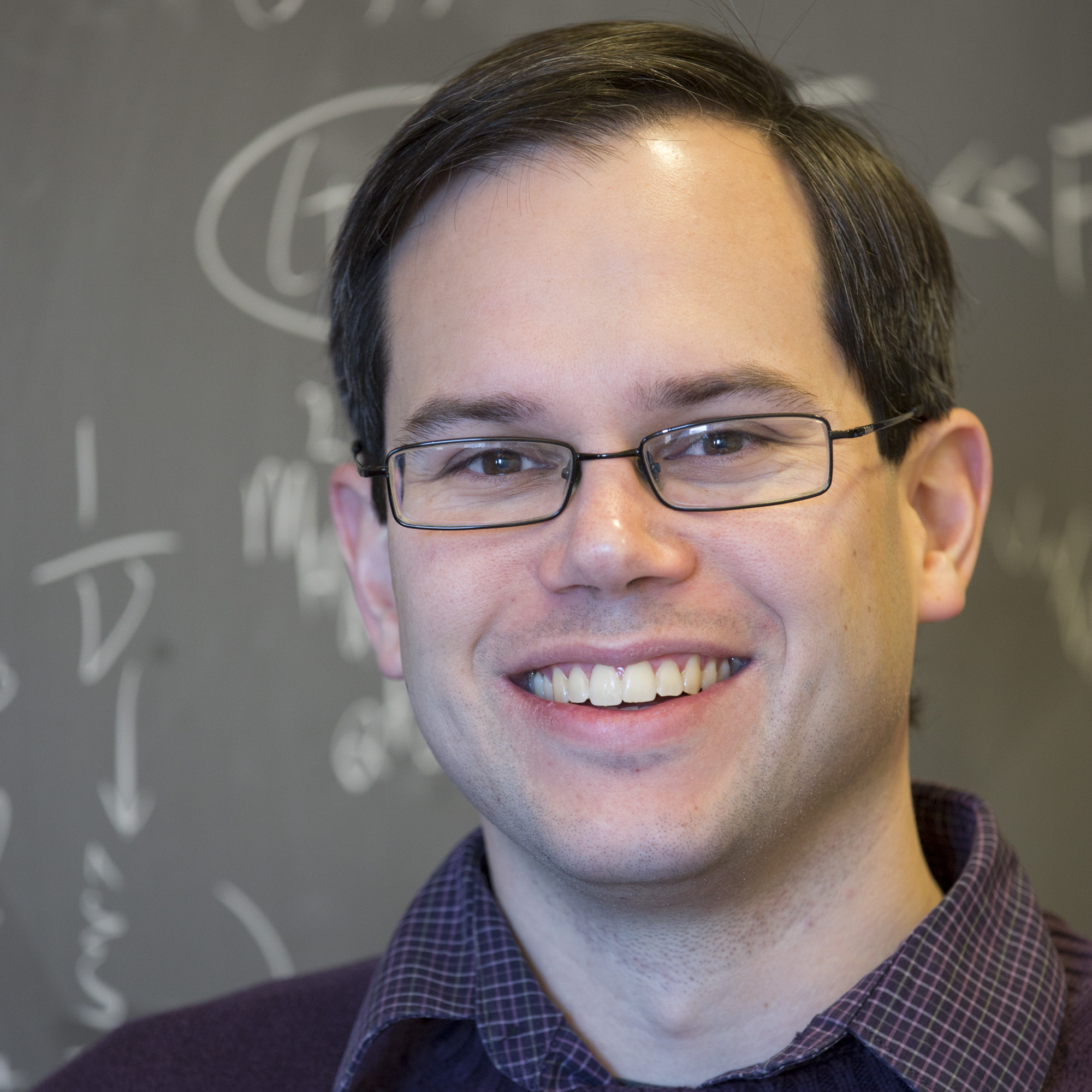 Matthew Reece合作论文数Department of Physics, Harvard University3
 Michihisa Takeuchi (竹内道久)合作论文数School of Physics and Astronomy, Sun Yat-Sen University3
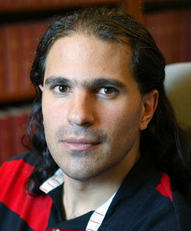 Nima Arkani-Hamed合作论文数School of Natural Sciences, Institute for Advanced Study3
 Patrick Meade合作论文数C. N. Yang Institute for Theoretical Physics, Stony Brook University;Department of Physics and Astronomy, College of Arts and Sciences, Stony Brook University3




