High-dimensional entanglement is considered to hold great potential for quantum key distribution (QKD) in high-loss and -noise scenarios. To harness its robustness, we construct a source for high-dimensional time-bin entangled photons optimized for high brightness, low complexity, and long-term stability. We certify the generated high-dimensional entanglement with a new witness employing nested Franson interferometry. Finally, we obtain key rates using a novel, noise-resilient QKD protocol. Our flexible evaluation method, centered around discretizations of the time stream, enables the same dataset to be processed while varying parameters such as state dimensionality and time bin length, allowing optimization of performance under given environmental conditions. Our results indicate regions within the accessible parameter space where high key rates per time are achievable for dimensionalities larger than two.
Teaching quantum mechanics is challenging, not least because the theory often conflicts with our classical worldview. Quantum correlations in particular are notoriously counter-intuitive. Their non-classical behavior is typically revealed through Bell-type inequalities. Among these, Wigner's Inequality constitutes a particularly accessible test, as it relies on minimal set-theoretic assumptions. In this pedagogical paper, we derive Wigner's Inequality, describe a quantum-optical setup to experimentally violate it, and provide access to the raw data, enabling students and instructors to perform their own analyses. Our measured data shows clear violations of Wigner's Inequality, directly illustrating the non-classical nature of quantum correlations. By connecting theory, experiment, and data analysis, this paper equips educators with a resource for engaging students in authentic scientific practice and developing a deeper understanding of quantum systems.
I have been interested in quantum mechanics or, synonymously, quantum physics since the very days when I first learned about them as a student. The initial impression was that of an immense mathematical beauty of the formalism of quantum mechanics. The second impression was the fantastic agreement of the theoretical predictions of quantum physics for experiments, and the third and somewhat surprising impression was that there was widespread disagreement about the interpretation of the new theory.
Common sense suggests that a particle must have a definite origin if its full path information is available. In quantum mechanics, the knowledge of path information is captured through the well-established duality relation between path distinguishability and interference visibility. If visibility is zero, high path distinguishability can be achieved, which enables one to determine with high predictive power where the particle originates. We investigate the complementarity between path information and interference visibility through an experiment involving three sources emitting into identical modes. Our findings challenge the classical intuition that a particle can be traced back to its origin through its trajectory when full path information is available. By grouping the crystals in different ways, we demonstrate that it is impossible to ascribe a definite physical origin to the photon pair, even if the emission probability of one individual source is zero and full path information is available. Our results shed new light on the physical interpretation of probability assignment and path information beyond its mathematical meaning and show that the interpretation of path information in quantum mechanics is subjective.
Violation of local realism via Bell inequality-a profound and counterintuitive manifestation of quantum theory that conflicts with the prediction of local realism-is viewed to be intimately linked with quantum entanglement. Experimental demonstrations of such a phenomenon using quantum entangled states are among the landmark experiments of modern physics and paved the way for quantum technology. Here, we report the violation of the Bell inequality that cannot be described by quantum entanglement in the system but arises from quantum indistinguishability by path identity, shown by the multiphoton frustrated interference. By analyzing the measurement of four-photon frustrated interference within the standard Bell-test formalism, we find a violation of Bell inequality by more than four SDs. Our work establishes a connection between quantum correlation and quantum indistinguishability, providing insights into the fundamental origin of the counterintuitive characteristics observed in quantum physics.
The measurement of quantum states is one of the most important problems in quantum mechanics. We introduce a quantum state tomography technique in which the state of a qubit is reconstructed, while the qubit remains undetected. The key ingredients are: (i) employing an additional qubit, (ii) aligning the undetected qubit with a known reference state by using path identity, and (iii) measuring the additional qubit to reconstruct the undetected qubit state. We theoretically establish and experimentally demonstrate the method with photonic polarization states. The principle underlying our method could also be applied to quantum entities other than photons.
We present an adaptive procedure for aligning quantum nonlocality experiments without any knowledge of the two-qudit state shared by the participating parties. The quantum state produced by the source, its unitary evolution, as well as the actual measurement bases remain unknown to both parties at all times. The entanglement of the quantum state helps establish desired correlations between individual measurement bases of the two distant parties. We implement the procedure in a fiber-based quantum key distribution (QKD) setup with polarization-entangled photons, where we do not rely on any additional alignment tools such as lasers or polarizers. In a QKD scenario, the procedure can be done without any additional measurements beyond those that are performed regardless.
Despite its amazing quantitative successes and contributions to revolutionary technologies, physics currently faces many unsolved mysteries ranging from the meaning of quantum mechanics to the nature of the dark energy that will determine the future of the Universe. It is clearly prohibitive for the general reader, and even the best informed physicists, to follow the vast number of technical papers published in the thousands of specialized journals. For this reason, we have asked the leading experts across many of the most important areas of physics to summarise their global assessment of some of the most important issues. In lieu of an extremely long abstract summarising the contents, we invite the reader to look at the section headings and their authors, and then to indulge in a feast of stimulating topics spanning the current frontiers of fundamental physics from 'The Future of Physics' by William D Phillips and 'What characterises topological effects in physics?' by Gerard 't Hooft through the contributions of the widest imaginable range of world leaders in their respective areas. This paper is presented as a preface to exciting developments by senior and young scientists in the years that lie ahead, and a complement to the less authoritative popular accounts by journalists.
Measuring entanglement is an essential step in a wide range of applied and foundational quantum experiments. When a two-particle quantum state is not pure, standard methods to measure the entanglement require detection of both particles. We realize a conceptually new method for verifying and measuring entanglement in a class of two-part (bipartite) mixed states. Contrary to the approaches known to date, in our experiment we verify and measure entanglement in mixed quantum bipartite states by detecting only one subsystem, the other remains undetected. Only one copy of the mixed or pure state is used but that state is in a superposition of having been created in two identical sources. We show that information shared in entangled systems can be accessed through single-particle interference patterns. Our experiment enables entanglement characterization even when one of the subsystems cannot be detected, for example, when suitable detectors are not available.
We present an adaptive procedure for aligning quantum non-locality experiments without any knowledge of the two-qudit state shared by the participating parties. The quantum state produced by the source, its unitary evolution as well as the actual measurement bases remain unknown to both parties at all times. The entanglement of the quantum state helps establish desired correlations between individual measurement bases of the two distant parties. We implement the procedure in a fiber-based quantum key distribution (QKD) setup with polarization-entangled photons, where we do not rely on any additional alignment tools such as lasers or polarizers. In a QKD scenario the procedure can be done without any additional measurements as those that are performed regardless.
Quantum imaging with undetected photons is a recently introduced technique that goes significantly beyond what was previously possible. In this technique, images are formed without detecting the light that interacted with the object that is imaged. Given this unique advantage over the existing imaging schemes, it is now of utmost importance to understand its resolution limits, in particular what governs the maximal achievable spatial resolution. We show both theoretically and experimentally that the momentum correlation between the detected and undetected photons governs the spatial resolution — a stronger correlation results in a higher resolution. In our experiment, the momentum correlation plays the dominating role in determining the resolution compared to the effect of diffraction. We find that the resolution is determined by the wavelength of the undetected light rather than the wavelength of the detected light. Our results thus show that it is in principle possible to obtain resolution characterized by a wavelength much shorter than the detected wavelength.
The quantum internet will give us an infrastructure able to distribute and process quantum information on a planetary scale. The core of that internet will be formed from quantum error corrected links able to distribute information over large distances all while maintaining their coherence for long periods of time. However, many of the applications at the edge of such networks may rely on raw unencoded data – not protected by error correcting codes due to the nature of how it was generated. In this presentation, we will describe an experiment in which quantum information encoded on a physical qubit can be teleported into an error-corrected logical qubit. Our demonstration shows how one can get information into and out of quantum processors and tomorrows large-scale quantum networks.
Two photon-pair creation processes can be arranged such that the paths of the emitted photons are identical. Thereby the path information is not erased but is never born in the first place. In addition to its implications for fundamental physics, this concept has recently led to a series of discoveries in the fields of imaging, spectroscopy, and quantum information science. Here we present the idea of path identity and provide a comprehensive review of the recent developments.
Entanglement verification and measurement is essential for experimental tests of quantum mechanics and also for quantum communication and information science. Standard methods of verifying entanglement in a bipartite mixed state require detection of both particles and involve coincidence measurement. We present a method that enables us to verify and measure entanglement in a two-photon mixed state without detecting one of the photons, i.e., without performing any coincidence measurement or postselection. We consider two identical sources, each of which can generate the same two-photon mixed state but they never emit simultaneously. We show that one can produce a set of single-photon interference patterns, which contain information about entanglement in the two-photon mixed state. We prove that it is possible to retrieve the information about entanglement from the visibility of the interference patterns. Our method reveals a distinct avenue for verifying and measuring entanglement in mixed states.
Two photon-pair creation processes can be arranged such that the paths of the emitted photons are identical. Thereby the path information is not erased but is never born in the first place. In addition to its implications for fundamental physics, this concept has recently led to a series of discoveries in the fields of imaging, spectroscopy, and quantum information science. Here we present the idea of path identity and provide a comprehensive review of the recent developments.
Entanglement, according to Erwin Schroedinger the essence of quantum mechanics, is at the heart of the Einstein-Podolsky-Rosen paradox and of the so called quantum-nonlocality - the fact that a local realistic explanation of quantum mechanics is not possible as quantitatively expressed by violation of Bell's inequalities. Even as entanglement gains increasing importance in most quantum information processing protocols, its conceptual foundation is still widely debated. Among the open questions are: What is the conceptual meaning of quantum entanglement? What are the most general constraints imposed by local realism? Which general quantum states violate these constraints? Developing Schroedinger's ideas in an information-theoretic context we suggest that a natural understanding of quantum entanglement results when one accepts (1) that the amount of information per elementary system is finite and (2) that the information in a composite system resides more in the correlations than in properties of individuals. The quantitative formulation of these ideas leads to a rather natural criterion of quantum entanglement. Independently, extending Bell's original ideas, we obtain a single general Bell inequality that summarizes all possible constraints imposed by local realism on the correlations for a multi-particle system. Violation of the general Bell inequality results in an independent general criterion for quantum entanglement. Most importantly, the two criteria agree in essence, though the two approaches are conceptually very different. This concurrence strongly supports the information-theoretic interpretation of quantum entanglement and of quantum physics in general.
Quantum error correction is an essential tool for reliably performing tasks for processing quantum information on a large scale. However, integration into quantum circuits to achieve these tasks is problematic when one realizes that non-transverse operations, which are essential for universal quantum computation, lead to the spread of errors. Quantum gate teleportation has been proposed as an elegant solution for this. Here, one replaces these fragile, non-transverse inline gates with the generation of specific, highly entangled offline resource states that can be teleported into the circuit to implement the non-transverse gate. As the first important step, we create a maximally entangled state between a physical and an error-correctable logical qubit and use it as a teleportation resource. We then demonstrate the teleportation of quantum information encoded on the physical qubit into the error-corrected logical qubit with fidelities up to 0.786. Our scheme can be designed to be fully fault-tolerant so that it can be used in future large-scale quantum technologies.
Quantum key distribution (QKD) is a pioneering quantum technology on the brink of widespread deployment. Nevertheless, the distribution of secret keys beyond a few 100 km at practical rates remains a major challenge. One approach to circumvent lossy terrestrial transmission of entangled photon pairs is the deployment of optical satellite links. Optimizing these non-static quantum links to yield the highest possible key rate is essential for their successful operation. We therefore developed a high-brightness polarization-entangled photon pair source and a receiver module with a fast steering mirror capable of satellite tracking. We employed this state-of-the-art hardware to distribute photons over a terrestrial free-space link with a distance of 143 km, and extracted secure key rates up to 300 bits per second. Contrary to fiber-based links, the channel loss in satellite downlinks is time-varying and the link time is limited to a few minutes. We therefore propose a model-based optimization of link parameters based on current channel and receiver conditions. This model and our field test will prove helpful in the design and operation of future satellite missions and advance the distribution of secret keys at high rates on a global scale.
 Harald Weinfurter合作论文数Faculty of Physics, Ludwig-Maximilians-Universität München;Max Planck Institute of Quantum Optics;Munich Center for Quantum Science and Technology79
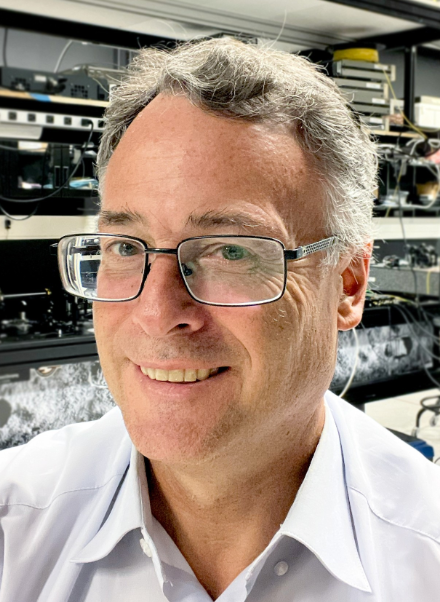 Thomas Jennewein合作论文数Department of Physics, Simon Fraser University;QEYNet;Universal Quantum Devices Inc.74
 Rupert Ursin合作论文数ZeroThird GmbH;Quantum Technology Laboratories GmbH;Qssys - Quantum Space Systems GmbH62
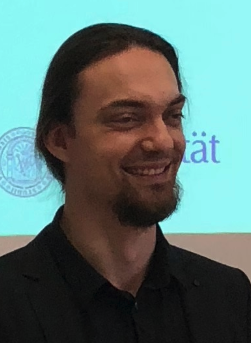 Mario Krenn合作论文数Artificial Scientist Lab, Theory Division, Max Planck Institute for the Science of Light57
 Markus Aspelmeyer合作论文数Faculty of Physics, University of Vienna;Institute for Quantum Optics and Quantum Information Vienna, Austrian Academy of Sciences56
 Jian-Wei Pan (潘建伟)合作论文数Division of Quantum Physics and Quantum Information, University of Science and Technology of China50
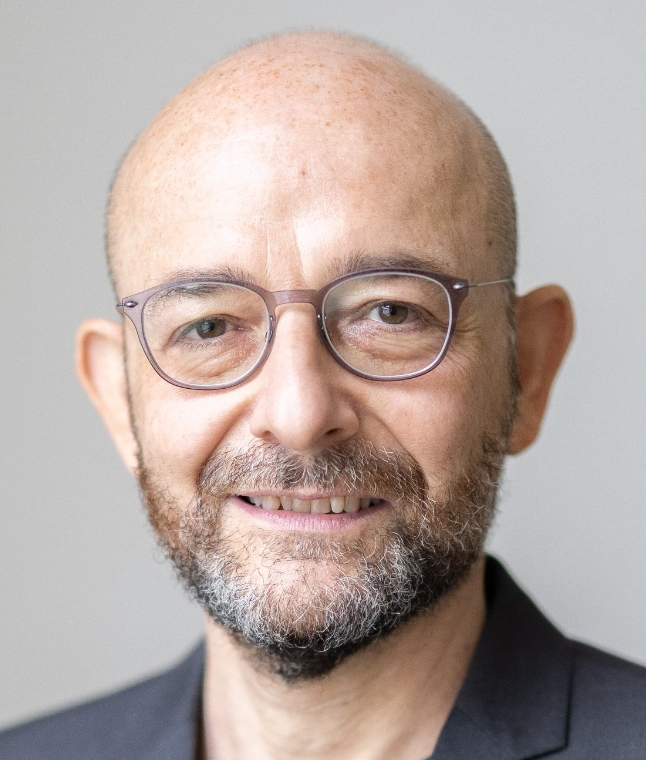 Caslav Brukner合作论文数Faculty of Physics, Quantum Optics, Quantum Nanophysics and Quantum Information, University of Vienna;Institute for Quantum Optics and Quantum Information Vienna, Austrian Academy of Sciences48
 Gregor Weihs合作论文数Institute for Quantum Computing, University of Waterloo41
 Thomas Scheidl合作论文数Institute for Quantum Optics;Austrian Academy of Sciences;Boltzmanngasse;Institute for Quantum Optics, Austrian Academy of Sciences37
 Radek Lapkiewicz合作论文数Quantum Information, University of Vienna;Institute for Quantum Optics and Quantum Information, Austrian Academy of Science;Institute for Quantum Optics and Quantum Information, University of Vienna36
 Philip Walther合作论文数Institut fur Experimentalphysik;Universitat Wien;Institut fur Experimentalphysik, Universitat Wien36
 Sven Ramelow合作论文数Quantum Information, University of Vienna;Institute for Quantum Optics and Quantum Information, Austrian Academy of Science;Institute for Quantum Optics and Quantum Information, University of Vienna35
 Marek Żukowski合作论文数International Centre for Theory of Quantum Technologies, University of Gdansk30
 Robert Fickler合作论文数Quantum Information, University of Vienna;Institute for Quantum Optics and Quantum Information, Austrian Academy of Science;Institute for Quantum Optics and Quantum Information, University of Vienna29armin hochrainer合作论文数Austrian Acad Sci, IQOQI, A-1090 Vienna, Austria28
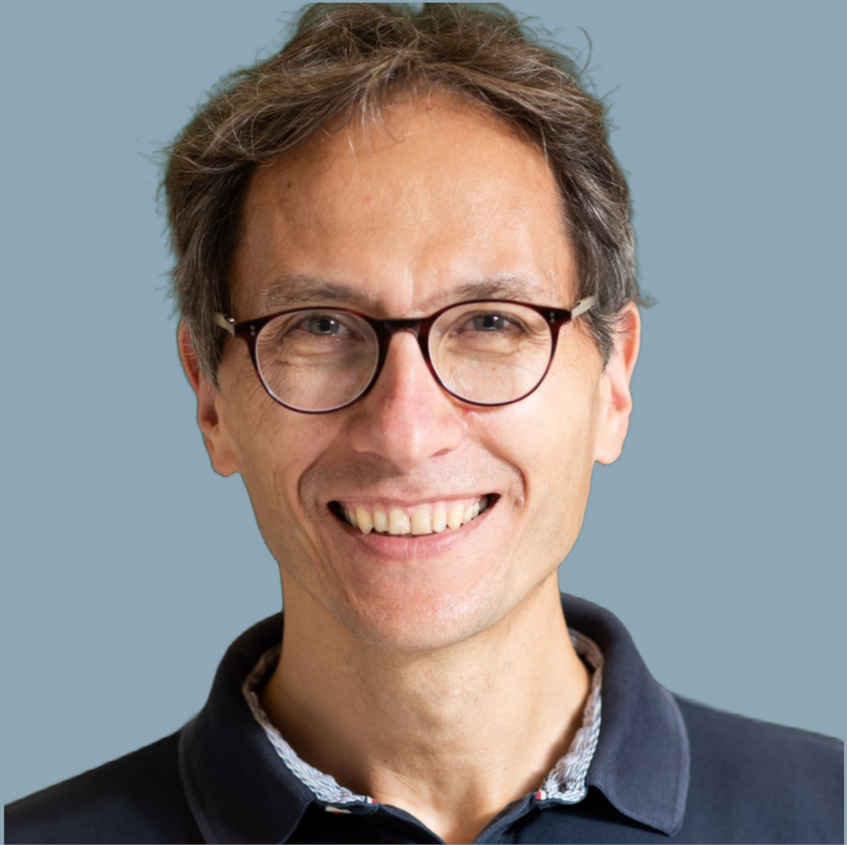 Markus Arndt合作论文数Faculty of Physics, University of Vienna27
 Manuel Erhard合作论文数Inst Quantum Opt & Quantum Informat IQOQI Vienn, Austrian Acad Sci26
 Johannes Kofler合作论文数Institut für Quantenoptik und Quanteninformation;Fakultät für Physik;Universität Wien;Institut für Quantenoptik und Quanteninformation, Universität Wien24
 Andreas Poppe合作论文数Celare Quantum Communications;PoppeQ24Mayukh Lahiri合作论文数Dept Phys & Astron, Univ Rochester24
 Alessandro Fedrizzi合作论文数Institute for Quantum Optics;Austrian Academy of Sciences;Boltzmanngasse;Institute for Quantum Optics, Austrian Academy of Sciences23Ma Horne合作论文数20
 Daniel M. Greenberger合作论文数Department of Physics, City College of New York20
 Xiaosong Ma (马小松)合作论文数School of Physics, Nanjing University19
 Gabriela Barreto Lemos合作论文数Instituto de F ´ õsica;Universidade Federal do Rio de Janeiro;Rio de Janeiro;Instituto de F ´ õsica, Universidade Federal do Rio de Janeiro19
 Johannes Handsteiner合作论文数Univ Vienna, Fac Phys, Vienna Ctr Quantum Sci & Technol, A-1090 Vienna, Austria18Felix Tiefenbacher合作论文数17
 Mehul Malik合作论文数Institute of Photonic and Quantum Sciences, School of Engineering and Physical Sciences, Heriot-Watt University17
 Paul G Kwiat合作论文数Department of Physics, The Grainger College of Engineering, University of Illinois Urbana-Champaign16
 Joerg Schmiedmayer合作论文数Vienna Center for Quantum Science and Technology, Institute of Atomic and Subatomic Physics, Vienna University of Technology;TU Wien Atominstitut16
 Alipasha Vaziri合作论文数Institut fur Experimentalphysik;Universitat Wien;Institut fur Experimentalphysik, Universitat Wien16
 Robert Prevedel合作论文数European Molecular Biology Laboratory, University of Heidelberg16
 Fabian Steinlechner合作论文数Abbe Center of Photonics, Friedrich-Schiller-Universität Jena;Fraunhofer IOF15
 Kevin J Resch合作论文数Institute for Quantum Computing, University of Waterloo/Department of Physics and Astronomy, University of Waterloo15
 John Rarity合作论文数School of Electrical, Electronic and Mechanical Engineering, Faculty of Engineering, University of Bristol15
 Thomas Herbst合作论文数Institute for Quantum Optics;Austrian Academy of Sciences;Boltzmanngasse;Institute for Quantum Optics, Austrian Academy of Sciences15
 Klaus Mattle合作论文数Institut fur Experimentalphysik;Universitat Innsbruck;Institut fur Experimentalphysik, Universitat Innsbruck14
 Rainer Kaltenbaek合作论文数Institute for Quantum Computing;Department of Physics & Astronomy;University of Waterloo;Institute for Quantum Computing, University of Waterloo13michael a horne合作论文数12
 Simon Gröblacher合作论文数Department of Quantum Nanoscience, Faculty of Applied Sciences, Delft University of Technology12
 Matthias Fink合作论文数Inst Innovat Management, Johannes Kepler Univ Linz12Helmut Rauch合作论文数12
 Momtchil Peev合作论文数Optical and Quantum Communications Laboratory, Munich Research Center, Huawei Technologies Duesseldorf GmbH12
 Stefan Bernet合作论文数Div Biomed Phys, Innsbruck Med Univ12C. Keller合作论文数11
 Christoph Simon合作论文数Institute for Quantum Science and Technology, University of Calgary11
 Tomasz Paterek合作论文数Xiamen University Malaysia;Instytut Fizyki Teoretycznej i Astrofizyki, Wydział Matematyki, Fizyki i Informatyki, Uniwersytet Gdański11Olaf Nairz合作论文数11Roland Abfalterer合作论文数10




