Deep sound speed structure in the western Irminger Sea is found to be highly dynamic in comparison to the adiabatic (uniform) sound speed gradient underpinning data assimilation and modeling efforts around the globe. A beamed source parabolic equation model is used to illustrate how the resulting non-uniform sound speed structure at 1 to 1.5 km in depth and sound speed inversion near the seafloor produce observable effects on acoustic signals between a shallow source and shallow vertical line array at convergence zone ranges. Beamforming analysis shows that a uniform sound speed gradient leads to “ideal” interference patterns that do not capture or represent modeled convergence zone properties, such as location, strength, and sharpness. Overall findings suggest that in situ information about sound speed below 1 km is necessary for low frequency, long-range propagation studies, particularly in areas of complex thermohaline circulation.
After completing her doctoral program in electromagnetics in 1995 Lisa decided to go to MIT Lincoln Laboratory to work on Matched Field Processing (MFP) in a nascent group formed for sonar and underwater acousitcs efforts. Then MFP introduced new methods of beamforming which were found to be sensitive to assumptions made for the sonar system, the environment and array processing. The so called adaptive one were especially sensitive. Lisa examined the importance of source motions and array are important for any sonar. In this context she introduced (i) mode based rank reduction, or modal MFP, (ii) array tile corrections, (iii) a “dynamic” snapshot correction method a focused MFP while the source is moving similar to beam steered MVDR, and (iv) “instantaneous” data and model based interference filtering. All these were subsequently discovered by later MFP researchers. Lisa and her coauthors were well ahead of there time.
The PrüferTransform for the Sturm-Liouvile (SL) equation was introduced by Prüferin 1923. An excellent reference is Numerical Solutions of Sturm-Liouville Problems by Pryce. Porter in Computational Ocean Acoustics introduced it to ocean acoustics. This author stumbled upon working on state variables at CMRE on 1978. The method derives first order equations for the phase and log-magnitude for second order equation in a phase plane. The essential feature is the phase equation is not coupled to the magnitude, so it may be solved as a nonlinear, first order equation and the surface boundary condition leads to a unique solution. New results for normal modes using the Prüfermethod are introduced. i) equations for the phase shifts and log-magnitudes at layer boundaries such as at the seabed; ii) state variable transformations based upon Ricatti equations and requiring evaluating one transcendental quantity, important for numerical methods; iii) issues of numerical stability for coupling the phase solution across the potential barriers of local sound speed maxima and poorly coupled boundaries; iv) an equation for computing the imaginary part leading to modal attenuation’s. The method is fast has survived many students using it, even those writing Matlab versions.
High-resolution observations from moorings and transect data can provide new insights into ocean structures, their variability, and the downstream effects on acoustic operations. Previously, we established a framework to maintain optimal communication and navigation for small-scale, under-ice operations that focused on spatio-temporal variability in the upper water column and around an autonomous underwater vehicle. However, mid- and deep-water sound speed fidelity are crucial for larger operations that exploit convergence zone ranging. The Irminger Sea is a useful case study for understanding how sound speed uncertainty, whether from partial data or models, obscures the informational content from acoustics. Generally, the density gradient dominates the sound speed at depth. In the Irminger Sea, hydrographic variability comes from the advection of different water masses through the region at all depths and also from water mass modification by local air-sea interaction. Instead of a uniform gradient as a result of hydrostatic loading, a shifted gradient in the mid-water column and a negative gradient near the bottom are often observed in mooring and transect data. This talk presents initial results for understanding the impacts of the environment through the lens of impact on acoustic propagation. [Work supported by the Office of Naval Research]
Recent experiments in the Beaufort Sea encountered the “Beaufort Lens,” a hydrographic feature named by Russian acousticians, where warmer Pacific water enters the Bering Straits and rests above Atlantic water. This creates a “double duct” subsurface duct with this “lens” being near ubiquitous in space and time throughout the Beaufort. As part of the ONR Task Force Ocean program we found subsurface ducts in the Irminger Sea over the Reykjanes Ridge not reliably predicted by HYCOM. Propagation in these “double ducts” has some remarkable features and is well understood using normal modes and analogies to potential wells in quantum mechanics. These include the (i) filling of individual wells preferentially according to the modal phase speeds; (ii) tunneling phenomena when the phase speeds approaches the height of the potential barrier or maximum speed separating the ducts; (iii) issues of degeneracy when the modal phase speeds appear to cross; (iv) appearance of “mini convergence zones” for the transmission losses in each duct; (v) differences in modal group speeds with very small differences in phase speeds; and (vi) very low transmission loss when both source and receiver are in the subsurface duct separated from the water and/or ice surfaces.
Complexities of acoustic propagation in ducts have long been known, e.g., shallow water environments and deep waters off Gibraltar. The "Beaufort Lens" (Lens) is a duct north of Alaska with nominal depths between 60 and 200 m and is reachable by oceanographic instruments and underwater unmanned vehicles and submarines. Propagation within the ducts is governed by waveguide physics. The frequencies must be high enough to support the modes within them such that there is a "critical frequency" (CF) where modes start to "detach" from surface loss mechanisms. Therefore, transmission losses (TLs) can abruptly decrease once a mode "fits" within a duct. This paper describes an experimental part of Ice Exercise 2018 supported by the U.S. Navy's Arctic Submarine Laboratory. The signals were transmitted from Camp Sargo north of Prudhoe Bay to the submarines SSN Hartford, SSN Connecticut, and HMS Trenchant. The data indicate low TLs near 100 Hz and an abrupt 10 dB decrease in TLs 244-280 Hz, both suggesting CFs. Modeling suggests CFs for modes 1 near 100 Hz and a higher CF when modes 3-6 "cascade" into the Lens starting near 250 Hz. There are also abrupt increases in TLs at other frequencies, which are explained by nulls in the product of the mode functions.
In 2020, the Woods Hole Oceanographic Institution (WHOI) celebrates 90 years of research, education, and exploration of the World Ocean. Since inception this has included Arctic studies. In fact, WHOI’s first technical report is on the oceanographic data obtained during the submarine “Nautilus” polar expedition in 1931. In 1951 and 1952, WHOI scientists supervised the collection of hydrographic data during the U.S. Navy SkiJump I & II expeditions utilizing ski-equipped aircraft landings in the Beaufort Sea, and inferred the Beaufort Gyre circulation cell and existence of a mid-Arctic ridge. Later classified studies, particularly concerning under-ice acoustics, were conducted by WHOI personnel from Navy and Air Force ice camps. With the advent of simple satellite communications and positioning, WHOI oceanographers began to deploy buoys on sea ice to obtain surface atmosphere, ice, and upper ocean time series data in the central Arctic beginning in 1987. Observations from these first systems were limited technologically to discrete depths and constrained by power considerations, satellite throughput, as well as high costs. As technologies improved, WHOI developed the drifting Ice-Tethered Profiler (ITP) to obtain vertically continuous upper ocean data several times per day in the ice-covered basins and telemeter the data back in near real time to the lab. Since the 1980s, WHOI scientists have also been involved in geological, biological, ecological and geochemical studies of Arctic waters, typically from expeditions utilizing icebreaking vessels, or air supported drifting platforms. Since the 2000s, WHOI has maintained oceanographic moorings on the Beaufort Shelf and in the deep Canada Basin, the latter an element of the Beaufort Gyre Observing System (BGOS). BGOS maintains oceanographic moorings via icebreaker, and conducts annual hydrographic and geochemical surveys each summer to document the Beaufort Gyre freshwater reservoir that has changed significantly since earlier investigations from the 1950s–1980s. With the experience and results demonstrated over the past decades for furthering Arctic research, WHOI scientists are well positioned to continue to explore and study the polar oceans in the decades ahead
The minimum power distortionless response (MPDR) beamformer minimizes the output power while passing the look direction signal with unity gain. To alleviate the performance degradation caused by estimating the spatial correlation matrix with a relatively small number of snapshots of the received signal compared to the number of sensors, a regularization implemented via diagonal loading of the estimated correlation matrix is used. This paper presents a study for the optimal diagonal loading that minimizes the estimation mean square error (MSE) of two diagonally loaded MPDR beamformer-based spatial power estimators in the snapshot deficient regime. First, the asymptotic behavior of the power estimators for fixed diagonal loading is analyzed and the approximate characterization of their expectations is derived. Second, it is conjectured that because of the snapshot deficient sample support, the squared bias is the factor that primarily controls the optimal diagonal loading. Finally, the respective performances of the two power estimators are compared using MSE as the metric and it is shown that one outperforms the other. The analytical results are validated using simulation data.
The Office of Naval Research sponsored Arctic field programs almost every year from 1978 to 1994 during the height of the Cold War. Almost all of them had an acoustics component coupled with observations for physical oceanography, geoacoustics, plate tectonics, ice mechanics, and used both active and passive methods. In 1978, these started with emphasis on basin reverberation and ended in 1994 with trans Arctic Ocean tomography. They had acronyms from CANBARX (Canadian Basin), FRAM I—IV, MIZEZ (Marginal Ice Zone), PRUDEX (Prudoe Bay) CEAREX and SIMI/TAP (Sea Ice Mechanics/Trans Arctic Propagation). The author was the chief scientist for most of these programs and will provide an overview of ONR's efforts in the Arctic during the Cold War. [Work supported by ONR.]
The travel time for end of the final finale is often used is in inversion algorithms for acoustic tomography experiments when there is impreciseness due to ship and mooring positions and/or motions. The rationale is the first mode has the maximum slowness and higher order ones must arrive earlier, so the finale must solely be composed of energy from the first mode. This places a constraint on the tomographic sections, e.g., on the summation of the ray path or mode group slownesses. In a two papers Dozier and Tappert (JASA, 1978) examined the re population of the mode space for signals propagating in a stochastic ocean described by a Garrett & Munk model for internal waves. In the limit of an energy conserving ocean, i.e. no loss through boundaries, the limit of the population goes to an equipartition population density which was verified by numerical experiments. For more realistic oceans with boundary losses, the limit is a race between loss and scattering. This complicates what can be well identified as mode one at long ranges at low SNR's. We perform a numerical experiment by spatial filtering for mode one along the range dependent path to select just its energy in the finale. Earlier NUMERICAL studies by the author, (JASA, 1998) suggests just five percent of the energy remained at one megameter ranges with a 1/2 Garrett/Munk ocean. [Work supported by ONR.]
Ira arrived at MIT in 1970 from BBN to take a professorship offered by Alfred Kyle, Head of the Department of Naval Architecture. He had said yes; however, Kyle surprised him and asked him to also head the department, renamed Ocean Engineering. With some trepidation he accepted. He started new research programs in ocean acoustics, ambient noise, reverberation and propagation while making seminal contributions. He became the director of the MIT Sea Grant Program and soon MIT was one of the first Sea Grant colleges. In 1977 Ira had the idea to research basin-scale reverberation. He thought the Mediterranean would be the ideal enclosed basin including opportunities for post-experiment R&R! He approached the Office of Naval Research, they enthusiastically agreed, and sent him to the Arctic! That detour north turned into a super highway of decades of Arctic acoustics research from a controversial seamount discovery in his first reverberation experiment, detailed morphology of ice cracking noise, propagation and ice scattering to global climate change. Ira will have lasting and enduring impact in acoustics through his contributions and through his many students and colleagues that had the great privilege and joy to learn from, know, and work with Ira.
A direct version for the stochastic Cramér-Rao bound (CRB) for parameters of Gaussian signals with additive Gaussian noise is introduced. The formulation applies to passive and active radars/sonars/seismics/structures with vector observations from multiple sources. These sensors include pressure, vector velocity, and/or acceleration sensors for ocean and structural acoustics, seismometers, polarized receivers for electromagnetics, and vector current meters for oceanography. The observations may contain partially coherent signals such as multipath. The parameters represent (i) signal localization or (ii) tomographic ones. As such, their embedding is very general using a Green's function vector and is not limited to direction of arrival problems. This formulation leads to simplified expressions for the stochastic CRB using just three quadratic forms involving just the Green's function and its derivatives with the inverse of the noise matrix for the norm. The number of the parameters sets the dimensions of these quadratic forms, so performance studies over the parameter space can be done with much smaller matrices as the noise covariance is inverted just once. The formulas are applied to vector sensors in jamming with both analytical and numerical results. The results are also compared to often cited papers on the CRB.
The WHOI Ice Tethered Profilers in the Beaufort has confirmed a “sound speed duct” at depths between 100 to 250 m labeled as the “Beaufort Lens.” It is thought to be caused by warm water intrusion from the Bering Strait. A significant consequence of the duct is the prediction of 10 dB lower transmission losses at ranges of 100 km for sources and receivers both within the duct. We examine how the properties of the duct impact detection and communication. Transmission loss is strongly affected by frequency. Ducted propagation is not supported below a modal cutoff and absorption losses become consequential at higher frequencies. For active sonar, where wideband waveforms are employed, dispersion effects and multipath become important. The shape of the duct, especially boundary gradients, impacts this dispersion. While a vertical line array spanning the duct can potentially exploit the multipath ray/mode coherence and the resolution of the array impacts whether coherent or incoherent combination should be employed to achieve desired gains. Data for validating and verifying long range transmission loss in the duct were acquired by two submarines participating in ICEX-16. This presentation examines the signal processing for detection and communication within the so called “Beaufort Lens.”
The multipath arrivals in ocean acoustic tomography are the important observations for the inversion to a sound speed profile and then to temperature. They are also implicit in any matched field processing beamforming. While the covariance of ray path travel times has been examined (Flatte and Stoughton, JGR 91, C6), the correlations among the waveforms of these multipaths has never been determined. There are two conflicting hypotheses: i) the paths radiate from a source, so they must be correlated. ii) Alternatively, the small scale ocean inhomogeneities randomize the paths since they traverse different ocean masses. At short ranges and low frequencies, the paths are correlated, whereas at long ranges and high frequencies, they are uncorrelated. Reality is somewhere in between. We have a power law medium which at large scales correlates paths but decorrelates them at small scales. The key quantity distinguishing the scales is the Fresnel zone extent. We analyze the correlation from two perspectives. A theoretical one based on path integral formulations and a experimental one on numerical Monte Carlo simulations on the massively parallel MIT Lincoln Laboratory LLGrid using adaptive beamforming for path resolution.
The Arctic Program Office of the Office of Naval Research ten Arctic field programs from 1978–1994 under the visionary leadership of program managers Dr. G. Leonard Johnson and Dr. Tom Curtin. During this period, over ten ice camps in both the western Arctic (Beaufort Sea) and the eastern Arctic (Nansen and Pole Abyssal Plains were manned and four ice breakers served as platforms in the marginal ice zone (Fram Straits). Since the cost of the support logistics for Arctic field programs is so very high, these experiments were multidisciplinary and almost all had an acoustic component. Some of the highlights were transoceanic reverberation, seismic reflection and refraction, random channels for time and Doppler spreading, target detection, matched field processing,ocean acoustic tomography, seismicity, and ambient noise were among the many topics examined. There were also robust efforts advancing data acquisition. Large, two dimensional horizontal arrays with both cabled and “WIFI” telemetry, large vertical arrays, precision sensor navigation, and sophisticated remote instrumentation buoys were deployed. With the end of the “Cold War” the last field program was in 1994 and the ONR Arctic program eventually was disestablished. Now, the retreat Arctic ice cover and Arctic Ocean warming has reinvigorated ONR's interest in the Arctic and after two decades ONR field programs are planned for the near future.
The dramatic reduction of sea ice in the Arctic Ocean will increase human activities in the coming years. This activity will be driven by increased demand for energy and the marine resources of an Arctic Ocean accessible to ships. Oil and gas exploration, fisheries, mineral extraction, marine transportation, research and development, tourism, and search and rescue will increase the pressure on the vulnerable Arctic environment. Technologies that allow synoptic in situ observations year-round are needed to monitor and forecast changes in the Arctic atmosphere-ice-ocean system at daily, seasonal, annual, and decadal scales. These data can inform and enable both sustainable development and enforcement of international Arctic agreements and treaties, while protecting this critical environment. In this paper, we discuss multipurpose acoustic networks, including subsea cable components, in the Arctic. These networks provide communication, power, underwater, and under-ice navigation, passive monitoring of ambient sound (ice, seismic, biologic, and anthropogenic), and acoustic remote sensing (tomography and thermometry), supporting and complementing data collection from platforms, moorings, and vehicles. We support the development and implementation of regional to basin-wide acoustic networks as an integral component of a multidisciplinary in situ Arctic Ocean observatory.
On April 9 and 13, 1999, two Arctic Climate Observation Using Underwater Sound tomography signals were transmitted from a 20.5-Hz acoustic source moored at the Franz Victoria Strait to an eight-element, 525-m vertical array at ice camp APLIS in the Chukchi Sea at a distance of ∼2720 km. The transmitted signal was a 20-min long, 255-digit m-sequence that can be treated as a binary-phase shift-keying communication signal with a data rate of 2 bits/s. The almost error-free performance using either spatial diversity (three elements) for a single transmission or temporal diversity (two transmissions) with a single element demonstrates the feasibility of ice-covered trans-Arctic acoustic communications.
A very senior ocean acoustician is attributed with the quote to the effect “one does not start in ocean acoustics, but rather ends up in it.” This may well summarize the issues confronting education in ocean acoustics. Acoustics were part of the curriculum in physics departments, whereas now it is spread across many departments. Acoustics and perhaps ocean acoustics are most often found in mechanical or ocean engineering departments, but seldom in physics. Almost all our pioneers from the WWII era were educated in physics and some more recently in engineering departments. Yet, only a few places maintained in depth curricula in ocean acoustics. Most education was done by one on one mentoring. Now the number of students is diminishing, whether because of perception of employment opportunities or the number of available assistantships is uncertain. ONR is the major driver in ocean acoustics for supporting graduate students. The concern about this is hardly new. Twenty plus years ago this was codified as part of the so called “Lackie Report” establishing ocean acoustics as “Navy unique” giving it a priority as a “Navy National Need” (NNR). With fewer students enrolled in ocean acoustics administrators at universities are really balking at sponsoring faculty slots, so there are very significant issues arising for an education in ocean acoustics. Perhaps, reverting to the original model of fundamental training in a related discipline followed by on the job training may be the only option for the future.
An adaptive beamformer for vector sensor arrays (VSA's), which uses a quadratic norm of the acoustic Poynting vector (PV) and linear constraint on the PV itself, is introduced. The paradigm follows minimum variance distortionless response (MVDR) but now the metric to be minimized is a quartic function of the filter weights and the constraint is quadratic. This leads to numerical approaches for the optimization instead of a matrix inversion for MVDR. This exploration is motivated by the observation that many nonlinear processing methods lead to “better” performance when a signal is above some threshold SNR. Examples of these include split beam arrays, DIFAR's and monopulse systems. This presentation discusses the optimization method and compares the results for ABF with linear processing for VSA's. The use of linear and quadratic refer to the clairvoyant processing where the ABF uses ensemble covariances and leaves open the problem of sample covariance estimation. [Work supported by ONR Code 321, Undersea Signal Processing.]
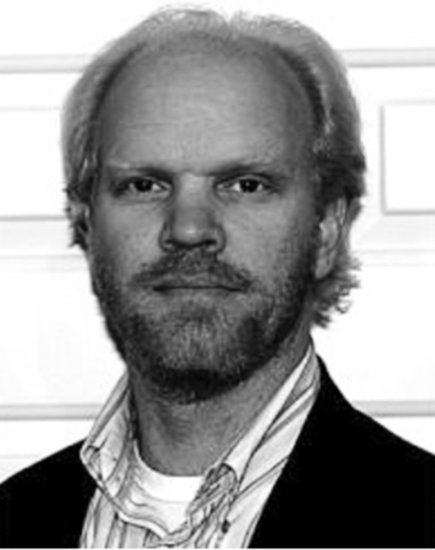 Kevin D. Heaney合作论文数27
 Peter F. Worcester合作论文数Scripps Institution of Oceanography, UC San Diego26
 Matthew Dzieciuch合作论文数Scripps Institution of Oceanography, University of California, San Diego20
 Peter N. Mikhalevsky合作论文数DEPT OCEAN ENGN, MIT19
 James C. Preisig合作论文数Department of Applied Ocean Physics and Engineering, WHOI;JPAnalytics LLC17
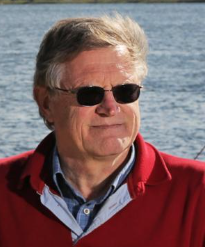 Henrik Schmidt合作论文数Department of Mechanical Engineering, Massachusetts Institute of Technology17edward k scheer合作论文数14
 Alan Oppenheim合作论文数Department of Electrical Engineering and Computer Science, College of Computing, Massachusetts Institute of Technology13
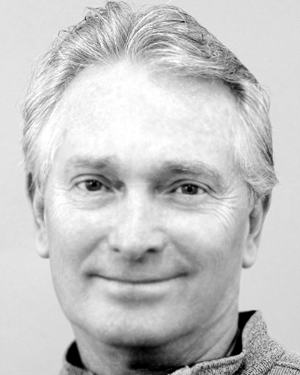 James A. Mercer合作论文数12
 John A. Colosi合作论文数Dept Oceanog, Naval Postgrad Sch12D'Spain G L合作论文数11
 Kathleen E. Wage合作论文数10
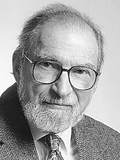 Ira Dyer合作论文数Massachusetts Institute of Technology10
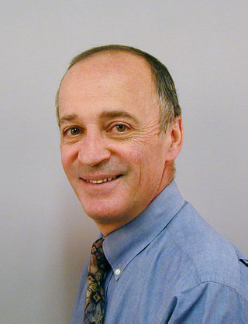 Robert C. Spindel合作论文数University of Washington10
 Walter H. Munk合作论文数Scripps Institution of Oceanography,University of California,San Diego9B. M. Howe合作论文数8W. A. Kuperman合作论文数Scripps Institution of Oceanography, University of California, San Diego8
 Brian Dushaw合作论文数Applied Physics Laboratory, University of Washington7
 Bruce D. Cornuelle合作论文数Scripps Institution of Oceanography|University of California , San Diego7
 Brian Chen合作论文数7John a Mercer合作论文数7TG BIRDSALL合作论文数7E. K. Scheer合作论文数6K. Metzger合作论文数6
 Wen Xu (徐文)合作论文数Ocean Academy, Zhejiang University;Institute of Deep-sea Science and Engineering, Chinese Academy of Sciences;University of Chinese Academy of Sciences6
 Gregory W. Wornell合作论文数Department of Electrical Engineering and Computer Science, MIT6
 Nick Laneman合作论文数Department of Electrical Engineering, College of Engineering, University of Notre Dame;Wireless Institute, University of Notre Dame;Pulte Institute for Global Development, University of Notre Dame;An NSF Spectrum Innovation Center, SpectrumX6Matthew J. Secor合作论文数6Stephen D. Lynch合作论文数6thomas m dauphinee合作论文数5stanley l ehrlich合作论文数5k vonderheydt合作论文数5andrew j poulsen合作论文数5gregory l duckworth合作论文数5Brian J Sperry合作论文数5
 James Murray合作论文数5Charles K. Sestok合作论文数5lloyd z maudlin合作论文数5Bernard Gold合作论文数5Campbell Richard L合作论文数5Gregory L. Duckworth合作论文数5Richard J. Barron合作论文数5
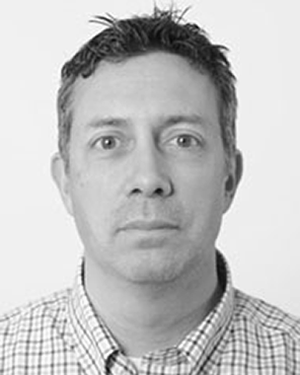 Kyle M. Becker合作论文数5
 Yonina Eldar合作论文数Signal Acquisition Modeling Processing and Learning Lab, Department of Computer Science and Applied Mathematics, Faculty of Mathematics and Computer Science, Weizmann Nstitute of Science5
 Bruce M. Howe合作论文数Department of Ocean and Resources Engineering, School of Ocean and Earth Science and Technology, University of Hawai‘i at Mānoa5
 D. B. Kilfoyle合作论文数5Joseph Sikora合作论文数4Shawn M. Verbout合作论文数4Michael J. Lopez合作论文数4




