Ultrafast single-shot measurement techniques with high throughput are needed for capturing rare events that occur over short time scales. Such instruments unveil non-repetitive dynamics in complex systems and enable new types of spectrometers, cameras, light scattering, and lidar systems. Photonic time stretch stands out as the most effective method for such applications. However, practical uses have been challenged by the reliance of current time stretch instruments on costly supercontinuum lasers and their fixed spectrum. The challenge is further exacerbated by such a laser’s rigid self-pulsating characteristic, which offers no ability to control the pulse timing. The latter hinders the synchronization of the optical source with the incoming signal—a crucial requirement for the detection of single-shot events. Here, we report the first demonstration of time stretch using electro-optically modulated continuous wave lasers. We do this using diode lasers and modulators commonly used in wavelength-division-multiplexing optical communication systems. This approach offers more cost-effective and compact time stretch instruments and sensors and enables the synchronization of the laser source with the incoming signal. Limitations of this new approach are also discussed, and applications in time stretch microscopy and light scattering are explored.
Intelligent transportation systems are a subset of system of systems that combine information from autonomous vehicles, road infrastructure, and other systems in order to improve the safety and efficiency of travel on roadways. The performance of an intelligent transportation system is limited by the transmission distance and delay of critical messages between components of the system of systems. Roadside units are road infrastructure designed to improve both of these limiting factors through their superior transmission capabilities and the ability to tunnel information to other roadside units over long distances. The placement of roadside units is critical to the their ability to assist the intelligent transportation system, with authors applying a number of different methods for determining the optimal positions. The goal of this work is to prove the ability of neural networks to solve this problem, which up to this point has not been attempted. A convolutional neural network is presented which uses images of the road network to determine the optimal placement of a roadside unit. The network is trained using data obtained through OpenStreetMaps, and the results demonstrate the ability of neural networks to determine the optimal placement of a roadside unit.
Executive leadership in government, military and industry are faced with many difficult challenges when trying to understand the complex interaction of public and government security policies, the vulnerabilities in the wide array of key technologies supporting critical infrastructure upon which society is vitally dependent, and the identification of key cyber security trends that will need to be considered in the future. This invited paper discusses public policy issues related to the threat environment and provides a comprehensive description of the various cyber vulnerabilities and risks arising from a broad range of technologies supporting critical infrastructure and highlights key requirements and design principles desired from next generation automated defence capabilities. This document provides a unique review of key aspects related to these separate but interrelated subject areas that will hopefully provide greater context, background and clarity for senior decision makers responsible for shaping development agendas for their organizations.
Over the past several decades the dramatic increase in the availability of computational resources, coupled with the maturation of machine learning, has profoundly impacted sensor technology. In this Perspective, we discuss computational sensing with a focus on intelligent sensor system design. By leveraging inverse design and machine learning techniques, data acquisition hardware can be fundamentally redesigned to ‘lock-in’ to the optimal sensing data with respect to a user-defined cost function or design constraint. We envision a new generation of computational sensing systems that reduce the data burden while also improving sensing capabilities, enabling low-cost and compact sensor implementations engineered through iterative analysis of data-driven sensing outcomes. We believe that the methodologies discussed in this Perspective will permeate the design phase of sensing hardware, and thereby will fundamentally change and challenge traditional, intuition-driven sensor and readout designs in favour of application-targeted and perhaps highly non-intuitive implementations. Such computational sensors enabled by machine learning can therefore foster new and widely distributed applications that will benefit from ‘big data’ analytics and the internet of things to create powerful sensing networks, impacting various fields, including for example, biomedical diagnostics, environmental sensing and global health, among others. Traditional sensing techniques apply computational analysis at the output of the sensor hardware to separate signal from noise. A new, more holistic and potentially more powerful approach proposed in this Perspective is designing intelligent sensor systems that ‘lock-in’ to optimal sensing of data, making use of machine leaning strategies.
Wearable sweat analysis possesses significant potential for transforming personalized and precision medicine, by capturing the longitudinal profiles of a broad spectrum of biomarker molecules that are informative of our body's dynamic chemistry. However, the lack of established physiological criteria to provide personalized feedback, based on sweat biomarker readings, has prevented the translation of wearable sweat-based bioanalytical technologies into health and wellness monitoring applications. Accordingly, scalable sweat sampling tools are required to facilitate large-scale and longitudinal clinical studies focusing on interpreting sweat biomarker readings. However, conventional sweat induction-collection tools are bulky and require multi-step and manual operations. Accordingly, here, we devise a sweat sampling patch, which can be deployed for autonomous diurnal sweat induction-collection. The core of this patch is an addressable array of miniaturized and coupled iontophoresis/microfluidic interfaces that can be activated on-demand or at scheduled time-points to induce/collect sufficient sweat samples for analysis. The iontophoresis interface was designed following an introduced design space centering on sufficient sweat secretory agonist delivery at safe current levels. The microfluidic interface was fabricated following a simple, rapid, and low-cost fabrication scheme. To achieve autonomous operation, these interfaces were extended into an array format and coupled with a custom-developed flexible and wireless circuit board. To inform utility, periodically induced/collected sweat samples of an individual were analyzed in relation to meal intake. [2020-0194]
Western societies' technological superiority potentially serves as its principal vulnerability. As technology manifests itself into the fabric of our daily existence, our personal lives, economy, defense and security relies upon the internet and related technologies. The rapid adoption of advanced technologies since the early days of the internet in pursuit of low-cost dramatic improvements in efficiency, has driven our society to rely upon fragile automated systems. These were initially designed with the emphasis on openness, speed and efficiency as opposed to security as the core capability supporting much of our critical infrastructure. Traditional passive and reactive information security approaches are now incapable of serving as the sole means of protection and automated defensive measures are increasingly required. This paper examines the cyber threat to various critical automated systems and highlights potential approaches.
To track dynamically varying and physiologically relevant biomarker profiles in sweat, autonomous wearable platforms are required to periodically sample and analyze sweat with minimal or no user intervention. Previously reported sweat sensors are functionally limited to capturing biomarker information at one time-point/period, thereby necessitating repeated user intervention to increase the temporal granularity of biomarker data. Accordingly, we present a compact multi-compartment wearable system, where each compartment can be activated to autonomously induce/modulate sweat secretion (via iontophoretic actuation) and analyze sweat at set time points. This system was developed following a hybrid-flex design and a vertical integration scheme-integrating the required functional modules: miniaturized iontophoresis interfaces, adhesive thin film microfluidic-sensing module, and control/readout electronics. The system was deployed in a human subject study to track the diurnal variation of sweat glucose levels in relation to the daily food intake. The demonstrated autonomous operation for diurnal sweat biomarker data acquisition illustrates the system's suitability for large-scale and longitudinal personal health monitoring applications.
This book focuses on the theory & application of interdependent networks, specifying the importance of context & developing sustainable smart cities.
An optically-assisted single-shot instrument with automated Tikhonov calibration for measuring the complex frequency response of electronic devices is presented. High-throughput characterization of microwave amplifiers at 37 million impulse response measurements per second is demonstrated.
With the ever-increasing need for bandwidth in data centers and 5G mobile communications, technologies for rapid characterization of wide-band devices are in high demand. We report an instrument for extremely fast characterization of the electronic and optoelectronic devices with 27 ns frequency-response acquisition time at the effective sampling rate of 2.5 Tera-sample/s and an ultra-low effective timing jitter of 5.4 fs. This instrument features automated digital signal processing algorithms including time-series segmentation and frame alignment, impulse localization and Tikhonov regularized deconvolution for single-shot impulse and frequency response measurements. The system is based on the photonic time-stretch and features phase diversity to eliminate frequency fading and extend the bandwidth of the instrument.
In this chapter, we briefly provide a big picture of emerging challenges in the interdependent networks. The introduced networks will collaborate together to achieve sustainability in terms of upgrading the infrastructures to more intelligent and efficient systems, providing more realistic models of interdependent networks, and modernizing the conventional urban areas to smart cities. Then, we provide the potential trends to address the challenges caused by integration of these networks. We also introduce smart cities as a prominent example of sustainable interdependent networks. We then provide the motivations for studying theory and applications of interdependent networks while capturing the requirements of the sustainable development. Finally, we explain the general structure of the book and provide a brief overview of the chapters. For more information please visit www.interdependentnetworks.com .
While AI is expanding to many systems and services from search engines to online retail, a revolution is needed, to produce rapid, reliable “AI everywhere” applications by “continuous, cross-domain learning”. We introduce Synthesizable Artificial Intelligence, and discuss its uniqueness by its five advanced “abilities”; (1) continuous learning after training by “connecting the dots”; (2) measuring quality of success; (3) correcting concept drift; (4) “self-correcting” for new paradigms; and (5) retroactively applying new learning for development of “long-term self-learning”. SAI can retroactively apply new concepts to old examples, “self-learning” in a new way by considering recent experiences similar to the human experience. We demonstrate its current and future applications in transferring seamlessly from one domain to another, and show its use in commercial applications, including engine sound analysis, providing real-time indications of potential engine failure.
A new instrument for fast measurement of frequency response of high-bandwidth optical and electronic devices is reported. Single-shot frequency spectrum measurements are enabled by time-stretch technology. An extremely fast measurement time of 27 ns is reported for the instrument. The reported instrument enables single-shot impulse response measurements with a 40 GHz bandwidth, which could be extended to beyond 100 GHz by using a faster electro-optic modulator. An ultra-low jitter of 20.5 fs is reported for the proposed instrument. The impulse responses measured using this technique are shown to correspond consistently with the manufacturer's specifications for the device under test. The reported instrument makes possible high-speed network parameter measurements, thereby enabling high-speed production-level testing of high-bandwidth opto-electronic devices/circuits/subsystems/systems and complex permittivity measurement of dielectric materials at a much reduced test time, lowering the test costs in a production environment.
Datacenter-based Cloud Computing services provide a flexible, scalable and yet economical infrastructure to host online services such as multimedia streaming, email and bulk storage. Many such services perform geo-replication to provide necessary quality of service and reliability to users resulting in frequent large inter- datacenter transfers. In order to meet tenant service level agreements (SLAs), these transfers have to be completed prior to a deadline. In addition, WAN resources are quite scarce and costly, meaning they should be fully utilized. Several recently proposed schemes, such as B4 [1], TEMPUS [2], and SWAN [3] have focused on improving the utilization of interdatacenter transfers through centralized scheduling, however, they fail to provide a mechanism to guarantee that admitted requests meet their deadlines. Also, in a recent study, authors propose Amoeba [4], a system that allows tenants to define deadlines and guarantees that the specified deadlines are met, however, to admit new traffic, the proposed system has to modify the allocation of already admitted transfers. In this paper, we propose Rapid Close to Deadline Scheduling (RCD), a close to deadline traffic allocation technique that is fast and efficient. Through simulations, we show that RCD is up to 15 times faster than Amoeba, provides high link utilization along with deadline guarantees, and is able to make quick decisions on whether a new request can be fully satisfied before its deadline.
There is an urgent need for corporations to take positive climate change actions to reduce the earth's carbon footprint. On the other hand, growing demands, high expectations of customers for advanced product functionalities and reliability have led to establishing large scale manufacturing plants with complex and capital intensive automated equipments which negatively impact climate change. Overall Equipment Effectiveness (OEE) to track and improve such plants' efficiencies is prudent for corporate management. Further, the financial regulations imposed by the US government call for corporations to achieve Sarbanes-Oxley (SOX) compliance. Therefore, this research presents a systems design to integrate implementation and monitoring of positive climate change actions concurrently with OEE monitoring and adherence to SOX compliance requirements.
 Jim B. Vuong合作论文数21
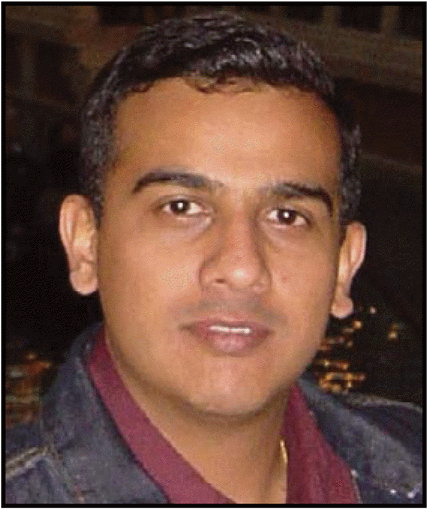 Prasanna Sridhar合作论文数University of New Mexico Autonomous Control Engineering (ACE) Albuquerque Albuquerque12
 Mo Jamshidi合作论文数Department of Electrical and Computer Engineering, College of Engineering and Integrated Design, The University of Texas at San Antonio;Autonomous Control Engineering Laboratory, The University of Texas at San Antonio;University of New Mexico;USAF Research Laboratory;Obuda University11
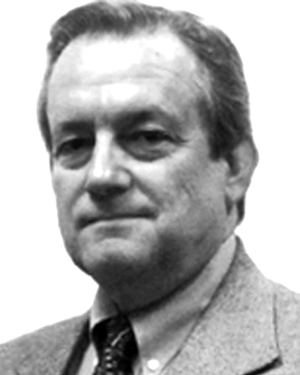 Lynn E. Costlow合作论文数11lawrence a wan合作论文数8robert k hansen合作论文数8Vuong, J.B.合作论文数8Wells, R.F.合作论文数7
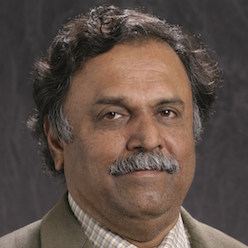 S.S. Iyengar合作论文数Knight Foundation School of Computing and Information Sciences, Florida International University7
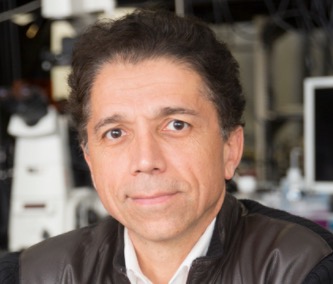 Bahram Jalali合作论文数Department of Electrical and Computer Engineering, Samueli School of Engineering, University of California, Los Angeles6Wan, L.A.合作论文数6philip vuong合作论文数5
 Cejo K. Lonappan合作论文数Department of Electrical Engineering, University of California, Los Angeles;Department of Electrical Engineering, University of California, Los Angeles4
 M. Hadi Amini合作论文数Knight Foundation School of Computing and Information Sciences, College of Engineering & Computing, Florida International University;TraCR UTC;Solid Lab4
 Kianoosh Boroojeni合作论文数4
 Alireza Sadeghian合作论文数Department of Computer Science, Ryerson University4
 Rajendra V. Boppana合作论文数The Univ. of Texas at San Antonio4
 Frede Blaabjerg合作论文数Department of Energy Technology, Faculty of Engineering and Science, Aalborg University4
 Panos M. Pardalos合作论文数Center for Applied Optimization, University of Florida;Department of Industrial and Systems Engineering, University of Florida4
 Hossein Rahnama合作论文数RTA School of Media, Rogers Communication Centre, Toronto Metropolitan University4Suresh Chalasani合作论文数University of Wisconsin - Parkside;Department of Business4
 Rajit Gadh合作论文数Department of Mechanical and Aerospace Engineering, Samueli School of Engineering, University of California, Los Angeles3Endler, H.合作论文数3
 Bantwal Prabhu合作论文数3
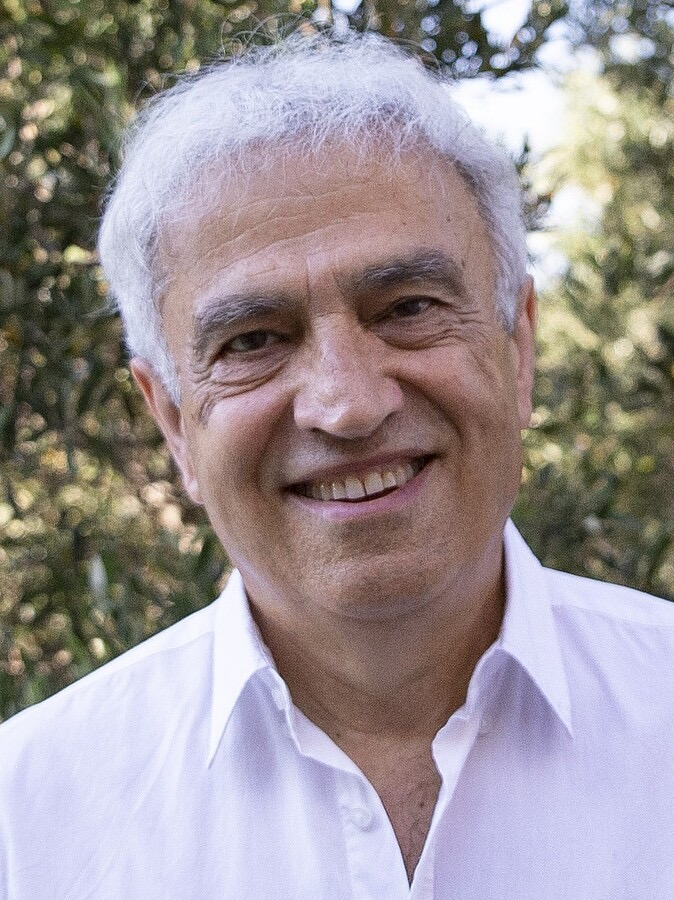 Yannis A. Phillis合作论文数School of Production Engineering & Management, Technical University of Crete3K. Donald Tham合作论文数3Hansen, R.K.合作论文数2
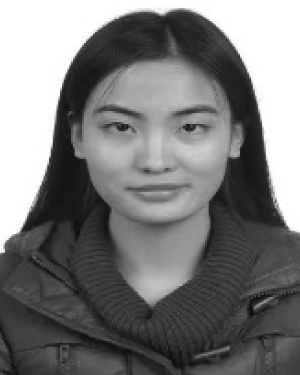 Zhuoya Bai合作论文数Institute of Lightwave Technology, Beijing Jiaotong University2
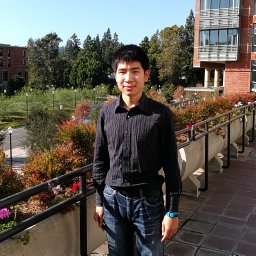 Shuyu Lin合作论文数Univ Calif Los Angeles, Dept Elect & Comp Engn, Interconnected & Integrated Bioelect Lab I2BL, Los Angeles, CA 90095 USA2
 Yichao Zhao合作论文数Dept Mat Sci & Engn, Univ Calif Los Angeles2
 Hannaneh Hojaiji合作论文数Univ Calif Los Angeles, Dept Elect & Comp Engn, Interconnected & Integrated Bioelect Lab I2BL, Los Angeles, CA 90095 USA2
 Sam Emaminejad合作论文数Department of Bioengineering, School of Engineering, University of California, Los Angeles2
 Thrishantha Nanayakkara合作论文数Dyson School of Design Engineering, Faculty of Engineering, Imperial College London2
 Brandon Buckley合作论文数2Endler, H.M.合作论文数2
 Keith Hipel (基思·威廉·海珀)合作论文数Department of Systems Design Engineering, University of Waterloo;Centre for International Governance Innovation;Balsillie School of International Affairs2
 Andrei Shkel合作论文数MicroSystems Laboratory, Department of Mechanical and Aerospace Engineering, Samueli School of Engineering, University of California, Irvine;Department of Electrical Engineering and Computer Science, Samueli School of Engineering, University of California, Irvine2
 Saeid Nahavandi合作论文数Swinburne University of Technology;Harvard University2Qiang Zou (邹强)合作论文数School of Pharmacy and Bioengineering, Chongqing University of Technology2
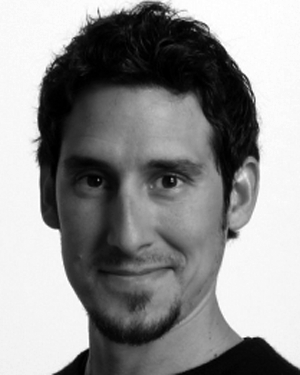 Cenk Acar合作论文数Department of Mechanical and Aerospace Engineering;Microsystems Laboratory;University of California at Irvine2
 Nilmini Wickramasinghe合作论文数School of Computing, Engineering & Mathematical Sciences, La Trobe University2
 Kouikoglou Vassilis合作论文数School of Production Engineering and Management, Technical University of Crete2
 Spiros Papaefthimiou合作论文数Department of Physics, University of Patras2
 Harish Ramamurthy合作论文数2
 Daniel C.H. Yang合作论文数2
 Eun Sok Kim合作论文数Ming Hsieh Department of Electrical and Computer Engineering, Viterbi School of Engineering, University of Southern California2
 Evangelos Grigoroudis合作论文数Dept. of Production Engineering & Management, Technical University of Crete2
 Fotis D. Kanellos合作论文数School of Electrical and Computer Engineering, National Technical University of Athens2
 Patrick Benavidez合作论文数2




