Microchannels (MICHs) play a critical role in microfluidic, thermal management, and MEMS-based applications, where dimensional precision and surface integrity are essential. Although laser micromachining offers a rapid and flexible fabrication approach, systematic multi-parameter optimization for plexiglas-based microchannels remains limited. In this study, a statistically validated optimization framework was developed for CO₂ laser micromachining of plexiglas substrates. Five key process parameters—laser power, traverse velocity, pulse frequency, spot size, and number of passes—were investigated using Response Surface Methodology (RSM) combined with Central Composite Design (CCD). Scanning Electron Microscopy (SEM) was employed to evaluate channel geometry, surface morphology, and heat-affected zone characteristics. The results indicate that increased laser power significantly enhances channel depth, while higher traverse velocity reduces thermal penetration. Interaction analysis revealed dominant influence of power and traversing on both depth and width responses. The developed regression models demonstrated strong statistical adequacy (R² > 0.97) with prediction errors below 6
This article presents a comprehensive exploration of ultrasonic welding across conventional, water-submerged, and saltwater-submerged conditions. Utilizing Taguchi L25 arrays, a systematic optimization process revealed nuanced parameter adjustments tailored to each welding scenario. Shore-D hardness tests confirmed mechanical resilience under optimized settings, showcasing distinct outcomes in water and saltwater-submerged welding. SEM imaging unveiled unique microstructural characteristics, emphasizing increased porosity in the central region in saltwater-submerged conditions. The deductions drawn underscore the feasibility of ultrasonic welding for thermoplastic composites in diverse environments, challenging conventional methods. Notably, optimized weld strength or USL in water and saltwater-submerged conditions exceeded that of conventional welding, demonstrating the potential of ultrasonic welding in subaqueous applications. The increased hardness observed in all welded specimens, attributed to post-weld refusion of 3D-printed layers, was substantiated by LOM and SEM analyses. While providing valuable insights, the study calls for further research to explore into the intricate physical and chemical changes during ultrasonic welding of thermoplastic composites in varied environmental conditions. This research lays a foundation for tailoring welding parameters and advancing subaqueous joining and repair operations.
This study numerically investigates the compressive buckling stability of Aluminium stiffened plates, which are critical components in marine structures and heavy machinery used in the textile industry, with a particular focus on the effects of crack orientation and eccentricity. Using linear finite element analysis (FEA), the plates were modelled with central and off-centre cracks under both clamped-free and simply supported-free boundary conditions. The analysis systematically varied the crack angle and its distance from the plate's centre to understand their influence on buckling modes and critical load coefficients. The results demonstrate a significant reduction in buckling stability due to the presence of cracks. This reduction is highly dependent on the crack's characteristics, as the most critical case for buckling occurs when the crack is oriented parallel to the stiffeners (at a 90 degrees angle), significantly lowering the buckling load for both boundary conditions. Furthermore, the research findings of this article reveal that crack eccentricity plays a crucial role. For simply supported-free plates, the buckling load is most critically reduced when the crack is closer to the loaded edge (ey=80mm), while for clamped-free plates, the opposite is true. Quantitatively, a crack can decrease the buckling coefficient by approximately 11% in clamped-free plates and 17% in simply supported-free plates in the most critical configurations. This research provides essential insights into the failure mechanisms of stiffened plates, emphasising the importance of considering crack parameters in structural design and maintenance to ensure the integrity of marine structures.
This paper introduces a detailed numerical investigation of the thermal and hydraulic performance of a double-pass solar air heater (DPSAH) with semi-spherical balls and perforated baffles as roughness elements. With ANSYS Fluent 2020 R1, the simulations were performed over a Reynolds number (Re) range of 3000–19000 with different ball radius ratios (r/H) between 0.2 and 0.6 and longitudinal pitch ratios (P/H) between 3 and 6. Results reveal greater heat transfer with a significant increase in the Nusselt number (Nu) from 62.24 to 276.06 while r/H had been increased from 0.2 to 0.6 at P/H = 4. This occurs due to increased disturbance of the boundary layer and turbulence. In the same manner, the friction factor (f) increased from 0.080 to 0.168 due to increased flow resistance. However, increasing P/H at constant r/H = 0.6 led to decreasing Nu (from 276.69 to 65.61) and f (from 0.180 to 0.084). The best value of the thermo-hydraulic performance parameter (THPP) of 2.46 at Re = 3000, r/H = 0.6, and P/H = 4 reflects a perfect balance between pressure drop and heat transfer. Compared to the traditional geometries, the present configuration yields an increase in THPP by a maximum of 47.15
This study investigates the impact of key electrical discharge machining (EDM) parameters: specifically, current, pulseon time, and servo voltage on the material removal rate (MRR) for SK2MCr4 steel. A comprehensive experimental approach employing a full factorial design was utilized to explore both the individual and interaction effects of these parameters. To enhance efficiency and precision, the Taguchi method, in conjunction with ANOVA, was applied for process optimization. The findings revealed that electric current is the most significant factor, accounting for approximately 64–73
Improving the thermal efficiency of solar-powered water heating systems is essential for enhancing renewable energy utilization and reducing reliance on conventional energy sources. In this context, the use of nanofluid-filled heat pipes represents a promising and innovative approach to overcome the thermal limitations of conventional working fluids. This research investigates the potential enhancement of solar-powered water heating systems by applying nanofluid-filled heat pipes. A nanofluid is prepared by suspending copper and nickel nanoparticles (approximately 20 nm) in ethanol, and its thermophysical properties are measured as a function of temperature to improve thermal efficiency. The thermal performance of a 1000-mm-long copper heat pipe is compared between the prepared copper–nickel/ethanol nanofluid and pure acetone as working fluids under simulated daytime solar radiation. Both working fluids are tested under a filling ratio of 40
This study investigates submerged ultrasonic welding (S-USW) of carbon-fiber-reinforced polyamide (CFRP) using rectangular, triangular, and semi-circular energy directors (EDs). A 3D finite element model in COMSOL Multiphysics simulated heat generation, stress, and displacement, validated through lap shear strength (LSS) tests. Rectangular EDs generated weld-zone temperatures up to 278 °C in air and 227 °C in water, with maximum LSS of 11.6 MPa. Triangular EDs reached lower peak temperatures (167 °C in S-USW) and weld strengths below 12 MPa despite faster melting. Semi-circular EDs achieved the most favorable outcomes, producing a uniform weld-zone temperature of 227 °C and maximum LSS of 16.42 MPa under submerged conditions. Stress analysis confirmed reduced concentration compared to other geometries. These results demonstrate that semi-circular EDs enhance heat distribution, bond strength, and joint reliability in CFRP composites. The combined computational–experimental approach offers quantitative guidance for optimizing ultrasonic welding design and parameters.
Currently, water pollution remains a major global concern, and sustainable wastewater treatment is essential to addressing water scarcity and achieving potable water standards. This article presents an integrated environmental and sustainability assessment of an advanced industrial wastewater treatment system for a textile industry generating 2,000 m³/day of effluent. A hybrid treatment system, comprising a membrane bioreactor (MBR), activated carbon filtration, and reverse osmosis (RO), achieved significant pollutant removal: 98.6% COD, 99.3% TSS, and 95.1% heavy metals (Pb, Cd, Cr). The treated water met WHO drinking water standards with TDS <300 mg/L, and microbial contaminants are undetectable. Sustainability metrics showed an 87% water recovery rate and a specific energy consumption of 2.8 kWh/m³. Life Cycle Assessment (LCA) revealed a 32% lower carbon footprint than conventional methods, while economic analysis estimated a treatment cost of $0.92/m³ and a 6.5-year payback period when combined with water reuse. Additionally, this research focused on the potential of microalgae-based bioremediation as an eco-friendly alternative. Microalgae offer effective nutrient recovery, greenhouse gas reduction, and biomass valorization for biofuels, fertilizers, food additives, and therapeutic compounds. Thus, microalgae integration presents a cost-effective, sustainable solution for wastewater treatment and bioenergy production.
 Nitesh Dutt合作论文数Dept Mech Engn, Coll Engn Roorkee38
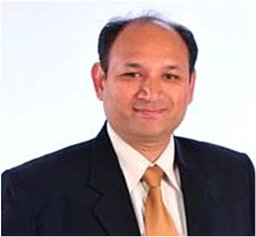 Pravin P. Patil合作论文数Graphic Era University36
 Varun Pratap Singh合作论文数Dept Mech Engn, Coll Engn Roorkee COER35
 Sivasakthivel Thangavel合作论文数Department of Mechanical Engineering and Vehicle Technology GCET, University of West of England28
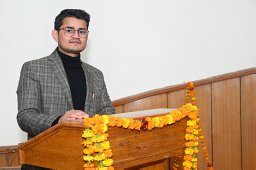 Chandan Swaroop Meena合作论文数CSIR Cent Bldg Res Inst27
 Mukesh Kumar Awasthi合作论文数25
 Avinash Kumar Seth合作论文数23
 Abhishek Kumar合作论文数Jabalpur Engn Coll17
 Milad Heidari合作论文数Global Coll Engn & Technol, Mech Engn Dept, POB 2546,CPO Ruwi 112, Muscat, Oman17
 Gaurav Dwivedi合作论文数Corresponding authors.17
 Yatika Gori合作论文数15
 Arbind Prasad合作论文数14Yogesh Kumar Singla合作论文数14
 Himanshu Jaiswal合作论文数13
 Amit Choudhari合作论文数7
 Pooyan Rahmanivahid合作论文数Mech Engn Dept, Global Coll Engn & Technol GCET7
 Vikas Verma合作论文数Authors contributed equally to the first authorship.7
 Siddharth Jain合作论文数Indian Institute of Technology Kanpur7
 Ankush Hedau合作论文数6
 Morteza Khashehchi合作论文数Dept Agrotechnol, Univ Tehran6
 Dr. Dhananjay Yadav合作论文数5
 Nusrat Chowdhury合作论文数Dept Elect & Elect Engn, Daffodil Int Univ5
 Ashish Karn合作论文数Dept Mech Engn, Univ Petr & Energy Studies5
 Aritra Ghosh合作论文数Department of Renewable Energy, University of Exeter4
 Vipin Kumar Sharma合作论文数4Neelesh Kumar Sharma合作论文数4
 Faraz Ahmad合作论文数Graphic Era Deemed to be University4Mohit Bajaj合作论文数3Bidyanand Mahto合作论文数3Ashok Kumar Yadav合作论文数3
 Subhash Singh合作论文数3
 Gourhari Chakraborty合作论文数National Institute of Technology3
 Sandeep Bhoi合作论文数Dept Mech Engn, Parala Maharaja Engn Coll3
 Tikendra Nath Verma合作论文数Department of Mechanical Engineering, Maulana Azad National Institute of Technology Bhopal3
 Sachin Mishra合作论文数School of Electronics and Electrical Engineering, Lovely Professional University3
 Michael R. Maughan合作论文数3
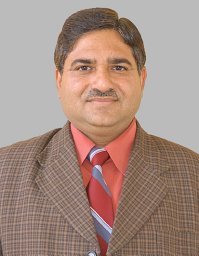 Naveen Kumar Sharma合作论文数Indian Institute of Technology3
 Muhammad Shafiq合作论文数Cyberspace Institute of Advanced Technology, Guangzhou University;Shenyang Normal University2
 Arpit Dwivedi合作论文数2Kavitha Sharanappa Gudadur合作论文数2
 Anjali Saxena合作论文数2Rudra Bubai Sarkar合作论文数2Anka Datta合作论文数2
 Gunjan Pant合作论文数2
 Shubham Srivastava合作论文数2
 Rajeev Ranjan合作论文数2Vipul Paliwal合作论文数Department of Mechanical Engineering, Graphic Era (Deemed To be University2
 Atul Kumar Shukla合作论文数Dept Math, Babasaheb Bhimrao Ambedkar Univ2
 Akshay Jain合作论文数2




