Cultural heritage (CH) wooden artifacts are often stained by iron oxides/hydroxy-oxides, which may have detrimental effects on wood. Their removal is a common conservation practice, and it is usually achieved with non-eco-friendly chelators, such as ethylene diamine tetra acetic acid (EDTA) and diethylene triamine penta acetic acid (DTPA). Siderophores are green materials that have been recently explored as chelators, given the currently growing environmental concerns. This work investigated desferrioxamine B (DFO-B), a promising siderophore that has not been adequately studied for its potential in removing ferric oxides/hydroxy-oxides from dry CH wooden substrates. Mock-ups of maple (Acer platanoides L.) were artificially stained with akaganeite and maghemite, and DFO-B was employed via hydrogels (pH: 6.5 and 8.6) and ethanol gels. The chelator efficacy was assessed using Energy-Dispersive Spectroscopy (EDS), Attenuated Total Reflection–Fourier Transform Infrared Spectroscopy (ATR-FTIR), Scanning Electron Microscopy (SEM) and colorimetry. The hydrogels’ impact on the wood was also assessed using ATR-FTIR and colorimetry. The obtained results demonstrate that the most effective DFO-B formulation was the alkaline hydrogel (pH 8.6), followed by the acidic (pH 6.5) hydrogel and the DFO-B ethanol gel. No differences in wood chemistry or color were recorded when using pH 6.5 or 8.6. The DFO-B ethanol gels were also proven to be potential alternatives to hydrogels for use with water-sensitive CH substrates.
A typical case of producing records within the domain of conservation of cultural heritage is considered. During condition and collection surveys in memory organisations, surveyors observe types of multiple components of an object but without creating a record for each one. They also observe the absence of components. Such observations are significant to researchers and are documented in registration forms but they are not easy to implement using popular ontologies, such as the CIDOC CRM which primarily consider individuals. In this paper techniques for expressing such observations within the context of the CIDOC CRM in both OWL and RDFS are explored. OWL cardinality restrictions are considered and new special properties deriving from the CIDOC CRM are proposed, namely ‘typed properties’ and ‘negative typed properties’ which allow stating the types of multiple individuals and the absence of individuals. The nature of these properties is then explored in relation to their correspondence to longer property paths, their hierarchical arrangement and relevance to thesauri. An example from bookbinding history is used alongside a demonstration of the proposed solution with a dataset from the library collection of the Saint Catherine Monastery in Sinai, Egypt.
Manuscripts are a crucial form of evidence for research into all aspects of premodern European history and culture, and there are numerous databases devoted to describing them in detail. This descriptive information, however, is typically available only in separate data silos based on incompatible data models and user interfaces. As a result, it has been difficult to study manuscripts comprehensively across these various platforms. To address this challenge, a team of manuscript scholars and computer scientists worked to create “Mapping Manuscript Migrations” (MMM), a semantic portal, and a Linked Open Data service. MMM stands as a successful proof of concept for integrating distinct manuscript datasets into a shared platform for research and discovery with the potential for future expansion. This paper will discuss the major products of the MMM project: a unified data model, a repeatable data transformation pipeline, a Linked Open Data knowledge graph, and a Semantic Web portal. It will also examine the crucial importance of an iterative process of multidisciplinary collaboration embedded throughout the project, enabling humanities researchers to shape the development of a digital platform and tools, while also enabling the same researchers to ask more sophisticated and comprehensive research questions of the aggregated data.
Documentation is a core task for conservators, allowing evaluation of past choices and providing an evidence base for reasoned decision-making for future practice. However, much of the documentation created is not shared with other conservators or broader audiences. During the Linked Conservation Data (LCD) project, we explored the potential of documentation practices known as Linked Data for conservation, inspired by practices in other domains including medical science and biology, as well as various openGLAM initiatives. As part of the project, we developed: guidelines for harmonising disparate conservation terminologies; proposals for encoding different types of conservation data; a template for articulating policy in relation to conservation data; and a Linked Data pilot demonstrating the value of the approach. This work encourages institutions to begin sharing conservation records routinely, for use and re-use by other conservators. Adopting such a practice at large scale will provide an invaluable resource of conservation-related information that can be used for decision-making and enable data analysis and statistical work with large samples in conservation. We present conclusions and lessons learned from the LCD pilot, including the: importance of structured records; role of documentation of conservation vocabularies; foundational work still needed for sharing records as Linked Data; and practicalities of implementing a Linked Data system for sharing conservation records. We conclude by outlining the role and responsibilities that professional bodies need to adopt towards this effort.
Manuscripts are a crucial form of evidence for research into all aspects of premodern European history and culture, and there are numerous databases devoted to describing them in detail. This descriptive information, however, is typically available only in separate data silos based on incompatible data models and user interfaces. As a result, it has been difficult to study manuscripts comprehensively across these various platforms. To address this challenge, a team of manuscript scholars and computer scientists worked to create “Mapping Manuscript Migrations” (MMM), a semantic portal, and a Linked Open Data service. MMM stands as a successful proof of concept for integrating distinct manuscript datasets into a shared platform for research and discovery with the potential for future expansion. This paper will discuss the major products of the MMM project: a unified data model, a repeatable data transformation pipeline, a Linked Open Data knowledge graph, and a Semantic Web portal. It will also examine the crucial importance of an iterative process of multidisciplinary collaboration embedded throughout the project, enabling humanities researchers to shape the development of a digital platform and tools, while also enabling the same researchers to ask more sophisticated and comprehensive research questions of the aggregated data.
This article proposes the implementation of a system which allows for sharing conservation data using Linked Data technologies. It begins with a review of the reasons why conservation data should be shared by default and highlights the value of sharing for practical tasks such as assessing environmental control based on condition surveys and environmental monitoring records. The article also makes the argument for public delivery of work which is completed with public funding and continues by examining the value of sharing data in other fields of research. It makes reference to important projects which were only possible because of sharing data, such as the Human Genome Project (HGP) and other projects in the fields of meteorology and biodiversity. A short introduction to '5 Star Linked Data' is included alongside a description of key concepts for Linked Data, such as the production and maintenance of Uniform Resource Identifiers (URIs). An outline of the proposed work for making conservation data sharable is given which includes terminology harmonisation, reconciliation of records and mapping of local databases to a global schema (CIDOC-CRM). The article concludes with an attempt to identify ongoing costs for the community to maintain a data sharing system and refers to standard subscription models of conservation professional bodies and the requirement for synergy across them.
Since it was awarded a Round 4 Trans-Atlantic Platform Digging into Data Challenge grant in 2017, the Mapping Manuscript Migrations project has been working to develop and test a methodology to link disparate datasets from Europe and North America with the aim of providing large-scale analysis and visualizations of the history and provenance of medieval and Renaissance manuscripts.
One of the fundamental roles of memory organisations is to safe-keep collections and this includes activities around their preservation and conservation. Conservators produce documentation records of their work to assist future interpretation of objects and to explain decision making for conservation. This documentation may exist as structured data or free text and in both cases they require vocabularies that can be understood widely in the domain. This paper describes a survey of conservation professionals which allowed us to compile the vocabularies used in the domain. It includes an analysis of the vocabularies with key findings: a) the overlapping terms with multiple definitions, b) the partial coverage of the domain which is lacking controlled vocabularies for condition types and treatment techniques and c) the limited formats in which vocabularies are published, making them difficult to use within Linked Data implementations. The paper then describes an approach to improve the vocabulary landscape in conservation by providing guidelines for encoding and aligning vocabularies as well as considering third party platforms for sharing vocabularies in a sustainable way. The paper concludes with a summary of our findings and recommendations.
In the domain of heritage conservation much of the decision making relies on assessing risk and planning in advance. This is particularly important for built heritage where environmental conditions cannot be controlled easily and a broader range of risks must be taken into account. Risk assessment requires detailed surveys of built heritage which produce a wealth of data around the vulnerability of a building using domain expert terminology. It also requires information about environmental condition and the dangerousness of the area that the building is situated. Integrating this data within systems is essential. Further sharing this data with external audiences such as emergency services is also important. In this paper we consider guidelines developed for the Linked Conservation Data project in relation to a risk assessment system: Risk Map of the Italian Ministry of Culture. The guidelines explain how terminology data can be integrated so ensure a common language across systems or system components. We focus on terminology alignment with the Getty Arts & Architecture Thesaurus and we explore specific terms from the built heritage domain and the challenges posed by their use in different contexts.
ABSTRACT Conservation education in Books and Paper at Camberwell College of Arts formally started in 1970, having grown out of a strong British tradition in bookbinding and typography dating as far back as 1904. This is the complete list of the Book and Paper MA degree works from 1992 to 2019, when the course was discontinued.
This article explores and challenges notions and methodologies of conservation, including the use of blockchain technologies as a means of establishing provenance of a physical BioArtwork, of the artist’s documentation encapsulating their intentions and of the conservator’s records required for the artwork’s ongoing care. The exploration is done through a case study of an art project called ‘Unruly Objects and Biological Conservation’ created by Anna Dumitriu with support from Alex May. The artwork consists of three items containing RFID tags sealed in resin – which point to the location of the artist’s documentation. Therefore, the works physically include instructions for maintaining their inherent concepts and materiality for the benefit of the conservators. Such instructions can often be difficult to track down, or become disassociated from the artwork while the digital preservation of this storage method also poses its own set of questions. The works also include biological material including mud from a bacterial ecosystem known as a Winogradsky Column, living plant material and SARS-CoV-2 (coronavirus) RNA from a plasmid construct.
The Mapping Manuscript Migrations (MMM) project transformed three separate datasets relating to the history and provenance of medieval and Renaissance manuscripts into a unified knowledge graph. The source databases are: Schoenberg Database of Manuscripts, from the Schoenberg Institute for Manuscript Studies, University of Pennsylvania; Bibale, from the Institut de recherche et d’histoire des textes (IRHT-CNRS, Paris); and Medieval Manuscripts in Oxford Libraries, from the Bodleian Libraries, University of Oxford. The data consist of more than 20 million RDF triples which have been mapped to the MMM Data Model. The model combines classes and properties from CIDOC-CRM and FRBR, together with some specific MMM elements. The Knowledge Graph was created using the MMM data transformation pipeline. The MMM dataset is available from the Zenodo repository, and can be directly deployed on a SPARQL endpoint using a docker recipe. To test and demonstrate its usefulness, the MMM Knowledge Graph is in use in the MMM Semantic Portal: https://mappingmanuscriptmigrations.org.
 Nicholas Pickwoad合作论文数17David Lewis合作论文数9
 Toby Burrows合作论文数School of Humanities, University of Western Australia;Faculty of History, University of Oxford8Emma Thomson合作论文数7Lynn Ransom合作论文数Univ Penn, Philadelphia, PA 19104 USA7Hanno Wijsman合作论文数Institut de recherche et d'histoire des textes Aubervilliers France7
 Esko Ikkala合作论文数Semantic Computing Research Group SeCo, Aalto University7
 Jouni Tuominen合作论文数Semantic Computing Research Group;Helsinki University of Technology;University of Helsinki;Helsinki University of Technology, University of Helsinki7
 Kevin R. Page合作论文数Oxford e-Research Centre, University of Oxford7
 Mikko Koho合作论文数Semantic Computing Research Group (SeCo), Aalto University7
 Eero Hyvönen合作论文数Helsinki Centre for Digital Humanities, Faculty of Arts, University of Helsinki;Department of Computer Science, Aalto University7Doug Emery合作论文数4Andrew Morrison合作论文数4Mitch Fraas合作论文数4susan pui san lok合作论文数2Sebastian Faubel合作论文数2Hannah Barton合作论文数2Kristen St John合作论文数2Guillaume Porte合作论文数2Moritz Eberl合作论文数2Mick Grierson合作论文数Goldsmiths, University of London2gustav metzger合作论文数1
 Synnøve Midtbø Myking合作论文数1judy vaknin合作论文数1karyn stuckey合作论文数1Halle Burns合作论文数1
 Stavroula Rapti合作论文数1Georgios Panagiaris合作论文数Egaleo Pk, Univ West Attica1
 Donatella Fiorani合作论文数1
 Marta Acierno合作论文数1
 Helia Marcal合作论文数Department of History and Art, University College London1
 Carlo Meghini合作论文数Istituto di Scienza e Tecnologie dell’ Informazione [ISTI], CNR1
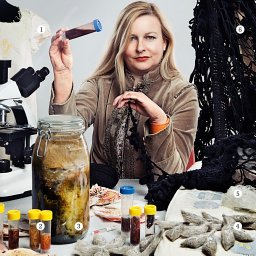 Anna Dumitriu合作论文数The Deco Building1
 Martin Doerr合作论文数Institute of Computer Science;Foundation for Research and Technology;Institute of Computer Science, Foundation for Research and Technology1
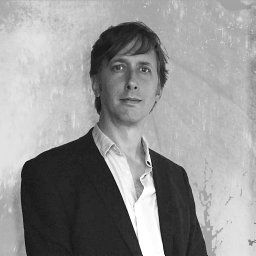 Alex May合作论文数1Uriel Orlow合作论文数1
 J. Stephen Downie合作论文数School of Information Sciences, University of Illinois Urbana-Champaign;HathiTrust Research Center, University of Illinois Urbana-Champaign1John P. Harrison合作论文数1
 Stamatis Boyatzis合作论文数Institute of Physical Chemistry, NCSR Demokritos1Clive Phillpot合作论文数1
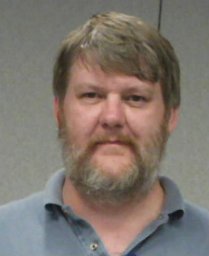 Stephen Derek Stead合作论文数University of Crete1
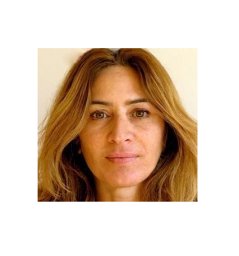 Anastasia Pournou合作论文数Dept . of Conservation of Antiquities & Works of Art;Institute of Electronic Structure and Laser;Foundation for Research and Technology-Hellas;Institute of Electronic Structure and Laser, Foundation for Research and Technology-Hellas1
 Andrew Hankinson合作论文数Schulich School of Music, McGill University1
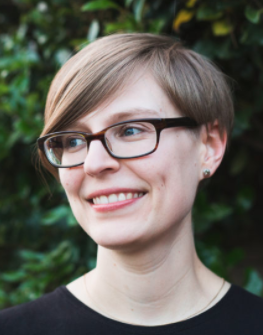 Rebecca Fiebrink合作论文数r.fiebrink@gold.ac.uk Department of Computing Goldsmiths, University of London1
 Zoi Sakki合作论文数1
 Veroniki Korakidou合作论文数1




