For many years, it has been thought that aerospace technology was reserved only for developed countries since significant economic investments were needed. It was thought that developing countries could only invest in raw material exploitation since aerospace development only involved unnecessary expenses. However, with the accelerated advance of technology, and the development of small missions, which allow lower component costs, the investment to enter into the space era becomes more accessible. In addition, space technology can bring significant benefits to developing countries. In the present work, a study highlights the great benefits and opportunities that developing countries have in the aerospace field. The results show favorable situations in this aspect.
There is a need to study the behavior of living organisms and other objects of interest under microgravity conditions. To investigate the effects of microgravity, one would typically need to send these items into space. However, this approach is relatively expensive, costing around $80,000.00 per kilogram sent into space, excluding the costs of developing the experiment. To address this issue, it is essential to find a way to simulate microgravity on Earth, thereby avoiding the high costs associated with space travel. This proposal aims to design a clinostat to simulate the effects of microgravity. The design features a dual-axis rotation to create a 3D clinostat with variable speeds to achieve a random positioning machine. The device uses two motors that rotate between 20 and 90 revolutions per minute and has a work area of 20 x 20 x 20 cm3. A robust design has been achieved to conduct various experiments to test the effects of microgravity on microorganisms.
As many as one in three people worldwide have anemia, with young children at increased risk of both disease and complications. In settings without clinical laboratories, portable hemoglobinometers serve important roles in diagnosing anemia and estimating prevalence. Here, we assess the validity of two such point-of-care devices-the HemoCue Hb201 and the HemoCue Hb301-relative to the international reference standard, the cyanmethemoglobin method. In total, 428 children ages 6-60 months were recruited at health posts in Lima, Peru, and venous and capillary blood samples were collected from each participant. Venous blood was assessed with the cyanmethemoglobin method, whereas capillary blood was assessed using the Hb201 and the Hb301; 16.1% of participants were found to have anemia using the cyanmethemoglobin method. Both the Hb201 (43.7%) and the Hb301 (20.6%) overestimated this prevalence, with the former reaching statistical significance (P <0.0001 and P = 0.11, respectively). Both devices also tended to underestimate hemoglobin concentration, with the Hb201 (mean difference =-0.99 g/dL; percentage error =-8.1%) being appreciably less accurate than the Hb301 (mean difference =-0.35 g/dL; percentage error =-2.7%). Areas under the curve for the Hb201 (0.92) and the Hb301 (0.93) were statistically similar (P = 0.28); however, the Hb201 incorrectly classified 29.4% of participants compared with 11.0% for the Hb301. Both devices had more false positives than false negatives. In conclusion, the Hb301 was found to be significantly more accurate than the Hb201 at measuring hemoglobin, diagnosing anemia, and estimating anemia prevalence.
Space transportation has been and remains one of the most valuable resources in the constant exploration of space; after all, it is the only known way out of the atmosphere. Moreover, since devices of great size and scope generally constitute this particular transport, the use and application of aerospace technologies in this sense demand several instruments and infrastructure of significant proportions; these places are the so-called spaceports or cosmodromes, which they turn out to be the doors to space. In contrast, it is not enough to have the place itself to launch rockets and transport loads; an essential factor is a geographical location in which said port must be found so that the launch expense, which is an essential element, is much smaller. In this sense, the closer the launch site is to the equator, the more efficient the rocket's departure and subsequent launching into orbit will be due to the "slingshot effect" that it presents. Likewise, seeing the panorama of the so-called new space conquest, growth in the line of this industry is increasing, since investment and development in this sector increases by double digits every year, so it is no surprise to say that the need to reach the space in the future will be increasingly demanding. That being said, and taking into account that Peru is a favorite candidate for the installation of launch ports given its geographical location very close to Ecuador, this research aims to present a study of the impact it would have on the region and a forecast of what profit that it would represent for the country to have a cosmodrome for national and international use. Based on what is currently perceived in the aerospace field, the definitive advance in space technology development in Peru would bring enormous development. As well as demonstrate how advantageous it would be for foreign agencies and companies to have variants of access to space at the time of executing their launches. Finally, this study is expected to obtain a clear understanding of what it would demonstrate and mean for Peru and the world to have a Peruvian spaceport.
This research aims to address the need for monitoring the behavior of organic and inorganic materials in hypergravity conditions. To fulfill this objective, a container with specific features was designed. The container has a box with a lid, measuring 10×10×10 cm, conforming to the 1U volume of the CubeSat standard. It includes four cylindrical spaces to accommodate the sample wells. The container was 3D printed using polylactic acid (PLA) wire. For the electronic components, four ESP32-CAM modules were utilized, with two programmed to capture and upload photos to the cloud, and the other two programmed to capture and store photos on a micro SD memory card. Additionally, four light emitting diodes (LEDs) were incorporated to illuminate the well spaces. The total weight of the container is 450 grams, and it has a maximum wireless upload distance of 10 meters to the cloud. The storage capacity of the SD memory card determines the number of images that can be saved.
The "Mapaton 2023," a collaborative initiative by the Peruvian Space Agency, Paraguayan Space Agency, and AMERIGEOS, introduces an innovative approach to analyze fire-prone areas in Arequipa, a pivotal endeavor for disaster prevention. Focused on the provinces of Arequipa and Caylloma, recent studies identified over 1,500 affected hectares by forest fires, emphasizing the urgency of employing satellite images and geospatial analysis techniques. Leveraging Landsat 8 satellite imagery, the research calculated indices, including the normalized difference vegetation index (NDVI) for vegetation analysis and the differenced normalized burn ratio (dNBR) for fire severity assessment. Results revealed varying impacts, with some areas exhibiting increased vegetation and others displaying significant damage. The use of ArcGIS online facilitated the presentation of geospatial data, emphasizing the utility of remote sensing in comprehending and addressing forest fires. Drawing insights from analogous studies in Mexico and the Amazon, this research underscores the importance of remote sensing and geospatial analysis in informing preventive measures against wildfires. The findings, crucial for environmental management, are recommended for sharing with relevant authorities, and the continued use of diverse satellite imagery sources is encouraged to enhance accuracy in monitoring and mitigating forest fires.
In the context of virtual teaching during the COVID-19 pandemic, a gap emerged between students and teachers due to social distancing measures. This gap hindered the flow of information about the teaching-learning process, making it difficult for authorities to make informed decisions to improve student satisfaction and teaching performance. In this context, the widespread use of mobile applications, through which students express their opinions on the conditions of their learning sessions, is significant. In this sense, the objective of this paper is to apply voice analytics to identify the factors that contribute to the lowest level of student satisfaction in teacher performance using WhatsApp audio messaging. The study has a quantitative approach, an exploratory-descriptive level, and a non-experimental cross-sectional design. The study population consisted of 33 students. It was determined that the factor with the lowest level of satisfaction is the dimension “class session administration,” with a percentage of 57.58%, which is significantly lower than the satisfaction levels of the other factors analyzed, which are above 90%. Therefore, it is concluded that in addition to using rubrics to evaluate teacher performance in adhering to lesson plans and class sessions, the authorities should also implement regulations that support the use of voice analytics through mobile applications like WhatsApp. This will provide insights from students, who are direct participants in the teaching process, regarding their perception of teaching performance.
In recent years, occupational accidents have been increasing, and it has been suggested that this increase is related to poor or no supervision of personal protective equipment (PPE) use. This study proposes developing a system capable of identifying the use of PPEs using artificial intelligence through a neural network called YOLO. The results obtained from the development of the system suggest that automatic recognition of PPEs using artificial intelligence is possible with high precision. The recognition of gloves is the only critical object that can give false positives, but it can be addressed with a redundant system that performs two or more consecutive recognitions. This study also involved the preparation of a custom dataset for training the YOLO neural network. The dataset includes images of workers wearing different types of PPEs, such as helmets, gloves, and safety shoes. The system was trained using this dataset and achieved a precision of 98.13% and a recall of 86.78%. The high precision and recall values indicate that the system can accurately identify the use of PPEs in real-world scenarios, which can help prevent occupational accidents and ensure worker safety.
1. RAI R., TIWARI M.K., IVANOV D., DOLGUI A., 2021, Machine Learning in Manufacturing and Industry 4.0 Applications, Int. J. Prod. Res., 59, 4773–4778. Google Scholar
exploration of the universe is progressively increasing, within this inquiry, the planet Mars and the Moon remain a mystery and challenge, as well as its colonization and civilization. Thus, in the extravehicular activities (EVA) where the astronaut will be in extreme environments performing activities such as exploration, and collection of rock and soil samples for later analysis, it should be noted that when he performs these activities, he will be exposed to extreme environmental parameters such as radiation, temperature, gravity, and many other extreme conditions. Therefore, the Center of Space Emerging Technologies (C-SET) proposed a project called T-EVA, developed into the Research Line: Space Suits and Assistive Devices, and in the Research Area: Biomechatronics and Life Support Systems, with the aim of astronaut temperature monitoring during their work outside the base station, being able to know how much their body is measuring and if they are at risk of hypothermia or hyperthermia, which could cause irreparable damage. The electronic design was made for testing both in the laboratory and outside, as well as the implementation of the lycra to mount the design, resulting in a feasible prototype that can be implemented in real situations with easy access to temperature reports.
Currently, Peru is one of the countries with the highest levels of citizen insecurity in Latin America, and its capital is considered the thirtieth most populated city in the world, thus being one of its territories with the highest percentage of citizen insecurity, providing a poor quality of life to its citizens as they feel unsafe when passing through different places and being victims of any criminal act. Therefore, this research work is developed to support this problem through the implementation of a mobile application that manages and controls citizen insecurity. Applying the research method based on design and scrum methodology, which together generate greater control over changes during project development. In addition, resources and the support of different tools were used for its study and execution, such as marvelApp for the design and prototyping of the mobile application and android studio. Obtaining highly viable results for the support of citizen security through a suitable and fully viable mobile application.
In the current educational landscape, there is a growing emphasis on providing students with a comprehensive education that includes the development of research skills. However, experts argue that it is crucial to cultivate these skills at an early stage, even during primary and secondary education, to enable students to strengthen their research abilities in university. This research project aimed to establish a scientific platform to foster research capacities among young students. The scientific platform comprised three interdisciplinary working groups, consisting of 14 undergraduate students from various Latin American countries pursuing different academic disciplines. The program was overseen by three instructors. Problem-Based Learning (PBL) methodology was employed in the scientific platform program, wherein each group was assigned three challenging cases. As a result, at the conclusion of the program, the students presented their research findings and proposed solutions for the assigned cases. In comparison to previous experiences conducted in specific universities, this platform successfully integrated students from different Latin American countries and diverse professional fields.
In this study, a remote authentication dial in user service (RADIUS) server was implemented, which offers a wireless security method based on registering users authorized to use the network. For this, a computer with 4GB of RAM and a fourth-generation i3 processor was used, mounted on the Ubuntu Server 18.04 operating system and using the free RADIUS open-source software. This server was connected to the network through the TL-WR940N router using the AES encryption method and the WPA2 – Enterprise wireless security protocol, which allows a RADIUS server to authenticate wireless users. Evaluating this method with three registered users, two of them administrators, and one guest, and a total of 8 wireless devices, the experimental results showed that, for the five failed attempts to enter the network, the RADIUS server was able to identify them with an accuracy of 100% in real-time. In addition, the two administrators' correct identification and subsequent access were achieved; one used the same credential to have another device connected to the network, so an identified user can connect to more than one device without creating other credentials. Finally, this security method was compared to WPA2 Personal for 4 hours, where it was verified that the RADIUS server maintains a maximum of 3 devices connected, while the second method allowed the entry of any device, whether or not it was foreign to the network, showing that the RADIUS server is a robust method with great potential to protect wireless networks.
Humankind is living more than a year in a COVID-19 pandemic. Faced with this international health emergency situation, scientific research is a tool to combat it. Universities, which must contribute human knowledge, are called upon to do research to combat COVID-19 in different aspects. This work analyses which Peruvian universities have contributed the most to developing projects and publications related to COVID-19. The results show that it is mainly the universities in the capital, Lima, that have won funds from the government to develop projects Keywords: COVID-19, Coronavirus, SARS-Cov2, Scientific Research, Peru, Funding, Research projects.
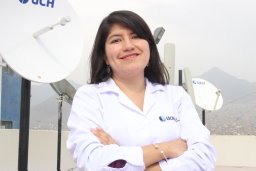 Natalia Indira Vargas-Cuentas合作论文数Res & Dev Lab, Univ Peruana Cayetano Heredia55
 Brian Meneses-Claudio合作论文数33
 Witman Alvarado合作论文数20
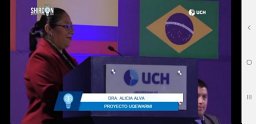 Alicia Alva合作论文数INTI Lab, Univ Ciencias & Humanidades18
 Mirko Zimic合作论文数Laboratorios de Investigación y Desarrollo, Universidad Peruana Cayetano Heredia12
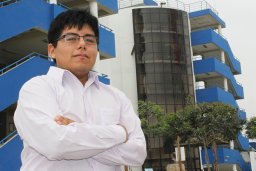 Enrique Lee Huamaní合作论文数Image Proc Res Lab, Univ Ciencias & Humanidades7
 Franklin Paul Barrientos Porras合作论文数Res & Dev Lab, Univ Peruana Cayetano Heredia6
 Sebastian Ramos Cosi合作论文数6
 Robert H. Gilman合作论文数Department of Molecular Microbiology and Immunology, Bloomberg School of Public Health, Johns Hopkins University;Department of International Health, Bloomberg School of Public Health, Johns Hopkins University;Center for Global Health, Johns Hopkins University6
 Fiorella Flores Medina合作论文数5Guillermo Wenceslao Zarate Segura合作论文数5
 Patricia Condori合作论文数5Victor Romero-Alva合作论文数4
 Kevin jairo Rodriguez Villarreal合作论文数4David Llulluy合作论文数4Laberiano Andrade-Arenas合作论文数4Wilber J. Diaz-Sotelo合作论文数4
 Carlos Sotomayor-Beltran合作论文数4
 Monica Pajuelo合作论文数4
 Malena Correa合作论文数3Ronald Barrientos合作论文数3Cynthia Anticona合作论文数3
 Gabriel Tirado-Mendoza合作论文数3Omar Freddy Chamorro Atalaya合作论文数National Technological University of Lima Sur3
 Leonardo Solis-Vasquez合作论文数Embedded Systems and Applications Group, Technische Universität Darmstadt, Darmstadt, Germany3
 Daniel Hidalgo合作论文数3
 Roberto J. Lavarello合作论文数3
 Richard A Oberhelman合作论文数3
 Benjamin Castaneda合作论文数Department of Electrical and Computer Engineering, Rochester Center for Biomedical Ultrasound;University of Rochester;Rochester Center for Biomedical Ultrasound and Department of Electrical and Computer Engineering, University of Rochester3
 Mihai Datcu合作论文数German Aerospace Center DLR3Antony E. Quiroz-Olivares合作论文数2Eliseo Chávez-Alarcon合作论文数2krista asaldealvarez合作论文数2willian a perez oviedo合作论文数2Antony Ciriaco-Susanibar合作论文数2
 Alejandro Boza-Chua合作论文数2
 Angel F. Navarro合作论文数2
 Bryan Saldivar Espinoza合作论文数2
 Mariela Vargas合作论文数Faculty of Health Sciences, Universidad de León2
 Paul Palacios合作论文数Space Physics & Engineering Division, Bioastronautics and Space Mechatronics Research Group, Lima, PERU2
 José Cornejo合作论文数Facultad de Ingeniería2Miguel Fernandez合作论文数2Sassan Noazin合作论文数International Health, Bloomberg School of Public Health, Johns Hopkins University2
 William Checkley合作论文数Department of Otolaryngology-Head and Neck Surgery, School of Medicine, Johns Hopkins University2Yreneo Cruz-Telada合作论文数1Fernando Alvarado Rojas合作论文数1Mario I. Salguedo-Bohorquez合作论文数1Juan Vargas-Machuca合作论文数1Mariana Torres-Viso合作论文数1




