Fused filament fabrication (commonly known as “3D printing”) has exciting potential for producing ferroelectrets with high piezoelectric $\boldsymbol{d}_{\mathbf{3 3}}$ coefficients. However, many 3Dprintable thermoplastic polymers are not capable of storing space charge for extended periods, which degrades the material performance with time. In this study, we sandwich a 3D-printed thermoplastic polyurethane (TPU) support structure between two fluoroethylene propylene (FEP) films for enhanced charge retention. Charged samples exhibit a remanent polarization of up to $\mathbf{0. 6 ~ m C} / \mathbf{m}^{\mathbf{2}}$ and have high $\boldsymbol{d}_{\mathbf{3 3}}$ coefficients of up to $\mathbf{7 5 5} \boldsymbol{\pm} \mathbf{1 7} \mathbf{~ p C} / \mathbf{N}$ at a bias force of 2.16 N.
Nowadays, the demand for advanced functional materials in transducer technology is growing rapidly. Piezoelectric materials transform mechanical variables (displacement or force) into electrical signals (charge or voltage) and vice versa. They are interesting from both fundamental and application points of view. Ferrooelectrets (also called piezoelectrets) are a relatively young group of piezo-, pyro- and ferroelectric materials. They exhibit ferroic behavior phenomenologically undistinguishable from that of traditional ferroelectrics, although the materials per se are essentially non-polar space-charge electrets with artificial macroscopic dipoles (i.e., internally charged cavities). A lot of work has been done on ferroelectrets and their applications up to now. In this paper, we review and discuss mostly the work done at University of Potsdam on the research and development of ferroelectrets. We will, however, also mention important results from other teams, and prospect the challenges and future progress trend of the field of ferroelectret research.
Using fused filament fabrication, ferroelectrets (i.e. polymer films with internal air-filled voids) can be manufactured from a variety of materials and with custom designed structures for optimum mechanical compliance and piezoelectric activity. In this study, we investigated a vertically oriented “double-wave” design, which results in structures with very low mechanical stiffness, and hence high piezoelectric $d_{33}$ coefficients. The structures were designed in an open-source parametric modeler and 3D-printed from polylactic acid (PLA) and polypropylene (PP). The total thickness is approx. $300 \mu\mathrm{m}$ and channel void heights are around $100 \mu \mathrm{m}$ . When charged in direct contact, the ferroelectret samples exhibited a remanent polarization of $0.25 \text{mC}/\mathrm{m}^{2}$ (PP) and $0.12 \text{mC}/\mathrm{m}^{2}$ (PP), respectively. Piezoelectric $d_{33}$ coefficients of up to $800 \text{pC}/\mathrm{N}$ were observed, but showed a strong decrease when static bias forces in excess of 1 N were applied to the 16 mm diameter electrodes. This behavior is likely caused by a stiffening of the double-wave structure as more compressive stress is applied. FEM calculations showed a very low effective Young's modulus of 125 kPa.
This Special Issue of IEEE Transactions on Dielectrics and Electrical Insulations collects a total of 23 invited and contributed articles from eminent scientists and engineers in the field of electrets and related phenomena. These articles have been substantially extended from their contributions presented at the 17th International Symposium on Electrets (ISE) held at the Bernal Institute of the University of Limerick, Ireland between 2–6 September 2019. The conference was sponsored by IEEE Dielectrics and Electrical Insulation Society and supported by European Materials Characterisation Council (EMCC). Analog Devices International provided financial sponsorship.
We present a low-cost, dual-probe position sensor in a mechanical resonance experiment suitable for deployment in large lab courses with multiple stations. The motion of the two ends of a driven, damped spring oscillator is recorded with US-100 ultrasonic distance sensors and ESP8266 microcontrollers. Sensor lag is compensated via a modified Savitzky-Golay filter. Data is downloaded to a computer via Wi-Fi in a format suitable for analysis in Logger Pro. Due to the simple and fast data acquisition process, students can gather sufficient data to plot curves of the amplitude and phase lag as a function of driving frequency.
Ferroelectrets (i. e. voided, soft polymer composites with internal bipolar space charges) were prepared by laminating porous spacers between polyproplyene films in gas mixtures containing sulfur hexafluoride (SF <sub xmlns:mml="http://www.w3.org/1998/Math/MathML" xmlns:xlink="http://www.w3.org/1999/xlink">6</sub> ), a gas of higher electric breakdown strength than air. This has the potential to reduce “back discharges”, which occur when the electric field created by the deposited space charges exceeds the breakdown strength of the gas in the void. As a result, significantly higher piezoelectric activity is expected. As shown by hysteresis curves and nonlinear capacitance dilatometry measurements, the SF <sub xmlns:mml="http://www.w3.org/1998/Math/MathML" xmlns:xlink="http://www.w3.org/1999/xlink">6</sub> -filled samples do indeed exhibit an increased polarization and a 2-3× enhancement in their d <sub xmlns:mml="http://www.w3.org/1998/Math/MathML" xmlns:xlink="http://www.w3.org/1999/xlink">33</sub> coefficients.
Measuring the distribution of electrical polarization and space charge with focused thermal pulses or waves is one of the basic characterization techniques in electret research. However, in multi-layer systems, reconstructing the polarization from the measured transient current requires a multi-physics approach using finite element analysis. This method is feasible for investigating a range of geometries, including samples with buried light-absorbing electrodes. The present work shows the modeling of the transient thermal-pulse current for a metal-polymer-metal sample, heated on one side with a 15~μs Gaussian-shaped laser beam.
Ferroelectrets, i.e., soft materials with electric charges deposited on the surfaces of internal voids, are well known for their potential in transducer applications and energy harvesting. Due to their regular geometry and optical transparency, tubular channel ferroelectrets (manufactured by laminating polymer films around a polytetrafluoroethylene template which is later removed) are well-suited for studying the process of charge deposition. Understanding how space charges are formed on the internal surfaces will lead to improvements in the charge density and in the piezoelectric performance of these films. In this work, the inception voltage for dielectric barrier discharges (and hence the onset of charge deposition) was measured using two independent techniques, fluorescence imaging and the laser intensity modulation method (LIMM). The results (around 1.4–1.7 kV, depending on the void height) are in agreement within ±50 V. The internal electric field distribution was calculated using finite element analysis (FEA). Combined with Paschen's law, these calculations explained the experimentally observed discharge patterns, starting from the channel edges in thick samples, but glowing more uniformly in films with void heights of 50 μm or less. A time-dependent FEA simulation of the LIMM measurement reproduced the observed thermoelastic resonances and their effect on the LIMM signal, and explained its seemingly erratic behavior. This approach has great potential for analyzing LIMM and thermal pulse data obtained in inhomogeneous materials.
Sweat-based physiological monitoring has been intensively explored in the last decade with the hopes of developing real-time hydration monitoring devices. Although the content of sweat (electrolytes, lactate, urea, etc.) provides significant information about the physiology, it is also very important to know the rate of sweat at the time of sweat content measurements because the sweat rate is known to alter the concentrations of sweat compounds. We developed a calorimetric based flow rate sensor using PolydimethylSiloxane that is suitable for sweat rate applications. Our simple approach on using temperature-based flow rate detection can easily be adapted to multiple sweat collection and analysis devices. Moreover, we have developed a 3D finite element analysis model of the device using COMSOL Multiphysics™ and verified the flow rate measurements. The experiment investigated flow rate values from 0.3 μl/min up to 2.1 ml/min, which covers the human sweat rate range (0.5 μl/min–10 μl/min). The 3D model simulations and analytical model calculations covered an even wider range in order to understand the main physical mechanisms of the device. With a verified 3D model, different environmental heat conditions could be further studied to shed light on the physiology of the sweat rate.
The charge deposition process in tubular channel ferroelectrets, (i. e. voided FEP polymer films with internal electric charges) has been studied using a combination of near-UV fluorescence light emission imaging and non-destructive space charge measurements with the laser intensity modulation method (LIMM). By galvanically isolating the diode laser from the detection circuit, the LIMM sensitivity was improved by nearly one order of magnitude. It was shown that the onset of light emission as a function of charging voltage precisely correlates with the deposition of space charge. This confirms previous studies where the presence of space charge was indirectly detected from the sample's piezoelectric properties.
Thermo-physical properties, such as thermal conductivity, thermal diffusivity and specific heat are important quantities that are needed to interpret and characterize thermoplastic materials. Such characterization is necessary for many applications, ranging from aerospace engineering to food packaging, electrical and electronic industry and medical science. In this work, the thermal diffusivity of commercially available polymeric films is measured in the thickness direction at room temperature using thermal wave method. The results obtained with this method are in good agreement with theoretical and experimental values.
A new organic–inorganic ferroelectric hybrid capacitor designed by uniformly incorporating monodisperse 15 nm ferroelectric BaTiO3 nanocubes into non-polar polymer blends of poly(methyl methacrylate) (PMMA) and acrylonitrile-butadiene-styrene (ABS) terpolymer is described.
 Reimund Gerhard合作论文数Soft Transducer Materials and Systems, Universitiy of Potsdam41
 Werner Wirges合作论文数University of Potsdam Applied Condensed-Matter Physics19
 Xunlin Qiu (邱勋林)合作论文数School of Mechanical and Power Engineering, East China University of Science and Technology10
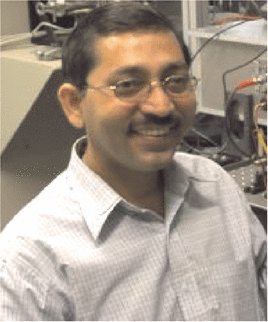 Rajeev Singh合作论文数9
 C. Bradley Moore合作论文数College of Chemistry, University of California, Berkeley8
 Fc Gonzalez合作论文数7
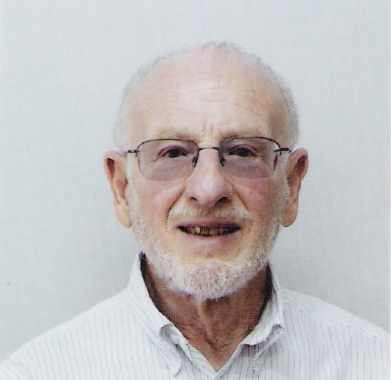 Sidney Lang合作论文数Ben Gurion University7
 Rosaura Flores Suarez合作论文数6
 Tolga Kaya合作论文数5
 Scott R. Harris合作论文数Dept Hist Polit Sci Philosophy & Amer Studies, Spartanburg, SC USA5
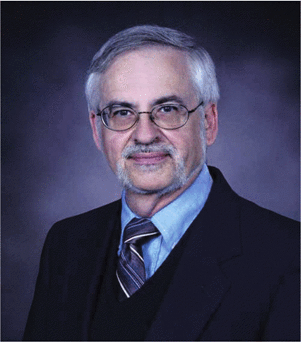 Daniel Schweickart合作论文数4
 Saurav Aryal合作论文数Dept. of Phys., Central Michigan Univ.;c;Dept. of Phys., Central Michigan Univ.4
 Mcdermid, B.合作论文数4Leela Rakesh合作论文数4
 Michael Wegener合作论文数Centre for Advanced Spatial Analysis, University College London;Spiekermann & Wegener4c r vidal合作论文数4
 l f santos合作论文数3
 Ruy Alberto Pisani Altafim合作论文数3
 Laurent Berquez合作论文数3
 Mellinger, O.合作论文数3Lakshmi Meena Ganesan合作论文数3
 Congduc Pham合作论文数university of Pau
LIUPPA laboratory3Michael V. Ashikhmin合作论文数3
Congduc Pham合作论文数university of Pau
LIUPPA laboratory3Michael V. Ashikhmin合作论文数3 Anca Petre合作论文数3Forrest Wright合作论文数2
 Mahmoud Alomari合作论文数2shuang peng合作论文数2wenjun du合作论文数2William D. Joysey合作论文数2
 N. Nepal合作论文数Dept Phys, Cent Michigan Univ2
 Qiming Zhang合作论文数School of Electrical Engineering and Computer Science, College of Engineering, The Pennsylvania State University;Department of Materials Science and Engineering, College of Earth and Mineral Sciences, The Pennsylvania State University;Nascent Devices, Inc.2
 Basso, H.C.合作论文数2Parizi Saman Salemizadeh合作论文数2
 Sheshakamal Jayaram合作论文数Department of Electrical and Computer Engineering, University of Waterloo2Ireneusz Glowacki合作论文数2
 Gabriel Caruntu合作论文数Department of Chemistry and Advanced Materials Research Institute, University of New Orleans2
 Davide Fabiani合作论文数Department of Electrical, Electronics and Information Engineering, University of Bologna2
 R. M. Faria合作论文数2IJ KALINOVSKI合作论文数1Bob Howell合作论文数1Jc Crane合作论文数1Stanley Hirschi合作论文数1Rj Fleming合作论文数1Pa Wright合作论文数1
 Anja Mueller合作论文数1Resi Zarb合作论文数1samuel e snelgrove合作论文数1




