To satisfy the stringent requirements of emerging broadband services in home networks, a novel Centralized optical and Wi-Fi Access Network (C-WAN) has been proposed within the context of Fiber-to-The-Room (FTTR). In C-WAN, centralized management and control of multiple Wi-Fi access points (APs) deployed in each room are facilitated by relocating portions of Wi-Fi protocols from the APs to a centralized entity. This approach significantly enhances network performance, including throughput and roaming capabilities. However, C-WAN also imposes strict demands on the fronthaul networks, specifically requiring high bandwidth and ultra-low latency. In this context, orthogonal frequency division multiplexing passive optical network (OFDM-PON) emerges as a promising solution to support the C-WAN fronthaul network by allocating dedicated subcarriers to each AP. In C-WAN over OFDM-PON, Wi-Fi stations still contend for access to the wireless channel based on existing Wi-Fi protocols, which may result in prolonged wireless access delays. Consequently, the Quality of Service (QoS) requirements for time-sensitive (TS) services may not be met. Additionally, the variation in maximum Wi-Fi throughput due to the contention-based access mechanism presents a significant challenge for the efficient allocation of optical network resources under stringent delay constraints. To address these issues, we propose a priority-based access mechanism that assigns higher priority to TS services for accessing Wi-Fi channels and obtaining wireless resources. Building on this mechanism, we further develop a Wi-Fi throughput prediction model, which is used to optimize the allocation of optical network resources. Simulation results demonstrate that the proposed scheme can effectively reduce wireless access delay and jitter for TS services, meeting their performance requirements while also improving the utilization of optical network resources.
In optical multi-band networks, low-margin service operation is critical to enable efficient resource management and meet rapid traffic growth. In operational networks, to mitigate service disruption due to physical-layer impairments and hardware imperfections, operators employ conservative link margins, but excessive margination leads to significant resource over-provisioning. Hence, we propose new, to our knowledge, provisioning strategies that exploit the flexible requirements of applications, e.g., in terms of delayability and compressibility, to compensate for the physical-layer impairments arising in $\text{C} +\text{L}$-band networks. By exploiting these flexibilities, operators can mitigate service disruption, accommodate more traffic under a reduced margin, and significantly lower operational cost.
Space division multiplexing (SDM) and spatial super-channel (Spa SCh) technology offer scalable solutions to meet the increasing capacity demands in optical networks. This study focuses on multi-fiber optical networks integrated with the innovative Spa SCh technology, which creates different granularities of Spa SChs by spatially combining the same spectrum across multiple fibers, known as fiber-SDM (FSDM). Most existing studies have concentrated on provisioning dynamic or static lightpath demands in FSDM networks. However, for several applications in real-world networks, scheduled lightpath demands—where setup and teardown times are pre-determined—are more common. To address this, we consider the provisioning of scheduled lightpath demands in FSDM networks and aim to solve the routing, fiber, spectrum, and time-slot assignment (RFSTA) problem for these demands. We propose two integer linear programming (ILP) models: one optimizing only the spectrum resource utilization (SRU) and the other jointly optimizing both SRU and capital expenditure (CAPEX). In addition, we develop several efficient heuristic algorithms for large-scale optical networks, based on the concepts of the spatial spectrum window (SSW), SSW plane, and time-slot window (TW). Furthermore, an evolutionary joint optimization strategy is introduced to explore optimal Spa SCh configurations, aiming to jointly optimize network SRU and CAPEX. Simulation results demonstrate that the proposed algorithms closely match the performance of ILP models in small networks. Among the heuristic approaches, the adaptive least-load algorithm performs best under an optimal Spa SCh configuration, which bundles half of the fibers to form link fiber bundles.
We present our latest development and experimental validation of carrier cooperative recovery for enhancing the resilience of optical packet transport networks. Experimental results prove that in case of resource crunch caused by, e.g., traffic congestion, failures, man-made/natural disasters, etc., swift and low-cost recovery can be achieved by exploiting the interconnection capability among carriers, which demonstrates a novel use case of multi-carrier interconnection technology.
We propose a privacy-preserving strategy based on federated learning to localize soft failures in multi-carrier optical networks using a self-supervised approach on unlabeled data. Evaluations conducted on data from a testbed demonstrate the effectiveness of the proposed strategy.
The networking industry is offering new services leveraging recent technological advances in connectivity, storage, and computing such as mobile communications and edge computing. In this regard, extended reality, a term encompassing virtual reality, augmented reality, and mixed reality, can provide unprecedented user experience and pioneering service opportunities such as: live concerts, sports, and other events; interactive gaming and entertainment; immersive education, training, and demos. These services require high-bandwidth, low-latency, and reliable connections, and are supported by next-generation ultra-reliable and low-latency communications in the vision of 6G mobile communication systems. In this work, we devise a novel scheme, called backup from different data centers with multicast and adaptive bandwidth provisioning, to admit reliable, low-latency, and high-bandwidth extended reality live streams in next-generation networks. We consider network services where contents are non-cacheable and investigate how backup services can be offered by different data centers with multicast and adaptive bandwidth provisioning. Our proposed service-provisioning scheme provides protection not only against link failures in the physical network but also against computing and storage failures in data centers. We develop scalable algorithms for the service-provisioning scheme and evaluate their performance on various complex network instances in a dynamic environment. Numerical results show that, compared to conventional service-provisioning schemes such as those seeking backup services from the same data center, our proposed service-provisioning scheme efficiently utilizes network resources, ensures higher reliability, and guarantees low latency; hence, it is highly suitable for extended reality live streams.
Ensuring fast and efficient cloud-service restoration after a disaster is critical, yet it is hindered by resource competition and confidentiality concerns among stakeholders, such as network carriers and Datacenter providers (DCPs). To address this, we propose a novel centralized cooperation model led by a neutral entity called Provider Neutral Exchange (PNE). We devise a multi-objective Integer Linear Programming (ILP) optimization model to be executed by PNE to maximize restoration of cloud services requested by the DCPs, based on resource availability of the carriers. The model also tries to minimize restoration time and cost while prioritizing critical connections. Results across various disaster scenarios demonstrate that our approach significantly enhances cloud-service restoration compared to heuristic strategies.
To enhance the resilience of network-cloud ecosystems, we establish a data governance framework for sharing optical testbed data across organizations and fostering machine learning research of optical networks. We further introduce multientity cooperation for efficient network-cloud recovery with open and policy-based information sharing among entities.
This paper explores the joint impact of two capacity enhancement schemes in optical backbone networks: multi-band expansion from C+L to C+L+S bands and varying 3R regeneration (no, selective, and full). Using a pay-as-you-grow batch upgrade framework that considers deferral benefits, we evaluate their interaction. In the short-haul BT-UK network, S-band upgrade consistently improves throughput and cost efficiency, with the greatest economic gain with no regeneration. In the long-haul USNET network, S-band upgrade reduces throughput because K-least-loaded routing does not consider path distance, yielding low-quality lightpaths with high blocking probability. Thus, C+L bands with full regeneration are more cost-effective.
This paper proposes a preemptive downlink scheduling method for fiber-to-the-room (FTTR) networks that optimizes frame aggregation and leverages Wi-Fi 8’s channel preemption to coordinate multi-priority traffic and reduce delay. Simulation results show that the adoption of the preemptive algorithm reduces the average end-to-end (E2E) delay of video (VI) traffic by 5.89 ms (62%), voice (VO) traffic by 0.59 ms (12%), and best effort (BE) traffic by 9.6 ms (13%). With FTTR centralized control scheduling, the average E2E delay of VI traffic is further reduced by 0.6 ms (37%), and the delay of BE traffic is decreased by around 6.8 ms (45%).
In the post-pandemic era, global working patterns have been reshaped, and the demand for online network services has increased significantly. Therefore, cross-data-center content migration has become a relevant problem to address, leading to higher attention in data backup/recovery planning. Beyond traditional pre-disaster content redundancy approaches, this work focuses on the challenge of rapid post-disaster content evacuation under the threat of cascading failures. In fact, due to the interdependence of data centers (DCs), inter-DC optical networks, and power grid networks, disasters may have a domino effect on these infrastructures, with their impact gradually expanding over time and space. In this paper, we propose two trajectory models that capture the dynamic evolution of cascading failures, and we propose a trajectory-based content evacuation (TCE) strategy that considers the spatiotemporal evolution of cascading failures to minimize content loss. Numerical results show that, when each DC needs to evacuate about 200 TB of massive content, TCE can reduce content loss by up to 25% compared to baseline strategies.
In network-cloud ecosystems, large-scale failures affecting network carrier and datacenter (DC) infrastructures can severely disrupt cloud services. Post-disaster cloud service restoration requires cooperation among carriers and DC providers (DCPs) to minimize downtime. Such cooperation is challenging due to proprietary and regulatory policies, which limit access to confidential information (detailed topology, resource availability, etc.). Accordingly, we introduce a third-party entity, a provider-neutral exchange, which enables cooperation by sharing abstracted information. We formulate an optimization problem for DCP–carrier cooperation to maximize service restoration while minimizing restoration time and cost. We propose a scalable heuristic, demonstrating significant improvement in restoration efficiency with different topologies and failure scenarios.
In network-cloud ecosystems, cooperation among different entities, for example, network carriers and datacenter providers (DCPs), is crucial to enhance resiliency, especially during large-scale failures or congestion. However, such cooperation is constrained by limited visibility of confidential information, for example, network topology, resource availability, and so on, of different entities owing to proprietary and regulatory policies. To facilitate cooperation, we present and discuss the role of a third-party entity, called provider neutral exchange (PNE), which acts as a broker/mediator and enables cooperation among multiple entities by sharing abstracted (instead of detailed) information of individual entities. We design novel cooperation strategies for post-disaster service restoration and categorize them as: multi-carrier cooperation and DCP-carrier cooperation. Results under different failure scenarios show benefits of cooperation in terms of service-restoration efficiency, restoration time, and restoration cost.
Cooperation among telecom carriers and datacenter providers (DCPs) is essential to ensure the resiliency of network-cloud ecosystems. To enable efficient cooperative recovery in case of traffic congestion or network failures, we introduce a novel, to our knowledge, multi-entity cooperation platform (MCP) for implementing cooperative recovery planning. The MCP is built over distributed ledger technology (DLT), which ensures decentralized and tamper-proof information exchange among stakeholders to achieve open and fair cooperation. We experimentally demonstrate a proof-of-concept DLT-based MCP on a testbed. We showcase a DCP–carrier cooperative planning process and the corresponding recovery in the data-plane, showing the possibility of multi-entity cooperation for quick recovery of network-cloud ecosystems.
Network operators tend to migrate multiband optical networks to wider bands by batch upgrade (i.e., with a pay-as-you-grow strategy affecting only a subset of links at a time). However, temporary interruptions of services routed along the fibers that require equipment upgrades can create significant service blocking, which can only be avoided with interim lightpath re-allocation during the upgrade period. To seamlessly upgrade the network from C+L to C+L+S bands, we propose a batch upgrade strategy to reduce the upgrade cost, and a band-selective re-allocation method during the upgrade period to minimize blocking probability (BP). Simulations on the US-24 topology demonstrate up to nearly 50% cost reduction and BP as low as 0.3%.
Efficient network management in optical backbone networks is essential to manage continuous traffic growth. To accommodate this growth, network operators need to upgrade their infrastructure at appropriate times. Given the cost constraint of upgrading the entire network at once, upgrading the network periodically in multiple batches is a more pragmatic approach to meet the growing demands. While multi-period, batch-upgrade strategies to increase network capacity from the conventional C band to C+L bands have been proposed, they did not consider so far the possibility to re-provision existing traffic. In this work, we investigate how to selectively re-provision connections from C band to L band during a batch upgrade. This is to ensure greater availability of C-band resources which can help to delay network upgrade and hence reduce upgrade cost, while limiting the number of disrupted connections in the network. This study proposes two re-provisioning strategies, namely, Budget-Based (BB) and Margin-Aware (MA) re-provisioning, which rely on the Quality of Transmission (QoT) of lightpaths. These strategies leverage the knowledge of Generalized Signal-to-Noise Ratio (GSNR) to choose which lightpaths to re-provision. We compare these strategies with a baseline distance-based strategy that uses path length to select and re-provision lightpaths. We also incorporate Machine Learning techniques for QoT estimation of lightpaths to reduce the computational time required for optical-path feasibility check. Numerical results show that, compared to distance-based strategy, BB and MA strategies reduce disruption by about 22% and 27%, respectively, in representative network topologies.
The photoresponse properties of nanocrystalline tin dioxide (SnO2) thin films with different grain sizes were systematically studied for fabricating transparent oxide-based ultraviolet (UV) photodetector. SnO2 nanoparticles were synthesized using the coprecipitation method and calcination temperatures were varied (400 degrees C-800 degrees C) to prepare SnO2 particles of different grain sizes ( 8 nm- 42 nm). Subsequently, thin films of SnO2 nanoparticles were deposited using the spin-coating technique to fabricate UV photodetectors. The optical transparency of SnO2 thin films was improved by 10 % with the increasing grain size of the sample, while the band gap of the films was found to vary from 3.718 eV to 3.761 eV. The responsivity (R lambda) and the external quantum efficiency (EQE) of SnO2 based photodetector were noticeably large (R lambda= 200 mA/W and EQE = 90 %) in the UV range for devices with the smallest grain sizes ( 8 nm). Moreover, the same device exhibited a much faster photoresponse time ( 2 s) and a large photo-to-dark current ratio ( 103). The structural and spectroscopic studies on the SnO2 thin films revealed that the microscopic parameters like grain size, grain boundary potential, and surface oxygen vacancies play significant roles in modulating the optical properties and photoresponse of the nanocrystalline SnO2 thin films.
Large-scale carrier networks are fundamental ICT infrastructures that support future 5G/6G services, and their resilience is a primary societal concern. Differently from single-carrier networks (in which one carrier owns multiple networks), in multi-carrier network ecosystems (in which the networks in the fields are operated by different carriers), cooperation among such different carriers is crucial to achieve resilience against large-scale failures. However, such cooperation is challenging since carriers may not disclose confidential information, e.g., detailed resource availability. In this study, we investigate how to perform carrier cooperative recovery in the case of large-scale failures/disasters. We propose two-stage carrier-carrier cooperative recovery planning by incorporating a coordinated scheduling for faster recovery. Through numerical evaluation, we confirm the potential benefit of carrier cooperation in terms of both recovery time and recovery cost reduction.
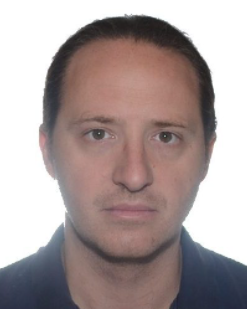 Massimo Tornatore合作论文数Department of Computer Science, College of Engineering, University of California, Davis;Department of Electronics, Information and Bioengineering, Politecnico di Milano206
 Dipak Ghosal合作论文数Department of Computer Science, University of California, Davis;Lawrence Berkeley National Laboratory47
 Sifat Ferdousi合作论文数42
 Jing Zhang合作论文数31
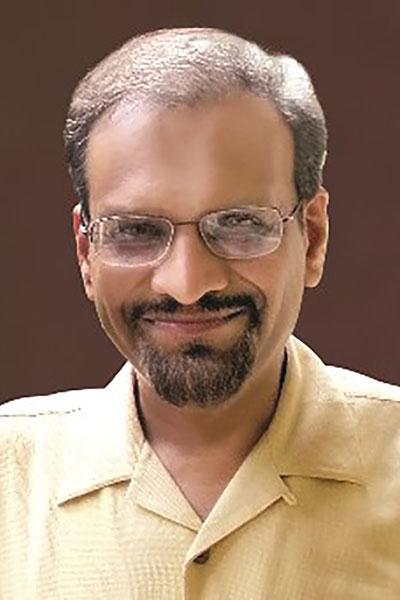 Sudhir Dixit合作论文数University of Oulu;Basic Internet Foundation;Trustyfi30
 Pulak Chowdhury合作论文数University of California, Davis30
 Keyao Zhu合作论文数Research and Innovation, Alcatel Shanghai Bell, Shanghai, China.29
 Ferhat Dikbiyik合作论文数Electrical and Computer Engineering Department, University of California, Davis29M. Farhan Habib合作论文数29
 Sugang Xu合作论文数28
 Yoshinari Awaji合作论文数28Hui Zang合作论文数26
 Yusuke Hirota合作论文数NVIDIA Research Taiwan26
 Charles U. Martel合作论文数Department of Computer Science, University of California, Davis24
 Suman Sarkar合作论文数BSIP, Lucknow, India22
 Gangxiang Shen (沈纲祥)合作论文数School of Electronic and Information Engineering, Soochow University21
 Amitabha Banerjee合作论文数Department of Computer Science;University of California , Davis;Department of Computer Science, University of California , Davis21
 Xinbo Wang合作论文数University of California Davis;c;University of California Davis20
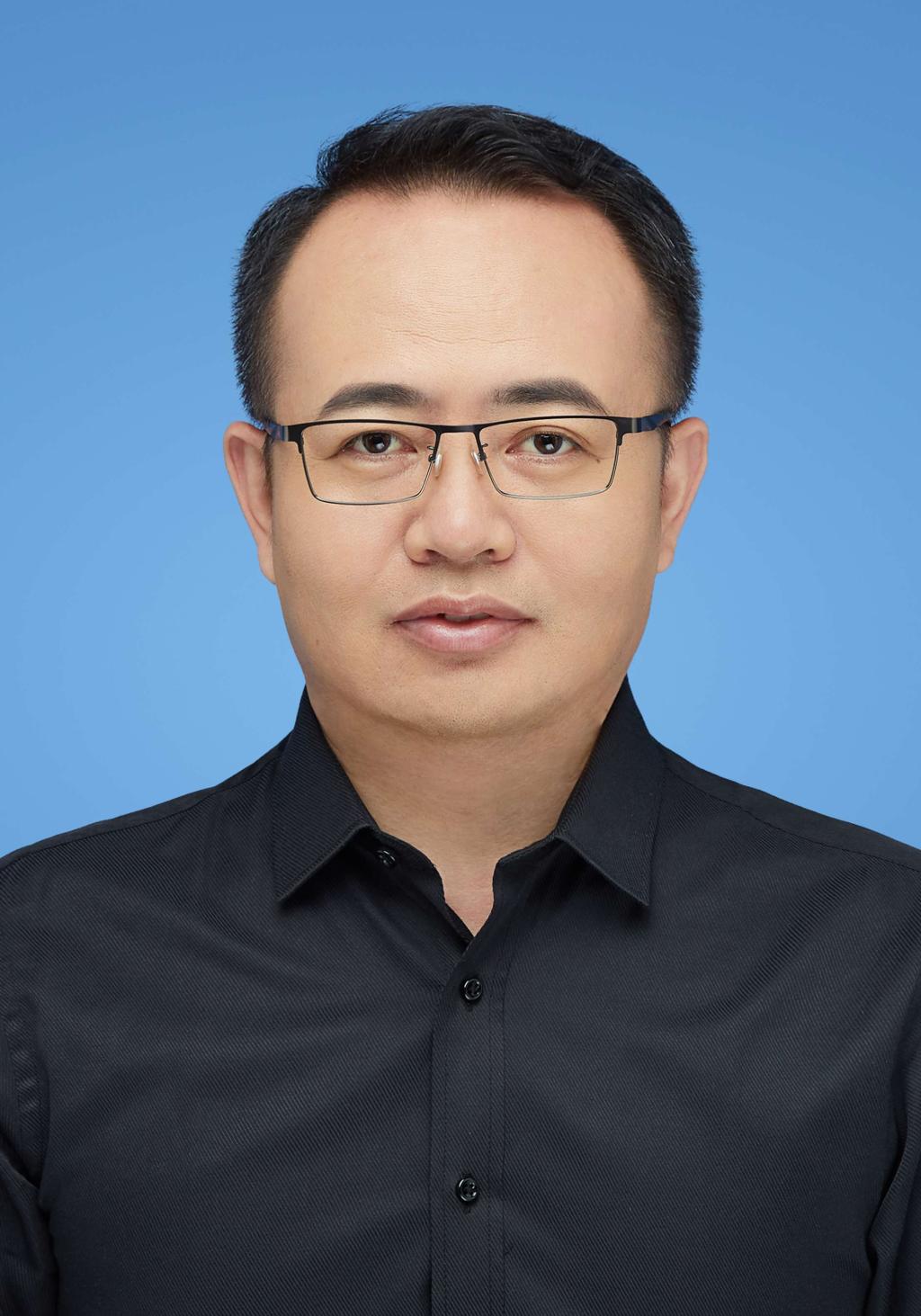 Yongli Zhao (赵永利)合作论文数School of Electronic Engineering, Beijing University of Posts and Telecommunications20
 Marwan Batayneh合作论文数University of California, Davis19
 Glen Kramer合作论文数Teknovus, Inc.19
 Abu S. Reaz合作论文数Telecommunications and Networks Research Lab;School of Computer Science;University of Oklahoma;School of Computer Science, University of Oklahoma19
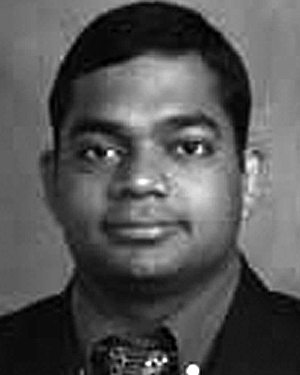 Narendra K. Singhal合作论文数18
 Smita Rai合作论文数17Han Hyub Lee合作论文数16
 Lei Song合作论文数16
 Jonathan Paul Heritage合作论文数Electrical and Computer Engineering, College of Engineering, University of California, Davis16
 Shun Yao (姚舜)合作论文数16
 Sabidur Rahman合作论文数Sonoma State University15Masaki Shiraiwa合作论文数15
 Cicek Cavdar合作论文数Division of Communication Systems, Department of Computer Science, School of Electrical Engineering and Computer Science, KTH Royal Institute of Technology15
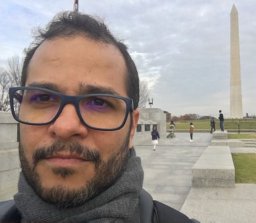 Gustavo Bittencourt Figueiredo合作论文数Instituto de Computac;Universidade Estadual de Campinas;Instituto de Computac, Universidade Estadual de Campinas15
 Achille Pattavina合作论文数Dipartimento di Elettronica, Informazione e Bioingegneria, Politecnico di Milano14
 S. Sedef Savas合作论文数College of Engineering, Koç University14
 Shuqiang Zhang合作论文数Meta14
 Debasish Datta合作论文数Department of Electronics and Electrical Communication Engineering, Indian Institute of Technology14Ming Xia合作论文数13
 Soomyung Park合作论文数13
 Avishek Nag合作论文数Beijing Dublin International College, Beijing University of Technology13
 Jie Zhang (张杰)合作论文数School of Integrated Circuit, Beijing University of Posts and Telecommunications13
 Saigopal Thota合作论文数13
 Canhui Ou合作论文数One01 Capital LP13
 Dragos Andrei合作论文数Department of Computer Science;University of California , Davis;Department of Computer Science, University of California , Davis13
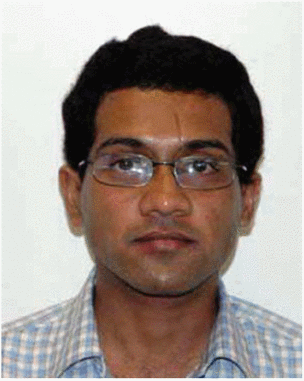 Vishwanath Ramamurthi合作论文数Univ Calif Davis13
 Byrav Ramamurthy合作论文数Department of Computer Science and Engineering, University of Nebraska, Lincoln12Laxman H Sahasrabuddhe合作论文数12
 Partha Bhaumik合作论文数Department of Computer Science and Engineering, Jadavpur University12Moumita Mukherjee合作论文数Department of Materials Science, Indian Association for the Cultivation of Science11Tanjila Ahmed合作论文数11




