Indoor localization in GNSS-denied environments remains a significant challenge due to the low sampling frequency and high variability of wireless signal measurements. This paper presents a wireless communication-based indoor localization method that integrates Wi-Fi received signal strength indication (RSSI) measurements with optical initialization and inertial sensor fusion. The proposed approach eliminates the need for labor-intensive fingerprinting and specialized infrastructure by leveraging existing Wi-Fi networks. Optical pose estimation using ArUco markers provides accurate initial position and orientation, enabling alignment between sensor coordinate systems and reducing inertial drift. During tracking, inertial measurements compensate for motion between sparse Wi-Fi observations by virtually translating historical RSSI samples, allowing statistically consistent averaging and improved distance estimation. A simplified factor graph framework is employed to fuse heterogeneous measurements while maintaining computational efficiency suitable for real-time operation on mobile devices. Experimental validation using a robot-based ground-truth reference system demonstrates sub-meter localization accuracy with an average positioning error of approximately 0.40 m. The proposed method provides a low-cost and scalable solution for indoor positioning and navigation applications such as access-controlled environments, exhibitions, and large public venues.
We present an algorithm for solving the unification problem in the description logic ℱℒ_. This logic extends ℱℒ_0 with the bottom constructor, and thus supports conjunction, value restrictions, top and bottom constructors. Unification of concepts can be a useful tool for ontology maintenance; however, little is known about unification even in small, restricted description logics. The unification problem has been solved only for ℱℒ_0 and ℰℒ. This paper contributes to the ongoing effort to extend these results to richer logics. Our algorithm runs in exponential time with respect to the size of the problem.
Description Logics are a formalism used in the knowledge representation, where the knowledge is captured in the form of concepts constructed in a controlled way from a restricted vocabulary. This allows one to test effectively for consistency of and the subsumption between the concepts. Unification of concepts may likewise become a useful tool in analysing the relations between concepts. The unification problem has been solved for the description logics $\mathcal{FL}_0$ and $\mathcal{EL}$. These small logics do not provide any means to express negation. Here we show an algorithm solving unification in $\mathcal{FL}_\bot$, the logic that extends $\mathcal{FL}_0$ with the bottom concept. Bottom allows one to express that two concepts are disjoint. Our algorithm runs in exponential time, with respect to the size of the problem.
FILO is a java application that decides unifiability for a unification problem formulated in the description logic $\mathcal{FL}_0$. If the problem is unifiable, it presents a user with an example of a solution. FILO joins a family of similar applications like UEL solving unification problems in the description logic $\mathcal{EL}$, $\mathcal{FL}_0$wer a subsumption decider for $\mathcal{FL}_0$ with TBox, CEL and JCEL subsumption deciders for $\mathcal{EL}$ with TBox, and others. These systems play an important role in various knowledge representation reasoning problems.
FILO is a java application that decides unifiability for a unification problem formulated in the description logic ℱℒ_0. If the problem is unifiable, it presents a user with an example of a solution. FILO joins a family of similar applications like UEL solving unification problems in the description logic ℰℒ, ℱℒ_0wer a subsumption decider for ℱℒ_0 with TBox, CEL and JCEL subsumption deciders for ℰℒ with TBox, and others. These systems play an important role in various knowledge representation reasoning problems.
This study investigates the enhancement of localization accuracy through the application of the Kalman filter and LSTM neural network. Experimental results reveal the successful elimination of outliers originating from noise and signal reflections, leading to a improvement from an initial error of 2.33 meters in raw samples to about 0.7 meters with LSTM and Kalman. The proposed method uses an LSTM neural network to fuse data from accelerometer, gyroscope, and ultrawideband 2D position measurements for position estimation. Despite offering comparable results, the Kalman filter sensitivity in selecting covariance matrix parameters is highlighted because minor changes are leading to significant declines in performance The LSTM filter, in contrast, demonstrates resilience to parameter tuning and provides accurate results without requiring specific domain knowledge or equations. However, the LSTM model applicability is limited to systems with accessible training and testing data. In contrast, the Kalman filter adaptability to various navigation problems featuring Gaussian error distributions remains a distinct advantage.
An increasing number of companies move to a touchless user interface, partly because of the pandemic's impact and the restricted rules of using public access objects. The market for Zero User Interface is increasing and industrial implementations are growing and promising. Currently, the knowledge of keeping yourself healthy and clean is essential to prevent the spread of Covid-19 disease. A proposed project – a hand gesture-controlled application to properly guide the user through the handwashing process can increase the overall level of hygiene in public. The solution is realized with a transfer learning method based on EfficientNet Lite models making it possible to run on Android, iOS, embedded Linux devices, and microcontrollers.
Indoor localization systems have become more and more popular. Several technologies are intensively studied with application to high precision object localization in such environments. Ultra-wideband (UWB) is one of the most promising, as it combines relatively low cost and high localization accuracy, especially compared to Beacon or WiFi. Nevertheless, we noticed that the leading UWB systems’ accuracy is far below the values declared in the documentation. To achieve high localization accuracy, low fingerprinting complexity, and tolerance to significant random errors, we propose a Multiple Hypothesis Tracker with Direction Motion Constraint (MHT-MDC) algorithm followed by a transfer learning approach. We perform fingerprinting using a dense grid in a controlled environment to train the neural network. Thanks to transfer learning, full fingerprinting is not necessary to obtain high localization accuracy when the UWB system is deployed in a new localization. We demonstrate that thanks to transfer learning, high localization accuracy can be maintained when only 7% of fingerprinting samples from a new localization are used to update the neural network, which is very important in practical applications. It is also worth noticing that our approach can be easily extended to other localization technologies. This is an extended version of the conference paper published in [1].
This paper investigates static and dynamic localization accuracy of two indoor localization systems using Ultra-wideband (UWB) technology: Pozyx and DecaWave DW1000. We present the results of laboratory research, which demonstrates how those two UWB systems behave in practice. Our research involves static and dynamic tests. A static test was performed in the laboratory using the different relative positions of anchors and the tag. For a dynamic test, we used a robot that was following the EvAAL-based track located between anchors. Our research revealed that both systems perform below our expectations, and the accuracy of both systems is worse than declared by the system manufacturers. The imperfections are especially apparent in the case of dynamic measurements. Therefore, we proposed a set of filters that allow for the improvement of localization accuracy.
In the past decade, there have been significant improvements in image classification thanks to approaches using neural networks. With the widespread availability of free and open-source frameworks for training neural networks, such as Google's TensorFlow, it is now feasible to make use of advanced image classification in novel areas. One such area is the problem of identifying dog breeds from photos. The American Kennel Club currently recognizes 193 distinct breeds-all of which not only look different and have different temperaments, but which may require special care, such as frequent grooming, a specific diet, or a more active lifestyle. Therefore, it is important for dog owners to know their dogs' breeds. The main subject of this paper is the usage of neural networks to provide non-technical users with the means to automatically identify breeds of dogs from their pictures.
This article describes methods for reducing the position measure-ment error of ultra-wideband localization system - DecaWave TREK1000. The static localization accuracy of this system can achieve 10cm. The local-ization algorithm introduced in this paper can improve it up to 1 centimeter. We could achieve such good accuracy, thanks to experiments that were car-ried out in various environmental conditions. This allowed us to identify the nature of the measurement error and design the correct set of filters.
We call a Herbrand model of a set of first-order clauses finite, if each of the predicates in the clauses is interpreted by a finite set of ground terms. We consider first-order clauses with the signature restricted to unary predicate and function symbols and one variable. Deciding the existence of a finite Herbrand model for a set of such clauses is known to be ExpTime-hard even when clauses are restricted to an anti-Horn form. Here we present an ExpTime algorithm to decide if a finite Herbrand model exists in the more general case of arbitrary clauses. Moreover, we describe a way to generate finite Herbrand models, if they exist. Since there can be infinitely many minimal finite Herbrand models, we propose a new notion of acyclic Herbrand models. If there is a finite Herbrand model for a set of restricted clauses, then there are finitely many (at most triple-exponentially many) acyclic Herbrand models. We show how to generate all of them.
Unification in Description Logics (DLs) has been proposed as an inference service that can, for example, be used to detect redundancies in ontologies. For the DL EL, which is used to define several large biomedical ontologies, unification is NP-complete. However, the unification algorithms for EL developed until recently could not deal with ontologies containing general concept inclusions (GCIs). In a series of recent papers we have made some progress towards addressing this problem, but the ontologies the developed unification algorithms can deal with need to satisfy a certain cycle restriction. In the present paper, we follow a different approach. Instead of restricting the input ontologies, we generalize the notion of unifiers to so-called hybrid unifiers. Whereas classical unifiers can be viewed as acyclic TBoxes, hybrid unifiers are cyclic TBoxes, which are interpreted together with the ontology of the input using a hybrid semantics that combines fixpoint and descriptive semantics. We show that hybrid unification in EL is NP-complete and introduce a goal-oriented algorithm for computing hybrid unifiers.
Description Logics (DLs) [BCM+07] are prominent modeling formalisms underlying the Web Ontology Language (OWL). The lightweight DL EL in particular is used to formulate many biomedical ontologies. DLs allow to represent subconcept-superconcept relationships between concepts, e.g., diseases, as well as more complex correspondences. Unification in DLs has been proposed as a non-standard reasoning task to detect redundant concepts in ontologies [BN01, BM10b]. Recently, disunification in EL has been investigated and several algorithms were proposed to solve disunification problems [BBM16].
The International Workshop on Description Logics is the main annual event of the Description Logic research community. It is the forum at which those interested in description logics, from both academia and industry, meet to discuss ideas, share information, and compare experiences. The workshop explicitly welcomes submissions from researchers that are new to the area and provides quality feedback via peer-reviewing, while at the same time being of an inclusive nature with a very high acceptance rate. There are only informal (electronic) proceedings and inclusion of a paper there is not supposed to preclude its publication at conferences. Further information can be found on the DL Web pages at http://dl. kr. org/.This volume contains the papers presented at the 30th International Workshop on Description Logics (DL 2017) held on 18–21 July 2017 in Montpellier, France. Every submission to the workshop received three reviews, provided by 49 PC members and 18 additional external reviewers. Overall, the committee decided to accept 39 full papers and 22 extended abstracts. The contents of these papers were presented in 30 regular talks of 25 minutes each, 14 short talks of 15 minutes. The program also included three invited talks by Markus Krötzsch, Andreas Pieris and Uli Sattler.
Unification in description logics has been proposed as a novel inference service that can, for example, be used to detect redundancies in ontologies. The inexpressive description logic EL is of particular interest in this context since, on the one hand, several large biomedical ontologies are defined using EL. On the other hand, unification in EL has been shown to be NP-complete and, thus, of considerably lower complexity than unification in other description logics of similarly restricted expressive power.However, EL allows the use of the top concept (T), which represents the whole interpretation domain, whereas the large medical ontology SNOMEDCT makes no use of this feature. Surprisingly, removing the top concept from EL makes the unification problem considerably harder. More precisely, we will show that unification in EL without the top concept is PSPACE-complete. In addition to the decision problem, we also consider the problem of actually computing EL-T-unifiers.
 Franz Baader合作论文数Institut fur Theoretische Informatik, Technische Universitat Dresden;International Center for Computational Logic, Faculty of Computer Science, Technische Universitat Dresden22
 Stefan Borgwardt合作论文数Department of Psychiatry and Psychotherapy, University of Lübeck17
 Piotr Lipinski合作论文数Corresponding author.7
 Christopher S. Lynch合作论文数Department of Mechanical and Aerospace Engineering, University of California, UCLA Samueli School of Engineering, Riverside6
 Krzysztof Lichy合作论文数6
 Marcin Leplawy合作论文数2
 Julian Alfredo Mendez合作论文数Department of Computing Science, Umeå University2
 Oliver Fernandez Gil合作论文数2Dariusz Marzec合作论文数1Jakub Niedzwiedzki合作论文数1
 Krzysztof Adamkiewicz合作论文数German Research Center for Artificial Intelligence;Rheinland-Pfälzische Technische Universität1
 Roman Kontchakov合作论文数Department of Computer Science and Information Systems, Birkbeck, University of London1
 Peter F. Patel Schneider合作论文数PARC1
 Linh Anh Nguyen合作论文数1
 Carsten Lutz合作论文数Institut für Informatik, Fakultät für Mathematik und Informatik, Universität Leipzig1
 Rafael Peñaloza Nyssen合作论文数Department of Computer Science, Systems, and Communications, University of Milano-Bicocca;Information and Knowledge Representation, Retrieval and Reasoning Laboratory, University of Milano-Bicocca1
 Evgeny Kharlamov合作论文数University of Oslo;Bosch Center for Artificial Intelligence1
 Boris Konev合作论文数Department of Computer Science, University of Liverpool1
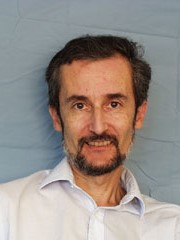 Alexander Borgida合作论文数Department of Computer Science, School of Arts and Sciences, Rutgers University1
 Matthew Horridge合作论文数University of Manchester1
 Bernardo Cuenca Grau合作论文数Department of Computer Science, University of Oxford;Keble College, University of Oxford;Oxford Semantic Technologies1
 Marie-Laure Mugnier合作论文数University of Montpellier1
 Yevgeny Kazakov合作论文数Institut for Artificial Intelligence, University of Ulm1
 Oliver Kutz合作论文数Research Centre for Knowledge-based Artificial Intelligence, Free University of Bozen-Bolzano;Faculty of Engineering, Free University of Bozen-Bolzano1
 Maurizio Lenzerini合作论文数Dipartimento di Ingegneria Informatica Automatica e Gestionale, Sapienza Universita di Roma;Department of Computer, Control and Management Engineering, Sapienza Universita di Roma;School for Advanced Studies, Sapienza University1
 Giuseppe De Giacomo合作论文数Department of Computer Science, University of Oxford;Green Templeton College, University of Oxford;Dipartimento Di Ingegneria Informatica, Automatica E Gestionale, Facoltà Di Ingegneria Dell'informazione, Informatica E Statistica, Sapienza Universita' di Roma1
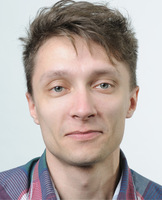 Mark Kaminski合作论文数Deutsches Patent- und Markenamt1
 Nico Matentzoglu合作论文数Semanticly1
 Elena Botoeva合作论文数Faculty of Computer Science,Free University of Bozen-Bolzano1
 Martin Homola合作论文数Comenius University, Bratislava1
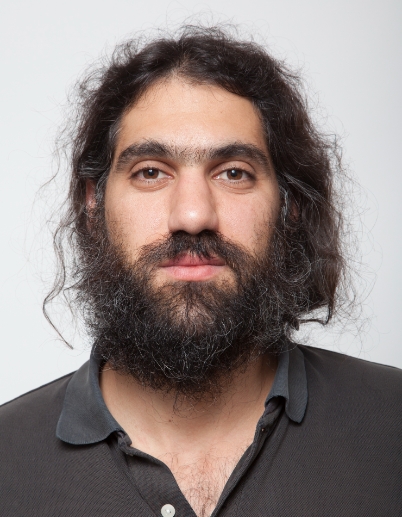 Andreas Pieris合作论文数Laboratory for Foundations of Computer Science, School of Informatics, University of Edinburgh1
 Markus Krötzsch合作论文数Institute for Theoretical Computer Science, Faculty of Computer Science, Technical University of Dresden1
 Boris Motik合作论文数Department of Computer Science, University of Oxford;Somerville College, University of Oxford1
 Antonella Poggi合作论文数Department of Computer, Automatic and Management Engineering "Antonio Ruberti", Sapienza Università di Roma1
 Ernesto Jiménez-Ruiz合作论文数Department of Computer Science, School of Science and Technology, City St George's, University of London;Advance HE;The Alan Turing Institute1
 Alessandro Artale合作论文数KRDB Research Centre, Faculty of Computer Science, Free University of Bozen-Bolzano1Thanh Binh Nguyen合作论文数Centre for Advanced Structural Engineering;School of Civil Engineering, Room 3601
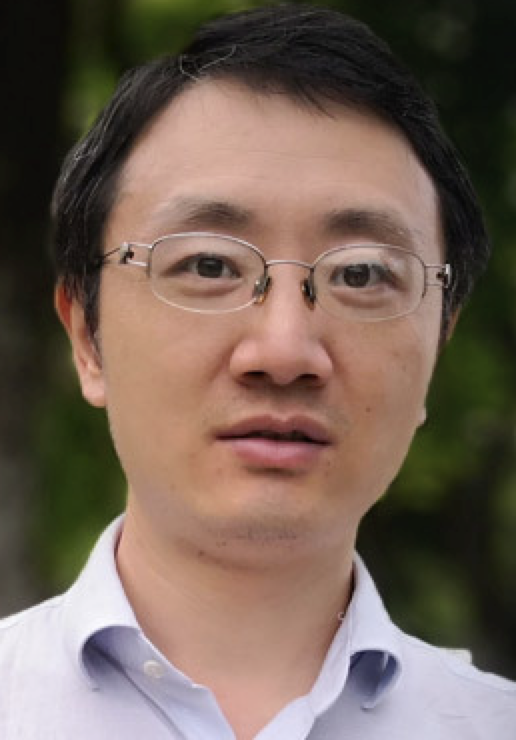 Guilin Qi (漆桂林)合作论文数School of Computer Science and Engineering, Southeast University1
 Binh Thanh Nguyen合作论文数Ctr Rech Gif Sur Yvette, CNRS1
 Birte Glimm合作论文数Institut für Künstliche Intelligenz, Universität Ulm1
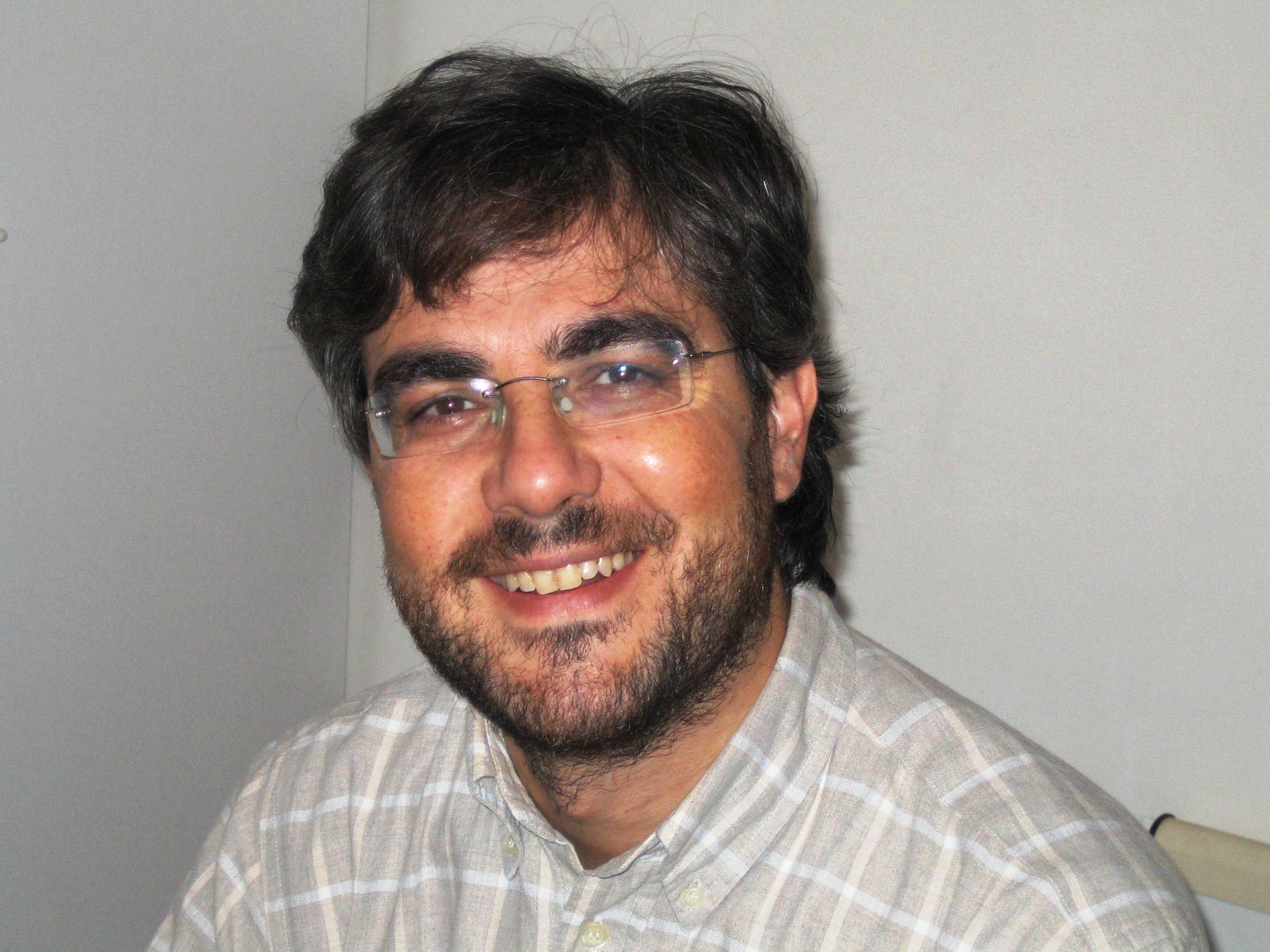 Domenico Lembo合作论文数SAPIENZA Universita di Roma1
 Víctor Gutiérrez Basulto合作论文数School of Computer Science and Informatics, Cardiff University1




