Corporate entrepreneurship (CE) is of utmost importance for organizational development and yet, the literature is scarce in reflecting how CE is taught in entrepreneurship education. In this chapter, we focus on leading case studies on CE and analyze them according to a behavioral (discovery, evaluation legitimation and exploitation) and hierarchical (top, middle and operating roles) aspects. With this analysis we conclude that case studies are a preferred way for entrepreneurship educators to promote experiential learning in the classroom about CE. At the same time, we motivate educators to increasingly focus on the identification of the key actions being taken within CE as well as of where the responsibility of such actions typically falls within organizational roles. We contribute to further our knowledge about CE in entrepreneurship education and reflect the varying CE activities, actors, and behaviors.
The entrepreneurial university is recognized as an organization capable of maintaining an active link with the actors of its environment and of impacting socio-economic development. However, while it should be noted that the entrepreneurial university concept has been developed from the experience of advanced economies in the West, there is a lack of theoretical considerations and empirical evidence on whether the entrepreneurial university model is applicable in the contexts of less developed countries. Building on the understanding that the evolution of an ideal entrepreneurial university model is facilitated by certain institutional logics in advanced economies, this paper takes the case of CAMES area in Africa (19 emerging countries) as an example to explore the entrepreneurial practices supported by the regulatory framework documents. It also looks at the practices in the field in order to identify those that are most common compared to the models found in the literature. Our study presents new possibilities of understanding for entrepreneurial university from Africa contexts. It shows that despite the absence of certain key factors characteristic of the entrepreneurial university in the regulatory and institutional documents, the actors have informal practices that contribute to some extent to the purpose of the entrepreneurial university. The conclusion reinforces the need to see entrepreneurial university through the lens of less developed countries' contexts, highlighting opportunities for future studies.
Corporate entrepreneurship dispersed throughout an organization and leveraging the entrepreneurial potential of all its employees bears significant benefits for those organizations that embrace it. However, it appears more difficult to instill and requires strong investment in the development of human capital and entrepreneurial mindset among the employees and across the organization. In this chapter, we discuss the essence of corporate entrepreneurship mindset and show that across an organization, there might be different entrepreneurial mindsets that correspond to different people, opportunities, and contexts. Although different, they all lead to enactment of entrepreneurial projects. This chapter, thus, contributes to the discussion regarding the nature of corporate entrepreneurial mindsets, and their development and stimulation within an organization, from both academic and practical view.
Based on years of practical experience and insight, this book identifies fundamental challenges and is rooted in concrete examples of innovation.
Do entrepreneurship education programs (EEPs) really influence participants' attitudes and intention toward entrepreneurship? How is this influence related to past experience and how does it persist? Researchers and entrepreneurship education stakeholders alike have been looking into this question for quite a while, with a view to validating the efficacy of such programs. The authors of this paper propose to operationalize the concept of entrepreneurial intention and its antecedents in an attempt to address those issues. In particular, we propose an original research design where (1) we measure the initial state and persistence of the impact and not only short-term effects; (2) we deal with a compulsory program, allowing to avoid self-selection biases; and (3) we deal with an homogeneous compact program rather than programs combining multiple teaching components whose effects cannot be disentangled. Our main research results show that the positive effects of an EEP are all the more marked when previous entrepreneurial exposure has been weak or inexistent. Conversely, for those students who had previously significantly been exposed to entrepreneurship, the results highlight significant countereffects of the EEP on those participants.
Previous research has extensively investigated the relationship between entrepreneurial orientation and firm performance, leaving the way entrepreneurial orientation is shaped, fostered, developed and maintained within organizations almost unattended. This paper is among the first to systematically investigate the pervasiveness of entrepreneurial orientation within an organization by exploring varying perceptions of entrepreneurial orientation both within and between the business units of a well-established multi-national company. First, we examine the overarching question of whether and how entrepreneurial orientation exhibits variance across hierarchical levels and business units. Second, we explore the dynamics of entrepreneurial orientation change over time, providing insights into the factors which affect the manifestation of entrepreneurial orientation in different time periods. The study is conducted on a full population of business units from an industrial company observed with a time lag of three years. We find partial confirmation for our hypotheses and we contribute to the call for greater research exploring the antecedents of entrepreneurial orientation, extend this research conversation beyond reports of top managers, and examine employee perceptions in regards to manifestation of a business unit’s level of entrepreneurial orientation.
La croissance des jeunes entreprises est un phenomene complexe qui pose encore de grands defis aux chercheurs. Ceci est du au fosse existant entre la realite complexe du phenomene et les approches souvent mobilisees pour l’aborder. Cette recherche propose une nouvelle approche methodologique permettant d’etudier de facon systematique les trajectoires de croissance initiale des jeunes entreprises. Exploitant une base de donnees sur l’evolution de toutes les entreprises belges fondees entre 1992 et 2002 et encore en vie en 2002, nous avons etabli un echantillon de donnees longitudinales concernant 741 jeunes entreprises. Nous avons elabore un cadre conceptuel original integrant des mesures multivariees et une approche dynamique de la croissance organique a travers les secteurs, ainsi que l’identification de trajectoires-type, permettant d’examiner la dynamique de developpement de ces jeunes entreprises. Cette approche a permis de developper une taxonomie de 7 trajectoires-type a partir de 4 stades de croissance distincts identifies. Cette taxonomie correspond a la majorite des entreprises de l’echantillon, et n’est pas correlee avec les caracteristiques demographiques des entreprises. L’evidence empirique montre des lors que la dynamique de croissance initiale des jeunes entreprises est un processus complexe mais qui n’est neanmoins ni idiosyncratique ni continu. Il est cependant possible d’identifier des trajectoires-types representatives. Ce travail contribue ainsi a combler un trou methodologique. La taxonomie originale developpee dans ce travail facilite la comprehension de la nature complexe du phenomene. Elle apporte des informations supplementaires grâce aux indicateurs financiers utilises. De plus, certaines trajectoires-types identifiees correspondent a des comportements etudies dans la litterature. Enfin, ce travail souleve de nouvelles questions sur le processus de croissance initiale des jeunes entreprises dont les implications sont multiples
Understanding the entrepreneurial processes and how we can inspire and teach entrepreneurship is currently one of the core issues of the European Union 2020 strategic plan. Despite increasing research interest on the topic, the literature reveals that it is still unclear to what extent such education impacts the level of graduate entrepreneurship or whether it enables graduates to become more effective entrepreneurs (Pittaway and Cope, 2007). Simulation-based learning has been highlighted as a method for engaging students more actively in the entrepreneurial learning process (Politis, 2005; Honing 2004; Minniti and Bygrave, 2001). But the impact of entrepreneurial simulation is still poorly understood and represents a significant future research activity (Honing, 2004). Building on entrepreneurial action and diversity theories (McMullen and Shepherd, 2006; Jackson, May and Whitney, 1995; Cox, 1993) our research aims to offer a new literature on entrepreneurial learning context by investigating the following research question: Who learns more and why? We provide a research model investigating whether team characteristics enhance team performance and learning by facilitating entrepreneurial action. Specifically, the study explores the mediating effects of entrepreneurial team diversity on the relationship between team characteristics, entrepreneurial action and team performance.
Research suggests that entrepreneurial orientation (EO) may have a positive impact on the organizational performance (Rauch et al., 2009). It is, therefore, surprising, how little we know about the way EO is formed within organizations (Anderson and Eshima, 2011) and what causes its potential heterogeneity across the business units (Wales et al., 2011), as this knowledge is needed to understand how firms may foster, develop and maintain the desired level of EO. In this paper we investigate whether the heterogeneity of EO manifestations may be linked to the business unit employees’ work engagement and their extra-role voice behaviors. We argue that if a company expects entrepreneurial activities from its employees, the challenge for the management is to instill the personal emotional and cognitive engagement among them. We believe that along with engagement a business unit EO is unthinkable without the possibility of employees to voice their suggestions and improvements. We find partial confirmation for our hypotheses and show that for managers and staff the mechanism works differently.
A long-standing line of research proves a positive relationship between entrepreneurial orientation and performance of firms. Still, it is surprising, how little we know about the way entrepreneurial orientation is shaped, fostered, developed and maintained within organizations. Wales, Monsen, and Mckelvie (2011) have recently argued that the way entrepreneurial orientation is manifested across the organization may vary vertically across hierarchy levels, horizontally across business units and temporally as an organization develops. Indeed, large diversified firms contain multiple business units that can differ in the level of the entrepreneurial orientation. Therefore organizations that are aiming at properly managing their entrepreneurial posture need to investigate the sources of heterogeneity of manifestations of entrepreneurial orientation at different levels and units of the organization. In this paper we add to the literature by looking into the question why some units within firms may display higher entrepreneurial orientation levels than others and suggest a new look at both the employee engagement and its relation with the business entity’s entrepreneurial orientation. We suggest that the heterogeneity of the entrepreneurial orientation manifestations may be linked to the business unit employees’ work emotional and cognitive engagement and their extra-role voice behaviors. The study is conducted on a sample of business units from an industrial company observed at two different points of time, separately for managers and staff. We find partial confirmation for our hypotheses and we contribute to the literature by showing that different groups of employees contribute to the pervasiveness of entrepreneurial orientation in different ways.
 Alain Fayolle合作论文数CREA UniCa, Università degli Studi di Cagliari25
 Olga Belousova合作论文数University of Groningen20
 Mahamadou Biga-Diambeidou合作论文数13
 Michel Verleysen合作论文数Electrical Engineering Department, Universite catholique de Louvain11Damien François合作论文数Department of Mathematical Engineering of the Universite catholique de Louvain.11Narjisse Lassas-Clerc合作论文数10
 Vincent Wertz合作论文数Department of mathematical engineering10
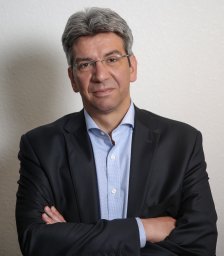 Frank Janssen合作论文数7
 Olivier Basso合作论文数5michel installe合作论文数4Luc Armel合作论文数3dominique frugier合作论文数2gbenangnon luc armel da gbadji合作论文数2Luc Armel G. Da Gbadji合作论文数2Aïni Hannachi合作论文数2Et-Taoufik Fathi合作论文数2Valérie Eeckhout合作论文数2
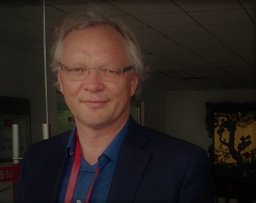 Aard J. Groen合作论文数University of Twente;Dutch Institute for Knowledge Intensive Entrepreneurship;Dutch Institute for Knowledge, University of Twente2
 Amaury Lendasse合作论文数Aalto University, School of Science and Technology, Department of Information and Computer Science2Arend J. Groen合作论文数1john taylor合作论文数1
 Dagmar Ylva Hattenberg合作论文数University of Groningen1
 Edina Eberhardt-Toth合作论文数ICN Business Sch1Klaus-Peter Schulz合作论文数1
 Silvia Costa合作论文数Ctr Entrepreneurship, Univ Groningen1Lorraine Warren合作论文数School of Management, University of Southampton1
 Jill Kickul合作论文数Simmons School of Management1Gyewan Moon合作论文数1
 Sophie Bacq合作论文数1
 Armin Schwienbacher合作论文数Business School, University of Amsterdam1
 Erik Monsen合作论文数Institute of Economics;Indiana University;Max Planck Institute of Economics;Max Planck Institute of Economics, Indiana University1




