The place of work in organization studies and management has waxed and waned. Yet, today, social and technological developments have raised again interest in the study of work and this curated discussion brings together experts in key approaches to this topic. Seven contributions have been selected to provide a panorama of what we know about work while pointing to some uncharted territories worthy of future exploration. The contributions outline the principles behind and value of systemic, contextualized, or holistic view of work and report insights on how changes in some work components reverberate in its broader ecology. We hope this curated discussion will make us more aware of the collective journey scholars have charted so far while posing new questions and opening or re-directing new avenues of inquiry.
In the wake of media hype about artificial intelligence (AI)/human collaboration, organizations are investing considerable resources into developing and using AI. In this paper, we draw on theories of technology in organizations to frame new directions for the study of what it means to work “with” AI. Drawing on prior literature, we consider how interactions between users and AI might unfold through theoretical lenses which cast technology as a tool and as a medium. Reflecting on how AI technologies diverge from technologies studied in the past, we propose a new perspective, which considers technology as a counterpart in a system of work that includes its design, implementation, and use. This perspective encourages developing a grounded understanding of how AI intersects with work, and therefore ethnography, building on thick descriptions, is an apt approach. We argue that relational ethnographic approaches can assist organization theorists in navigating the methodological challenges of taking a counterpart perspective and propose several strategies for future research.
This symposium aims to present research that analyzes some of the current challenges professionals and frontline workers face in public organizations. Public organizations, from large organizations to small agencies, perform key tasks for the functioning of government and society. To do so, they employ workers with specialized skills and knowledge that face challenges on the way their work is understood, managed, and assessed. Some of these challenges involve interacting with different audiences; managing conflicting expectations, criteria, expertise, and mandates; interacting with citizens; and conducting expert work in bureaucratic settings. This symposium aims to identify common concerns and insights across this research and to provide avenues for future scholarship in this area. Presenters have conducted research on professional identity, expert work, accountability, and conflicting mandates in police departments, public hospitals, emergency management services, and regulatory agencies in different countries. From Brave Enforcer to Trusted Protector: Role Evolution and Procedural Justice Training in Mexico Presenter: Rodrigo Canales; Yale U. Presenter: Jessica Zarkin; Cornell U. Presenter: Lluvia Gonzalez; Innovations for Poverty Action Routinization of Expertise: Experts and the Entry of Less-Credentialed Workers into Organizations Presenter: Jillian Chown; Northwestern Kellogg School of Management Presenter: Carlos Inoue; U. of Illinois at Urbana-Champaign Social Media Scrutiny of Front-line Professionals in Emergency Management Organizations Presenter: Arvind Karunakaran; Stanford U. Managing Conflicting Mandates: Wielding Procedural Expertise in a Government Agency Presenter: Samantha Orlena Ortiz Casillas; EMLYON Business School
In knowledge-based organizations, conflict among interdependent occupations can be exacerbated by the absence of a clear hierarchical ordering of these occupations within the organization. Moreover...
Academy of Management Annual Meeting Proceedings includes abstracts of all papers and symposia presented at the annual conference, plus 6-page abridged versions of the “Best Papers” accepted for inclusion in the program (approximately 10%). Papers published in the Proceedings are abridged because presenting papers at their full length could preclude subsequent journal publication. Please contact the author(s) directly for the full papers. Emerging Research on Meaningful Work in Educational WorkplacesVivek G. Nair, Hayuta Yinon, Vivek G. Nair, Shiri Lavy, Vivek G. Nair, Jennifer Lauren Nelson, Elina Riivari, Hayuta Yinon, Beth Bechky, Anne-Laure Fayard and Priyanshu GuptaVivek G. NairIIT Delhi, Hayuta YinonOranim College of Education, Vivek G. NairIIT Delhi, Shiri LavyU. of Haifa, Vivek G. NairIIT Delhi, Jennifer Lauren NelsonU. of Illinois, Elina RiivariU. of Jyväskylä, Hayuta YinonOranim College of Education, Beth BechkyUC Davis, Anne-Laure FayardNOVA School of Business and Economics and Priyanshu GuptaAssistant Professor Indian Institute of Management LucknowPublished Online:6 Jul 2022https://doi.org/10.5465/AMBPP.2022.11367symposiumAboutSections ToolsDownload CitationsAdd to favoritesTrack Citations ShareShare onFacebookTwitterLinkedInRedditEmail Abstract'Meaningful work' has been defined by Rosso et al. (2010: 95) as ""work experienced as particularly significant and holding more positive meaning for individuals"". Previous studies have shown that meaningful work is beneficial for employees. For example, meaningful work has been found to be related to employees' well-being (Arnold et al., 2007), job satisfaction (Scroggins, 2008; Steger et al., 2012), and work engagement (Olivier & Rothmann, 2007; Steger et al., 2013). Meaningful work has also been associated with reduced burnout (Malach Pines, 2002) and less intentions of quitting (Scroggins, 2008). Due to the great impact of education on society (Brown & Lauder, 1991; Feinstein et al., 2006; Ozturk, 2001), and in line with the theme of this year’s annual meeting, ""creating a better world together"", the proposed symposium focuses on meaningful work in educational workplaces (i.e., kindergartens, schools, and higher education institutions). More specifically, it concentrates on the perspectives of the employees (i.e., teachers and academic staff). Recent research on educational workplaces shows that educational workplaces are perceived as stressful (Lensen et al., 2021; Olsen, 1993). They are also experienced as insecure (Bristow et al., 2017; Rosenblatt & Ruvio, 1996). Educational workplaces are also characterized by high rates of burnout and attrition (Agarwal & Bansal, 2021; Friedman, 1991; Shub & Maaz, 2021). Furthermore, research demonstrates that educational workplaces affect the well-being and job satisfaction of employees (Aelterman et al., 2007; Bahtilla & Hui, 2021; Kinman et al., 2006; Olsen, 1993; Toropova et al., 2021), which in turn influence students' well-being and academic outcomes (Harding et al., 2019; Jennings & Greenberg, 2009). These troubling findings may indicate employees' difficulties in achieving meaningful work. Despite the importance of educational workplaces and the growing body of research on meaningful work (see Bailey et al., 2019 for a recent review), less research has been devoted to examining meaningful work in educational workplaces. The proposed symposium strives to fill this gap in the literature by addressing emerging research on meaningful work in educational workplaces. More specifically, the proposed symposium attends to a wide range of educational workplaces: kindergartens, elementary schools, middle schools and high schools (in the first two presentations), colleges and universities (in the last two presentations). The symposium also maintains an international nature, with each presentation relating to a different country: USA (in the first presentation), Israel (in the second presentation), Finland (in the third presentation), and India (in the fourth presentation). Finally, contrary to the few studies that have examined meaningful work in educational workplaces, and used quantitative methodology, the four studies presented in the symposium utilized qualitative methodologies.Attaining Occupational Knowledge, Values & Belonging through spatially situated interactions at workPresenter: Jennifer Lauren Nelson; U. of IllinoisPresenter: Beth Bechky; UC DavisPresenter: Anne-Laure Fayard; NOVA School of Business and EconomicsWorkplace Characteristics that Impede Experiences of Meaningfulness among Israeli TeachersPresenter: Hayuta Yinon; Oranim College of EducationCounting stars: Impact of Changing Management Education Landscape on Management scholars.Presenter: Vivek G. Nair; IIT DelhiPresenter: Priyanshu Gupta; Assistant Professor Indian Institute of Management LucknowTensions of Meaningful Work in the University ContextPresenter: Elina Riivari; U. of JyväskyläFiguresReferencesRelatedDetails Vol. 2022, No. 1 Permissions Metrics in the past 12 months History Published online 6 July 2022 Published in print 1 August 2022 InformationCopyright of Academy of Management Journal is the property of Academy of Management and its content may not be copied or emailed to multiple sites or posted to a listserv without the copyright holder’s express written permission. However, users may print, download, or email articles for individual use.KeywordsAOM Annual Meeting Proceedings 2022AOM Seattle 2022
Commercialization has spread across nonmarket spheres of social life, altering the modus operandi of their members, organizations, and institutions. Scholarship has mainly emphasized people’s cognition: how people living through commercialization have been thinking through this experience and its consequences. However, an emerging set of studies has uncovered deeply emotional instances of resistance to commercialization, suggesting a need to go beyond this cognitive institutional perspective. In this study, we examine an opera company which commercialized. Mirroring their field’s emerging concerns about opera’s ability to survive, the company’s administrators made organizational changes that attempted to cut costs. However, these organizational and institutional changes compromised aspects of the company’s work, which had been supported by its older institutional context. And in delving into company members’ lived experience of these changes, we discovered their profound sense of loss, embodied in their intense feelings of frustration and sorrow. Looking closely at an organization’s commercialization thereby allowed us analytical purchase on what we refer to as its members’ “anachronization”: they were left behind by the changing character of the times, were increasingly out of step with how their world – that is, their work and organization – was being structured, and were haunted by what had vanished. And in studying this experience, we found that value tethers people to institutions: its destruction evoked members’ passionate refusal to let go, and their ardent repudiation of how the nature of their work was changing. We therein breathe meaning and feeling into our depictions of how people experience change by drawing attention to noncognitive aspects of life within organizations and institutions.
Though beginning with deterministic views on how technologies affect organizations, organizational scholars have made significant progress since, providing a variety of nuanced frameworks by which to understand disruptive workplace technologies - such as AI - and what effects they may have. However, lessons learned about technology and organizing in the literature’s development seem to have been lost in today’s discourse on AI. For instance, Collins (2018) bemoans the state of this discourse, noting our tendency to view this technology deterministically: an unstoppable force which will consume everything in its path. Our symposium is an attempt at re-orienting the emerging literature on AI and their effect on work and organizing. It aims at leaving determinism behind to instead uncover the complex negotiations – among humans and between the social and technical – which both shape and are shaped by AI, and the consequences of such negotiations for AI’s development and use. It does so by drawing on and comparing across four ethnographic studies on AI from the very edge of the future of work: a response to scholars’ concern that “discourse on the topic is largely speculative, focusing on the possibilities” (Brayne 2017: 977) rather than grounded in what has actually been going on (see also Barley and Kunda 2001; Bechky 2011). Doubting the Diagnosis: Using AI when Forming Critical Professional Judgments Presenter: Sarah Lebovitz; U. of Virginia “It’s Like Being in the Future” vs. “It’s a Joke”: Divergent Interpretations of Facial Recognition Presenter: Elizabeth Anne Watkins; Columbia U. Augmenting or Automating? Breathing Life into the Promise of Artificial Intelligence Presenter: Kevin Woojin Lee; New York U. The Interpretation of Machine-Learning Technologies in Organizations Presenter: Katherine C. Kellogg; MIT
The theme of this year's Academy is “Broadening our Sight.” Broadening our sight involves getting a new view on the theories and the methods we use. Firsthand experiences, as provided by participant-observation methods, are a great source of learning and a way to broaden our sight by looking at an organizational phenomenon through the “eyes” of the informants (Douglas, 1976; Pratt, Lepisto & Dane, 2018). Several scholars (see call for papers in Academy of Management Review by Haveman, Mahoney & Mannix, 2019) in the management field have stressed the importance of going into the field to get a better understanding of how people in organizations deal with current issues and thus get a fresh look at possibly outdated theories (Pratt & Rouse, forthcoming). This symposium’s purpose it to offer a new perspective on how the researcher can take actions in their work, and what participating in the contexts we study can bring to qualitative work.
Email. S.ansari@jbs.cam.ac.uk University website: Shahzad (Shaz) Ansari Faculty A-Z Cambridge Judge Business School ORCID https://orcid.org/0000-0002-3620-078X TWITTER @ShazAnsari1 LinkedIn Shaz Ansari https://www.linkedin.com/in/shaz-ansari-65a847/ ResearchGate https://www.researchgate.net/profile/Shaz_Ansari Google Scholar Shahzad (Shaz) Ansari Google Scholar NAME: Shaz Ansari EDUCATION • PhD (University of Cambridge) • MPhil (University of Cambridge) TITLES: • Professor of Strategy and Innovation, Cambridge Judge Business School (CJBS) • Professorial Fellow, St Edmund’s College, University of Cambridge • Honorary Professor, University College London (UCL) • Visiting Faculty, Rotterdam School of Management (RSM), The Netherlands • Visiting Professor of Strategy and Innovation in International Business School Suzhou at Xi’an Jiaotong-Liverpool University, China • Director of the MPhil in Innovation, Strategy & Organisation Programme (CJBS) 2018-2020 • Elected member of Faculty Board (CJBS) 2009-2020, ongoing • Director of the MPhil in Innovation, Strategy & Organisation Programme (CJBS) 20112013; 2018-2021 • PhD Steering Committee Representative (Strategy A) (CJBS)
The field of management has only begun to recognize and examine the importance of occupational dynamics on individual, organizational, and societal outcomes. This symposium seeks to advance new research at the cutting-edge of this occupational turn in management scholarship by examining interactions between occupation members at the interface with organizations, technology and clients. By examining occupational group dynamics across four unique contexts, including medicine, the music industry, book publishing, and nursing, using multiple qualitative and quantitative methodologies, this symposium aims to enhance our understanding of occupational and professional group dynamics. Together, the four empirical papers, the discussion of these papers, and the facilitated question and answer session are designed to develop new theoretical insights about occupations and their relation to organizations, technology and clients by identifying commonalities and differences across the four papers. This design is also intended to generate new insights by sparking a rich conversation about occupations and professions among session attendees and participants. Organizational Influence over Professional Work Presenter: Jillian Chown; Northwestern Kellogg School of Management Reassessing the Relationship between Technological and Occupational Change Presenter: Andrew Nelson; U. of Oregon Presenter: Callen Anthony; New York U. Presenter: Mary Tripsas; Boston College Stand-In Workers and the Rising Economy of Self: When Calls for Authenticity Breed Adulteration Presenter: Michel Anteby; Boston U. Presenter: Nicholas Occhiuto; Yale U. The Ideal Client: The Client Role in Affirming or Denying Professional Identity Claims Presenter: Julia DiBenigno; Yale School of Management
In today’s knowledge economy, occupations are becoming more salient in the structuring of work as the role of organizations is receding. As such, the modern-day worker’s aspiration is more and more in the vein of progressing to the center of the occupation (i.e. moving from ‘apprentice’ to ‘master’) rather than simply progressing to the top of the organizational hierarchy. Consequently, expertise has become constitutive of what an occupation is and does more than ever before. At the same time, occupational experts regularly confront innovations and dramatic changes that require radically different ways of knowing, disrupt established task jurisdictions and reconfigure work practices, thereby challenging the raison d’être of many occupations. To understand these salient issues, we require more situated longitudinal studies that investigate what occupational experts actually do and how radical change, whether social or material, alters this “doing.” Led by two prominent scholars in this field of inquiry, this symposium aims to bring the focus on knowledge and expertise back into work-based studies of occupations. How Temporarily Embedded Occupations Enact Expertise in Client Settings Presenter: Daisy Eusun Chung; Cass Business School, City U. London Presenter: Isaac Waisberg; Tel Aviv U. Wait, the Baby Could Die! Integrating Expertise in a Hospital Merger Presenter: Karla Sayegh; McGill U. A Regime of Knowing Perspective for Implementing Technology at Work Presenter: Stella Pachidi; U. of Cambridge Analytical Technologies and the Practices of Validation in the Production of Strategic Knowledge Presenter: Callen Anthony; New York U.
We examine how different occupational communities that are embedded in organizations exercise control processes to achieve emergent coordination as they create complex products together. We compare two types of organizations, equipment manufacturing and film production, and find that although occupational control was important for emergent coordination in both settings, this relationship varied according to two aspects of occupational embeddedness: organizational acknowledgment of occupational control and occupational interdependence. In the equipment manufacturing setting, occupational control was latent: the communities visibly conformed to organizational control processes while exercising occupational control behind the scenes to coordinate emergently. In the film setting, the organization granted the occupational community significant latitude over its tasks, which enabled members to coordinate emergently to solve problems the majority of the time. We propose that these two aspects of occupational embeddedness must be analyzed together with occupational control processes to explain how integration unfolds in knowledge-based settings in ways that organizational control processes are ill-equipped to manage.
Using qualitative methods, we examined how observers assessed professional women when they cried at work. Our findings showed that, in four common but stressful professional work situations, observers used relatively complex and context-specific cognitive scripts to evaluate female colleagueswho cried. Specifically, we found that script violation led observers to make dispositional attributions of criers (i.e., that they were weak, unprofessional, and/or manipulative), whereas script confirmation led them to make situational attributions of criers (i.e., that they were experiencing a tough situation at work, or personal issues at home). Interestingly, assessments of the underlying emotions experienced by criers did not appear to influence observers' attributions of those criers. Together, these discoveries help to elaborate a relatively sophisticated framework describing the assessment of crying at work that builds on recent theorizing by Vingerhoets (2013). More generally, these discoveries extend our understanding of the interpretation of ambiguous "expressive cues" (i.e., visible expressions of emotion such as crying) in organizations, and suggest how contextual factors influence attributions of these ambiguous cues.
 Callen Anthony合作论文数Dept Management & Org, NYU5
 Arvind Karunakaran合作论文数Department of Management Science and Engineering, Stanford University4
 Gerardo A. Okhuysen合作论文数David Eccles School of Business, University of Utah Department of Management4
 Siobhan O'Mahony合作论文数School of Management, Boston University4
 Anne-Laure Fayard合作论文数Anne-Laure Fayard4
 Kevin Woojin Lee合作论文数U. of British Columbia3
 Kimberly D. Elsbach合作论文数Graduate School of management, University of California, Davis3
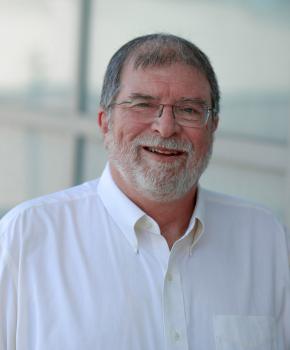 Stephen R. Barley合作论文数College of Engineering, University of California, Santa Barbara3
 Karla Sayegh合作论文数U. of Cambridge2
 Pedro Monteiro合作论文数Copenhagen Business Sch, Dept Org, Copenhagen, Denmark2
 Andrew Nelson合作论文数University of Oregon2
 Jillian Chown合作论文数Management & Organizations, Kellogg School of Management, Northwestern University2
 Davide Nicolini合作论文数Organisation and Work, Warwick Business School, University of Warwick/IKON Research Group, Warwick Business School, University of Warwick2
 Michel Anteby合作论文数Harvard Business School, Boston, Massachusetts 021632
 Sharon Koppman合作论文数Department of Sociology, University of Arizona2
 Gabriel Robert Sala合作论文数1Greetje Frankje Corporaal合作论文数1Daisy Chung合作论文数1
 Andrew C Cohen合作论文数1Marco Antonio Rocha Galo合作论文数1bonalyn j nelsen合作论文数Dept Business Adm, Izmir Univ Econ1
 Anastasia Sergeeva合作论文数Department of Behavioural and Cognitive Sciences, Université du Luxembourg1
 Esther Leibel合作论文数1Hayuta Yinon合作论文数1
 Eliana Crosina合作论文数Babson College1
 Farnaz Ghaedipour合作论文数McMaster-Carr1
 Nick A. Mmbaga合作论文数Lacy Sch Business, Butler Univ1
 Deborah Anderson合作论文数U. of Oxford1
 Sarah Lebovitz合作论文数McIntire Sch Commerce, Univ Virginia1
 Patrick Reilly合作论文数U. of British Colombia1
 Suntae Kim合作论文数Carroll Sch Management, Boston Coll1
 Priyanshu Gupta合作论文数Inst Environm & Sustainable Dev, Banaras Hindu Univ1
 Ivana Milosevic合作论文数College of Charleston1
 Susan Wright合作论文数Dept Educ Anthropol, Aarhus Univ1Vivek G. Nair合作论文数1
 Elizabeth Anne Watkins合作论文数Columbia University1
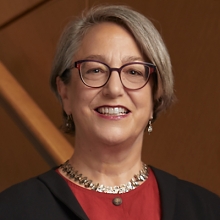 Lisa Cohen合作论文数Desautels Faculty of Management, McGill University1
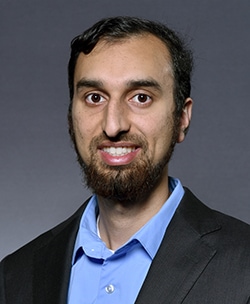 Hatim Rahman合作论文数Management & Organizations, Kellogg School of Management, Northwestern University1
 Nicholas Occhiuto合作论文数Department of Organizational Behavior, School of Industrial and Labor Relations, Cornell University/Research Center for Work, Technology, & Organization, Social Sciences and Humanities, Emlyon Business School1
 Julia DiBenigno合作论文数School of Management, Yale University1
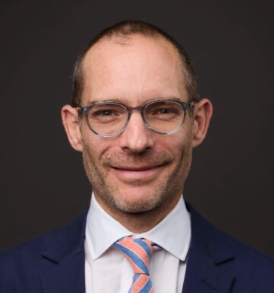 Rodrigo Canales合作论文数Questrom School of Business, Boston University1
 Mary-Hunter McDonnell合作论文数Management Department, The Wharton School, University of Pennsylvania1
 Ileana Stigliani合作论文数Management and Entrepreneurship, Imperial College Business School, Imperial College London1
 Melissa Valentine合作论文数Management Science & Engineering Department, Stanford University1
 Samer Faraj合作论文数Desautels Faculty of Management, McGill University;Digital Innovation Center, Cambridge University;Department of Social Studies of Medicine, Cambridge University1
 Fred Luthans合作论文数College of Business, University of Nebraska—Lincoln1
 Barbara L. Gray合作论文数Smeal College of Business, Pennsylvania State University1
 Ingrid Erickson合作论文数Rutgers University1
 Shiri Lavy合作论文数Hadassah Medical School, Hebrew University1




