Image-based social relationships classification is an emerging and challenging problem in social media analysis. Practically, social relationships can provide intelligent entities with a deeper understanding of human behavior and emotion. Essentially, as an extension of our former study, we proceed with the following work. First, an extended social relationships database named SRI2.0 is introduced based on the coverage of social relationships categories. Second, we propose to exploit clothing information to extract the relevance of clothing characteristics among the group in images. Finally, we propose a metric learning method by using the correlation similarity measure to better highlight the differences between images with different types of social relationships. Experimental results demonstrate the efficiency of our proposed methods.
This erratum corrects measurements of the prompt and secondary (from-b).
Kinship verification aims to predict whether there is a kin relationship between a pair of facial images. Previous representative research has proved that learning an appropriate similarity metric plays an important role in this task. Most of the related metric learning methods focus on learning a single Mahalanobis distance metric under the assumption that kin data has a unimodal distribution. Instead, in this paper, we propose a novel nonlinear multi-metric learning (NMML) method to learn a similarity measure where the pairwise difference is drawn from a mixture distribution. Particularly, the similarity measure is derived based on a statistical inference perspective, which can indicate the characteristics of a likelihood ratio that captures the subtle resemblance between identities. To make better use of multiple estimators, we further propose an ensemble NMML (ENMML) method to perform multiple estimators fusion to improve the performance of kinship verification. Extensive experiments on three publicly available kinship datasets demonstrate the feasibility and effectiveness of our proposed methods.
Chemical Vapour Deposition (CVD) diamond is being considered as a material for particle detectors in a harsh radiation environment. This article presents beam test results of 3D pixel detectors fabricated with poly-crystalline CVD diamonds. The cells of the devices had a size of 50 mu m x 50 mu m with columns 2.6 mu m in diameter. The cells were ganged in a 3 x 2 and 5 x 1 pattern to match the layouts of the pixel read-out electronics currently used in the CMS and ATLAS experiments at the Large Hadron Collider, respectively. In beam tests, using tracks reconstructed with a high precision tracking telescope, a tracking efficiency of 99.3% was achieved. The efficiency of both devices plateaus at a bias voltage of 30V. Also irradiated poly-crystalline CVD diamond pad detectors were investigated. In high rate beam tests with particle fluxes up to 20 MHz/cm(2) and irradiations up to 8 . 10(15) n/cm(2) it was shown that the pulse height of irradiated poly-crystalline CVD diamonds does not depend on flux to the O(2%).
We have measured the radiation tolerance of poly-crystalline and single-crystalline diamonds grown by the chemical vapor deposition (CVD) process by measuring the charge collected before and after irradiation in a 50 mu m pitch strip detector fabricated on each diamond sample. We irradiated one group of sensors with 800 MeV protons, and a second group of sensors with 24 GeV protons, in steps, to (1.34 +/- 0.08 x 10(16)) protons cm(-2) and (1.80 +/- 0.18 x 10(16)) protons cm(-2) respectively. We observe the sum of mean drift paths for electrons and holes for both poly-crystalline CVD diamond and single-crystalline CVD diamond decreases with irradiation fluence from its initial value according to a simple damage curve characterized by a damage constant for each irradiation energy and the irradiation fluence. We find for each irradiation energy the damage constant, for poly-crystalline CVD diamond to be the same within statistical errors as the damage constant for single-crystalline CVD diamond. We find the damage constant for diamond irradiated with 24 GeV protons to be 0.62( -0.01)(+0.01) (stat) (+0.06)(-0.06) (syst) x 10(-18) cm(2) (p mu m)(-1) and the damage constant for diamond irradiated with 800 MeV protons to be 1.04 (+0.02)(-0.02) (stat) (-0.04)(-0.05) (syst) x 10(-18) cm(2) (p mu m)(-1) Moreover, we observe the FWHM/MP pulse height decreases with fluence for poly-crystalline CVD material and within statistical errors does not change with fluence for single-crystalline CVD material for both 24 GeV proton irradiation and 800 MeV proton irradiation. Finally, we have measured the uniformity of each sample as a function of fluence and observed that for poly-crystalline CVD diamond the samples become more uniform with fluence while for single-crystalline CVD diamond the uniformity does not change with fluence.
At present most experiments at the CERN Large Hadron Collider (LHC) are planning upgrades in the next 5-10 years for their innermost tracking layers as well as luminosity monitors to be able to take data as the luminosity increases and CERN moves toward the High Luminosity-LHC (HL-LHC). These upgrades will most likely require more radiation tolerant technologies than exist today. As a result this is one area of intense research, and Chemical Vapour Deposition (CVD) diamond is one such technology. CVD diamond has been used extensively in beam condition monitors as the innermost detectors in the highest radiation areas of all LHC experiments. This talk describes the preliminary radiation tolerance measurements of the highest quality polycrystalline CVD material for a range of proton energies and neutrons obtained with this material with the goal of elucidating the issues that should be addressed for future diamond based detectors. The talk presents the evolution of various semiconductor parameters as a function of dose.
Detectors based on Chemical Vapor Deposition (CVD) diamond have been used extensively and successfully in beam conditions/beam loss monitors as the innermost detectors in the highest radiation areas of Large Hadron Collider (LHC) experiments. The startup of the LHC in 2015 brought a new milestone where the first polycrystalline CVD (pCVD) diamond pixel modules were installed in an LHC experiment and successfully began operation. The RD42 collaboration at CERN is leading the effort to develop polycrystalline CVD diamond as a material for tracking detectors operating in extreme radiation environments. The status of the RD42 project with emphasis on recent beam test results is presented.
The production cross-sections for W +/- and Z bosons are measured using ATLAS data corresponding to an integrated luminosity of 4.0 pb-1 collected at a centre-ofmass energy v s = 2.76 TeV. The deca ...
This change does not have any impact on the measured helicity fractions, but it changes the obtained limits on the anomalous couplings.
Abstract A search for supersymmetry involving the pair production of gluinos decaying via third-generation squarks into the lightest neutralino $$ \left({\tilde{\chi}}_1^0\right) $$ χ ˜ 1 0 is reported. It uses LHC proton-proton collision data at a centre-of-mass energy $$ \sqrt{s}=13 $$ s = 13 TeV with an integrated luminosity of 36.1 fb−1 collected with the ATLAS detector in 2015 and 2016. The search is performed in events containing large missing transverse momentum and several energetic jets, at least three of which must be identified as originating from b-quarks. To increase the sensitivity, the sample is divided into subsamples based on the presence or absence of electrons or muons. No excess is found above the predicted background. For $$ {\tilde{\chi}}_1^0 $$ χ ˜ 1 0 masses below approximately 300 GeV, gluino masses of less than 1.97 (1.92) TeV are excluded at 95% confidence level in simplified models involving the pair production of gluinos that decay via top (bottom) squarks. An interpretation of the limits in terms of the branching ratios of the gluinos into third-generation squarks is also provided. These results improve upon the exclusion limits obtained with the 3.2 fb−1 of data collected in 2015.
This paper presents a search for direct electroweak gaugino or gluino pair production with a chargino nearly mass-degenerate with a stable neutralino. It is based on an integrated luminosity of 36.1 $\mathrm{fb}^{-1}$ of $pp$ collisions at $\sqrt{s} = 13$ TeV collected by the ATLAS experiment at the LHC. The final state of interest is a disappearing track accompanied by at least one jet with high transverse momentum from initial-state radiation or by four jets from the gluino decay chain. The use of short track segments reconstructed from the innermost tracking layers significantly improves the sensitivity to short chargino lifetimes. The results are found to be consistent with Standard Model predictions. Exclusion limits are set at 95% confidence level on the mass of charginos and gluinos for different chargino lifetimes. For a pure wino with a lifetime of about 0.2 ns, chargino masses up to 460 GeV are excluded. For the strong production channel, gluino masses up to 1.65 TeV are excluded assuming a chargino mass of 460 GeV and lifetime of 0.2 ns.
Searches for the exclusive decays of the Higgs and Z bosons into a J/ψ, ψ(2S), or ϒ(nS) (n=1,2,3) meson and a photon are performed with a pp collision data sample corresponding to an integrated luminosity of 36.1fb−1 collected at s=13TeV with the ATLAS detector at the CERN Large Hadron Collider. No significant excess of events is observed above the expected backgrounds, and 95% confidence-level upper limits on the branching fractions of the Higgs boson decays to J/ψγ, ψ(2S)γ, and ϒ(nS)γ of 3.5×10⁻⁴, 2.0×10⁻³, and (4.9,5.9,5.7)×10−4, respectively, are obtained assuming Standard Model production. The corresponding 95% confidence-level upper limits for the branching fractions of the Z boson decays are 2.3×10⁻⁶, 4.5×10⁻⁶ and (2.8,1.7,4.8)×10−6, respectively.
Beam test results of the radiation tolerance study of chemical vapour deposition (CVD) diamond against different particle species and energies is presented. We also present beam test results on the independence of signal size on incident particle rate in charged particle detectors based on un-irradiated and irradiated poly-crystalline CVD diamond over a range of particle fluxes from 2 kHz/cm(2) to 10 MHz/cm(2). The pulse height of the sensors was measured with readout electronics with a peaking time of 6 ns. In addition functionality of poly-crystalline CVD diamond 3D devices was demonstrated in beam tests and 3D diamond detectors are shown to be a promising technology for applications in future high luminosity experiments.
Abstract Inclusive jet and dijet cross-sections are measured in proton-proton collisions at a centre-of-mass energy of 13 TeV. The measurement uses a dataset with an integrated luminosity of 3.2 fb−1 recorded in 2015 with the ATLAS detector at the Large Hadron Collider. Jets are identified using the anti-k t algorithm with a radius parameter value of R = 0.4. The inclusive jet cross-sections are measured double-differentially as a function of the jet transverse momentum, covering the range from 100 GeV to 3.5 TeV, and the absolute jet rapidity up to |y| = 3. The double-differential dijet production cross-sections are presented as a function of the dijet mass, covering the range from 300 GeV to 9 TeV, and the half absolute rapidity separation between the two leading jets within |y| < 3, y ∗, up to y ∗ = 3. Next-to-leading-order, and next-to-next-to-leading-order for the inclusive jet measurement, perturbative QCD calculations corrected for non-perturbative and electroweak effects are compared to the measured cross-sections.
AbstractAn angular analysis of the decayBd0 → K∗μ+μ−is presented, based on proton-proton collision data recorded by the ATLAS experiment at the LHC. The study is using 20.3 fb−1of integrated luminosity collected during 2012 at centre-of-mass energy of$$ \sqrt{s}=8 $$s=8TeV. Measurements of theK*longitudinal polarisation fraction and a set of angular parameters obtained for this decay are presented. The results are compatible with the Standard Model predictions.
A search for resonant and nonresonant pair production of Higgs bosons in the bb[over ¯]τ^{+}τ^{-} final state is presented. The search uses 36.1 fb^{-1} of pp collision data with sqrt[s]=13 TeV recorded by the ATLAS experiment at the LHC in 2015 and 2016. Decays of the τ-lepton pairs with at least one τ lepton decaying to final states with hadrons and a neutrino are considered. No significant excess above the expected background is observed in the data. The cross-section times branching ratio for nonresonant Higgs boson pair production is constrained to be less than 30.9 fb, 12.7 times the standard model expectation, at 95% confidence level. The data are also analyzed to probe resonant Higgs boson pair production, constraining a model with an extended Higgs sector based on two doublets and a Randall-Sundrum bulk graviton model. Upper limits are placed on the resonant Higgs boson pair production cross-section times branching ratio, excluding resonances X in the mass range 305 GeV
In this paper, the affinity propagation algorithm algorithm(AP) and its related parameters are studied, and the volatility is used to measure the intensity of the data concussion. The two parameters of preference and damping factor are studied. Then, according to the need of clustering analysis of emotion words, the AP algorithm is improved and applied to the generation of emotional word clustering. From the experimental results, the improved algorithm has better time performance and emotional word clustering performance.
 S. C. Haines合作论文数431
 Neville Harnew合作论文数Department of Physics, University of Oxford429Daniel Decamp合作论文数427
 Ricardo Graciani Díaz合作论文数Departament de Física Quàntica i Astrofísica, Facultat de Física, Universitat de Barcelona427
 Olivier Leroy合作论文数Centre De Physique Des Particules De Marseille, Institut National De Physique Nucléaire Et De Physique Des Particules, CNRS426
 Marco Gersabeck合作论文数Physikalisches Institut, University of Freiburg426Pierre Henrard合作论文数Université Clermont Auvergne424D. Galli合作论文数424Matthew Needham合作论文数Institute for Particle and Nuclear Physics, School of Physics and Astronomy, The University of Edinburgh424E. N. Gushchin合作论文数Institute for Nuclear Research, Russian Academy of Sciences424
 Eric van Herwijnen合作论文数Chiojdeanu424Eddy Jans合作论文数423B. Khanji合作论文数423
 Valerie Gibson合作论文数The Cavendish Laboratory, Department of Physics, University of Cambridge423
 Alexandru Tudor Grecu合作论文数Horia Hulubei National R&D Institute for Physics and Nuclear Engineering423
 Stephanie Hansmann-Menzemer合作论文数Physikalisches Institut, Universität Heidelberg423Sergey Filippov合作论文数Institute for Nuclear Research of Russian Academy of Sciences422
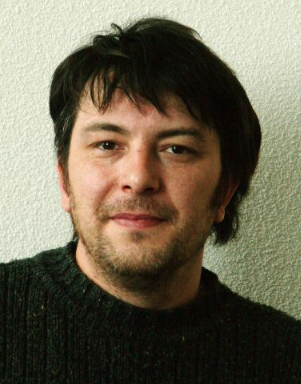 Olivier Deschamps合作论文数Université Clermont Auvergne;Laboratoire de Physique de Clermont Auvergne422
 David Hutchcroft合作论文数Department of Physics, School of Physical Sciences, Faculty of Science and Engineering, University of Liverpool421F. Ferreira Rodrigues合作论文数421L. A. Granado Cardoso合作论文数421Dmitry Golubkov合作论文数Department of Heavy Ions Physics, Institute for Theoretical and Experimental Physics420
 Clara Matteuzzi合作论文数Istituto Nazionale di Fisica Nucleare;University of Milan420
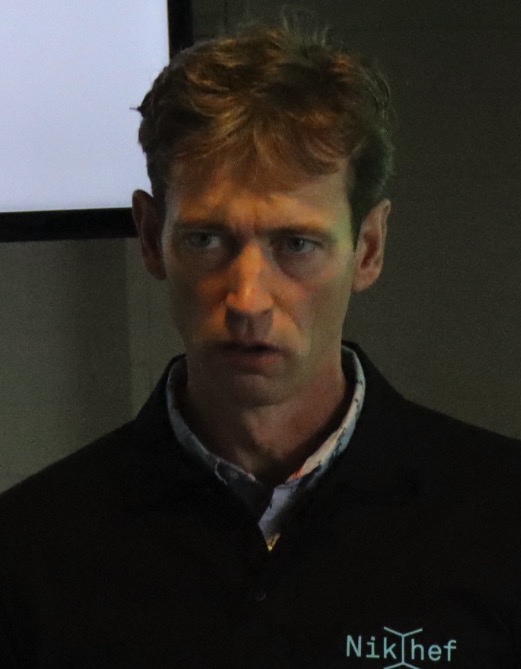 Wouter Hulsbergen合作论文数Nikhef420S. Farry合作论文数420M. Ferro Luzzi合作论文数419
 Katharina Kreplin合作论文数SAP419M. Coombes合作论文数419
 Robert Currie合作论文数School of Physics and Astronomy, University of Edinburgh419
 Chris Parkes合作论文数Department of Physics & Astronomy, School of Natural Sciences, Faculty of Science and Engineering, The University of Manchester419Giovanni Passaleva合作论文数419
 Karol Hennessy合作论文数Department of Physics, School of Physical Sciences, Faculty of Science and Engineering, University of Liverpool419
 Florian Kruse合作论文数Point 8 GmbH418
 Richard Jacobsson合作论文数CERN418R. Lefèvre合作论文数417
 Ronan McNulty合作论文数School of Physics, University College Dublin417
 Giovanni Carboni合作论文数Università degli Studi di Roma Tor Vergata417
 Philip Ilten合作论文数University of Cincinnati417Pascal Perret合作论文数Laboratoire de Physique de Clermont Auvergne, Universite Blaise Pascal;CNRS416
 Valentin Niess合作论文数Laboratoire de Physique de Clermont Auvergne, Institut National De Physique Nucléaire Et De Physique Des Particules, CNRS;Université Clermont Auvergne416
 Guido Haefeli合作论文数High Energy Physics Laboratory, École Polytechnique Fédérale de Lausanne416Marek Kucharczyk合作论文数416
 Sergii Kandybei合作论文数415Yu. Guz合作论文数415
 Patrick Koppenburg合作论文数Nikhef415
 Conor Fitzpatrick合作论文数Department of Physics & Astronomy, School of Natural Sciences, The University of Manchester415
 Gianluigi Casse合作论文数Oliver Lodge Laboratory, Department of Physics, School of Physical Sciences, Faculty of Science and Engineering, University of Liverpool;Sapienza University of Rome415Christoph Frei合作论文数More information for this company is available on on IMDbPro415
 Lars Eklund合作论文数Department of Physics and Astronomy, Uppsala University;Department of Nuclear Physics, Uppsala University414




