Data preparation aims to denoise raw datasets, uncover cross-dataset relationships, and extract valuable insights from them, which is essential for a wide range of data-centric applications. Driven by (i) rising demands for application-ready data (e.g., for analytics, visualization, decision-making), (ii) increasingly powerful LLM techniques, and (iii) the emergence of infrastructures that facilitate flexible agent construction (e.g., using Databricks Unity Catalog), LLM-enhanced methods are rapidly becoming a transformative and potentially dominant paradigm for data preparation. By investigating hundreds of recent literature works, this paper presents a systematic review of this evolving landscape, focusing on the use of LLM techniques to prepare data for diverse downstream tasks. First, we characterize the fundamental paradigm shift, from rule-based, model-specific pipelines to prompt-driven, context-aware, and agentic preparation workflows. Next, we introduce a task-centric taxonomy that organizes the field into three major tasks: data cleaning (e.g., standardization, error processing, imputation), data integration (e.g., entity matching, schema matching), and data enrichment (e.g., data annotation, profiling). For each task, we survey representative techniques, and highlight their respective strengths (e.g., improved generalization, semantic understanding) and limitations (e.g., the prohibitive cost of scaling LLMs, persistent hallucinations even in advanced agents, the mismatch between advanced methods and weak evaluation). Moreover, we analyze commonly used datasets and evaluation metrics (the empirical part). Finally, we discuss open research challenges and outline a forward-looking roadmap that emphasizes scalable LLM-data systems, principled designs for reliable agentic workflows, and robust evaluation protocols.
Semi-structured documents integrate diverse interleaved data elements (e.g., tables, charts, hierarchical paragraphs) arranged in various and often irregular layouts. These documents are widely observed across domains and account for a large portion of real-world data. However, existing methods struggle to support natural language question answering over these documents due to three main technical challenges: (1) The elements extracted by techniques like OCR are often fragmented and stripped of their original semantic context, making them inadequate for analysis. (2) Existing approaches lack effective representations to capture hierarchical structures within documents (e.g., associating tables with nested chapter titles) and to preserve layout-specific distinctions (e.g., differentiating sidebars from main content). (3) Answering questions often requires retrieving and aligning relevant information scattered across multiple regions or pages, such as linking a descriptive paragraph to table cells located elsewhere in the document. To address these issues, we propose MoDora, an LLM-powered system for semi-structured document analysis. First, we adopt a local-alignment aggregation strategy to convert OCR-parsed elements into layout-aware components, and conduct type-specific information extraction for components with hierarchical titles or non-text elements. Second, we design the Component-Correlation Tree (CCTree) to hierarchically organize components, explicitly modeling inter-component relations and layout distinctions through a bottom-up cascade summarization process. Finally, we propose a question-type-aware retrieval strategy that supports (1) layout-based grid partitioning for location-based retrieval and (2) LLM-guided pruning for semantic-based retrieval. Experiments show MoDora outperforms baselines by 5.97
To operate effectively in the real world, robots should integrate multimodal reasoning with precise action generation. However, existing vision-language-action (VLA) models often sacrifice one for the other, narrow their abilities to task-specific manipulation data, and suffer catastrophic forgetting of pre-trained vision-language capabilities. To bridge this gap, we introduce **InstructVLA**, an end-to-end VLA model that preserves the flexible reasoning of large vision-language models (VLMs) while delivering leading manipulation performance with the help of embodied reasoning. InstructVLA introduces a novel training paradigm, *Vision-Language-Action Instruction Tuning (VLA-IT)*, which employs multimodal training with mixture-of-experts adaptation to jointly optimize embodied reasoning and action generation on both standard VLM corpora and a curated 650K-sample VLA-IT dataset. On in-domain SimplerEnv tasks, InstructVLA achieves 33.3% improvement over SpatialVLA. To evaluate generalization, we introduce SimplerEnv-Instruct, an 80-task benchmark requiring closed-loop control and high-level instruction understanding, where it outperforms a fine-tuned OpenVLA by 96% and an action expert aided by GPT-4o by 29%. Additionally, InstructVLA surpasses baseline VLMs on multimodal tasks and exhibits inference-time scaling by leveraging textual reasoning to boost manipulation performance in both simulated and real-world settings. These results demonstrate InstructVLA's potential for bridging intuitive and steerable human-robot interaction with efficient policy learning.
Streaming video understanding demands direct responses from the causally observed prefix of an unfolding video. Existing systems add inference-time memory, retrieval, and compression, yet a training-free sliding-window baseline already matches them. We therefore fix a memory-free recent-window protocol and ask how far post-training alone can go. Reinforcement learning with verifiable rewards fits this regime poorly, encouraging long “think-then-answer” generations, while on-policy distillation (OPD) supplies dense token-level teacher supervision on student trajectories but is stable only when both models train in thinking mode. These observations lead to StreamOPD, a recipe combining verifiable streaming-video data, thinking-mode OPD, and instruct-mode deployment. It raises StreamingBench from 77.9% to 83.9%—within 0.3 points of the 9B teacher—and improves OVO-Bench excluding its hallucination-detection subtask (HLD) by 9.1 points under unchanged inference. As a teacher-privilege extension, Spatio-Temporal CueGate (ST-CueGate) aggregates cue-versus-no-cue teacher likelihood ratios into a group-relative response score that reweights OPD. It reaches 71.9% on OVO-Bench (excluding HLD) and 64.9% on Video-MME, and is the only variant that stays above the base model on all four benchmarks. Replacing the teacher with a frozen copy of the student's initial policy—on-policy self-distillation—retains most of these gains and lifts HLD to 57.0%, above both the untrained student and the 9B teacher, so abstention loss is not intrinsic to the recipe. We provide a transparent and reproducible reference for open-source streaming-video research.
Document Question Answering (DocQA) focuses on answering questions grounded in given documents, yet existing DocQA agents lack effective tool utilization and largely rely on closed-source models. In this work, we introduce DocDancer, an end-to-end trained open-source Doc agent. We formulate DocQA as an information-seeking problem and propose a tool-driven agent framework that explicitly models document exploration and comprehension. To enable end-to-end training of such agents, we introduce an Exploration-then-Synthesis data synthesis pipeline that addresses the scarcity of high-quality training data for DocQA. Training on the synthesized data, the trained models on two long-context document understanding benchmarks, MMLongBench-Doc and DocBench, show their effectiveness. Further analysis provides valuable insights for the agentic tool design and synthetic data.
Predicting spatial gene expression from Histological images is a fundamental task in understanding tissue organization and molecular phenotypes. However, existing methods often rely on single-model representations or lack effective alignment between image and transcriptomic features. To address these limitations, we propose a unified multimodal learning framework that integrates histological imaging and spatial transcriptomics through a shared latent representation space. Specifically, histological H&E images are encoded by a ResNet50-based convolutional stem and a MobileViT Transformer backbone to extract hierarchical visual representations. Both modalities are projected into a shared latent space via linear-GELU-dropout transformation blocks, enabling cross-modal alignment through a contrastive learning objective that maximizes agreement between the corresponding image and the spot embeddings. Experimental results on the 10x Genomics Visium dataset of human liver tissue demonstrate that MViTGene achieves significantly higher prediction accuracy than existing methods across multiple gene subsets, with improvements of 20%, 33%, and 12% in predicting marker genes, highly expressed genes, and highly variable genes, respectively. The significant improvement in relevance indicates that the model can more accurately capture the true correspondence between tissue morphology and gene expression, therefore enabling more reliable biological interpretation. It provides a computational tool for high-throughput spatial gene expression prediction that balances performance and interpretability.
Recent document parsers achieve table TEDS scores above 93 on OmniDocBench v1.6, yet community feedback and our audit reveal persistent failures on complex real-world tables. To quantify this gap, we introduce TableParseMap, a diagnostic benchmark of 916 real-world tables organized into five challenging scenarios and nine failure types. The strongest evaluated parser achieves only 85.03 TEDS, showing that aggregate benchmark scores conceal substantial weaknesses. Our analysis attributes these failures to three complementary limitations: large tables exceed the reliable processing scale of a single pass, weak or ambiguous visual cues hinder structure perception, and the reconstructed table may remain visually inconsistent with the image. We therefore propose DEC (Decompose--Enhance--Correct), a visual-consistency-guided agentic framework that improves frozen table parsers without retraining. DEC uses a general VLM as the controller: Decompose partitions large tables along structure-aware boundaries, Enhance exposes weak visual evidence and reparses transformed views, and Correct diagnoses and repairs residual errors. A Visual Consistency Gate (VC-Gate) selectively triggers intervention, while a Visual Consistency Ranker (VC-Ranker) verifies candidate updates and supports rollback without ground-truth HTML at inference time. We further derive a 1,977-table Consensus-Hard Set from 4,556 candidates through offline metrics and cross-model consensus. Across three frozen parsers, DEC improves TEDS by 1.57 points on average; on TableParseMap, gains reach 1.89 points overall, 2.62 on structural errors, and 5.66 on large tables.
The expansion of retrieval-augmented generation (RAG) into multimodal domains has intensified the challenge for processing complex visual documents, such as financial reports. While page-level chunking and retrieval is a natural starting point, it creates a critical bottleneck: delivering entire pages to the generator introduces excessive extraneous context. This not only overloads the generator's attention mechanism but also dilutes the most salient evidence. Moreover, compressing these information-rich pages into a limited visual token budget further increases the risk of hallucinations. To address this, we introduce AgenticOCR, a dynamic parsing paradigm that transforms optical character recognition (OCR) from a static, full-text process into a query-driven, on-demand extraction system. By autonomously analyzing document layout in a "thinking with images" manner, AgenticOCR identifies and selectively recognizes regions of interest. This approach performs on-demand decompression of visual tokens precisely where needed, effectively decoupling retrieval granularity from rigid page-level chunking. AgenticOCR has the potential to serve as the "third building block" of the visual document RAG stack, operating alongside and enhancing standard Embedding and Reranking modules. Experimental results demonstrate that AgenticOCR improves both the efficiency and accuracy of visual RAG systems, achieving expert-level performance in long document understanding. Code and models are available at https://github.com/OpenDataLab/AgenticOCR.
Despite the remarkable progress of large language models (LLMs), the capabilities of standalone LLMs have begun to plateau when tackling real-world, complex tasks that require interaction with external tools and dynamic environments. Although recent agent frameworks aim to enhance model autonomy through tool integration and external interaction, they still suffer from naive workflows, unstable performance, limited support across diverse benchmarks and tasks, and heavy reliance on costly commercial APIs. In this work, we propose a high-performance and robust open-source agent framework, termed MiroFlow, which incorporates an agent graph for flexible orchestration, an optional deep reasoning mode to enhance performance, and a robust workflow execution to ensure stable and reproducible performance. Extensive experiments demonstrate that MiroFlow consistently achieves state-of-the-art performance across multiple agent benchmarks, including GAIA, BrowseComp-EN/ZH, HLE, xBench-DeepSearch, and notably FutureX. We hope it could serve as an easily accessible, reproducible, and comparable baseline for the deep research community.
Visual manipulation localization (VML) aims to identify tampered regions in images and videos, a task that has become increasingly challenging with the rise of advanced editing tools. Existing methods face two main issues: resolution diversity, where resizing or padding distorts forensic traces and reduces efficiency, and the modality gap, as images and videos often require separate models. To address these challenges, we propose RelayFormer, a unified framework that adapts to varying resolutions and modalities. RelayFormer partitions inputs into fixed-size sub-images and introduces Global-Local Relay (GLR) tokens, which propagate structured context through a global-local relay attention (GLRA) mechanism. This enables efficient exchange of global cues, such as semantic or temporal consistency, while preserving fine-grained manipulation artifacts. Unlike prior methods that rely on uniform resizing or sparse attention, RelayFormer naturally scales to arbitrary resolutions and video sequences without excessive overhead. Experiments across diverse benchmarks demonstrate that RelayFormer achieves state-of-the-art performance with notable efficiency, combining resolution adaptivity without interpolation or excessive padding, unified modeling for both images and videos, and a strong balance between accuracy and computational cost.
Human semantic segmentation is increasingly important in various human sensing scenarios such as motion analysis. However, traditional visual methods raise privacy concerns, while RF methods suffer from multi-path reflections or sparse signals. This paper introduces MIRaSeg, a novel multi-modal human semantic segmentation system that fuses millimeter-wave radar and the low-resolution infrared sensor. Specifically, we carefully design a unique feature extraction and fusion network to enhance human semantic segmentation of millimeter-wave point clouds using low-resolution infrared heatmap information. We construct a 400,000 frame activity dataset from 34 volunteers, the experiments show that MIRaSeg achieved an average accuracy of 83.21
Multimodal Large Language Models (MLLMs) have significantly advanced document understanding, yet current Doc-VQA evaluations score only the final answer and leave the supporting evidence unchecked. This answer-only approach masks a critical failure mode: a model can land on the correct answer while grounding it in the wrong passage – a critical risk in high-stakes domains like law, finance, and medicine, where every conclusion must be traceable to a specific source region. To address this, we introduce CiteVQA, a benchmark that requires models to return element-level bounding-box citations alongside each answer, evaluating both jointly. CiteVQA comprises 1,897 questions across 711 PDFs spanning seven domains and two languages, averaging 40.6 pages per document. To ensure fidelity and scalability, the ground-truth citations are generated by an automated pipeline-which identifies crucial evidence via masking ablation-and are subsequently validated through expert review. At the core of our evaluation is Strict Attributed Accuracy (SAA), which credits a prediction only when the answer and the cited region are both correct. Auditing 20 MLLMs reveals a pervasive Attribution Hallucination: models frequently produce the right answer while citing the wrong region. The strongest system (Gemini-3.1-Pro-Preview) achieves an SAA of only 76.0, and the strongest open-source MLLM reaches just 22.5. Ultimately, towards trustworthy document intelligence, CiteVQA exposes a reliability gap that answer-only evaluations overlook, providing the instrumentation needed to close it. Our repository is available at https://github.com/opendatalab/CiteVQA.
Current document parsing methods compete primarily on model architecture innovation, while systematic engineering of training data remains underexplored. Yet SOTA models of different architectures and parameter scales exhibit highly consistent failure patterns on the same set of hard samples, suggesting that the performance bottleneck stems from shared deficiencies in training data rather than architecture itself. Building on this finding, we present , which advances the state of the art solely through data engineering and training strategy optimization while keeping the 1.2B-parameter architecture of completely fixed. At its core is a Data Engine co-designed around coverage, informativeness, and annotation accuracy: Diversity-and-Difficulty-Aware Sampling expands training data from under 10M to 65.5M samples while correcting distribution shift; Cross-Model Consistency Verification leverages output agreement among heterogeneous models to assess sample difficulty and generate reliable annotations; the Judge-and-Refine pipeline improves annotation quality for hard samples through render-then-verify iterative correction. A three-stage progressive training strategy – large-scale pre-training, hard sample fine-tuning, and GRPO alignment – sequentially exploits these data at different quality tiers. On the evaluation front, we fix element-matching biases in OmniDocBench v1.5 and introduce a Hard subset, establishing the more discriminative OmniDocBench v1.6 protocol. Without any architectural modification, achieves 95.69 on OmniDocBench v1.6, improving over the same-architecture baseline by 2.71 points and surpassing all existing methods including models with over 200× more parameters.
We introduce MinerU2.5, a 1.2B-parameter document parsing vision-language model that achieves state-of-the-art recognition accuracy while maintaining exceptional computational efficiency. Our approach employs a coarse-to-fine, two-stage parsing strategy that decouples global layout analysis from local content recognition. In the first stage, the model performs efficient layout analysis on downsampled images to identify structural elements, circumventing the computational overhead of processing high-resolution inputs. In the second stage, guided by the global layout, it performs targeted content recognition on native-resolution crops extracted from the original image, preserving fine-grained details in dense text, complex formulas, and tables. To support this strategy, we developed a comprehensive data engine that generates diverse, large-scale training corpora for both pretraining and fine-tuning. Ultimately, MinerU2.5 demonstrates strong document parsing ability, achieving state-of-the-art performance on multiple benchmarks, surpassing both general-purpose and domain-specific models across various recognition tasks, while maintaining significantly lower computational overhead.
Multimodal Foundation Models (MFMs) have made substantial progress, yet remain fragile in spatial reasoning over the physical world. A key bottleneck lies in their inability to transform local egocentric observations into a global allocentric spatial representation. To address this, we propose AlloSpatial, an agentic framework for allocentric spatial cognition in foundation models. AlloSpatial introduces World2Mind, a plug-and-play cognitive mapping sandbox that converts egocentric observations into structured allocentric priors, including Allocentric-Spatial Trees and route maps that support querying object topology, geometric relations, passability, and trajectories. To utilize these priors reliably under noisy reconstruction and ambiguous visual evidence, AlloSpatial introduces a Spatial Reasoning Harness for tool-use judgment, modality-decoupled cue collection, and geometry-semantic arbitration. We further internalize this process in Qwen3-VL through cold-start reinforcement learning with a harness-gated trajectory-level reward. Experiments on VSI-Bench and MindCube show that AlloSpatial improves proprietary models by 5
Due to limitations such as geographic, physical, or economic factors, collected seismic data often contain missing traces. Traditional reconstruction methods require extensive empirical parameter tuning and perform poorly on large contiguous sections of missing traces. Recent advances in deep learning have led to diffusion models with strong reconstruction capabilities. However, UNet-based diffusion models are computationally intensive and struggle to learn correlations between different traces. To address these challenges, we proposed SeisRDT - a latent diffusion transformer (DiT) based on representation learning for seismic data reconstruction. This uses a new architecture that we proposed, the representation diffusion transformer (RDT) architecture, which incorporates a relative positional bias that is added when calculating attention. It also uses a mask modeling scheme based on representation learning to enhance reconstructed data amplitude distribution consistency. The combination of these features enables the method to have global information awareness of the seismic data set, which is especially beneficial when there are large contiguous gaps in the data. Despite having these advantages that improve the quality of results, the proposed method has smaller computational resource requirements than most of the alternative approaches we compared it against. This is in part achieved due to its use of a pre-trained data compression model that compresses data into a latent space. Experiments on field and synthetic data sets show that our method achieves higher reconstruction accuracy than some existing methods and can handle various complex missing data scenarios. However, as the SeisRDT learns the probability distribution of the training data, it may not generalize well to data sets with significantly different distributions.
Document AI has advanced rapidly and is attracting increasing attention. Yet, while most efforts have focused on document layout analysis (DLA), its generative counterpart, layout generation, remains underexplored. Distinct from traditional graphic layout design and room layout planning, document layout generation typically involves a larger number of elements per page and exhibits greater structural diversity and complexity. Currently, a major obstacle lies in the scarcity of diverse document layouts: academic papers with Manhattan-style structures dominate existing studies, while open-world genres such as newspapers and magazines remain severely underrepresented. To address this gap, we curate OmniDocLayout-1M, the first million-scale dataset of diverse document layouts, covering six common document types and comprising contemporary layouts collected from multiple sources. Moreover, since existing methods struggle in complex domains and often fail to arrange long sequences coherently, we introduce OmniDocLayout-LLM, a 0.5B model with designed two-stage Coarse-to-Fine learning paradigm:1) learning universal layout principles from our dataset with coarse category definitions, and 2) transferring the knowledge to a specific domain with few fine-grained annotated samples. Extensive experiments demonstrate that our approach achieves strong performance on multiple domains in M^6Doc dataset, substantially surpassing both existing layout generation experts and several latest general-purpose LLMs. Our code, dataset, and models will be publicly released.
We introduce Intern-S1-Pro, the first one-trillion-parameter scientific multimodal foundation model. Scaling to this unprecedented size, the model delivers a comprehensive enhancement across both general and scientific domains. Beyond stronger reasoning and image-text understanding capabilities, its intelligence is augmented with advanced agent capabilities. Simultaneously, its scientific expertise has been vastly expanded to master over 100 specialized tasks across critical science fields, including chemistry, materials, life sciences, and earth sciences. Achieving this massive scale is made possible by the robust infrastructure support of XTuner and LMDeploy, which facilitates highly efficient Reinforcement Learning (RL) training at the 1-trillion parameter level while ensuring strict precision consistency between training and inference. By seamlessly integrating these advancements, Intern-S1-Pro further fortifies the fusion of general and specialized intelligence, working as a Specializable Generalist, demonstrating its position in the top tier of open-source models for general capabilities, while outperforming proprietary models in the depth of specialized scientific tasks.
Optical character recognition (OCR) has evolved from line-level transcription to structured document parsing, requiring models to recover long-form sequences containing layout, tables, and formulas. Despite recent advances in vision-language models, most existing systems rely on autoregressive decoding, which introduces sequential latency and amplifies error propagation in long documents. In this work, we revisit document OCR from an inverse rendering perspective, arguing that left-to-right causal generation is an artifact of serialization rather than an intrinsic property of the task. Motivated by this insight, we propose MinerU-Diffusion, a unified diffusion-based framework that replaces autoregressive sequential decoding with parallel diffusion denoising under visual conditioning. MinerU-Diffusion employs a block-wise diffusion decoder and an uncertainty-driven curriculum learning strategy to enable stable training and efficient long-sequence inference. Extensive experiments demonstrate that MinerU-Diffusion consistently improves robustness while achieving up to 3.2x faster decoding compared to autoregressive baselines. Evaluations on the proposed Semantic Shuffle benchmark further confirm its reduced dependence on linguistic priors and stronger visual OCR capability.
 Conghui He (何聪辉)合作论文数Shanghai AI Laboratory54
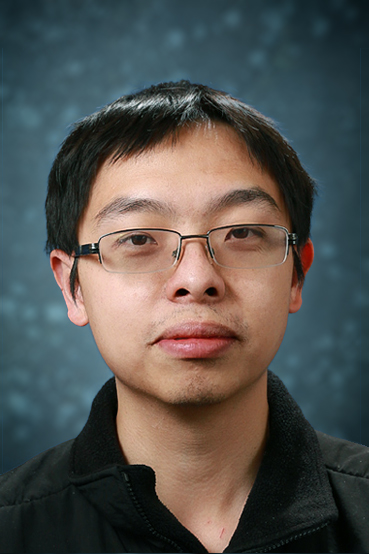 Dahua Lin (林達華)合作论文数Department of Information Engineering, The Chinese University of Hong Kong;Shanghai Artificial Intelligence Laboratory21
 Yu Qiao (乔宇)合作论文数Multimedia Laboratory, Shenzhen Institutes of Advanced Technology, Chinese Academy of Sciences;Shanghai AI Laboratory;Shenzhen University of Advanced Technology17
 Weijia Li (李唯嘉)合作论文数16
 Jiaqi Wang (王佳琦)合作论文数Shanghai AI Laboratory15
 Bo Zhang合作论文数Shanghai Aritifcal Intelligence Laboratory15
 Chao Xu (许超)合作论文数School of Intelligence Science and Technology, Peking University15
 Wei Li合作论文数14
 Xiaoyi Dong合作论文数The Chinese University of Hong Kong;Shanghai Artificial Intelligence Laboratory13
 Linke Ouyang (欧阳霖柯)合作论文数Shanghai Artificial Intelligence Laboratory12
 Wentao Zhang (张文涛)合作论文数Center of Machine Learning Research, Peking University10Zhiyuan Zhao合作论文数9
 Wenhai Wang (王文海)合作论文数Multimedia Laboratory, The Chinese University of Hong Kong9Botian Shi合作论文数Shanghai AI Laboratory9Zhenjiang Jin合作论文数8
 Lijun Wu合作论文数Microsoft Research AI4Science8
 Yuhang Zang (臧宇航)合作论文数Shanghai AI Laboratory8
 Pan Zhang合作论文数Shanghai AI Laboratory8
 Fei Deng (邓飞)合作论文数College of Computer Science and Cyber Security, Chengdu University of Technology8
 Kai Chen (陈恺)合作论文数8Yuhang Cao合作论文数Shanghai Artificial Intelligence Laboratory8
 Zichen Wen合作论文数Shanghai Jiao Tong University7
 Jifeng Dai (代季峰)合作论文数Department of Electronic Engineering, Tsinghua University7Yuan Qu合作论文数6
 Zhe Chen (陈喆)合作论文数Department of Computer Science and Technology, Nanjing University;Shanghai AI Laboratory6
 Lei Bai (白磊)合作论文数Shanghai AI Laboratory6
 Wenwei Zhang (张文蔚)合作论文数School of Computer Science and Engineering, College of Engineering, Nanyang Technological University;Multimedia Laboratory, Nanyang Technological University6
 Haodong Duan (段浩东)合作论文数ByteDance6
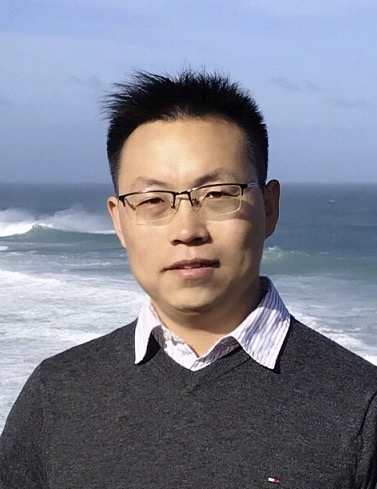 Lidong Bing (邴立东)合作论文数Shanda AI Research Institute, Shanda Group;MiroMind.ai6
 Jianye Hao (郝建业)合作论文数Deep Reinforcement Learning Laboratory, School of Computer Software, College of Intelligence and Computing, Tianjin University6
 Bowen Zhou (周伯文)合作论文数Center for Collaborative & Conversational Intelligence, Department of Electronic Engineering, Tsinghua University6Xiaomeng Zhao合作论文数5Jiang Wu合作论文数5WEI XINGJIAN (魏行健)合作论文数上海AI LAB5Pei Chu合作论文数5
 Xiangchao Yan合作论文数5Tao Chu合作论文数5
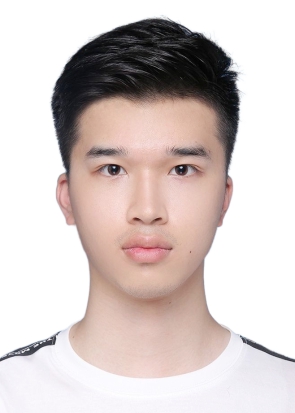 Jiakang Yuan (袁家康)合作论文数School of Information Science and Technology, Fudan University5
 Xuanhe Zhou (周煊赫)合作论文数School of Computer Science, Shanghai Jiao Tong University5
 Yilun Chen合作论文数Shanghai Artificial Intelligence Laboratory5
 Jiangmiao Pang (庞江淼)合作论文数OpenRobotLab, Shanghai AI Laboratory5
 Yue Deng (邓岳)合作论文数School of Computer Science and Engineering, Nanyang Technological Univeristy;DAMO Academy, Alibaba Group5
 Yao (Mark) Mu (穆尧)合作论文数AI Institute, School of Computer Science, Shanghai Jiao Tong University5
 Hang Yan (颜航)合作论文数Shanghai Artificial Intelligence Laboratory5Wanghan Xu合作论文数School of Electronic Information and Electrical Engineering, Shanghai Jiao Tong University4Zhongying Tu合作论文数4Jingwen Li合作论文数4Erfei Cui合作论文数4Jiahui Peng合作论文数4




