Relying on the powerful communication capabilities and rapidly changing geometric configurations, Low Earth Orbit (LEO) satellites have become strong candidates for offering the integrated communication and navigation (ICAN) services in future sixth generation (6G) networks. Considering the distinct performance and resource requirements, how to strike a balance between communication and navigation is one of the key design issues in LEO-ICAN systems. Against this backdrop, we take the transmission rate and geometric dilution of precision (GDOP) as evaluation metrics of communication and navigation performance, respectively, and formulate a weighted rate and GDOP maximization problem by jointly optimizing the beamforming design and satellite selection. To deal with the optimization problem, we split the original problem into the beamforming design and satellite selection subproblems, and propose a two-layer resource allocation algorithm to solve these subproblems iteratively until convergence. Specifically, in the inner layer, the beamforming design is modeled as a difference-of-convex (DC) problem, and the DC programming method is applied to maximize the communication rate. In the outer layer, the satellite selection is modeled as an overlapping coalition formation (OCF) game, and the OCF-based satellite selection algorithm is proposed to simultaneously reconcile the navigation GDOP. Extensive simulation results demonstrate the effectiveness of our proposed algorithms and reveal the trade-off between communication and navigation performance.
In order to realize the internet of everything in sixth generation (6G), the emerging 6G applications have brought increasing demands for the high-speed communication and high-accuracy positioning concurrently. Relying on the potentials of high transmission power, large quantity and excellent geometric topology, low earth orbit (LEO) satellites have become strong candidates for providing integrated communication and positioning (ICAP) services. However, the resource competition between services and high dynamics of space-ground environment make it intractable to strike a balance between communication and positioning performance, which is one of the key design issue in LEO-ICAP networks. Against this backdrop, we consider an ICAP system with multiple LEO satellites, and adopt communication rate and squared position error bound (SPEB) as performance evaluation metrics. Based on that, we further formulate a weighted utility maximization problem, where the balance between communication and positioning performance can be achieved by jointly optimizing the subcarrier and power allocation, while simultaneously satisfying users’ quality of service (QoS) requirements. To solve this mixed-integer nonlinear programming problem, we propose a compressed sensing-based resource allocation algorithm, where the sparsity property of optimization variables is exploited to reformulate the problem into a continuous form, and the sequential convex programming method is then applied to solve the problem iteratively until convergence. Extensive simulations verify the superiority of our proposed algorithm compared to various benchmark schemes, where the proposed algorithm achieves a sum-rate improvement of at least 22% and a SPEB reduction of at least 28%, showing its effectiveness in realizing the balanced optimization of communication and positioning performance.
Unmanned Aerial Vehicles (UAVs) face significant challenges in autonomous navigation due to their limited energy and computational resources. This paper introduces a knowledge-driven meta-learning framework specifically designed for ultra-fast path planning in lightweight UAVs. The proposed approach integrates domain-specific knowledge across three core domains-environment, network, and behavior-with visual data to enable adaptive learning from unlabeled data and rapid model retraining in various scenarios. To evaluate this framework, we created the Meta-UAV Optimal Path Dataset, a unique dataset tailored for complex, multi-domain path planning tasks. Additionally, a knowledge-driven loss function incorporating physics-based constraints ensures that the model's predictions align with real-world conditions. Experimental results demonstrate that our model achieves superior path efficiency, cross-domain adaptability, and lower resource consumption compared to traditional models, making it a suitable choice for real-world UAV applications.
Relying on the powerful communication capabilities, rapidly changing geometric configuration, and strong power, Low Earth Orbit (LEO) satellites own the potential to offer the integrated communication and navigation (ICAN) services with broader coverage, higher precision, and stronger reliability. Against this backdrop, LEO-ICAN has been attracting wide research attention. However, despite the above promising potential, many challenges are still unresolved in terms of architecture, key technologies and unified performance characterization. Therefore, in this article, we first elaborate three evolutionary stages of LEO-ICAN, where a fusional LEO-ICAN architecture is innovatively proposed to better meet the high-speed communication and high-precision navigation requirements of the emerging applications. Moreover, key technologies are discussed, and a use case referring to the joint optimization in fusional LEO-ICAN systems is studied, where we jointly optimize the satellite selection and beamforming design to simultaneously balancing the communication and navigation performance. Effectiveness of our proposed scheme is proved through extensive simulations. In addition, a performance evaluation index for LEO-ICAN systems is established based on the minimum variance unbiased estimate (MVUE), providing theoretical guidance and support for the improvement of both communication and navigation performance. Finally, open issues and future research directions are discussed.
Relying on the powerful communication capabilities and rapidly changing geometric configuration, the Low Earth Orbit (LEO) satellites have the potential to offer integrated communication and navigation (ICAN) services. However, the isolated resource utilization in the traditional satellite communication and navigation systems has led to a compromised system performance. Against this backdrop, this paper formulates a joint beamforming design and satellite selection optimization problem for the LEO-ICAN network to maximize the sum rate, while simultaneously reconciling the positioning performance. A two-layer algorithm is proposed, where the beamforming design in the inner layer is solved by the difference-of-convex programming method to maximize the sum rate, and the satellite selection in the outer layer is modeled as a coalition formation game to simultaneously reconcile the positioning performance. Simulation results verify the superiority of our proposed algorithms by increasing the sum rate by 16.6% and 29.3% compared with the conventional beamforming and satellite selection schemes, respectively.
In this article, an unmanned aerial vehicle (UAV)-mobile edge computing (MEC) network is considered, where cellular-connected UAVs can either handle the computing tasks locally or offload to base stations. Considering the emerging computation-intensive and delay-sensitive applications, how to strike a balance between energy and delay, is one of the key design issues in UAV-MEC networks. Against this backdrop, we establish a double-queue model innovatively, in which the virtual queue is introduced to sense the backlog status of the actual queue. As such, the delay guarantee of computing tasks can be turned into the stable control of virtual queues. The network quality and server heterogeneity are considered to schedule the workloads rationally. Based on the Lyapunov optimization method, we formulate the deterministic problem to achieve a tradeoff between the long-term energy consumption and the time-average traffic delay, by jointly optimizing the offloading decision, resource allocation and trajectory planning, subject to the constraints of queue stability, resource budgets and flying kinematics. To solve this mixed-integer nonlinear programming problem, we propose an energy-efficient and delay-aware online algorithm, in which the problem is first split into equivalent resource allocation and trajectory planning subproblems, and the closed-form solutions of power, slot and computing resource allocation can be derived. Then, based on the Lagrange dual and successive convex approximation methods, these subproblems are solved iteratively to explore the optimality. Extensive simulations validate the superiority of our proposed algorithm over various benchmark schemes, showing its effectiveness in minimizing the energy consumption while simultaneously maintaining the low latency.
Given the prevalence of Return-Oriented Programming (ROP) in exploitation, automating ROP has become a cornerstone of security research and education. Many security measures are evaluated against and thus restricted by the practical capability of ROP. However, the ROP automation state-of-the-art approaches have fundamental limitations in their gadget utilization and fall short of delivering the promise. To overcome these fundamental limitations, we design and implement TGRop which advances ROP automation to a new level. TGRop can leverage gadgets that operate memory and perform complex arithmetic calculations. By breaking down the entire computation into sub-goals, TGRop effectively reduces search space and thus maximizes the utility of the SAT/SMT solver. More importantly, TGRop employs a systematic approach to resolving data dependencies and eliminating side effects. Our thorough measurement shows that TGRop outperforms all existing approaches by more than 1.62–3.11 times. Additionally, we validate the rationale behind its design via analytical experiments. When running TGRop against the newest ROP mitigations, we discovered their weaknesses and reported to vendors.
Unmanned aerial vehicle (UAV)-assisted edge caching has been attracting significant attention, due to the potential of UAVs in delivering prompt content services to users. One of the key issues in UAV-assisted edge caching networks is the unpredictable user requests, which requires dynamic update of cache placement. Moreover, the timescale difference between cache placement strategy with long updating cycle and UAV trajectory planning strategy with short updating cycle makes them difficult to be optimized simultaneously. Against these backdrops, in this article, we consider a UAV-assisted edge caching network, where the UAVs act as aerial base stations (BSs), together with terrestrial BS to provide edge caching services for the mobile users. The user association, UAV cache placement and trajectory planning strategies are jointly optimized to maximize the throughput, while simultaneously satisfying the cache capacity and kinematics constraints of the UAVs. Specifically, we split the optimization problem into a cache placement subproblem in large timescale and a user association and trajectory planning subproblem in small timescale. A double deep Q-network (DDQN) method is adopted to solve the former subproblem, and an attention-based multi-agent deep deterministic policy gradient (ATMADDPG) algorithm is utilized to deal with the latter, in which the users and UAVs are regarded as heterogeneous agents to learn the accessing and flying policies for mutual benefits, respectively. Finally, a two-timescale deep reinforcement learning (2TDRL) algorithm is proposed to iteratively solve these two subproblems. Through comparisons with the other state-of-art schemes, simulation results verify the effectiveness of our proposed algorithm and demonstrate that a well-designed cache placement strategy can increase the throughput by 18.6%.
Deploying unmanned aerial vehicles (UAVs) as mobile edge computing (MEC) servers has been attracting significant attention, since the UAVs' inherent maneuverability and mobility can further reduce the distance between the users and computational functionalities. In the UAV-assisted MEC systems, the caching and offloading decision optimization, subject to the computation and energy constraints of the UAVs, is one of the key design issues. Against this backdrop, in this paper, we propose a novel cloud-edge framework to facilitate MEC in the UAV networks. Specifically, in our framework, the edge UAVs (EUAVs), together with the cloud, provide caching and computing services for the terrestrial users. In order to minimize the weighted sum cost of latency and energy consumption, we jointly optimize the caching and offloading decisions, the EUAV deployment, the radio and computation resource allocation, while simultaneously satisfying the UAVs' cache and computation capacity constraints, as well as the users' latency and energy consumption constraints. To solve this NP-hard problem, we propose a sequential convex programming (SCP) and sequential quadratic programming (SQP) based deep Q-learning (SS-DQN) algorithm. The proposed algorithm allows the system to adaptively adjust caching and offloading decisions with the EUAV deployment scheme and the resource allocation scheme obtained by SCP and SQP algorithms, respectively. Simulation results verify the superiority of our proposed algorithm compared to two benchmark schemes, and demonstrate how the combination of DRL and convex optimization can improve the system performance significantly.
The integration of communication and navigation is an important direction in modern satellite communication and navigation fields.The advancement of low earth orbit (LEO) mega-constellations provides the abundant load, link and terminal resources, as well as the powerful communication coverage and information transmission capabilities.Moreover, together with the fast-changing geometric configuration and strong power, the LEO satellites can complement, backup, and enhance the existing navigation systems to provide communication and navigation services with broader coverage, higher precision and reliability.In the LEO satellite-enabled communication and navigation-integrated system, the design of the transmitted signals and the processing of the received signals are crucial for achieving efficient communication and high-precision navigation.To this end, the evolution process of the communication and navigation fusion was first outlined.Then, it focused on the design of transmitting signals and the processing of receiving signals, the relevant schemes included the layout of the frame structure and the receiver were emphasized, respectively.Finally, the challenges and potential solutions that lie ahead in the future were explored.
Abstract To ensure assembly accuracy and efficiency, lots of holes are made directly on the laminated material composed of CFRP and Al alloys. However, because the different laminated sequence, the optimal process parameters are also different, which affects the hole-making quality of the laminated materials. First, the motion of helical milling was analyzed. Level values of influence the quality of the hole-making are determined, such as spindle speed, pitch and preload. The response surface method (RSM) was used to design experiments, and the burr height between Al alloy interlayer and the tear value of CFRP were used as the standard to analyze the experimental results. The optimal parameters combination for different laminated sequences were predicted and used for cutting force analysis. Secondly, the hole-making processes with variable parameters study were carried out, and the method of micro-lifting tool is proposed for the experimental study of the sudden change of axial force in the transition between interlayer with constant parameters. The results show that the aperture of the hole-making with variable parameters of the laminated materials using the optimal process parameters all meets the H9. The interlayer burr of the Al alloy and the tear value of the CFRP at the entrance and exit conform to the technical requirements. The hole-making axial forces of the laminated material are less than 50 N and 60 N, which are 70% and 83% of constant parameters milling. The effectively reduce the sudden change of axial force between interlayer.
To ensure assembly accuracy and efficiency, the holes are made directly on the laminated material composed of CFRP and Al alloys. However, due to the sudden change of axial force in the transition area with different laminated sequence, a method of micro-lifting tool was proposed. First, the motion of helical milling was analyzed. The level values of influence the quality of the hole-making are determined, such as spindle speed, pitch, and preload. The response surface method (RSM) was used to design experiments, and the burr height between Al alloy interlayer and the tear value of CFRP was used as the standard to analyze the experimental results. The optimal parameter combination for different laminated sequences were predicted and used for cutting force analysis. The results show that sudden increase in cutting force is prone to occur in the transition area. Secondly, the hole-making processes with variable parameters study were carried out, and the method of micro-lifting tool is proposed for the experimental study of the sudden change of axial force in the transition between interlayer with constant parameters. The results show that the aperture of the hole-making with variable parameters of the laminated materials using the optimal process parameters all meets the H9. The interlayer burr of the Al alloy and the tear value of the CFRP at the entrance and exit conform to the technical requirements. The hole-making axial forces of CFRP and Al alloy are less than 50 N and 60 N, which are 70% and 83% of constant parameters milling.
Big data and artificial intelligence has promoted the development of intelligent service.However, due to the high cost of data management and model training, as well as the increasing demands of users for latency and privacy, it is difficult to achieve the intelligent network based on the existing centralized network architecture.To address this issue, an artificial intelligence-based fog radio access network (AI-FRAN) architecture that supported distributed machine learning was proposed, and the fundamental principles that support the architecture were discussed.The key enabling techniques were identified that can realize the full utilization of communication resources, computing resources and cache resources in fog radio access network (F-RAN).Finally, the opportunities and challenges of AI-FRAN were discussed.
Integrating mobile edge computing (MEC) into the Internet of Things (IoT) enables the IoT devices of limited computation capabilities and energy to offload their computation-intensive and delay-sensitive tasks to the network edge, thereby providing high quality of service to the devices. In this article, we apply non-orthogonal multiple access (NOMA) technique to enable massive connectivity and investigate how it can be exploited to achieve energy-efficient MEC in IoT networks. In order to maximize the energy efficiency for offloading, while simultaneously satisfying the maximum tolerable delay constraints of IoT devices, a joint radio and computation resource allocation problem is formulated, which takes both intra- and inter-cell interference into consideration. To tackle this intractable mixed integer non-convex problem, we first decouple it into separated radio and computation resource allocation problems. Then, the radio resource allocation problem is further decomposed into a subchannel allocation problem and a power allocation problem, which can be solved by matching and sequential convex programming algorithms, respectively. Based on the obtained radio resource allocation solution, the computation resource allocation problem can be solved by utilizing the Knapsack method. Numerical results validate our analysis and show that our proposed scheme can significantly improve the energy efficiency of NOMA-enabled MEC in IoT networks compared to the existing baselines.
Non-orthogonal multiple access (NOMA) has been considered as a promising communication technology to enhance the spectral efficiency and support massive connections in fog radio access networks (F-RANs). In this paper, with the aim of maximizing the weighted sum rate while taking co-channel interference into consideration, a joint resource block (RB) and power allocation problem is formulated. To solve this problem, we first propose the optimal resource allocation scheme. Specifically, the monotonic optimization is applied and an outer polyblock approximation algorithm is proposed to get the global optimal solution. In order to reduce the computational complexity, we then propose the suboptimal resource allocation scheme. In particular, the original problem is decomposed into separated RB and power allocation problems. The RB allocation problem is modeled as a many-to-one matching game and a modified swap-enabled matching algorithm is proposed. The power allocation problem is converted into a convex form through some approximations and solved by a successive convex approximation algorithm. Simulation results demonstrate that the suboptimal scheme can achieve almost the same performance as the optimal scheme, while requiring much less computational complexity. In addition, the superiority of NOMA-enabled F-RANs over the conventional OMA-enabled F-RANs is verified.
KL crankshaft is one of the core parts of an internal combustion diesel engine for truck. The crankshaft bears complex loads and it's working environment is harsh. During the use of the KL crankshaft, fracture failure occurs multiple times. Firstly, physical and chemical analysis of KL crankshaft were done, fatigue failure is the main initial reason of crankshaft. Then the modal analysis and fatigue analysis of crankshaft were calculated by FEM software of ANSYS Workbench. We tested the bending and torsion fatigue on the KL crankshaft to verify the simulation results. Based on the physical and chemical analysis, simulation analysis and failure test of the KL crankshaft, it is concluded that the main factor of crankshaft failure is fatigue caused by overload.
Mobile edge computing (MEC) enables the users of limited computation capabilities and energy to offload their computation-intensive and delay-sensitive tasks to the network edge, thereby providing high quality of service to the users. In this paper, we investigate how non-orthogonal multiple access (NOMA) techniques can be exploited to achieve energy-efficient MEC in multi-cell networks. To this end, we first characterize the energy efficiency of the considered system, taking into account the impact of both intra- and inter-cell interference in multi-cell networks. We then jointly optimize the subchannel allocation, power allocation, and the computation resource allocation to maximize the energy efficiency of NOMA-enabled MEC, while simultaneously satisfying the maximum tolerable delay constraints of the users. Numerical results validate our analysis and show that our proposed scheme can significantly improve the energy efficiency of NOMA-enabled MEC in multi-cell networks compared to the existing baselines.
Taking full advantage of fog radio access network (F-RAN),non-orthogonal multiple access techniques,and artificial intelligence techniques,smart fog radio access networks (S-FRAN) have been envisioned as a promising framework to fulfill the stringent requirements of 6G wireless network,such as ultra-high data rate,ultra-low latency,and ultra-large number of devices.The principles of S-RAN were firstly presented.Based on which,the key technol-ogies,research progress and standardization of S-FRAN were introduced.Finally,the challenges of S-FRAN were identified.
对用于柴油发动机上由42CrMoA锻钢制成的曲轴进行了故障调查,在第3主直径中发现曲轴中出现的裂缝.对存在裂纹的曲轴第3主轴颈进行了宏观观测、化学成分分析、金相分析、扫描电镜分析和能谱分析,总结检测的结果,并结合理论知识分析了曲轴颈裂纹产生的原因.结果表明:曲轴颈的开裂模式为沿晶脆性开裂;曲轴颈材料存在较严重的微观偏析缺陷,这会导致曲轴存在异常的组织应力,这种应力也导致了曲轴第3主轴颈发生了沿晶脆裂.
In order to improve the manufacturing quality of holes (Φ3–Φ8 mm) and to optimize the hole drilling process in T300 carbon fiber-reinforced plastic (CFRP) and 7050-T7 Al alloy stacks, a prediction model of multiple objective parameter optimization was proposed based on a back propagation (BP) neural network algorithm. Four parameters of feed rate, spindle speed, drilling diameter, and cushion plate were taken as the input layer parameters to study the manufacturing quality of holes in four stack types: CFRP/Al, Al/CFRP, Al/CFRP/Al, and CFRP/Al/CFRP. Delamination and tearing defects often appear in the drilling process; thus, a certain degree of defects in CFRP was selected as the output parameter, in an effort to build a prediction model of drilling quality. After the neural network model of the optimized hole-making process of an 8–14–1 three-layer topology was corrected by 170 steps, the error was reduced to 0.00016882, the regression fitting was 0.99978, and the fitting error of training samples was 10−2~10−5. The prediction model of the number of defective holes provided basically similar results to the experimental data. This indicates that the prediction model based on a BP neural network has good prediction ability. Based on the prediction of parameters, verification tests were performed, and the number of defective holes in CFRP was reduced while the manufacturing quality of the holes was improved significantly; the qualified rate of manufactured holes reached 97%.
 Morgan Peng (彭木根)合作论文数School of Information and Communication Engineering, Beijing University of Posts and Telecommunications;State Key Laboratory of Networking and Switching Technology, Beijing University of Posts and Telecommunications15
 Chenxi Liu (刘晨熙)合作论文数School of Information and Communication Engineering, Beijing University of Posts and Telecommunications7
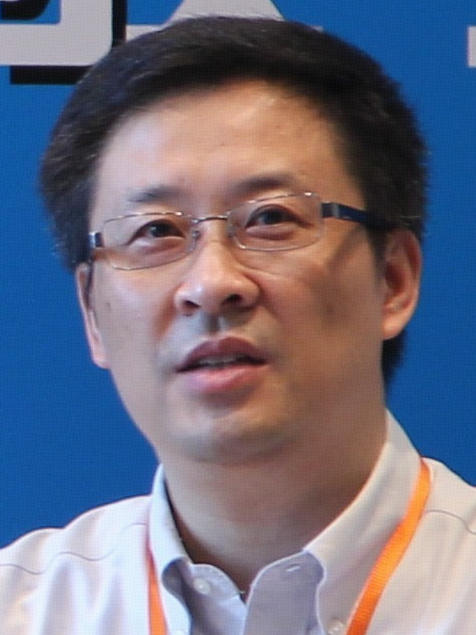 Yiwei Shi (石艺尉)合作论文数School of Information Science and Technology, Fudan University;Key Laboratory for Information Science of Electromagnetic Waves, Ministry of Education Fudan University7
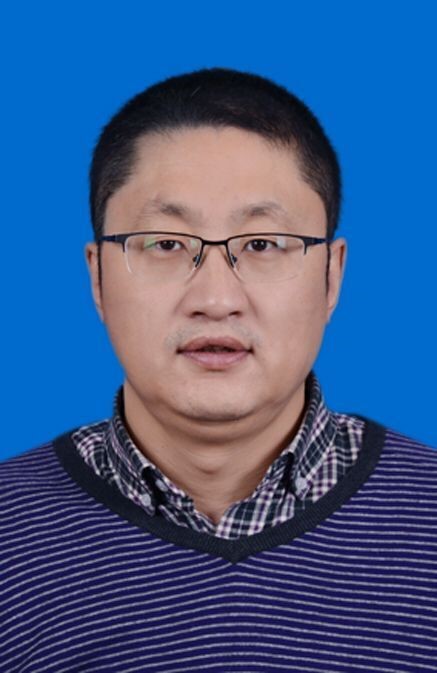 Anyuan Jiao (焦安源)合作论文数University of Science and Technology Liaoning6
 Xiaosong Zhu (朱晓松)合作论文数School of Information Science and Technology, Fudan University;Key Laboratory for Information Science of Electromagnetic Waves, Ministry of Education, Fudan University3
 Zhen Zhang合作论文数2Xiao-Li Tang合作论文数2GuoFu Zhang合作论文数2Yujing He合作论文数2Xue Li合作论文数2
 Bangshan Sun合作论文数Fudan University, Fudan University2
 Wei Huo (霍玮)合作论文数Institute of Information Engineering, Chinese Academy of Sciences;University of Chinese Academy of Sciences2Zheng Zhou (周正)合作论文数School of Information and Communication Engineering, Beijing University of Posts and Telecommunications2Yongxiang Jiang (蒋永翔)合作论文数2
 Yaqiong Liu (刘雅琼)合作论文数School of Information and Communication Engineering, Beijing University of Posts and Telecommunications2ZHAO Yafei (赵亚飞)合作论文数1Nanyu Zhong合作论文数1Xian Zhang合作论文数1
 Yanyan Zou (邹燕燕)合作论文数Institute of Information Engineering, Chinese Academy of Sciences;University of Chinese Academy of Sciences1Jiahuan Xu合作论文数1Muyue Feng合作论文数1Zhang Yue合作论文数1Qian Tang合作论文数1Shiyang Wang合作论文数1
 Yue Zhang (张越)合作论文数School of Mechanical Engineering and Mechanics, Xiangtan University1Yang Xiao合作论文数Institute of Information Engineering, Chinese Academy of Sciences1Gu Ban合作论文数1
 Yaohua Sun (孙耀华)合作论文数School of Information and Communication Engineering, Beijing University of Posts and Telecommunications1
 Xueyan Cao合作论文数Key Laboratory of Universal Wireless Communications (Ministry of Education), Beijing University of Posts and Telecommunications, Beijing, China1
 Yuan Ai (艾元)合作论文数1Xiaobin Zou (邹晓彬)合作论文数1Hua Hua (华花)合作论文数1He Su合作论文数1
 Xiangtian Zhao合作论文数1XinNan Long (龙新南)合作论文数1FengHui Wang (王凤辉)合作论文数1JunWei Deng (邓军伟)合作论文数1
 Shi Yan (闫实)合作论文数School of Information and Communication Engineering, Beijing Post and Telecommunications University1Weijun Liu (刘伟军)合作论文数沈阳工业大学机械工程学院1
 Weixuan Mao合作论文数1
 Yuanwei Liu合作论文数Department of Electrical and Computer Engineering, The University of Hong Kong1Zhonghan Wei (魏中晗)合作论文数1
 Xuan Zeng (曾璇)合作论文数School of Microelectronics, Fudan University;State Key Laboratory of ASIC and System, Fudan University1
 Yueqi Chen合作论文数School of Information Science & Engineering, Lanzhou University1
 Xinyu Xing合作论文数Department of Computer Science, McCormick School of Engineering, Northwestern University1
 Zimu Yuan (袁子牧)合作论文数Institute of Information Engineering, Chinese Academy of Sciences;University of Chinese Academy of Sciences1Xiaoxia Sheng (盛小夏)合作论文数1Katsumasa Iwai合作论文数Sendai National College of Technology1
 Menghao Li (李孟豪)合作论文数Key Laboratory of Network Assessment Technology, Institute of Information Engineering, Chinese Academy of Siences1




