Continual learning is a long-standing challenge in robot policy learning, where a policy must acquire new skills over time without catastrophically forgetting previously learned ones. While prior work has extensively studied continual learning in relatively small behavior cloning (BC) policy models trained from scratch, its behavior in modern large-scale pretrained Vision-Language-Action (VLA) models remains underexplored. In this work, we find that pretrained VLAs are remarkably resistant to forgetting compared with smaller policy models trained from scratch. Simple Experience Replay (ER) works surprisingly well on VLAs, sometimes achieving zero forgetting even with a small replay data size. Our analysis reveals that pretraining plays a critical role in downstream continual learning performance: large pretrained models mitigate forgetting with a small replay buffer size while maintaining strong forward learning capabilities. Furthermore, we find that VLAs can retain relevant knowledge from prior tasks despite performance degradation during learning new tasks. This knowledge retention enables rapid recovery of seemingly forgotten skills through finetuning. Together, these insights imply that large-scale pretraining fundamentally changes the dynamics of continual learning, enabling models to continually acquire new skills over time with simple replay.
The slow, sequential nature of autoregressive (AR) language models has driven the adoption of parallel decoding methods. However, these non-autoregressive models often sacrifice generation quality because they struggle to model the complex joint distribution of token sequences. To bridge this gap, we introduce Gumbel Distillation, a novel distillation technique that enables parallel decoders to learn this distribution effectively. Our method leverages the Gumbel-Max trick to create a deterministic mapping from a latent Gumbel noise space to the output tokens of a high-performing AR teacher. As a model-agnostic technique, Gumbel Distillation seamlessly integrates with diverse parallel decoding architectures, including MDLM and BD3-LM. Experiments on LM1B and OpenWebText show that Gumbel Distillation substantially improves the generation quality of parallel language models, achieving a 30.0% improvement in MAUVE Score and 10.5% in generative perplexity over MDLM trained on OpenWebText dataset.
We introduce , a recurrent Transformer architecture with fixed-size memory that generalizes sliding-window attention while remaining parallelizable during training. consists of two coupled models: a prefiller Q, which leverages full attention[In practice, we use interleaved full and sliding-window attention for Q, as this yields stronger performance. The essential requirement is that Q be more expressive than P, with access to the full history.] to produce memory targets m'_t, and a decoder P, which uses only sliding-window attention and recurrent K/V injection to produce decoder memories m_t for next-token prediction. We train with a memory consistency loss that aligns m_t with m'_t, allowing inference to use P alone. Empirically, improves validation loss and downstream pretraining benchmarks over sliding-window and latent recurrent transformer baselines. Moreover, sharing parameters between P and Q reduces parameter memory while preserving most of the gains.
Prompt optimization improves language models without updating their weights by searching for a better system prompt, but its effectiveness varies widely across tasks. We study what makes a task amenable to prompt optimization. We show that the reward variance across different system prompts can be decomposed into two components: variance among responses, which captures generation stochasticity, and variance among system prompts, which captures differences in system prompt quality. Prompt optimization succeeds when variance among system prompts is sufficiently large, but fails when variance among responses dominates the variance of the system prompts. Surprisingly, we further show that scaling to more user prompts can hurt optimization by reducing variance among system prompts, especially on heterogeneous datasets where different user prompts favor different system prompts. Motivated by this insight, we propose p1, a simple user prompt filtering method that selects a small subset of user prompts with high variance across candidate system prompts. This subset of user prompts allows one to distinguish a good system prompt from a bad one, making system optimization easier. Experiments on reasoning benchmarks show that p1 substantially improves prompt optimization over training on the full dataset and outperforms strong baselines such as GEPA. Notably, training on only two prompts from AIME 24 yields a system prompt that generalizes well to other reasoning benchmarks.
A long-term goal of language agents is to learn and improve through their own experience, ultimately outperforming humans in complex, real-world tasks. However, training agents from experience data with reinforcement learning remains difficult in many environments, which either lack verifiable rewards (e.g., websites) or require inefficient long-horizon rollouts (e.g., multi-turn tool use). As a result, most current agents rely on supervised fine-tuning on expert data, which is challenging to scale and generalizes poorly. This limitation stems from the nature of expert demonstrations: they capture only a narrow range of scenarios, and expose the agent to limited environment diversity. We address this limitation with a middle-ground paradigm we call : interaction data generated by the agent's own actions, where the resulting future states serve as supervision without reward signals. Within this paradigm, we study two strategies of using such data: (1) implicit world modeling, which uses collected states to ground the policy in environment dynamics; and (2) self-reflection, where the agent learns from its suboptimal actions to improve reasoning and decision-making. Evaluation across eight diverse environments and multiple model families shows that our approaches consistently improve effectiveness and out-of-domain generalization, highlighting the value of early experience. Moreover, in environments with verifiable rewards, our results provide promising signals that early experience offers a strong foundation for subsequent reinforcement learning, making it a practical bridge between imitation learning and fully experience-driven agents.
Continual Reinforcement Learning (CRL) for Vision-Language-Action (VLA) models is a promising direction toward self-improving embodied agents that can adapt in openended, evolving environments. However, conventional wisdom from continual learning suggests that naive Sequential Fine-Tuning (Seq. FT) leads to catastrophic forgetting, necessitating complex CRL strategies. In this work, we take a step back and conduct a systematic study of CRL for large pretrained VLAs across three models and five challenging lifelong RL benchmarks. We find that, contrary to established belief, simple Seq. FT with low-rank adaptation (LoRA) is remarkably strong: it achieves high plasticity, exhibits little to no forgetting, and retains strong zero-shot generalization, frequently outperforming more sophisticated CRL methods. Through detailed analysis, we show that this robustness arises from a synergy between the large pretrained model, parameter-efficient adaptation, and on-policy RL. Together, these components reshape the stability-plasticity trade-off, making continual adaptation both stable and scalable. Our results position Sequential Fine-Tuning as a powerful method for continual RL with VLAs and provide new insights into lifelong learning in the large model era. Code is available at github.com/UT-Austin-RobIn/continual-vla-rl.
While reinforcement learning (RL) can empower large language model (LLM) agents by enabling self-improvement through interaction, its practical adoption remains challenging due to costly rollouts, limited task diversity, unreliable reward signals, and infrastructure complexity, all of which obstruct the collection of scalable experience data. To address these challenges, we introduce DreamGym, the first unified framework designed to synthesize diverse experiences with scalability in mind to enable effective online RL training for autonomous agents. Rather than relying on expensive real-environment rollouts, DreamGym distills environment dynamics into a reasoning-based experience model that derives consistent state transitions and feedback signals through step-by-step reasoning, enabling scalable agent rollout collection for RL. To improve the stability and quality of transitions, DreamGym leverages an experience replay buffer initialized with offline real-world data and continuously enriched with fresh interactions to actively support agent training. To improve knowledge acquisition, DreamGym adaptively generates new tasks that challenge the current agent policy, enabling more effective online curriculum learning. Experiments across diverse environments and agent backbones demonstrate that DreamGym substantially improves RL training, both in fully synthetic settings and in sim-to-real transfer scenarios. On non-RL-ready tasks like WebArena, DreamGym outperforms all baselines by over 150%. And in RL-ready but costly settings, it matches GRPO and PPO performance using only synthetic interactions. When transferring a policy trained purely on synthetic experiences to real-environment RL, DreamGym achieves an additional 64.5% performance gain while using no more than 10% of real-world interactions.
Diffusion large language models (dLLMs) are emerging as an efficient alternative to autoregressive models due to their ability to decode multiple tokens in parallel. However, aligning dLLMs with human preferences or task-specific rewards via reinforcement learning (RL) is challenging because their intractable log-likelihood precludes the direct application of standard policy gradient methods. While prior work uses surrogates like the evidence lower bound (ELBO), these one-sided approximations can introduce significant policy gradient bias. To address this, we propose the Sandwiched Policy Gradient (SPG) that leverages both an upper and a lower bound of the true log-likelihood. Experiments show that SPG significantly outperforms baselines based on ELBO or one-step estimation. Specifically, SPG improves the accuracy over state-of-the-art RL methods for dLLMs by 3.6% on GSM8K, 2.6% on MATH500, 18.4% on Countdown, and 27.0% on Sudoku.
AdamW has been the default optimizer for transformer pretraining. For many years, our community searched for faster and more stable optimizers with only constrained positive outcomes. In this work, we propose a \textbf{single-line modification in Pytorch} to any momentum-based optimizer, which we rename cautious optimizer, e.g. C-AdamW and C-Lion. Our theoretical result shows that this modification preserves Adam's Hamiltonian function and it does not break the convergence guarantee under the Lyapunov analysis. In addition, a whole new family of optimizers is revealed by our theoretical insight. Among them, we pick the simplest one for empirical experiments, showing not only consistent speed-up on LLM pretraining and post-training tasks, but also better results in MAE pretraining, with minimum extra tuning on hyperparameters.
The most fundamental capability of modern AI methods such as Large Language Models (LLMs) is the ability to predict the next token in a long sequence of tokens, known as “sequence modeling.” Although the Transformers model is the current dominant approach to sequence modeling, its quadratic computational cost with respect to sequence length is a significant drawback. State-space models (SSMs) offer a promising alternative due to their linear decoding efficiency and high parallelizability during training. However, existing SSMs often rely on seemingly ad hoc linear recurrence designs.In this work, we explore SSM design through the lens of online learning, conceptualizing SSMs as meta-modules for specific online learning problems. This approach links SSM design to formulating precise online learning objectives, with state transition rules derived from optimizing these objectives.Based on this insight, we introduce a novel deep SSM architecture based on the implicit update for optimizing an online regression objective. Our experimental results show that our models outperform state-of-the-art SSMs, including the Mamba model, on standard sequence modeling benchmarks and language modeling tasks.
Rectified Flow offers a simple and effective approach to high-quality generative modeling by learning a velocity field. However, we identify a limitation in directly modeling the velocity with an unconstrained neural network: the learned velocity often fails to satisfy certain boundary conditions, leading to inaccurate velocity field estimations that deviate from the desired ODE. This issue is particularly critical during stochastic sampling at inference, as the score function's errors are amplified near the boundary. To mitigate this, we propose a Boundary-enforced Rectified Flow Model (Boundary RF Model), in which we enforce boundary conditions with a minimal code modification. Boundary RF Model improves performance over vanilla RF model, demonstrating 8.01% improvement in FID score on ImageNet using ODE sampling and 8.98% improvement using SDE sampling.
Achieving precise alignment between textual instructions and generated images in text-to-image generation is a significant challenge, particularly in rendering written text within images. Sate-of-the-art models like Stable Diffusion 3 (SD3), Flux, and AuraFlow still struggle with accurate text depiction, resulting in misspelled or inconsistent text. We introduce a training-free method with minimal computational overhead that significantly enhances text rendering quality. Specifically, we introduce an overshooting sampler for pre-trained rectified flow (RF) models, by alternating between over-simulating the learned ordinary differential equation (ODE) and reintroducing noise. Compared to the Euler sampler, the overshooting sampler effectively introduces an extra Langevin dynamics term that can help correct the compounding error from successive Euler steps and therefore improve the text rendering. However, when the overshooting strength is high, we observe over-smoothing artifacts on the generated images. To address this issue, we propose an Attention Modulated Overshooting sampler (AMO), which adaptively control the strength of overshooting for each image patch according to their attention score with the text content. AMO demonstrates a 32.3% and 35.9% improvement in text rendering accuracy on SD3 and Flux without compromising overall image quality or increasing inference cost.
Imitation Learning is a simple and widely used framework for acquiring robotic manipulation skills through expert demonstrations. While recent advances have applied diffusion models with promising results, key challenges remain—most notably, the temporal inconsistency in action generation and the high computational cost, especially in 3D tasks. In this paper, we propose a diffusion-based imitation learning framework that addresses both challenges through architectural improvements. Prior action sequences are incorporated into the diffusion policy via ControlNeXt to explicitly enforce temporal consistency, enabling stateful action generation. To minimize computational overhead, ControlNeXt injects control signals using only a lightweight convolutional modulation branch, avoiding the need for deep or redundant networks typically required in prior conditioning methods. We evaluate our method on Adroit and MetaWorld benchmarks, where it outperforms prior diffusion-based approaches in terms of task success rate and time efficiency.
By combining classical planning methods with large language models (LLMs), recent research such as LLM+P has enabled agents to plan for general tasks given in natural language. However, scaling these methods to general-purpose service robots remains challenging: (1) classical planning algorithms generally require a detailed and consistent specification of the environment, which is not always readily available; and (2) existing frameworks mainly focus on isolated planning tasks, whereas robots are often meant to serve in long-term continuous deployments, and therefore must maintain a dynamic memory of the environment which can be updated with multi-modal inputs and extracted as planning knowledge for future tasks. To address these two issues, this paper introduces L3M+P (Lifelong LLM+P), a framework that uses an external knowledge graph as a representation of the world state. The graph can be updated from multiple sources of information, including sensory input and natural language interactions with humans. L3M+P enforces rules for the expected format of the absolute world state graph to maintain consistency between graph updates. At planning time, given a natural language description of a task, L3M+P retrieves context from the knowledge graph and generates a problem definition for classical planners. Evaluated on household robot simulators and on a real-world service robot, L3M+P achieves significant improvement over baseline methods both on accurately registering natural language state changes and on correctly generating plans, thanks to the knowledge graph retrieval and verification.
Large Language Models (LLMs) exhibit impressive performance across various tasks, but deploying them for inference poses challenges. Their high resource demands often necessitate complex, costly multi-GPU pipelines, or the use of smaller, less capable models. While quantization offers a promising solution utilizing lower precision for model storage, existing methods frequently experience significant performance drops at lower precision levels. Additionally, they typically provide only a limited set of solutions at specific bit levels, many of which are extensively manually tuned. To address these challenges, we propose a new method called \textbf{SKIM}: Scaled K-means clustering wIth Mixed precision. Our approach introduces two novel techniques: 1. A \textit{greedy algorithm} to solve approximately optimal bit allocation across weight channels, and 2. A \textit{trainable scaling vector} for non-differentiable K-means clustering. These techniques substantially improve the model performance and can be adapted to any given bit. Notably, in terms of perplexity, our method narrows the gap between quantized LLaMA models and their full precision counterparts by around \textbf{14\%} on average.
Modern deep learning heavily depends on adaptive optimizers such as Adam and its variants, which are renowned for their capacity to handle model scaling and streamline hyperparameter tuning. However, these algorithms typically experience high memory overhead caused by the accumulation of optimization states, leading to a critical challenge in training large-scale network models. In this study, we introduce a novel adaptive optimizer, H-Fac, which incorporates a memory-efficient factorization approach to address this challenge. By employing a rank-1 parameterization for both momentum and scaling parameter estimators, H-Fac reduces memory costs to a sublinear level while maintaining competitive performance across a wide range of architectures. We develop our algorithms based on principles derived from Hamiltonian dynamics, providing robust theoretical underpinnings in optimization dynamics and convergence guarantees. These optimization algorithms are designed to be both straightforward and adaptable, facilitating easy implementation in diverse settings.
In-context imitation learning (ICIL) enables robots to learn tasks from prompts consisting of just a handful of demonstrations. By eliminating the need for parameter updates at deployment time, this paradigm supports few-shot adaptation to novel tasks. However, recent ICIL methods rely on Transformers, which have computational limitations and tend to underperform when handling longer prompts than those seen during training. In this work, we introduce RoboSSM, a scalable recipe for in-context imitation learning based on state-space models (SSM). Specifically, RoboSSM replaces Transformers with Longhorn – a state-of-the-art SSM that provides linear-time inference and strong extrapolation capabilities, making it well-suited for long-context prompts. We evaluate our approach on the LIBERO benchmark and compare it against strong Transformer-based ICIL baselines. Experiments show that RoboSSM extrapolates effectively to varying numbers of in-context demonstrations, yields high performance on unseen tasks, and remains robust in long-horizon scenarios. These results highlight the potential of SSMs as an efficient and scalable backbone for ICIL. Our code is available at https://github.com/youngjuY/RoboSSM.
Multi-task Reinforcement Learning (MTRL) has emerged as a critical training paradigm for applying reinforcement learning (RL) to a set of complex real-world robotic tasks, which demands a generalizable and robust policy. At the same time, massively parallelized training has gained popularity, not only for significantly accelerating data collection through GPU-accelerated simulation but also for enabling diverse data collection across multiple tasks by simulating heterogeneous scenes in parallel. However, existing MTRL research has largely been limited to off-policy methods like SAC in the low-parallelization regime. MTRL could capitalize on the higher asymptotic performance of on-policy algorithms, whose batches require data from the current policy, and as a result, take advantage of massive parallelization offered by GPU-accelerated simulation. To bridge this gap, we introduce a massively parallelized Multi-Task Benchmark for robotics (MTBench), an open-sourced benchmark featuring a broad distribution of 50 manipulation tasks and 20 locomotion tasks, implemented using the GPU-accelerated simulator IsaacGym. MTBench also includes four base RL algorithms combined with seven state-of-the-art MTRL algorithms and architectures, providing a unified framework for evaluating their performance. Our extensive experiments highlight the superior speed of evaluating MTRL approaches using MTBench, while also uncovering unique challenges that arise from combining massive parallelism with MTRL. Code is available at https://github.com/Viraj-Joshi/MTBench
Lean is an advanced proof assistant designed to facilitate formal theorem proving by providing a variety of interactive feedback. In this paper, we explore methodologies to leverage proof assistant feedback to augment the capabilities of large language models in constructing formal proofs. First, we deploy online reinforcement learning using Lean verification outcomes as the reward signal to improve the proof completion policy. This straightforward approach shows great promise in enhancing the model's alignment with the formal verification system. In addition, we propose RMaxTS, a variant of Monte-Carlo tree search that employs an intrinsic-reward-driven exploration strategy to generate diverse proof paths. The tree structure is organized to represent the transitions of intermediate tactic states, extracted from the compilation messages given by Lean's tactic mode. The intrinsic reward is constructed to incentivize the discovery of novel tactic states, which helps to to mitigate the sparse-reward problem inherent in proof search. These techniques lead to a more efficient planning scheme for formal proof generation, achieving new state-of-the-art results on both miniF2F and ProofNet benchmarks.
Modern adaptive optimization methods, such as Adam and its variants, have emerged as the most widely used tools in deep learning over recent years. These algorithms offer automatic mechanisms for dynamically adjusting the update step based on estimates of gradient statistics. Compared to traditional algorithms like Stochastic Gradient Descent, these adaptive methods are typically more robust to model scale and hyperparameter tuning. However, the gradient statistics employed by these methods often do not leverage sufficient gradient covariance information, leading to suboptimal updates in certain directions of the parameter space and potentially slower convergence. In this work, we keep track of such covariance statistics in the form of a structured preconditioner matrix. Unlike other works, our approach does not apply direct approximations to estimate this matrix. We instead implement an invertible transformation that maps the preconditioner matrix into a new space where it becomes approximately diagonal. This enables a diagonal approximation of the preconditioner matrix in the transformed space, offering several computational advantages. Empirical results show that our approach can substantially enhance the convergence speed of modern adaptive optimizers. Notably, for large language models like LLaMA, we can achieve a speedup of 2x compared to the baseline Adam. Additionally, our method can be integrated with memory-efficient optimizers like Adafactor to manage computational overhead.
 Peter Stone合作论文数Department of Computer Science, College of Natural Sciences, The University of Texas at Austin;Sony AI;Sony Research33
 Qiang Liu合作论文数Department of Computer Science, College of Natural Sciences, The University of Texas at Austin24
 Xuesu Xiao合作论文数Department of Computer Science, George Mason University;Unsorted13
 Garrett Warnell合作论文数U.S. Army DEVCOM Army Research Laboratory7
 Zifan Xu合作论文数Computer Science Department, University of Texas at Austin5
 Chong Ruan合作论文数DeepSeek4
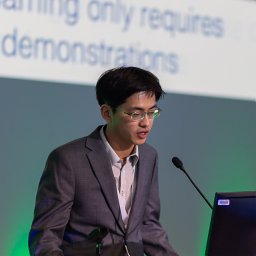 Yifeng Zhu合作论文数Department of Computer Science, The University of Texas4Yihao Feng合作论文数Salesforce Research4
 Xixi Hu合作论文数The University of Texas at Austin4
 Shahaf S. Shperberg合作论文数Department of Software and Information Systems Engineering, Ben-Gurion University of the Negev4
 Yuke Zhu (朱玉可)合作论文数Department of Computer Science, College of Natural Sciences, The University of Texas at Austin;NVIDIA4Qiushi Du合作论文数3Wenjun Gao合作论文数3Zehui Ren合作论文数3Kai Dong合作论文数3Liyue Zhang合作论文数3
 Bingxuan Wang (王炳宣)合作论文数DeepSeek AI;Sensetime3Yaofeng Sun合作论文数3Haowei Zhang合作论文数3Dejian Yang合作论文数3Lizhang Chen合作论文数3
 Jiaheng Hu (胡佳恒)合作论文数The University of Texas at Austin;Google DeepMind3Hanwei Xu合作论文数3
 Anirudh Nair合作论文数Mathematics, University of Texas at Austin, Austin, Texas3
 Zhihong Shao (邵智宏)合作论文数3
 Fuli Luo (罗福莉)合作论文数Xiaomi Corporation3
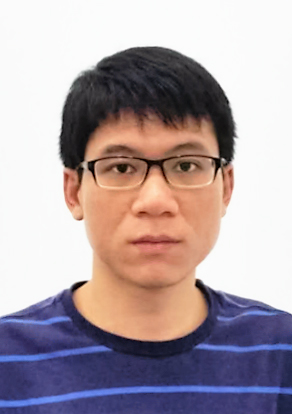 Wen Liu (刘闻)合作论文数DeepSeek AI3
 Junxiao Song合作论文数DeepSeek;Department of ECE, Hong Kong University of Science and Technology3
 Zizhao Wang合作论文数University of Texas at Austin;OpenAI3
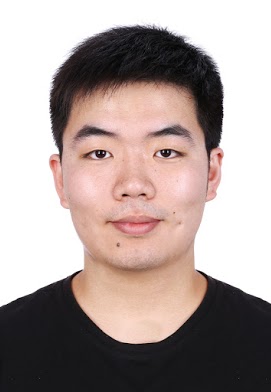 Lemeng Wu合作论文数Department of Computer Science, The University of Texas at Austin3
 Yuqian Jiang合作论文数Stealth Startup3
 Zhenda Xie (解振达)合作论文数DeepSeek AI3
 Qihao Zhu (朱琪豪)合作论文数DeepSeek3
 Kaizhao Liang合作论文数University of Texas at Austin;SambaNova Systems, Inc3
 Peiyi Wang合作论文数National Key Laboratory for Multimedia Information Processing, Peking University3Mingchuan Zhang合作论文数2DeepSeek-AI合作论文数2Gauraang Dhamankar合作论文数2
 Damai Dai (代达劢)合作论文数DeepSeek2
 Zhuoshu Li合作论文数International Design Institute, Zhejiang University2William Yue合作论文数2Xuan Lu合作论文数2Y. Wu合作论文数2Hui Qu合作论文数2Minghua Zhang合作论文数2Jianzhong Guo合作论文数2Xin Xie合作论文数2Shiyu Wang合作论文数2




