In apparel recognition, deep neural network models are often trained separately for different verticals (e.g. [7]). However, using specialized models for different verticals is not scalable and expensive to deploy. This paper addresses the problem of learning one unified embedding model for multiple object verticals (e.g. all apparel classes) without sacrificing accuracy. The problem is tackled from two aspects: training data and training difficulty. On the training data aspect, we figure out that for a single model trained with triplet loss, there is an accuracy sweet spot in terms of how many verticals are trained together. To ease the training difficulty, a novel learning scheme is proposed by using the output from specialized models as learning targets so that L2 loss can be used instead of triplet loss. This new loss makes the training easier and make it possible for more efficient use of the feature space. The end result is a unified model which can achieve the same retrieval accuracy as a number of separate specialized models, while having the model complexity as one.
A key problem in many data integration tasks is that data is often in the wrong format and needs to be converted into a different format. This can be a very time consuming and tedious task. In this paper we propose an approach that can learn data transformations automatically from examples. Our approach not only identifies the transformations that are consistent with all examples, but also recommends the transformations that most likely transform the rest of unseen data correctly. The experimental results show that in six transformation scenarios our approach produces good results.
This paper presents an abstract for a general data transformation approach. Using programming by demonstration technique, we learn the transformation rules through user given examples. These transformation rules are automatically generated from a predefined grammar. Due to the grammar space is huge, we propose a grammar space reduction method to reduce the search space and a sketch of search algorithm is adopted to identify the rules that are consistent with the examples. The final experimental results show our approach achieves promising results on different transformation scenarios.
In this paper, we proposed a pedestrian detection system based on laser and image data fusion. The high speed of laser data based location and precise of image based classification are fully explored. First, laser scanner point data is clustered into segments, each of which implies a pedestrian candidate. Then, the segments are projected to the image domain to form regions of interest (ROI) on the image, given camera calibration parameters. Finally two SVM classifiers on Histogram of Oriented Gradient (HOG) features are used to precisely locate pedestrians on the ROI. Experiments report over 30 times higher speed than the state-of-the-art method and a comparable detection rate.
Simultaneously segmenting and labeling images is a fundamental problem in Computer Vision. In this paper, we introduce a hierarchical CRF model to deal with the problem of labeling images of street scenes by several distinctive object classes. In addition to learning a CRF model from all the labeled images, we group images into clusters of similar images and learn a CRF model from each cluster separately. When labeling a new image, we pick the closest cluster and use the associated CRF model to label this image. Experimental results show that this hierarchical image labeling method is comparable to, and in many cases superior to, previous methods on benchmark data sets. In addition to segmentation and labeling results, we also showed how to apply the image labeling result to rerank Google similar images.
Detecting and reading text from natural images is a hard computer vision task that is central to a variety of emerging applications. Related problems like document character recognition have been widely studied by computer vision and machine learning researchers and are virtually solved for practical applications like reading handwritten digits. Reliably recognizing characters in more complex scenes like photographs, however, is far more difficult: the best existing methods lag well behind human performance on the same tasks. In this paper we attack the problem of recognizing digits in a real application using unsupervised feature learning methods: reading house numbers from street level photos. To this end, we introduce a new benchmark dataset for research use containing over 600,000 labeled digits cropped from Street View images. We then demonstrate the difficulty of recognizing these digits when the problem is approached with hand-designed features. Finally, we employ variants of two recently proposed unsupervised feature learning methods and find that they are convincingly superior on our benchmarks.
The last two years have witnessed the introduction and rapid expansion of products based upon large, systematically-gathered, street-level image collections, such as Google Street View, EveryScape, and Mapjack. In the process of gathering images of public spaces, these projects also capture license plates, faces, and other information considered sensitive from a privacy standpoint. In this work, we present a system that addresses the challenge of automatically detecting and blurring faces and license plates for the purpose of privacy protection in Google Street View. Though some in the field would claim face detection is “solved”, we show that state-of-the-art face detectors alone are not sufficient to achieve the recall desired for large-scale privacy protection. In this paper we present a system that combines a standard sliding-window detector tuned for a high recall, low-precision operating point with a fast post-processing stage that is able to remove additional false positives by incorporating domain-specific information not available to the sliding-window detector. Using a completely automatic system, we are able to sufficiently blur more than 89% of faces and 94 - 96% of license plates in evaluation sets sampled from Google Street View imagery.
We propose a method that detects and segments multiple, partially occluded objects in images. A part hierarchy is defined for the object class. Both the segmentation and detection tasks are formulated as binary classification problem. A whole-object segmentor and several part detectors are learned by boosting local shape feature based weak classifiers. Given a new image, the part detectors are applied to obtain a number of part responses. All the edge pixels in the image that positively contribute to the part responses are extracted. A joint likelihood of multiple objects is defined based on the part detection responses and the object edges. Computation of the joint likelihood includes an inter-object occlusion reasoning that is based on the object silhouettes extracted with the whole-object segmentor. By maximizing the joint likelihood, part detection responses are grouped, merged, and assigned to multiple object hypotheses. The proposed approach is demonstrated with the class of pedestrians. The experimental results show that our method outperforms the previous ones.
The study uses Gaussian mixture model to build background model of video sequence, then we segment the foreground image and detect the corners’ characteristics of the crowd, finally we use the covariance matrix of of feature points’ coordinates sets to do optimization calculation and we use the changes of the determinant value to describe the changes of corner area, the curve of corner areas changing with time can be use to describe the behavior of the crowd, we can use this curve to distinguish the behavior of the crowd. We test PETS standard data sets and self-shooting images. The results show that the proposed algorithm has better realistic effects than the original Harris.
This paper presents a detection based object tracking method that forms object trajectories by associating detection responses. Discriminative classifiers of objects of a known class are learned and applied to the video sequence frame by frame. The output of the detection module is a "soft decision", which consists of a set of detection responses of different confidence levels. Responses of different confidence levels are generated by classifiers with different complexities. The cheap classifiers are applied to the whole image first, while the expensive classifiers are only applied to the region accepted as object by the cheap classifiers. Object trajectories are initialized from the responses of higher confidence; hypothesized objects are tracked by associating with all the responses in the order of their confidence levels. The proposed approach is applied to the problems of human tracking in indoor meeting videos and outdoor surveillance videos. The system is evaluated on two public video corpora and compared with some previous methods.
Multi-object tracking is one of the key technologies in video surveillance.In this paper,a new PCR-based multi-object tracking algorithm is proposed and principal colors are used to characterize the appearance of each object.Combined with the kalman filter prediction a PCR-based mean shift procedure is applied to estimate the current location of each object.Then an association matrix between the estimate locations and foreground blobs is built to distinguish many different situations that possibly occur in complex real world applications.Lastly the state of object including location,size and color model is updated according to different situations.Experimental results on many image sequences have shown that the proposed algorithm can efficiently deal with complex occlusions.The performance of this new tracking algorithm is robust.
Segmentation and tracking of multiple humans in crowded situations is made difficult by interobject occlusion. We propose a model based approach to interpret the image observations by multiple, partially occluded human hypotheses in a Bayesian framework. We define a joint image likelihood for multiple humans based on the appearance of the humans, the visibility of body obtained by occlusion reasoning, and foreground/background separation. The optimal solution is obtained by using an efficient sampling method, data-driven Markov chain Monte Carlo (DDMCMC), which uses image observations for proposal probabilities. Knowledge of various aspects including human shape, camera model, and image cues are integrated in one theoretically sound framework. We present experimental results and quantitative evaluation, demonstrating that the resulting approach is effective for very challenging data.
 Ram Nevatia合作论文数Viterbi School of Engineering, University of Southern California;Thomas Lord Department of Computer Science, University of Southern California;Ming Hsieh Department of Electrical and Computer Engineering, University of Southern California19
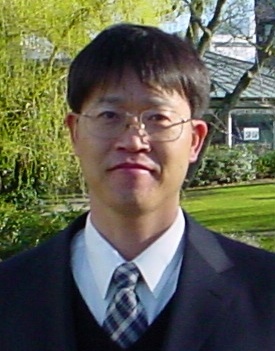 Haizhou Ai (艾海舟)合作论文数Institute of Human-computer Interaction (HCI) and Media Integration, Department of Computer Science and Technology, Tsinghua University12
 Chang Huang (黄畅)合作论文数Horizon Robotics Inc.11
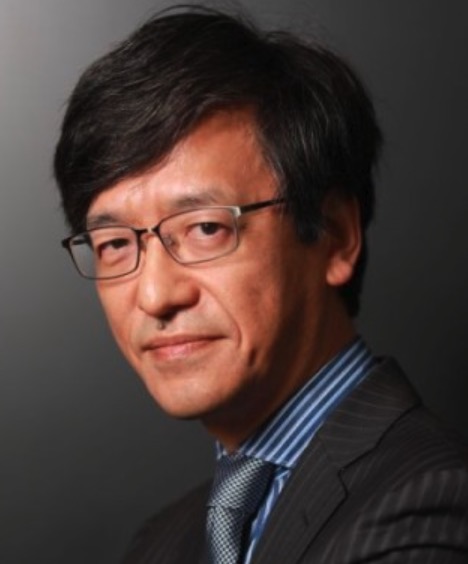 Shihong Lao合作论文数Sensetime Japan Ltd.;Sensetime Group Limited6
 Pedro Szekely合作论文数Amazon5
 Ramnandan Krishnamurthy合作论文数3Ramakant Nevatia合作论文数3wan jing合作论文数3shrikanth narayanan合作论文数3Chengye Yin合作论文数university of southern california3frank yang合作论文数3akshay合作论文数3yaoyi chiang合作论文数3Amandeep Singh合作论文数university of southern california3
 Mohsen Taheriyan合作论文数Google3
 Shubham Gupta合作论文数Statistics and Machine Learning Group, Department of Computer Science and Automation, Indian Institute of Science Bangalore3Andrew Philpot合作论文数USC;Information Sciences Institute3
 Hartwig Adam合作论文数Google DeepMind3german cheung合作论文数2ahmad abdulkader合作论文数2Yuan Li合作论文数2
 Marco Zennaro合作论文数Telecommunications/ICT for Development Laboratory, International Centre for Theoretical Physics2
 Craig Knoblock合作论文数Information Sciences Institute, University of Southern California2
 Hartmut Neven合作论文数Google2
 Alessandro Bissacco合作论文数Google2
 Luc Vincent合作论文数Meta2Tao Zhao (赵涛)合作论文数2
 Andrea Frome合作论文数Frome Consulting, LLC2Gj Brostow合作论文数1F. Tufano合作论文数1Antonio Alcaraz Asensio合作论文数1Wenxian Zhao合作论文数1yuval netzer合作论文数1
 Ning Le合作论文数1jianjun dou合作论文数1
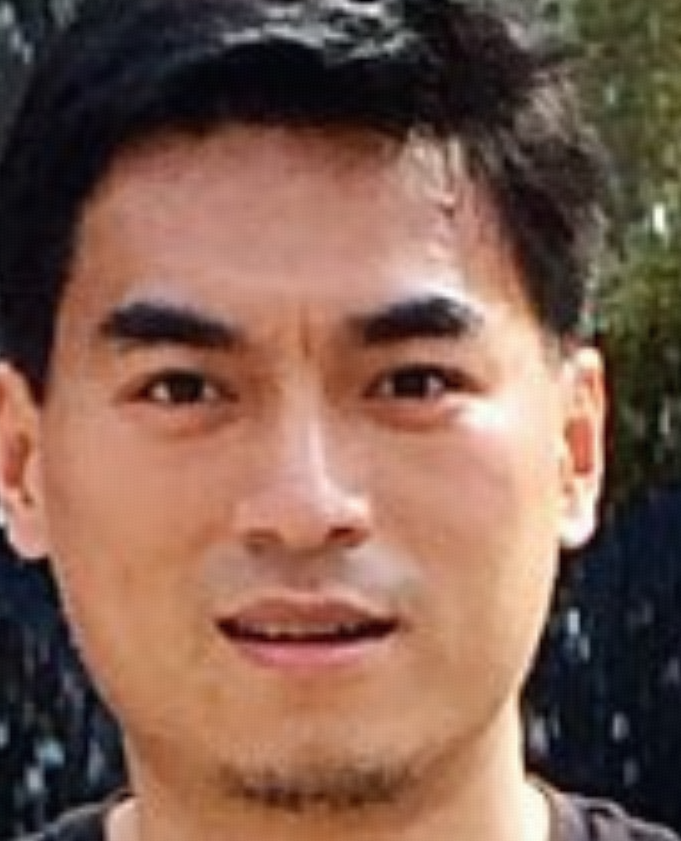 Qian Yu合作论文数Qcraft.ai1Yubo Wang (王宇博)合作论文数1
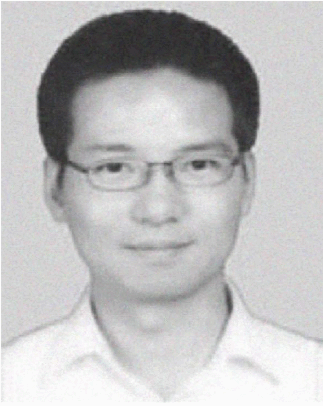 Yibo Wang合作论文数1jing jia合作论文数1
 Xuefeng Song (宋学锋)合作论文数1Sooyeong Kwak合作论文数1Guntae Bae合作论文数1Xianxian Tian合作论文数1
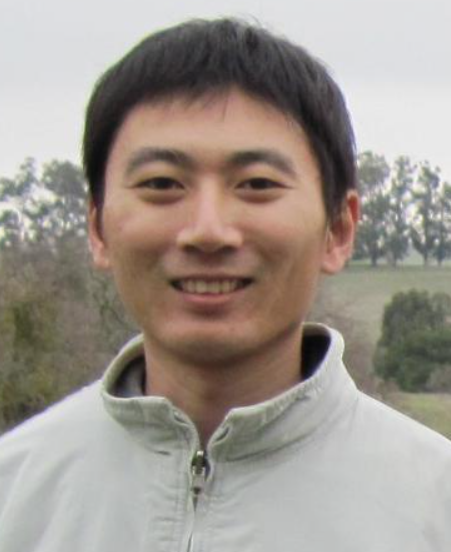 Tao Wang合作论文数Department of Genetics, Stanford University;Stanford AI Lab1
 Yang Song合作论文数Waymo1
 Yadong Wu (吴亚东)合作论文数西南科技大学计算机科学与技术学院;西南科技大学智能电器与智能系统四川省高校重点实验室1
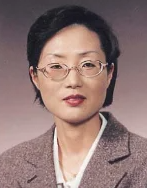 Hyeran Byun合作论文数College of Computing, Yonsei University1
 Hong Bao (鲍泓)合作论文数Robotics College of Beijing Union University1
 Guangyou Xu (徐光祐)合作论文数清华大学计算机系人机交互与媒体集成研究所1




