Aquanauts—people who live and work underwater for extended periods—have anecdotally reported cognitive shifts in how they perceive the ocean environment and their role in it. This experience bears resemblance to the cognitive shift astronauts have experienced when first seeing our planet from space, dubbed “The Overview Effect.” This shift involves an intense feeling of awe that increases astronauts’ sense of connection to humanity and the entire planet. In this study, we used semi-structured interviews with aquanauts to document their experiences living underwater. Results show that aquanauts do indeed experience shifts in cognitive, affective, behavioral, perspectival, and relational areas that strengthen feelings of connectedness and commitment to the marine environment. However, the effects of the experience varied between aquanauts, indicating a potential “Underview Effect” that may occur on a spectrum of intensity with a number of core features.
Climate change is reshaping biodiversity globally, but not uniformly. Many regions are severely impacted by losses, yet areas and habitats of varying scales exist where climate change impacts are expected to remain comparatively low. The identification and forecasting of such areas, termed climate change refugia, represents conservation capacity for improving resilience of natural and managed ecosystems. However, we still lack methods for detecting and integrating refugia into spatial management plans that incorporate physiological information, especially in marine environments. We offer a new framework to bridge the gap between large-scale environmental modelling and individual- to species-level physiology to identify current and future ocean refugia for biological conservation. We introduce the concept of the “physiological seascape”, which integrates spatial-temporal heterogeneity in climatic drivers, stability and uniqueness of those drivers at organism-relevant scales, and direct and indirect assessments of physiological sensitivity. We provide two theoretical exploratory examples and recommend that mapping the intersection of refugia and biodiversity become part of priority setting within spatial conservation instruments (e.g., as part of cumulative effects assessments), to inform climate-ready biodiversity conservation and restoration actions.
The concept of tipping points is increasingly being addressed in both fundamental and applied environmental contexts, and is particularly salient in the context of anthropogenic threats, including climate change. Most research on tipping points has been conducted through the lens of a single realm (i.e., freshwater, marine, or terrestrial). Yet, there is both the need and opportunity to learn and share across ecosystems, and to engage in coordinated and comparative research. We aimed to identify priority questions that are germane to freshwater, marine and terrestrial realms, and that, if answered, would improve our ability to understand what tipping points are, why they occur, where they occur, and what to do about them. To help enable such efforts, we assembled a team with diverse expertise to identify key research questions, supplemented by an outreach call distributed via various electronic outlets (e.g., email, websites, social media). The responses were then thematized, evaluated, aggregated or disaggregated, and prioritized. Through workshops, and using a modified Delphi approach, we developed a final list of 18 priority research questions. Key themes that emerged included questions of societal relevance (i.e., why questions), drivers, ecological processes, and sensitivity (i.e., what questions), scale and connectivity (i.e., where questions), and tools, techniques, and resources for implementation (i.e., how questions). These questions frame a research agenda intended to help guide future fundamental and applied research related to tipping points in freshwater, marine, and terrestrial ecosystems.
Abstract Identifying regions where organisms are most (and least) vulnerable to climate change remains a key focus in ecological research. However, accurately capturing the thermal stress experienced by many, if not most, organisms is challenging because body temperature, which determines physiological performance, is driven by multiple environmental factors. We hindcasted hourly body temperatures of intertidal mussels globally using a modified heat budget model and assessed thermal risks (extreme temperatures and heatwaves) and hotspots based on body temperature. Results indicated that 98.34% of global coastal mussel populations faced at least one thermal risk factor, and 45.14% are subjected to the compounding effects of four or more thermal risk factors. Regions such as the Mediterranean coast and the northeastern coast of South America face a high and stacking thermal risk. Most thermal risk metrics exhibited a patchy, mosaic distribution. Semi‐enclosed topography and western boundary currents are thermal risk amplifiers, making organisms in these regions more vulnerable than those in other regions of the same latitude. Our research demonstrates the utility of hindcast body temperature in integrating multiple thermal metrics to assess global thermal risks.
The physical structure of microhabitats, especially orientation to direct solar radiation, can radically influence the body temperatures of individual organisms, their physiological performance, and survival. Using a numerical approach via finite element (FE) analysis to simulate the spatial and temporal temperature variations in rocky intertidal habitats, we systematically explored the role of substrate roughness in driving variability of surface temperatures at scales relevant to very small (cm) organisms. This approach accounts for three-dimensional heat exchange among fine-scale (mm-cm) surface features through radiation, convection, and conduction. Analyses were performed for a surface mapped using a terrestrial laser scanner at an intertidal site on the coast of Haifa, Israel. Simulation results provided comparable temperatures to those recorded in the field via infrared camera. A series of rough surfaces were generated numerically to explore relationships between the scale of surface roughness and microhabitat temperatures, and how these relationships changed both over a diurnal cycle and across seasons. Overall, increasing habitat complexity had little influence on the average temperature of a similar to 1 m(2) surface, despite differences of up to 25 degrees C among microhabitats within that surface. Temperature magnitudes of the hottest and coolest microhabitats increased markedly with roughness, generally supporting the 'habitat heterogeneity hypothesis' where a range of thermal microenvironments is predicted to increase with surface roughness. Here, we attribute this pattern to the observation that the presence of cool, shaded "valley" microhabitats is invariably accompanied by the presence of "peaks" exposed to full, direct solar radiation.
Body temperature is universally recognized as a dominant driver of biological performance. Although the critical distinction between the temperature of an organism and its surrounding habitat has long been recognized, it remains common practice to assume that trends in air temperature-collected via remote sensing or weather stations-are diagnostic of trends in animal temperature and thus of spatiotemporal patterns of physiological stress and mortality risk. Here, by analysing long-term trends recorded by biomimetic temperature sensors designed to emulate intertidal mussel temperature across the US Pacific Coast, we show that trends in maximal organismal temperature ('organismal climatologies') during aerial exposure can differ substantially from those exhibited by co-located environmental data products. Specifically, using linear regression to compare maximal organismal and environmental (air temperature) climatologies, we show that not only are the magnitudes of body and air temperature markedly different, as expected, but so are their temporal trends at both local and biogeographic scales, with some sites showing significant decadal-scale increases in organismal temperature despite reductions in air temperature, or vice versa. The idiosyncratic relationship between the spatiotemporal patterns of organismal and air temperatures suggests that environmental climatology cannot be statistically corrected to serve as an accurate proxy for organismal climatology. Finally, using quantile regression, we show that spatiotemporal trends vary across the distribution of organismal temperature, with extremes shifting in different directions and at different rates than average metrics. Overall, our results highlight the importance of quantifying changes in the entire distribution of temperature to better predict biological performance and dispel the notion that raw or 'corrected' environmental (and specially air temperature) climatologies can be used to predict organismal temperature trends. Hence, despite their widespread coverage and availability, the severe limitations of environmental climatologies suggest that their role in conservation and management policy should be carefully considered.
As on land, oceans exhibit high temporal and spatial temperature variation. This "ocean weather" contributes to the physiological and ecological processes that ultimately determine the patterns of species distribution and abundance, yet is often unrecognized, especially in tropical oceans. Here, we tested the paradigm of temperature stability in shallow waters (<12.5 m) across different zones of latitude. We collated hundreds of in situ, high temporal-frequency ocean temperature time series globally to produce an intuitive measure of temperature variability, ranging in scale from quarter-diurnal to annual time spans. To estimate organismal sensitivity of ectotherms (i.e. microbes, algae, and animals whose body temperatures depend upon ocean temperature), we computed the corresponding range of biological rates (such as metabolic rate or photosynthesis) for each time span, assuming an exponential relationship. We found that subtropical regions had the broadest temperature ranges at time spans equal to or shorter than a month, while temperate and tropical systems both exhibited narrow (i.e. stable) short-term temperature range estimates. However, temperature-dependent biological rates in tropical regions displayed greater ranges than in temperate systems. Hence, our results suggest that tropical ectotherms may be relatively more sensitive to short-term thermal variability. We also highlight previously unexplained macroecological patterns that may be underpinned by short-term temperature variability.
The ecological state of the Persian or Arabian Gulf (hereafter ‘Gulf') is in sharp decline. Calls for comprehensive ecosystem-based management approaches and transboundary conservation have gone largely unanswered, despite mounting marine threats made worse by climate change. The region's long-standing political tensions add additional complexity, especially now as some Gulf countries will soon adopt ambitious goals to protect their marine environments as part of new global environmental commitments. The recent interest in global commitments comes at a time when diplomatic relations among all Gulf countries are improving. There is a window of opportunity for Gulf countries to meet global marine biodiversity conservation commitments, but only if scientists engage in peer-to-peer diplomacy to build trust, share knowledge and strategize marine conservation options across boundaries. The Gulf region needs more ocean diplomacy and coordination; just as critically, it needs actors at its science-policy interface to find better ways of adapting cooperative models to fit its unique marine environment, political context and culture. We propose a practical agenda for scientist-led diplomacy in the short term and lines of research from which to draw (e.g. co-production, knowledge exchange) to better design future science diplomacy practices and processes suited to the Gulf's setting.
Ecosystems experiencing pressures are at risk of rapidly transitioning (“tipping”) from one state to another. Identifying and managing these so-called tipping points continue to be a challenge in marine, freshwater, and terrestrial ecosystems, particularly when multiple potentially interacting drivers are present. Knowledge of tipping points, the mechanisms that cause them, and their implications for management practices are evolving, but often in isolation within specific ecological realms. Here, we summarize current knowledge of tipping points in marine, freshwater, and terrestrial realms and provide a multi-realm perspective of the challenges and opportunities for applying this knowledge to ecosystem management. We brought together conservation practitioners and global experts in marine, freshwater, and terrestrial tipping points and identified seven challenges that environmental policymakers and managers contend with including (1) predictability, (2) spatiotemporal scales, (3) interactions, (4) reversibility, (5) socio-ecological context, (6) complexity and heterogeneity, and (7) selecting appropriate action. We highlight opportunities for cross-scalar and cross-realm knowledge production and provide recommendations for enabling the management of tipping points. Although knowledge of tipping points is imperfect, we stress the need to continue working toward incorporating tipping points perspectives in environmental management across all realms.
The ongoing and interactive effects of climate change, overharvesting, and habitat loss on fish and fisheries impacts a wide array of stakeholders who rely on access to sustainable fish populations for their health, recreation, well-being, and income. Successful responses to these threats will require the involvement of stakeholders in co-developing solutions. Understanding the socio-psychological characteristics of these diverse stakeholders, including their environmental attitudes and behaviors, can potentially improve management support and effectiveness across and within these groups. Past research has focused on climate impacts and adaptation efforts in commercial fisheries, but less is known about climate-related perceptions and attitudes of recreational fishers and other stakeholders such as citizen scientists. This study investigated how pro-environmental attitudes (PEAs), pro-environmental behaviors (PEBs), and climate change concerns vary among fisheries-based recreationists based on activity type (recreational fishing, fish monitoring for citizen science) and specialization level. Among stakeholders, citizen scientists (fish counters) exhibited the strongest PEBs, followed by more specialized recreational fishers. Citizen scientists also had stronger PEAs than recreational fishers and non-fisher/non-citizen scientists, but there were no significant differences in PEAs across specialization levels. Citizen scientists showed greater concern for climate change than recreational fishers and non-fisher/non-citizen scientists. However, respondents overall showed greater concern for "the environment" than for climate change. Our results suggest that both activity type and specialization level are important considerations when developing strategies to promote pro-environmental behaviors and climate concerns and that communication frames centered on healthy ecosystems may be more effective with some stakeholders than those focused solely on climate change. We discuss implications for building public support of climate engagement efforts and sustainable, climate-resilient fisheries.
Biodiversity can promote ecosystem functioning in both terrestrial and marine environments, emphasizing the necessity of biodiversity conservation in order to preserve critical ecosystem functions and associated services. However, the role of biodiversity in buffering ecosystem functioning under extreme events caused by climate change remains a major scientific issue, especially for intertidal systems experiencing stressors from both terrestrial and marine drivers. We performed a regional-scale field experiment along the Italian coast to investigate the response of unmanipulated intertidal communities (by using a natural biodiversity gradient) to low tide aerial exposure to both ambient and short-term extreme temperatures. We specifically investigated the relationship between Biodiversity and Ecosystem Functioning (BEF) using different biodiversity indexes (species richness, functional diversity and evenness) and the response of the intertidal communities' ecosystem functioning (community respiration rates). Furthermore, we investigated which other environmental variables could influence the BEF relationship. We show that evenness explained a greater variation in intertidal community ecosystem functioning under both temperature conditions. Species richness (the most often used diversity metric in BEF research) was unrelated to ecosystem functioning, while functional diversity was significantly related to respiration under ambient but not extreme temperatures. We highlight the importance of the short-term thermal history of the communities (measured as body temperature) in the BEF relationship as it was consistently identified as the best predictor or response under both temperature conditions. However, Chlorophyll a in seawater and variation in sea surface temperature also contributed to the BEF relationship under ambient but not under extreme conditions, showing that short-duration climate-driven events can overcome local physiological adaptations. Our findings support the importance of the BEF relationship in intertidal communities, implying that systems with more diverse and homogeneous communities may be able to mitigate the effects of extreme temperatures.
The ways in which people conceptualize the human-nature relationship have significant implications for proenvironmental values and attitudes, sustainable behavior, and environmental policy measures. Human exceptionalism (HE) is one such conceptual framework, involving the belief that humans and human societies exist independently of the ecosystems in which they are embedded, promoting a sharp ontological boundary between humans and the rest of the natural world. In this paper, we introduce HE in more depth, exploring the impact of HE on perceptions of the human-nature relationship, the role of culture in HE, and speculating on the origins of HE. We consider potential implications for environmental decision-making, conservation and environmental science, and promoting proenvironmental behavior. We present empirical evidence on the pervasiveness and consequences of HE in WEIRD (Western, Educated, Industrialized, Rich and Democratic) populations, and potential interventions. Finally, we close with implications of human-exceptionalist thinking on other sustainability-related fields, including conservation practices, nature management, climate change adaptation, and environmental science. Understanding the cognitive and social drivers of this disconnect is vital on a planet now dominated by environmental change, as not only are humans increasingly impacted by natural disasters, but the choices they make can have ever more dire consequences for the sustainability of ecosystems.
Although the world’s oceans play a critical role in human well-being, they have not been a primary focus of the sustainable HCI (SHCI) community to date. In this paper, we present a scoping review to show how concerns with the oceans are threaded throughout the broader SHCI literature and to find new research opportunities. We identify several themes that could benefit from focused SHCI research, including marine food sources, culture and coastal communities, ocean conservation, and marine climate change impacts and adaptation strategies. Finally, we discuss opportunities for further work on marine human-natural systems research in SHCI and interdisciplinary collaboration with marine science and coastal communities.
 Francis Choi合作论文数Marine Sci Ctr, Northeastern Univ25
 Gianluca Sara合作论文数Department of Earth and Marine Science, Universita degli Studi di Palermo23
 David Wethey合作论文数Department of Biological Sciences, College of Arts and Sciences, University of South Carolina18
 Yunwei Dong (董云伟)合作论文数Fisheries College, Ocean University of China15
 Carol Blanchette合作论文数Marine Science Institute, University of California, Santa Barbara;Sierra Nevada Aquatic Research Laboratory, University of California, Santa Barbara11
 Mackenzie Zippay合作论文数10
 Mark Denny合作论文数Hopkins Marine Station, Doerr School of Sustainability, Stanford University9
 Fernando Lima合作论文数8
 Matzelle Allison合作论文数8
 Eric Sanford合作论文数Bodega Marine Laboratory, University of California Davis8
 Bayden Dwight Russell合作论文数School of Earth & Environmental Sciences, University of Adelaide8
 Bernardo R. Broitman合作论文数National Center for Ecological Analysis and Synthesis, University of California8
 k a s mislan合作论文数7
 Mieszkowska Nova合作论文数Marine Biol Assoc United Kingdom Lab, Plymouth PL1 2PB, Devon, England7
 Monaco Cristián J合作论文数Department of Biological Sciences, University of South Carolina7
 Emily Carrington合作论文数Department of Biology, College of Arts & Sciences, University of Washington7
 Sylvain P. Pincebourde合作论文数Institut de Recherche sur la Biologie de l'Insecte;Facultedes Sciences et Techniques;Institut de Recherche sur la Biologie de l'Insecte|Facultedes Sciences et Techniques7
 Rui Seabra合作论文数Departamento de Zoologia-Antropologia, Faculdade de Ciências da Universidade do Porto7Valeria Montalto合作论文数6
 James Leichter合作论文数Scripps Institution of Oceanography, University of California, San Diego6
 Gray A Willams合作论文数Research Division for Ecology & Biodiversity, Faculty of Science, The University of Hong Kong6
 Christopher Harley合作论文数Institute for Resources, Environment and Sustainability, Faculty of Science, The University of British Columbia6
 Sean Connell合作论文数Faculty of Sciences, Engineering and Technology, The University of Adelaide;School of Biological Sciences,The University of Adelaid6
 Karl Castillo合作论文数Department of Earth, Marine and Environmental Sciences, College of Arts and Sciences, The University of North Carolina at Chapel Hill6
 Gil Rilov合作论文数Tel Aviv University, University of Canterbury Ramat-Aviv Tel Aviv6
 Sarah Gilman合作论文数Columbia University6Michael J. O'Donnell合作论文数5
 Clare Fieseler合作论文数Sci Technol & Int Affairs Program, Georgetown Univ5
 Enrique Montes合作论文数Univ S Florida, Coll Marine Sci, St Petersburg, FL 33701 USA5N. P. Burnett合作论文数5
 Venkataraman Lakshmi合作论文数Department of Engineering Systems and the Environment, University of Virginia5
 Kenneth Sebens合作论文数Department of Biology, School of Aquatic and Fishery Sciences, University of Washington5
 Gretchen E. Hofmann (Gretchen Hofmann)合作论文数Department of Ecology, Evolution and Marine Biology, University of California, Santa Barbara5
 Frank E. Muller Karger合作论文数Department of Biological Oceanography, College of Marine Science, University of South Florida;Institute for Marine Remote Sensing, College of Marine Science, University of South Florida5
 Jessica Lin Torossian合作论文数Marine Science Center, Northeastern University4
 Michael Kearney合作论文数School of BioSciences, University of Melbourne4
 Scyphers Steven B合作论文数Department of Marine Sciences, University of South Alabama4
 Zoe A. Doubleday合作论文数Marine Research Laboratories;Tasmanian Aquaculture & Fisheries Institute;University of Tasmania;Private Bag 49;Tasmanian Aquaculture & Fisheries Institute, University of Tasmania4Patricia M. Halpin合作论文数4
 Patricia Miloslavich合作论文数Simon Bolivar University4
 Kimberly R. Schneider合作论文数Department of Zoology;University of Florida;Department of Zoology, University of Florida4
 Jerry Hilbish合作论文数Department of Biological Sciences, College of Arts and Sciences, University of South Carolina4
 Eduardo Klein合作论文数Universidad Simón Bolívar Departamento de Estudios Ambientales, Centro de Biodiversidad Marina.4
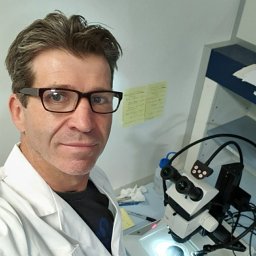 Brendan P. Kelaher合作论文数Department of Ecology;State University of New York;Department of Ecology, State University of New York4
 John D. Coley合作论文数Northwestern University4
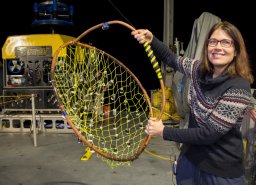 Amanda E Bates合作论文数Portobello Marine Laboratory, University of Otago4
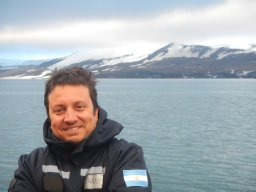 Gregorio Bigatti合作论文数Centro Nacional Patagónico CENPAT – CONICET4
 Sarah Woodin合作论文数Department of Biological Sciences, University of South Carolina4




