A multi-TeV muon collider offers a spectacular opportunity in the direct exploration of the energy frontier. Offering a combination of unprecedented energy collisions in a comparatively clean leptonic environment, a high energy muon collider has the unique potential to provide both precision measurements and the highest energy reach in one machine that cannot be paralleled by any currently available technology. The topic generated a lot of excitement in Snowmass meetings and continues to attract a large number of supporters, including many from the early career community. In light of this very strong interest within the US particle physics community, Snowmass Energy, Theory and Accelerator Frontiers created a cross-frontier Muon Collider Forum in November of 2020. The Forum has been meeting on a monthly basis and organized several topical workshops dedicated to physics, accelerator technology, and detector R D. Findings of the Forum are summarized in this report.
A bstract A search for the exclusive decays of the Higgs and Z bosons to a ϕ or ρ meson and a photon is performed with a pp collision data sample corresponding to an integrated luminosity of up to 35 . 6 fb −1 collected at $$ \sqrt{s}=13 $$ s = 13 TeV with the ATLAS detector at the CERN Large Hadron Collider. These decays have been suggested as a probe of the Higgs boson couplings to light quarks. No significant excess of events is observed above the background, as expected from the Standard Model. Upper limits at 95% confidence level were obtained on the branching fractions of the Higgs boson decays to ϕ γ and ρ γ of 4 . 8 × 10 −4 and 8 . 8 × 10 −4 , respectively. The corresponding 95% confidence level upper limits for the Z boson decays are 0 . 9 × 10 −6 and 25 × 10 −6 for ϕ γ and ρ γ, respectively.
A search for leptoquarks decaying into the bτ final state is performed using Run 2 proton-proton collision data from the Large Hadron Collider, corresponding to an integrated luminosity of 139 fb−1 at √(s) = 13 TeV recorded by the ATLAS detector. The benchmark models considered in this search are vector leptoquarks with electric charge of 2/3e and scalar leptoquarks with an electric charge of 4/3e. No significant excess above the Standard Model prediction is observed, and 95
The discovery of the Higgs boson confirms the existence of a scalar sector of the standard model, responsible for electroweak symmetry breaking, but the nature and properties of the potential at the origin of this mechanism are still unknown. By studying the production of pairs of Higgs bosons (HH), physicists can directly measure the coupling of the Higgs boson to itself and thus determine the shape of this potential, which has far-reaching implications on the origin and evolution of our Universe. Because of this deep connection to the foundations of electroweak symmetry breaking, HH production is also an ideal place to search for manifestations of yet-unknown physics, such as modifications of the strength of the self-coupling and of the interaction between pairs of vector bosons and Higgs bosons. In this review article, we summarize the current searches for HH production at ATLAS and CMS, using the LHC Run 2 dataset, discuss the implications of our current constraints on physics beyond the standard model, and briefly review prospect for future HH searches.
In this white paper for the 2021 Snowmass process, we give a description of the proposed Future Circular Collider (FCC) project and its physics program. The paper summarizes and updates the discussion submitted to the European Strategy on Particle Physics. After construction of an approximately 90 km tunnel, an electron-positron collider based on established technologies allows world-record instantaneous luminosities at center-of-mass energies from the Z resonance up to tt thresholds, enabling a rich set of fundamental measurements including Higgs couplings determinations at the sub percent level, precision tests of the weak and strong forces, and searches for new particles, including dark matter, both directly and via virtual corrections or mixing. Among other possibilities, the FCC-ee will be able to (i) indirectly discover new particles coupling to the Higgs and/or electroweak bosons up to scales around 7 and 50 TeV, respectively; (ii) perform competitive SUSY tests at the loop level in regions not accessible at the LHC; (iii) study heavy-flavor and tau physics in ultra-rare decays beyond the LHC reach, and (iv) achieve the best potential in direct collider searches for dark matter, sterile neutrinos, and axion-like particles with masses up to around 90 GeV. The tunnel can then be reused for a proton-proton collider, establishing record center-of-mass collision energy, allowing unprecedented reach for direct searches for new particles up to the around 50 TeV scale, and a diverse program of measurements of the Standard Model and Higgs boson, including a precision measurement of the Higgs self-coupling, and conclusively testing weakly-interacting massive particle scenarios of thermal relic dark matter.
A technique is presented to measure the efficiency with which c -jets are mistagged as b -jets (mistagging efficiency) using $$t\bar{t}$$ t t ¯ events, where one of the W bosons decays into an electron or muon and a neutrino and the other decays into a quark–antiquark pair. The measurement utilises the relatively large and known $$W\rightarrow cs$$ W → c s branching ratio, which allows a measurement to be made in an inclusive c -jet sample. The data sample used was collected by the ATLAS detector at $$\sqrt{s} = 13$$ s = 13 $$\text {TeV}$$ TeV and corresponds to an integrated luminosity of 139 fb $$^{-1}$$ - 1 . Events are reconstructed using a kinematic likelihood technique which selects the mapping between jets and $$t\bar{t}$$ t t ¯ decay products that yields the highest likelihood value. The distribution of the b -tagging discriminant for jets from the hadronic W decays in data is compared with that in simulation to extract the mistagging efficiency as a function of jet transverse momentum. The total uncertainties are in the range 3–17%. The measurements generally agree with those in simulation but there are some differences in the region corresponding to the most stringent b -jet tagging requirement.
 Catrin Bernius合作论文数SLAC National Accelerator Laboratory, Stanford University;CERN129
 Ben Brau合作论文数Department of Physics, College of Natural Sciences, University of Massachusetts Amherst128
 Lorenzo Bellagamba合作论文数Gran Sasso Laboratory, INFN128
 Dante Amidei合作论文数Department of Physics, College of Literature, Science, and the Arts, University of Michigan128
 Driss Benchekroun合作论文数Faculté des Sciences Ain Chock, Université Hassan II de Casablanca;Réseau Universitaire de Physique des Hautes Energies128
 Tracey Berry合作论文数Centre for Particle Physics and Astronomy, Department of Physics, Royal Holloway, University of London128
 Fernando Barreiro合作论文数CIAFF, Univ Autonoma Madrid128Tristan Beau合作论文数Laboratoire de Physique Nucléaire et de Hautes Energies128
 Sergei Chekanov合作论文数High Energy Physics Division, Argonne National Laboratory128Gabor Bella合作论文数Department of Physics and Astronomy Tel Aviv University 69978 Tel Aviv Israel128D. Bruncko合作论文数127
 Markus Atkinson合作论文数Nlight Defense Systems, Inc.127
 Christos Anastopoulos合作论文数School of Mathematical and Physical Sciences, University of Sheffield127G. Avolio合作论文数127Buanes T合作论文数127Argyropoulos S合作论文数127
 Gustaaf Brooijmans合作论文数Department of Physics, Columbia University127T. Bold合作论文数Department of Physics & Astronomy, University of California127Giacomo Artoni合作论文数Department of Physics, University of Oxford127Tancredi Carli合作论文数CERN126Gianpaolo Carlino合作论文数Istituto Nazionale di Fisica Nucleare126
 Shikma Bressler合作论文数126
 Dave Britton合作论文数School of Physics & Astronomy, University of Glasgow;Department of Physics and Astronomy, University of Glasgow126
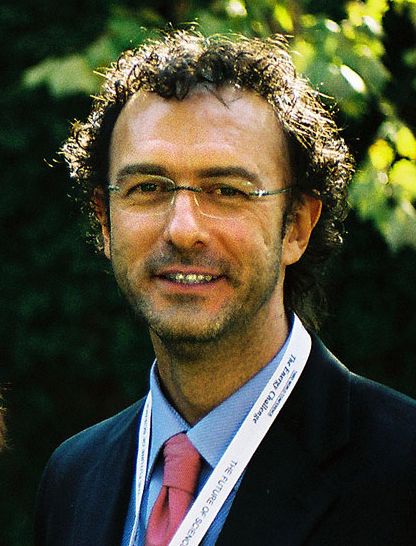 Gianluca Alimonti合作论文数Istituto Nazionale di Fisica Nucleare;University of Milan126Róbert Astaloš合作论文数Faculty of Mathematics, Physics and Informatics, Comenius University Bratislava126
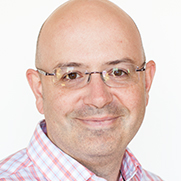 Jean-François Arguin合作论文数Département De Physique, Faculté Des Arts Et Des Sciences, Université de Montréal126
 Davide Caforio合作论文数Institute of Experimental and Applied Physics, Czech Technical University in Prague126
 Muhammad Alhroob合作论文数Department of Physics, University of Warwick126Timothy L. Barklow合作论文数SLAC National Accelerator Laboratory, Stanford University126
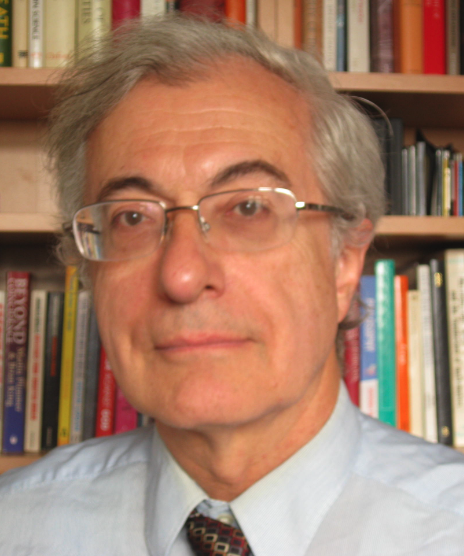 Peter J. Bussey合作论文数School of Physics & Astronomy, University of Glasgow125S. Calvet合作论文数125
 Cesare Bini合作论文数Dipartimento di Fisica, Facoltà di Scienze Matematiche, Fisiche e Naturali, Sapienza Università di Roma125Michael Begel合作论文数Department of Physics, Brookhaven National Laboratory125
 Sascha Caron合作论文数Radboud University Nijmegen;Nikhef125
 Giulio Aielli合作论文数Dipartimento di Fisica, Università degli studi di Tor Vergata;CERN125
 Paolo Calafiura合作论文数Lawrence Berkeley National Laboratory;The United States Department of Energy125Calfayan P合作论文数125
 Timothy R Andeen合作论文数Department of Physics, College of Natural Sciences, The University of Texas at Austin125
 Liron Barak合作论文数School of Physics and Astronomy, Tel Aviv University125
 Tim Adye合作论文数Particle Physics Department, Rutherford Appleton Laboratory125
 Elżbieta Banaś合作论文数Division of Particle and Astroparticle Physics, Institute of Nuclear Physics, Polish Academy of Sciences;Department of Diffractive Processes, Institute of Nuclear Physics, Polish Academy of Sciences;CERN125
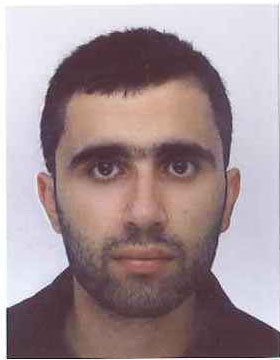 Georges Aad合作论文数Aix-Marseille University125
 Aaron Richard Angerami合作论文数Lawrence Livermore National Laboratory125F. Balli合作论文数124C Amelung合作论文数124Marco Bruschi合作论文数Istituto Nazionale di Fisica Nucleare, Sezione di Bologna;CERN124
 J Bracinik合作论文数University of Birmingham124
 Will Buttinger合作论文数Rutherford Appleton Laboratory124
 David Gordon Cameron合作论文数Department of Physics, The Faculty of Mathematics and Natural Sciences, University of Oslo;CERN124




