Responding to an open invitation, 18 scholars with 4k+ Google Scholar cites point to a decade-or-more old paper with cite count below his or her h-index. The contributors are Doug Allen, Niclas Berggren, Christian Bjornskov, Peter Boettke, Nick Bostrom, Bryan Caplan, Joshua Gans, Terri Griffith, Zoe Hilton, Dan Klein, Douglas Noonan, Michael Ostrovsky, Sam Peltzman, Eric Rasmusen, Paul Rubin, Steve Sheffrin, Stefan Voigt, and Richard Wagner.
Bryan Caplan is a senior research fellow at the Mercatus Center and a professor of economics at George Mason University. Bryan joins Policy@McCombs to discuss his recent book, The Case Against Education. This initiative is a joint effort between scholars in order to test the importance and factors of entrepreneurial success. Professor William Fuchs (Finance) is working on a number of projects trying to understand the impact of access to credit on the formation of new business. Salem Center support will help the creation of randomized controlled trials to help : (1) evaluate the importance of complementarities between credit and business training and (2) provide a better understanding of the determinants of entrepreneurial success. The first wave of experiments is underway in Bolivia in partnership with the Banco para el Desarrollo Productivo (BDP).
Why we need to stop wasting public funds on education Despite being immensely popular--and immensely lucrative?education is grossly overrated. In this explosive book, Bryan Caplan argues that the primary function of education is not to enhance students' skill but to certify their intelligence, work ethic, and conformity?in other words, to signal the qualities of a good employee. Learn why students hunt for easy As and casually forget most of what they learn after the final exam, why decades of growing access to education have not resulted in better jobs for the average worker but instead in runaway credential inflation, how employers reward workers for costly schooling they rarely if ever use, and why cutting education spending is the best remedy. Caplan draws on the latest social science to show how the labor market values grades over knowledge, and why the more education your rivals have, the more you need to impress employers. He explains why graduation is our society's top conformity signal, and why even the most useless degrees can certify employability. He advocates two major policy responses. The first is educational austerity. Government needs to sharply cut education funding to curb this wasteful rat race. The second is more vocational education, because practical skills are more socially valuable than teaching students how to outshine their peers. Romantic notions about education being "good for the soul" must yield to careful research and common sense?The Case against Education points the way.
In the classical economic view of markets a third party is needed to create and protect property rights. This should make black markets where the government actively opposes rights in the goods and services traded impossible, yet we see functional black markets across the world. We argue that the endowment effect drives the creation of and respect for property rights. We build a game theoretic model demonstrating this process which shows how the expectation of first party enforcement creates a bilateral incentive to respect property rights regardless of third party involvement. We further give evidence of how the endowment effect exists in both animals and humans, resulting in lower levels of violent conflict and apparent respect for property rights, connecting the biology literature on territoriality in animal species with the economic property rights behavior of humans.
Classical liberals, such as Locke, Tocqueville and Mill, have developed arguments to justify constitutional democracy and defended the spreading out of the suffrage. Classical liberals have defended the democratic developments against its critics in difficult times. However, with the development of public choice theory, some philosophers started to criticize the basic assumptions of democracy very harshly in the liberal tradition. The problems such as the gap between the democratic policies and the popular consent and the wide-spread political ignorance of the voters are frequently given as examples of the democratic failure by public choice theorists. Caplan and Brennan, public choice libertarians, want to restrict political rights of the incompetent voters through establishing a kind of aristocratic political regime where the informed voters only have the right for political rights. Therefore, they want to break the link between political rights and the civil rights in the liberal tradition, and thus, offer a radical proposal. In this article, the reasons of this radical proposal in liberal tradition are examined, and the assumptions of Caplan and Brennan are criticized.
This chapter argues that immigration policy should be reformed so that there are no quantitative caps on legal migration. It argues that a policy of open borders and free migration would create massive poverty reduction while helping to improve the lives of most of the native born, and that any adverse consequences could be made up for with “keyhole solutions” that leave massive migration flows intact while tweaking policy to deal with specific consequences. It provocatively argues that given the evidence surveyed in the earlier chapters, every major moral theory recommends open borders.
This paper develops a critique of the single-tax proposal of Henry George. We present a simple search-theoretic model for the discovery of natural resources and show that a tax on the unimproved value of land is distortionary. We then consider the time inconsistency and regime uncertainty problem created by even incremental Georgist policy. We discuss historical cases of land reform and the subsequent challenge to re-establish a credible commitment to property rights in land and natural resources.
Abstract Many scholars argue that retrospective voting is a powerful information shortcut that offsets widespread voter ignorance. Even deeply ignorant voters, it is claimed, can effectively punish incumbents for bad performance and reward them if things go well. But if voters' understanding of which officials are responsible for which outcomes is systematically biased, retrospective voting becomes an independent source of political failure rather than a cure for it. We design and administer a new survey of the general public and political experts to test for such biases. Our analysis reveals frequent, large, robust biases in voter attributions of responsibility for a variety of political actors and outcomes with a tendency for the public to overestimate influence, although important examples of underestimation also exist.
Consider the following thought experiment: Moved by the plight of desperate earthquake victims, you volunteer to work as a relief worker in Haiti. After two weeks, you’re ready to go home. Unfortunately, when you arrive at the airport, customs officials tell you that you’re forbidden to enter the United States. You go to the American consulate to demand an explanation. But the official response is simply, “The United States does not have to explain itself to you.” You don’t have to be a libertarian to admit that this seems like a monstrous injustice. The entire ideological menagerie — liberals, conservatives, moderates, socialists, and libertarians — would defend your right to move from Haiti to the United States. What’s so bad about restricting your migration? Most obviously, because life in Haiti is terrible. If the American government denies you permission to return, you’ll live in dire poverty, die sooner, live under a brutal, corrupt regime, and be cut off from most of the people you want to associate with. Hunger, danger, oppression, isolation: condemning you to even one seems wrong. Which raises a serious question: if you had been born in Haiti, would denying you permission to enter the United States be any less wrong? This thought experiment hardly proves that people have an absolute right of free migration. After all, many things that seem wrong on the surface turn out to be morally justified. Suppose you knock me unconscious, then slice me open with a knife. This is normally wrong. But if you’re performing surgery required to save my life, and I gave my informed consent, then your action is not just morally permissible, but praiseworthy. Nevertheless, my thought experiment does establish one weak conclusion: immigration restrictions seem wrong on the surface. To justifiably restrict migration, you need to overcome the moral presumption in favor of open borders (Huemer 2010). How would one go about overcoming this presumption? For starters, you must show that the evils of free immigration are fairly severe. Immigration restrictions trap many millions in Third World misery. Economists’ consensus estimate is that open borders would roughly double world GDP, enough to virtually eliminate global poverty (Clemens 2011). The injustice and harm that immigration restrictions prevent has to be at least comparable to the injustice and harm that immigration restrictions impose. But hard evidence that immigration has major drawbacks is not enough. The proponent of immigration restrictions also has to show that there is no cheaper or more humane way to mitigate the evils of immigration. Surgery wouldn’t be morally justified if a $1 pill were an equally effective treatment. Why not? Because even if surgery will save the patient’s life, there is a cheaper, more humane way to do so. The rest of this paper examines the alleged evils of immigration through this moral lens. In each case, I begin with a balanced survey of the relevant social science. The point is not to determine whether immigration has good overall effects. The point, rather, is to determine whether any of the effects of immigration are bad enough to credibly overcome the moral presumption in favor of open borders. After reviewing the social science, each section then turns to a deeper question: assuming the worst about immigration, are immigration restrictions the only viable remedy? If cheaper, more humane alternatives exist, then immigration restrictions remain unjustified even if my summary of the social science is hopelessly biased.
We develop a critique of the single-tax proposal of Henry George. We present a simple search-theoretic model for the discovery of natural resources and show that a tax on the unimproved value of land is distortionary. We then consider the time inconsistency and regime uncertainty problem created by even incremental Georgist policy. We discuss historical cases of land reform and the subsequent challenge to re-establish a credible commitment to property rights in land and natural resources.
A summary is not available for this content so a preview has been provided. Please use the Get access link above for information on how to access this content.
有关政治和宗教的信条通常有三个令人困惑的特征:系统性的偏见、高度的确定性和信息基础薄弱。理性无知理论只能解释拥有少量信息的情况。本文则提出了"理性的非理性"综合模型,对以上三种程式化事实都可以做出解释。根据理性的非理性理论,非理性——即偏离理性预期——和其他任何商品一样,是一种商品;私人成本越低,购买它的代理人就越多。政治、宗教等信条都有一个不同寻常的特征,即错误对个人的影响几乎不存在,使非理性的个人成本为零。因此在这些领域中,非理性的看法是最显而易见的。对非理性的消费可能是最优的,但是如果非理性的个人和社会成本不同,那么它就不是最佳的,选举就是一例。
Contrary to my critics, voter irrationality does not imply that economists cannot mitigate political failure. With rational voters, reform-minded economists have few viable tactics; with irrational voters reformers have more options. Rational voters can be swayed only by facts and logic; irrational voters could respond to better rhetoric. Rational voters strategically punish those who ignore their policy preferences; irrational voters use less effective disciplinary strategies that create political slack. Even with irrational voters, efficiency-enhancing reform is hard. With rational voters, however, democracy’s failure to adopt a reform is strong evidence that the reform does not enhance efficiency.
Education is by far the strongest predictor of whether a non-economist will share the economic beliefs of the average economist. (Caplan, 2001) Is the effect of education as large as it seems? Or is education largely a proxy for cognitive ability? Using data from the General Social Survey (GSS), we show that the estimated effect of education sharply falls after controlling for intelligence. In fact, education is driven down to second place, and intelligence replaces it at the top of the list of variables that make people "think like economists." Thus, to a fair degree education is proxy for intelligence, though there are some areas—international economics in particular—where education still dominates. An important implication is that the political externalities of education may not be as large as they initially appear.
Previous research suggests that positive and normative beliefs about economics are largely unrelated. Using questions from two national surveys, this study finds that: (a) the underlying determinants of positive and normative beliefs are strikingly similar; (b) education is by far the strongest overall determinant of both positive and normative beliefs; and (c) the variables known to push positive beliefs in the same direction as formal economic training-education, male gender, income growth, and job security-also push normative beliefs in the same direction. These results strongly suggest that the positive-normative connection has been underestimated.
 Edward Peter Stringham合作论文数Department of Economics;San Jose State University;Department of Economics, San Jose State University7
 Zachary Gochenour合作论文数James Madison University2
 Stephen C. Miller合作论文数Department of Biochemistry and Molecular Pharmacology, University of Massachusetts Medical School2
 Somin Ilya合作论文数2
 Daniel B. Klein合作论文数Department of Economics, George Mason University2
 Peter J. Boettke合作论文数Department of Economics, George Mason University2
 Sam Peltzman合作论文数Graduate School of Business;University of Chicago;Graduate School of Business, University of Chicago2
 Niclas Berggren合作论文数Ratio Institute2
 Robin D. Hanson合作论文数George Mason University2Dan Johansson合作论文数1francesco forte合作论文数1
 Andreas Bergh合作论文数Research Institute of Industrial Economics;Department of Economics, School of Economics and Management, Lund University1richard h timberlake合作论文数1
 Eric Hammer合作论文数Corresponding author. 6 Clinton Court, Sterling, VA 20165, USA.1Colin Robinson合作论文数1
 Eric Crampton合作论文数Dept Econ, Univ Canterbury1
 Lars P. Feld合作论文数Walter Eucken Institut1
 Paul H. Rubin合作论文数The University of Georgia1
 Bruce L. Benson合作论文数Department of Economics, College of Social Sciences and Public Policy, Florida State University1Richard E. Wagner合作论文数Department of Economics;George Mason University;Department of Economics, George Mason University1
 Martin Ricketts合作论文数1Shujuan Yuan (袁淑娟)合作论文数1
 John Meadowcroft合作论文数Department of Political Economy, School of Politics & Economics, Faculty of Social Science & Public Policy, King’s College London1
 Robert D. Tollison合作论文数George Mason University1
 Steven Horwitz合作论文数1
 Robert H Nelson合作论文数1
 Christian Bjørnskov合作论文数Department of Economics, Aarhus University/Research Institute of Industrial Economics1
 Vipul Naik合作论文数1
 David C. Colander合作论文数Middlebury College1Tyler Cowen合作论文数Department of Economics;George Mason University;Department of Economics, George Mason University1
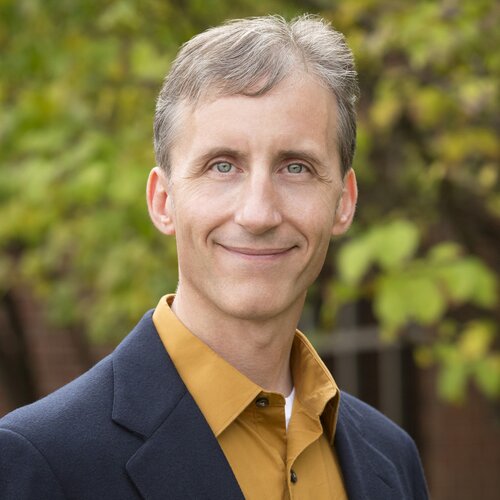 Scott L. Althaus合作论文数Department of Political Science College of Liberal Arts & Sciences, University of Illinois at Urbana-Champaign1
 Henrik Lindberg合作论文数Division of Wood Material Science, Luleå University of Technology1
 David Theodore Levy合作论文数Institute for Research and Evaluation1
 Wayne A. Grove合作论文数1
 Fred Foldvary合作论文数Santa Clara University1
 Lawrence H. White合作论文数Department of Economics;University of California;Department of Economics, University of California1T Mayer合作论文数1
 Roger E. Meiners合作论文数Emory University1
 Scott Beaulier合作论文数Center for Political Economy;Department of Economics;George Mason University;Center for Political Economy, George Mason University1
 George Selgin合作论文数University of Georgia1Leland B. Yeager合作论文数1Eric Rasmusen合作论文数Indiana University;School of Business1
 Gerald P. Dwyer合作论文数Federal Reserve Bank of Atlanta1
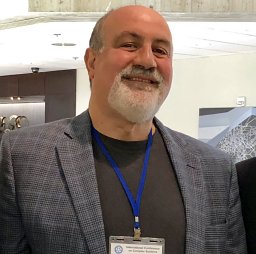 Nassim Nicholas Taleb合作论文数New York University Polytechnic Institute1
 Douglas W. Allen合作论文数Carleton University1Nils Karlson合作论文数1Jeffrey Friedman合作论文数Division of Plastic Surgery, Baylor College of Medicine1Willem Thorbecke合作论文数1




