A study of the single production of a vector-like top partner T at a √(s)=3 TeV e^+e^- collider is presented, using a decay-mode and mass-agnostic event selection built around the recoil mass observable. The analysis relies on fully simulated samples processed through a common reconstruction and event selection chain. The baseline selection is validated without beam polarization or initial-state radiation (ISR). The impact of more realistic running conditions, including ISR together with an e^- beam polarization of -80%, is then evaluated and the discovery reach is mapped as a function of the top partner mass m_T and coupling strength κ_T. In the baseline scan, the estimated statistical significance rises above 3σ for the lowest benchmark masses once κ_T exceeds approximately 0.3.
The Fast Beam Condition Monitor (BCM1F) has been used at the CMS Experiment since the first LHC circulating beams in 2008. Originally meant as a beam-induced background monitor for fast beam losses detection, it showed a potential also for luminosity measurements in 2012 running, and has been used for luminosity measurements since the beginning of Run 2 data taking in 2015 as a part of the Beam Radiation, Instrumentation and Luminosity (BRIL) system. Over the years, the system has undergone various upgrades to the sensors, the front-end and back-end electronics, providing improvements in the precision of the measurements, that remain valid in the higher pileup conditions of LHC Run 3 (2022-2026). Based on the experience of all BCM1F Run 2 upgrades, the detector was completely rebuilt prior to LHC Run 3 using AC-coupled silicon-pad diodes and active cooling. This latest detector version exhibits excellent linearity with instantaneous luminosity and achieves nanosecond-level timing precision, enabling improved systematic corrections for luminosity and background measurements. This paper presents a detailed overview of the detector system for LHC Run 3, including the selection and qualification of sensors as well as a summary of the readout system. It also outlines the processing and calibration strategy for luminosity data, discussing operational hurdles and comparing BCM1F measurements to other CMS luminosity measurements to assess the system's performance as a luminometer. Lastly, the implications for the design of a future luminosity detector to be used in the envisioned HL-LHC upgrade are discussed.
A test of lepton flavor universality in B ± → K ± μ + μ − and B ± → K ± e + e − decays, as well as a measurement of differential and integrated branching fractions of a nonresonant B ± → K ± μ + μ − decay are presented. The analysis is made possible by a dedicated data set of proton-proton collisions at s = 13 TeV recorded in 2018, by the CMS experiment at the LHC, using a special high-rate data stream designed for collecting about 10 billion unbiased b hadron decays. The ratio of the branching fractions B ( B ± → K ± μ + μ − ) to B ( B ± → K ± e + e − ) is determined from the measured double ratio R ( K ) of these decays to the respective branching fractions of the B ± → J / ψ K ± with J / ψ → μ + μ − and e + e − decays, which allow for significant cancellation of systematic uncertainties. The ratio R ( K ) is measured in the range 1.1 < q 2 < 6.0 GeV 2 , where q is the invariant mass of the lepton pair, and is found to be R ( K ) = 0.78 − 0.23 + 0.47 , in agreement with the standard model expectation R ( K ) ≈ 1 . This measurement is limited by the statistical precision of the electron channel. The integrated branching fraction in the same q 2 range, B ( B ± → K ± μ + μ − ) = ( 12.42 ± 0.68 ) × 10 − 8 , is consistent with the present world-average value and has a comparable precision.
The Pixel Luminosity Telescope is a silicon pixel detector dedicated to luminosity measurement at the CMS experiment at the LHC. It is located approximately 1.75 m from the interaction point and arranged into 16 "telescopes", with eight telescopes installed around the beam pipe at either end of the detector and each telescope composed of three individual silicon sensor planes. The per-bunch instantaneous luminosity is measured by counting events where all three planes in the telescope register a hit, using a special readout at the full LHC bunch-crossing rate of 40 MHz. The full pixel information is read out at a lower rate and can be used to determine calibrations, corrections, and systematic uncertainties for the online and offline measurements. This paper details the commissioning, operational history, and performance of the detector during Run 2 (2015-18) of the LHC, as well as preparations for Run 3, which will begin in 2022.
Production cross sections of Υ(1S), Υ(2S), and Υ(3S) states decaying into μ^+μ^- in proton-lead (pPb) collisions are reported using data collected by the CMS experiment at √(s_NN) = 5.02 TeV. A comparison is made with corresponding cross sections obtained with pp data measured at the same collision energy and scaled by the Pb nucleus mass number. The nuclear modification factor for Υ(1S) is found to be R_pPb(Υ(1S)) = 0.806 ± 0.024 (stat) ± 0.059 (syst). Similar results for the excited states indicate a sequential suppression pattern, such that R_pPb(Υ(1S)) R_pPb(Υ(2S)) R_pPb(Υ(3S)). The suppression is much less pronounced in pPb than in PbPb collisions, and independent of transverse momentum p_T^Υ and center-of-mass rapidity y_CM^Υ of the individual Υ state in the studied range p_T^Υ 30 GeV/c and | y_CM^Υ| 1.93. Models that incorporate sequential suppression of bottomonia in pPb collisions are in better agreement with the data than those which only assume initial-state modifications.
Using a data sample of $$\sqrt{s}=13\,\text {TeV}$$ proton-proton collisions collected by the CMS experiment at the LHC in 2017 and 2018 with an integrated luminosity of $$103\text {~fb}^{-1}$$ , the $$\text {B}^{0}_{\mathrm{s}} \rightarrow \uppsi (\text {2S})\text {K}_\mathrm{S}^{0}$$ and $$\text {B}^{0} \rightarrow \uppsi (\text {2S})\text {K}_\mathrm{S}^{0} \uppi ^+\uppi ^-$$ decays are observed with significances exceeding 5 standard deviations. The resulting branching fraction ratios, measured for the first time, correspond to $${\mathcal {B}}(\text {B}^{0}_{\mathrm{s}} \rightarrow \uppsi (\text {2S})K_\mathrm{S}^{0})/{\mathcal {B}}(\text {B}^{0}\rightarrow \uppsi (\text {2S})K_\mathrm{S}^{0}) = (3.33 \pm 0.69 (\text {stat})\, \pm 0.11\,(\text {syst}) \pm 0.34\,(f_{\mathrm{s}}/f_{\mathrm{d}})) \times 10^{-2}$$ and $${\mathcal {B}}(\text {B}^{0} \rightarrow \uppsi (\text {2S})\text {K}_\mathrm{S}^{0} \uppi ^{+} \uppi ^{-})/ {\mathcal {B}}(\text {B}^{0} \rightarrow \uppsi (\text {2S})\text {K}^{0}_{\mathrm{S}}) = 0.480 \pm 0.013\,(\text {stat}) \pm 0.032\,(\text {syst})$$ , where the last uncertainty in the first ratio is related to the uncertainty in the ratio of production cross sections of $$\hbox {B}^{0}_{\mathrm{s}}$$ and $$\hbox {B}^{0}$$ mesons, $$f_{\mathrm{s}}/f_{\mathrm{d}}$$ .
The B$^0_s$ and B$^+$ production yields are measured in PbPb collisions at a center-of-mass energy per nucleon pair of 5.02 TeV. The data sample, collected with the CMS detector at the LHC, corresponds to an integrated luminosity of 1.7 nb$^{-1}$. The mesons are reconstructed in the exclusive decay channels B$^0_s$ $\to$ J/$\psi(\mu^+\mu^-)\phi($K$^+$K$^-)$ and B$^+$ $\to$ J/$\psi(\mu^+\mu^-)$K$^+$, in the transverse momentum range 7-50 GeV/c and absolute rapidity 0-2.4. The B$^0_s$ meson is observed with a statistical significance in excess of five standard deviations for the first time in nucleus-nucleus collisions. The measurements are performed as functions of the transverse momentum of the B mesons and of the PbPb collision centrality. The ratio of production yields of B$^0_s$ and B$^+$ is measured and compared to theoretical models that include quark recombination effects.
The second-order Fourier coefficients (v(2)) characterizing the azimuthal distributions of Y(1S) and Y(2S) mesons produced in PbPb collisions at root s(NN) = 5.02 TeV are studied. The Y mesons are reconstructed in their dimuon decay channel, as measured by the CMS detector. The collected data set corresponds to an integrated luminosity of 1.7 nb(-1). The scalar product method is used to extract the v2 coefficients of the azimuthal distributions. Results are reported for the rapidity range vertical bar y vertical bar < 2.4, in the transverse momentum interval 0 < pT < 50 GeV/c, and in three centrality ranges of 10-30%, 30-50% and 50-90%. In contrast to the J/psi mesons, the measured v(2) values for the Y mesons are found to be consistent with zero. (C) 2021 The Author(s). Published by Elsevier B.V.
The high-luminosity upgrade of the LHC (HL-LHC) is expected to reach an instantaneous luminosity of roughly a factor five of the current value. The resulting requirements for background monitoring and luminosity measurement create the need for new high-precision instrumentation at CMS, using radiation-hard detector technologies. This contribution presents the strategy for bunch-by-bunch online luminosity measurements based on various detector technologies. A main component of the system is the Tracker Endcap Pixel Detector with dedicated triggers for the online measurement of the luminosity and the beam-induced background using the pixel cluster counting method as implemented in FPGAs. The potential of exploiting the outer tracker, the forward hadron calorimeter, and muon trigger objects is discussed, as well as the concept of a standalone luminosity and beam-induced background monitor using silicon-pad sensors.
A measurement is presented of electroweak (EW) production of a W boson in association with two jets in proton-proton collisions at s = 13 Te . The data sample was recorded by the CMS Collaboration at the LHC and corresponds to an integrated luminosity of 35.9 fb - 1 . The measurement is performed for the l ν jj final state (with l ν indicating a lepton-neutrino pair, and j representing the quarks produced in the hard interaction) in a kinematic region defined by invariant mass m jj \u003e 120 Ge and transverse momenta p T j \u003e 25 Ge . The cross section of the process is measured in the electron and muon channels yielding σ EW ( W jj ) = 6.23 ± 0.12 (stat) ± 0.61 (syst) pb per channel, in agreement with leading-order standard model predictions. The additional hadronic activity of events in a signal-enriched region is studied, and the measurements are compared with predictions. The final state is also used to perform a search for anomalous trilinear gauge couplings. Limits on anomalous trilinear gauge couplings associated with dimension-six operators are given in the framework of an effective field theory. The corresponding 95% confidence level intervals are - 2.3 c W W W / Λ 2 2.5 Te - 2 , - 8.8 c W / Λ 2 16 Te - 2 , and - 45 c B / Λ 2 46 Te - 2 . These results are combined with the CMS EW Zjj analysis, yielding the constraint on the c W W W coupling: - 1.8 c W W W / Λ 2 2.0 Te - 2 .
A search is conducted for a low-mass charged Higgs boson produced in a top quark decay and subsequently decaying into a charm and a strange quark. The data sample was recorded in proton-proton collisions at $\\sqrt{s}=$ 13 TeV by the CMS experiment at the LHC and corresponds to an integrated luminosity of 35.9 fb$^{-1}$. The search is performed in the process of top quark pair production, where one top quark decays to a bottom quark and a charged Higgs boson, and the other to a bottom quark and a W boson. With the W boson decaying to a charged lepton (electron or muon) and a neutrino, the final state comprises an isolated lepton, missing transverse momentum, and at least four jets, of which two are tagged as b jets. To enhance the search sensitivity, one of the jets originating from the charged Higgs boson is required to satisfy a charm tagging selection. No significant excess beyond standard model predictions is found in the dijet invariant mass distribution. An upper limit in the range 1.68-0.25% is set on the branching fraction of the top quark decay to the charged Higgs boson and bottom quark for a charged Higgs boson mass between 80 and 160 GeV.
Anisotropies in the initial energy density distribution of the quark-gluon plasma created in high energy heavy ion collisions lead to anisotropies in the azimuthal distributions of the final-state particles known as collective anisotropic flow. Fourier harmonic decomposition is used to quantify these anisotropies. The higher-order harmonics can be induced by the same order anisotropies (linear response) or by the combined influence of several lower order anisotropies (nonlinear response) in the initial state. The mixed higher-order anisotropic flow and nonlinear response coefficients of charged particles are measured as functions of transverse momentum and centrality in collisions at nucleon-nucleon center-of-mass energies and 5.02 with the CMS detector. The results are compared with viscous hydrodynamic calculations using several different initial conditions, as well as microscopic transport model calculations. None of the models provides a simultaneous description of the mixed higher-order flow harmonics and nonlinear response coefficients.
Events with no charged particles produced between the two leading jets are studied in proton-proton collisions at
Anisotropies in the initial energy density distribution of the quark-gluon plasma created in high energy heavy ion collisions lead to anisotropies in the azimuthal distributions of the final-state particles known as collective anisotropic flow. Fourier harmonic decomposition is used to quantify these anisotropies. The higher-order harmonics can be induced by the same order anisotropies (linear response) or by the combined influence of several lower order anisotropies (nonlinear response) in the initial state. The mixed higher-order anisotropic flow and nonlinear response coefficients of charged particles are measured as functions of transverse momentum and centrality in PbPb collisions at nucleon-nucleon center-of-mass energies $\\sqrt{S}$$_{NN}$=2.76 and 5.02TeV with the CMS detector. The results are compared with viscous hydrodynamic calculations using several different initial conditions, as well as microscopic transport model calculations. None of the models provides a simultaneous description of the mixed higher-order flow harmonics and nonlinear response coefficients.
Central exclusive and semiexclusive production of [see pdf] pairs is measured with the CMS detector in proton-proton collisions at the LHC at center-of-mass energies of 5.02 and 13TeV. The theoretical description of these nonperturbative processes, which have not yet been measured in detail at the LHC, poses a significant challenge to models. The two pions are measured and identified in the CMS silicon tracker based on specific energy loss, whereas the absence of other particles is ensured by calorimeter information. The total and differential cross sections of exclusive and semiexclusive central [see pdf] production are measured as functions of invariant mass, transverse momentum, and rapidity of the [see pdf] system in the fiducial region defined as transverse momentum [see pdf] and pseudorapidity [see pdf] . The production cross sections for the four resonant channels , [see pdf] , , and are extracted using a simple model. These results represent the first measurement of this process at the LHC collision energies of 5.02 and 13TeV.
The strong Coulomb field created in ultrarelativistic heavy ion collisions is expected to produce a rapidity-dependent difference ($\Delta v_2$) in the second Fourier coefficient of the azimuthal distribution (elliptic flow, $v_2$) between $\mathrm{D}^0$ ($\mathrm{\bar{u}c}$) and $\overline{\mathrm{D}}^0$ ($\mathrm{u\bar{c}}$) mesons. Motivated by the search for evidence of this field, the CMS detector at the LHC is used to perform the first measurement of $\Delta v_2$. The rapidity-averaged value is found to be $\langle\Delta v_2 \rangle =$ 0.001 $\pm$ 0.001 (stat) $\pm$ 0.003 (syst) in PbPb collisions at $\sqrt{s_\mathrm{NN}} =$ 5.02 TeV. In addition, the influence of the collision geometry is explored by measuring the $\mathrm{D}^0$ and $\overline{\mathrm{D}}^0$ mesons $v_2$ and triangular flow coefficient ($v_3$) as functions of rapidity, transverse momentum ($p_\mathrm{T}$), and event centrality (a measure of the overlap of the two Pb nuclei). A clear centrality dependence of prompt $\mathrm{D}^0$ meson $v_2$ values is observed, while the $v_3$ is largely independent of centrality. These trends are consistent with expectations of flow driven by the initial-state geometry.
 A. Grohsjean合作论文数101A. Di Mattia合作论文数93
 Prolay Kumar Mal合作论文数National Institute of Science Education and Research90Christian Schwanenberger合作论文数90
 Arthur M. Moraes合作论文数Department of Physics, School of Mathematics and Physics, Xi'an Jiaotong-Liverpool University90
 Stathes Paganis (裴思達)合作论文数Department of Physics, National Taiwan University90
 Marc Weber合作论文数Division V - Physics and Mathematics, Karlsruhe Institute of Technology87
 Pedro Galli Mercadante合作论文数Centro de Ciências Naturais e Humanas, Universidade Federal do ABC86M. A. Ciocci合作论文数85
 Md Naimuddin合作论文数Department of Physics and Astrophysics, University of Delhi;European Organization for Nuclear Research85M. Flechl合作论文数83
 Lea Caminada合作论文数University of Zurich;Paul Scherrer Institut83R. Demina合作论文数83
 M. Titov合作论文数83
 Yuri Gershtein合作论文数Department of Physics and Astronomy, School of Arts and Sciences, Rutgers University83B. Cox合作论文数82
 Vipin Bhatnagar合作论文数Department of Physics, Panjab University82
 Gabriella Pásztor合作论文数Department of Atomic Physics, Faculty of Natural Sciences, Eötvös Loránd University82
 Sergio Ferraz Novaes合作论文数Instituto de Física Teórica, Universidade Estadual Paulista Júlio de Mesquita Filho;São Paulo Research and Analysis Center82
 Greg Landsberg合作论文数Department of Physics, Brown University82
 Todd Adams合作论文数Department of Physics, College of Arts and Sciences, Florida State University82Fabrice Couderc合作论文数Particle Physics Division, CEA Paris-Saclay82
 Alice L. Bean合作论文数Department of Physics & Astronomy, College of Liberal Arts & Sciences, University of Kansas81Ana Ovcharova合作论文数81
 Emanuela Barberis合作论文数College of Science, Northeastern University81
 René Luna-García合作论文数Centro de Investigación en Computación, Instituto Politécnico Nacional80J Schieck合作论文数79
 João Seixas合作论文数Center of Physics and Engineering of Advanced Materials;Associated Laboratory for Advanced Materials and Emerging Technologies;IST;CERN;Instituto Superior Tecnico79
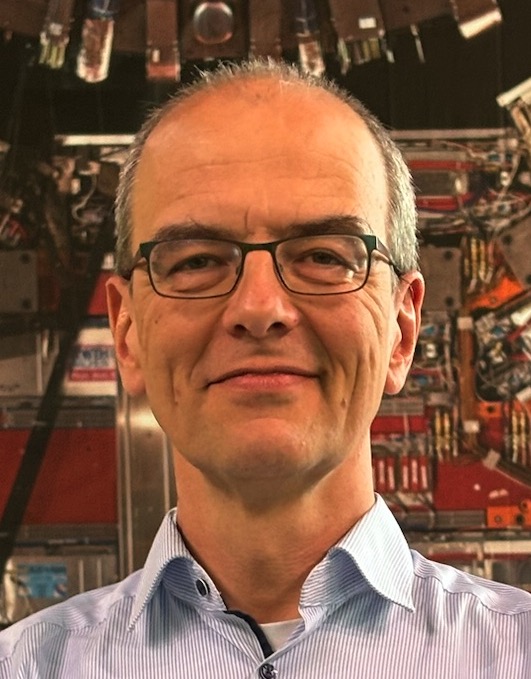 Andreas B. Meyer合作论文数Deutsches Elektronen-Synchrotron;Hamburg University79
 David Leith合作论文数Stanford Linear Accelerator Center79
 Boos Eduard Ernstovich合作论文数Department of Expiremental High Energy Physics, Skobeltsyn Institute of Nuclear Physics, Lomonosov Moscow State University79
 María José Costa Mezquita合作论文数Instituto de Física Corpuscular, Consejo Superior de Investigaciones Científicas79
 Sourabh Dube合作论文数Department of Physics, Indian Institute of Science Education and Research, Pune78
 Bob Hirosky合作论文数Department of Physics, University of Virginia78
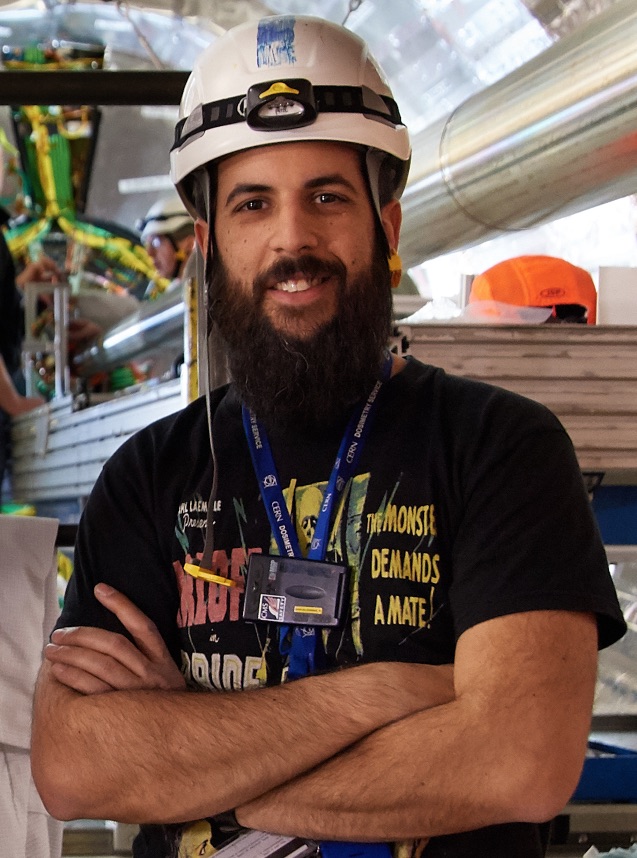 Stefanos Leontsinis合作论文数Physik Institut, University of Zurich77T. Ferbel合作论文数77
 Carsten Hensel合作论文数Department of High Energy Physics, Centro Brasileiro de Pesquisas Físicas77
 Bjoern Penning合作论文数Physik-Institut, University of Zurich76
 Elizaveta K. Shabalina合作论文数University of Gottingen76
 Luiz Mundim合作论文数Instituto de Física Armando Dias Tavares, Universidade do Estado do Rio de Janeiro;Departamento de Física Nuclear e Altas Energias, Universidade do Estado do Rio de Janeiro76
 Clemencia Mora Herrera合作论文数Departamento de Física Nuclear e Altas Energias, Rio de Janeiro State University76
 Anadi Canepa合作论文数Fermi National Accelerator Laboratory76L. Uvarov合作论文数76Andrea Bocci合作论文数CERN76Marc Hohlfeld合作论文数University of Mainz76Giovanni Zevi Della Porta合作论文数European Organization for Nuclear Research76
 Marc-André Pleier合作论文数Physics Department, Brookhaven National Laboratory75
 Andrew Askew合作论文数Department of Physics, College of Arts and Sciences, Florida State University74
 Miloš Lokajíček Jr合作论文数Division of Elementary Particle Physics, Particle Physics Department, Institute of Physics of the Czech Academy of Sciences74




