Abstract: This research note explores the cultural impact of Flau'jae Johnson as a college student/HipHop artist/basketball player. Her 2025 commercial with Powerade is the cultural site for analysis. Themes from commercial and rap lyrics underscore the importance of "grit" and noncognitive abilities, including dedication, teamwork, leadership, and resilience, as college students seek to matriculate in higher education while participating in athletics. Future research and practical recommendations are provided for policymakers in higher education, intercollegiate athletics, and corporations that work closely with agencies producing content, marketing, and other related materials, with collegiate athletes at the center of these cultural representations.
The practice of racial stacking continues to play a significant role in the National Football League (NFL or the League). This paper explores the effects of racial stacking on NFL hiring practices by enumerating examples of the selection of football players and how it fosters a disadvantageous environment for Blacks who desire to become head coaches and leaders of sport franchises. With data analysis that showcases hiring practices that affect Black and Brown head coaches and front-office personnel, the paper traces the hiring of Black presidents, general managers, and head coaches while critically assessing indicators of color blindness within the pipeline to NFL leadership positions. We contend that channeling athletes to specific playing positions on a team adversely affects their chances of advancing to leadership roles as coaches and team executives.
Theory without relevance for practice in a professional graduate degree has been critiqued by some scholars as a deficit approach when preparing MBA students for the workforce. Scholars and practitioners alike call for more pedagogy in the curriculum with a focus on innovation, creativity, and the involvement of industry practitioners. This paper serves as a case study of a moment in time on Monday, 14 June 2021, when the concept of “pracademics” was realized between two artists and two faculty. Following the transcription of the dialogue between two guest speakers from the Hip Hop world (i.e., Fat Joe and DJ Khaled) and two faculty from the sport management MBA program, the paper analyzes the deeper meaning of their intellectual presence with their expertise in the business of culture (i.e., Hip Hop). Findings reveal how the pairing of Hip Hop artists and faculty in an MBA program can address the innovation gap within global business curricula and models. The broader umbrella of pedagogy and application has implications for other academic disciplines to embrace this concept of pairing academics and industry practitioners.
Scholars of entrepreneurship, business, and economics have been reluctant to consider Hip Hop as a viable means for research and theory-building. Oddly enough, through the 1970s - a period that was generally characterized by stagnation and high unemployment - Hip Hop captivated audiences around the globe, creating innovative and diverse market opportunities for a host of different communities. The term 'Hip Hop Mogul' emerged to describe artists whose commercial viability appealed to varied sensibilities and disparate public spheres. Who are these Hip Hop Moguls? What are the interests of these Hip Hop Moguls? Drawing on lyrical content from a sample of Hip Hop Moguls (n = 15), we examine the discursive frameworks that make-up Moguldom, its politics, and its ways of being. Ultimately, our findings shed light on the different ways that marginalized communities negotiate antagonistic economic relations and disrupt traditional business paradigms.
This project explores the effects of racial phenotypic stereotypicality, or the degree to which a person's appearance is perceived as typical of their racial group, on leadership outcomes. Building on research showing that people hold an image of the ideal leader as a White person, we propose that looking more typically White may facilitate leadership attainment. In Study 1, which used a sample of American college football coaches (N = 1,106), White (vs. Black) coaches were more likely to occupy leadership roles. Furthermore, within race, stereotypicality positively predicted occupying a leadership or head-coach role among White professionals (and negatively predicted occupying a head-coach role among Black professionals). Study 2 elucidated a possible mechanism by showing a causal effect of stereotypicality on perceived suitability for leadership among Whites. These findings advance theorizing on the White-leader link and have implications for the ability of people of color to access lucrative professional roles.
Omitted in discussions of college athletes’ use of Name, Image, and Likeness (NIL) opportunities is a focus on equity, educational issues, and transition into post-college careers. We frequently hear National Collegiate Athletic Association (NCAA) declarations stating that nearly all college athletes ‘will go pro in something other than sports,’ but little is said about the challenges faced by Black athletes as they deal with coursework and the transition into post-college careers. In this paper, we summarize how the changing contexts of collegiate sports and race relations in higher education have intensified those challenges for Black athletes. We discuss how NIL opportunities can be used by Black athletes to expand identities, create and nurture relationships with mentors from Black-owned businesses, and develop programs in Black communities and organizations that promote social justice and racial equity. We assert that NIL can be combined with Happenstance Learning Theory (HLT) to develop skills for using unanticipated NIL-related opportunities in meeting challenges in courses and the transition into post-college lives. Lessons learned from support programs for Black athletes serve as a basis for recommending that universities fund the formation of a NIL Alliance of Black Athletes on campuses and provide career counselors to guide athletes as they meet people in connection with NIL deals that involve a combination of financial and personal development benefits relevant to education and future careers.
Purpose A perceived misalignment between socially responsible fans and football club management has recently led to a major crisis during the annual meeting in 2021 of Bayern Munich, one of the largest professional football teams in Europe. In an unprecedented scenario, Bayern Munich fans demanded that management drop one of its largest sponsors due to alleged violation of human rights. The goal of this paper is to examine this particular phenomenon, as it not only demonstrates a discrepancy between the social organizational identity and its image, but more importantly, how it impacts legitimation strategies and the fans' loyalty attitudes towards the club. Design/methodology/approach Using the underlying concepts of legitimacy and loyalty, this conceptual model paper proposes two frameworks for social responsibility in professional football clubs: (1) analyzing how the (mis-)alignment between organizational identity and image impacts fan loyalty and (2) depicting four different types of social responsibility strategies to align organizational identity and image. Findings The authors identify various theoretical concepts that influence organizational identity and image in and for social responsibility and combine the two critical concepts of legitimacy and loyalty to categorize the social responsibility strategies for professional football clubs. Originality/value Both frameworks advance the understanding of the decision-making behind social responsibility strategies and also synthesize the current literature to offer conceptual clarity regarding the varied implications and outcomes linked to the misalignment between organizational identity and image.
The canon of traditional academia has gradually expanded to include narratives through the prism of Black Americans. The inclusion of these narratives represents a challenge to the center of academe's canon. Sport sociologists have written scholarship through the prism of Black Americans to illustrate phenomena such as identity development, masculinity, and the gap between theory and practice in higher education. The rigorous study of sport sociology has created a space for academic credibility. Two fields that intentionally disrupt political and cultural consciousness are sport and HipHop. Two scholar-activists discuss the relationship between HipHop and sport as a cultural, theoretical, and global phenomenon to demonstrate the validity of this challenge to traditional academiaThis paper serves as a case study of a moment in time on Monday, June 14, 2021, when Sutton's concept of "pracademics" were realized. Following the transcription of two guest speakers from the Hip Hop world (i.e., Fat Joe and DJ Khaled), the paper analyzes the deeper meaning of their intellectual presence with their expertise in the business of culture (i.e., Hip Hop). The broader umbrella of pedagogy and application has implications for other academic disciplines to embrace this concept of "pairing" academics and industry practitioners.
The iconic image of Tommie Smith and John Carlos standing on the podium, with bowed heads, black-gloved fists in the air during the playing of the American national anthem at the 1968 Summer Olympic Games in Mexico City, is a symbol of resistance and the civil rights movement. This symbolic activism was part of a larger movement, the Olympic Project for Human Rights (OPHR) that was led by Dr. Harry Edwards. The movement was designed to be a nonviolent protest against the inhumane treatment of Black men in the United States. While Edwards and several of the track-and-field athletes worked to create awareness of their fight, a small group of rowers out of Harvard University also took notice. The Harvard men’s eight was the crew selected to represent the United States at the 1968 Games in Mexico, and shortly after their selection, a number of the men decided that they too wanted to support the initiative that Edwards had started. In their attempt to prove that they were indeed allies to the Black athletes on the American team, the men met with Edwards and decided to send letters to each person selected to represent the United States at the 1968 Games in Mexico that outlined the plight of the Black American athletes. However, while their intentions may have been honorable, many within the OPHR movement did not agree with the involvement of the Harvard rowers. Several members argued that these privileged White men had no right to be involved and their initiative was unwanted. This raises important discussions surrounding allyship; more specifically what constitutes an ally compared to the “great white hope?” This paper uses Edward’s concept of allyship and the oblivious possessive investment of whiteness and critically examines the Harvard men’s support of the OPHR movement in 1968.
It is widely documented that emotions play an important role in product marketing and branding. The current study explores the role that a human brand association can play in eliciting emotional responses and attachments from consumers that drive their subsequent behaviour. The human-centred Jordan Brand was examined because it uses the likeness/image of Michael Jordan. The study revealed the impact of consumer responses and decision-making through survey analysis (N = 1,133) at two Jordan Brand partner university's athletic events. The results demonstrate that the partnership between the university athletic department and Jordan Brand elicits strong emotional responses, the propensity to donate to the university, and increased consumer willingness to pay for merchandise bearing the human brand's likeness. The findings are useful for both scholars and practitioners as evidence that strategies designed to elicit emotional responses can yield positive results in consumer perception of the brand and financial success.
Racial analysis of photography in the canon is important when unpacking layers of racial discrimination, Black manhood, and the historical dynamics within social forces that create stereotypical perceptions of African American males. Race, religion, and sport allow scholars to unpack the perceived disposability of Black lives in contemporary society. In an effort to fully understand how sport and religion inform racialized experiences in Black manhood, the current paper seeks to advance theories of visual and racial culture in a particular context. Contextual analysis of a 1964 photograph of Malcolm X and Dr. Harry Edwards synthesizes the visual turn and offers insight into how race, sport, and religion collide to raise minority pride. A contextual analysis accounts for the ways in which visual materials function within broad social ecologies of Black masculinity. Implications are discussed for the role of sport and religion in continuing activism for racial equality.
The British Society of Sports History is actively working towards a more diverse and inclusive membership alongside the aim of encouraging a more representative research output in the field of sports history in Britain. This article provides an introduction to the process of developing and implementing strategies towards this intention. The article sits alongside and is informed by texts from authors such as Skillen and Osborne who have highlighted the continuing gender divide within sports history and the traditional leaning towards a male centred approach, and Evans et al, who have recently focussed on the disappointing legacy of the 'Black Lives Matter' movement within the field. Not limited to these particular underrepresented groups, the article considers the questions which need to be asked to produce useful and considered policies for inclusivity. With collaboration from members of the North American Society for Sport History, the author draws no conclusions, but hopes to contribute to the debate related to the inclusion of marginalised or underrepresented individuals within our sphere of academia.
The Rooney Rule was implemented in the National Football League (NFL) in 2003 to increase levels of employment for ethnic-minority coaches by requiring teams within the league to interview candidates of color for head coaching and executive level positions. However, only three coaches of color were employed at the beginning of the 2020 season. Framed within the larger context of occupational mobility, the present study aims to identify mobility trends for white coaches and coaches of color and analyzes the root causes for the difficulties that candidates of color experience when seeking higher-level positions within NFL organizations. Results illuminate a variety of institutional issues that exist within the NFL and allow for the development of recommendations that are useful for scholars and practitioners alike.
This study will explore the learning context and its relationship with life skills in former elite athletes. This was a cross-sectional study where 477 former elite athletes completed an ad-hoc questionnaire. A two factors solution (individual and social life skills) from the Exploratory Factor Analysis (EFA) explained 59.1% of the variance. Athletes that had a higher education at retirement, perceived having higher individual and social life skills. Athletes from team sports and those who trained less than 27 h/week perceived a higher degree of social life skills. Age was related to social life skills, too. Additionally, the higher the monthly salary was, the greater the athletes perceived their individual and social life skills. Sport stakeholders should not only provide athletes specific courses on life skills, but they should also guide them on how to apply those life skills in other spheres of their life after sport.
The value of intercollegiate athletics in universities has increased since Dr. Myles Brand’s presidency. Brand believed strongly in the integrated view of education and sport. This paper follows the emergence and value of the personal narrative by two African American males working together within the structural forces of the National Collegiate Athletic Association (NCAA), higher education, and intercollegiate athletics. The personal narrative collaborative effort occurred in the early stages of the NCAA’s Academic Progress Rate movement during Brand’s leadership decision to harmonize education and sport. The personal narrative structure focuses on one of Brand’s major initiatives: improving academic standards. One culturally relevant program that resulted in a collaborative moment during Brand’s leadership tenure will be the focus of this paper, as well as the potential contributions to theory and practice.
Abstract The field of sport history, as productive of history, is reckoning with the asymmetries of racial power and representations that constitutes the field. This paper provides a meaningful intervention for how sport historians and sport studies scholars who wish to publish in sport history can change the practices that constitute how they do their work and how the field of study is organized. First, we interrogate the ways in which “objective” insider whiteness has dominated sport history and determined the value of sport history scholarship. Second, we propose a solution of inside/out collaboration as an intervention to the field. Finally, we introduce a paradigm shift to expand scholarly knowledge and evolve social justice into sustainable equality.
 Scott Bukstein合作论文数DeVos Grad Sport Business Management Program, Univ Cent Florida33
 Whitney Griffin合作论文数Cerritos College13Suzanne Malia Lawrence合作论文数12
 Rhema Fuller合作论文数Univ Memphis9Jessie Dickens合作论文数6
 Jeff Stone合作论文数University of Arizona6Brandon E. Martin合作论文数5Danielle McArdle合作论文数5
 Eddie Comeaux合作论文数Grad Sch Educ, Univ Calif Riverside5Amanda N. Schweinbenz合作论文数5S. Malia Lawrence合作论文数4Suzanne M. Lawrence合作论文数4Jeff Eyanson合作论文数4neza janson合作论文数4
 Jacob K Tingle合作论文数3Tosen Nwadei合作论文数2Ginny McPherson-Botts合作论文数2Jay Coakley合作论文数2
 Kathy Babiak合作论文数School of Kinesiology, University of Michigan-Ann Arbor2
 James B. Wade合作论文数School of Business, George Washington University;Emory University2
 Melissa J. Williams合作论文数University of California;Rice University;University of California, Rice University2Anand Swaminathan合作论文数University of California, Davis2Leonard Moore合作论文数1Amanda Callan-Spenn合作论文数1Kirtigandha Salwe Carter合作论文数1Tanya K. Jones合作论文数1William A. Sutton合作论文数1keshia woodie合作论文数1Malia Lawerence合作论文数1maria taustine合作论文数1
 Corrado Lupo合作论文数1Katherine Klein合作论文数1
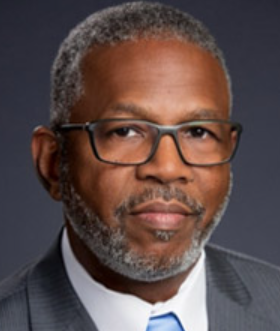 Louis Harrison合作论文数African and African Diaspora Studies, College of Liberal Arts, University of Texas at Austin1
 Colin A Zestcott合作论文数Department of Psychology & Sociology, College of St. Scholastica.1Javier Ramos合作论文数1Rebecca Ponce de Leon合作论文数1
 David M. Herold合作论文数Inst Transport & Logist Management, Vienna Univ Econ & Business1
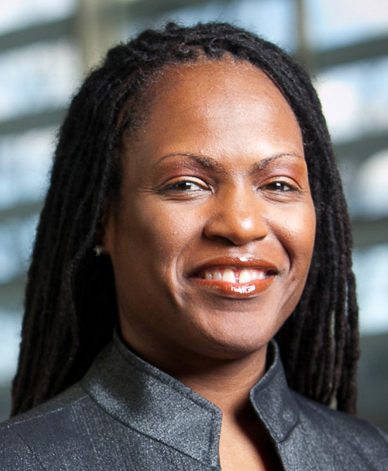 Ashleigh Shelby Rosette合作论文数Management and Organization, Fuqua School of Business, Duke University1
 Herminia Ibarra合作论文数London Business School1
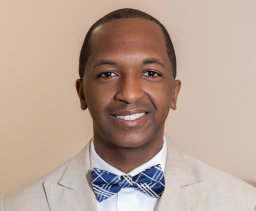 Carter Robert合作论文数Dept Computat Biol, St Jude Childrens Res Hosp1Dan Merson合作论文数1S. Yee合作论文数1
 Earl Smith合作论文数1V. Rullan合作论文数1
 D. Eric Boyd合作论文数College of Business Harrisonburg, James Madison University1Jenessa R. Shapiro合作论文数Department of Psychology;Arizona State University;Department of Psychology, Arizona State University1
 Raina Brands合作论文数1Richard E. Lapchick合作论文数1Leticia Oseguera合作论文数1




