Here we present an open-source cloud model for substellar atmospheres, called Virga . The Virga-v0 series has already been widely adopted in the literature. It is written in Python and has heritage from the A. S. Ackerman & M. S. Marley model (often referred to as eddysed ), used to study clouds on both exoplanets and brown dwarfs. In the development of the official Virga-v1 we have retained all the original functionality of eddysed and updated/expanded several components, including the back-end optical constant data, calculations of the Mie properties, available condensate species, saturation vapor pressure curves, and formalism for fall speed calculations. Here we benchmark Virga by reproducing key results in the literature, including the SiO _2 cloud detection in WASP-17 b and the brown dwarf Sonora Diamondback model series. Development of Virga is ongoing, with future versions already planned and ready for release. We encourage community feedback and collaborations within the GitHub code repository.
Approximate methods for radiative transfer equations that are fast, reliable, and accurate are essential for the understanding of atmospheres of exoplanets and brown dwarfs. The simplest and most popular choice is the “two-stream method,” which is often used to produce simple yet effective models for radiative transfer in scattering and absorbing media. Toon et al. (hereafter, Toon89) outlined a two-stream method for computing reflected light and thermal spectra that was later implemented in the open-source radiative transfer model PICASO . In Part I of this series, we developed an analytical spherical harmonics method for solving the radiative transfer equation for reflected solar radiation that was implemented in PICASO to increase the accuracy of the code by offering a higher-order approximation. This work is an extension of this spherical harmonics derivation, to study thermal emission spectroscopy. We highlight the model differences in the approach for thermal emission and benchmark the four-term method (SH4) against Toon89 and a high-stream discrete-ordinates method, CDISORT . By comparing the spectra produced by each model, we demonstrate that the SH4 method provides a significant increase in accuracy, compared to Toon89, which can be attributed to the increased order of approximation and to the choice of phase function. We also explore the trade-off between computational time and model accuracy. We find that our four-term method is twice as slow as our two-term method, but is up to five times more accurate, when compared with CDISORT . Therefore, SH4 provides excellent improvement in model accuracy with minimal sacrifice in numerical expense.
A significant challenge in radiative transfer theory for atmospheres of exoplanets and brown dwarfs is the derivation of computationally efficient methods that have adequate fidelity to more precise, numerically demanding solutions. In this work, we extend the capability of the first open-source radiative transfer model for computing the reflected light of exoplanets at any phase geometry, PICASO (Planetary Intensity Code for Atmospheric Spectroscopy Observations). Until now, PICASO has implemented two-stream approaches to the solving the radiative transfer equation for reflected light, in particular following the derivations of Toon et al. In order to improve the model accuracy, we have considered higher-order approximations of the phase functions; namely, we have increased the order of approximation from two to four, using spherical harmonics. The spherical harmonics approximation decouples spatial and directional dependencies by expanding the intensity and phase function into a series of spherical harmonics, or Legendre polynomials, allowing for analytical solutions for low-order approximations to optimize computational efficiency. We rigorously derive the spherical harmonics method for reflected light and benchmark the four-term method (SH4) against Toon et al. and two independent and higher-fidelity methods (CDISORT and doubling method). On average, the SH4 method provides an order-of-magnitude increase in accuracy, compared to Toon et al. Finally, we implement SH4 within PICASO and observe only a modest increase in computational time, compared to two-stream methods (20% increase).
The Saturnian moon Enceladus presents a unique opportunity to sample the contents of a subsurface liquid water ocean in situ via the continuous plume formed over its south polar terrain using a multi-flyby mission architecture. Previous analyses of the plume's composition by Cassini revealed an energy-rich system laden with salts and organic compounds, representing an environment containing most of the ingredients for life as we know it. Following in the footsteps of the Cassini-Huygens mission, we present Astrobiology eXploration at Enceladus (AXE), a New Frontiers class Enceladus mission concept study carried out during the 2021 NASA Planetary Science Summer School program at the Jet Propulsion Laboratory, California Institute of Technology. We demonstrate that a scientifically compelling geophysical and life-detection mission to Enceladus can be carried out within the constraints of a New Frontiers-5 cost cap using a modest instrument suite, requiring only a narrow angle, high-resolution telescopic imager, a mass spectrometer, and a high-gain antenna for radio communications and gravity science measurements. Using a multi-flyby mission architecture, AXE would evaluate the habitability and potential for life at Enceladus through a synergistic combination of in situ chemical analysis measurements aimed at directly detecting the presence of molecular biosignatures, along with geophysical and geomorphological investigations to contextualize chemical biosignatures and further evaluate the habitability of Enceladus over geologic time.
The observed atmospheric spectrum of exoplanets and brown dwarfs depends critically on the presence and distribution of atmospheric condensates. The Ackerman and Marley methodology for predicting the vertical distribution of condensate particles is widely used to study cloudy atmospheres and has recently been implemented in an open-source python package, Virga. The model relies upon input parameter f sed, the sedimentation efficiency, which until now has been held constant. The relative simplicity of this model renders it useful for retrieval studies due to its rapidly attainable solutions. However, comparisons with more complex microphysical models such as CARMA have highlighted inconsistencies between the two approaches, namely that the cloud parameters needed for radiative transfer produced by Virga are dissimilar to those produced by CARMA. To address these discrepancies, we have extended the original Ackerman and Marley methodology in Virga to allow for non-constant f sed values, in particular, those that vary with altitude. We discuss one such parameterization and compare the cloud mass mixing ratio produced by Virga with constant and variable f sed profiles to that produced by CARMA. We find that the variable f sed formulation better captures the profile produced by CARMA with heterogeneous nucleation, yet performs comparatively to constant f sed for homogeneous nucleation. In general, Virga has the capacity to handle any f sed with an explicit anti-derivative, permitting a plethora of alternative cloud profiles that are otherwise unattainable by constant f sed values. The ensuing flexibility has the potential to better agree with increasingly complex models and observed data.
EXPLORATION AT ENCELADUS (AXE). K. Marshall Seaton, Ethan R. Burnett, C. Adeene Denton, Bryce Doerr Kamak Ebadi, Stephanie Eckert, Ian. T. W. Flynn, Szilárd Gyalay, Casey I. Honniball, Shayna Hume, Corbin L. Kling, Julian C. Marohnic, Julia Milton, Claire A. Mondro, Raquel G. Nuno, Caoimhe M. Rooney, Beck E. Strauss, Gaia Stucky de Quay Alfred Nash, Jennifer Scully. Georgia Institute of Technology, Atlanta, GA 30332, United States (kseaton6@gatech.edu). University of Colorado, Boulder. Purdue University. Massachusetts Institute of Technology. Jet Propulsion Laboratory, California Institute of Technology. University of Central Florida. University of Pittsburgh. University of California, Santa Cruz. NASA Goddard Space Flight Center. National Air and Space Museum, Smithsonian Institution. University of Maryland, College Park. University of Tennessee, Knoxville. University of California, Los Angeles. NASA Ames Research Center. National Institute of Standards and Technology. Harvard University.
Heat transport in granular and porous media occurs through conduction in the solid and radiation through the voids. By exploiting the separation of length scales between the small typical particles or voids and the large size of whole region, the method of multiple scales can be applied. For a purely diffusive system, this yields a problem on the macroscale with an effective conductivity, deduced by solving a 'cell problem' on the microscale. Here, we apply the method when radiation and conduction are both present; however, care must be taken to correctly handle the integral nature of the radiative boundary condition. Again, an effective conductivity is found by solving a 'cell problem' which, because of the non-linearity of radiative transfer, to be solved for each temperature value. We also incorporate modifications to the basic theory of multiple scales in order to deal with the non-local nature of the radiative boundary condition. We derive the multiple scales formulation of the problem and report on numerical comparisons between the homogenised problem and direct solution of the problem. We also compare the effective conductivity to that derived using Maxwell models and effective medium theory.
Mathematical models are developed to explain the size distribution of particles in blenders to give insight into the behaviour of possible blender designs. The initial models consider idealized simplified situations, first with the chopping of long thin particles and then of spheres. The models are first presented using the idea of chopping at discrete places but then extended to account for chopping at any point via a continuous model. Some of the simple models can be solved analytically while others require numerical calculations. Comparisons of the predictions from the various models with experimental data at a fixed time are presented and show that the models account for much of the behaviour. The initial models do not however predict the large amount of extremely small particles (debris) that are observed at the end of the blending process. The models are thus modified using simple extensions to account for additional effects and numerical solutions of these models are compared with the observed data. The theory should provide a useful tool that eliminates the need to perform costly and time-consuming experiments when understanding how a particular food will be blended.
 Mark S. Marley合作论文数Lunar and Planetary Laboratory, College of Science, University of Arizona5
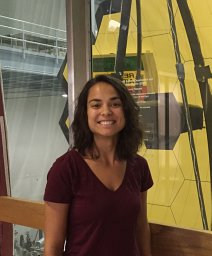 Natasha E. Batalha合作论文数NASA Ames Research Center4
 Stephanie Eckert合作论文数2K. Marshall Seaton合作论文数2Alfred Nash合作论文数2
 Shayna Hume合作论文数2Peter Gao合作论文数2
 Ian Flynn合作论文数2
 Casey Honniball合作论文数NASA Goddard Space Flight Ctr, NASA Postdoctoral Program2
 Julia Milton合作论文数Massachusetts Institute of Technology2
 Becky E. Strauss合作论文数NIST2
 Julian Marohnic合作论文数Center for Robust Decision Making on Climate and Energy Policy, University of Chicago2
 Claire A. Mondro合作论文数Geosciences Department, The Pennsylvania State University2C. A. Denton合作论文数2
 raquel g nuno合作论文数Dept Earth Planetary & Space Sci, Univ Calif Los Angeles2
 Corbin Kling合作论文数Ctr Earth & Planetary Studies, Smithsonian Inst2
 Kamak Ebadi合作论文数NASA Jet Propulsion Laboratory -California Institute of Technology, Pasadena, CA2
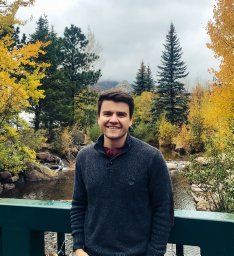 Ethan Burnett合作论文数Aerosp Engn Sci, Univ Colorado Boulder2
 Szilard Gyalay合作论文数Univ Calif Santa Cruz2
 Gaia Stucky De Quay合作论文数2
 Jennifer Scully合作论文数Jet Propulsion Laboratory, California Institute of Technology2
 Colin P. Please合作论文数Mathematical Institute, University of Oxford2
 James Mang合作论文数Dept Astron, Univ Texas Austin1
 Bryce Doerr合作论文数Univ Minnesota, Dept Aerosp Engn & Mech, Minneapolis, MN 55455 USA1Sagnick Mukherjee合作论文数1
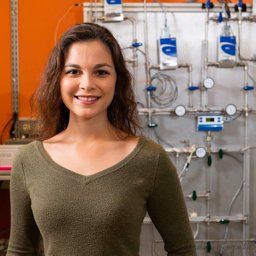 Sarah E. Moran合作论文数University of Arizona1
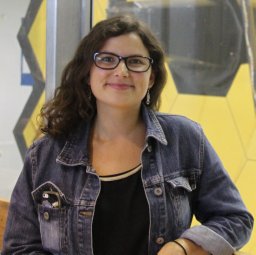 Hannah R Wakeford合作论文数Univ Exeter, Sch Phys, Astrophys Grp, Stocker Rd, Exeter EX4 4QL, Devon, England1
 Nikole Lewis合作论文数Department of Astronomy, College of Arts & Sciences, Cornell University1
 Ian M. Griffiths合作论文数Mathematical Institute, University of Oxford1
 Caroline V. Morley合作论文数Department of Astronomy, College of Natural Sciences, The University of Texas at Austin1
 Natalie Batalha合作论文数Astronomy & Astrophysics Department, University of California, Santa Cruz1
 Jonathan Fortney合作论文数Department of Astronomy and Astrophysics, University of California, Santa Cruz1
 Channon Visscher合作论文数Lunar and Planetary Institute1
 Sam Howison合作论文数Mathematical Institute, University of Oxford1




