We demonstrate that conditional Masked Autoregressive Flows constitute a flexible interpolation tool for lattice QCD observables, conditioned on bare lattice parameters. As a benchmark, we use the chiral phase structure of QCD with five degenerate light quark flavours, which on coarse lattices exhibits a region of first-order chiral transitions terminating in a critical quark mass. The method successfully reproduces standard reweighting in the gauge coupling, and naturally extends to interpolation in quark mass and spatial volume, for which reweighting is computationally prohibitive or inapplicable, respectively. Once trained, the model generates samples across the full parameter space in minutes, which can be used to obtain consistent first estimates of the critical quark mass without simulating all intermediate parameter values. This offers a concrete reduction in the number of lattice ensembles required. Precision on the critical mass from learned distributions is so far prohibited by the mode-covering effect inherent to maximum-likelihood-based training, which introduces a systematic bias near first-order transitions. At the current stage, the method is well-suited for a range of practical applications: localising phase boundaries, identifying the universal scaling axes at a critical point, and accelerating informed determinations of parameter values ahead of high-precision Monte Carlo campaigns.
The energy-momentum tensor (EMT) is the conserved current corresponding to space-time translation symmetry. Its applications are remarkably diverse, ranging from the thermodynamics to the calculation of transport coefficients. While the EMT is well-defined in the continuum up to a total derivative, with its coefficients fixed by Ward identities, its extension to lattice QCD is not straightforward. The primary challenge arises from the breaking of continuous space-time symmetries by the discrete lattice regulator. Although the EMT can be constructed on the lattice in a way that yields the correct continuum limit, the operators are not uniquely defined. In this proceeding, we construct the EMT for both pure-gauge theory and full QCD, discussing its renormalization in the specific context of determining the coefficients required for shear viscosity. In this context, we present a comparative analysis of the trace anomaly, number density, pressure, energy density and enthalpy density with imaginary chemical potential for multiple β values at approximately the same temperature, aimed for the continuum limit.
We discuss the status and progress of recent efforts to modernize the International Lattice Data Grid(ILDG).This includes activities of the metadata and middleware workinggroups concerning deployment and operation of crucial services (user management, metadata catalogues, file catalogues) and extensions of the metadata format, which have been tailored according to the needs of the large collaborations. We also report on developments and extensions that are planned to be addressed in the foreseeable future.
We will report recent progress on the QCD phase diagram at finite temperature and density. In particular, we discuss the universal scaling of the chiral transition in the limit of two massless quarks and one strange quark. We also discuss influence of other control parameter as chemical potentials, external magnetic field strength and number of quark flavors on the chiral transition. From calculations of Taylor expansion coefficients of the pressure w.r.t the baryon chemical potential and at imaginary chemical potential, we discuss estimates of the QCD critical point. Those estimates make use of the universal scaling ansatz of the Lee-Yang edge singularity.
We study the generalized charm susceptibilities in 2+1 flavor QCD on the lattice at several lattice spacings. We show that, below the chiral crossover, these susceptibilities are well described by the hadron resonance gas (HRG) model if charmed hadrons not listed in tables of the Particle Data Group are included. However, the HRG description abruptly breaks down just above the chiral crossover. To understand this, we use a model for the charm pressure in which it is expressed as the sum of partial pressures from charmed baryons, charmed mesons, and charm quarks. We present continuum estimates of these partial pressures and find that, while the partial pressures of charmed mesons and baryons drop below their respective HRG predictions, the charm quark pressure becomes non-zero above the chiral crossover.
We summarize the status of lattice QCD ensemble generation efforts and their data management characteristics. Namely, these proceedings combine the contributions to a dedicated parallel session during the 41st International Symposium on Lattice Field Theory (Lattice 2024), during which representatives of 16 lattice QCD collaborations provided details on their simulation program, with focus on plans for publication, data management, and storage requirements. The parallel session was organized by the International Lattice Data Grid (ILDG), following an open call to the lattice QCD community for participation in the session.
The shear viscosity of the quark-gluon plasma (QGP) plays a crucial role in interpreting current measurements from heavy-ion collisions and is a key input to hydro-dynamical models. The interest in shear viscosity also lies in the fact that QGP is the most ideal fluid ever observed and has the shear viscosity to entropy ratio ($\eta / s$) close to the theoretical bound $\eta / s \geq 1/ 4 \pi$ in the strong coupling region within AdS/CFT formalism. The lattice determination of $\eta / s$ has been explored for the pure gauge case, but its determination in full QCD remains unexplored, despite its significant importance. In this proceeding, we present updates on extending our quenched findings to full QCD. Specifically, we focus on the renormalization of the energy-momentum tensor with the gradient flow method and provide a progress update on determining the relevant renormalization coefficients for shear viscosity. For this purpose, we have used an imaginary isospin chemical potential.
We will report on current progress in the understanding of the QCD phase diagram, including universal scaling in the chiral limit and the vicinity of the QCD critical point. In the latter case we will discuss the universal scaling of Lee-Yang zeros and their determination from multi-point Padé approximations to the baryon number density at imaginary chemical potentials. In particular, reported results include the critical phase transition temperature, the curvature of the critical and pseudo-critical transition temperature with respect to the chemical potential and the location of the QCD critical point.
Phase diagrams of some important theories like quantum chromodynamics (QCD), are only accessible through numerical simulations with only finite degrees of freedom. Information about critical phenomena can then only inferred through finite size scaling studies of various moments of the order parameter. Alternatively, one can study the complex zeros of the grand canonical partition function, known as Lee-Yang zeros, which are accessible as poles of the thermodynamic variables. Moreover the temperature and volume scaling of these poles can be used as a probe to understand the nature of phase transitions in many systems. We will discuss here the recent progress that has been made in this direction with respect to the Roberge-Weiss transition, the 2D Ising model and the conjectured QCD critical point. We will further discuss results on the universal location of Lee-Yang edge singularity from continuum extrapolated scaling function for some $O(N)$ models in $3-d$.
We discuss the scaling of the Yang-Lee singularity (YLs) and show how the universal scaling can be used to locate phase transitions in QCD. We describe two complementary methods to extract the location of the Yang-Lee singularity from lattice QCD data of the baryon-number density and higher order cumulants of the baryon number, obtained at imaginary chemical potential. The first method (multi-point Padé resummation) is used to determine the Roberge-Weiss phase transition temperature. Our continuum extrapolated result is T_RW=211.1±3.1 MeV. The second method is based on the asymptotic behaviour of the Fourier coefficients of the baryon-number density. We discuss the derivation of a fitting function and demonstrate that the procedure can successfully locate the YLs in the Quark Meson model.
The rise of exascale supercomputers has fueled competition among GPU vendors, driving lattice QCD developers to write code that supports multiple APIs. Moreover, new developments in algorithms and physics research require frequent updates to existing software. These challenges have to be balanced against constantly changing personnel. At the same time, there is a wide range of applications for HISQ fermions in QCD studies. This situation encourages the development of software featuring a HISQ action that is flexible, high-performing, open source, easy to use, and easy to adapt. In this technical paper, we explain the design strategy, provide implementation details, list available algorithms and modules, and show key performance indicators for SIMULATeQCD, a simple multi-GPU lattice code for large-scale QCD calculations, mainly developed and used by the HotQCD collaboration. The code is publicly available on GitHub.
In this paper we study the universal properties of the baryon chemical potential Fourier coefficients in Quantum Chromodynamics. We show that by following a well-defined strategy, the Fourier coefficients can be used to locate Yang-Lee edge singularities associated with chiral phase transition (and by extension with the Roberge-Weiss) in the complex chemical potential plane. We comment on the viability of performing this analysis using lattice QCD data.
We discuss the analytic continuation of scaling function in the 3-dimensional Z(2),O(2) andO(4) universality classes using the Schofield representation of the magnetic equation of state. We show that a determination of the location of Lee-Yang edge singularities and, in the case of Z(2), also the Langer edge singularity yields stable results. Results for the former are in good agreement with Functional Renormalization Group calculations. We also present results for the location of the Langer edge singularity in the 3-d,Z(2) universality class. We find that in terms of the complex scaling variable z the distance of the Langer edge singularity to the critical point agrees within errors with that of the Lee-Yang edge singularity. Furthermore the magnitude of the discontinuity along the Langer branch cut is an order of magnitude smaller than that along the Lee-Yang branch cut.
The Bielefeld Parma Collaboration has in recent years put forward a method to probe finite density QCD by the detection of Lee-Yang singularities. The location of the latter is obtained by multi-point Padè approximants, which are in turn calculated matching Taylor series results obtained from Monte Carlo computations at (a variety of values of) imaginary baryonic chemical potential. The method has been successfully applied to probe the Roberge Weiss phase transition and preliminary, interesting results are showing up in the vicinity of a possible QCD critical endpoint candidate. In this talk we will be concerned with a couple of significant aspects in view of a more powerful application of the method. First, we will discuss the possibility of detecting finite size scaling of Lee-Yang/Fisher singularities in finite density (lattice) QCD. Second, we will briefly mention our attempts at detecting both singularities in the complex chemical potential plane and singularities in the complex temperature plane. The former are obtained from rational approximations which are functions of the chemical potential at given values of the temperature; the latter are obtained from rational approximations which are functions of the temperature at given values of the chemical potential.
Using the multi-point Padé approach, we locate Lee-Yang edge singularities of the QCD pressure in the complex baryon chemical potential plane. These singularities are extracted from singularities in the net baryon-number density calculated in N_f=2+1 lattice QCD at physical quark mass and purely imaginary chemical potential. Taking an appropriate scaling ansatz in the vicinity of the conjectured QCD critical endpoint, we extrapolate the singularities on N_τ=6 lattices to pure real baryon chemical potential to estimate the position of the critical endpoint (CEP). We find T^ CEP=105^+8_-18 MeV and μ_B^ CEP = 422^+80_-35 MeV, which compares well with recent estimates in the literature. For the slope of the transition line at the critical point we find -0.16(24).
We calculate Fourier coefficients of the net-baryon number as a function of a purely imaginary chemical potential. The asymptotic behavior of these coefficients is governed by the singularity structure of the QCD partition function and thus encodes information on phase transitions. For the calculation of the Fourier coefficients from lattice data of the Bielefeld-Parma collaboration we use a novel Filon-type quadrature, designed for highly oscillatory integrals. We find sensitivity to chiral scaling in a narrow temperature interval below the Roberge-Weiss transition temperature. Scaling fits yield reasonable values for the position of the Lee-Yang edge singularity in the complex chemical potential plane. Our lattice data has been obtained from simulations with (2+1)-flavors of highly improved staggered quarks (HISQ) at imaginary chemical potential on $N_\tau=4, 6$ and $8$ lattices at physical quark masses.
A new approach is presented to explore the singularity structure of lattice QCD in the complex chemical potential plane. Our method can be seen as a combination of the Taylor expansion and analytic continuation approaches. Its novelty lies in using rational (Pade) approximants for studying the Lee-Yang edge singularities. We present a calculation of the cumulants of the net-baryon number as a function of a purely imaginary baryon number chemical potential, obtained with highly improved staggered quarks at temporal lattice extent of N-tau = 4, 6. We construct various rational function approximations of the lattice data and determine their poles (and roots) in the complex plane. We compare the position of the closest pole to the theoretically expected position of the Lee-Yang edge singularity. At high temperature, we find scaling that is in accordance with the expected power law behavior of the Roberge-Weiss transition, while a different behavior is found for T less than or similar to 170 MeV.
Phase transitions in a non-perturbative regime can be studied by ab initio Lattice Field Theory methods. The status and future research directions for LFT investigations of Quantum Chromo-Dynamics under extreme conditions are reviewed, including properties of hadrons and of the hypothesized QCD axion as inferred from QCD topology in different phases. We discuss phase transitions in strong interactions in an extended parameter space, and the possibility of model building for Dark Matter and Electro-Weak Symmetry Breaking. Methodological challenges are addressed as well, including new developments in Artificial Intelligence geared towards the identification of different phases and transitions.
Phase transitions in a non-perturbative regime can be studied by ab initio Lattice Field Theory methods. The status and future research directions for LFT investigations of Quantum Chromo-Dynamics under extreme conditions are reviewed, including properties of hadrons and of the hypothesized QCD axion as inferred from QCD topology in different phases. We discuss phase transitions in strong interactions in an extended parameter space, and the possibility of model building for Dark Matter and Electro-Weak Symmetry Breaking. Methodological challenges are addressed as well, including new developments in Artificial Intelligence geared towards the identification of different phases and transitions.
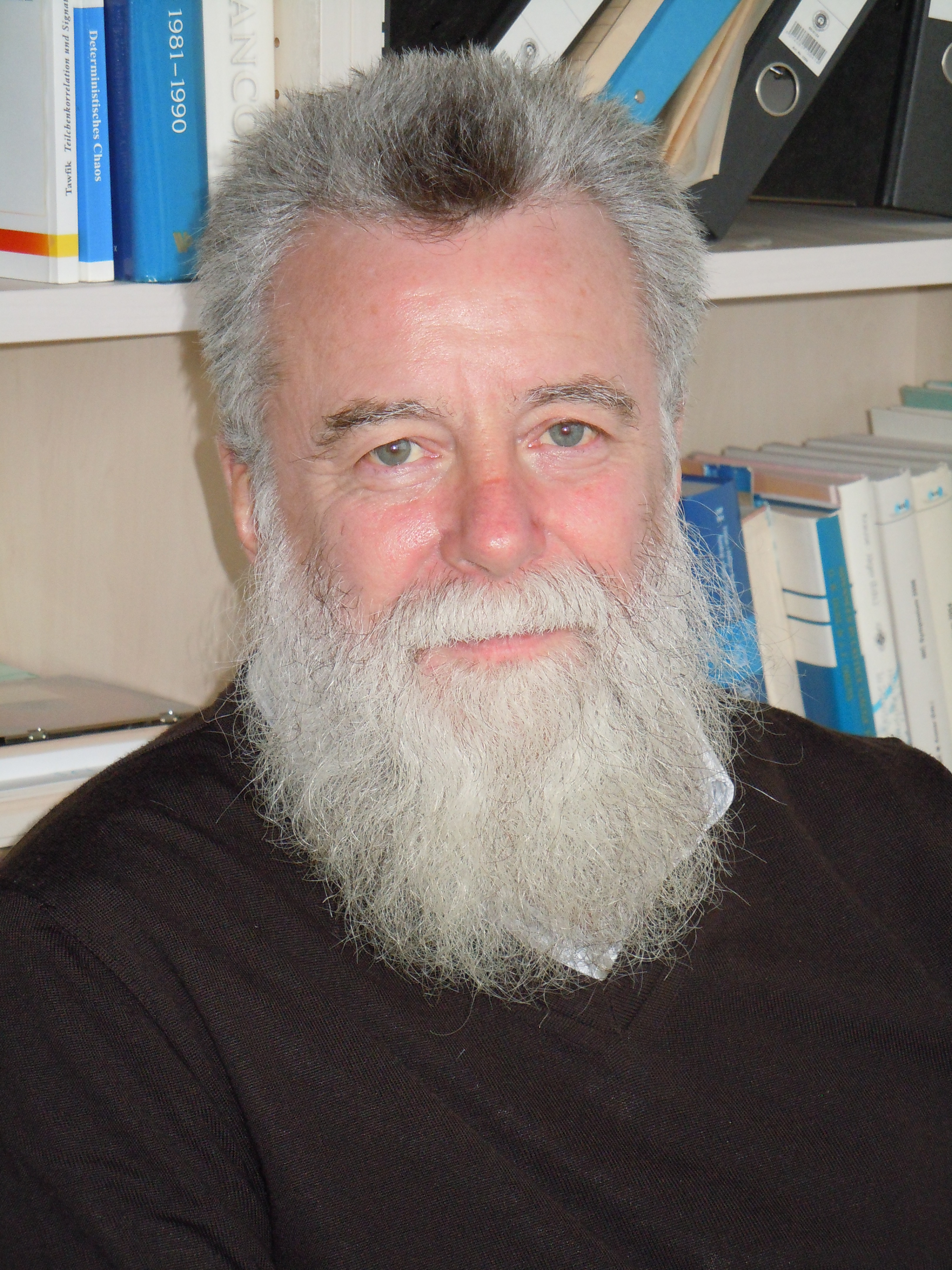 Frithjof Karsch合作论文数Faculty of Physics, Bielefeld University28
 Olaf Kaczmarek合作论文数Fakultat fur Physik|Universitat Bielefeld20
 Jishnu Goswami合作论文数Univ Bielefeld16Anirban Lahiri合作论文数Department of Computer Science and Engineering,
Indian Institute of Technology, Kharagpur14
Jishnu Goswami合作论文数Univ Bielefeld16Anirban Lahiri合作论文数Department of Computer Science and Engineering,
Indian Institute of Technology, Kharagpur14 Peter Petreczky合作论文数Department of Physics, Brookhaven National Laboratory12
 Simran Singh合作论文数Dipartimento Sci Matemat Fis & Informat, Univ Parma10Petros Dimopoulos合作论文数Dipartimento di Scienze Matematiche, Fisiche e Informatiche, Università degli studi di Parma10
 Swagato Mukherjee合作论文数Physics Department, Brookhaven National Laboratory10
 Francesco Di Renzo合作论文数9Kevin Zambello合作论文数8
 Prasad Hegde合作论文数8
 David Clarke合作论文数7
 Hengtong Ding (丁亨通)合作论文数College of Physical and Technology, Central China Normal University7
 Edwin Laermann合作论文数Fakultat fur Physik, Universitat Bielefeld7Felix Ziesche合作论文数5Guido Nicotra合作论文数4Sipaz Sharma合作论文数4Philipp Scior合作论文数4Marius Neumann合作论文数4
 Mugdha Sarkar合作论文数HBNI, Saha Institute of Nuclear Physics4D. Bollweg合作论文数4Shinji Ejiri (江尻真司)合作论文数Department of Science, Faculty of Science, Niigata University4
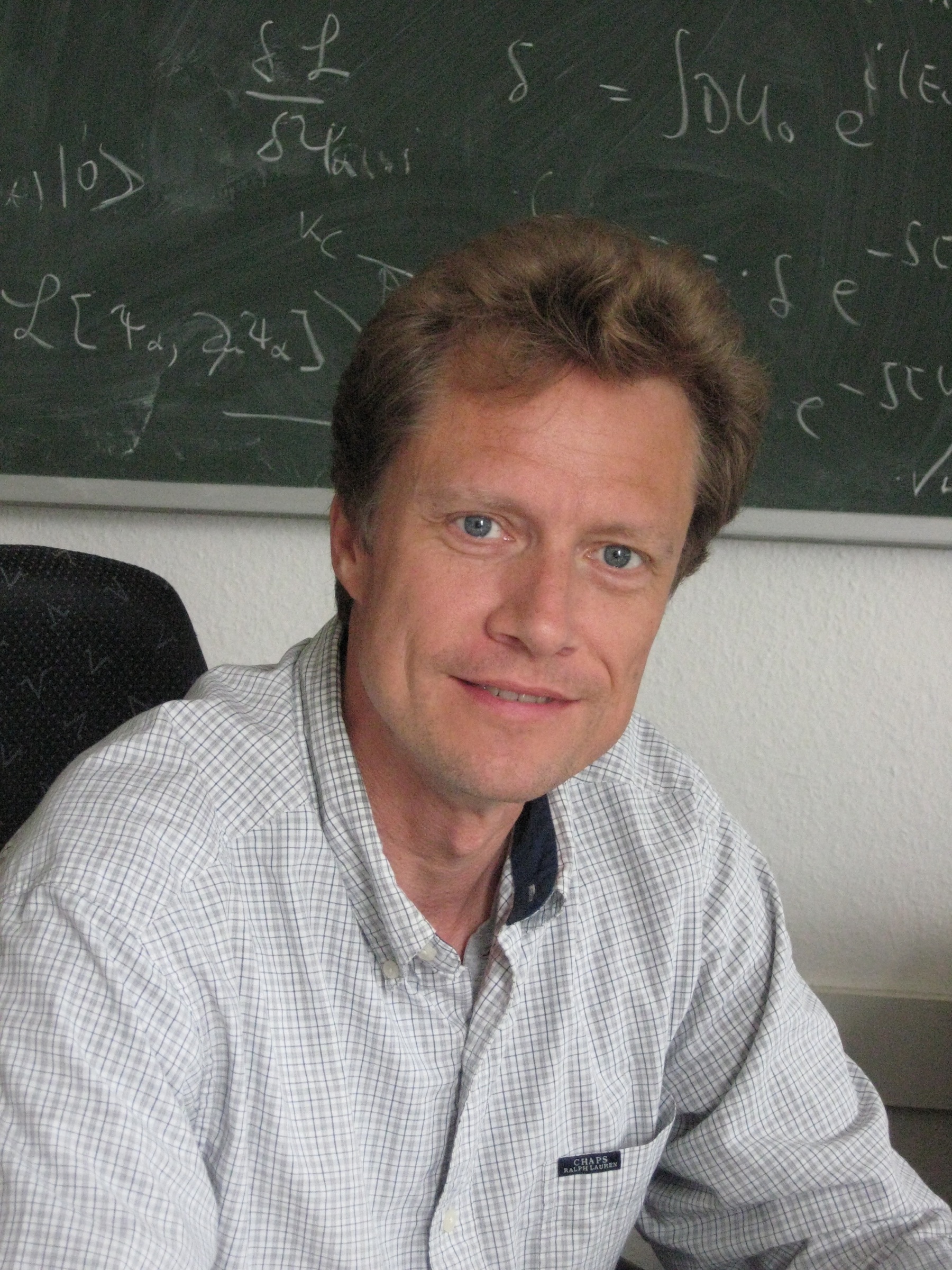 Owe Philipsen合作论文数Institut für Theoretische Physik, Goethe-Universität Frankfurt4
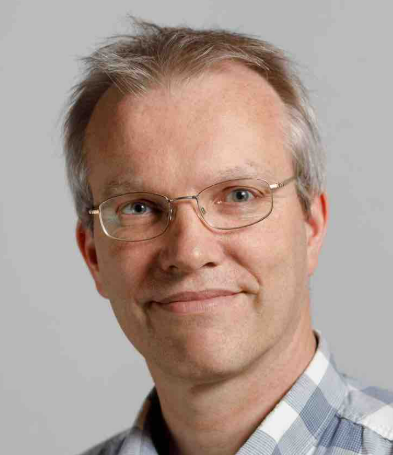 Jan Martin Pawlowski合作论文数Institut für Theoretische Physik, Universität Heidelberg4C. R. Allton合作论文数4Lorenzo Dini合作论文数3P. Steinbrecher合作论文数3Lukas Mazur合作论文数3Xiao-Dan Wang合作论文数3
 Akio Tomiya合作论文数RIKEN BNL Res Ctr, Brookhaven Natl Lab3Francesca Cuteri合作论文数3A. Yu. Kotov合作论文数3
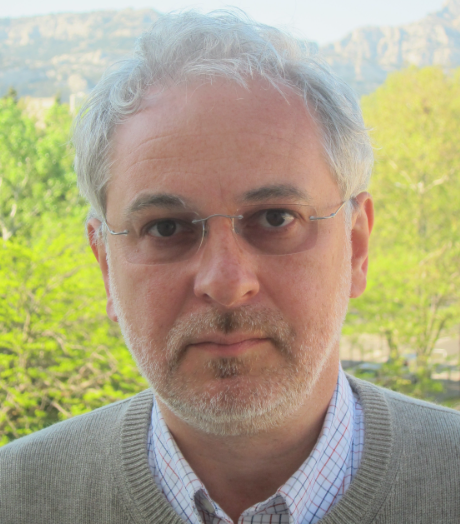 Zoltan Fodor合作论文数Department of Physics, Eberly College of Science, Pennsylvania State University3
 Rajan Gupta合作论文数Los Alamos National Laboratory3Chuan Miao合作论文数3Alexei Bazavov合作论文数3S. D. Katz合作论文数Institute for Theoretical Physics;Eotvos University;Institute for Theoretical Physics, Eotvos University3Robert D. Mawhinney合作论文数Columbia University3
 Steven A. Gottlieb合作论文数Department of Physics, College of Arts and Sciences, University Graduate School, Indiana University Bloomington3Vladimir V. Skokov合作论文数2Sinéad M. Ryan合作论文数2Lorenzo Maio合作论文数2Hauke Sandmeyer合作论文数2Joerg Aichelin合作论文数2Costanza Conti合作论文数2M. Caselle合作论文数2Scherzer Manuel合作论文数2
 Marianna Sorba合作论文数SISSA – Via Bonomea2




