A perfect code in a graph Γ= (V, E) is a subset C of V such that no two vertices in C are adjacent and every vertex in V ∖ C is adjacent to exactly one vertex in C. A total perfect code in Γ is a subset C of V such that every vertex of Γ is adjacent to exactly one vertex in C. In this paper we prove several results on perfect codes and total perfect codes in Cayley graphs of finite abelian groups.
In 1935, Philip Hall published what is often referred to as “Hall's marriage theorem” in a short paper (P. Hall, On Representatives of Subsets, J. Lond. Math. Soc. (1) 10 (1935), no.1, 26–30.) This paper has been very influential. I state the theorem and outline Hall's proof, together with some equivalent (or stronger) earlier results, and proceed to discuss some the many directions in combinatorics and beyond which this theorem has influenced.
Our purpose in this paper is twofold. (a) We discuss the computational problem of deciding whether a given graph is the commuting graph of a Ti-nite group; we give a quasipolynomial algorithm, and a polynomial algorithm for the case when the group is an extraspecial p-group for pan odd prime. (b) We give new results on the question of whether the com-muting graph of a given group is a cograph or a chordal graph, two classes of graphs defined by forbidden sub-graphs. The problems are not unrelated, since there are a number of cases where hard computational problems on graphs are eas-ier when restricted to special classes of graphs; we conjecture that the recognition problem is polynomial for cographs and chordal graphs. @2025 The Author(s). Published by Elsevier Inc. This is an open access article under the CC BY license (http:// creativecommons.org/licenses/by/4.0/)-
Let k and l be integers, both at least 2. A (k,l)-bipartite graph is an l-regular bipartite multigraph with coloured bipartite sets of size k. Define ,X (k,l) and mu (k,l) to be the minimum and maximum order of automorphism groups of (k,l)-bipartite graphs, respectively. We determine ,X (k,l) and mu (k,l) fork >= 8, and analyse the generic situation when k is fixed and l is large. In particular, we show that almost all such graphs have automorphism groups which fix the vertices pointwise and have order far less than mu (k,l). These graphs are intimately connected with both contingency tables with uniform margins and uniform set partitions; we examine the uniform distribution on the set of k x k contingency tables with uniform margin l, showing that with high probability all entries stray far from the mean. We also show that the symmetric group acting on uniform set partitions is non-synchronizing.
This study makes some preliminary observations towards an extension of current work on graphs defined on groups to simplicial complexes. I define a variety of simplicial complexes on a group, which are preserved by automorphisms of the group, and in many cases have a relation to familiar graphs on the group. The ones which seem to reach deepest into the graph structure are two forms of independence complex, and some results on the class of groups for which these two complexes coincide are given. Other examples are treated more briefly.
If $G$ is a graph, $A$ and $B$ its induced subgraphs, and $f\colon A\to B$ an isomorphism, we say that $f$ is a \emph{partial automorphism} of $G$. In 1992, Hrushovski proved that graphs have the \emph{extension property for partial automorphisms} (\emph{EPPA}, also called the \emph{Hrushovski property}), that is, for every finite graph $G$ there is a finite graph $H$, an \emph{EPPA-witness} for $G$, such that $G$ is an induced subgraph of $H$ and every partial automorphism of $G$ extends to an automorphism of $H$. The EPPA number of a graph $G$, denoted by $\mathop{\mathrm{eppa}}\nolimits(G)$, is the smallest number of vertices of an EPPA-witness for $G$, and we put $\mathop{\mathrm{eppa}}\nolimits(n) = \max\{\mathop{\mathrm{eppa}}\nolimits(G) : \lvert G\rvert = n\}$. In this note we review the state of the area, prove several lower bounds (in particular, we show that $\mathop{\mathrm{eppa}}\nolimits(n)\geq \frac{2^n}{\sqrt{n}}$, thereby identifying the correct base of the exponential) and pose many open questions. We also briefly discuss EPPA numbers of hypergraphs, directed graphs, and $K_k$-free graphs.
In this paper, nonzero component graphs and nonzero component union graphs of finite dimensional vector space are studied using the zero-divisor graph of specially constructed 0-1-distributive lattice and the zero-divisor graph of rings. Further, we define an equivalence relation on nonzero component graphs and nonzero component union graphs to deduce that these graphs are the graph join of zero-divisor graphs of Boolean algebras and complete graphs. In the last section, we characterize the perfect and chordal nonzero component graphs and nonzero component union graphs.
Let G be a finite transitive permutation group on $\Omega $ . The G-invariant partitions form a sublattice of the lattice of all partitions of $\Omega $ , having the further property that all its elements are uniform (that is, have all parts of the same size). If, in addition, all the equivalence relations defining the partitions commute, then the relations form an orthogonal block structure, a concept from statistics; in this case the lattice is modular. If it is distributive, then we have a poset block structure, whose automorphism group is a generalised wreath product. We examine permutation groups with these properties, which we call the OB property and PB property respectively, and in particular investigate when direct and wreath products of groups with these properties also have these properties.A famous theorem on permutation groups asserts that a transitive imprimitive group G is embeddable in the wreath product of two factors obtained from the group (the group induced on a block by its setwise stabiliser, and the group induced on the set of blocks by G). We extend this theorem to groups with the PB property, embedding them into generalised wreath products. We show that the map from posets to generalised wreath products preserves intersections and inclusions.We have included background and historical material on these concepts.
This paper provides a bridge between two active areas of research, the spectrum (set of element orders) and the power graph of a finite group. The order sequence of a finite group $G$ is the list of orders of elements of the group, arranged in non-decreasing order. Order sequences of groups of order $n$ are ordered by elementwise domination, forming apartially ordered set. We prove a number of results about this poset, among them the following.1. M. Amiri recently proved that the poset has a unique maximal element, corresponding to the cyclic group.We show that the product of orders in a cyclic group of order $n$ is at least $q^{\phi(n)}$ times as large as the product in any non-cyclic group, where $q$ is the smallest prime divisor of $n$ and $\phi$ is Euler's function,with a similar result for the sum.2. The poset of order sequences of abelian groups of order $p^n$ is naturally isomorphic to the (well-studied) poset of partitions of $n$ with its natural partial order.3. If there exists a non-nilpotent group of order $n$, then there exists such a group whose order sequence is dominated by the order sequence of any nilpotent group of order $n$.4. There is a product operation on finite ordered sequences, defined by forming all products and sorting them into non-decreasing order. The product of order sequences of groups $G$ and $H$ is the order sequence of agroup if and only if $|G|$ and $|H|$ are coprime. The paper concludes with a number of open problems.
Eigenvalues of the Laplacian matrix of a graph have been widely used in studying connectivity and expansion properties of networks, and also in analyzing random walks on a graph. Independently, statisticians introduced various optimality criteria in experimental design, the goal being to obtain more accurate estimates of quantities of interest in an experiment. It turns out that the most popular of these optimality criteria for block designs are determined by the Laplacian eigenvalues of the concurrence graph, or of the Levi graph, of the design. The most important optimality criteria, called A (average), D (determinant) and E (extreme), are related to the conductance of the graph as an electrical network, the number of spanning trees, and the isoperimetric properties of the graphs, respectively. The number of spanning trees is also an evaluation of the Tutte polynomial of the graph, and is the subject of the Merino–Welsh conjecture relating it to acyclic and totally cyclic orientations, of interest in their own right. This chapter ties these ideas together, building on the work in [4] and [5].
Let G be a finite group with identity e and H {e} be a subgroup of G. The generalized non-coprime graph _G,H of G with respect to H is the simple undirected graph with G ∖{e } as the vertex set and two distinct vertices x and y are adjacent if and only if (|x|,|y|) 1 and either x ∈ H or y ∈ H , where |x| is the order of x∈ G . In this paper, we study certain graph theoretical properties of generalized non-coprime graphs of finite groups, concentrating on cyclic groups. More specifically, we obtain necessary and sufficient conditions for the generalized non-coprime graph of a cyclic group to be in the class of stars, paths, triangle-free, complete bipartite, complete, split, claw-free, chordal or perfect graphs. Then we show that widening the class of groups to all finite nilpotent groups gives us no new graphs, but we give as an example of contrasting behaviour the class of EPPO groups (those in which all elements have prime power order). We conclude with a connection to the Gruenberg–Kegel graph.
We describe, through the use of Rubin's theorem, the automorphism groups of the Higman-Thompson groups $G_{n,r}$ as groups of specific homeomorphisms of Cantor spaces $\mathfrak{C}_{n,r}$. This continues a thread of research begun by Brin, and extended later by Brin and Guzm\'an: to characterise the automorphism groups of the `Chameleon groups of Richard Thompson,' as Brin referred to them in 1996. The work here completes the first stage of that twenty-year-old program, containing (amongst other things) a characterisation of the automorphism group of $V$, which was the `last chameleon.' The homeomorphisms which arise fit naturally into the framework of Grigorchuk, Nekrashevich, and Suschanskii's rational group $\mathscr{R}$: they are exactly those homeomorphisms which are induced by bi-sychronizing transducers, which we define in the paper. This result appears to offer insight into the nature of Brin and Guzman's exotic automorphisms, while also uncovering connections with the theory of reset words for automata (arising in the Road Colouring Problem) and with the theory of automorphism groups of the full shift.
The solvable conjugacy class graph of a finite group G, denoted by Γ _sc(G) , is a simple undirected graph whose vertices are the non-trivial conjugacy classes of G and two distinct conjugacy classes C, D are adjacent if there exist x ∈ C and y ∈ D such that ⟨ x, y⟩ is solvable. In this paper, we discuss certain properties of the genus and crosscap of Γ _sc(G) for the groups D_2n , Q_4n , S_n , A_n , and PSL (2,2^d) . In particular, we determine all positive integers n such that their solvable conjugacy class graphs are planar, toroidal, double-toroidal, or triple-toroidal. We shall also obtain a lower bound for the genus of Γ _sc(G) in terms of the order of the center and number of conjugacy classes for certain groups. As a consequence, we shall derive a relation between the genus of Γ _sc(G) and the commuting probability of certain finite non-solvable group.
As a contribution to the study of graphs defined on groups, we show that for a finite group G the following statements are equivalent: the commuting graph of G is a split graph; the commuting graph of G is a threshold graph; either G is abelian, or G is a generalized dihedral group D(A) =< A, t : ( for all a is an element of A)(at)(2 ) = 1 > where A is an abelian group of odd order.
Let A be a graph type and B an equivalence relation on a group G. Let [g] be the equivalence class of g with respect to the equivalence relation B. The B superA graph of G is an undirected graph whose vertex set is G and two distinct vertices g, h ∈ G are adjacent if [g] = [h] or there exist x ∈ [g] and y ∈ [h] such that x and y are adjacent in the A graph of G. In this paper, we compute spectrum of equality/conjugacy supercommuting graphs of dihedral/dicyclic groups and show that these graphs are not integral.
Let F be a set of finite groups. A finite group G is called an F-cover if every group in F is isomorphic to a subgroup of G. An F-cover is called minimal if no proper subgroup of G is an F-cover, and minimum if its order is smallest among all F-covers. We prove several results about minimal and minimum F-covers: for example, every minimal cover of a set of p-groups (for p prime) is a p-group (and there may be finitely or infinitely many, for a given set); every minimal cover of a set of perfect groups is perfect; and a minimum cover of a set of two nonabelian simple groups is either their direct product or simple. Our major theorem determines whether {Zq,Zr} has finitely many minimal covers, where q and r are distinct primes. Motivated by this, we say that n is a Cauchy number if there are only finitely many groups which are minimal (under inclusion) with respect to having order divisible by n, and we determine all such numbers. This extends Cauchy's theorem. We also define a dual concept where subgroups are replaced by quotients, and we pose a number of problems.
In some experiments, the experimental units are all pairs of individuals who have to undertake a given task together. The set of such pairs forms a triangular association scheme. Appropriate randomization then gives two non-trivial strata. The design is said to have commutative orthogonal block structure (COBS) if the best linear unbiased estimators of treatment contrasts do not depend on the stratum variances. There are precisely three ways in which such a design can have COBS. We give a complete description of designs for which all treatment contrasts are in the same stratum. Then we give a very general construction for designs with COBS which have some treatment contrasts in each stratum.
The difference graph $D(G)$ of a finite group $G$ is the difference of enhanced power graph of $G$ and power graph of $G$, with all isolated vertices are removed. In this paper we study the connectedness and perfectness of $D(G)$ with respect to various properties of the underlying group $G$. We also find several connection between the difference graph of $G$ and the Gruenberg-Kegel graph of $G$.
Let G be a group. Associate a directed graph (called the Engel digraph of G) with G whose vertex set is G, with an arc (x,y) if [y, _k x]=1 for some positive integer k, where [y,_kx] is the iterated commutator [y,x,x,…,x], with k terms x in the expression. From this we define the Engel graph by ignoring directions; the co-Engel graph is its complement. The co-Engel graph, under the name “Engel graph”, was introduced by Abdollahi. However, the name we use is more natural. We begin with some general results about the Engel digraph and graph, before turning our attention to the co-Engel graph. Among other things, we show that (unlike what happens for the power graph) the undirected Engel graph does not determine the directed version up to isomorphism, though counterexamples seem to be fairly rare: there are just two orders less than 100 for which this happens. The isolated vertices of the co-Engel graph form the set L(G) be the set of all left Engel elements of G. In a finite group G, L(G) is the Fitting subgroup of G (a result of Abdollahi). We realize the induced subgraph of co-Engel graphs of certain finite non-Engel groups G induced by G ∖ L(G). The reduced co-Engel graph is obtained by deleting the isolated vertices. We compute genus, various spectra, energies and Zagreb indices of the reduced co-Engel graphs for those groups. As a consequence, we determine (up to isomorphism) all finite non-Engel group G such that the clique number of the co-Engel graph is at most 4 and the graph is toroidal or projective. Further, we show that the graph is super integral and satisfies the E-LE conjecture and the Hansen–Vukičević conjecture for the groups considered in this paper.
 R. A. Bailey合作论文数School of Mathematical Sciences at Queen Mary, University of London22
 Joao Araujo合作论文数18
 Cheryl E. Praeger合作论文数Centre for the Mathematics of Symmetry and Computation The University of Western Australia12J. H. Van Lint合作论文数10William M. Kantor合作论文数Department of Mathematics, University of Oregon9Wolfram Bentz合作论文数8Pablo Spiga合作论文数School of Mathematics and Statistics, the University of Western Australia7Maximilien Gadouleau合作论文数6
 Dudley Stark合作论文数School of Mathematical Sciences, Queen Mary University of London6
 Rajat Kanti Nath合作论文数Department of Mathematics Permanent Campus, North-Eastern Hill University6
 Michel Deza合作论文数Ecole Normale Supérieure6JJ SEIDEL合作论文数5Sam Tarzi合作论文数5
 Thirugnanam Tamizh Chelvam合作论文数Department of Mathematics, M.S. University Tirunelveli5Soren Riis合作论文数Department of Computer Science5
 Tomas Nilson合作论文数Department of Applied Science and Design, Mid Sweden University5
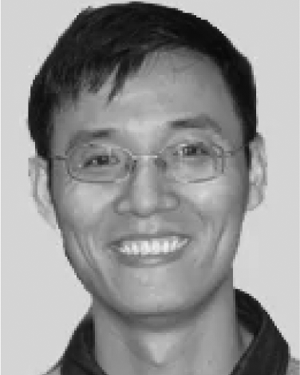 Taoyang Wu合作论文数5Dimitri Leemans合作论文数4
 J. D. Mitchell合作论文数BBC Research & Development4
 Collin Bleak合作论文数University of Nebraska at Lincoln4
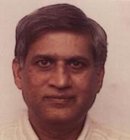 Navin M. Singhi合作论文数Tata Institute of Fundamental Research4
 Thomas Prellberg合作论文数School of Mathematical Sciences;Queen Mary University of London;School of Mathematical Sciences, Queen Mary University of London4Jack H. Van Lint合作论文数4Jm Goethals合作论文数3
 Lavanya Selvaganesh合作论文数3Marina Anagnostopoulou-Merkouri合作论文数3William Raynaud合作论文数3Feyishayo Olukoya合作论文数3Hiranya Kishore Dey合作论文数3
 Arunkumar Ganesan合作论文数3
 David Ellis合作论文数Queen Mary, University of London3Peter M. Neumann合作论文数3
 Maria Elisa Fernandes合作论文数Center for Research and Development in Mathematics and Applications, University of Aveiro3
 Benjamin Sambale合作论文数Mathematisches Institut3Jan Saxl合作论文数3Francis Buekenhout合作论文数3Donald A. Preece合作论文数3
 Gordon F. Royle合作论文数School of Physics, Mathematics and Computing, University of Western Australia;Centre for the Mathematics of Symmetry and Computation, University of Western Australia3
 Michael Giudici合作论文数Department of Mathematics and Statistics, The University of Western Australia;Centre for the Mathematics of Symmetry and Computation, The University of Western Australia3
 Amanda Chetwynd合作论文数Lancaster University3A. J.W. Hilton合作论文数Pure Mathematics3i p pinayev合作论文数2Jh Vanlint合作论文数2L Babai合作论文数2R. Connolly合作论文数2
 Bernard Kosciuk合作论文数2M. Blaskiewicz合作论文数2B. Bacha合作论文数2Peter Dobcsányi合作论文数2




