Through interviews and observations, this article explores the community cultural wealth operating in two schools to identify literacy practices to support children’s literacy learning.
Purpose The purpose of this paper is to describe how a school district–university partnership was sustained following the unexpected termination of federal grant funding. Drawing on mutualism as a lens for school and district–university partnerships, this paper explores how shared leadership, relational commitment, and problem-solving practices sustained our partnership during a period of disruption, termination, and beyond. Design/methodology/approach We used a reflective, storytelling approach to describe the journey of a district–university teacher residency partnership. Drawing on semi-structured interviews with university and district leaders, along with project leadership reflections, we highlight leadership decisions and partnership responses across key inflection points during the project. This approach allowed us to document how the partnership was established, navigated the abrupt loss of grant funding, and adapted to sustain its work. Findings A strong relational foundation established prior to the funding disruption enabled our partnership to respond collectively and adaptively during a period of uncertainty. Shared vision, transparent communication, and people-centered leadership fostered collaboration and supported the co-construction of a reformulated pathway forward for residents. Rather than weakening under pressure, the partnership deepened, resulting in revised agreements, reallocated institutional resources, and sustained support for residents. Originality/value Our work contributes to an underexplored area in the literature by illustrating how one district–university partnerships endured following abrupt funding loss. By foregrounding sustained commitment, relational trust, and intentional collaboration, we offer practical insights for building resilient, sustainable partnerships that extend beyond the life of external funding.
ABSTRACT This historical analysis focuses on the 72‐year legacy of the Summary Investigations of Reading Research ( SIRR ) originally written by William S. Gray as a monograph in 1925, and continuing under the authorship of Helen Robinson and Samuel Weintraub until 1997. While publication venues changed, the intention remained the same: to provide reading scholars and educators with a comprehensive overview of reading research published each year. While many questions could be brought to this archive, we ask: What can we learn about how reading has developed as a science, and the role played by equity and diversity in reading scholarship by exploring the 72‐year history of the Summary of Reading Investigations?‐‐ To address these issues, we attend to intersections among discourses of place (e.g., venues, universities), interactional orders (e.g., collaborations, forms of communication), and foci (e.g., recurring themes) through a discourse‐historical approach. Our analysis reveals numerous historical points of tensions and suggests that increases in the use of scientific language in the Summary Investigations coincided with increased attention to student diversity and equitable schooling experiences. Notably, these advances revealed tensions between what science can and cannot reveal about how children become readers, especially when we ask who is well‐served. Representation of international scholarship is discussed.
This mixed-methods study explored the intertwined development of Atayal oral language, emergent reading-like behaviors, and cultural identity for 28 Indigenous preschoolers (average age 4.11 years) during a year-long book project. Eight early childhood and Atayal language teachers from two classrooms implemented bilingual books at two levels of difficulty. Each level was used for a semester. Pre-project, mid-project and post-project assessments related to oral language, emergent reading, and cultural identity were conducted; child interviews and observational field notes were collected. Quantitative (i.e., ANOVA with repeated measures, paired sample t-test, Pearson correlation) and qualitative analyses (i.e., coding of interview transcripts and field notes, identification/counting of reading-like behaviors) revealed significant improvement for Atayal oral language, emergent reading-like behaviors, and cultural identity after the first semester. However, further improvement on oral language and reading-like behaviors was not indicated, perhaps due to dissimilar sentence structures between level one and level two books. While this project enhanced children's attention to print and print concepts, most children continued to rely on picture cues and memory rather than phonetic cues. This study sheds light on developing and implementing materials to sustain Indigenous languages.
PurposeThe study provides insight into the contribution of practice-based approaches by focusing on the voices of novice and experienced teachers as they reflect on what helped them as they became educators. Specifically, our work provides insight into the role of learning experiences that are embedded in schools and classrooms.Design/methodology/approachData draw on a combination of qualitative and quantitative data including a survey and qualitative interview data.FindingsWe explore the significance novice and experienced teachers attribute to various teacher preparation practices and specifically methods courses that are embedded in schools. Based on our analysis, we are confident that students in practice-based programs benefitted from embedded methods classes that involved collaborating with teachers and working with children. At the same time, based on teacher reports, we recognize that embedded methods classes must better support teachers with classroom management, lesson planning and attending to student diversityResearch limitations/implicationsWhile our relatively small sample size and reliance on teacher-reporting (i.e. survey and interviews) limits our claims, alumni from our certification programs valued the time they spent in classrooms, accompanying opportunities to observe different teaching styles and work with children from different communities. Thus, we recommend that teacher educators continue to explore the affordances on embedded learning experiences for preservice teachers.Originality/valueWhile we value the strengths of our embedded program, we recognize that our efforts are incomplete and that embedded classes do not automatically address all aspects of becoming teachers.
This metasynthesis of Professional Development Schools (PDS) scholarship focuses on research that examines PDS as an entity – a systemic, multifaceted innovation that builds on and affects multiple dimensions of teaching and learning across educational contexts. We contextualize our work within scholarship that documents the challenges and affordances of PDS, discuss previous reviews of PDS scholarship and describe our methodological metasynthesis. Among our significant findings was the surprisingly small number of studies (n = 4) that focused on PDS as a layered entity. Other significant findings related to the lack of attention to cultural and linguistic diversity in comprehensive studies of PDS spaces and the methodological limits of much PDS research. We highlight the importance of circulating and boundary-spanning leadership, evolving collaboration and peer learning, challenges and benefits due to the complexity of PDS spaces and few efforts to directly measure PDS effectiveness. With our focus on peer-reviewed research articles, we may have overlooked book-length reports, which may have contributed to our analysis. Further, the PDS spaces described in our sample were relatively new (i.e. operating for five years at most); more established sites deserve detailed researcher attention. We call for: (1) multidimensional analyses involving various PDS participants and varied data sources, (2) mixed-methods studies that merge quantitative measures with rich ethnographic data and (3) longitudinal approaches to explore PDS spaces over time to learn about the formation and sustenance of PDS spaces as well as threats to sustainability. We advocate for: (1) teams of researchers using parallel methods to document activities within and across PDS spaces and (2) systemic attention to community voices and equity practices in PDS spaces. To counter the tendency for PDS scholarship to focus on logistics and implementation, we engaged in a metasynthesis of PDS research to explore PDS as an entity – a systemic, multi-faceted innovation that builds on and affects multiple dimensions of teaching and learning. We found very few studies that met these criteria.
In this metasynthesis, we examined 21 highly cited qualitative studies on family literacy scholarship conducted by Black, Indigenous, and People of Color (BIPOC) scholars from 1981 to 2019. This metasynthesis integrates findings to present a counterstory that challenges dominant narratives in family literacy. By amplifying often overlooked or erased narratives, we highlight diverse themes including family literacy as activism, its temporal aspects, barriers, challenges, hybridity, emotionality, bonding, spiritual literacies, and healing practices. These themes enhance racial, linguistic, and cultural awareness in scholars' engagement with families and communities. This metasynthesis broadens the conceptualization of family literacy, encouraging a reevaluation of our understanding of families, literacies, and research representation. Additionally, it underscores the critical importance of acknowledging and authentically representing BIPOC scholars and their participants’ stories.
Systemic and seismic changes across multiple dimensions of schooling are needed to create equitable schools. We highlight a promising set of intentional and illustrative practices at one university that illustrate how equity can be highlighted across educational systems. While our efforts are ongoing, we explore a commitment to equity and social justice across: (1) A professional development school network. (2) An elementary education program. (3) Focal classrooms committed to equity practices. (4) Teacher education courses embedded in schools. This paper draws on data collected at each systemic level listed above. We use these data to illustrate the importance of intentional and simultaneous efforts to change practices across classrooms, schools, teacher professional development spaces, and teacher education courses. While our efforts are ongoing and inevitably incomplete, we maintain that this systemic confluence contributes to comprehensive and sustainable structures that support more equitable learning experiences for children, teachers, preservice teachers, and university faculty.
Compton-Lilly and colleagues respond to recent critiques of their viewpoint article, Stories Grounded in Decades of Research: What We Truly Know about the Teaching of Reading-published in The Reading Teacher. We first respond to specific concerns raised by our critics. We then discuss recent legislation being enacted in statehouses across the United States that does not reflect current research. Finally, we reiterate two preeminent concerns that were not addressed by our critics: (1) instruction must be responsive to readers and (2) teachers must bring a vast range of expertise to competently serve readers who bring multifaceted literate and experiential knowledge to texts. Reiterating concerns raised by other readings scholars, we worry that attending to microdimensions of arguments creates false binaries, obfuscates important areas of agreement, and distracts attention from what truly matters: children.
In this chapter, Catherine Compton-Lilly draws on data from a 12-year study that follows children from immigrant families as they progress through school. This analysis of three longitudinal case studies draws on theories of intersectionality, figured worlds, and assemblage. While these three theories are generally not placed in conversation with each other, Compton-Lilly reveals the complexity of becomings by considering multiple identity dimensions (e.g., intersectionality) alongside the role of cultural roles and expectations (e.g., figured worlds), and idiosyncratic aspects of being and becoming (e.g., assemblage). The chapter draws on a multimodal data set that includes interviews (children, parents, and teachers), observations (home, school, and community), and student-created artifacts (drawings, photographs, and writing). Specifically, Compton-Lilly explores the experiences of Gabby, a third-generation Mexican American girl who negotiates gender expectations; Lupita, a first-generation Mexican American girl who increasingly displays pride in her Latina heritage and her Spanish-speaking abilities; and Adam, a Moroccan, Muslim boy who explores his role as a global citizen. Together these stories speak to the unique, situated, and longitudinal nature of identity becomings across time.
This article explores a collaboration designed to support two Indigenous Taiwanese communities to combat language loss and promote Indigenous language literacy. Rather than relying on expert knowledge of literacy and language scholars, we have intentionally sought local knowledge to design and create books that introduce young children to simple phrases and basic conversational vocabulary in Atayal language. To do this, we engaged in a series of conversations with Tribal Leaders from two Indigenous Atayal communities. The full ethnographic study addresses designing, planning and creating bi/trilingual books with Atayal communities; instructional uses of bilingual/trilingual books; assessment of children’s language learning; and reflections from Atayal leaders, teachers, and parents. In this article, we examine the lessons we learned in designing and creating the books, as well as Tribal Leader, parent, caregiver, and teacher responses to the books.
The recent dissemination of selective research findings related to reading privileges a narrow body of reading scholarship and a singular, unproven solution—teaching phonics. We offer a research‐based correction by presenting two compelling bodies of research to argue that reading instruction must be responsive to individual children. While this confluence of complexity does not deny the importance of phonics, it highlights the significant findings related to: (1) the brain and reading, and (2) the systematic observation of young readers. We argue that reductive and singular models of reading fail to honor the cultures, experiences, and diversity of children. This confluence of research findings reveals an unequivocal need for caution as states, universities, schools, and teachers adopt assumedly universal and narrow approaches to teaching reading.
Teachers are leaving the classroom at greater rates while traditional teacher pathways are not yielding enough teacher candidates. These factors create a need for teachers that is especially evident in rural communities. Paraprofessionals (e.g., teaching assistants, instructional aides, paraeducators) who provide classroom support are uniquely positioned to fill these vacancies. In this paper, we examine the experiences of paraprofessionals prior to applying to a teacher residency program. Based upon the experiences shared by the participants, intrapersonal characteristics needed to become a teacher were highlighted, and policy requirements identified, surfacing challenges paraprofessionals encounter impacting their desire to become a teacher.
This article revisits the legacy of Ken Goodman, specifically his work on African American Language and reading. In this body of scholarship, Goodman and like‐minded scholars entered a fray of competing interests, political agendas, and economic stakes, which continue to plague current debates about the teaching of reading. To make sense of Goodman's contribution, I briefly explore the context in which the research was conducted. I then discuss Goodman's attention to language variation and African American Language, including an illustrative study the compared the reading of elementary grade students from eight linguistic communities. I end by linking this historical body of research to current debates about the reaching of reading.
Time and temporality are variously conceptualized and employed ubiquitously in both theoretical and empirical studies of education and literacy. Since education and learning are inherently defined as change over time, any theory of learning or education makes implicit or explicit claims about the nature of time. In this exploratory conceptual review / theoretical essay, temporal discourse analysis is used to identify the temporal claims operating in six studies drawing on six different theoretical framings: (1) predictive theorizing (Sénéchal & LeFevre, 2002); (2) developmental theorizing (Sulzby, 1985); (3) sociocultural theorizing (Gonzalez et al., 1995); (4) critical literacy theorizing (Jones & Enriquez, 2009); (5) critical race theory (Solórzano & Yosso, 2001); and (6) queer theorizing (Schey, 2023). Each theorization brings theoretical, methodological, and practical implications related to how research might be conducted, what changes across time, how time operates, and what might be tracked across time. Theorizations of time have substantive implications for what happens in classrooms and how what happens is interpreted by teachers, students, and researchers.
List of figures Embedded activities in elementary classesx List of tables 2.1Studies on phonics with adults that were
At the final session of the 2022 Literacy Research Association Conference, Catherine Compton-Lilly, Marcus Croom, Mary McVee, and Allison Skerrett presented critical work related to equity, representation, and race in literacy scholarship. Panelists shared concerns and pursued a shared goal. Specifically, as literacy scholars, they recognized that like the empirical research conducted in classrooms and communities, review scholarship—scholarship that aspires to make sense of large bodies of available research—is always subject to systemic biases, privileging, and racism. In this panel session, we intentionally sought to dismantle biases through four review-oriented projects that—each in its own way—attempts to counter the systemic whitewashing that has characterized review scholarship in literacy. The collective synthetic, counter-narrative that we presented is significant to literacy education. As we explained, the historical omission of scholarly reviews conducted by Scholars of Color requires a reclaiming of the field. Significantly, the omission is not a minor oversight. Scholarly reviews have long-term effects on scholarly communities; reviews provide novice and established scholars with macro views of the literacy field; in short, reviews identify what is important and worthy of scholarly attention and it is with this history in mind that the Integrative Review Panel for LRA 2022—and this current set of articles—were organized. Across our papers, we explore silences and obfuscations relative to the voices of Scholars of Color, the experiences of Communities of Color, and the education of all children. We view our public presentation of these syntheses as intentionally anti-racist acts designed to name, describe, and recognize the contributions of BIPOC (an acronym for Black, Indigenous, and People of Color) scholars and communities. We are confident that the LRA community will continue to find this work impressive, inspiring, and important.
 Tisha Lewis Ellison合作论文数Dept Language & Literacy Educ, Univ Georgia16
 Rebecca Rogers合作论文数College of Education, University of Missouri15
 Erin Quast合作论文数Sch Teaching & Learning, Illinois State Univ12
 Stephanie Shedrow合作论文数University of Wisconsin-Green Bay11
 Laura Hamman-Ortiz合作论文数Sch Educ, Univ Rhode Isl10Kristin Papoi合作论文数10
 Dana Hagerman合作论文数9Bingjie Zheng合作论文数8Yao-Kai Chi合作论文数8
 Brooke Taira合作论文数8Sun Young Lee合作论文数8Eurydice Bauer合作论文数7
 Guofang Li合作论文数Department of Language and Literacy Education, Faculty of Education, The University of British Columbia7
 Aria Razfar合作论文数College of Education, University of Illinois7
 Jieun Kim合作论文数4Michele Myers合作论文数3Melissa A. Baker合作论文数3
 Amber Adgerson合作论文数3Rachelle Curcio合作论文数Univ South Carolina3
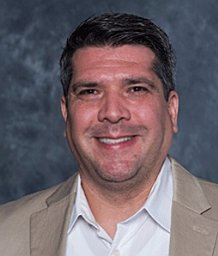 George J. Roy合作论文数Department of Instruction and Teacher Education, University of South Carolina3
 Stephen Thompson合作论文数3
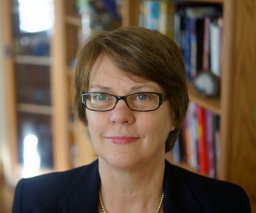 Lucy Spence合作论文数3
 Ching-Ting Hsin合作论文数Department of Curriculum and Instruction, University of Wisconsin-Madison3Leigh D'Amico合作论文数2Jessie Guest合作论文数2
 Eliza Braden合作论文数University of South Carolina2
 Kristin Harbour合作论文数University of South Carolina2Sarah Tran合作论文数2
 Scott H. Decker合作论文数School of Criminology & Criminal Justice, Arizona State University2
 P. L. Thomas合作论文数Research Station, Agriculture Canada2Di Tam Luu合作论文数1
 Jessie D. Guest合作论文数1Ming-Fang Hsieh合作论文数1Kathleen Olmstead合作论文数1Kathleen Colantonio-Yurko合作论文数1brook goralskicumbajin合作论文数1andrea duron合作论文数1lois zamzow合作论文数1
 Margaret Hawkins合作论文数Department of Curriculum and Instruction, School of Education, University of Wisconsin-Madison1
 Patricia Venegas-Weber合作论文数1Allison Skerrett合作论文数1
 Marcus Croom合作论文数Indiana University Bloomington1
 Ya-Fang Cheng合作论文数Dept Curriculum & Instruct, Univ Wisconsin Madison1
 Yang Wang合作论文数Dept Instruct & Teacher Educ, Univ South Carolina1Ji Eun Kim合作论文数1Lenny Sanchez合作论文数1
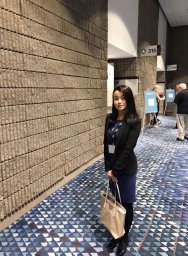 Aijuan Cun合作论文数Dept Instruct & Learning, SUNY Buffalo1
 Maria Padros合作论文数Educ, Univ Barcelona1




