DALTON, DALLAS H. JR. M.D.; MCDOWELL, HOLT A. M.D.; LYONS, CHAMP M.D. Author Information
Lyons, Champ M.D.; Clark, Leland C. Jr. Ph.D.; McDowell, Holt M.D.; McArthur, Katrina M.D. Author Information
BRADLEY, MERRILL N. M.D.; MCARTHUR, KATRINA T. M.D.; LYONS, CHAMP M.D. Author Information
Edwards, W. Sterling M.D.; Clark, Leland C. Jr. Ph.D.; Lyons, Champ M.D. Author Information
Annals of the New York Academy of SciencesVolume 102, Issue 1 p. 29-45 ELECTRODE SYSTEMS FOR CONTINUOUS MONITORING IN CARDIOVASCULAR SURGERY Leland C. Clark Jr., Leland C. Clark Jr. Medical College of Alabama, Birmingham, Ala.Search for more papers by this authorChamp Lyons, Champ Lyons Medical College of Alabama, Birmingham, Ala.Search for more papers by this author Leland C. Clark Jr., Leland C. Clark Jr. Medical College of Alabama, Birmingham, Ala.Search for more papers by this authorChamp Lyons, Champ Lyons Medical College of Alabama, Birmingham, Ala.Search for more papers by this author First published: October 1962 https://doi.org/10.1111/j.1749-6632.1962.tb13623.xCitations: 2,693AboutPDF ToolsRequest permissionExport citationAdd to favoritesTrack citation ShareShare Give accessShare full text accessShare full-text accessPlease review our Terms and Conditions of Use and check box below to share full-text version of article.I have read and accept the Wiley Online Library Terms and Conditions of UseShareable LinkUse the link below to share a full-text version of this article with your friends and colleagues. Learn more.Copy URL Share a linkShare onEmailFacebookTwitterLinkedInRedditWechat References 1 Clark, L. C., Jr., S. Kaplan, E. C. Matthews, F. K. Edwards & J. A. Helmsworth. 1958. Monitor and control of blood oxygen tension and p H during total body perfusion. J. Thoracic Surg. 36: 488–496. 2 Clark, S.Persona] communication. 3 Spinco Division of Beckman Instruments. Bibliography of Physiological Gas Analysis. DS-192. Standford Industrial Park, Palo Alto , Calif. 4 Severlvghaus, J. W. Recent developments in blood O2 and CO2 electrodes. In Symposium on pH and Blood Gas Measurements. 1959. R. Woolmer, Ed., Little, Brown and Co., Boston , Mass . Pp. 126–149. 5 Clark, L. C., Jr. 1960. Continuous recording of blood oxygen content. Surg. Forum. 11: 143–144. 6 McARTHUR, K. T., L. C. Clark, Jr., C. Lyons & S. Edwards. 1961. Continuous recording of blood oxygen saturation in open-heart operations. Surgery. 51: 121–126. 7 Strickland, E. H., F. D. Ziegler & P. A. Anthony. 1961. Oxygen electrode for measurement of tissue slice respiration. Nature. 191: 969–970. 8 Skeccs, L. T., Jr. 1957. An automatic method for colorimetric analysis. Am. J. Clin. Pathol. 28: 311–322. 9 Skeccs, L. T., Jr. 1960. The determination of carbon dioxide in blood serum. Ann. N.Y. Acad. Sci. 87(2): 650–657. 10 Clark, L. C., Jr. & L. M. Bargeron, Jr. 1959. The detection and direct recording of left-to-right shunts with the hydrogen electrode catheter. Surgery. 46: 797–804. 11 Clark, L. C., Jr., L. M. Bargeron, Jr., C. Lyons, M. N. Bradley & K. T. McArthur. 1960. The detection of right-to-left shunts with an arterial potentiometric electrode. Circulation. 22: 949–955. 12 Bargeron, L. M., Jr., L. C. Clark, Jr. & C. Lyons. 1961. Use of an electrode for continuously recording intracardiac p O2 changes in cardiac catheterization. Circulaiton. 24: 881. 13 Clark, L. C., Jr. 1960. Intravascular polarographic and potentiometric electrodes for the study of circulation. Trans. Am. Soc. Artificial Internal Organs. 6: 348–354. 14 Kaplan, S., L. C. Clark, Jr., F. K. Edwards, M. E. Gallaher & R. P. Fox. 1961. Localization of right-to-left shunts with an anode sensitive to ascorbic acid. Am. J. Cardiol. 8: 659–663. 15 Frommer, P. L., W. W. Pfaff & E. Braunwald. 1961. The use of ascorbic dilution curves in cardiovascular diagnosis. Circulation. 24: 1227–1234. 16 Lyons, C., K. McArthur, L. C. Clark, Jr., S. Edwards & L. M. Bargeron, Jr. 1962. Functional evaluation of surgical procedures for correction of intracardiac defects using an autoclavable platinum electrode. Surgery. In press. 17 Chin, W. & W. Kroontje. 1961. Conductivity method for determination of urea. Anal. Chem. 33: 1757–1760. 18 Sugioka, K., T. C. Gibson & M. Hintehnoff. 1961. Alterations in blood sodium as measured by a glass electrode. Circulation. 24: 1052. 19 Eisenman, C., D. G. Rudin & J. V. Casby. 1957. Glass electrode for measuring sodium ion. Science. 126: 831–832. 20 Garrels, R. M., M. Sato, M. E. Thompson & A. H. Truesdell. 1962. Glass electrodes sensitive to divalent cations. Science. 135: 1045–1048. 21 Spencer, G. O., Jr., L. C. Clark, Jr. & C. Lyons. 1961. Continuous analysis of blood nitrous oxide content. Surgical Forum. 12: 138–140. Citing Literature Volume102, Issue1Automated and Semi‐Automated Systems in Clinical ChemistryOctober 1962Pages 29-45 ReferencesRelatedInformation
1. 1. Experience with the Clark blood oxygen content analyzer (BOCA) has been presented. 2. 2. There has been confirmation of previous observations that a mixed venous oxygen saturation of 60 to 70 per cent means circulatory competence, 50 to 60 per cent shows reduced myocardial efficiency, and 40 to 50 per cent presages circulatory failure. 3. 3. The arterial oxygen content permits evaluation of the adequacy of alveolar gas exchange. 4. 4. There were no significant hazards in the clinical use of this apparatus in 75 patients.
Edwards, Sterling M.D.; Lyons, Champ M.D.; Thomas, H. Duke M.D.; Clark, Leland C. Jr. Ph.D. Author Information
Saline solution saturated with hydrogen is completely cleared of hydrogen in passing through the normal lung. The presence of dissolved hydrogen, which can be detected with a platinum electrode, in the aorta following the injection of hydrogen saturated solutions into the right heart is therefore diagnostic of a right-to-left shunt. Localization of the shunt is made by a series of injections into the various chambers of the heart. Since the electrode also responds to increased concentrations of sodium ascorbate, this substance can be used as an indicator in itself and as a test to establish the functional ability of the aortic electrode. The sensitivity and speed of the response of the electrode, together with the relative simplicity and inexpensiveness of the procedure, makes the technic readily adaptable to routine diagnostic catheterizations in infants.
From the Sections of General Surgery and Neurosurgery, Department of Surgery, Medical College of Alabama, Birmingham, Alabama
CLARK, JOHN H. M.D.; NELSON, WOODROW M.D.; LYONS, CHAMP M.D.; MAYERSON, H. S. PH.D.; DECAMP, PAUL M.D. Author Information
 Katrina T. Mcarthur合作论文数4Woodrow Nelson合作论文数4Hs Mayerson合作论文数3Jh Clark合作论文数3
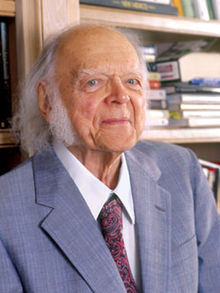 Leland C. Clark合作论文数Synthetic Blood International, Inc.3W.Sterling Edwards合作论文数3Sterling Edwards合作论文数3LM BARGERON合作论文数3Paul T. Decamp合作论文数2Merrill N. Bradley合作论文数2HK WARD合作论文数2ME Field合作论文数1Holt McDowell合作论文数1Kate McArthur合作论文数1Cecil K. Drinker合作论文数1Galbraith J G合作论文数1SNYDER H E合作论文数1Ward H K合作论文数1
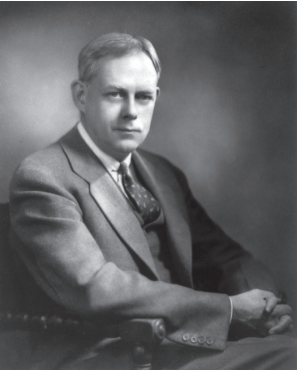 Tracy B. Mallory合作论文数Massachusetts General Hospital1Edward D. Churchill合作论文数1George W. Holmes合作论文数1Oscar P. Hampton合作论文数1Grantley W. Taylor合作论文数1Holt Mcdowell合作论文数1Israel Kapnick合作论文数1John D. Stewart合作论文数1H. S. Mayerson合作论文数1H. Duke Thomas合作论文数1Rex Perkins合作论文数1I. Kapnick合作论文数1W B AYERS合作论文数1John H. Clark合作论文数1




