The standard post-training recipe for large multimodal models (LMMs) applies supervised fine-tuning (SFT) on curated demonstrations followed by reinforcement learning with verifiable rewards (RLVR). However, SFT introduces distributional drift that neither preserves the model's original capabilities nor faithfully matches the supervision distribution. This problem is further amplified in multimodal reasoning, where perception errors and reasoning failures follow distinct drift patterns that compound during subsequent RL. We introduce PRISM, a three-stage pipeline that mitigates this drift by inserting an explicit distribution-alignment stage between SFT and RLVR. Building on the principle of on-policy distillation (OPD), PRISM casts alignment as a black-box, response-level adversarial game between the policy and a Mixture-of-Experts (MoE) discriminator with dedicated perception and reasoning experts, providing disentangled corrective signals that steer the policy toward the supervision distribution without requiring access to teacher logits. While 1.26M public demonstrations suffice for broad SFT initialization, distribution alignment demands higher-fidelity supervision; we therefore curate 113K additional demonstrations from Gemini 3 Flash, featuring dense visual grounding and step-by-step reasoning on the hardest unsolved problems. Experiments on Qwen3-VL show that PRISM consistently improves downstream RLVR performance across multiple RL algorithms (GRPO, DAPO, GSPO) and diverse multimodal benchmarks, improving average accuracy by +4.4 and +6.0 points over the SFT-to-RLVR baseline on 4B and 8B, respectively. Our code, data, and model checkpoints are publicly available at https://github.com/XIAO4579/PRISM.
Large Language Models (LLMs) have demonstrated strong performance across a wide range of NLP tasks. However, they often exhibit suboptimal behaviors and inconsistencies when exposed to unfamiliar external information, underscoring their limitations in effectively leveraging such knowledge. Inspired by constructivist learning theory, we propose ThinkNote, a novel framework that enhances the external knowledge utilization of LLMs through a two-stage constructivist cognitive modeling process. Specifically, ThinkNote performs knowledge assimilation to align new information with the model's parametric memory, forming a coherent internal representation. It then applies thought accommodation to adapt internal reasoning, thereby promoting more consistent and reliable outputs. Extensive experimental results demonstrate that ThinkNote achieves a 10
While Mixture-of-Experts (MoE) scales model capacity without proportionally increasing computation, its massive total parameter footprint creates significant storage and memory-access bottlenecks, which hinder efficient end-side deployment that simultaneously requires high performance, low computational cost, and small storage overhead. To achieve these properties, we present DECO, a sparse MoE architecture designed to match the performance of dense Transformers under identical total parameter budgets and training tokens. DECO utilizes the differentiable and flexible ReLU-based routing enhanced by learnable expert-wise scaling, which adaptively balances the contributions of routed and shared experts. Furthermore, we introduce NormSiLU, an activation function that normalizes inputs prior to SiLU operators, producing a more stable trend of routed-expert activation ratio and a higher intrinsic sparsity level. We also identify an empirical advantage in using non-gated MLP experts with ReLU-based routing, indicating the possibility of MoE architecture simplification. Experiments demonstrate that DECO, activating only 20
Hybrid Transformer architectures, which combine softmax attention blocks and recurrent neural networks (RNNs), have shown a desirable performance-throughput tradeoff for long-context modeling, but their adoption and studies are hindered by the prohibitive cost of large-scale pre-training from scratch. Some recent studies have shown that pre-trained softmax attention blocks can be converted into RNN blocks through parameter transfer and knowledge distillation. However, these transfer methods require substantial amounts of training data (more than 10B tokens), and the resulting hybrid models also exhibit poor long-context performance, which is the scenario where hybrid models enjoy significant inference speedups over Transformer-based models. In this paper, we present HALO (Hybrid Attention via Layer Optimization), a pipeline for distilling Transformer models into RNN-attention hybrid models. We then present HypeNet, a hybrid architecture with superior length generalization enabled by a novel position encoding scheme (named HyPE) and various architectural modifications. We convert the Qwen3 series into HypeNet using HALO, achieving performance comparable to the original Transformer models while enjoying superior long-context performance and efficiency. The conversion requires just 2.3B tokens, less than 0.01
Masked diffusion models (MDMs), which leverage bidirectional attention and a denoising process, are narrowing the performance gap with autoregressive models (ARMs). However, their internal attention mechanisms remain under-explored. This paper investigates the attention behaviors in MDMs, revealing the phenomenon of Attention Floating. Unlike ARMs, where attention converges to a fixed sink, MDMs exhibit dynamic, dispersed attention anchors that shift across denoising steps and layers. Further analysis reveals its Shallow Structure-Aware, Deep Content-Focused attention mechanism: shallow layers utilize floating tokens to build a global structural framework, while deeper layers allocate more capability toward capturing semantic content. Empirically, this distinctive attention pattern provides a mechanistic explanation for the strong in-context learning capabilities of MDMs, allowing them to double the performance compared to ARMs in knowledge-intensive tasks. All codes and datasets are available at https://github.com/NEUIR/Attention-Floating.
Long-context reasoning is an essential capability for large language models, particularly when they are deployed as autonomous agents that must reason over lengthy trajectories. Reinforcement learning (RL) has recently emerged as a dominant paradigm for improving this ability, yet existing work largely focuses on reward engineering while diverse training data remains scarce. We revisit this problem from a data-centric perspective and show that a simple yet effective data recipe alone, paired with a minimal outcome-based GRPO setup, suffices to substantially improve long-context reasoning. Our recipe targets three complementary task families – retrieval, multi-evidence synthesis, and reasoning – for which we construct and curate eight datasets totaling 14K examples. Experiments on three models (Qwen3-4B/8B/30B-A3B) yield average gains of +7.2/+3.2/+6.4 points across seven long-context benchmarks, surpassing prior RL training sets. We further demonstrate that these gains transfer to agentic tasks, where continuing RL training on an agent-tuned model with our data recipe improves GAIA by +4.8 and BrowseComp by +7.0 points. We will release our datasets to facilitate future research.
Modern language models increasingly adopt hybrid architectures that combine full attention with efficient attention modules, such as sliding-window attention (SWA) and recurrent sequence mixers. However, how these efficient modules shape model capabilities remains poorly understood. To address this gap, we conduct a systematic analysis across hybrid architectures from three perspectives: scaling behavior, mechanism analysis, and architecture design. First, from a scaling perspective, we find that efficient-attention design primarily affects how fast long-context capability emerges, while different hybrids eventually converge to comparable long-context performance under sufficient training. Second, mechanistically, we show that long-range retrieval is mainly carried by full attention, whereas efficient attention shapes its optimization trajectory. This explains a counter-intuitive phenomenon we call Large-Window Laziness: larger SWA windows can delay the formation of retrieval heads in full-attention layers. Third, guided by this mechanism, we show that applying NoPE to only the full-attention layers of a small-window SWA hybrid substantially improves long-context performance with negligible impact on short-context performance.
On-policy distillation (OPD) trains a student on its own responses using dense token-level guidance from a stronger teacher. In long-context tasks, however, token-level teacher support can favor locally plausible responses that omit evidence distributed across the input or violate global task constraints. Task-specific verifiers, in contrast, evaluate task completion at the response level and may return graded rewards that reflect partial success. We diagnose this mismatch on fixed responses from two representative long-context evidence-aggregation tasks. Across longer input ranges, trajectory-level OPD scores become progressively less aligned with verifier rewards, indicating teacher-verifier disagreement. Motivated by this observation, we introduce Group-Calibrated On-Policy Distillation (GC-OPD). GC-OPD separately normalizes verifier rewards and trajectory-level OPD scores within each rollout group and uses their difference as a signed teacher-verifier disagreement residual. Relative-advantage-based credit assignment (RACA) distributes this trajectory-level residual across tokens according to their relative OPD advantages while preserving the original OPD signal. Across five long-context benchmarks, post-training with GC-OPD raises the five-benchmark averages of the official Qwen3-4B and Qwen3-8B checkpoints from 29.08 to 40.47 and from 35.12 to 44.65, respectively. Vanilla OPD reaches 39.31 and 43.56 under the same setup. Controlled ablations show that the signed residual is more effective than either an additional OPD-derived term or direct group-normalized verifier reward addition, while RACA further improves over uniform token allocation. Together, these results demonstrate that group-relative residual calibration can incorporate verifier outcomes without discarding dense token-level guidance. Code is available at https://github.com/SolereZhang/GC-OPD.
Large language models increasingly rely on long-form reasoning for complex tasks, yet their reasoning traces may drift away from the supplied context when evidence is sparse, noisy, or in conflict with parametric knowledge. Existing grounding methods either attach citations after generation or encourage evidence retrieval inside the trace, but they often do not ensure that cited content is sufficient for the local inference and final answer. We propose REFACT, an adaptive fact-restatement citation framework that trains models to decide when a reasoning step needs contextual grounding and at what granularity source facts should be restated. This design avoids both unsupported inference and indiscriminate fact copying by turning citations into answer-supporting intermediate states. REFACT is optimized with a two-stage SFT-to-RL pipeline in which a citation-utility reward encourages cited facts to be well-formed, source-traceable, and answer-sufficient. Experiments on LongBench, LV-Eval, and ConFiQA show that REFACT improves long-context QA and counterfactual faithfulness while substantially reducing token consumption. Further analysis shows that REFACT preserves more answer-bearing evidence with fewer restated facts, yielding reasoning traces that are denser rather than longer. All code and data are available at https://github.com/NEUIR/REFACT.
The efficiency of long-video inference remains a critical bottleneck, mainly due to the dense computation in the prefill stage of Large Multimodal Models (LMMs). Existing methods either compress visual embeddings or apply sparse attention on a single GPU, yielding limited acceleration or degraded performance and restricting LMMs from handling longer, more complex videos. To overcome these issues, we propose APB-V, a sequence-parallel framework with optimized attention that accelerates long-video inference across multiple GPUs. By distributing approximate attention, APB-V reduces computation and increases parallelism, enabling efficient processing of more visual embeddings without compression and thereby improving task performance. System-level optimizations, such as load balancing and fused forward passes, further unleash the potential of APB-V, delivering speedups of 12.72x, 1.70x, and 1.18x over FlashAttn, ZigZagRing, and APB, without notable performance loss.
On-policy distillation (OPD) has become a core technique in the post-training of large language models, yet its training dynamics remain poorly understood. This paper provides a systematic investigation of OPD dynamics and mechanisms. We first identify that two conditions govern whether OPD succeeds or fails: (i) the student and teacher should share compatible thinking patterns; and (ii) even with consistent thinking patterns and higher scores, the teacher must offer genuinely new capabilities beyond what the student has seen during training. We validate these findings through weak-to-strong reverse distillation, showing that same-family 1.5B and 7B teachers are distributionally indistinguishable from the student's perspective. Probing into the token-level mechanism, we show that successful OPD is characterized by progressive alignment on high-probability tokens at student-visited states, a small shared token set that concentrates most of the probability mass (97
Long-sequence processing is a critical capability for modern large language models. However, the self-attention mechanism in the standard Transformer architecture faces severe computational and memory bottlenecks when processing long sequences. While trainable sparse attention methods offer a promising solution, existing approaches such as NSA introduce excessive extra parameters and disrupt the conventional pretrain-on-short, finetune-on-long workflow, resulting in slow convergence and difficulty in acceleration. To overcome these limitations, we introduce Dense-Sparse Switchable Attention framework (DSSA), a trainable sparse attention that seamlessly adapts models from short to long sequences. Specifically, DSSA reuses dense attention parameters through parameter-free architecture modification, maintaining consistency between short and long sequence processing. Additionally, DSSA ensures computational efficiency across all sequence lengths, by using dense attention for short inputs and smoothly transitioning to sparse attention for long sequences. To achieve practical acceleration, we further introduce an efficient implementation of DSSA that significantly reduces the computational overhead. Our experiments on long-context understanding and chain-of-thought reasoning demonstrate that DSSA is $4\times$ faster than dense attention while retaining 98.1% and 99.7% of the performance, respectively. We will release all associated implementations to facilitate future research on efficient attention.
The evolution of large language models (LLMs) towards applications with ultra-long contexts faces challenges posed by the high computational and memory costs of the Transformer architecture. While existing sparse and linear attention mechanisms attempt to mitigate these issues, they typically involve a trade-off between memory efficiency and model performance. This paper introduces MiniCPM-SALA, a 9B-parameter hybrid architecture that integrates the high-fidelity long-context modeling of sparse attention (InfLLM-V2) with the global efficiency of linear attention (Lightning Attention). By employing a layer selection algorithm to integrate these mechanisms in a 1:3 ratio and utilizing a hybrid positional encoding (HyPE), the model maintains efficiency and performance for long-context tasks. Furthermore, we introduce a cost-effective continual training framework that transforms pre-trained Transformer-based models into hybrid models, which reduces training costs by approximately 75
Self-evolving agents improve future behavior from interaction experience, yet existing evaluations typically optimize under fixed execution conditions and do not test recovery after those conditions change. To address this gap, we introduce PACE-Bench (Physics Adaptation via Code Evolution), a simulator-grounded benchmark of 144 source-to-target adaptation pairs across six physics domains. Each pair links a source environment to a mutated target environment with the same goal and interface. A code-driven design that succeeds in the source fails in the target, where agents must iteratively adapt it into a working target design using diagnostic sandbox feedback within a limited attempt budget. We compare ten self-evolving methods from four paradigms. The benchmark remains far from saturated: Reflexion + Qwen3-14B succeeds on only 35.9% of full-benchmark pairs, while GPT-5.5 solves 66.7% of the Statics subset under the full budget. Together, these results show that simulator-grounded reflection is more reliable than unverified self-revision, while memory anchors agents to early designs and broad tree search explores without converging. Even revealing exact physical changes does not raise the performance ceiling, pointing to mechanism redesign rather than parameter inference as the central bottleneck. Data and code are available at https://github.com/thunlp/PACE-Bench.
Large reasoning models achieve strong performance on complex tasks through long chain-of-thought (CoT) trajectories, but directly transferring such reasoning processes to smaller models remains challenging. A key difficulty is that not all teacher-generated reasoning trajectories are suitable for student learning. Existing approaches typically rely on post-hoc filtering, selecting trajectories after full generation based on heuristic criteria. However, such methods cannot control the generation process itself and may still produce reasoning paths that lie outside the student's learning capacity. To address this limitation, we propose Gen-SSD (Generation-time Self-Selection Distillation), a student-in-the-loop framework that performs generation-time selection. Instead of passively consuming complete trajectories, the student evaluates candidate continuations during the teacher's sampling process, guiding the expansion of only learnable reasoning paths and enabling early pruning of unhelpful branches. Experiments on mathematical reasoning benchmarks demonstrate that Gen-SSD consistently outperforms standard knowledge distillation and recent baselines, with improvements of around 5.9 points over Standard KD and up to 4.7 points over other baselines. Further analysis shows that Gen-SSD produces more stable and learnable reasoning trajectories, highlighting the importance of incorporating supervision during generation for effective distillation.
Training small reasoning models with RL has become a race toward complexity, using multi-stage pipelines, dynamic schedules, and curriculum learning. We ask whether this complexity necessary? We show that JustRL, a simple recipe with fixed hyperparameters, achieves state-of-the-art performance on two different 1.5B base models (54.5% and 64.3% across 9 math benchmarks) while using 2× less compute than sophisticated approaches. The same hyperparameters transfer across both models without tuning, and training remains stable over thousands of steps without intervention. This suggests the field may be adding complexity to solve problems that disappear with a stable, scaled-up baseline.
Enabling large language models (LLMs) to appropriately abstain from answering questions beyond their knowledge is crucial for mitigating hallucinations. While existing reinforcement learning methods foster autonomous abstention, they often compromise answer accuracy because their static reward mechanisms, agnostic to models' knowledge boundaries, drive models toward excessive caution. In this work, we propose KARL, a novel framework that continuously aligns an LLM's abstention behavior with its evolving knowledge boundary. KARL introduces two core innovations: a Knowledge-Boundary-Aware Reward that performs online knowledge boundary estimation using within-group response statistics, dynamically rewarding correct answers or guided abstention; and a Two-Stage RL Training Strategy that first explores the knowledge boundary and bypasses the "abstention trap", and subsequently converts incorrect answers beyond the knowledge boundary into abstentions without sacrificing accuracy. Extensive experiments on multiple benchmarks demonstrate that KARL achieves a superior accuracy-hallucination trade-off, effectively suppressing hallucinations while maintaining high accuracy across both in-distribution and out-of-distribution scenarios.
Humans need to study only a handful of well-written textbooks to master a discipline and attempt its hardest problems. We argue that an ideal self-evolution method should share the same property, that is autonomously learning from raw training material for transferable problem-solving capability. However, we still lack a direct measurement for it. We introduce StudyBench, a controlled physics benchmark that directly measures how efficiently a self-evolution method converts training material into capability. We organise the test set into an Application Set, consisting of difficult textbook problems and evaluating absorption ability, and a Transfer Set, consisting of olympiad-level problems and evaluating transfer ability. Benchmarking representative self-evolution methods across three base models, we find that improvements on the Application Set rarely translate to the harder Transfer Set. A guidance ablation exposes a Guidance Gap: even the strongest method closes only a small fraction of what the same material unlocks when supplied as in-context guidance. Besides, every method hits a Compute Plateau, saturating well before exhausting its compute budget. The remaining gap is therefore a method problem rather than a data or compute problem. By offering a clean and controlled benchmark, StudyBench turns self-evolution progress from an open-ended pursuit into a measurable target for future research. Our code is released at https://github.com/thunlp/StudyBench.
On-policy distillation (OPD) combines student-generated rollouts with dense token-level supervision from a teacher. Existing work has mainly studied its algorithmic behavior, leaving the role of training data unclear. We examine this role at the data-minimal limit by training on a single query. One-shot OPD keeps improving for hundreds of steps and recovers most of full-data OPD's gain across task domains and model families. We explain this result through the states visited during training and the rate at which the student aligns with the teacher. We measure state coverage, the fraction of the states full-data OPD visits that a query set's rollouts reach. A single query already reaches 71.5%, most of it within the first 100 steps. Adding semantically distinct queries raises coverage and validation accuracy together, until 16 queries reach 98.9% and match full-data training. Yet alignment slows at a similar pace whether OPD trains on one query or the whole dataset, and even a fixed set of states takes hundreds of steps to absorb. OPD is therefore data-overfed but algorithm-starved. Its rollouts quickly expose broad supervision, while the student absorbs that supervision increasingly slowly. The state-coverage result extends to multi-teacher OPD, where 16 semantically diverse queries per domain match full-data MOPD. As a further stress test, content-light templates and off-domain WildChat queries also approach the real-query baseline. Task content and induced state coverage can therefore come apart. We hope these findings direct future work toward the step efficiency of OPD, and prompt a re-examination of the data and the mechanisms behind its recent successes in frontier post-training.
Data quality has become a key factor in enhancing model performance with the rapid development of large language models (LLMs). Model-driven data filtering has increasingly become a primary approach for acquiring high-quality data. However, it still faces two main challenges: (1) the lack of an efficient data verification strategy makes it difficult to provide timely feedback on data quality; and (2) the selection of seed data for training classifiers lacks clear criteria and relies heavily on human expertise, introducing a degree of subjectivity. To address the first challenge, we introduce an efficient verification strategy that enables rapid evaluation of the impact of data on LLM training with minimal computational cost. To tackle the second challenge, we build upon the assumption that high-quality seed data is beneficial for LLM training, and by integrating the proposed verification strategy, we optimize the selection of positive and negative samples and propose an efficient data filtering pipeline. This pipeline not only improves filtering efficiency, classifier quality, and robustness, but also significantly reduces experimental and inference costs. In addition, to efficiently filter high-quality data, we employ a lightweight classifier based on fastText, and successfully apply the filtering pipeline to two widely-used pre-training corpora, FineWeb and Chinese FineWeb datasets, resulting in the creation of the higher-quality Ultra-FineWeb dataset. Ultra-FineWeb contains approximately 1 trillion English tokens and 120 billion Chinese tokens. Empirical results demonstrate that the LLMs trained on Ultra-FineWeb exhibit significant performance improvements across multiple benchmark tasks, validating the effectiveness of our pipeline in enhancing both data quality and training efficiency.
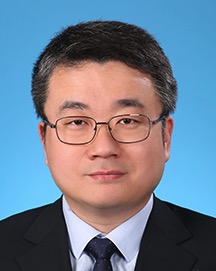 Zhiyuan Liu (刘知远)合作论文数Department of Computer Science and Technology, Tsinghua University60
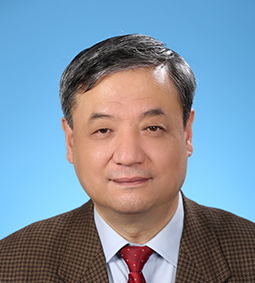 Maosong Sun (孙茂松)合作论文数Department of Computer Science and Technology, Tsinghua University49
 Xu Han (韩旭)合作论文数38
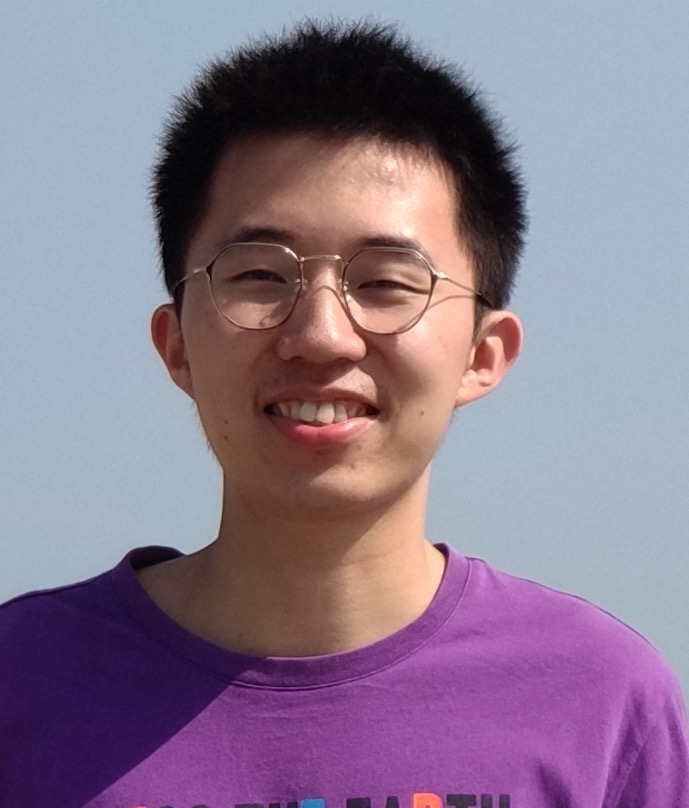 Zhengyan Zhang合作论文数DeepSeek14
 Weilin Zhao (赵威霖)合作论文数Department of Computer Science and Technology, Tsinghua University14
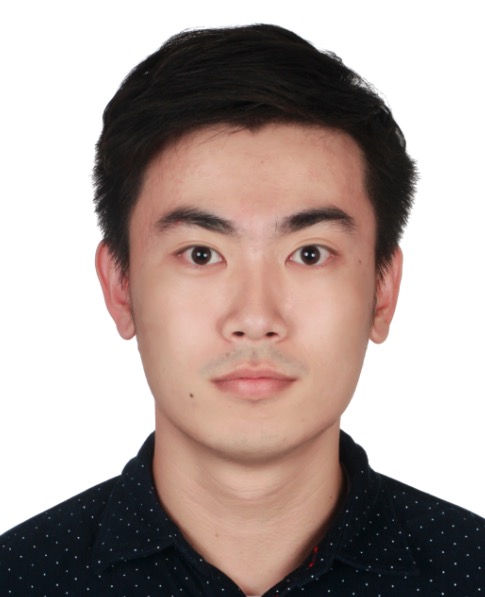 Yankai Lin (林衍凯)合作论文数Gaoling School of Artificial Intelligence, Renmin University of China14
 Jie Zhou合作论文数Pattern Recognition Center, WeChat AI, Tencent Inc11
 Yuan Yao (姚远)合作论文数College of AI, Tsinghua University10
 Cunchao Tu (涂存超)合作论文数10
 Yuxiang Huang (黄宇翔)合作论文数NLP Group, Tsinghua University9
 Yingfa Chen (陈英发)合作论文数Natural Language Processing Lab, Tsinghua University9
 Ruobing Xie (谢若冰)合作论文数Tencent9
 Haoxi Zhong (钟皓曦)合作论文数Tencent9
 Shuo Wang合作论文数8
 Ning Ding (丁宁)合作论文数Department of Electronic Engineering, Tsinghua University7Guoyang Zeng合作论文数Department of Computer Science and TechnologyTsinghua University & BAAIChina6
 Xiaozhi Wang (王晓智)合作论文数Shenzhen International Graduate School, Tsinghua University6
 Chenyang Song合作论文数5Zekai Qu合作论文数5
 Cheng Qian合作论文数BLENDER Lab, University of Illinois Urbana-Champaign5
 Zhenghao Liu (刘正皓)合作论文数Information Retrieval Lab, Department of Computer Science and Engineering, School of Computer Science and Engineering, Northeastern University5
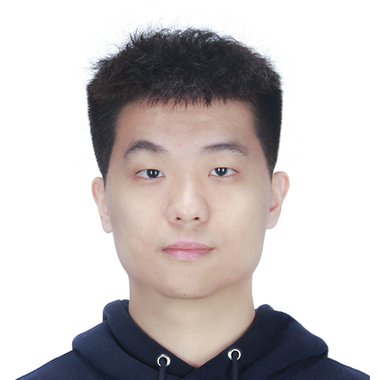 Ganqu Cui (崔淦渠)合作论文数Shanghai AI Laboratory5Zheni Zeng (曾哲妮)合作论文数5Zhipeng Guo (郭志鹏)合作论文数5
 Huimin Chen (陈慧敏)合作论文数School of Journalism and Communication, Tsinghua University5
 Xianpei Han (韩先培)合作论文数University of Chinese Academy of Sciences;Chinese Information Processing Laboratory, Institute of Software, Chinese Academy of Sciences5Cheng Gao合作论文数4
 Ao Sun合作论文数4
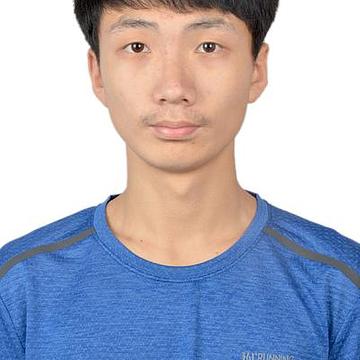 Haoyang Li合作论文数School of Information, Renmin University of China4Yewei Fang合作论文数4Leyu Lin合作论文数WeChat, Tencen4
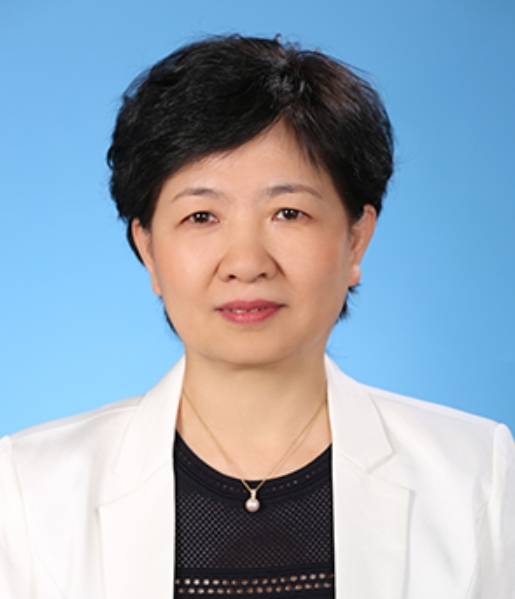 Juanzi Li (李涓子)合作论文数Department of Computer Science and Technology, Tsinghua University4
 Weize Chen (陈纬泽)合作论文数Tsinghua University4Yuxuan Li合作论文数3Jie Cai合作论文数3Pengle Zhang合作论文数3
 Bingxiang He合作论文数3
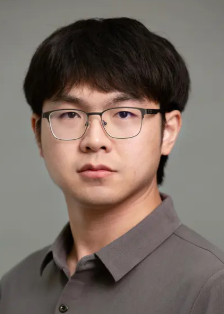 Feng Yao (姚峰)合作论文数University of California, San Diego3
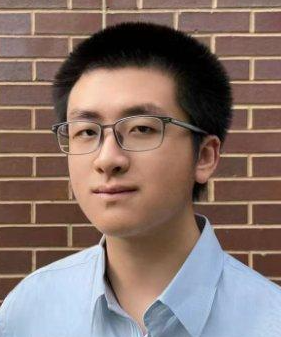 Zhiyuan Zeng合作论文数Department of Computer Science and Technology, Tsinghua University3Zhen Hu合作论文数3Jianfeng Xu合作论文数3
 Yukun Yan合作论文数Tsinghua Univ, Sch Med, Dept Biomed Engn, Beijing, Peoples R China3Heng Wang合作论文数3Tianyang Zhang合作论文数Beijing Powerlaw Intelligent Technology Co., Ltd.3
 Peng Li (李鹏)合作论文数3
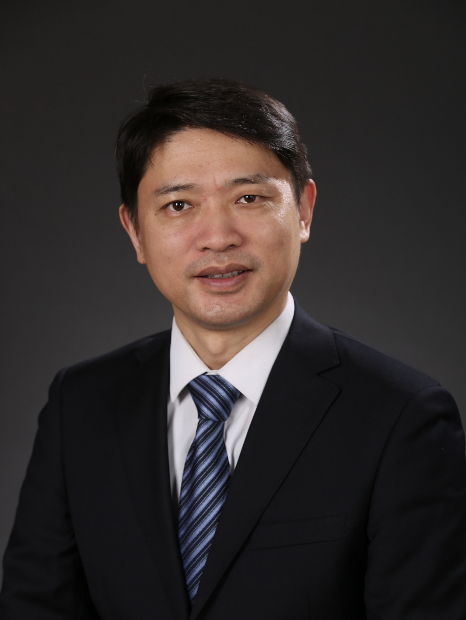 Yang Liu (刘洋)合作论文数Department of Computer Science and Technology, Tsinghua University;Institute for AI Industry Research, Tsinghua University3Wenhao Li合作论文数Department of Computer Science and Technology, Tsinghua University;Beijing National Research Center for Information Science and Technology;Institute for Artificial Intelligence, Tsinghua University3
 Yufei Huang (黄宇飞)合作论文数Department of Computer Science and Technology, Tsinghua University3
 Ge Yu (于戈)合作论文数College of Computer Science and Engineering, Northeastern University3




