This paper addresses the optimal formation control problem of underactuated unmanned surface vehicles (USVs) subject to unknown dynamics, communication delays, prescribed performance constraints, environmental disturbances, and input saturation. An integral reinforcement learning-based control scheme is developed. First, the underactuated dynamics are transformed into a standard cascaded integrator form via output redefinition. A prescribed performance control (PPC) scheme with an initial-condition-independent error transformation is then introduced to guarantee full-time formation error constraints. To compensate for communication delays, a data-driven state predictor is designed to estimate neighbors' current states using only delayed information received through the communication network. On this basis, a non-quadratic performance index is constructed, and an optimal control policy is learned online within an integral reinforcement learning (IRL) framework, eliminating the need for an accurate system model. An experience replay (ER) mechanism is incorporated to relax the persistent excitation (PE) requirement and remove the dependence on an initially stabilizing control policy. Lyapunov-based analysis proves that all signals in the closed-loop system are uniformly ultimately bounded (UUB). Finally, simulation results verify the effectiveness and superiority of the proposed control scheme.
This paper develops an adaptive dynamic programming (ADP)-based HPo optimal formation control strategy for underactuated unmanned surface vehicles (USVs) under prescribed performance and input constraints. By applying a coordinate transformation, the underactuated system dynamics are converted into a standard integral cascade form. A novel error transformation is introduced to enforce prescribed performance constraints regardless of the initial tracking errors. The HPo control problem is reformulated as a zero-sum game with a nonquadratic performance index, leading to the corresponding Hamilton-Jacobi-Isaacs (HJI) equation. An adaptive dynamic programming scheme incorporating critic-actor-disturbance neural networks (NNs) is developed, enabling realtime learning of the optimal control policy and enhancing robustness to unknown disturbances. Moreover, a stabilizing term is incorporated into the critic weight update law, thereby relaxing the requirement for an initial stabilizing control policy. The uniform ultimate boundedness of both the formation tracking errors and the neural network weight estimation errors is rigorously established. Simulation results verify the effectiveness and robustness of the proposed control scheme.
This work investigates the formation control of multiple unmanned surface vessels (USVs) in the presence of model uncertainty and input saturation, where the separation requirements must comply with the constraints of prescribed performance. First, a novel fixed-time formation error constraint method is designed. This method strictly constrains the error between the desired and actual distances between the leader and the follower USVs within a prescribed range. Next, a predictor-based fuzzy logic system is proposed to estimate the model uncertainty. The problem of input saturation is addressed using auxiliary systems, which consider more reasonable operational safety constraints and enhance the practical applicability of the formation control. Finally, a fixed-time dynamic surface control approach is employed to design the formation controller. It is proven via the Lyapunov stability theory that all closed-loop signals are ultimately uniformly bounded. Numerical simulation results demonstrate the effectiveness of the proposed control scheme.
A formation-containment control strategy for unmanned surface vehicles (USVs) is proposed in this study through the integration of finite-time prescribed performance control theory with an event-triggered mechanism, while explicitly addressing actuator saturation and failure constraints. The control architecture is hierarchically structured into two layers: a formation layer and a containment layer. First, to enhance transient and steady-state performance under input saturation, a saturation-tolerant finite-time prescribed performance function (SFPPF) is developed. When input saturation occurs, performance boundaries are adaptively regulated by the SFPPF through autonomous adjustment mechanisms, effectively circumventing potential singularity issues. Subsequently, an event-triggered mechanism is proposed, with formation and containment controllers designed by integrating Lyapunov stability theory and the backstepping methodology, while simultaneously reducing communication bandwidth consumption and actuator fatigue. Actuator faults and environmental disturbances are estimated via an interval type-2 fuzzy neural network combined with parameter adaptive methods. Furthermore, theoretical analysis demonstrates that all closed-loop system signals remain bounded with finite-time convergence of formation and containment errors. Notably, the prescribed performance controller ensures that the event-triggered mechanism does not degrade system control accuracy. The effectiveness of the proposed formation-containment control framework is validated via numerical simulations with USV dynamic models.
This paper addresses the containment control problem for underactuated unmanned surface vehicles (USVs) under input constraints and environmental disturbances by proposing a saturation-tolerant prescribed performance control (PPC) strategy. First, To address the singularity issues caused by input saturation in PPC, a novel saturation-tolerant prescribed performance function (STPPF) and an auxiliary system are introduced. The auxiliary system establishes a relationship between input saturation and PPC, while the STPPF can adaptively adjust the boundaries of performance constraints based on the input saturation condition. Second, a transverse function is developed to address the challenges arising from the underactuated characteristics of the USV in controller design. Based on the transverse function, a backstepping controller is designed, along with an adaptive law to estimate the upper bound of disturbances. Third, the stability of the closed-loop system is rigorously proven using Lyapunov stability theory, ensuring that under strict performance requirements, all error signals are bounded and uniformly ultimately bounded. Finally, The effectiveness of the proposed control strategy was verified through Matlab simulation.
Abstract Laboratory proficiency testing is one of the important technical methods for evaluating laboratory technical capabilities. Through proficiency testing, the quality and ability of laboratory testing can be evaluated, and the overall level of reference laboratory technical capabilities and differences between laboratories can be assessed, promoting the consistency of laboratory testing results. The testing of electromagnetic field emission intensity of electric vehicles in the frequency range of 150 kHz to 30 MHz is currently conducted entirely in electromagnetic compatibility darkrooms in China. Different suppliers have used different solutions for electromagnetic compatibility darkrooms, resulting in different site characteristics when testing the electromagnetic field emission intensity in the frequency range of 150 kHz to 30 MHz, which affects the test results. This article mainly proposes a verification method to verify the testing ability of electromagnetic field emission intensity in the frequency range of 150 kHz to 30 MHz for electric vehicles.
Abstract Although the fast discriminative scale space tracking(fDSST) method shows superior performance for short time visual tracking, it is prone to tracking failure when the target is occluded or moving fast in case of long time tracking. To address this issue, we proposed a novel enhanced visual tracking method based on fDSST for robust tracking. Specifically, based on correlation filter response map we design a visual tracking status discrimination method by integrating Peak to Sidelobe Ratio(PSR) and the number of response peaks. Then, we design an adaptive model update method coupled with extended search area strategy to reduce the probability of target loss. Extensive experiments are performed on challenging benchmark sequences from Online Object Tracking Benchmark(OTB) with significant target occlusion and fast motion. Ours results show that the proposed approach improves the DP by 11.9% and AUC by 8.4% compared to the baseline fDSST, and operates at real-time.
Throughout the operation of WEC-PTO, to achieve a high energy-efficiency response, combinations of its characteristic parameters must be adjusted following the actual wave conditions. Hence, it is imperative to develop a predictive approach that enables the extraction of combinations of characteristic characteristics with energy-efficient responses from known wave circumstances, serving as a foundation for operational management. A BP neural network model was implemented, which incorporated genetic algorithm and sample weights. Throughout the training process, the weights of the model were modified to account for various wave conditions, enabling efficient attention to the prevailing wave conditions. By integrating genetic algorithms and sample weights, the model's ability to generalize is substantially enhanced, and machine learning techniques are employed to derive the combinations of characteristic parameters and float absorption power for arbitrary wave conditions. Furthermore, the compressor's cylinder diameter was optimized to improve its ability to absorb energy under the prevailing wave conditions in the South China Sea. The results indicate that the proposed approach has superior performance compared to previous models in predicting float power, with a mean absolute error of 0.37 and a mean absolute percentage error of 1.4%.
The integrated navigation system ensures maritime autonomous surface ships (MASSs) to safely, efficiently, and autonomously complete various operations in different complex navigation environments. Investigating robust algorithms for integrated navigation is crucial for enhancing the fault tolerance of the system and ensuring the stable and continuous output of the ship's motion state. However, existing research primarily focused on optimising particular filtering algorithms or examining the foundations of information allocation within a predetermined integrated navigation structure. As such, strategies for enhancing the robustness of the MASS integrated navigation system and the design of subsystems for federated filters in the event of navigation sensor failures have not been sufficiently investigated for complex maritime navigation scenarios. Consequently, this research introduces an observability sharing factor accounting for both system characteristics and state estimation performance in integrated navigation systems, employing nonlinear sampling filtering. Subsequently, a robust integrated navigation framework with distributed federal filter is developed. Within this framework, an adaptive federated filtering integrated navigation algorithm is proposed based on the observability sharing factor to allocate information in federated filtering. Finally, both the theoretical correctness and effectiveness of the algorithm were verified through simulations and real-ship experiments to assist with the development of accurate and fault-tolerant maritime navigation systems.
This paper deals with the consensus control problem for a class of multi-agent systems with state-dependent intermittent communication. The main contribution is that a novel state-dependent intermittent scheme is proposed, where whether the control protocols are implemented on the agents or not is related to system dynamics. In this communication scheme, by dividing the nonnegative real region into three subregions, the work time and the rest time are dependent on the pre-given subregions and a function value describing the error state. Based on this, a novel state-dependent intermittent control protocol can be designed and the sufficient conditions for the overall consensus can further be obtained. Compared to the existing time-dependent intermittent communication schemes, the proposed state-dependent one can tolerate more rest time. Finally, two simulation examples are developed to illustrate our results.
This paper investigates the containment control problem of multiple unmanned surface vehicles (USVs) with directed communication topology. The unknown dynamics, external disturbances and actuator dead-zones of each USV are taken into account. Firstly, an event-triggered quantized (ETQ) control strategy and an improved prescribed-time control technique are combined, such that a balance is achieved between reducing the channel burden and ensuring control performance. Then, with the aid of backstepping method, finite-time differentiators, neural networks and parametric adaptive techniques, a fully-distributed adaptive containment controller is developed. The idea of single-parameter learning and estimating the upper bound of disturbances greatly reduce the calculation of the controller. Importantly, the degradation of the control performance caused by saving channel resources and reducing calculation is not worth worrying about, thanks to the performance prescribed control scheme. It is proved that all signals in the closed-loop system are bounded and the containment error of the multi-USV system is semi-globally practically finite-time stable. Finally, the effectiveness of the proposed controller was verified by simulations of 1:70 scale ship models.
To consider the safety of mooring lines and transient performance of system, a reliability-based dynamic surface controller with prescribed performance is proposed for the dynamic positioning (DP) system of turret-moored vessels. The descriptions are given for the vessel model and the reliability of mooring lines at first. Then, a dynamic surface controller is presented on the basis of reliability of mooring lines and prescribed performance function. The performance specifications are imposed in advance on the reliability and heading tracking errors according to the actual demands. By adjusting the reliability, the ability of mooring system can be fully used within the safe range of mooring lines. Therefore, less energy consumption is needed for the DP system. Finally, the numerical simulations illustrate the performance of the presented DP controller.
The path following of underactuated autonomous surface vehicle (ASV) with line-of-sight (LOS)-based heading and velocity guidance is studied thoroughly in the presence of complex uncertainties and asymmetric input saturation that actuators are likely to suffer from. On the basis of the extended-state-observer-based LOS (ELOS) principle and guided velocity design strategies, a finite-time heading and velocity guidance control (HVG) scheme is presented. Firstly, an improved ELOS (IELOS) is developed such that the unknown sideslip angle can be estimated directly, instead of requiring one more step to calculate it by the output of observers and relying on the equivalent assumption between actual heading angle and guidance angle. Secondly, a new form of velocity guidance is designed by considering magnitude and rate constraints and path's curvature, keeping in line with ASV's manoeuvrability and agility. Then asymmetric saturation is considered and studied by designing projection-based finite-time auxiliary systems to avoid parameter drift. All error signals of the closed-loop system of ASV are forced to converge to an arbitrarily small neighbourhood of the origin within a finite settling time by the HVG scheme. The expected performance of the presented strategy is demonstrated via a series of simulations and comparisons. In addition, to show the strong robustness of the presented scheme, stochastic noises modelled by Markov process, bidirectional step signals and faults both multiplication and addition types are considered in simulations.
为实现参数摄动、海流扰动条件下欠驱动水下无人航行器(underwater unmanned vehicle,UUV)安全执行路径跟踪控制任务,提出一种基于预设性能、改进视线制导律(improved line-of-sight,IMLOS)和非奇异终端滑模(nonsingular terminal sliding mode,NTSM)的路径跟踪控制策略.首先,引入Serret-Frenet坐标系建立跟踪误差方程,引入预设性能函数对跟踪误差进行约束及转换;然后,设计基于预设性能的海流补偿制导律和动力学控制器,确保航行器跟踪期望路径的同时确保航行安全;最后,利用有限时间理论证明该路径跟踪控制策略作用下的闭环运动系统的跟踪误差是有限时间收敛的.通过数值仿真验证所提出的路径跟踪控制策略能够有效地执行欠驱动UUV在参数摄动、海流扰动等约束下的路径跟踪任务,且跟踪误差始终处于预设性能范围之内,可有效地保证航行器的航行安全.
Autonomous surface ships (ASSs) have attracted attention owing to their ability to perform various tasks in complex and challenging aquatic environments without relying on a crew. However, they require reliable sensors to ensure navigational safety. In this study, a robust and intelligent fault detection algorithm was designed for the integrated navigation system of an ASS. First, a residual observer-based fault detection algorithm using Hi/H∞ optimization is proposed to deal with process disturbances and measurement noise. Such noise can be modeled under the condition of a bounded l2-norm to account for the sensitivity and robustness of the residual observer against random noise with unknown properties. However, this fault detection algorithm is insensitive to soft faults, which manifest as noise characterized by a small amplitude and slow variation. Conventional strategies for evaluating the fault detection threshold rely on human experience, which is insufficiently sophisticated for fault detection. Therefore, a cascaded neural network is proposed for optimizing the fault detection algorithm when the amount of training data is limited. The cascaded neural network consists of a multi-feature time domain network, a frequency-domain fault detection network as well as a decision-level fusion network. The proposed algorithm was verified in simulations as well as on historical data collected from real ship sensors. The results demonstrated that the proposed algorithm offers intelligent fault detection, including soft faults, with a low false alarm rate for integrated navigation systems.
In this article, the line-of-sight (LOS)-based on the control principle of path following is presented to apply to a marine surface vessel (MSV) with an unknown time-varying sideslip angle. The input saturation and the uncertain model are taken into account. The presented finite-time predictor-based adaptive integral line-of-sight (FPAILOS) guidance principle can estimate the unknown time-varying sideslip angle while compensating for the drift force. The FPAILOS guidance law offers the desired yaw angle. The drift force can be caused by the ocean currents, which are taken into account in the kinematic model for the MSV. For the input saturation problem, we select the finite-time auxiliary system to limit inputs. Designing path following control signals adopts the finite-time dynamic surface control (FDSC) method. The finite-time low-frequency learning-based fuzzy system is designed to solve the uncertain model problem for the MSV. Finally, the stability of the system is demonstrated and numerical simulations are performed, where the objective is to evaluate the proposed theoretical results. With the presented control strategy, the track errors can converge into arbitrary small neighborhoods around zero in finite time.
This paper deals with the consensus control problem for a class of multi-agent systems with state-dependent intermittent communication. The main contribution is that a novel state-dependent intermittent scheme is proposed, where whether the control protocols are implemented on the agents or not is related to system dynamics. In this communication scheme, by dividing the nonnegative real region into three subregions, the work time and the rest time are dependent on the pre-given subregions and a function value describing the error state. Based on this, a novel state-dependent intermittent control protocol can be designed and the sufficient conditions for the overall consensus can further be obtained. Compared to the existing time-dependent intermittent communication schemes, the proposed state-dependent one can tolerate more rest time. Finally, two simulation examples are developed to illustrate our results.
Most of the tasks based on pose-guided person image synthesis have obtained accurate target pose, but still have not obtained reasonable style texture mapping. In this paper, we propose a new two-stage network to decouple style and content, which aims to enhance the accuracy of pose transfer and the realism of a person appearance. Firstly, we propose an Aligned Multi-scale Content Transfer Network(AMSNet) to predict the target edge map for pose content transfer in advance, which can not only preserve clearer texture content but also alleviate spatial misalignment through advancing to transfer pose information. Secondly, we propose a new Style Texture Transfer Network(STNet) to gradually transfer the source style features to the target pose to for reasonable distribution of styles. To achieve highly similar appearance texture to the source style, we use a style-content-aware adaptive normalization method. The source style features are mapped into the same latent space as aligned content images (target pose and edge), and consistency between style texture and content is enhanced through adaptive adjustment of source style and target pose. Experimental results show that the proposed model can synthesize target images consistent with the source style, achieving superior results both quantitatively and qualitatively.
In this article, the prescribed performance control strategy is extended to multi-input multi-output nonstrict-feedback nonlinear systems with asymmetric input saturation, and not only each element in tracking error vector converges to a prescribed small region within preassigned finite time, but also the converging mode during the preset time is prespecifiable and controllable explicitly. By blending the barrier function with novel speed function, a prescribed performance controller using command-filtered-based vector-backstepping design framework is proposed to steer the tracking error vector for the first time, where the boundedness of filter errors is guaranteed by sufficiently small time constant and an error compensator is constructed to handle the effects of filter errors. To attenuate the adverse effects resulted from nondifferentiable input saturation, hyperbolic tangent function is utilized to estimate asymmetric saturation function such that the control input is designed as a new state variable with initial value of zero in augmented system. Nussbaum function is employed to overcome singularity problem caused by the differentiation of hyperbolic tangent function. At each step of backstepping design, the universal approximation property of neural network and the command filter system are utilized to approximate uncertain dynamics and to solve algebraic loop obstacle due to nonstrict-feedback structure, respectively. Moreover, only one parameter needs to be updated online to cope with the lumped uncertain dynamics by virtual parameter technology, rendering a control strategy with low complexity computation. The validity of the presented controller is verified by theoretical analysis and two-link robotic system.
Recently, deep learning-based methods have shown significant results in 3D face reconstruction. By harnessing the power of convolutional neural networks, significant progress has been made in recovering 3D face shapes from single images using the 3D Morphable Model approach. However, training neural networks typically requires a large amount of data, while face images with ground-truth 3D face shapes are scarce. In this paper, we propose an unsupervised learning framework for accurate 3D face reconstruction from a single image. Our key idea is to process the images generated by a differentiable renderer and leverage the advantages of Generative Adversarial Networks to train a powerful neural renderer that produces highly realistic face images resembling the input image. We then modify traditional fitting methods to exploit the advantages of the neural renderer in finding optimal face parameters for improved 3D face reconstruction. The experimental results demonstrate that our method is capable of generating more accurate 3D face reconstruction results.
 Haomiao Yu合作论文数39
 Zhipeng Shen (沈智鹏)合作论文数31Chuang Zhang (张闯)合作论文数Navigation College of Dalian Maritime University28
 Jialu Du合作论文数28
 Hui Li (李辉)合作论文数Information Science and Technology College, Dalian Maritime University20Chengjun Shi (史成军)合作论文数Marine Engineering College of Dalian Maritime University18Guangqiang Li合作论文数16JianBo Sun (孙建波)合作论文数15
 Yang Liu (刘杨)合作论文数14Fengqiang Zhao合作论文数13
 Tieshan Li (李铁山)合作论文数School of Automation Engineering, University of Electronic Science and Technology of China13CaiQin Sun (孙才勤)合作论文数12
 Muzhuang Guo (郭沐壮)合作论文数11
 Fan Yunsheng合作论文数11
 Guofeng Wang合作论文数11
 Yalei Yu合作论文数Dalian Maritime Univ, Sch Nav, Dalian 116026, Peoples R China10Haiqing Shen合作论文数9Rong Chen (陈荣)合作论文数School of Information Science and Technology, Dalian Maritime University9Ning Zhang合作论文数9
 Jinmeng Qin合作论文数8
 Zaiji Piao合作论文数8
 Mingcong Li合作论文数8
 Yunbiao Jiang合作论文数8
 Xianku Zhang (张显库)合作论文数Navigation College, Dalian Maritime University8
 Jiangqiang Hu (胡江强)合作论文数College of Navigation,Dalian Maritime University8GuoXun Yang (杨国勋)合作论文数7
 Zhengling Lei (雷正玲)合作论文数College of Engineering Science and Technology, Shanghai Ocean University7
 Hong Zhao (赵宏)合作论文数Guangzhou Institute of Technology, Xidian University7Shi-chun YUAN (袁士春)合作论文数6Tao Ning合作论文数6XinLe Jia (贾欣乐)合作论文数6Heng Wu (吴恒)合作论文数6XiaoFang Li (李晓方)合作论文数6
 Jian Sun合作论文数5Jingzhe Yu合作论文数5Yi Yuan合作论文数5
 Shasha Wang合作论文数5ShuiSheng Peng (彭水生)合作论文数5Yulong Tuo (庹玉龙)合作论文数College of Transportation Engineering, Dalian Maritime University5
 Yi Liu合作论文数5
 Jin Lv (吕进)合作论文数School of Information Engineering, Chang'an University5
 Yongsheng Zhao合作论文数5Jianbo Sun (孙建波)合作论文数5
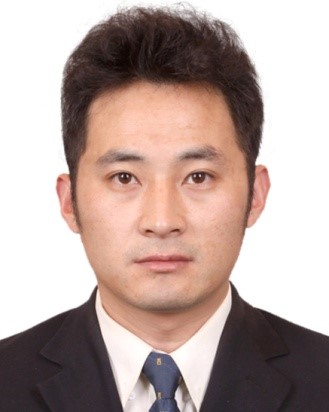 Ning Wang (王宁)合作论文数Marine Engineering College of Dalian Maritime University;College of Artificial Intelligence, Dalian Maritime University5Yuan Zhang合作论文数5




