Existing single-ended traveling-wave protection schemes for flexible DC lines rely on boundary elements. Without such boundaries, the faulted line cannot be identified reliably. This paper develops a high-frequency equivalent model for a boundary-less T-zone and derives a quantitative explanation of the mechanism. It shows that common excitation of the first traveling wave compresses the discriminative features. A threeterminal +/- 800 kV EMT simulation confirms that conventional rate-of-change-of-voltage (ROCOV) travelingwave criteria lose selectivity under this condition. To address this issue, a fault identification and selective isolation scheme for a three-terminal DC line is proposed. The scheme is coordinated with current control and a DC high-speed switch (HSS). Before the converter control fully responds, a directional criterion is constructed within a short time window. The energy ratio of forward and backward traveling-wave components, obtained from incremental voltage and current, is used to determine the faulted port. During the fault ride-through stage, the three converters coordinate their current references and perform a smooth mode transition. This process actively forms a no-current branch on the faulted side. As a result, the HSS current is quickly reduced below its interrupting threshold, enabling selective isolation. After isolation, voltage reconstruction is carried out. The Euclidean distance between the measured port voltage and a preset ramp trajectory is calculated to distinguish internal and external faults and to determine the recovery strategy. Simulation results indicate that the proposed scheme requires a low sampling rate and has clear setting rules. Its performance is insensitive to boundary strength. Both metallic and high-resistance faults are accurately identified. The HSS interrupting condition is achieved in about 40 ms. Voltage reconstruction and power restoration of the healthy subsystem are completed within about 100 ms. These results demonstrate strong engineering feasibility and high reliability.
Although deep neural networks have significantly improved object detection accuracy, manually designing efficient architectures is costly, and NAS networks incur high computational overhead, limiting their applicability in resource-constrained or real-time scenarios. This study aims to develop an efficient neural architecture search method capable of rapidly generating low-latency, high-performance detection networks on edge devices. We propose Knowledge-Guided Neural Architecture Search (KGNAS). First, explicit knowledge from a hardware universal deployment framework is used to enrich the search space; second, implicit knowledge characterizes the impact of memory interactions in hierarchical operator blocks on latency; finally, a zero-cost proxy metric evaluates the feature extraction capability of the backbone without training. Experiments show that KGNAS can design efficient networks for various edge devices within one hour, reducing inference latency by 88% compared to DetNAS with only a 3% accuracy loss.
This paper quantitatively analyses the potential of vertical scaling MicroVMs in serverless computing. Our analysis shows that under real-world serverless workloads, vertical scaling can significantly improve execution performance and resource utilization. However, we also find that the memory scaling of MicroVMs is the bottleneck that hinders vertical scaling from reaching the performance ceiling. We propose Faascale, a novel mechanism that efficiently scales the memory of MicroVMs for serverless applications. Faascale employs a series of techniques to tackle this bottleneck: 1) it sizes up/down the memory for a MicroVM by blocks that bind with a function instance instead of general pages; and 2) it pre-populates physical memory for function instances to reduce the delays introduced by the lazy-population. Compared with existing memory scaling mechanisms, Faascale improves the memory scaling efficiency by 2 to 3 orders of magnitude. Based on Faascale, we realize a serverless platform, named Puffer. Experiments conducted on eight serverless benchmark functions demonstrate that compared with horizontal scaling strategies, Puffer reduces time for cold-starting MicroVMs by 89.01%, improves memory utilization by 17.66%, and decreases functions execution time by 23.93% on average.
The serverless computing paradigm has emerged as a promising solution to address the resource underutilization and inflexible service scaling in edge environments by decomposing the monolithic application into a serverless workflow. However, existing serverless platforms are primarily designed for cloud data centers, relying on heavyweight isolation mechanisms that are ill-suited for resource-constrained edge computing. These limitations lead to high latency, low deployment density, and restricted parallelism. In this paper, we propose Sonnet, a serverless platform tailored for edge computing, capable of rapidly responding to user requests and supporting efficient and elastic service scaling. Sonnet offers these features by (i) employing lightweight WebAssembly as the execution environment for functions, (ii) leveraging serverless workflow information to optimize function deployment on resource-constrained edge environments, and (iii) providing a function deployment algorithm that achieves dynamic load balancing within the cluster. An extensive evaluation of Sonnet with real-world serverless workflows demonstrates its effectiveness and practical applicability. Compared with SOTA and commonly used edge computing serverless solutions, Sonnet can reduce end-to-end latency by 27% and improve throughput by 2.83x
Under extreme weather conditions such as ice storms and freezing rain, power transmission lines are prone to ice accumulation. When ice detaches from transmission lines due to natural conditions like temperature changes, it causes vertical oscillations in the conductors known as ice-shedding jumps, posing a threat to the safe operation of the power grid. To analyze the electrical characteristics of transmission lines during ice-shedding jumps, this paper proposes a method combining finite element modeling with electrical parameter modeling for simulation. The finite element model provides the actual motion trajectory of ice shedding jumps, while the electrical parameter model employs a time-varying line model to simulate changes in electrical parameters caused by ice shedding jumps by altering line electrical parameters. Simulation analysis indicates that ice-shedding jumps on single-span transmission lines primarily affect the phase of the voltage difference between the two ends of the line. Furthermore, the electrical characteristics significantly diminish as the transmission line length increases. Considering the measurement accuracy of instrument transformers, it is impossible to extract the electrical characteristics of ice-shedding jumps on lines longer than 10 km.
Fine solving time step is commonly required in the simulation of grid-tied inverters due to the fast inner-loop control and high-frequency switching behavior. However, the dynamics of the grid-tied inverters, especially in a large-scale renewable power farm study, are frequently governed by the slower outer-loop control. The mismatching between the small solving time step and the slow outer loop leads to time-consuming simulations when using conventional numerical methods. While a neural network (NN) can serve as a surrogate for the entire grid-tied inverter, modeling full behaviors still demands large and computationally intensive networks. To address this issue, this article proposes a hybrid modeling approach for accelerated simulation of the grid-tie inverters. It combines analytical models and neural ordinary differential equations (NODEs). NODE is employed to solely represent the inner loop dynamics, eliminating deep or complex networks, while the other components outside the inner loop are retained and analytically represented. This hybridization combines the coarse-step capability of NN-based surrogates with the physical interpretability and efficiency of analytical models. Experimental results demonstrate that the proposed hybrid approach achieves high-fidelity predictions under various disturbances and grid faults, while significantly reducing simulation time compared with the conventional methods.
Due to the dependencies among different computing tasks, edge devices must await the completion of preceding computing tasks in order to continue with the current computing task. As a result, there is a long waiting time. In the past, reducing waiting time was often achieved by optimizing the scheduling of edge devices to execute computing tasks more efficiently. However, this approach incurs a certain level of communication overhead. Additionally, the waiting process for edge devices results in a waste of their computational resources. In order to tackle the challenge of excessive waiting time, we propose a wait-time compression scheme (WCS) based on model early-exit. The WCS selects early exit points for computing tasks based on the user-tolerated latency and reduces the waiting time without scheduling computing tasks or edge devices. Furthermore, to optimize the use of idle computational resources of edge devices during the waiting process, we introduce an idle-resource-based computing task scheduling scheme (ICTS). A significant number of experiments demonstrate that compared to other computing tasks scheduling schemes, WCS achieves a latency reduction of up to 10.7%, while ICTS enhances computational resource utilization by as much as 28.8%.
Knowledge distillation has been widely used to improve the performance of small compact models for face recognition. However, selecting key knowledge and effectively transferring it from teacher to student remains a challenging problem. In this work, we propose an efficient Cluster-based Knowledge Distillation (CKD) dedicated to aligning the student model with the teacher model in terms of both sample relations and class centers. Specifically, CKD first determines the key sample relations based on the similarities between the sample features extracted by the teacher and their cluster centers generated by existing clustering algorithms. Then, CKD effectively transfers the knowledge of the above relations from the teacher to the student by designing a cluster-based relation distillation loss. Finally, CKD further improves the quality of the student's class centers by constructing a center loss between the above representative cluster centers and the student's class centers. We validate the proposed CKD on multiple face benchmarks. For example, CKD improves the baseline student performance from 91.95% to 94.20% on MegaFace and consistently outperforms recent competitive distillation methods on multiple benchmarks. These results demonstrate the effectiveness and superiority of CKD.
The advancements in deep learning and edge computing have driven artificial intelligence (AI) applications to the edge. However, challenges such as heterogeneous, resource-constrained edge devices, inference congestion, and dynamic environments hinder the development of edge intelligence (EI). To maximize the average quality of service (QoS) for EI, we formulate an optimization problem that aims to balance inference latency and accuracy while considering constraints such as energy consumption, limited network resources, and task request rates. To address these challenges, we propose a computational offloading and resource allocation method (CORA-TDPPO) based on Tammer decomposition and proximal policy optimization (PPO). The CORA-TDPPO decomposes the problem into resource allocation and offloading subproblems, which are easier to solve individually. By combining Tammer decomposition with PPO, CORA-TDPPO generates near-optimal strategies for computational offloading and resource allocation, adapting quickly to dynamic environments. Experimental results show that CORA-TDPPO improves average QoS by at least 1.82 times compared to other methods.
Topology identification plays a key role in understanding and controlling complex dynamical networks (CDNs). However, existing topology identification methods generally require prior knowledge of system parameters or only guarantee asymptotic convergence, while also facing challenges including node parameter uncertainties, large-scale deployment constraints, nonlinear couplings, and multiple links. To address these issues, this paper proposes a unified finite-time framework for partial topology identification and parameter estimation in stochastic multiplex delayed complex networks (SMDCNs). By leveraging synchronization mechanisms, including complete synchronization and generalized synchronization, the proposed approaches are able to reconstruct the partial uncertain network topology and node parameters solely based on the state information in finite time, avoiding the requirement for prior knowledge or slow convergence of existing methods. Furthermore, it is proved that the state error and identification error converge to zero in finite time by employing finite time stability theory. Finally, the effectiveness of the proposed approaches is demonstrated through numerical experiments.
High-resistance ground faults on line-commutated-converter-based high-voltage direct-current (LCC-HVDC) overhead lines may cause single-ended dc line protection to fail to operate. To address this issue, a distance protection method for LCC-HVDC lines under single-pole high-resistance ground faults is presented. The inverter-side current of the faulty pole is reconstructed through a low-frequency line model considering frequency-dependent characteristics, and the low-frequency faultbranch current is obtained. The fault-point voltage is decomposed into a filtered step-voltage component and a transition-resistance voltage drop, so that the fault distance and transition resistance can be jointly estimated by a linear least-squares equation. The estimated fault distance is used as the main criterion for internal/external fault discrimination, and a transition-resistance validity criterion is introduced to avoid misjudgment under extremely high resistance. The proposed method effectively improves the transition-resistance withstand capability of singleended protection. PSCAD simulations demonstrate that the proposed scheme improves the high-resistance withstand capability of single-ended protection.
Major challenges in LLMs inference remain frequent memory bandwidth bottlenecks, computational redundancy, and inefficiencies in long-sequence processing. To address these issues, we propose LLM-CoOpt, a comprehensive algorithmhardware co-design framework aimed at improving both throughput and latency in LLM inference. LLM-CoOpt integrates three key strategies: (1) Key-Value Cache Optimization, termed Opt-KV, which improves memory access efficiency by optimizing both KV cache write and read paths, and introduces FP8 quantization to reduce memory footprint while maintaining accuracy; (2) Grouped-Query Attention for Computational Efficiency, termed Opt-GQA, which reduces the overall computational complexity by restructuring multi-head self-attention into grouped-query attention with shared key-value projections, enabling higher throughput and lower resource consumption; (3) Paged Attention for Long- Sequence Processing, termed Opt-Pa, which adopts a two-step strategy to first segment long sequences into manageable chunks and then apply lazy memory mapping and computation, significantly reducing memory pressure and improving performance on long-context inputs.Experiments on the LLaMa-13BGPTQ model demonstrate that LLM-CoOpt increases inference throughput by up to 13.43
Edge intelligence (EI) is a promising paradigm where end devices collaborate with edge servers to provide artificial intelligence services to users. In most realistic scenarios, end devices often move unconsciously, resulting in frequent computing migrations. Moreover, a surge in computing tasks offloaded to edge servers significantly prolongs queuing latency. These two issues obstruct the timely completion of computing tasks in EI-assisted systems. In this paper, we formulate an optimization problem aiming to maximize computing task completion under latency constraints. To address this issue, we first categorize computing tasks into new computing tasks (NCTs) and partially completed computing tasks (PCTs). Subsequently, based on model partitioning, we design a new computing task saving scheme (NSS) to optimize early exit points for NCTs and computing tasks in the queuing queue. Furthermore, we propose a partially completed computing task saving scheme (PSS) to set early exit points for PCTs during computing migrations. Numerous experiments show that computing saving schemes can achieve at least 90% computing task completion rate and up to 61.81% latency reduction compared to other methods.
Container orchestration systems, such as Kubernetes, streamline containerized application deployment. As more and more applications are being deployed in Kubernetes, there is an increasing need for rescheduling - relocating a running pod to different nodes - due to system upgrades, node failures, and load-balancing optimizations. Live migration, which transfers services from source nodes to target nodes with minimal downtime, is the ideal support for rescheduling. However, implementing live migration for pods that run stateful services is challenging, because Kubernetes manages pods as stateless. First, the current pod's network namespace initialization process causes a mismatch in the network state between the migrated pod and internal containers. Second, migrating the memory state results in extended downtime. Third, Kubernetes operations on pods do not consider preserving the state of the pods. Therefore, we propose KubeSPT to achieve live migration of stateful pods in rescheduling scenarios. First, we synchronize the network state of pods and internal containers by controlling packet flow and implement fast service redirection. Second, we introduce a Hot Data and Lazy-Restore method for memory restoration to reduce migration downtime. Finally, we decouple pod migration operations from other Kubernetes operations to ensure compatibility with live migration. Experimental results show that KubeSPT reduces downtime by 86% -93% compared to current rescheduling methods.
Local planning is a key issue in the field of autonomous delivery. Autonomous delivery requires high delivery efficiency and lower equipment maintenance costs, which pose challenges to the latency and smoothness of path planning algorithms. After investigation of the work on optimizing the latency and smoothness of local planning, we proposed a Robotic-Look-Ahead approach based on Look Ahead approach. It consists of four parts: calculating the conjunction speed, circular arc interpolation, the Look-Ahead method, and path modification. The experiment showed that with different paths, different running memory, and different maximum running speeds, latency decreased by an average of 90% compared to the benchmark, and smoothness improved by an average of 40%. Under different loads, the average energy consumption decreases by 4%.
Network slicing has become a primary function of 5G/6G network resource management. However, the existing slicing schemes have not sufficiently discussed the reconfiguration optimization schemes brought by user behavior changes and mobile network environment fluctuations, leading to excessive service interruption rates and slice reconfiguration costs in dynamic environments. To address this problem, this paper proposes an End-to-end Steady-state Adaptive slicing method for Dynamic network state and load (ESAD). To realize the steady-state slicing decisions, ESAD takes the steady-state degree of network slicing and reconfiguration cost as the objective and constructs the slicing reconfiguration probability evaluation function based on the service load dynamics function and the time-varying function of the network channel conditions. To improve the predictability and steady-state degree of the slicing decision, ESAD introduces an ensemble deep learning method to predict the load service fluctuation based on the user behavior model and employs reinforcement learning to compute the channel dynamics boundary, which guides the slicing decision to balance the network dynamics factors. Experiments on quality of service assurance for 5G cloud game rendering class prove that ESAD can reduce reconfiguration probability and long-term reconfiguration cost by 49.45%-58.50% while improving system QoS assurance and capacity.
Learning a good similarity measure for large-scale high-dimensional data is a crucial task in machine learning applications, yet it poses a significant challenge. Distributed minibatch stochastic gradient descent (SGD) serves as an efficient optimization method in large-scale distributed training, allowing linear speedup in proportion to the number of workers. However, communication efficiency in distributed SGD requires a sufficiently large minibatch size, presenting two distinct challenges. Firstly, a large minibatch size leads to high memory usage and computational complexity during parallel training of high-dimensional models. Second, a larger batch size of data reduces the convergence rate. To overcome these challenges, we propose an efficient distributed sparse relative similarity learning framework EDSRSL. This framework integrates two strategies: local minibatch SGD and sparse relative similarity learning. By effectively reducing the number of updates through synchronous delay while maintaining a large batch size, we address the issue of high computational cost. Additionally, we incorporate sparse model learning into the training process, significantly reducing computational cost. This paper also provides theoretical proof that the convergence rate does not decrease significantly with increasing batch size. Various experiments on six high-dimensional real-world datasets demonstrate the efficacy and efficiency of the proposed algorithms, with a communication cost reduction of up to \(90.89\%\) and a maximum wall time speedup of \(5.66\times\) compared to the baseline methods.
In this paper, considering the influence of the transient characteristics of DC voltage divider and the line distributed capacitance current on protection, a pilot differential protection of HVDC transmission lines considering the influence of DC voltage divider is proposed. Based on the circuit model of DC voltage divider, the transfer function of DC voltage divider is derived, and the transient characteristics of DC voltage divider are analyzed. Based on the theory of equal transfer process of transmission lines (ETPTL), the current signal is processed by virtual digital DC voltage divider to solve the problem of inconsistent transmission characteristics between voltage and current. When the line voltage is processed by a low-pass filter with a sufficiently low cut-off frequency, it can be considered that the line voltage is linearly distributed along the transmission line. According to the fitted characteristics of voltage distribution along the transmission line, the distributed capacitance current of the line can be calculated by integral calculation. Simulation results show that the proposed method can quickly and reliably identify faults in different fault scenarios, and has high resistance tolerance.
Starting a container needs to build a container image layer-by-layer if the required image is not available. However, the image building involves downloading a large amount of data, which significantly delays the development and deployment of containerized services. To reduce data downloads and accelerate image building, current methods typically focus on improving data sharing through reconstructing images. Unfortunately, these approaches show limited performance improvement in clusters as they only improve data sharing on a single node. In this paper, we find that there are significant duplicated remote file downloads between nodes in a cluster. Accordingly, we propose cBuild, a distributed file cache to minimize costly image data downloads in cluster environments. Specifically, to enable inter-node image data sharing, cBuild designs a non-intrusive interception mechanism based on network namespace, instead of directly detecting building instructions that dirty images. Based on the distribution characteristics of duplicated files in layers, cBuild places image files among nodes in a balanced manner to prevent transfer bottlenecks caused by hotspot nodes and employs a layer-aware searching strategy to quickly locate the desired files. We implement cBuild on the basis of Docker. Experiments show that cBuild improves building speed by up to 15.3x and reduces the data downloading by 80%.
Asynchronous Byzantine Fault Tolerant (BFT) consensus protocols have garnered significant attention with the rise of blockchain technology. A typical asynchronous protocol is designed by executing sequential instances of the Asynchronous Common Sub-seQuence (ACSQ). The ACSQ protocol consists of two primary components: the Asynchronous Common Subset (ACS) protocol and a block sorting mechanism, with the ACS protocol comprising two stages: broadcast and agreement. However, current protocols encounter three critical issues: high latency arising from the execution of the agreement stage, latency instability due to the integral-sorting mechanism, and reduced throughput caused by block discarding. To address these issues,we propose Falcon, an asynchronous BFT protocol that achieves low latency and enhanced throughput. Falcon introduces a novel broadcast protocol, Graded Broadcast (GBC), which enables a block to be included in the ACS set directly, bypassing the agreement stage and thereby reducing latency. To ensure safety, Falcon incorporates a new binary agreement protocol called Asymmetrical Asynchronous Binary Agreement (AABA), designed to complement GBC. Additionally, Falcon employs a partial-sorting mechanism, allowing continuous rather than simultaneous block committing, enhancing latency stability. Finally, we incorporate an agreement trigger that, before its activation, enables nodes to wait for more blocks to be delivered and committed, thereby boosting throughput. We conduct a series of experiments to evaluate Falcon, demonstrating its superior performance.
 Hai Jin (金海)合作论文数School of Computer Science & Technology, Huazhong University of Science and Technology;Zhengzhou University64
 Dezhong Yao (姚德中)合作论文数School of Computer Science and Technology, Huazhong University of Science and Technology18
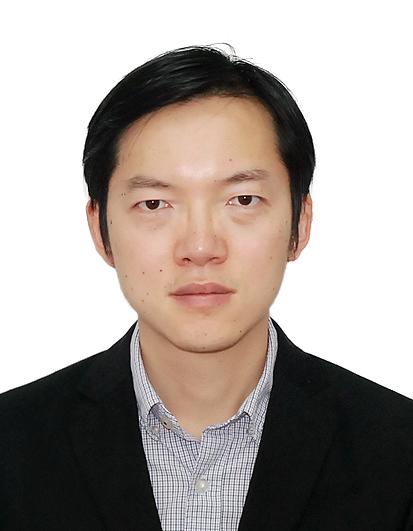 Minghao Wen (文明浩)合作论文数School of Electrical and Electronic Engineering, Huazhong University of Science and Technology18
 John M. Martinis合作论文数Department of Physics, University of California, Santa Barbara11
 P. Roushan合作论文数10Campbell B合作论文数10Peter O'Malley合作论文数10
 Josh Mutus合作论文数Department of Physics, University of California9
 Charles Neill合作论文数Google;University of California, Santa Barbara9
 Jing Xiao (肖晶)合作论文数School of Artificial Intelligence, Wuhan University9
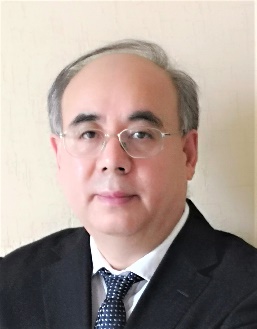 Wei Hong (洪伟)合作论文数State Key Laboratory of Millimeter Waves, School of Information Science and Engineering, Southeast University9
 Song Wu (吴松)合作论文数School of Computer Science and Technology, Huazhong University of Science and Technology;Parallel and Distributed Computing Institute, Huazhong University of Science and Technology;Service Computing Technology and System Lab, Huazhong University of Science and Technology9Evan Jeffrey合作论文数9
 Ruimin Hu (胡瑞敏)合作论文数School of Cyber Engineering, Xidian University9
 Daniel Sank合作论文数Google9James Wenner合作论文数9
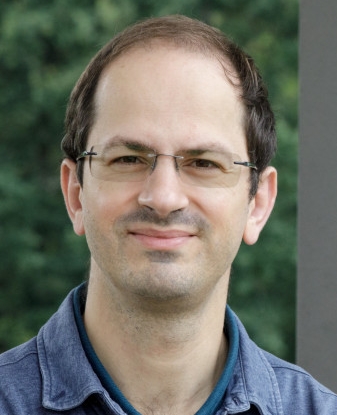 Rami Barends合作论文数Peter Grünberg Institute for Functional Quantum Systems, Forschungszentrum Jülich9
 Kelly J合作论文数Department of Physics, University of California8
 Haiming Wang (王海明)合作论文数School of Information Science and Engineering, Southeast University8
 Laurence Tianruo Yang (杨天若)合作论文数School of Computer and Artificial Intelligence, Zhengzhou University;School of Computer Science and Technology, Huazhong University of Science and Technology8
 Yong Kang (康勇)合作论文数School of Electrical and Electronic Engineering, Huazhong University of Science and Technology8
 Xin Niu合作论文数Changzhou Vocational Institute of Engineering8Xianwei Lv (吕现伟)合作论文数华中科技大学8A. Megrant合作论文数7RuiZhi Ma (马瑞芝)合作论文数7
 Chris Quintana合作论文数Department of Physics, University of California7
 Andrew Dunsworth合作论文数Google AI Quantum7
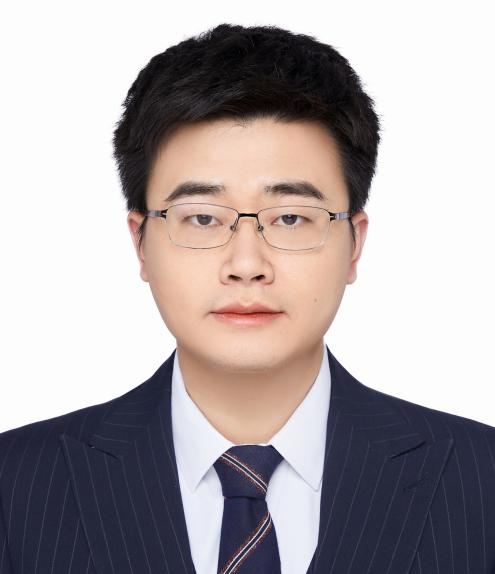 Liang Liao (廖良)合作论文数Hangzhou Institute of Technology, Xidian University6
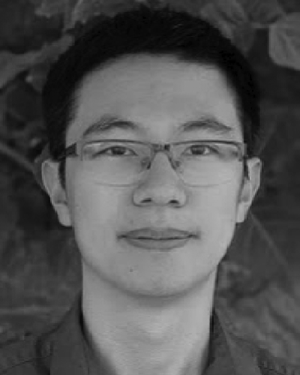 Z. Chen合作论文数Google6
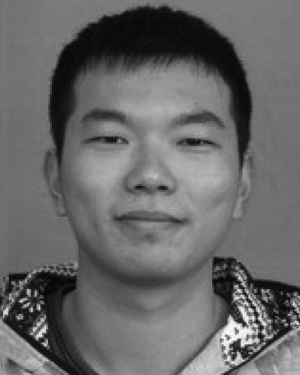 Hao Fan合作论文数Huazhong Univ Sci & Technol, Sch Comp Sci & Technol, Cluster & Grid Comp Lab, Serv Comp Technol & Syst Lab, Wuhan 430074, Peoples R China6
 Amit Vainsencher合作论文数Google6Ben Chiaro合作论文数6
 Jiehan Zhou合作论文数Tsinghua Univ, Tsinghua Univ.6
 Dan Feng (冯丹)合作论文数School of Computer Science & Technology, Huazhong University of Science and Technology;Key Laboratory of Information Storage System, Wuhan National Laboratory for Optoelectronics, Huazhong University of Science and Technology6
 Andrew N. Cleland合作论文数Argonne National Laboratory6
 Emmanuel Smith合作论文数Department of Molecular Medicine, University of South Florida5White T C合作论文数Department of Physics, University of California5
 Wei Chen (陈卫)合作论文数5
 Xianggen Yin (尹项根)合作论文数School of Electrical and Electronic Engineering, Huazhong University of Science and Technology5Susumu Horiguchi合作论文数Graduate School of Information Sciences, Tohoku University, Sendai, Japan5Michael D Sacco合作论文数Morsani Coll Med, Univ S Florida4
 Ted White合作论文数Google, Goleta, CA 94043 USA4Xiujun Zhang合作论文数4Zhuo Huang合作论文数4
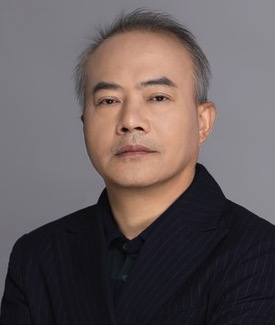 Zhongyuan Wang (王中元)合作论文数School of Computer Science, Wuhan University4
 Jiang Xiao (肖江)合作论文数School of Computer Science and Technology,Huazhong University of Science and Technology4
 Guangqi Yang (杨广琦)合作论文数School of Information Science and Engineering, Southeast University4
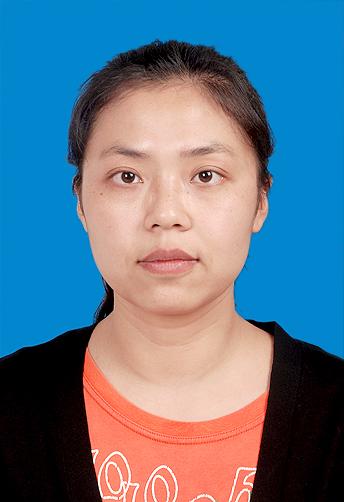 Wei Tong (童薇)合作论文数Wuhan National Laboratory for Optoelectronics, Huazhong University of Science and Technology4
 Yijun Mo (莫益军)合作论文数School of Computer Science & Technology, Huazhong University of Science and Technology4




