Numerous 3D shape descriptors have been proposed in recent years, among which spectral descriptors have gained significant prominence. However, widely used spectral signatures, such as the Heat Kernel Signature (HKS), Scale-Invariant HKS (SIHKS), and Wave Kernel Signature (WKS), suffer from parameter dependence, where heuristic and sub-optimal scale selection limits their robustness and generalizability. To address this limitation, this paper introduces a novel class of descriptors termed Geometric Moments of Spectral Shape Descriptors (GMSDs). By integrating temporal and spatial domains, GMSDs leverage invariant moment theory to calculate six moment terms, creating a theoretical framework that significantly enhances performance in non-rigid 3D shape analysis. GMSDs not only inherit the desirable properties of standard spectral signatures, such as isometric invariance and robustness to noise and topological changes, but also effectively mitigate parameter sensitivity. Extensive experiments on the TOSCA, SCAPE, SHREC 2011, and SHREC 2015 benchmarks demonstrate that GMSDs achieve superior performance in both shape correspondence and retrieval tasks compared to state-of-the-art methods.
Lighting enhancement is a classical topic in low-level image processing. Existing studies mainly focus on global illumination optimization while overlooking local semantic objects, and this limits the performance of exposure compensation. In this paper, we introduce SRENet, a novel lighting enhancement network guided by saliency information. It adopts a two-step strategy of foreground-background separation optimization to achieve a balance between global and local illumination. In the first step, we extract salient regions and implement the local illumination enhancement that ensures the exposure quality of salient objects. Next, we utilize a fusion module to process global lighting optimization based on local enhanced results. With the two-step strategy, the proposed SRENet yield better lighting enhancement for local illumination while preserving the globally optimal results. Experimental results demonstrate that our method obtains more effective enhancement results for various tasks of exposure correction and lighting quality improvement. The source code and pre-trained models are available at https://github.com/PlanktonQAQ/SRENet.
For large-scale point cloud processing, resampling takes the important role of controlling the point number and density while keeping the geometric consistency. However, current methods cannot balance such different requirements. Particularly with large-scale point clouds, classical methods often struggle with decreased efficiency and accuracy. To address such issues, we propose a weighted Poisson-disk (WPD) resampling method to improve the usability and efficiency for the processing. We first design an initial Poisson resampling with a voxel-based estimation strategy. It is able to estimate a more accurate radius of the Poisson-disk while maintaining high efficiency. Then, we design a weighted tangent smoothing step to further optimize the Voronoi diagram for each point. At the same time, sharp features are detected and kept in the optimized results with isotropic property. Finally, we achieve a resampling copy from the original point cloud with the specified point number, uniform density, and high-quality geometric consistency. Experiments show that our method significantly improves the performance of large-scale point cloud resampling for different applications, and provides a highly practical solution.
As an important metric for mesh quality evaluation, the isotropy property holds significant value for applications such as texture UV-mapping, physical simulation, and discrete geometric analysis. Classical isotropy remeshing methods adjust vertices and edge lengths, which exhibit certain limitations in terms of input data sensitivity, geometric consistency control, and convergence speed. In this paper, we propose an improved isotropy remeshing solution with inter-angle optimization during mesh editing to enhance shape control capability and accelerate convergence. The advantage of the solution lies in its ability to predict the impact of edge length adjustments on subsequent optimization by monitoring angle transformations. It avoids inefficient editing that may cause performance fluctuations, thereby improving efficiency. Experiments demonstrate that the proposed method effectively improves the overall efficiency of mesh optimization. (The code has been released at Isotropic-Remeshing-InterAngle .
Text-guided character animation generation has emerged as a significant research area with broad applications in gaming, film, interactive media, and beyond. However, existing motion-language datasets face limitations in motion quality, stylistic diversity, and annotation depth, particularly for professional applications. In contrast to existing datasets based on motion capture or video reconstruction techniques, our dataset leverages professionally crafted game animations and employs a structured annotation framework that incorporates standardized game design terminology. The dataset contains 8,700 high-fidelity motion sequences paired with 26,100 multi-level textual descriptions, generated through our proposed annotation pipeline that combines domain expertise with large language models. Through comprehensive experiments and user studies, we demonstrate GameMLD’s advantages in motion quality, style expressiveness, and annotation quality. Additionally, we showcase its practical value by developing a text-driven character animation generation system that effectively supports game production pipelines. Our experiments with state-of-the-art motion synthesis models demonstrate significant improvements in both animation quality and style control. The GameMLD dataset and source code can be reached via this link.
Point cloud upsampling aims to generate dense and uniformly distributed point sets from sparse point clouds. Existing point cloud upsampling methods typically approach the task as an interpolation problem. They achieve upsampling by performing local interpolation between point clouds or in the feature space, then regressing the interpolated points to appropriate positions. By contrast, our proposed method treats point cloud upsampling as a global shape completion problem. Specifically, our method first divides the point cloud into multiple patches. Then, a masking operation is applied to remove some patches, leaving visible point cloud patches. Finally, our custom-designed neural network iterative completes the missing sections of the point cloud through the visible parts. During testing, by selecting different mask sequences, we can restore various complete patches. A sufficiently dense upsampled point cloud can be obtained by merging all the completed patches. We demonstrate the superior performance of our method through both quantitative and qualitative experiments, showing overall superiority against both existing self-supervised and supervised methods.
Most masked point cloud modeling (MPM) methods follow a regression paradigm to reconstruct the coordinate or feature of masked regions. However, they tend to over-constrain the model to learn the details of the masked region, resulting in failure to capture generalized features. To address this limitation, we propose PointGAC, a novel clustering-based MPM method that aims to align the feature distribution of masked regions. Specially, it features an online codebook-guided teacher-student framework. Firstly, it presents a geometry-aware partitioning strategy to extract initial patches. Then, the teacher model updates a codebook via online k-means based on features extracted from the complete patches. This procedure facilitates codebook vectors to become cluster centers. Afterward, we assigns the unmasked features to their corresponding cluster centers, and the student model aligns the assignment for the reconstructed masked features. This strategy focuses on identifying the cluster centers to which the masked features belong, enabling the model to learn more generalized feature representations. Benefiting from a proposed codebook maintenance mechanism, codebook vectors are actively updated, which further increases the efficiency of semantic feature learning. Experiments validate the effectiveness of the proposed method on various downstream tasks. Code is available at https://github.com/LAB123-tech/PointGAC
Convolutional Neural Networks and Transformers have good feature extraction but struggle in no-reference image quality assessment (NR - IQA) with real-world distortions. Vision Transformers, with self-attention, capture global and multi-scale features well. Local information entropy quantifies image region complexity, aligning with human perception. We propose IE - ViT, an NR - IQA model. It uses ViT for feature extraction, a dual-branch for multi-scale assessment, local information entropy for better human-perception simulation, and a global correlation loss. Experiments show it outperforms others on multiple datasets, with high scores on KADID - 10K.
Point cloud registration is a classical topic in the field of 3D Vision and Computer Graphics. Generally, the implementation of registration is typically sensitive to similarity transformations (translation, scaling, and rotation), noisy points, and incomplete geometric structures. Especially, the non-uniform scales and defective parts of point clouds increase probability of struck local optima in registration task. In this paper, we propose a robust point cloud registration PKSS-Align that can handle various influences, including similarity transformations, non-uniform densities, random noisy points, and defective parts. The proposed method measures shape feature-based similarity between point clouds on the Pre-Kendall shape space (PKSS), which is a shape measurement-based scheme and doesn't require point-to-point or point-to-plane metric. The employed measurement can be regarded as the manifold metric that is robust to various representations in the Euclidean coordinate system. Benefited from the measurement, the transformation matrix can be directly generated for point clouds with mentioned influences at the same time. The proposed method does not require data training and complex feature encoding. Based on a simple parallel acceleration, it can achieve significant improvement for efficiency and feasibility in practice. Experiments demonstrate that our method outperforms the relevant state-of-the-art methods.
Sketch colorization is a classical topic in the fields of computer vision and multimedia. The challenge of the task lies in the semantic consistency keeping during the colorization, which poses a challenge to the precise semantic parsing and colour matching capabilities of the colorization. This paper proposes a semantic-aware colour generation diffusion model to implement automatic colouring of sketches with complex structures. It consists of two parts: semantic-aware colour initialization based on a cross-attention mechanism and colour generation based on diffusion denoising. To obtain semantic awareness, we designs a cross-attention mechanism module to analyze the semantic features of input sketch and match them with reference colour images. According to the matching relationship, a semantically consistent colour initialization can be established for the sketch. Based on the initial result, we establish a colouring diffusion model module, which performs noise addition and denoising to further optimize colour distribution. The proposed model fully considers the semantic constraint requirements, ensuring that the generated colours have good semantic consistency and meet specific colour styles. Experiments show that our method can achieve high-quality colours with semantic correspondence, which is beneficial for applications such as cultural relic restoration and digital media.
Robust gait recognition requires highly discriminative representations, which are closely tied to input modalities. While binary silhouettes and skeletons have dominated recent literature, these 2D representations fall short of capturing sufficient cues that can be exploited to handle viewpoint variations, and capture finer and meaningful details of gait. In this paper, we introduce a novel framework, termed DepthGait, that incorporates RGB-derived depth maps and silhouettes for enhanced gait recognition. Specifically, apart from the 2D silhouette representation of the human body, the proposed pipeline explicitly estimates depth maps from a given RGB image sequence and uses them as a new modality to capture discriminative features inherent in human locomotion. In addition, a novel multi-scale and cross-level fusion scheme has also been developed to bridge the modality gap between depth maps and silhouettes. Extensive experiments on standard benchmarks demonstrate that the proposed DepthGait achieves state-of-the-art performance compared to peer methods and attains an impressive mean rank-1 accuracy on the challenging datasets.
For camera-based image capturing, the impact of exposure or camera parameters (ISO sensitivity, shutter speed, and aperture F-number) on imaging quality is decisive. Such parameters interact in a coupled manner during the imaging process to determine the exposure quality and the degree of blur in a photograph. Naturally, decoupling such parameters from images holds significant value for applications like image quality assessment and illumination optimization. However, there has been no systematic research dedicated to this topic. In this paper, we propose a new benchmark, CamBench, for estimating camera parameters on images directly. It collects an image dataset Cam-10K with various indoor scenes and accurate labels of camera parameters. Based on Cam-10K, we propose a camera parameter estimation network to decouple and regress recorded exposure information. To the best of our knowledge, CamBench is the first benchmark for camera parameter estimation. Experiments demonstrate that it can enhance the performance of various downstream applications.The source code has been made publicly available at: https://github.com/pengquanhong/CamBench.
Text-driven human motion generation is gaining momentum lately thanks to its great potential in shaping the new pathway of interactive computer graphics in the era of AI. Despite the enormous efforts made so far, existing methods still struggle to ensure fluidity and body coordination when generating motions, which seriously hinders its application in a wide spectrum of areas such as gaming, animation, and the emerging metaverse. One of the many causes is, that learning directly from motion data is prone to interference from noise within the data, resulting in reduced quality of the generated motions. In this study, we for the first time propose to promote text-to-motion generation via out-of-distribution detection in the embedding space. Leveraging the Z-score-based outlier detection algorithm, we apply masking to motion data within the motion encoder and replace target data with means, ensuring the consistency of data distribution. To verify the effectiveness of the proposed method, we have conducted extensive experiments on the widely used KIT-ML dataset. Experimental results indicate that compared to previous frameworks, our solution significantly improves the quality of text-driven human motion generation.
Shape reconstruction from 3D point clouds is one of the most important topic in the field of computer graphics. In this paper, we propose a subdivision-based framework for this topic. The framework includes two parts: distance field optimization and mesh generation. The first part optimizes a point cloud into an approximately isotropic one based on a subdivision structure. The second part is to generate a triangular mesh from the optimized point cloud. The mesh is regarded as the result of shape reconstruction. The advantages of our method includes accurate geometric consistency, improved mesh quality, controllable point number, and fast speed. Experiments indicate that our method has good performance for shape reconstruction (compare to the state-of-the-art, our method achieves five and six times improvement in Hausdorff distance-based measurement and density estimation). The executable file is available: ( https://github.com/vvvwo/Parallel-Structure-ShapeReconstruction )
Text imageability is often used to quantize the ease with which a natural language description can invoke a mental image in a reader. With the proliferation of artificial intelligence powered text-toimage generation models, it will likely play an even more significant role in bridging the gap between language and visual representation. Unfortunately, automatically suggesting proper imageable textural prompts from a piece of plain text has scarcely been systematically investigated. In this paper, we narrow the gap by introducing a novel framework for text imageability assessment to automatically predict whether a piece of plain text and a prompt is highly imageable to be fed into a textto-image model for faithful image generation. We have also developed a new visual-text dataset, named Ted1.6k, to facilitate model training and validation. Experiment results demonstrate the effectiveness of the proposed method in promoting prompt-guided image generation.
As an important subtopic of image enhancement, color transfer aims to enhance the color scheme of a source image according to a reference one while preserving the semantic context. To implement color transfer, the palette-based color mapping framework was proposed. \textcolor{black}{It is a classical solution that does not depend on complex semantic analysis to generate a new color scheme. However, the framework usually requires manual settings, blackucing its practicality.} The quality of traditional palette generation depends on the degree of color separation. In this paper, we propose a new palette-based color transfer method that can automatically generate a new color scheme. With a redesigned palette-based clustering method, pixels can be classified into different segments according to color distribution with better applicability. {By combining deep learning-based image segmentation and a new color mapping strategy, color transfer can be implemented on foreground and background parts independently while maintaining semantic consistency.} The experimental results indicate that our method exhibits significant advantages over peer methods in terms of natural realism, color consistency, generality, and robustness.
Data augmentation is serving as a critical and fundamental technology to improve model generalization and performance in a wide spectrum of machine learning tasks. Despite the increasing interest in developing various pathways to artificially generate new data to reduce the overfitting issue during model training, enriching the diversity of training data in the field of medicine remains facing enormous challenges. By virtue of recent advancements in generative artificial intelligence, we present a novel data augmentation framework, CLIP-MedFake, to address the shortage of training data used in medical image classification. The proposed method first employs the Stable Diffusion model to generate new fake data based on a small amount of training data, and then adopts the paradigm of few-shot learning and uses the CLIP architecture as the backbone to pre-train the model with synthetic data and then fine-tune it with real medical images. Extensive experiment results on two publicly available datasets demonstrate the effectiveness of the proposed method in promoting medical image classification.
As a significant geometric feature of 3D point clouds, sharp features play an important role in shape analysis, 3D reconstruction, registration, localization, etc. Current sharp feature detection methods are still sensitive to the quality of the input point cloud, and the detection performance is affected by random noisy points and non-uniform densities. In this paper, using the prior knowledge of geometric features, we propose a Multi-scale Laplace Network (MSL-Net), a new deep-learning-based method based on an intrinsic neighbor shape descriptor, to detect sharp features from 3D point clouds. First, we establish a discrete intrinsic neighborhood of the point cloud based on the Laplacian graph, which reduces the error of local implicit surface estimation. Then, we design a new intrinsic shape descriptor based on the intrinsic neighborhood, combined with enhanced normal extraction and cosine-based field estimation function. Finally, we present the backbone of MSL-Net based on the intrinsic shape descriptor. Benefiting from the intrinsic neighborhood and shape descriptor, our MSL-Net has simple architecture and is capable of establishing accurate feature prediction that satisfies the manifold distribution while avoiding complex intrinsic metric calculations. Extensive experimental results demonstrate that with the multi-scale structure, MSL-Net has a strong analytical ability for local perturbations of point clouds. Compared with state-of-the-art methods, our MSL-Net is more robust and accurate.
With the advancement of 3D scanning technologies and deep learning theories, point cloud-based deep learning networks have gained considerable attention in the fields of 3D vision and computer graphics. Leveraging the rich geometric information present in 3D point clouds, these networks facilitate more accurate feature learning tasks. However, existing networks often suffer from generalization defects caused by variations in pose and inconsistent representations of training data. In this paper, we propose a novel data augmentation framework to overcome these limitations. Our approach utilizes principal component analysis (PCA) to generate four aligned copies of a point cloud. These copies are then input into a multi-channel structure, which is compatible with popular backbones of point cloud-based deep networks. Finally, the outputs of the multi-channel structure are merged to generate rotation-invariant feature learning results. Experimental evaluations demonstrate the efficacy of our framework, showcasing significant improvements in various existing point cloud-based deep learning methods. Notably, our method exhibits enhanced robustness in classification tasks, particularly when dealing with point clouds containing random pose variations and non-uniform densities. Project link: https://github.com/LAB123-tech/PCAlign .
Learning meaningful local and global information remains a challenge in point cloud segmentation tasks. When utilizing local information, prior studies indiscriminately aggregates neighbor information from different classes to update query points, potentially compromising the distinctive feature of query points. In parallel, inaccurate modeling of long-distance contextual dependencies when utilizing global information can also impact model performance. To address these issues, we propose GSTran, a novel transformer network tailored for the segmentation task. The proposed network mainly consists of two principal components: a local geometric transformer and a global semantic transformer. In the local geometric transformer module, we explicitly calculate the geometric disparity within the local region. This enables amplifying the affinity with geometrically similar neighbor points while suppressing the association with other neighbors. In the global semantic transformer module, we design a multi-head voting strategy. This strategy evaluates semantic similarity across the entire spatial range, facilitating the precise capture of contextual dependencies. Experiments on ShapeNetPart and S3DIS benchmarks demonstrate the effectiveness of the proposed method, showing its superiority over other algorithms. The code is available at https://github.com/LAB123-tech/GSTran.
 Zhongke Wu (武仲科)合作论文数School of Artificial Intelligence, Beijing Normal University18
 Xingce Wang (王醒策)合作论文数School of Artificial Intelligence, Beijing Normal University14
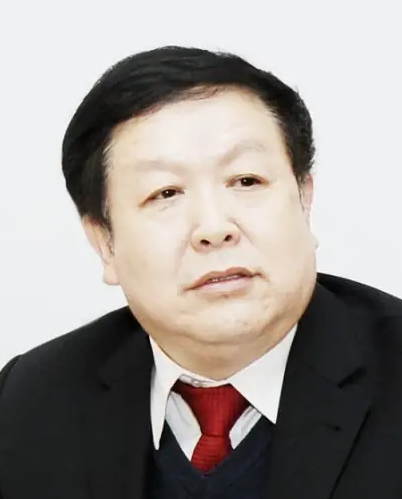 Mingquan Zhou (周明全)合作论文数Beijing Normal University11
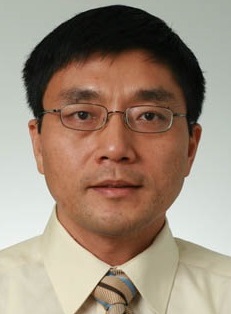 Weisi Lin合作论文数School of Computer Science and Engineering, Nanyang Technological University;College of Computing and Data Science, Nanyang Technological University10
 Baoquan Zhao (赵宝全)合作论文数School of Artificial Intelligence, Sun Yat-Sen University10
 Guanghui Yue合作论文数7
 Xin Zheng (郑新)合作论文数School of Artificial Intelligence, Beijing Normal University6
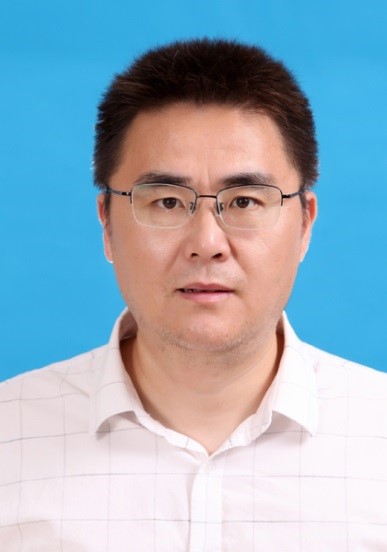 Dan Zhang (张丹)合作论文数College of Information Science and Technology, Nanjing Forestry University5
 Junli Zhao (赵君莉)合作论文数School of Sciences, Chang'an University5
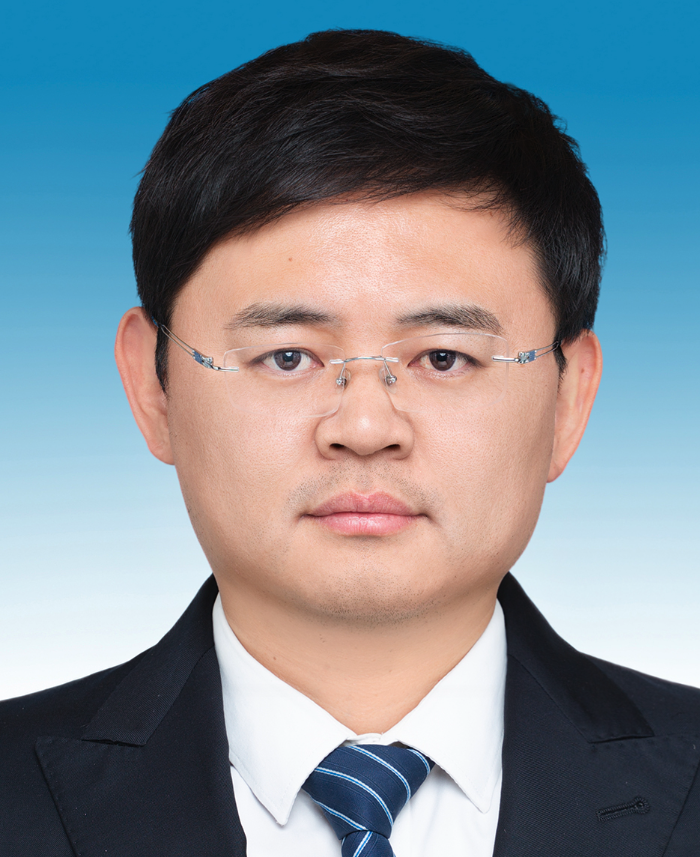 Yuming Fang (方玉明)合作论文数Jiangxi University of Finance and Economics5
 Ping Guo (郭平)合作论文数School of Systems Science, Beijing Normal University4
 Zhenkuan Pan (潘振宽)合作论文数青岛大学信息工程学院4
 Ruomei Wang (王若梅)合作论文数School of Software Engineering, Sun Yat-Sen University4
 Yifan Zuo合作论文数3
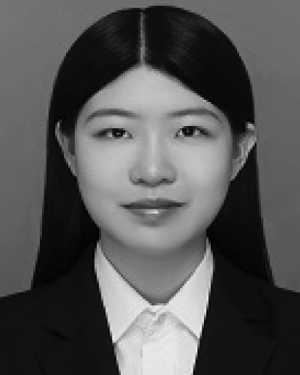 Yiran Zhu合作论文数3Shu Xu合作论文数3Jiaqi Kang合作论文数3Yanping Xue合作论文数3
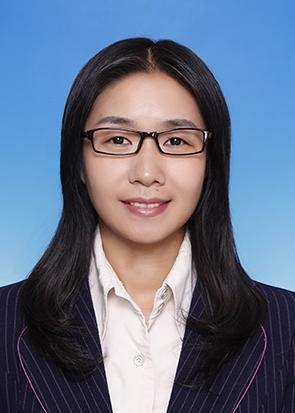 Qian Yin (尹乾)合作论文数School of Artificial Intelligence, Beijing Normal University3
 Hui Huang (黄惠)合作论文数Visual Computing Research Center, Shenzhen University3Qingqing Xu合作论文数3
 Fan Zhou (周凡)合作论文数School of Computer Science and Engineering, Sun Yat-sen University;Research Institute of Sun Yat-sen University in Shen3Xianhe Jiao合作论文数2
 Weiqing Yan (阎维青)合作论文数School of Computer and Control Engineering, Yantai University2
 Guofeng (Ryan) Mei (梅国锋)合作论文数DI Center, Fondazione Bruno Kessler2Xiangyuan Liu合作论文数Beijing Normal Univ, Coll Informat Sci & Technol, Beijing, Peoples R China2
 Na Liu合作论文数Beijing Institute of Technology(Beijing Institute of Technology,Beijing Inst. of Technol.),Beijing,China2
 Jian Zhang合作论文数Multimedia Data Analytics Lab, School of Electrical and Data Engineering, University of Technology Sydney2
 Ran Yi (易冉)合作论文数School of Computer Science, Shanghai Jiao Tong University2
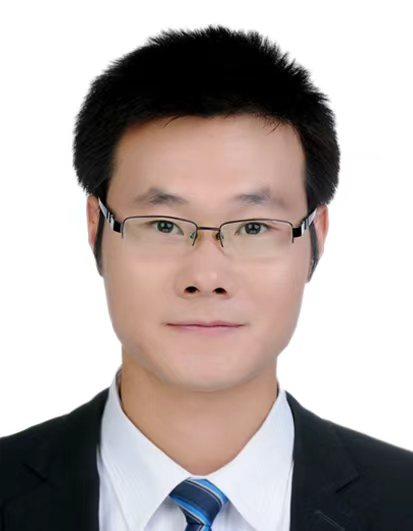 Chang Tang (唐厂)合作论文数School of Software Engineering, Huazhong University of Science and Technology2
 Weide Liu合作论文数Harvard Medical School, Harvard University2
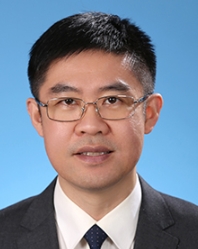 Yong-Jin Liu (刘永进)合作论文数Institute of HCI and Media Integration, Department of Computer Science and Technology, Tsinghua University2
 Fuqing Duan (段福庆)合作论文数School of Artificial Intelligence, Beijing Normal University2Peipei Pan合作论文数2Meihua Song合作论文数1Jianpeng Zhang合作论文数1Dong Zhao合作论文数1Quanhong Peng合作论文数1Xinzhu Li合作论文数1Muze Wang合作论文数1Runze Zhang合作论文数1
 Abiao Li合作论文数Jiangxi University of Finance and Economics1Ziming Nie合作论文数Northwestern Polytechnical University1Shanshan Pan合作论文数1Yuanyang Zhang合作论文数1Juepeng Zheng (郑珏鹏)合作论文数1
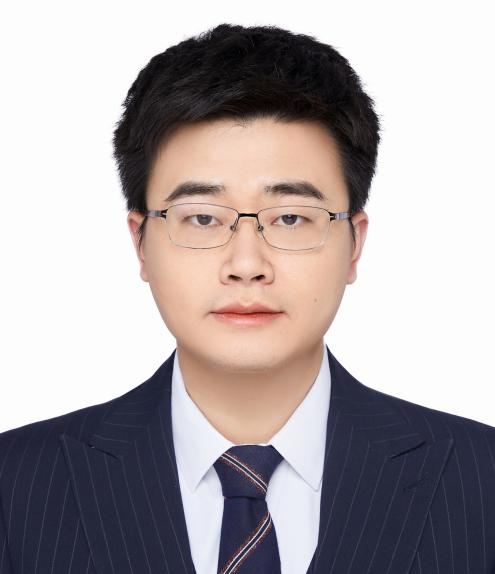 Liang Liao (廖良)合作论文数Hangzhou Institute of Technology, Xidian University1




