The international development community made a commitment to transformative goals related to social, economic, and environmental justice that requires them to leave no one behind. We argue that the use of transformative and indigenous frameworks for evaluation provide guidance towards achieving those goals. We provide a rationale for inclusion of these frameworks, along with an explanation of each framework and examples that illustrate their application. We conclude with hope for transformation on a global scale and reflections on our personal transformative experiences in conducting this work.
Background: The article is in honour of Sulley Gariba, an advocate for a Made in Africa Evaluation (MAE), who encouraged, promoted and mobilised African thinkers to write about African-based ontologies, epistemologies and axiologies and their contribution to knowledge production. Objectives: To map out the application of MAE concept in evaluation projects in Africa. It will be argued that in Africa, although there is remarkable progress conceptually on MAE partly because of Gariba’s influence, there is less application of the concept in evaluation projects. Method: It is based on a commissioned report on the evaluation landscape in Africa and the progress made in implementing MAE funded by Evalpartners. The results are based on a review of literature and an online survey on selected evaluators’ views. Results: African philosophies and indigenous philosophies from the Global South are increasingly being embraced to inform the discourse on evaluation. Spiritual reality and relational existence, which are common features of indigenous evaluation, have become powerful tools for ‘inventiveness’, abstract thinking, theory building and development of models and tools unique to Africa and other parts of the Global South and inform an evolving fifth research and evaluation paradigm. Conclusion: The reluctance of Western-trained evaluators to embrace a spiritual reality and a relational existence, funder colonialism, methodological colonialism and myths and misconceptions about MAE are major obstacles to its application to evaluation practice. Contribution: Sulley Gariba’s contribution was in his articulation of the value of African Philosophies, Values and culture in evaluation, theory and practice in Africa.
The theme of the special issue decolonizing evaluation: towards a fifth paradigm, an initiative of the International Evaluation academy (IEA), was inspired by the concerns that while evaluation reports largely tell stories of success, on the ground there is minimal change, communities remain impoverished, interventions cause harm to the environment and evaluation allow that to happen.
In this mural we demonstrate liberation of evaluation from normalized publication structures. The article is a challenge to publication structures, more specifically journals, to open space for diversity of expression of thought. In this mural, practitioners, academics, policymakers, development partners, VOPEs (Voluntary Organizations for Professional Evaluations), speak to the strategies to decolonize evaluation. The immediate impact of this mural is a demonstrated commitment to decolonize evaluation by more than 50 individuals and entities. Taking up the commitment will be a demonstrable change that came with the mural. The mural also provides an open space for the exchange of ideas, and strategies to decolonize evaluation. Moreover, the contributing voices are preserved in their own voices and their contribution to global knowledge production is acknowledged. This is indeed a departure from the ethics of confidentiality in research where the participants in an evaluation inquiry largely remain anonymous even in the co-creation of knowledge. We believe that when participants in an evaluation inquiry come across their commitments in evaluation journals, they are encouraged to further form coalitions with like minds and hold themselves accountable collectively to liberate evaluation from the remnants of colonialism.
Background. Human papillomavirus (HPV) is a sexually transmitted infection and a causative agent of cervical cancer. It is common in adolescent girls and young women, and the majority of infections are transient and asymptomatic. In Botswana, there are currently no data on the HPV prevalence against which the impact of prophylactic HPV vaccines can be measured. Objectives. To establish a baseline HPV prevalence in an unvaccinated cohort of young women. Methods. Women aged 0.001), number of sex partners _3 (aOR 2.10; 95% CI 1.39 -3.18; p<0.001), and smoking (aOR 2.00; 95% CI 1.26 -3.20; p=0.004). Conclusion. Our results demonstrate for the first time the prevalence of HPV in unvaccinated young women in Botswana. We found a high prevalence of HPV infection, with statistical differences with different risk factors. This finding supports the need for HPV vaccination strategies for females prior to sexual debut to reduce the future burden of cervical cancer in Botswana.
Transformative change is needed if the world is to achieve the sustainable development goals. Such change requires attention to culture, ethics, and values. We discuss the need to be responsive to the voices of Indigenous scholars in terms of the assumptions that guide methodological choices in the evaluation of international initiatives. We describe an Indigenous paradigmatic framework and then narrow the focus to a Made in Africa approach to evaluation that is designed to redress the epistemic violence perpetrated by the use of a Western cultural lens to determine evaluation approaches.
In this interview, Motswana postcolonial scholar Professor Bagele Chilisa discusses strategies for decolonising research, resisting the domination of Western knowledge, working with Indigenous worldviews, and introducing accountability and collaboration with people and communities who are the subjects of research. This piece has been created from two sources - a conversation between Bagele Chilisa, Cheryl White and David Denborough that took place in Gaborone, Botswana on 23 August 2018 and Bagele's keynote presentation, Equality in diversity: Indigenous research methodologies, at the 2015 American Indigenous Research Association Conference.
IntroductionThe global burden of cancer continues to increase in low- and middle-income countries, particularly in sub-Saharan Africa (SSA). Botswana, a middle-income country in SSA, has the second highest prevalence of HIV worldwide and has seen an increase in human papillomavirus (HPV)-associated cervical cancer over the last decade in the setting of improved survival of HIV-infected women. There is an urgent need to understand more clearly the causes and consequences of HPV-associated cervical cancer in the setting of HIV infection. We initiated the Ipabalele (‘take care of yourself’ in Setswana) programme to address this need for new knowledge and to initiate long-term research programme capacity building in the region. In this manuscript, we describe the components of the programme, including three main research projects as well as a number of essential cores to support the activities of the programme.Methods and proceduresOur multidisciplinary approach aims to further current understanding of the problem by implementing three complementary studies aimed at identifying its molecular, behavioural and clinical determinants. Three participant cohorts were designed to represent the early, intermediate and late stages of the natural history of cervical cancer.The functional structure of the programme is coordinated through programmatic cores. These allow for integration of each of the studies within the cohorts while providing support for pilot studies led by local junior investigators. Each project of the Ipabalele programme includes a built-in capacity building component, promoting the establishment of long-lasting infrastructure for future research activities.Ethics and disseminationInstitutional review board approvals were granted by the University of Pennsylvania, University of Botswana and Ministry of Health and wellness of Botswana. Results will be disseminated via the participating institutions and with the help of the Community Advisory Committee, the project’s Botswana advisory group.
AbstractThis chapter explores the meaning of decolonization and indigenization and the importance of these terms in conceptualizing research and evaluation in formerly colonized nations. We provide an exploration of ways in which efforts to “Africanize” the theory and practice of evaluation can be translated into widespread practice. In doing so, the rationale for an African‐rooted and African‐driven evaluation is discussed. We describe four evaluation conceptual frameworks: the least indigenized, integrative, predominantly Indigenous, and third space evaluation methodology. At the heart of these conceptual frameworks is the Indigenous knowledge systems that must be restored, protected, revitalized, and afforded justice. Our argument is that philosophical assumptions specific to African cultures and histories should inform evaluation theory and practice. The emerging evaluation practices will then emanate from the cultures and values of the African peoples.
The main argument in this article is that methodologies rooted in African philosophies, worldviews, and history, bring to the academic discourse, alternative ways of conducting research. Such methodologies question academic and methodological imperialism, and bring to the centre problem and solution-driven research agendas. The methodologies epitomise indigenous and local knowledge (ILK) as a body of thought that embraces all knowledge systems, and legitimise ILK holders, practitioners, and communities as scholars and authors of what they know and how it can be known. The article gives examples of how mainstream methodologies based on European/Western paradigms marginalise other knowledge systems. It illustrates the contested process of integrating academic and ILK. It further discusses the philosophical foundations of methodologies rooted in African cultures and how these methodologies can inform a decolonisation and indigenisation of sustainability science and transdisciplinary research.
The article engages with debates on democratizing and decolonizing research to promote multi-epistemological research partnerships that revolutionize the research methods landscape, bringing new paradigms onto the map to advance new research methods that engage and transform communities. The argument in the article is that people of all worlds irrespective of geographic location, colour, race, ability, gender or socio-economic status should have equal rights in the research scholarship and research process to name their world views, apply them to define themselves and be heard. An African-based relational paradigm that informs a postcolonial research methodological framework within which indigenous and non–indigenous researchers can fit their research is presented. The article further illustrates how an African relational ontological assumption can inform a complimentary technique of gathering biographical data on the participants and how African relational epistemologies can inform partnership of knowledge systems. The use of proverbs and songs as indigenous literature and community voices that researchers can use to deconstruct stereotypes and deficit theorizing and community-constructed ideologies of dominance is illustrated.
TSG 52, "Empirical methods and methodologies," was devoted to explorations of common themes and underlying issues in the use of empirical methods and methodologies.The challenge for the group was defined as follows:Research in mathematics education employs an extensive range of Methods, Methodologies, and Paradigms (M/M/Ps) in the service of key goals.But which M/M/P combinations help us understand which phenomena, in robust and reliable ways?The group met for four sessions at ICME-13.The first three sessions were devoted to parallel sessions in which the assembled groups explored methodological issues related to the following six goals central to ongoing research in mathematics education:1. Improving Mathematics Instruction (instructional materials, strategies, organisation, assessment).2. Understanding the Learning of Mathematics.3. Understanding the Teaching of Mathematics (teacher beliefs, knowledge, decision-making and professional development).4. Classroom Processes and Interactions.
Inclusive research with people with learning disabilities is distinctive among democratising approaches perhaps in its relationship with theory. Theoretical work does not have to be the domain of the academic researcher but it is often what academics can bring to the dialogic table. Similarly, knowledge of life on the ground living with disability is not the exclusive domain of marginalised groups but it is critical in inclusive research contexts. The Editorial reminds us of the relationship between qualitative research and ways of knowing; that it has always been about valuing unique subjectivities interwoven with contexts. Inclusive research looks back as it reacts against the people’s treatment by academic research in the past, and forward as it seeks to create new dynamics in research relationships and better outcomes from research. But the editors also flag new futures that are shaped by a different data landscape. The accessibility of ideas and texts is one area in which inclusive researchers have invested huge efforts. Fortunately, Milton’s (2012) double empathy concept highlights reciprocal challenges in interaction and that academic researchers need access help too. Hence the concept of bridges to other worlds is fundamental. Big data and the software to help us to manage and analyse it brings huge new accessibility challenges that inclusive researchers may feel more than most. If this is also integrally tied to accessing research grants, then the accessibility mountain becomes even harder to climb. But inclusive research is as much a dialogue with challenges as it is a dialogue with each other. We have spent the last couple of decades grappling with transforming research so that it can better transform lives and people wanting to do research inclusively will be seeking new ways up or round that mountain! Technology is enabling and data is becoming ever more visual; this should help.
Efforts at making evaluation culturally relevant have become central to evaluation discourses globally. However, global attempts at culturally responsive practice have not succeeded in incorporating African voices. This article discusses African perspectives on decolonization and indigenization of evaluation. It further provides a description of an African relational evaluation paradigm as a basis for originating evaluation practices and theories rooted in African world views, and provides examples of evaluation studies that illustrate relational evaluation approaches. It makes claims for an African evaluation tree metaphor that features approaches to evaluation in Africa by African theorists
Culture and tradition influence behavior. Multiple-partner and concurrent relationships are held responsible for the increase of HIV infection in Sub-Saharan Africa. A contextualized "theory of planned behavior" is used in this article to identify predictors of intention to practice monogamy. A mixed method design using qualitative data from focus groups, stories, and a survey is analyzed for quantitative data. The qualitative data add to the behavioral beliefs a sociocultural belief domain, as well as attitudes and subjective norms. Perceived behavioral control predicts the intention to practice monogamy. Adolescents show a tendency toward having more than one sexual partner. The normative beliefs and the sociocultural beliefs also predict intentions, while hedonistic beliefs and partner's reaction do not. In contextualizing theory-based interventions, it is important to draw from stories and the language that circulate in a community about a given behavior. More studies are needed on ways to combine qualitative approaches with quantitative approaches to inform the development of theory-based, culturally appropriate, and context-specific intervention strategies to reduce the risk of HIV.
Indigenous communities raise concerns that they are overresearched and tired of research always asking the same questions and reproducing the same answers, thus pressuring researchers to open the discourse on mixed methods research so as to enable new debates and approaches to emerge. A postcolonial indigenous paradigm provides a theoretical framework that informed a mixed methods research approach to design and test the efficacy of a school-based risk-reduction intervention for 14- to 17-year-old adolescents in Botswana. Indigenous methods were used to collect cultural knowledge and to build relationships; these approaches allowed for the integration of the largely marginalized knowledge systems with dominant knowledge systems through a decolonization and indigenization research process.
 Donna Mertens合作论文数5
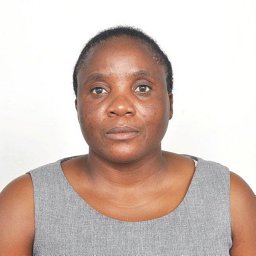 Thenjiwe Major合作论文数University of Botswana3
 Linda Chisholm合作论文数Human Sciences Research Council South Africa3
 Fiona Cram合作论文数2irene mohiemang合作论文数2rapelang chilisa合作论文数2
 Michael Gaotlhobogwe合作论文数2
 Surbhi Grover合作论文数Department of Radiation Oncology, Perelman School of Medicine, University of Pennsylvania;Leonard Davis Institute of Health Economics, University of Pennsylvania;Perelman Center for Advanced Medicine, University of Pennsylvania2
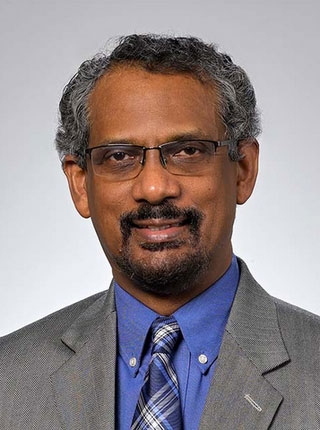 Erle S. Robertson合作论文数Department of Otorhinolaryngology, Perelman School of Medicine, University of Pennsylvania;Department of Microbiology, Perelman School of Medicine, University of Pennsylvania2
 Ramogola-Masire Doreen合作论文数Botswana-University of Pennsylvania Partnership2
 G Anita Heeren合作论文数2Ntshwarang Poloko N合作论文数2
 Martin Carnoy合作论文数Graduate School of Education, Stanford University2Paul Bennell合作论文数Training Department International2Karin Hyde合作论文数2Julia Preece合作论文数2
 Tapologo Maundeni合作论文数2
 Richard Tabulawa合作论文数Department of Languages and Social Sciences Education, University of Botswana2
 Nicola Zetola Burneo合作论文数Department of Medicine, Medical College of Georgia, Augusta University2
 Fiona Leach合作论文数2Gabo Ntseane合作论文数1
 Nnunu Tsheko合作论文数1Sebathu Chiyapo合作论文数1Dawn Balang合作论文数1Nicole Bowman合作论文数1
 Setlhomo Koloi-Keaikitse合作论文数1veronica margaret makwinjamorara合作论文数1Kebatshabile Ngoni合作论文数1
 Hildah Lorato Mokgolodi合作论文数Educ Fdn, Univ Botswana1
 Kolentino Mpeta合作论文数North West University1
 Kesaobaka Molebatsi合作论文数1
 Kelone Khudu-Petersen合作论文数1Nthabiseng Phaladze合作论文数1John Barton Jemmott iii合作论文数Department of Psychiatry, Perelman School of Medicine, University of Pennsylvania1
 Harvey M. Friedman合作论文数Division of Infectious Diseases, Department of Medicine, Perelman School of Medicine, University of Pennsylvania1Hao Shen合作论文数1Allison F Schnader合作论文数1
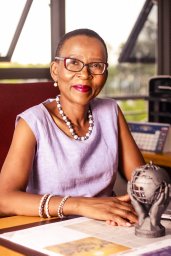 Oathokwa Nkomazana合作论文数University of Botswana School of Medicine1Matlhagela K合作论文数1
 Gabaitiri Lesego合作论文数Department of Statistics, University of Botswana;School of Mathematics, University of KwaZulu-Natal Private Bag X01;University of Botswana, University of KwaZulu-Natal1
 Giacomo Maria Paganotti合作论文数1
 Kara Helen合作论文数The Office, We Research It Ltd1Bvochora-Nsingo Memory合作论文数1Mathoma Anikie合作论文数1
 Paul Anthony Cobb合作论文数Dept. of Teaching and Learning, Vanderbilt University1Rosemarie Mick合作论文数1
 Alan H. Schoenfeld合作论文数Graduate School of Education, University of California,Berkeley1
 Lily Mafela合作论文数1
 David Clarke合作论文数School of Microbiology, University College Cork1




