Software development projects depend on collaborative teams. In the past 50 years of research, various studies have explored the effect of software engineer's personality traits and cultural values on team performance. These studies have led to better understand these relationships; however, how the personality traits and cultural values influence the team effectiveness is still far away in the literature. This research aims to investigate the relationships between social and psychological complexities (including personality traits and cultural values), team coordination, team motivation, and team success (which comprises team effectiveness and team climate) to explore the impact of social and psychological issues on software team success. An online survey targeting software development professionals and unstructured interviews were followed for data collection. We received 112 responses from software developers working in different countries. Findings indicate that personality traits and cultural values, that is, consciousness, openness, harmony, and autonomy, have positive relationship with team coordination effectiveness, while other factors such as neuroticism, embeddedness, hierarchy, and mastery were found to be related negatively with it. These negative relationships can be mitigated by motivating team members appropriately. Based on our research findings, we conclude that the negative impact caused by different personality and cultural traits could be reduced by improving team coordination effectiveness using effective motivation.
Instrumentation and control systems are nervous systems of nuclear power plant (NPP). These systems interact with several safety-critical components of the NPP, such as actuators, transformers, control valves, sensors, circuit breakers, signal processing units, controllers, and heat exchangers. Therefore, the failure of these systems could result in significant financial loss, harm to human resources, or environmental damage. As a result, these systems need to be highly reliable and accurate. In this article, we suggest a framework, based on the batch deterministic and stochastic Petri nets (BDSPNs) to measure the reliability and performance of safety-critical system. The framework consists of three phases. In the first phase, the system is modeled using the BDSPN to derive the transition rate among the system states. In phase 2, the transition rate matrix is utilized to compute the steady-state probability values, which help to evaluate the response time of the system using Little's law. The third phase uses a transition probability matrix to assess the reliability of the system. The technique is illustrated on shutdown system of NPP and is validated on the operational profile data. The obtained accuracy of 99.9905% in measurement of reliability validates the approach.
Underground coal mines are harsh in the working environment, which leads to more causality. Therefore, modern mines are using sensor networks to monitor the mines regularly to minimize mine accidents. Hence, very limited real-time monitoring systems are developed using a Real-time operating system (RTOS). Contiki-NG is a popular embedded application development framework for Wireless sensor networks and the internet of things (IoT). This paper provides a detailed roadmap to design a real-time monitoring system for underground coal using Contiki-NG. The System design comprises designing sensor node with modified RPL protocol and border router using TI CC2650 launchpad and raspberry pi 3. The Node-RED middleware collects data from the application environment using a sensor node. Store the data into the MongoDB database and visualizes sensed data in a web browser in the monitoring center.
Linear networks are characterized by their long and narrow topology, which transmits data in a linear manner. For time-critical linear IIoT networks, stable connectivity is paramount. A good deployment strategy ensures stable connectivity in the network and maximize the lifetime and coverage of the network. In order to achieve this goal, deployment strategies should address tunnelling effects in linear networks. The proposed method tackles three major issues: 1. minimizing tunnelling effects using non-linear sensor deployment method, 2. maximizing network coverage by introducing a modified Latin Hypercube Sequence (LHS), and 3. Minimizing data interference in the multichannel TSCH network using a neighbour countbased sensor node deployment technique. The simulation validates the efficacy of the suggested approach in prolonging the network's lifespan by mitigating the tunnelling effect near the sink. Moreover, it optimally utilizes over 70% of the mean energy within the network system. This is a significant improvement over previous algorithms which often failed to even utilizing 40% of the energy, and many a times much lesser. In terms of network coverage, it surpasses other algorithms. Consequently, the proposed method delivers economic advantages by extending the network's longevity, achieved through a higher number of nodes concentrated around the sink, and significantly reduces the tunnelling effect in the network.
With the growing advancement and demand for technology, computer-based systems (CBS) have become an integral part of human life. Numerous CBSs are safety and mission-critical in nature, and are employed in various industries, including nuclear power plant (NPP), locomotive control, avionics, medical automation, etc. Safety -critical systems (SCS) are one such CBS that are vital to control and maintain the infrastructure of NPP. This paper presents an inventive technique to assess the performance metric availability of SCSs. A Petri net (PN) models such systems, which feature multiple processing nodes interacting with one another. PN models are useful for generating the reachability graph. This article uses reachability graph to derive a collection of ordinary differential equations (ODEs), whose solution can be applied for assessing the availability of the system. Con-ventional methods like Markovian chains, Reliability Block diagrams (RBDs), Fault Tree Analyses (FTAs), and Flow Networks fail to cover the systems' behaviors and structures properties, as well as the lack of failure data, and the diversity of possible failures. The suggested technique has been applied to Digital Feed Water Control System (DFWCS) of NPP, which consider the failure, maintenance and repairment of the main-steam safety valves. We achieved 99.20% accuracy of availability measurement, proving the efficacy of methodology.
Conventionally, the countries viewed the integrity of physical international border as a very challenging task. As, with theincreasing risks of terrorist activity, illegal transportation of peoples, weapons and drugs, the countries face unrivaled challenges in securing their borders efficiently. To cater these challengesvariousconformist approaches were formed in the recent past. However, all such approaches require a thorough manual intervention and high maintenance costs. This advocated to use new technologies which can decrease the maintenance costs and increase the performance of the border surveillance system. Recently Linear Wireless Sensor Networks (LWSN) have attracted the researcher due to the type of topology used in LWSN for the security of linear structures. As the international borders are also linear in nature, so the LWSN could be a best option for the security of these borders. In the era of wireless technologies, energy consumption and data security are the most challenging tasks. This works reveals the minimization of the energy consumption rate on the constrained sensor nodes and, ensuring the privacy of the shared data. Recently, Zone Based Routing Protocol (ZRP) have emerged as one of the efficient routing protocols to improve energy consumption and packet delivery ratio. The efficacy of this work demonstrates the applicability of the A* algorithm with a base of ZRP that enhances the communication flow, packet delivery ratio and energy consumption rate. The results obtained after the simulation done on NS2 on time duration from 0 to 60 s, have shown better performance (08–10
In this proposal, the impact of dynamic farm environment due to varying vegetation density on the Received Signal Strength (RSS), coverage and energy consumption of an IoT assisted Wireless Sensor Network (IoWSN) is analyzed through measurement campaign. Experimental observations on free-space and tree Path Loss Model (PLM) based sensor node deployment strategies in a cropping period have shown network disconnectivity due to incorrect assessment of excess attenuation caused by dynamically varying vegetation height and density during the monitoring period. To address the challenge, an empirically formulated PLM is proposed to estimate the excess attenuation at different crop development stages of medium grass vegetation. Further, using the formulated PLM, a Non-dominated Sorting Genetic Algorithm (NSGA-III) multi-objective optimization is performed to generate initial node deployment with a heterogeneous transmission range. To address the issue of over-coverage, transmitter output power scheduling is performed with predefined upper limit derived from the NSGA-III optimization. The output power is dynamically scheduled during the monitoring period based on changes in the captured RSS to minimize over-coverage. Improvements in coverage, connectivity, and energy efficiency compared to existing approaches are validated through Proof of Concept.
Safety-critical systems (SCS) are essential in maintaining and controlling the nuclear power plant (NPP) facilities, providing feedback on the plant's conditions, and safeguarding it from adverse consequences i.e., SCS plays a vital role in NPP. Thus, failure of such systems can lead to massive financial losses, human resource damage, and environmental degradation. It is, therefore, important that these systems should have a high level of reliability and accuracy. This research introduces a novel method for designing and assessing the reliability of SCS by employing batch deterministic & stochastic Petri nets (BDSPNs) and Markov chain. Our method of reliability evaluation achieved 99.9905% accuracy, proving its effectiveness. This paper illustrates the proposed approach to NPP's Shutdown System (SDS).
Safety-critical systems (SCSs) mitigate the risk of catastrophic loss of assets and hence do have high dependability targets. Performance and reliability are the critical dependability attributes, particularly in control and safety systems, and hence essential to measure to ensure the dependability. Traditional methods either are not capable to capture the system dynamics or encounter state explosion problem. Also, the methods are not able to measure all critical performance attributes. This article proposes a novel approach to measure the performance and reliability of SCSs. Such systems contain multiple interconnecting processing nodes, the functional requirements of which are modeled using Petri net (PN). A set of ordinary differential equations (ODEs) is derived from the PN model that represents the state of the system. The ODE solution can be used to measure the critical performance attributes, such as latency time and throughput of the system. The proposed method can avoid the state explosion problem and also introduces new metrics of performance, along with their measurement: deadlock, liveness, stability, boundedness, and steady state. The proposed technique is applied to a case study of nuclear power plant. We obtained 99.887% and 99.939% accuracy of performance and reliability measurement, respectively, which proves the effectiveness of our approach.
A P2P (peer-to-peer) network is a distributed system dependent on the IP-based networks, where independent nodes join and leave the network at their drive. The files (resource) are shared in distributed manner and each participating node ought to share its resources. Some files in P2P networks are accessed frequently by many users and such files are called popular files. Replication of popular files at different nodes in structured P2P networks provides significant reduction in resource lookup cost. Most of the schemes for resource access in the structured P2P networks are governed by DHT (Distributed Hash Table) or DHT-based protocols like Chord. Chord protocol is well accepted protocol among structured P2P networks due to its simple notion and robust characteristics. But Chord or other resource access protocols in structured P2P networks do not consider the cardinality of replicated files to enhance the lookup performance of replicated files. In this paper, we have exploited the cardinality of the replicated files and proposed a resource cardinality-based scheme to enhance the resource lookup performance in the structured P2P networks. We have also proposed the notion of trustworthiness factor to judge the reliability of a donor node. The analytical modelling and simulation analysis indicate that the proposed scheme performs better than the existing Chord and PCache protocols.
This proposal examines the effect of grass vegetation elevation and density on path loss between sensors deployed in an IoT-enabled wireless sensor network (IoWSN) crop monitoring infrastructures. Observations via real-time measurement campaigns at different node heights and vegetation depths revealed that the sensor deployment made using free-space or tree vegetation based path loss model (PLM) experiences network disconnectivity due to variations in vegetation density in a cropping cycle. An empirical PLM is formulated to identify signal strength at different development phases of paddy and sugarcane medium grass vegetation. For this, the 2.4 GHz RF path loss coefficient (PLC) is estimated using data collected through measurement campaign over combinations of sensor height and vegetation density. Further, the formulated PLC is used to train multiple regression model to develop a generic PLM for all medium grass vegetation. Improvements in coverage and connectivity have been validated through proof of concept.
Regression testing is a testing method conducted to ensure that improvements do not affect the software's current behavior. Test cases play a significant role in software testing activities since it detects faults in the software. The selection of test cases for execution based on the priority is a considerable decision-making step since testing needs to be carried out with limited computing resources like cost, effort, and time. Prioritized selection of test cases involves considering specific test case parameters or criteria; prioritizing test cases can be conceived as a multi-criteria decision-making problem. In this paper, using the Analytic Hierarchy Process (AHP) method, we suggest an approach for prioritizing the selection of the test cases. AHP provides a rational framework for structuring a decision-making problem. It is used to determine the priority of a set of criteria and to calculate the consistency ratio of those criteria using pair-wise comparisons of various measures. Using a new priority regression test algorithm proposed in this study, regression test prioritization is transformed into a multi-criteria decision-making problem. The suggested strategy has a higher Average Percentage of Faults Detected (APFD) value when many determinants are taken into account. The experimental results indicate that our proposed prioritization approach would improve the probability that faults will be detected early and enhance performance compared to other prioritization strategies.
The Bord and Pillar methods are widely popular in an underground coal mine. Continuous monitoring of the environment is crucial to ensure the safety of miners. The Industrial Internet of Things (IIoT) is the contemporary technological advancement of wireless networks that makes environmental monitoring more sophisticated. However, deployment of sensor nodes is a complicated task as it is linear in structure. Furthermore, it is prone to failure owing to energy drain near the sink node. This paper proposes a hybrid sensor deployment approach which is implemented in a linear and integrated mine networks. This hybrid approach is an integration of two sensor deployment methods namely multi-level and grid methods. The simulation results prove that the proposed technique enhances the network’s lifetime by limiting the tunneling effect near the sink. Furthermore, it uses more than 80% of the mean energy in the network system, compared to previous algorithms, which frequently fail even before utilizing 50% of the energy, and in some circumstances, even less. Hence, the proposed method brings an economic benefit by expanding the lifespan of the network through an increased number of nodes around the sink and minimizes the tunneling effect at each level in the network.
Precision agriculture, as the future of farming technology, addresses challenges faced by farmers by data mining of information collected through IoT-enabled crop monitoring infrastructures. The identification of crop disease is one of the widely studied challenges. Crop diseases cannot be accurately predicted by merely analyzing individual disease causes. This proposal presents a fuzzy-logic-based pest prediction mechanism assisting in beforehand preparedness for potential pest prevention. The experiments are performed for pests in rice and millet crops. The data mining over samples collected in a cropping cycle revealed the plausible correlation between temperature, relative humidity, and rainfall with pest breeding. The data collected through IoT monitoring infrastructure is analyzed for the ambient breeding condition of the pest. These conditions are then employed to design the knowledge base of the fuzzy system. More specifically, the linguistic variables of the fuzzy membership function are optimized using a genetic algorithm for close prediction of pest breeding in given environmental conditions. The proposal verified that the weather factors have a strong impact on the occurrence of pests and diseases, and the fuzzy-logic-based pest prediction through IoT application development services will help farmers to take precautionary measures beforehand.
Integration of mobility to sensor node enhanced the scalability of Ad-hoc networks. Bandwidth estimation in scenarios where nodes move randomly and frequently changes its link may depend on factors other than congestion in network traffic. The event of link failure due to the high mobility behavior of nodes in the path from source to destination is one of the dominating cause. However, in both cases, TCP's new-Reno and its variants reduce the congestion-window size to half or 1-MSS, which can cause bandwidth underutilization in the event of a packet drop due to link failure. The proposed approach distinguishes the link failure from network congestion and estimates bandwidth based on link and path stability matrix. The contribution includes the identification of node mobility fuzziness in unicast and broadcast scenarios of IEEE 802.15.4 based MANET. The mobility-fuzziness formulation by the proposed NSGA-II optimized fuzzy-inference-system imitates the node's mobility behavior and, in the event of packet loss, is employed to realize the path-stability metric to estimate the congestion window size. The thorough evaluation with current state-of-the-art techniques shows that the proposed path stability metric allows the estimation of congestion window size to the current congestion window in the event of a packet loss due to link failure. Improving the bandwidth utilization metric in high mobility scenarios from 53–61% for existing approaches to above 83% in proposed approach.
This work proposes a single probe imitation of multidepth capacitive soil moisture sensor for low-cost and energy-efficient implementation of IoT-assisted wireless sensor network (IoWSN) farm monitoring infrastructure. A conditioning circuit (CC) is devised to capture the behavior of soil water movement and its impact on soil moisture around the probe at different depths. The captured correlation is used to train the proposed neural network (NN) models to estimate the soil water content (SWC) at different soil depths based on a single measurement taken at the reference depth. To adjust the weight of the neurons, training and test dataset are collected through a measurement campaign. The data are collected during the cropping period of paddy vegetation by deploying 150 sensor nodes at different depths in hare land before sowing. Two NN models-artificial neural network (ANN) and bidirectional long short term memory network (BLSTM)-are proposed and compared based on the accuracy of SWC estimation. To demonstrate the efficacy of the concept, the proposed sensor design is compared with relevant soil moisture sensors reported over the past five years. The root mean square error (RMSE), R-2 and mean absolute percentage error (MAPE)-based analysis validate the significance of the proposed NN models.
Traffic mishap are continuously growing with the increasing number of vehicles. Most of the mishaps occurs due to four reasons bad road design, low road maintenance (including active building areas), driver behavior (including drunk driving or distracted driving), and equipment or mechanical failures. The fourth is the mechanical failure of an appliance or a vehicle. Equipment failure can result in road crashes. This article highlights early detection of vehicle mechanical defects using acoustic signal processing. The paper focused on sounds of engine. In case of damage or dysfunction, the noise of the engine changes. This paper proposes an algorithm to detect mechanical failure using acoustic signals. The paper also proposes a smart device equipped with multiple sensors and a microcontroller for monitoring the health of vehicle. The device can be placed inside the vehicle. An algorithm based on adaptive Kalman filter and MFCC is proposed to determine the acoustic signal mode. This paper outlines the methodology and outcomes.
Underground coal mines are known for being one of the most hazardous sectors due to its working environment. The mine workers are usually prone to many risk factors leading to heavy casualties. As per the statistical records of Directorate General of Mines Safety, roof fall is one of the major causes of accident in Indian underground coal mines. One of the critical contributing factors of such accidents is lack of roof fall prediction system, thereby leading to failure to withdraw or removal of working persons before the actual failure. Real-time monitoring of strata movement and analysing the acquired data for predicting possible roof fall well in advance through an effective intelligent system can certainly pave way in reducing the accidents due to roof fall. The paper presents an integrated strata management system for continuous monitoring of strata behaviour and analysing the data using artificial intelligence for prediction of failure of strata ahead of time. This web-based monitoring system initially sets the customizable threshold values according to the mine conditions followed by continuously monitoring of the strata conditions including triggering an alarm system when the retrieved data crosses the set threshold limit.
Considering the safety significance, safety critical systems (SCS) of nuclear power plant (NPP) needs to be validated for their performance. Authors are putting their continuous efforts to device new models for performance analysis of the dynamical systems. The results of any model's performance analysis are critical because they help in identifying any potential bottlenecks by predicting the performance parameters of a system when direct measurement is not possible. A model's efficiency can be assessed using specific performance parameters or metrics. Depending on the type of system to be built, these metrics can include throughput, waiting time, response time, reliability, system availability, usage rate, resource consumption, and so on. Petri nets, as an analytical model, assist in the performance assessment of any device model. This survey presents various Petri nets-based models for their suitability analysis for use in SCS of NPP. We evaluate the model performance, their benefits, drawbacks, and performance measuring parameters. We consider the papers which are published during the years 2009-2020. These models' performance can be used to build better systems-this survey paper aids in the identification of appropriate approaches and promising research areas for the future. (c) 2021 Elsevier Ltd. All rights reserved.
Pipelines are often used for transmission of oil, gas, water and other resources to neighboring countries. These pipelines often pose risk and sometimes intervene with national security. Hence, to safeguard the pipeline, various technological usage is often encouraged. Unlike traditional non-linear structure, pipeline systems demand linear structure. Pipeline systems are often setup for greater transmission distance, for maximum utilization. Linear communication in wireless sensor network is always a time-consuming aspect due to variability in the coordinator node selection. To cater the surveillance needs of such transmission pipeline systems, we propose a cost-efficient optimization scheme which enables the network for greater communication efficiency through which maximum coverage can be achieved. The proposed scheme uses a hybrid optimization approach which encompasses ACO-PSO-GA-LOA to address the routing challenges. The proposed hybrid scheme is evaluated against traditional optimization algorithm using metrics such as communication end-to end delay, network throughput and normalized lifetime. The simulation results establish the effectiveness of the proposed scheme.
 Dharavath Ramesh合作论文数19Prem Nath合作论文数University of Delhi Faculty of Mathematics Delhi-7 India Delhi-7 India17
 Sachin Tripathi合作论文数16
 Lalit Singh合作论文数Nuclear Power Corporation of India12
 Rakesh Ranjan Kumar合作论文数11
 Sanjay Kumar Biswash合作论文数Faculty of Science & Technology, University of Coimbra Polo II11
 Mohammad Shameem合作论文数Departmentof Virology;Institute of TropicalMedicine;Departmentof Virology, Institute of TropicalMedicine10
 Bibhas Chandra合作论文数IIT ISM, Dept Managment Studies, Dhanbad, Bihar, India9
 Pankaj Pal合作论文数9
 Amrit Suman合作论文数8Siba Mishra合作论文数8
 Dhirendra Sharma合作论文数University of Petroleum and Energy Studies8
 Varshney, S.合作论文数ISM, Dhanbad, India;c;ISM7Abhishek Swaroop合作论文数Department of Computer Science and Engineering, G.P.M. College of Engineering7
 Rajeev Tripathi合作论文数MNNIT7Soumen Nayak合作论文数6
 Haider Banka合作论文数Centre for Soft Computing Research, Indian Statistical Institute6
 Mahendra Singh合作论文数5
 Sanjeev Singh合作论文数5
 Nand Kumar Jyotish合作论文数Dept Comp Sci & Engn, Indian Inst Technol ISM5
 Rashmi Priya Sharma合作论文数Indian Sch Mines IIT ISM, Indian Inst Technol, Dhanbad 826004, Jharkhand, India5
 Pramod Kumar合作论文数5
 Arif Ali Khan合作论文数University School of Basic and Applied Sciences, Guru Govind Singh Indraprastha University5Neeraj Tyagi合作论文数4
 Preetam Suman合作论文数Information Technology, Jaipuria Institute of Management4
 Mohd Naseem合作论文数Dept. of Comput. Sci. & Eng., Indian Sch. of Mines;c;Dept. of Comput. Sci. & Eng., Indian Sch. of Mines4
 Patra, A.N.合作论文数4
 Kshirasagar Naik合作论文数Department of Electrical and Computer Engineering, University of Waterloo4
 Praveen Lalwani合作论文数4Mohit Chawla合作论文数3Kriti Singh合作论文数3
 Koteswararao Kondepu合作论文数Tata Consultancy Services3
 Himanshu Seth合作论文数Department of Computer Science and Engineering, Indian Institute of Technology(ISM),2Rashda Khanam合作论文数2
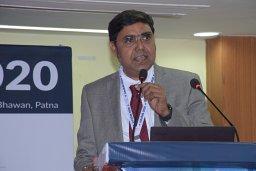 Sanjeev Sinha合作论文数National Institute of Technology Patna2
 Pooja Singh合作论文数Dept of Mathematical Sciences, IIT (BHU), Varanasi, India2Mahua Banerjee合作论文数2
 Lambodar Jena合作论文数2
 Vikas Kumar合作论文数Department of Mathematics;University of Rajasthan;Department of Mathematics, University of Rajasthan2Vijayalakshmi Saravanan合作论文数1
 Ashish Khanna合作论文数1V. Vijay Kumar合作论文数1
 Vishal Baral合作论文数1Binita Kumari合作论文数1
 Priyanshu Kumar合作论文数Samsung Electronics1Ajit Kumar合作论文数1Nirjharini Mohanty合作论文数Dept Comp Sci & Informat Technol, SOA Deemed Univ1
 Sushma Verma合作论文数National Institute of Technology Jamshedpur1




